J. L. BELL is a Massachusetts writer who specializes in (among other things) the start of the American Revolution in and around Boston. He is particularly interested in the experiences of children in 1765-75. He has published scholarly papers and popular articles for both children and adults. He was consultant for an episode of History Detectives, and contributed to a display at Minute Man National Historic Park.

Subscribe thru Follow.it


•••••••••••••••••


Showing posts with label Thomas Hutchinson. Show all posts

Saturday, February 28, 2026

“Acts of government could be resisted when they threatened the essential rights”
Jack Rakove is the William Robertson Coe Professor of History and American Studies emeritus at Stanford University, with parallel appointments in political science and law.

He’s the author of respected books of Revolutionary-era history, including Original Meanings: Politics and Ideas in the Making of the Constitution (winner of the Pulitzer Prize for History in 1997), James Madison and the Creation of the American Republic, and Revolutionaries: A New History of the Invention of America.

In other words, Rakove has worked largely in political history and how the Framers translated ideas into laws and policies for the new nation. When he uses the term radical, as in his 2020 book Beyond Belief, Beyond Conscience: The Radical Significance of the Free Exercise of Religion, he’s talking about the ideas of the Founders in their eighteenth-century context, not about the importance of now noting how hierarchical those men’s lifestyles were.

That’s something to bear in mind while reading Rakove’s essay for the Washington Monthly earlier this month, “Playing the Grinch at America’s 250th Birthday Party.”

In that essay Rakove writes:
Last June, I attended a conference on The American Revolution and the Constitution held at the American Enterprise Institute in Washington. It was the seventh of eight conferences that AEI has been holding on the 250th anniversary of independence. Given its conservative orientation, any conference sponsored by AEI would predictably take a celebratory turn, and so did this one. My own paper on “The Invention of American Constitutionalism” fits well within that framework. . . .

Yet at the conference dinner that followed, I became the grinch who wanted to rob the other happy campers of their semiquincentennial joy. Yuval Levin, our gracious host and convenor, started our post-dessert conversation by asking me, “What do you think the celebration of the 250th anniversary of independence will be like?”

“I think it is going to be a complete disaster,” I replied, and offered a few reasons to support that view. The most important one, directly relevant to our subject, was that the constitutional system is lurching toward collapse and outright failure.
That link leads to Rakove’s article from last June, “It’s Not Just a Constitutional Crisis in the Trump Era. It’s Constitutional Failure.” Having spent a career studying how the Constitution was supposed to work, he’s watching it not work that way at all.

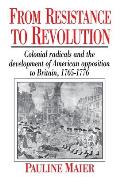
Rakove discerns some hope in what his graduate-school colleague Pauline Maier described as “extra-legal resistance” in her excellent book From Resistance to Revolution:
In the colonies as in Britain, communities believed that certain acts of government could be resisted when they threatened the essential rights and interests of the king’s subjects. Various kinds of uprisings, riotous events, and militant protests did occur during the colonial era of our history. From the perspective of imperial officials representing the British crown, these protests were illegal acts to be repressed or punished. Ship captains in the Royal Navy believed they were acting legally when they forcefully impressed sailors for their warships. Merchant seamen, shipyard workers, or ordinary individuals innocently strolling the streets thought otherwise. When anti-impressment riots occurred, they enjoyed the community’s full support.

This tradition was well established before the Stamp Act Crisis of 1765 disrupted imperial politics. Some of the earliest protests against the Stamp Act were indeed too violent. It was one thing to intimidate individuals who thought they had received lucrative appointments as stamp collectors into resigning their commissions. That was the easiest way to halt the enforcement of the Stamp Act. It was another matter entirely to ransack the residences of royal officials, notably including the Boston mansion of Thomas Hutchinson, lieutenant governor and chief justice of Massachusetts. . . .

In the past few weeks, Minneapolis has become our Boston, and its citizens have become modern Sons of Liberty. Far more important, they and their counterparts in other communities have unknowingly revived the strategy of resistance that American communities deployed between the Stamp Act Crisis of 1765 and the crisis of independence. Blowing whistles, tailing ICE and Border Patrol vehicles, blaring airhorns outside the hotels where their agents are hopefully spending sleepless nights—these are modern versions of the extra-legal resistance that Maier described.
The protesters aren’t the only people behaving outside the law, however. The Trump administration continues to put unconstitutional pressure on Minneapolis, this past week announcing a freeze on paying for medical benefits for anyone in the state of Minnesota. It’s tried that tactic before through the Department of Agriculture, and been stopped by federal courts, repeatedly. That sort of tyrannical action naturally prompts protests.

Wednesday, October 29, 2025

“Fully compensate for all the Insults and Indignities”?

Enemies to Their Country: The Marblehead Addressers and Consensus in the American Revolution is Nicholas W. Gentile’s first book, just published by the University of Massachusetts Press.

Timothy Symington’s review for the Journal of the American Revolution says:
Marblehead was an important fishing community, with an aristocracy created by the cod fishing industry. . . . the town’s harmony was threatened by the signatures of thirty-three residents to a letter published in the Essex Gazette in May 1774. The letter was a “send-off” to departing governor Thomas Hutchinson. . . . The thirty-three residents who added their names to the letter were hoping that Hutchinson would return to London and try to use his influence to calm the situation.

The letter thanked Hutchinson for his involvement on behalf of the fishing industry, and then ended on a conciliatory note: “‘We heartily wish you, Sir, a safe and prosperous Passage to Great-Britain, and when you arrive there may you find such a Reception, as shall fully compensate for all the Insults and Indignities which have been offered you.’”

The idea of apologizing to a man like Hutchinson was anathema to many who subscribed to the Patriot cause (which, at this point, meant a return to no taxation and stopping the abridgement of British liberties). Most of the Marblehead residents considered themselves Whigs and were incensed at the letter. Gentile describes the importance of everyone in the community at that time in history being on the same page. Giving up one’s individual needs for the common good helped to create social harmony. . . .

Most Addressers ended up offering recantations, and some then took active roles in fighting on the Patriot side after war broke out. Some Addressers were truly contrite and regretted signing the letter, claiming that they did not truly understand Hutchinson’s character. Other Addressers took a longer time to recant, which some did more than once since their first attempts were not accepted by the community. All Addressers did recant at some point, but some of them could not reconcile their politics for the good of the community.
The Marblehead Addresser I’ve written about most was John Pedrick, who after another century was turned into a Patriot hero through the stories of his daughter and granddaughter.

Gentile will speak about his book at the Marblehead Museum on Thursday, 6 November, at 7 P.M. For tickets to attend that event in person, go to this page. To watch online, go here. Tickets are $15, or $10 for museum members.

Thursday, September 25, 2025

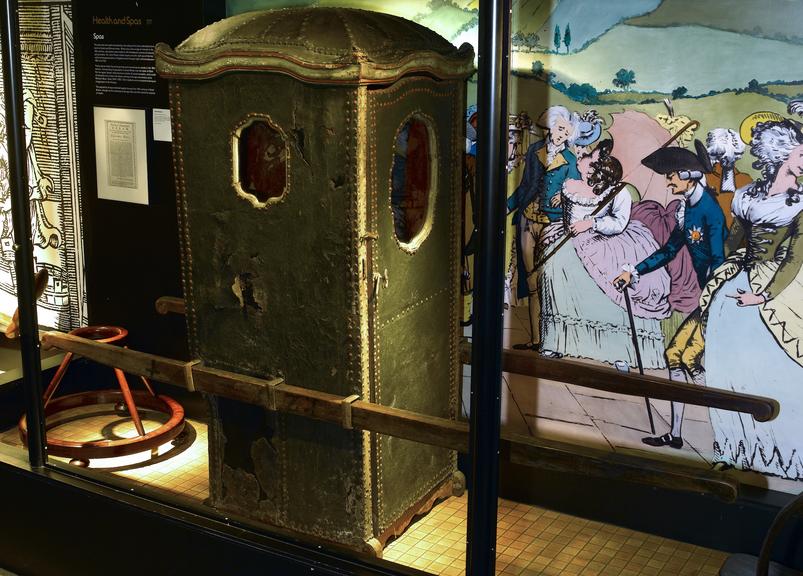
Boston’s “Sedan for Removing the Sick”

Lining up the sparse mentions of sedan chairs in colonial Boston reveals a clear pattern: they were used to transport sick people.

In 1674 the Rev. John Oxenbridge of the First Meetinghouse suffered a stroke while preaching the Thursday Lecture and “was carried home in a Cedan.”

Thirteen years later, Judge Samuel Sewall wrote in his diary: “Capt. Gerrish is carried in a Sedan to the Wharf and so takes Boat for Salem, to see if there he may find amendment of his Distemper.”

In May 1715, the newly reappointed governor Joseph Dudley was bed-ridden with gout. At the end of the month, Sewall wrote, he came to Boston and “was carried from Mr. Dudley’s to the Town-House in Cous. [William? Jeremiah?] Dummer’s Sedan: but twas too tall for the Stairs, so was fain to be taken out near the top of them.”

Yesterday I listed five times sedan chairs were advertised for sale in eighteenth-century Boston newspapers. I don’t think it was coincidence that four of those ads were estate sales, and the fifth seller died within two years. Those men might have acquired sedans as they or their wives became too ill to walk around.

Boston also had a public sedan chair, operated by the town itself. In March 1739, the Boston selectmen took note of “A Sedan, or Chair belonging to the Hon. Edward Hutchinson Esqr. which the Town has had the loan of for a considerable time.” One of those local elected officials was Thomas Hutchinson, and the sedan owner was his uncle. The selectmen decided that the chair “be effectually Repaired, and made fit for Use, in the best and frugal manner.”

That sedan chair became part of Boston’s public-health infrastructure. On 4 Jan 1757 the selectmen voted “that the Sedan for Removing the Sick be broke to Peices” and “Mr. [Isaac] Cazneau make a good Serviceable Sedan at the Charge of the Town.” Cazneau was a saddler.

In 1760 the Massachusetts General Court bought land in the sparsely populated western point of the Boston peninsula called “New Boston” for a new hospital. Four years later, the town suffered a serious smallpox epidemic. That appears in the selectmen’s records with an uptick in orders for the sedan chair to carry people to that hospital.
  • 16 Jan 1764: “Information was given the Select men by Dr. [Phillip] Cast, that One Hallet who came from Newfoundland a Month past, and Boards at Mrs. Nicholsons in Fitches Alley, has the Symptoms of the Small Pox upon him whereupon the Select men endeavour’d to perswade him to consent to his being removed, and having obtain’d such consent, he was accordingly removed in the Sedan to the Province Hospital at New Boston.”
  • 20 Jan 1764: “The Select men having prevailed with Mr. Adams to consent that his Child should be removed from his House to the Hospital at New Boston, they at about 12. OClock that Night took Mr. Williston and a number of hands with the Sedan to said House, when they received the Wet Nurse and Child and carried them to said Hospital”.
Similar entries appeared through August of that year.

TOMORROW: “Mr. Williston.”

(The picture above shows a sedan chair used to carry medical patients in La Paz, Bolivia, now in the Wellcome Collection in London.)

Monday, May 12, 2025

Thomas Newell and “that Detestable Tea”

Thomas Newell’s diary makes clear that he opposed Parliament’s tea tax in 1773, as most Bostonians did. On 2 December, for instance, he wrote about James Bruce bringing in the Eleanor with “116 Chest of that Detestable Tea.”

But what did Newell do to support that stance?

On 17 November the young man made clear he didn’t participate in the attack on the Clarke family’s warehouse, discussed back here: “This evening a number of persons assembled before Richard Clarke’s, Esq., one of the consignees of tea; they broke the windows, and did other damage. (I was at fire meeting this evening.)”

On 2 December, the same day Capt. Bruce arrived, Newell’s diary contains one of the longer bits of cipher in the diary. The word “Junr” is legible among the little symbols, and a squiggle that doesn’t fit the cipher turns out to be “St.” What was Newell hiding?

Not a whole lot, it turns out. Once deciphered, the line reads: “This Eving. was at St. Andrew’s Lodge, I was chosen Junr Deacon of said Lodge.” Well, good for Thomas Newell.

Some people credit that lodge of Freemasons with being at the heart of the anti-tea operation. (None give it more credit than the lodge itself.) And indeed Newell got more involved the next night.

On 3 December, Newell recorded: “This evening I was one of the watch on board of Captain Bruce (with twenty-four more), that has tea for the Clarkes & Co.” That patrol was to keep the tea from being landed so the tax could be collected.

Finally, here’s Thomas Newell’s account of 16 December:
Town and country sons mustered according to adjournment. The people ordered Mr. [Francis] Rotch, owner of Captain [James] Hall’s ship, to make a demand for a clearance of Mr. [Joseph] Harrison, the collector of the custom house (and he was refused a clearance for his ship). The body desired Mr. Rotch to protest against the custom-house, and apply to the governor for his pass for the castle. He applied accordingly, and the governor refused to give him one. The people, finding all their efforts to preserve the East India Company’s tea, at night dissolved the meeting. But behold what followed the same evening: a number of brave men (some say Indians), in less than three hours emptied every chest of tea on board the three ships, commanded by Captains Hall, Bruce, and [Hezekiah] Coffin (amounting to 342 chests), into the sea.
Was Newell among those “brave men”? I’d guess not. But he surely knew some of them.

A couple of details struck me Newell’s writing about the Boston tea protesters. First, he consistently referred to the people meeting in Old South Meeting-House as ”sons of liberty.” He didn’t worry about calling them the “body of the people.”

Second, in Newell’s telling the crowd that afternoon was trying “to preserve the East India Company’s tea.” By having it shipped back to Britain, that is. Would be a shame if anything else happened to it.

TOMORROW: A mystery name.

Wednesday, April 09, 2025

Richard Draper’s “Report of these Images”

As long as I’m discussing nomenclature for Boston’s political groups in the 1760s, I’ll tackle “the Union Club.”

America’s first public, outdoor demonstration against the Stamp Act took place along Boston’s main road on Wednesday, 14 Aug 1765. The big elm where the protesters hung effigies hadn’t yet been named Liberty Tree.

The next day, Richard Draper published his Boston News-Letter newspaper with a two-page supplement. It didn’t report on the protest, however—that sheet was entirely devoted to foreign news.

The News-Letter did print Gov. Francis Bernard’s 15 August proclamation of a reward for the rioters who had torn down stamp agent Andrew Oliver’s building the night before. That was the paper’s only description of the event.

Boston’s Whigs complained that Draper was tilting his coverage to please the royal government. In his 22 August issue the printer objected to the News-Letter being called “a Court-Paper…under the Controul of higher Powers.” He insisted:
IN regard to the Occurrences of last Week, we would observe, that it was out of our Power to give a perfect Account thereof, as the Transactions were not finished, and a partial one would perhaps have drawn down the Resentment of many of the true Sons of Liberty, and caused us to be more in Fear, than it is said were of publishing any Thing relating thereto:—

Had the Gentleman who furnished one of the Papers with a decent Account of the Affair, been so kind as to have sent us something of the same Nature, he would have saved himself the Trouble (if he really took the Trouble) to inform the Public that we filled an extraordinary Half Sheet with immaterial Foreign Articles.
The News-Letter’s account of the anti-Stamp Act protest, “as concise and true…as it is in our Power,” followed. In the details it agreed with the Monday newspapers, but it also included several sarcastic zings at the protest.
VERY early on Wednesday Morning, the 14th Instant, were discovered hanging on a Limb of the Great Trees, so called, at the South Part of this Town, two Effigies, one of which by the Labels appeared to be designed to represent a Stamp-Officer, the other a Jack-boot, with a Head and Horns peeping out of the Top. said by some of the Printers, to be the Devil or his Imp; but, as we are not acquainted with that Species of Gentlemen, we cannot so well determine whether it was an exact Resemblance or not:

The Report of these Images soon spread thro’ the Town, brought a vast Number of Spectators, and had such an Effect on them that they were immediately inspired with a Spirit of Patriotism, which diffus’d itself through the whole Concourse: So much were they affected with a Sense of Liberty, that scarce any could attend to the Task of Day-Labour; but all seemed on the Wing for Freedom.

About Dusk the Images were taken down, placed on a Bier, (not covered with a Sheet, except the Sheet of Paper which bore the Inscription) supported in Procession by six Men, followed by a great Concourse of People, some of the highest Reputation, and in the greatest Order, ecchoing forth, Liberty and Property! No Stamp! &c—

Having passed through the Town-House, they proceeded with their Pageantry down Kingstreet, and it is said intended for the North Part of the Town; but Orders being given, they turned their Course thro’ Kilbystreet, where an Edifice had been lately erected, which was suppos’d to be designed for a Stamp-Office.

Here they halted, and went to work to demolish that Building, which they soon effected, without receiving any Hurt, except one of the Spectators, who happened to be rather too nigh the Brick Wall when it fell: This being finished many of them loaded themselves with the wooden Trophies, and proceeded (bearing the two Effigies) to the Top of Fort-Hill; where a Fire was soon kindled, in which one of them was burnt; we can’t learn whether they committed the other to the Flames, or if they did whether it did not survive the Conflagration, being its said like the Salamander conversant in that Element.—

The Populace after this went to work on the Barn, Fence, Garden, and Dwelling-House, of the Gentleman against whom their Resentment was chiefly levelled, and which were contiguous to said Hill; and here entering the House they bravely showed their Loyalty, Courage, and Zeal, to defend the Rights and Liberties of Englishmen:——

Here, it is said, by some good Men that were present, they established their Society by the name of The Union Club.—

Their Business being finished, they retired, and proceeded to the Province-House, which was at about 11 o’Clock, gave three Huzzas, and all went quietly home.
The report went on to events of 15 August: Oliver’s resignation and an aborted action against Lt. Gov. Thomas Hutchinson’s house.

The 19 August Boston Gazette offered a detailed and favorable description of the protest in its own two-page supplement. The same day’s Boston Evening-Post printed a positive report from “A.Z.,” who also got in the dig at Draper’s paper. The Boston Post-Boy, friendly to the royal government, ran nothing. None of the three Monday papers reprinted Gov. Bernard’s proclamation.

TOMORROW: The long and short of “The Union Club.”

Monday, November 25, 2024

“Admiral Renegado, came to anchor in Port Despair”

At the start of February 1770, the big news in Boston was the non-importation movement, and particularly the weekly demonstrations by schoolboys in support of it.

That is to say, every Thursday when the schools let out early, gangs of boys would converge on the shop of someone who hadn’t signed the non-importation agreement, set up a picket line, and shout insults at that shopkeeper and his or her customers. If the kids were feeling feisty, they’d throw snowballs and mud as well.

The Boston Chronicle, which opposed the movement, responded on 1 February with a fictional advertisement:
Intended speedily to be acted,
By a Company of young Tragedians,
A TRAGEDY
(Not acted here these seventy-eight years,)
called the
W I T C H E S,
With many Alterations and Improvements.
(The full item is quoted back here.)

That slammed the Whigs’ boycott, tweaked the town’s ban on theater, and poked at the sore spot of the Salem witchcraft trials all in one. It was masterful trolling before that term was invented.

Four days later, the Boston Chronicle fictionalized another common newspaper item with this start:
S H I P   N E W S.
January 25, 1770.
Last Tuesday Evening the “Well disposed” [i.e., Whiggish] fleet, under the command of ADMIRAL RENEGADO, came to anchor in Port Despair, having left their stations that morning in great confusion on the appearance of an English VICE ADMIRAL, with the British STANDARD flying at the mast head.
This was commentary on how William Molineux led a crowd to confront Lt. Gov. Thomas Hutchinson’s two importer sons at his house—an action that even Josiah Quincy, Jr., had warned could be treated as treason—and how that action had fizzled out.

Exactly one month after the second article, the Boston Massacre occurred. To defuse tensions in the streets, Hutchinson decided to have the 29th and then the 14th Regiments moved to Castle William.

As a result, in the following months there was no governmental force in the streets of Boston strong enough to deter the Whigs and their supporters. Crowds tarred and feathered Customs officer Owen Richards in May and threatened Scottish merchant Patrick McMaster with the same punishment in June.

In that atmosphere, I suspect, the printing staff of the Boston Chronicle didn’t feel safe publishing another item lampooning and lambasting the local Whigs. Somebody in that shop—or perhaps more than one somebody—composed a long article that built on three items the paper had already run:
  • Caricatures of prominent Whigs like “Tommy Trifle” and “Johnny Dupe” from October 1769’s “Outlines of the characters of…the Well-Disposed.”
  • The fake theatrical announcement.
  • The name “Admiral Renegado.”
Instead of publishing that piece in their own newspaper, however, they sent it to Anthony Henry in Halifax. Obviously, disguised gossip about Bostonians had less meaning for readers in Nova Scotia. But after he ran the piece on 8 May, it could filter back to its targets without sparking a riot. Not that any Boston printer dared to reprint it.

The October 1769 “Outlines of the characters of…the Well-Disposed” is always attributed to John Mein, publisher of the Boston Chronicle. He left a written key confirming the targets, so he was obviously involved in the production. But someone at the Boston Chronicle must have carried on in the same mode after Mein was driven away the next month. That person most likely wrote the piece published in Halifax.

TOMORROW: The most likely author.

Wednesday, October 23, 2024

“Another Mob to search for Ebenezer Richardson”

Ebenezer Richardson reportedly went into hiding in Philadephia in mid-October 1773, just as the tea crisis heated up.

For the next several weeks the biggest American ports were focused on the East India Company tea.

Richardson’s employers and protectors, the Customs Commissioners, took shelter at Castle William in Boston harbor, and probably others in the department were also lying low.

On 25 Jan 1774, a Boston mob attacked another Customs officer, John Malcom. He had threatened a boy and then clubbed the small shoemaker George Robert Twelves Hewes.

When local authorities tried to convince the crowd to release Malcom, men answered “that in case they let him go they might expect a like satisfaction as they had received in the cases of Richardson and the soldiers, and the other friends of government.” People resented Richardson’s royal pardon and didn’t want a repeat, just as they didn’t like the acquittals after the Boston Massacre.

The attack on John Malcom continued and became one of the most vicious and infamous of the pre-war years.

Two days later, someone reported seeing Richardson himself in Boston. Richard Draper’s 28 January Boston News-Letter said:
It having been reported that the noted Ebenezer Richardson, was seen in Town, a Number of People were in Pursuit of him last Evening, but could not find him.
That same day, Gov. Thomas Hutchinson wrote to the Secretary of State, Lord Dartmouth, about the attack on Malcom and added:
there was an Attempt made to raise another Mob to search for Ebenezer Richardson, lately found guilty for Murder, but Judgment being suspended, His Majesty’s Pardon was applied for & obtained. He is now in some very inferior Employment in the Service of the Customs in Pensilvania, and it is thought a Report of his being in Town was spread for the sake of raising a Mob. Some of the more considerate People appeared & opposed the Leaders in the beginning of the Affair and put a Stop to it.
Hutchinson obviously believed Richardson was still in Philadelphia.

Richardson’s own statement to Dartmouth in January 1775 was skimpy on dates and other specifics about his movements:
after your petitioner was dischargd the Commissioners of the Customs Perocured for your Petitioner a place in Pennaslavania but the peopel of boston sent after and [???] the mob in Pennaslavania so that your petitioner could not shew his head there.
At some point in late 1773 or early 1774, Ebenezer Richardson did make his way back to Massachusetts.

TOMORROW: Meeting with the governor.

Monday, October 14, 2024

“A proper Person to be employed in the REVENUE”

On 10 Mar 1772, as described yesterday, Massachusetts’s high court delivered a royal pardon to Ebenezer Richardson, convicted twenty-three months earlier of murder.

According to one of the judges on that court, Peter Oliver, “The Prisoner fled the Town immediately on his Discharge; the Rabble heard of it, & pursued him to execute their own Law upon him, but he happily escaped.”

Gov. Thomas Hutchinson reported to his predecessor, Sir Francis Bernard, that the “poor fellow who has been in close prison more than two years…hapned to be discharged when the Inhabitants of the Town were engaged in an Affair at their annual meeting & by this means we saved a tumult at least if nothing more.”

Richardson still had family north of Boston in the Woburn/Stoneham/Reading area, so he probably lay low there. I haven’t found clues about his second wife Kezia and their children.

For a decade before his conviction Richardson had worked for the Customs service. The Commissioners of Customs appear to have eventually found another place for him—a distant place.

Or, as Edes and Gill’s Boston Gazette put it on 24 May 1773:
As an additional Affront to the Feelings of his Countrymen; as an aggravated Outrage on the Sensibility, Humanity, Virtue and Justice of this People; as a Master Stroke of rancorous Enormity, to put to the Rack the most obstinate Quietist: BE IT KNOWN;

that the cringing, smiling, fawning, bowing CHARLES FROTH, Esq; a Wretch, who from his earliest Puppy-hood, thro’ the lingering Progress of a too-long protracted Life, to a Period when he withers on the Crutch of Decrepitude, might challenge his recording Angel to produce one single Action, that sifted to it’s Motive, would not effectually consign him to eternal Infamy; has, O! unparalelled Effrontery! O! the detestable Parricide! has appointed that execrable Villain, the condemned Vagabond; the rank, bloody, and as yet unhanged EBENEZER RICHARDSON, an Officer in the Customs in the Port of Philadelphia.

And what is infinitely aggravating, and renders the Transaction much more atrocious; the Murderer is distinguished by a particular Recommendation to the Collector and Comptroller of that Port; declaring the Miscreant to be a distinguished Friend to Government, a proper Person to be employed in the REVENUE, and ordering them to reward him with a Guinea per Week.——

As the said Ebenezer Richardson is now placed on the Ladder of Promotion, we may expect him one of the Honorable Board of Commissioners, in a few Years; where he may probably make as distinguished a Figure as the Rest of his BRETHREN.
“Charles Froth” was the Whigs’ usual insult for Customs Commissioner Charles Paxton (shown above), who had employed Richardson as a confidential informer soon after he moved to Boston. As you might guess, Paxton was about as unpopular as Richardson himself.

TOMORROW: Shifting to Philadelphia.

Sunday, October 13, 2024

The Sentencing of Ebenezer Richardson

On 21 Apr 1770, as recounted back here, a Suffolk County jury found Ebenezer Richardson guilty of murdering young Christopher Seider.

The judges had instructed the jurors that all the evidence indicated Richardson had fired his gun in self-defense as a crowd attacked his house and family, so the worst they could convict him of was manslaughter. Judge Peter Oliver insisted that the facts showed Richardson was innocent of any crime.

The jurors ignored those instructions and came back with a guilty verdict. And the law provided only one punishment for a convicted murderer: death.

Instead of passing that sentence immediately, the judges adjourned the court.

The next time they met, one judge was ill, so they once again didn’t pass sentence.

In September, the judges called the jurors back into court to ask about their deliberation, whether the angry crowd in the courtroom had influenced them. The judges were seeking any reason to overturn the verdict. But no opportunity presented itself.

Gov. Thomas Hutchinson wrote to his superiors in London, seeking a royal pardon for Richardson. He could have issued a pardon himself as governor, but he didn’t want to take all the heat for that decision.

In February 1771, the London ministry responded by sending back notice that the king (which really meant the privy council) had put Richardson in for a pardon.

Ever the stickler, Hutchison thought that paperwork had to be complete to stand up to scrutiny. He asked for something clearer, more legalistic.

Meanwhile, Richardson was still in the Boston jail. That was when the press referred to him by such epithets as “the rank, bloody, and as yet unhanged Ebenezer Richardson.”

Richardson’s mother died while he was imprisoned.

On 10 Mar 1772, the Boston town meeting scheduled a discussion of William Molineux’s petition that he shouldn’t have to pay back money the town had loaned him to fund a public-works spinning project. Molineux brought supporters to Faneuil Hall to press for his case. Ultimately, justice Richard Dana stated the law didn’t allow for a loan like that to be forgiven. But the town didn’t press for the overdue repayment, either.

That same day (which wasn’t a coincidence), the royal judges summoned Richardson from jail. On 3 March, new paperwork had arrived from London, and Hutchinson passed it on to the judges. The 12 March Boston News-Letter reported what followed:
The Case of Ebenezer Richardson, who by Verdict of a Jury was found Guilty of the Murder of Christopher Seider, having been certified and laid before the King, His Majesty has been pleased to grant his most gracious Pardon, the Evidence of which, in the usual Form being laid before the Judges of the Superior-Court on Tuesday last, and the said Richardson having then entred into Recognizance to plead the said Pardon, when called upon, he was liberated from Prison where he has been confined above two Years.
Ebenezer Richardson was free. But of course he was still the most hated man in Boston.

TOMORROW: Fleeing the town.

Friday, September 06, 2024

The Flight of the Cambridge Loyalists, part 3

When the ministry in London chose supportive gentlemen for the Council under the Massachusetts Government Act, one was William Vassall (1715–1800, shown here with his son Leonard wanting help with homework).

William was the last male in his generation of Vassalls, thus the head of a wealthy Anglican family that generally supported the Crown.

However, he wasn’t a politician, and former governor Thomas Hutchinson called him “naturally timid.” And since marrying Margaret Hubbard, he was living on her very nice estate in Bristol, Rhode Island.

On 25 August, Gov. Thomas Gage wrote to Secretary of State Dartmouth that William Vassall was among three men who “plead age and infirmities, but I believe choose to avoid the present disputes.” Those disputes were taking the form of angry rural crowds pressuring the new-fangled mandamus Councilors to resign or leave town.

Some of William’s relatives witnessed the even bigger crowds in Cambridge on 2 Sept 1774, later dubbed the “Powder Alarm.” His niece Elizabeth was married to Lt. Gov. Thomas Oliver, and his sisters Susanna and Anna were the wives of George Ruggles and John Borland, respectively.

And then there was William’s nephew John Vassall, owner of the richest estate in Cambridge—now the Longfellow House–Washington’s Headquarters National Historic Site.

As a rich country gentleman, John Vassall had the usual appointments of justice of the peace and militia colonel. But he’d never sought to serve in a political office.

Until that week. On the morning of 2 September, Gov. Gage wrote to Dartmouth:
I have given Your Lordship in my letter of this date, the names of several of the New Council who desire to resign their Seats; and I have now the honour to transmit you the names of Three Gentlemen who desire to be of the Council, vizt.—Mr. John Vassall of Cambridge, Mr. Eliakim Hutchinson, and Mr. Nathaniel Hatch.
John Vassall probably thought that by joining the Council he would not only be supporting his king but also stepping up act as head of the family.

When he wrote, Gage didn’t know that thousands of men with sticks were marching along the road in front of John Vassall’s house. Nor did those men know that John Vassall had volunteered to be on the Council.

At that moment only John Vassall knew how close he was to receiving a summons from those thousands of men, as Joseph Lee and Samuel Danforth did. By the end of the day, he and his wife must have heard from their siblings, Elizabeth and Thomas Oliver, about the threatening crowd that surrounded the lieutenant governor’s house and demanded he resign.

In 1784, John Vassall told the British government’s Loyalists Commission: “He was afraid of the Mob who knew his principles & he went to Boston a Day or two after Govr. Oliver’s House was attacked.” 

On 23 Feb 1775, the Boston News-Letter published a long article about how various Loyalists had been driven from their homes. It said: “Col. Vassall, of Cambridge, from intolerable threats, and insolent treatment to his friends and himself, has left his elegant seat there, and retired to Boston, with his amiable family, for protection.”

The lack of specific examples of “insolent treatment” and Vassall’s report of leaving Cambridge within a couple of days after the “Powder Alarm” suggest that there may not have been many real confrontations. But there was a lot of real fear.

In the fall of 1774 the London government sent a writ of mandamus appointing John Vassall and others to the Council. On 15 December, Gov. Gage wrote back: “Messrs. Erving, Vassal and Hatch have accepted the honour conferred upon them, but desire that it may be kept secret for a time, and that they may not be called upon till they are prepared.”

The next Council meeting Gage convened was on 17 July. But Vassall didn’t participate. In 1784 he told the Loyalists Commission that “he was never sworn in owing to an Accident which made him lame.” Natural timidity might have run in the family. 

Sunday, June 23, 2024

Daniel Leonard on the Move

Daniel Leonard (1740–1829) was born into a wealthy family in Norton. He went to Harvard College, where he ranked third in the class of 1760 in social prestige, captained a militia company, and was elected valedictorian.

After graduating, Leonard earned his master’s degree and then went into the law. He was a leader among other bright young attorneys like Josiah Quincy, Jr., Francis Dana, and John Trumbull.

In 1767 Leonard married Sarah White, daughter of his legal mentor. Her other suitors had included Robert Treat Paine. Sarah Leonard died young, however, and in 1770 Leonard remarried to Sarah Hamock, daughter of a wealthy Boston merchant, in Trinity Church.

Inheriting his first father-in-law’s legal practice and his second father-in-law’s money, Leonard settled in Taunton. He quickly gained a royal appointment as the King’s Attorney for Bristol County and a seat in the Massachusetts General Court.

In that legislature Leonard worked with the province’s most fervent Whigs. He was on the committee of correspondence and a committee that called for the removal of Gov. Thomas Hutchinson and Chief Justice Peter Oliver.

Around the time of the Boston Tea Party, however, Leonard moved toward the side of the royal government. He said he’d come to distrust the motives of men like Samuel Adams. In February 1774 Leonard voted against impeaching Oliver.

People said Gov. Hutchinson had lured Leonard over to the Crown. Taunton locals reportedly watched him standing under a pear tree, speaking at length with the governor as he sat in his carriage. (I don’t know of any time the governor actually visited that town.) In 1815 John Adams put his own spin on the younger man’s progress:
As a Member of the House of Representatives, even down to the year 1770 he made the most ardent Speeches which were delivered in that House against Great Britain and in favour of the Colonies. His Popularity became allarming. The two Sagacious Spirits Hutchinson and [Jonathan] Sewall Soon penetrated his Character of which indeed he had exhibited very visible proofs.

He had married a daughter of Mr Hammock, who had left her a Portion, as it was thought in that day. He wore a broad Gold Lace round the rim of his Hatt. He had made his Cloak glitter with laces Still broader. He had sett up his Charriot and Pair and constantly travelled in it from Taunton to Boston. This made the World Stare. It was a Novelty. Not another Lawyer in the Province, Attorney or Barrister, of whatever Age Reputation Rank or Station presumed to ride in a Coach or a Charriot.

The discerning ones Soon perceived that Wealth and Power must have charms to a heart that delighted in So much finery and indulged in such unusual Expence. Such Marks could not escape the vigilant Eyes of the two Arch Tempters Hutchinson and Sewall, who had more Art, Insinuation and Adress than all the rest of their Party.

Poor Daniel was beset, with great Zeal for his Conversion. Hutchinson sent for him, courted him with the Ardor of a Lover, reasoned with him flattered him, overawed him frightened him, invited him to come frequently to his House.

As I was Intimate with Mr Leonard during the whole of this process I had the Substance of this Information from his own Mouth, was a Witness to the progress of the Impression made upon him, and to many of the Labours and Struggles of his Mind between his Interest or his Vanity and his Duty.
Whatever had motivated Daniel Leonard’s political shift, in June 1774 he still had enough of a history of standing up to the royal governors that several colleagues recommended him for the assembly’s committee to respond to the Boston Port Act. But Whig leaders didn’t trust him. He would, they suspected, tell Gov. Thomas Gage everything that committee was talking about.

So Adams and friends came up with a plan.

TOMORROW: An old rival returns.

Saturday, June 22, 2024

The Sestercentennial of Salem as the Seat of Government

Gov. Thomas Hutchinson prorogued the Massachusetts General Court on 8 Mar 1774, stating:
I have passed over without notice the groundless, unkind, and illiberal charges and insinuations made by each of the other branches against the Governor…
So those insinuations didn’t bother him, not at all.

Two months later, Gen. Thomas Gage arrived as the new governor, and the legislature didn’t have Thomas Hutchinson to kick around anymore.

A newly elected General Court convened in Boston on 25 May. By the end of the day, the legislatures had elected twenty-eight gentlemen to sit on the new Council.

The next morning, Gov. Gage vetoed thirteen of those men. So things were off to a smooth start.

The House started to address the petitions, bills, and other business before it. On Saturday, 28 May, the governor sent a message that he was adjourning the legislature, and the term would start up again on 7 June in the courthouse at Salem (shown above).

That action was part of the British government’s policy of isolating and punishing Boston until the town repaid the cost of the tea destroyed the previous December. Gage acted on instructions from London. Deciding when and where the legislature would meet had long been a Massachusetts governor’s power.

Naturally, the House’s first business when it reconvened was to complain about having to be in Salem. Its resolution argued that since Gage had acted “unnecessarily, or merely in Obedience to an Instruction, and without exercising that Judgment and Discretion of his own,” he wasn’t properly exercising the governor’s prerogative.

A day after that, the House members responded to Gage’s speech opening the session with more complaints about being in Salem.

Late on the morning of 9 June, the House made itself “a Committee to consider the State of the Province” after the Boston Port Bill. After some private and unrecorded debate, the lawmakers appointed a committee to recommend responses to that situation. Its members were:
(Some sources say the “Col. Tyng” appointed to this committee was William Tyng of Falmouth, but he had served in the previous General Court and the House journal referred to him as “Mr. Tyng.” The only Tyng in this session was John Tyng of Dunstable, and the Rev. Dr. Samuel Cooper’s diary confirms his title of colonel.)

That committee thus included three of Boston’s four representatives to the General Court. The remaining member was John Hancock, who’s not mentioned in the record of the Salem session, suggesting he wasn’t even there.

Paine later wrote that eight of those men “were considered as firm in the Opposition to British measures.” The exception?
by the mixture of nominations from both parties in the House the Name of Daniel Leonard was so repeated, that the Speaker found himself Obliged to nominate him & he was chosen.
TOMORROW: Who was Daniel Leonard?

Friday, June 21, 2024

“He would not consent to any alteration in the style”

Among the many disputes between Gov. Thomas Hutchinson and the Massachusetts General Court was one over how new laws were designated by year.

According to Hutchinson, the usual form for Parliament’s laws, copied by the colonial legislature, was “Anno Regni Regis Georgii Magnæ Britannia Franciæ &c.”—in the [number] year of George [number], King of Great Britain, France, and so on. (British monarchs continued to claim France until the Treaty of Amiens in 1802.)

In the spring of 1773, House clerk Samuel Adams started using the English phrase “In the thirteenth year of King George the third,” a common legal formula.

Hutchinson didn’t like that. He considered Adams “a Member of the House who does nothing without design.” (Though he added, “The House in general I suppose were not acquainted with the design.”)

On 28 June, the governor wrote to the assembly: “I am not only averse to Innovations, unless a manifest Reason can be given, but I am also restrained by my Instructions from consenting to any Bill of an unusual and extraordinary Nature without a suspending Clause.” He asked the legislature to return to the old style.

The Massachusetts House of course named a committee to respond, and of course the first member on that committee was Samuel Adams. The reply (hand-delivered by others) was:
The House have read your Message just now laid before them, and cannot but wonder that you should consider the Bills that have passed the two Houses as of an extraordinary nature, merely because the words expressive of the Year of the King’s Reign are in plain English instead of the Roman Language as usual; or that your Excellency should think yourself restrained by an Instruction from consenting to them.
Nonetheless, the House said it would revert to the previous phrasing.

Writing to the Lords of Trade in August, Hutchinson insisted: “the English words did not convey the same ideas and the alteration was proposed to the House meerly to get rid of Magne Britannæ or any words which imply it.”

That General Court had a second term from 26 January to 9 March, with the impeachment of Chief Justice Peter Oliver one of the main pieces of business—creating another big dispute with the governor.

In that session, Hutchinson noticed that the House used “Anno Regni Regis Georgii” but “left out the words et cætera.” He declared he now wouldn’t approve any bill unless it contained the whole phrase “Magnæ Britanniæ Franciæ & Hiberniæ.”

In a volume of history Hutchinson wrote a few years later, he connected those small edits to a big plan for elevating the province of Massachusetts to the same level as Britain:
Mr. Adams’s attention to the cause in which he was engaged would not suffer him to neglect even small circumstances, which could be made subservient to it. From this attention, in four or five years, a great change had been made in the language of the general assembly. That which used to be called the “court house,” or “town house,” had acquired the name of the “state house;” “the house of representatives of Massachusetts Bay,” had assumed the name of “his majesty’s commons;”—the “debates of the assembly,” are styled “parliamentary debates;”—“acts of parliament,” “acts of the British parliament;”—“the province laws,” “the laws of the land;”—“the charter,” a grant from royal grace or favour, is styled the “compact;”—and now “impeach” is used for “complain,” and the “house of representatives” are made analogous to the “commons,” and the “council” to the “lords,” to decide in cases of high crimes and misdemeanours, and, upon the same reason, in cases of high treason.
In a small way, those linguistic changes did get to the crux of Massachusetts’s dispute with the Crown. Did the Parliament in London have authority over every colony within the empire? Or was a colony’s own legislature the only parliament that could levy taxes and make laws for its people?

Gov. Hutchinson felt that he was standing up for the British constitution by insisting that George III be designated king of Great Britain, France, and Ireland—leaving no possibility that he was separately king of Massachusetts, or that the colonies might be listed at the same level as those core parts of the empire.

At the same time, Hutchinson was sure this nuance would be lost on most people in Massachusetts. They would assume his insistence on traditional wording arose “from mere humour” or peevishness. “To this inconvenience he was,” Hutchinson wrote of himself, “in many instances, forced to submit, to avoid a greater, by the controversy in which his attempting an explanation would involve him, which, in every answer, would bring fresh abuse.”

Friday, March 01, 2024

“Mr. Molineux at their head”

I’ve traced the Massachusetts General Court’s slow march toward impeaching Chief Justice Peter Oliver in February 1774 for accepting a salary from the Townshend Act duty on tea.

I’d be remiss, however, if I didn’t note how the legislature was pushed along by the Boston Whigs, and particularly by the radical merchant William Molineux.

Massachusetts politicians started to ask whether the Superior Court justices would accept Crown salaries way back in February 1773. At first those jurists put off their questioners by saying they hadn’t seen any pay warrants yet, so they weren’t in a position to answer.

In his History of the Province of Massachusetts-Bay, Gov. Thomas Hutchinson wrote:
This seemed to be a check to the progress of this business for a time; but several persons, members of the committee of correspondence for the town of Boston, thought fit to interest themselves, and presented a petition to the house, complaining of their delay, and urging further and more effectual measures.

Twenty-nine members of the house, eighty being present, had fortitude enough to vote for rejecting the petition. The other members voted for receiving and committing it. This was disapproved of by the inhabitants of the town of Boston in general, and caused a great clamour among them the next day. A few persons, it is said, with Mr. Molineux at their head, had taken upon them to direct the great council of the province.

The members for the town were alarmed, and, sensible that they had gone too far, moved, as soon as the house met, for a reconsideration of the vote for committing the petition, that the petitioners might have leave to withdraw it, and that the proceedings of yesterday should be erased. These motions were all approved of, and demonstrated the influence of three or four members over the body of the house.
Later in the summer of 1773, Molineux’s name came up on the list of petit jurors for Suffolk County. That gave him another way to protest.

On 1 September, Molineux appeared in court but refused jury duty. According to a supporter writing later in the Boston Evening-Post, he announced “that honor, justice and good conscience forbade his sitting upon the lives and properties of his fellow subjects” until the judges all denied they were accepting salaries from the Crown. He started to read from the legislature’s resolve on the issue.

Chief Justice Oliver interrupted: “Do you then refuse to serve?”

Molineux began his speech again.

“You refuse, and the law must take its course,” said Oliver.

Molineux again demanded an answer to his question about salaries.

“The court will consider of it,” said Oliver.

That consideration took the form of a £6 fine.

TOMORROW: More courtroom wrangling.

Thursday, February 29, 2024

A Busy Week in Boston in March 1774

Even before Lt. Gov. Andrew Oliver died on 3 Mar 1774, Gov. Thomas Hutchinson knew he had to postpone his trip to Britain.

Oliver would have taken over certain gubernatorial duties while Hutchinson was out of Massachusetts. But if both men were gone, the executive power would have devolved onto the Council.

That upper house of the Massachusetts General Court hadn’t become as radical as the lower house, but it was still dominated by Hutchinson’s opponents.

Among those opponents was John Hancock, who on 5 March delivered Boston’s annual oration commemorating the Boston Massacre. This was probably the most politically radical thing he ever did before July 1776.

On Monday, 7 March the house sent a long response to Hutchinson’s message, quoted yesterday, dismissing the effort to impeach Peter Oliver, chief justice and brother of the now late lieutenant governor.

Much of that response was written by Robert Treat Paine of Taunton, as shown by a rough draft in his papers. However, some touches are more political than legal and may have come from Samuel Adams. Most pointedly, the response quoted the phrase “an abridgment of what are called English liberties” from one of Hutchinson’s own leaked letters, which was kind of rubbing it in.

The assembly’s response concluded with yet another complaint about officials like Hutchinson and the Olivers misrepresenting the state of the province:
We assure ourselves, that were the nature of our grievances fully understood by our Sovereign, we should soon have reason to rejoice in the redress of them. But, if we must still be exposed to the continual false representations of persons who get themselves advanced to places of honour and profit by means of such false representations, and when we complain we cannot even be heard, we have yet the pleasure of contemplating, that posterity for whom we are now struggling will do us justice, by abhoring the memory of those men ”who owe their greatness to their country’s ruin.”
That last quotation came from Joseph Addison’s Cato.

On the evening of 7 March, men carried out the second Boston Tea Party, dumping twenty-nine crates of tea from the ship Fortune. Some traders had thought that Bostonians would accept that tea since it wasn’t owned by the East India Company. They didn’t.

The funeral for Lt. Gov. Oliver was on 8 March. Prominent members of his family didn’t feel safe attending, and it did not go smoothly.

Meanwhile, there was still a stalemate on impeachment as the legislative session neared a close. On 9 March the house resolved, “it must be presumed that the Governor’s refusing to take any Measures therein is, because he also receives his Support from the Crown.” That same day, Secretary Thomas Flucker brought in Gov. Hutchinson’s message proroguing the legislature until April.

As it turned out, there would be no April session. The impeachment effort was dead.

TOMORROW: In the courtroom.

Wednesday, February 28, 2024

“I cannot shew any Countenance to it”

When the Massachusetts house informed Gov. Thomas Hutchinson on 25 Feb 1774 that it had voted to impeach Chief Justice Peter Oliver, his first response was that “he desired the Message may be reduced the Writing.”

The house named Samuel Adams, Joseph Hawley, and Robert Treat Paine a committee to do that reduction, then a larger committee to deliver the paragraph to the governor.

That afternoon, they asked where Hutchinson’s promised response was. Secretary Thomas Flucker replied that the governor had gone home to Milton.

The next morning the house received this message:
Gentlemen of the House of Representatives,

By your Message of Yesterday you informed me that you had Resolved to Impeach Peter Oliver, Esq; Chief Justice of the Superior Court, &. before the Governor and Council of High Crimes and Misdemeanors, and that you had prepared Articles of Impeachment, and you prayed that I would be in the Chair that you might then have the Opportunity of laying them before the Governor and Council.

I know of no Species of High Crimes and Misdemeanors nor any Offence against the Law committed within this Province, let the Rank or Condition of the Offender be what it may, which is not cognizable by some Judicatory or Judicatories, and I do not know what the Governor and Council have a concurrent Jurisdiction with any Judicatory in Criminal Cases, or any Authority to try and determine any Species of High Crimes and Misdemeanors whatsoever.

If I should assume a Jurisdiction and with the Council try Offenders against the Law without Authority granted by the Charter or by a Law of the Province in pursuance of the Charter, I should make myself liable to answer before a Judicatory which would have Cognizance of my Offence, and His Majesty’s Subjects would have just Cause to complain of being deprived of a Trial by Jury, the general Claim of Englishmen except in those Cases where the Law may have made special Provision to the contrary.

Whilst such Process as you have attempted to commence shall appear to me to be unconstitutional, I cannot shew any Countenance to it.

T. Hutchinson.
Milton, 26 Feb. 1774.
The assembly sent their articles of impeachment up to the Council anyway.

On 1 March the assembly produced a longer version and sent that up as well. The impeachment was entirely based on Oliver’s refusal to accept the legislature’s salary instead of the Crown’s; now the legislature also voted not to pay the chief justice any salary, so there. 

John Adams spent that evening talking politics. In his diary he wrote: “Much said of the Impeachment vs. the C.J.—and upon the Question whether the Council have the Power of Judicature in Parliament, which the Lords have at home, or whether the Governor and Council have this Power?” The next day he wrote out the arguments against and for the Council being able to act alone.

Adams also wrote:
Lt. Govr. [Andrew] Oliver, senseless, and dying, the Governor sent for and Olivers Sons. Flucker has laid in, to be Lieutenant Governor, and has perswaded Hutchinson to write in his favour. This will make a difficulty. C. J. Oliver, and Fluker will interfere.
On 3 March, Lt. Gov. Andrew Oliver died.

TOMORROW: End of an impeachment.

Tuesday, February 27, 2024

“A Recess that I may attend to that Preparation for my Voyage”

On 24 Feb 1774, the day that the lower house of the Massachusetts General Court voted to impeach Chief Justice Peter Oliver, Gov. Thomas Hutchinson shared some news of his own.

Hutchinson sent this message written at his country home in Milton:
Having received discretionary Leave from the King to go to England, I think it proper to acquaint you with this Instance of His Majesty’s most gracious Condescension, and that I intend to avail myself of it as soon as his Service will admit.

I must desire you to give all Dispatch possible to such necessary public Business as may yet lie before you, for I must soon, by an Adjournment or Prorogation, give the Court a Recess that I may attend to that Preparation for my Voyage which His Majesty’s Service and my personal Affairs require.
The house received that news on 25 February. The legislators immediately sent a committee to ask the governor to preside over Oliver’s trial in the Council before he left.

Of course, Hutchinson had no desire to do that. The chief justice was his ally, in-law, and friend. He didn’t think the Massachusetts charter even allowed for impeachment.

Hutchinson had been asking the imperial government for permission to visit Britain for months, so his planned trip wasn’t just a ploy. At the same time, he was glad to have a reason to pressure the legislature to stick to “necessary public Business.”

Under the charter, while the governor would be out of the province, the lieutenant governor would take on his duties. At this time, that man was Andrew Oliver (shown above), the chief justice’s brother—even less welcoming to impeachment!

Also on 24 February, John Adams wrote home to his wife Abigail in Braintree: “General Court is preparing an Impeachment vs. the C. Justice. I must not add, but the Name of yr / John Adams.” That coyness might reflect his behind-the-scenes role in the impeachment.

Adams’s remark about “preparing an Impeachment” also shows how that process was still ongoing. At best, the house’s 24 February vote simply led the way to the real confrontation in the Council, and ultimately the Council’s vote.

Perhaps because of that drawn-out timeline, we can find authorities giving different anniversary dates for when the Massachusetts assembly impeached Chief Justice Oliver. The official vote came on 24 February, but there were months of actions leading up to that vote, and lots of work still to do.

TOMORROW: The final formalities.

Monday, February 26, 2024

“This House will impeach Peter Oliver, Esq;”

John Adams’s memoir, as quoted yesterday, offers his recollection of how he informed the Massachusetts assembly about the possibility of impeaching Chief Justice Peter Oliver—a rare practice, at least in Massachusetts.

The memoir doesn’t state when that happened, only that it occurred after Adams’s exchange of newspaper essays with William Brattle in early 1773.

We can say, however, when the assembly seized on the impeachment remedy. The 1773–74 legislative year started on 26 May, and on 28 June, the second-to-last day of its first session, the house resolved:
That it is the incumbent Duty of the Judges of the Superior Court without Delay, explicitly to Declare, whether they are Determined to Receive the Grants of the General Assembly of this Province, or to Accept of their Support from the Crown;…And in such Case [of delay] it will be the indispensible Duty of the Commons of this Province, to Impeach them before the Governor and Council, as Men disqualified to hold the important Posts they now sustain.
The house thus laid out its plan for the coming months. But that game plan still took a long time to play out.

The house reconvened on 26 Jan 1774. By then the colony was anxiously waiting to see how Parliament and its ministers in London would respond to the Boston Tea Party. But there were still unfinished local business.

On 1 February, the house noted a letter from Justice Edmund Trowbridge saying he wouldn’t take any salary from the Crown. (On that same day the house dismissed John Malcolm’s petition for redress.) The next day, the body demanded answers from the other justices within six days. (It also approved a payment of £500 to Benjamin Franklin for his services, which included the infamous leak.)

In a reply dated 3 February and read to the house on Monday, 7 February, Chief Justice Oliver said he had accepted the royal salary since July 1772. And that he would continue to do so “lest I should incur a Censure from the best of Sovereigns,” which would be George III.

On 11 February, the house approved a remonstrance against Oliver, “praying that he may not be suffered any more to sit and act in his Office of Chief Justice.” There were nine votes against. Three days later, the full legislature agreed that the superior court should be adjourned for three days as this was worked out.

The next day, Gov. Thomas Hutchinson responded to the remonstrance, promising to send it to the royal government in London but refusing to interfere with that government’s choice to put Oliver on the bench and pay him.

The day after that, the house invited the Council to respond to this action. In the afternoon, it resolved that the whole house wait on Gov. Hutchinson and give him a petition seeking “the Removal of the Chief Justice.” Two days later, on 18 February, the house went into the Council chamber and speaker Thomas Cushing read this petition to the governor.

On Monday, 21 February, the house passed another resolve saying it would be “highly improper, and contrary to Usage and Precedent,” for Chief Justice Oliver to sit on the court while this dispute was ongoing.

The next day, Gov. Hutchinson summoned the house members to the Council chamber. He told them he “was obliged to decline” the request to remove Oliver, and that they had misrepresented parts of the provincial charter. In response, at the end of the session on 22 February, the house resolved “That this House will impeach Peter Oliver, Esq; Chief Justice of the Superior Court, of certain High Crimes and Misdemeanors.”

And finally on 24 February, the house did vote to impeach, with only eight nay votes. The was 250 years ago this week. The representatives chose a committee, headed by Samuel Adams, to “lay before the Governor and Council a Copy of the Articles of Impeachment.” 

Because impeachment in the lower house was only the start of the process. Based on the model of Parliament, the next step was for the upper house, the Council, to try the case. And, needless to say, Gov. Hutchinson was not ready to allow that.

TOMORROW: The governor’s move.

Saturday, February 24, 2024

Two Salaries for Chief Justice Peter Oliver

One of the Massachusetts Whigs’ complaint about Thomas Hutchinson in the 1760s is that he amassed too many offices for himself.

Hutchinson was simultaneously the lieutenant governor, as such a member of the Council, the chief justice of the superior court, and a probate judge.

When Gov. Francis Bernard went home to Britain and Hutchinson became the acting governor, he gave up his judicial posts. Benjamin Lynde seemed like a natural fit for that role—his father, also named Benjamin Lynde, had been chief justice from 1729 to 1745.

After less than two years, however, Lynde resigned. Hutchinson, now governor in his own right, looked for a new chief justice. But first, he appointed his brother Foster to the court.

(Lyndes and Hutchinsons weren’t the only judicial dynasties. In 1772, William Cushing became a third-generation justice.)

Gov. Hutchinson decided to recommend elevating associate justice Peter Oliver (shown above) to the chief position. Oliver had been on the court since 1756. He was a strong supporter of unpopular Crown officials, as he’d shown at the trials of Ebenezer Richardson, Capt. Thomas Preston, and the British soldiers in 1770.

Oliver was also related to Hutchinson by marriage in three different ways. And his own brother Andrew was lieutenant governor. For the Whigs, Hutchinson giving his old jobs to his in-laws didn’t really look like sharing power.

One aspect of royal rule that should seem foreign to us is that Crown officials could keep a lot more of their actions secret from the public. Since the people’s representatives weren’t involved in choosing governors and justices or paying their salaries under the Townshend Acts, why did they need to know?

In July 1772 the Massachusetts General Court demanded that Gov. Hutchinson tell them whether he was getting paid by the Crown. He said he was. Joseph Hawley, a lawyer and representative from Northampton, drafted resolutions condemning this arrangement, but the legislature couldn’t do anything more about it.

It took even more time for the assembly to confirm that the royal government had offered salaries to Chief Justice Oliver and his colleagues. And even then it wasn’t clear the justices would accept that money. That didn’t stop Samuel Adams and the new Boston committee of correspondence from making that their primary complaint to other towns in late 1772.

In early 1773 the General Court tested the system by appropriating £300 to pay Oliver for the previous judicial term and £200 for the associate justices. In June, the newly elected legislature (many of the representatives having been reelected) asked treasurer Harrison Gray if the justices had collected that money. They had taken only half, Gray reported.

Aha! said the legislators. That means the justices were living off the royal government’s tax revenue. At the end of June, the General Court demanded that those men renounce any pay except what it had voted on. This is one of the paradoxical moments in Revolutionary confrontations: Massachusetts politicians demanding to pay government officials they disliked instead of letting the royal government do it. But it was the principle of the thing, you see.

The associate justices agreed that they wouldn’t accept any more royal pay. Chief Justice Oliver didn’t. The next move was up to the Whigs. But according to the provincial charter, they had no role in picking judges. So what could they do?

TOMORROW: John Adams’s bright idea.