J. L. BELL is a Massachusetts writer who specializes in (among other things) the start of the American Revolution in and around Boston. He is particularly interested in the experiences of children in 1765-75. He has published scholarly papers and popular articles for both children and adults. He was consultant for an episode of History Detectives, and contributed to a display at Minute Man National Historic Park.

Subscribe thru Follow.it


•••••••••••••••••


Showing posts with label Intolerable Acts. Show all posts

Wednesday, September 02, 2026

“Those who have something to lose who are now ye. Zealous Patriots of the Day”
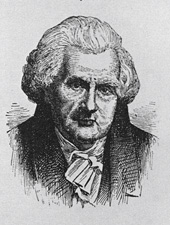
Since this is the anniversary of the 1774 “Powder Alarm” in Cambridge, I’m quoting from a letter that discusses that event and the surrounding political environment.

Stephen Mix Mitchell (1743–1835, shown here) was a lawyer in Wethersfield, Connecticut, having spent the 1760s as a student and then tutor at Yale College.

On 19 Sept 1774, Mitchell wrote to the merchant Peter Verstille in Boston. He first discussed his recent trip to the Rev. Eleazar Wheelock’s school, the challenges of collecting debts that season, and land that Gov. Francis Bernard might have been granted in Vermont.

Then Mitchell turned to the political turmoil in New England, addressing Verstille as representative of Boston and Massachusetts (which he wasn’t, but that’s another story):
We in the Country are more engaged for your Liberties (as I am told) than you are yourselves, you cannot conceive the Ardor of our people when the late Alarm happend. They flew to their Arms as readily as if they had been told their Wives & Children were captivated & carried of by a foreign foe,

I am fully convinced that the Country will never swallow these Acts of Parliament untill four fifths of the people are slain, the general say is “Tis a Country for which our fathers fought, bled & died with Savages, a Country for which we are not beholden to Great Britain, whose Liberties we will not give up but with our Lives——[”]

The Unanimity is beyond all Expectation. I have had Opportunity to enquire particularly in four or five Towns round about us which contain each about 4000 [sic] Inhabitants & not a Man whom the warmest Sons of Liberty do even suspect would not sacrifice his Life rather than submit....if this matter should come to blows, God only knows what would be the Event of it,

the Day is come when the friends of government at home can not say tis a Rabble who oppose them for tis now the land holders the freemen of our Towns those who have something to lose who are now ye. Zealous Patriots of the Day, & they will send their Sons to defend their Liberties; those who in the late warr would give 50 & 60 Dollars to hire a man to go into ye warr to get their Sons excused, are now determind. to trust the Defence of their Liberties in the hands of none but of their own families…

they say they chuse to live on their wonted good Terms with Great Britain, they chuse peace they chuse dependance on their mother Country, but if they must have warr or submit to these Duties & Marks of Slavery they have no Hesitancy in chusing the former;

they look up their old Deeds of patents from the Govt. & Company of the Colony when they read your Bill for regulating the Government of the Massachusetts Day, & then argue with themselves thus, “tis by this Deed I tho’t I held my land, this Deed is founded on our own Charter & what prevents our Charter from being taken from us, as that of our Neighbours has been? Then what security have I that I can hold my land by?”

Upon this the old Gray heads draw their old rusty Swords & order them to be cleand. & say like the brave Earl of Warren in another Case, “by this my father held & won his Land & by this I & my Children will defend it”—

This is no fiction but the cool deliberate Determination of the people, people who are friends to order & good government, & they are determind. this Time not to trust solely to the Virtue of the Merchants respecting non Importation, they will suffer no Mercht. To bring Goods.
It took some effort to track down Mitchell’s allusion to the “brave Earl of Warren.” Tobias Smollett’s Complete History of England told the story of John de Warenne, 6th Earl of Surrey (1231–1304), this way:
the earl of Warenne, who being required by the judges to produce his charter, unsheathed an old rusty sword, as the instrument by which his ancestors had acquired their lands, and with which he resolved to preserve them to the last drop of his blood. This bold answer gave [King] Edward to understand, that his inquisition would be attended with very dangerous consequences…
In the mid-1780s Mitchell represented Connecticut in the Confederation Congress. He was later appointed to the U.S. Senate to serve out Roger Sherman’s term, but his main government service was as a judge on Connecticut’s supreme court.

Mitchell’s letter is now at the American Philosophical Society and has been scanned as part of its Revolutionary City website. I haven’t found it transcribed anywhere before.

Wednesday, August 05, 2026

“Transmitted to us, their Posterity, a fair and rich Inheritance”

The American Scholar just published Robert A. Gross’s essay “Gratitude Isn’t Everything,” considering the start of the American Revolution in contrast to Vice President J. D. Vance’s one-way demands for gratitude.

American Patriots felt obligations to their ancestors who established the colonies, and to their further ancestors who established the British constitution as they understood it. But to them those obligations called for resistance to Parliament’s new laws, not simple loyalty to the government.
In the Revolutionary movement it was a mark of militancy to appeal to the ancestors in protests against British policies. Such statements rehearsed the history of New England from the Puritans’ first settlements down to the latest generation.

Lexington elaborated on this narrative in January 1773. The saga opened as the Puritans fled the tyranny of Charles I and Archbishop Laud, made the hazardous Atlantic crossing, and carved out new homes in the American wilderness. “Our worthy ancestors … [endured] many Struggles with their Enemies in the Face of every Danger and at the expence of much Treasure and Blood,” the Lexington town meeting declared. They thereby “secured to themselves, & transmitted to us, their Posterity, a fair and rich Inheritance, not only of a pleasant fertile Land, but also of Invaluable Rights & Priviledges both as Men & Christians, as stated in the Royal Charter of this Province, and … [guaranteed] by the Faith of the British Crown & Kingdom.” So precious a legacy came as a sacred trust. It was the townspeople’s duty to protect and preserve this birthright of liberty and pass it on intact to the next generation. To do otherwise would betray their very character as a people.

The rhetoric of filial duty became ubiquitous in 1774–75 and with good reason. To punish the Bay Colony for the Tea Party and to curb what royal officials deemed a disorderly democracy, Britain effectively revoked the revered 1691 Massachusetts Charter. Under the Massachusetts Government Act (MAGA), the Crown took over the hiring and firing of all judicial officials and excluded the assembly from its previous role in choosing the provincial council, the upper chamber of the general court. Most important, the new law barred town meetings without the governor’s consent, except for an annual session to elect municipal officials.

MAGA was a direct attack on local autonomy and on popular influence in government. To the inhabitants, these arbitrary changes, imposed from above, amounted to disinheritance, and as worthy heirs of virtuous forefathers, they rose up in outrage.
One result of Parliament’s overreach, Gross argues, was to spur the Patriots into adopting a broader view of their cause, not linked to one nation’s history. The article quotes Dr. Joseph Warren’s praise for a “universal enquiry into the rights of mankind in general” as well as the rights of British subjects.

Eventually that produced the natural-rights argument of the Declaration of Independence, which could inspire many later movements, not bound to Britain or the limits of eighteenth-century society.

The current administration may invoke the Founding, but in disregarding the natural rights of anyone who’s not an American citizen, that administration is showing contempt for the philosophy the Founders came to champion.

Thursday, March 12, 2026

“Without the leave of the Governor”

Earlier this month the Journal of the American Revolution ran an article by Ray Raphael about colonial Massachusetts’s constitution and how the royal government tried to curtail it.

Here’s a taste:
Of the four punitive acts passed in response to the Boston Tea Party, closing the port of Boston receives most attention in textbooks today—but at the time, with 95 percent of the colony’s population living outside Boston, it was “An Act for the Better Regulating the Government of the Province of the Massachusetts Bay”—known today as the Massachusetts Government Act—that sparked the people’s fury and led them to cast off British rule.

Under the 1691 Charter, “freeholders” could call a town meeting whenever they saw fit—but no longer: “Whereas a great abuse has been made of the power of calling such meetings, and the inhabitants have, contrary to the design of their institution, been misled to treat upon matters of the most general concern, and to pass many dangerous and unwarrantable resolves,” the 1774 act declared, “no meeting shall be called by the Selectmen, or at the request of any number of freeholders of any township, district, or precinct, without the leave of the Governor, or, in his absence, of the Lieutenant Governor, in writing, expressing the special business of the said meeting.”

Likewise, on the provincial level, power was wrested from the people. No longer would the incoming “general court or assembly” choose the Governor’s Council:
Whereas the said method of electing such counsellors or assistants. . . hath been so far from contributing to the attainment of the good ends and purposes thereby intended, and to the promoting of the internal welfare, peace, and good government of the said province, or to the maintenance of the just subordination to, and conformity with, the laws of Great Britain, . . . the said method of annually electing the counsellors or assistants . . . should no longer be suffered to continue . . .

Be it therefore enacted . . . that the council, or court of assistants, shall be composed of such of the inhabitants or proprietors of lands within the same as shall be thereunto nominated and appointed by his Majesty.
All other officers would also be appointed by the governor, who could remove them at will…
The voters of Massachusetts didn’t like to see Gov. Thomas Gage implement the new law. Soon they were protesting against it—and shutting down the colonial government to do so.
The next courts were scheduled for Springfield, shiretown of Hampshire County, two weeks later, on August 30—but some 1,500 citizens made sure they did not sit. One eyewitness, Joseph Clarke of Northampton, gave a vivid account: “The people of each town being drawn into separate companies marched with staves & musick . . . The trumpets sounding, drums beating, fifes playing and Colours flying, struck the passions of the soul into a proper tone, and inspired martial courage into each.”

The judges and justices of the peace offered no resistance to “the body of the county,” as Clarke called the men who marched with their town’s militia companies. When a committee asked them “whether they meant to hold their commissions and exercise their authority according to the new act of parliament for altering the constitution of the province,” they all said they would not.
One corrective for the article: The Boston Port Bill went into effect on 1 June 1774. The Massachusetts Government Act may have been drafted to start at the same time, but the final language said it took effect on 1 August. And then the text didn’t arrive in Salem until a few days after that.

In other words, it took only about two weeks from the start of the law for people in western Massachusetts to organize major protests and shut down a branch of the royal government. That’s how much people wanted to maintain their constitution.

Tuesday, December 31, 2024

Battling Myths and Misinformation about 1775

As we reach the cusp of the Sestercentennial year of 2025, I’m highlighting some articles I’ve written for the Journal of the American Revolution discussing myths and mistaken beliefs about the events of 1775.

Some of these articles were published in the past year, some more than a decade ago.

Here are the tl;dr versions with links to the full-length originals.

American Patriots didn’t call the laws that Parliament passed in 1774 to reform Boston (and Massachusetts as a whole) the “Intolerable Acts.” That term arose decades later in U.S. history textbooks. George III’s blanket term for those laws was “Coercive Acts.” Full article.

Tarring and feathering was a painful and humiliating public punishment, but it wasn’t fatal. Full article.

Dr. Joseph Warren didn’t obtain inside information about the British army march to Concord in April 1775 from Margaret Gage, Gen. Thomas Gage’s wife. Instead, he consulted with a man we’ve never heard of: a knife-maker named William Jasper. Full article.

Israel Bissell didn’t carry news of the fighting at Lexington south, and no single courier rode went all the way to Philadelphia. The first rider was named Isaac Bissell, and he carried the news to Hartford, Connecticut. Full article.

There’s solid evidence that Col. Israel Putnam (not Col. William Prescott) issued the order “Don’t fire till you see the whites of their eyes” at the Battle of Bunker Hill in June 1775. That phrase didn’t come from the Prussian army but from the Royal Navy. Full article.

Maj. John Pitcairn wasn’t fatally shot as he topped the wall of the provincial redoubt at Bunker Hill. Of the many men credited with that fatal shot, the best evidence points to Salem Poor, but he probably shot a different British officer. Full article.

Gen. George Washington didn’t respond to news of a gunpowder shortage in August 1775 by creating a false rumor of an adequate supply and feeding it to the British inside Boston. That was a novelistic touch created by a biographer misreading his sources. Full article.

Finally, my article for Age of Revolutions on how the “Join Or Die” snake evolved into the “Don’t Tread on Me” snake remains one of that site’s most read. While this essay doesn’t refute a clearly mistaken belief, I argue that those were two different species of American snakes: the glass snake and the rattlesnake.

If more people avoid repeating those myths and errors in the coming year, then my work will have benefited the world. And we can all move on to repeating new myths and errors.

Thursday, October 03, 2024

“My intention not to meet the said general court”

On 17 June 1774, as I recounted back here, Gen. Thomas Gage dissolved the Massachusetts General Court.

Gage acted under his authority as the royal governor. The Massachusetts charter of 1691 let him decide when the legislature would meet besides “upon every last Wednesday in the month of May,” which it had already done.

On 1 September, Gov. Gage sent out messages to the towns to elect representatives to a new General Court, to convene in Salem on 5 October.

By that time, the Massachusetts Government Act had arrived, and the governor had started to swear in his new appointed Council.

However, resistance to that law was also heating up. Western counties were closing their courts. Towns were demanding that Council members resign or driving them away. Even Salem defied the governor by holding a town meeting and choosing delegates to an Essex County convention despite troops camped nearby.

Gage apparently felt that reconvening the legislature would mollify enough of the population while that morning’s operation to remove gunpowder from the Charlestown storehouse would limit the potential for insurrection by the rest.

Instead, his soldiers’ action prompted the “Powder Alarm” mobilization. The general finally realized the opposition was widespread, not just a layer of troublemakers in the ports. Within a couple of days he was fortifying Boston against the countryside.

It therefore couldn’t have surprised anyone in the colony that on 28 September Gen. Gage issued this proclamation:
Whereas, on the first day of September instant, I thought fit to issue writs for calling a great and general court, or assembly, to be convened and held at Salem, in the county of Essex, on the fifth day of October next; and whereas, from the many tumults and disorders which have since taken place, the extraordinary resolves which have been passed in many of the counties, the instructions given by the town of Boston, and some other towns, to their representatives, and the present disordered and unhappy state of the province, it appears to me highly inexpedient that a great and general court should be convened at the time aforesaid; but that a session at some more distant day will best tend to promote his majesty’s service and the good of the province; I have, therefore, thought fit to declare my intention not to meet the said general court, at Salem, on the said fifth day of October next.

And I do hereby excuse and discharge all such persons as have been, or may be elected and deputed representatives to serve at the same, from giving their attendance: any thing in the aforesaid writs contained to the contrary notwithstanding: whereof all concerned are to take notice and govern themselves accordingly.
By then, however, lots of towns had already met to elect representatives. (Given the new law, it made sense to grab every excuse for a town meeting, after all.)

Furthermore, many of those towns also authorized men to represent them at a provincial congress. Some chose different delegates for the official legislature and this unofficial body. Others, foreseeing Gage’s about-face, told their General Court representatives to attend such a congress if necessary.

On 5 October, ninety men gathered in Salem. This was a small number compared to the usual legislative opening session. But then no one expected there to be a real legislative session.

Instead, the men waited out that Wednesday. By the end of the day, neither Gov. Gage nor an official representative, such as Lt. Gov. Thomas Oliver, had appeared. So they felt free to act on their own.

TOMORROW: Thursday and Friday.

Saturday, September 28, 2024

The Triumph of the Barnstable Crowd

As recounted yesterday, on 27 Sept 1774 a reported 1,500 people surrounded the courthouse in Barnstable, refusing to let the county court session begin.

The local justices kept assuring the crowd that they, too, were concerned about the Massachusetts Government Act and other Coercive Acts, but they felt they should sit to hear local cases.

The committee chosen by the crowd, led by Dr. Nathaniel Freeman, told the justices that wasn’t satisfactory. That day apparently ended in a stalemate with the courthouse still closed.

The committee drafted a promise for each justice to sign, promising not to act under the new laws, even if that meant losing their governmental appointment. Then the crowd decided that sheriffs, deputies, and anyone else holding a royal commission do the same.

Feeling even more expansive, the crowd went on to demand that a local who had threatened (jokingly, he said) to cut down Barnstable’s Liberty Pole promise never to do that. That man made himself scarce.

Finally, the crowd voted to ask James Otis, Sr., a longtime member of the Massachusetts Council under the previous constitution, to go to Salem in case Gov. Thomas Gage went through with his initial plan to convene the Massachusetts General Court there.

On 28 September, 250 years ago today, several justices and other royal appointees signed the crowd’s promises. Otis promised to go to Salem. The crowd marched back to the courthouse, drums sounding. There they resolved to provide arms for their defense, not to buy any imported goods, and “endeavor to suppress mobs and riots” (as well as “common peddlers”).

In 1830, Barnstable County built a new, larger courthouse. The 1763 building was eventually sold to a Baptist church that expanded and remodeled it, as shown above. Then in 1972 it became the headquarters of Tales of Cape Cod. But somewhere within that building is the courthouse at the center of a political protest in 1774. 

Friday, September 27, 2024

Around Barnstable County’s Courthouse

In 1763 Barnstable County commissioned a new courthouse. The sketch here shows one man’s memory of how it looked in the early 1800s.

The building wasn’t large. There was no separate jury room, for instance; juries deliberated in a nearby tavern.

The court records were stored in another building nearby, which burned down in 1827, leaving us records of only a handful of cases from colonial Barnstable County.

On 27 Sept 1774, 250 years ago today, there was supposed to be a court session in this building. 

However, back in August the men of Berkshire County had created a new meme for Massachusetts’s Patriot resistance: closing the courts as a protest against the Massachusetts Government Act. That law changed the constitution of the colony and the way juries were chosen.

Over the following weeks crowds shut down court sessions in one Massachusetts county after another, either by entering the building and refusing to let any judges enter, or by surrounding the building so no one dared to try.

On 26 September, men from the counties of Barnstable, Plymouth, and Bristol gathered in Rochester to plan the closing of the Barnstable Courthouse. 

On the morning of 27 September about 1,500 people assembled around that small building. They chose a committee to speak for them with Dr. Nathaniel Freeman of Sandwich as the leader.

Deputy sheriff Job Howland moved to ring the bell atop the building to signal the start of the court session. The crowd told him to stop.

Justices arrived to work. The crowd asked them to wait outside while they finished writing an address about the unconstitutionality of Parliament’s latest laws. After that document was read, some of the justices insisted that their own, older commissions were valid and that canceling the session would cause hardships.

Both sides spoke of adhering to whatever the upcoming Provincial Congress or the Continental Congress meeting in Philadelphia advised. But that didn’t resolve the question of what to do that day, 27 September.

TOMORROW: Signatures and James Otis. 

Monday, September 16, 2024

Reading the Middlesex Resolves

On 30–31 Aug 1774 delegates from “every town and district in the county of Middlesex” met at Concord to discuss the political situation in Massachusetts.

The body chose a committee headed by Jonathan Williams Austin of Chelmsford to draft its response to Parliament’s recent Coercive Acts. Austin was a young lawyer, raised in Boston, educated at Harvard, and trained by John Adams.

At the end of that convention, the body voted 146 to 4 to adopt the Austin committee’s report offering nineteen resolutions. Here’s the preface, as printed in a broadside:
IT is evident to every attentive Mind, that this Province is in a very dangerous and alarming Situation. We are obliged to say, however painful it may be to us, that the Question now is, Whether by a Submission to some late Acts of the Parliament of Great Britain, we are contented to be the most abject Slaves, and entail that Slavery on Posterity after us, or by a manly, joint and virtuous Opposition assert & support our Freedom.

There is a Mode of Conduct, which in our very critical Circumstances we wou’d wish to adopt, a Conduct, on the one Hand, never tamely submissive to Tyranny and Oppression, on the other, never degenerating into Rage, Passion and Confusion. This is a Spirit, which, we revere as we find it exhibited in former Ages, and will command Applause to latest Posterity.

The late Acts of Parliament pervade the whole System of Jurisprudence, by which Means, we think, the Fountains of Justice are fatally corrupted. Our Defence must therefore be immediate in Proportion to the Suddenness of the Attack, and vigorous in Proportion to the Danger.

We must NOW exert ourselves, or all those Efforts, which for ten Years past, have brightened the Annals of this Country, will be totally frustrated. LIFE & DEATH, or what is more, FREEDOM & SLAVERY are in a peculiar Sense now before us, and the Choice and Success, under God, depend greatly upon ourselves. We are therefore bound, as struggling not only for ourselves, but future Generations, to express our Sentiments in the following Resolves; Sentiments, which we think, are founded in Truth and Justice, and therefore Sentiments we are determined to abide by.
The Middlesex County resolutions complained about three acts of Parliament: the Boston Port Bill, the Massachusetts Government Act (in detail), and the Administration of Justice Act. This convention said nothing about the revised Quartering Act or the Quebec Act, often grouped with those others.

Resolution 17 called out Samuel Danforth and Joseph Lee by name as “judges of the Inferior Court of Common Pleas for this county, [who] have accepted commissions under the new act by being sworn members of his Majesty’s Council.” It’s no surprise, therefore, that those two men were the first targets of the “Powder Alarm” two days after the convention ended. They indeed had enough warning to write out their resignations from the Council.

TOMORROW: A question of style.

Sunday, September 08, 2024

Raphael on “The Massachusetts Revolution of 1774,” 10 Sept.

On Tuesday, 10 September, the Paul Revere House will host an online talk by Ray Raphael on “The Massachusetts Revolution of 1774.”

Ray is based in California and doesn’t come to Massachusetts as often as he once did [I’ve asked him twice this year!], so this is the best opportunity to hear him speak about the momentous events 250 years ago this month.

The event description says:
In response to the Boston Tea Party, Parliament not only shut down the port of Boston but also revoked the Massachusetts Charter of 1691, which guaranteed the people considerable say in their government. Their sacred rights withdrawn, the people rose up as a body and rebelled. They forced all crown-appointed officers to resign. Everywhere except Boston, where British troops were stationed, they shut down county courts, which administered British authority, executive as well as judicial, on the local level. To fill the vacuum, they formed a Provincial Congress that levied taxes, gathered arms, and raised an army.

When British soldiers marched on Lexington and Concord the following spring, they were trying to take back a province they had just lost. That’s when other colonies joined in, broadening the Massachusetts Revolution of 1774 into the American Revolution of 1775.
Ray wrote about these events in The First American Revolution: Before Lexington and Concord and with his wife Marie in The Spirit of ’74: How the American Revolution Began. He’s written many other books on the Revolutionary period, including A People’s History of the American Revolution, Founding Myths, and Founders.

The Paul Revere House says its lectures this season will focus on the silversmith’s lesser-known express assignments. Speakers will share the importance of Revere’s courier work not only as an individual act of patriotism but also as part of communications systems.

Ray Raphael’s lecture will be livestreamed by the GBH forum network here on YouTube. Though not every webpage agrees, this event will start at 6:30 P.M. Anyone can log on.

Thursday, August 01, 2024

“The Majority were four to One against them”

On 28 June 1774, the Boston town meeting witnessed “long Debates” about the committee of correspondence’s call for a non-consumption agreement, according to town clerk William Cooper’s record.

In his diary the merchant John Rowe confirmed, “The Debates very warm on both sides.” Unlike the previous day, alas, he didn’t record any of the speakers.

But the group urging a repudiation of the committee consisted mainly of major merchants, some with positions within the royal government. They worried that this boycott, on top of the Boston Port Bill, would doom the town’s economy.

The leaders of the Whigs, in reply, argued that standing up to Parliament’s Coercive Acts by not buying any more from Britain was their best way to force the repeal of those laws.

Eventually the meeting held a vote on the merchants’ motion to censure. Cooper recorded that “a great Majority” voted against repudiating the committee.

Rowe expressed disappointment, at least in his diary:
the Committee are wrong in the matter. The Merchants have taken up against them, they have in my Opinion exceeded their Power & the Motion was Put that they should be dismissed. the Gentlemen that made & supported this Motion could not Obtain their Vote, the Majority were four to One against them.

this affair will cause much evil one against the other. I wish for Peace in this Town I fear the Consequences.
The Whigs then sought to affirm the town’s support for the committee by offering their own motion:
That the Town bear open Testimony that they are abundantly satisfied of the upright Intentions, and much approve the honest Zeal of the Comittee of Correspondence & desire that they would persevere with their usual Activity & Firmness, continuing stedfast in the Way of well Doing
A “Vast” majority approved that.

After that, Samuel Adams returned to the chair, the committee on employing the poor said they were once again not ready to report, and the meeting adjourned until July.

That was the last attempt of the Boston Loyalists and/or merchants to curb the Whigs electorally, and they fell far short. Which wasn’t a surprise. The Whigs won every vote along the way, even on matters like which men would go ask if the gathering could move to the Old South Meeting-House.

The Boston town meeting would remain stalwart and implacably opposed to the royal administration until the war began.

COMING UP: Protests against the protest.

Friday, June 14, 2024

McConville on the Quebec Act at 250, 27 June

Years back, I decided to look into the burning question of whether the Quebec Act of 1774 was one of what American Patriots called the “Intolerable Acts.”

That law wasn’t, after all, directed at Massachusetts, even if the Suffolk Resolves treated the acceptance of Roman Catholicism in a population hundreds of miles away as a serious affront and threat.

The result was discovering that the American Patriots of 1774 didn’t call anything the “Intolerable Acts.” As I wrote in this article, that label surfaced in U.S. history textbooks in the late nineteenth century and was then retroactively embedded in the past.

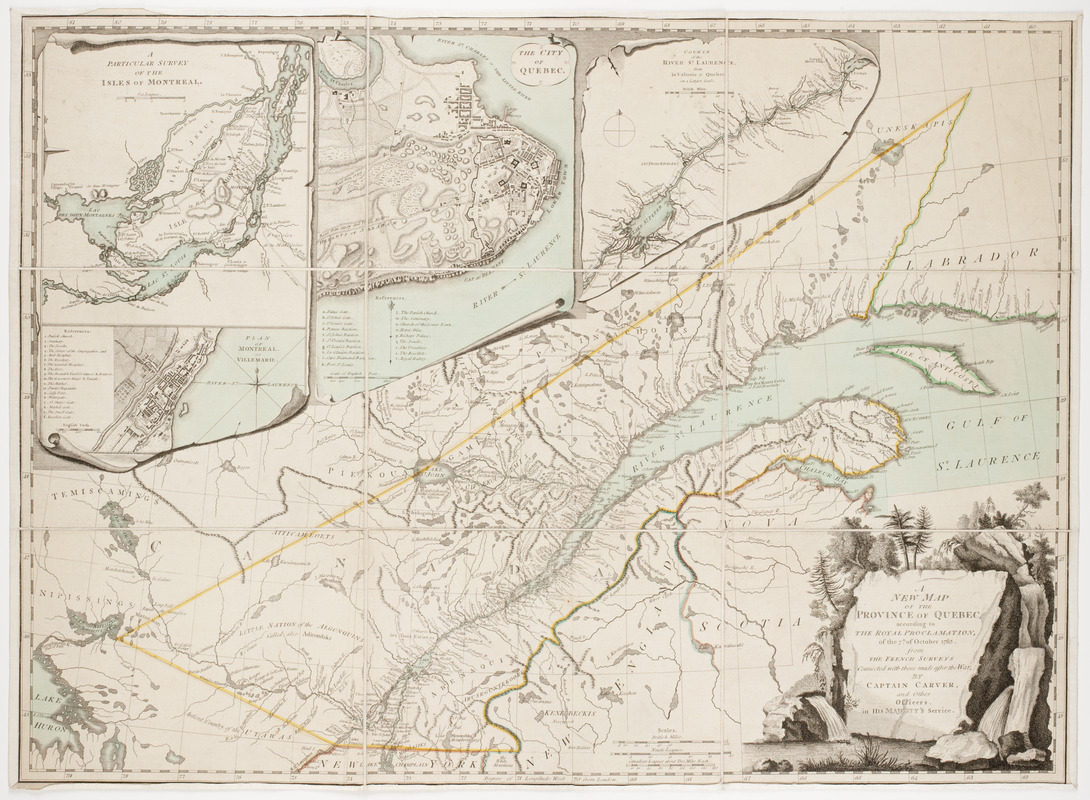
Nonetheless, the Quebec Act was one of the significant pieces of legislation to come out of Lord North’s government. Years in the making, that law incorporated a large formerly French territory into the British Empire. His Majesty’s government accepted the civil code and religion established under the former regime. The law even expanded the province to include the lands between the Ohio and Mississippi Rivers.

On 27 June, the Congregational Library and Archives will host “The Quebec Act at 250,” an online discussion with Prof. Brendan McConville exploring the significance of how the francophone province was folded into the British North American colonies—and why it made Congregationalists so profoundly uncomfortable.

McConville is Professor of History at Boston University and Director of the David Center for the American Revolution at the American Philosophical Society. He’s the author of These Daring Disturbers of the Public Peace, The King’s Three Faces: The Rise and Fall of Royal America, 1688-1776, and The Brethren: A Story of Faith and Conspiracy in Revolutionary America. He’s always offering provocative ways to look at the American Revolution.

This online event is scheduled to start at 1:00 P.M. It is free. To register and receive the link for that session, go to this page.

Monday, May 20, 2024

“Better Regulating the Government of the Province of the Massachuset’s Bay”

On 20 May 1774, 250 years ago today, Parliament passed “An Act for the Better Regulating the Government of the Province of the Massachuset’s Bay, in New England,” or the Massachusetts Government Act.

In the same days that the American colonies were absorbing the ramifications of the Boston Port Bill, this final, even more far-reaching Coercive Act was put into place.

The closing of Boston’s port to intercolonial trade was intended as a temporary measure to force the town to repay the cost of the destroyed tea. The Massachusetts Government Act, in contrast, spelled out permanent changes to the provincial charter.

At The Pursuit of History’s recent “Rebellion in New England” weekend, several speakers described in different ways how people reacted to the new law. My presentation pointed out small inland towns had previously offered Boston merchants mostly tepid support on the import tarriffs, but now Parliament had given those farmers something to be really angry about.

After news of the act arrived, previously moderate Whigs like John Hancock started to act like radicals. Outside Boston, crowds massed in their militia companies, then started to strengthen the militia. People in other colonies wondered if their charters were in jeopardy of similarly unilateral amendments.

The Massachusetts Government Act made three big changes, recommended by Sir Francis Bernard and other former officials who had worked in the colony.

First, the Council, which was the upper house of the Massachusetts General Court, changed from an elected body to an appointed one (as most other North American colonies already had). The Council also lost some power to stymie the royal governor’s appointments. That would be the equivalent of turning the U.S. Senate in the House of Lords and no longer requiring Senate approval of judges.

Second, henceforth towns would need the governor’s advance approval before convening a second town meeting in any year. In practice, towns began to extend their meetings by adjournment, thus never needing to call a legally new one. Still, this was a clear strike at the local self-government that communities (well, white men of property) had come to expect.

The third area of government changed by the new law was the court system. In particular, jurors for the grand and petit juries would no longer be elected but summoned by the royally appointed sheriffs. I hadn’t realized until I looked at the text of the law that those judicial-branch provisions account for most of its words, spelling out procedural changes in legalese.

Almost immediately, the people responded to the Massachusetts Government Act with mass actions. In towns where the appointed Councilors lived, crowds gathered to pressure them to decline the seats or resign. Some did. Others stayed on the Council but moved into Boston for their safety.

Crowds also shut down the county court sessions, starting in the west at Great Barrington in Berkshire County. We can see those actions as directed against the changes to the legal system. But also the judicial branch was virtually the only part of the provincial government that operated in the inland towns. And in the eyes of most men in the province, the Massachusetts Government Act had rendered the royal government illegitimate. 

Thursday, March 28, 2024

“The Gathering Storm” in Acton, 2 Apr.

On the evening of Tuesday, 2 April, I’ll speak in Acton at the invitation of the Acton 250 Committee.

We’re calling this talk “The Gathering Storm,” and here’s the description:
As 1774 began, Massachusetts politicians worried about the royal government response to the Boston Tea Party. The force of that reaction became clear in the return of troops to Boston, the Coercive Acts, and the Massachusetts Government Act. In late summer the province’s people rebelled by shutting down government functions in rural counties, seizing weapons in ports, and electing their own legislature.

The engine of that resistance was a little-understood institution: the colonial militia. By fall, it was clear that the new royal governor had no leverage outside Boston. This talk traces the end of British power in most of Massachusetts even before the war began.
I’ll draw on the stories in The Road to Concord and elsewhere, discussing how rural Massachusetts shifted in 1774 from lukewarm support for Boston’s fight against tariffs to militant opposition to the Crown.

This will be part of a series of talks by different authors tracing the events that led to war in 1775. Eventually the people of Acton were so committed to the Patriot cause that their militia company marched at the front of the Middlesex County column confronting the British regulars at the North Bridge in Concord.

This talk will take place in Room 204 of the Acton Town Hall on Main Street starting at 7:00 P.M. It is free, but the Acton 250 Committee asks people to register so that they can be contacted about future events. The talk will also be shown live on Acton TV and Zoom.

Wednesday, March 20, 2024

“Rebellion in New England” Now Open for Registration


I’m working with the Pursuit of History to produce a weekend filled with historical exploration of the “Rebellion in New England” 250 years ago this year.

As the year 1774 began, people in Massachusetts were worrying about how the royal government in London would react to the Boston Tea Party. Twelve months later, Massachusetts had a new governor and a revised charter, but most of the province was in open rebellion, preparing for war.

I explain more about our weekend exploring that history in the video above. The handsome Georgian building behind me is the Longfellow House–Washington’s Headquarters National Historic Site in Cambridge, our main host for this weekend.

“Rebellion in New England” will offer two full days of presentations, archive visits, and walking tours. On Friday and Saturday, 10–11 May, there will also be lunches with the speakers, plus a dinner for all attendees on Friday evening. On Sunday, we’ll have an optional extra session: a docent-led tour of the Museum of Fine Arts’s Early American galleries, including John Singleton Copley portraits of some of the people we’ll talk about.

I’ll lead the walking tours and speak about the “arms race” of late 1774. I’ve been recruiting other authors and scholars: Robert J. Allison on the royal government’s policy toward Massachusetts, Samuel Forman on the Patriots’ resistance organizing, Chris Beneke on how Massachusetts’s religious tradition affected its delegates’ reception at the First Continental Congress, Brooke Barbier on the rise of John Hancock. In the coming weeks I’ll announce the complete lineup (though I may preserve some surprises).

The Pursuit of History is the non-profit founded by Lee Wright which also organizes History Camp Boston. That event brings together hundreds of people to share presentations on a range of historical topics. This weekend is designed differently: only thirty seats, a focused subject, speakers recruited for their expertise, and visits to actual sites so we explore history where it happened. Go to this page for more detail and to register.

If “Rebellion in New England” is as much fun as we want, we’ll organize similar weekends in 2025 on the outbreak of the Revolutionary War and in 2026 on the departure of the British and the coming of independence.

Thursday, January 11, 2024

Who wrote, “we can make every Tory tremble”?

Earlier this year, I saw a tweet crediting Samuel Adams with the line: “With ladies on our side, we can make every Tory tremble.”

Adams wasn’t usually that pithy, and the statement doesn’t appear in the four volumes of The Writings of Samuel Adams.

The line first appeared in a letter to Daniel Fowle’s New-Hampshire Gazette published on 22 July 1774. Here’s more context:
The Consumption of TEA I think is in a fair Way of being totally laid aside in this Town, as there are but very few indeed, that will refuse to sign or solemnly ingage not to suffer it used in their Families;

and what adds a great Pleasure to us all, is, that the Fair Sex universally consent to give up, this detested superfluous Article; and under the Auspices of the worthy Doctor Clement Jackson, we hope soon to see a glorious List of Female Worthies, whose Virtue can withstand every daring Insult when put to the Test; and we all desire their Names may be recorded in the Town Books, to perpetuate their Memories:---

Then let us see who will sell that obnoxious Herb, for with the Ladies on our side, we can make every Tory tremble; as it is generally agreed upon, not to frequent those Shops were TEA is sold.
The signature, under a Latin quotation, was “AMICUS.”

A few weeks later, on 26 August, the New-Hampshire Gazette published another letter, addressed to the people of New Hampshire and signed “AMICUS PATRIAE.” It urged people in that colony to support Boston, suffering under Parliament’s Coercive Acts, with donations for the poor.

Both letters show a pattern of short italicized phrases and occasional all-capitalized nouns. Both end with Latin quotations. The signatures overlap. I therefore think it’s likely the two letters came from the same pen.

In his History of New-Hampshire (1792), the Rev. Jeremy Belknap printed a letter from New Hampshire governor John Winthrop to the Earl of Dartmouth dated 29 August, which said:
The town-clerk of Boston [William Cooper], who is said to be a zealous leader of the popular opposition, has been in this town about a week; immediately appears a publication in the New-Hampshire Gazette, recommending donations for Boston…
Belknap added a footnote to that sentence:
The publication here referred to was written by a person whom the Governor did not suspect, and the town-clerk knew nothing of it.
But Belknap obviously did know the author. In fact, his granddaughter Jane Belknap Marcou wrote in her 1847 biography that she had found “the imperfect manuscript [i.e., draft] remaining among Mr. Belknap’s papers.” In other words, he’d written it himself.

Back in 1774, Jeremy Belknap was the minister in Dover, New Hampshire. Ministers weren’t supposed to get directly involved in politics, but as “AMICUS PATRIAE” he had things to tell his fellow citizens. And Belknap also appears to have been the most likely author of the line “With ladies on our side, we can make every Tory tremble.” (I wonder if a draft of that essay might be in his papers at the Massachusetts Historical Society.)

The line resurfaced in John C. Miller’s Origins of the American Revolution (1943) as an example of American Whig sentiment before the war. Philip Foner picked it up in his History of the Labor Movement in the United States (1947), crediting the sentiment to “Sons of Liberty.” Charles O. F. Thompson included the line in A History of the Declaration of Independence: A Story of the American Patriots who Brought about the Birth of Our Nation (1947), curiously tossing in the word “blessed” ahead of “Tory.” Other books followed.

From there it appears that an author or authors decided that “Sons of Liberty” meant Samuel Adams. In the current century several books and authoritative websites attribute the statement to Adams, usually saying “often quoted” or “reported to have said” as a signal that the writers can’t find the words in those four volumes of Writings. In several places the quotation has also lost the article “the” before “Ladies.”

In conclusion, while it’s definitely possible to quote the line “with the Ladies on our side, we can make every Tory tremble” from the Revolutionary era, it should be tentatively attributed to Jeremy Belknap, not Samuel Adams.

Saturday, February 25, 2023

Exploring the Sid Lapidus Collection Online

Princeton University announced this month that alumnus Sidney Lapidus had completed the gift of a large collection of pamphlets and other political material from the broadly defined Revolutionary Era.

Lapidus started his collection in 1959 as a recent graduate, well before entering what turned out to be the rewarding field of private equity. He first bought a copy of Thomas Paine’s The Rights of Man from a London bookshop. (Paine’s cottage in New Rochelle, New York, was across the street from Lapidus’s high school.)

The Sid Lapidus ’59 Collection on Liberty and the American Revolution at Princeton now includes “more than 2,700 original books, atlases, pamphlets, newspapers, and magazines relating to human and political rights, liberty, and independence around the time of the American Revolution.”

In addition, Lapidus provided funds to digitize the material and make the collection keyword-searchable for anyone.

I tried out the site by asking to see all the material that used the phrase “Intolerable Acts.” That search produced several hits, but the phrase didn’t appear in the original texts, only in the dealers’ descriptions and other metadata attached to those items. As I wrote years ago, the phrase “Intolerable Acts” didn’t become widely used until the late 1800s.

One writer in Revolutionary America who used the word “intolerable” a lot was the Rev. Thomas Bradbury Chandler, author of A Free Examination of the Critical Commentary on Archbishop Secker’s Letter to Mr. Walpole, published by Hugh Gaine of New York in 1774. Chandler was a Loyalist, and what he found intolerable wasn’t a stricter Parliament but the “Hardship” of an ocean voyage, the “Licentiousness” of a totally free press, and the writer he was responding to.

I also searched for all material published in 1774 and mentioning Boston. That brought up the official texts of Parliament’s new Coercive Acts, the responses from the First Continental Congress, sermons and almanacs with commentary on current events, and so on.

One item that caught my eyes was A Letter to a Friend. Giving a Concise, But Just, Representation of the Hardships and Sufferings the Town of Boston is Exposed to and Must Undergo in Consequence of the Late Act of the British-Parliament; Which, by Shutting Up It’s Port, Has Put a Fatal Bar in the Way of that Commercial Business on which it Depended for It’s Support, published by Joseph Greenleaf.

That pamphlet from the summer of 1774 is signed “T.W. A Bostonian.” However, it was widely known that the author was the Rev. Dr. Charles Chauncy. Usually ministers stayed out of secular political disputes, preferring to work behind the scenes or through sermons, but Chauncy felt no compunction when the economic well-being of his town was in danger.

On page 22 of this pamphlet Chauncy embarked on a long footnote complaining about a Customs service policy that required firewood ships signing into Marblehead to completely unload and reload before going on to Boston. So he really was writing about earthly concerns.

Now the text of this Letter to a Friend is already scanned and transcribed on the web. So the arrival of this digital version from Princeton isn’t a revelation. But anything that makes research easier is welcome.

TOMORROW: Charles Chauncy’s friends.

Tuesday, June 14, 2022

“Too deeply impressed with the melancholy Situation”

A few days back I mentioned fireworks at New York’s celebration of King George III’s birthday in June 1774. I thought the report of that event in John Holt’s New-York Journal was interesting.

Saturday, June 4, of that year was when the king “entered the 27th Year of his Age.” The newspaper started with a discussion of the British military’s actions under Gen. Frederick Haldimand and Cdr. James Ayscough. (Gov. William Tryon was in Britain or else he would probably have led the celebration.)

The item continued:
In the Evening some very curious Fireworks were exhibited, and a small Number of Houses were illuminated; but the Generality of the Inhabitants (though perfectly well affected to his Majesty’s Person and Family, and prefering the English Constitution to every other Form of Government) were too deeply impressed with the melancholy Situation of all the British Colonies, to assume the least Appearance of public rejoicing, while it remains in Suspense whether we shall remain Freeman by maintaining our Rights, or submit to be Slaves.
Hugh Gaine’s New York Gazette and [James] Rivington’s New York Gazetteer didn’t include any of the words after “illuminated.”

In Philadelphia the diarist Christopher Marshall reported even less visible enthusiasm on what was ordinarily a patriotic holiday:
4th. This being the birth day of King George III., scarcely, if any, notice was taken of it in this city, by way of rejoicing: not one of our bells suffered to ring, and but very few colours were shown by the shipping in the harbour; no, nor not one bonfire kindled.
The problem was the Boston Port Bill and other Coercive Acts. Americans Whigs like Marshall were alarmed by how Parliament was clamping down after the Tea Party and wanted to make their fellow colonists equally alarmed that the same could happen to them.

At the same time, Whig printer Holt wanted to assure readers in America and Britain that the colonists were still loyal to the king and constitution. They just differed with the ministers in London about what that constitution demanded.

Saturday, December 04, 2021

The Aspect of the Declaration of Independence that Bothers Me

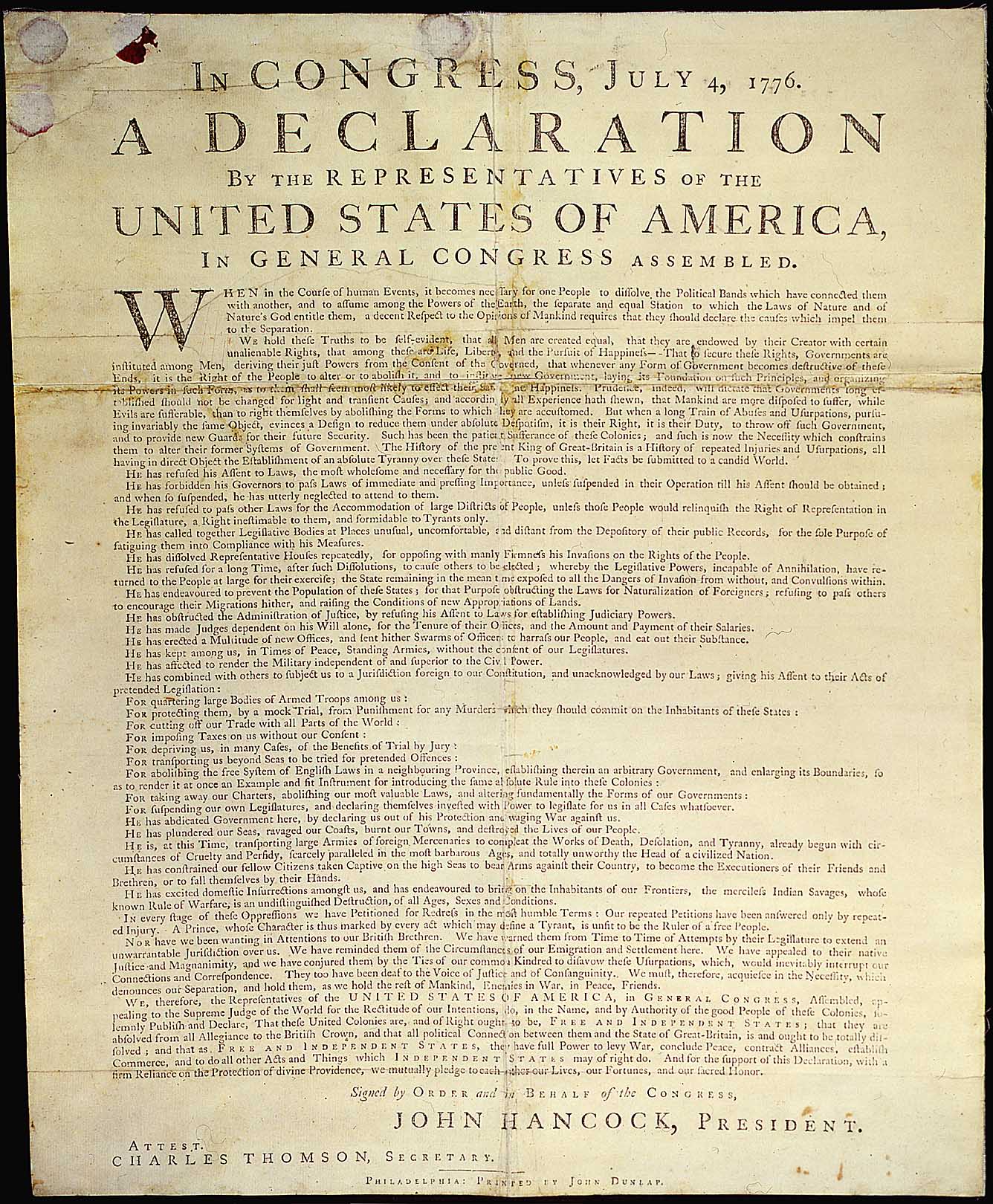
For decades, something about the grievances in the Declaration of Independence has bothered me: They’re not grammatically parallel.

I know this problem might not look as weighty as one-sided descriptions of policy, piling all the blame onto King George, the hypocrisy of complaining about wartime measures the Continental governments had also taken, or the hollowness of those “self-evident” truths in practice, but it really did bother me.

The Continental Congress listed twenty-seven grievances, starting with “He has refused his Assent to Laws, the most wholesome and necessary for the public good” and ending with “He has excited domestic insurrections amongst us, and has endeavoured to bring on the inhabitants of our frontiers, the merciless Indian Savages, whose known rule of warfare, is an undistinguished destruction of all ages, sexes and conditions.”

As you see, the grumbling moves from a vague disagreement about policy and governance to incendiary language about non-white warriors killing women and children.

Along the way, the grammatical structure of those grievances changes. The first thirteen are complete sentences beginning “He has…” Then come “For Quartering large bodies of armed troops among us” and eight more similarly constructed phrases that are not even complete sentences. The list resumes the “He has…” for the last five complaints.

The first printing of the Declaration by John Dunlap, the first newspaper printing, and the official government transcript all format those grievances with the same indentation and emphasis.

The famous handwritten copy likewise makes no clear distinction among the grievances. That’s because none of those clauses are set out in separate paragraphs, scribe Timothy Matlack formatting the whole thing in just two blocks of text.

So if all those complaints are supposed to be parallel, why aren’t they worded in the same way?

Last month in a series of Twitter postings starting here, Jack Rakove, emeritus William Robertson Coe Professor of History and American Studies and professor of political science at Stanford, wrote:
The real structure of the DoI, once past its Preamble, has three distinct parts: a summary of longstanding grievances of imperial governance; a denunciation of all the recent acts adopted in response to the Boston Tea Party and other acts of intercolonial resistance; and a concluding set (I would say the last 5 listed) relating to the forms of military repression and violence directed against the colonists, obviously including but hardly limited to the invitation to insurrection on the part of the enslaved and indigenous peoples.
In other words, the first batch of grievances covered the years 1760 to 1773, the next batch the Coercive Acts of 1774, and the last bunch the British government’s decisions since the start of the war.

I wondered if those three categories mapped onto the three grammatically distinct groups of complaints. In the end, I concluded they don’t match up exactly, but Rakove’s observation got me thinking about how those groupings pointed in somewhat different directions rather than running in parallel.

TOMORROW: Sorting out the lists.

Monday, November 08, 2021

Giving the Loyalists Their Due and Then Some

Yesterday’s Boston Globe included a review of one of at least three overviews of the American Revolution published this season: H. W. Brands’s Our First Civil War: Patriots and Loyalists in the American Revolution.

Brands holds a named chair in the History Department at the University of Texas at Austin. His dissertation and early books were about the Cold War, but he moved to earlier periods in U.S. history. Among his many books is The First American, a biography of Benjamin Franklin.

Reviewer David M. Shribman says Brands’s book “turns upside down the view of the struggle” that we usually see, mostly by treating the Loyalists as equally patriotic in their way.

In the last two decades there have been several scholarly books about Loyalists and how they saw the conflict. The observation that the Revolutionary War was in many ways a civil war, as many adherents of the Crown termed it at the time, has become common. In fact, the phrase “our first Civil War” appears in writing by Edward Everett Hale and Charles H. Levermore in the late nineteenth century, during the first period of sympathy for the Loyalists.

Brands might well give equal space or sympathy to the Loyalists, which would be unusual in an overview for general readers. In other respects, Our First Civil War appears to be rather traditional. It follows some of the biggest names of the Revolution, all upper-class white men: Franklin, George Washington, John Adams, Benedict Arnold, Thomas Hutchinson, Joseph Galloway, and William Franklin.

As for local issues, Shribman writes:
Brands characterizes both George Washington of Virginia and Benjamin Franklin of Pennsylvania as moderates in comparison with the radicals of Massachusetts. He describes Boston as “the hotbed of resistance to British authority.”

But by 1770, tensions in the Bay Colony reached the boiling point, with unruly mobs roaming through Boston, threatening those regarded as sympathetic to British officials. In March came the Boston Massacre, followed three years later by the Boston Tea Party. “Respect for order and the rule of law all but vanished in Boston,” Brands writes.

The mere fact the measure that the Lord North government titled the Coercive Acts was dubbed the Intolerable Acts in America speaks to the widening gap between colony and mother country.
In fact, that last sentence doesn’t express a fact at all. As I wrote in this 2013 article, I haven’t found the words “Intolerable Acts” in any Revolutionary writings, much less in many of them. The label surfaced first in U.S. history textbooks a century after the Revolution. I can’t tell if the phrase appears in Brands’s book, but I’ve seen it in two reviews so far.

As for the sentence about “Respect for order and the rule of law” quoted from the book, that was how Loyalists saw the situation in Boston. But as a historical judgment it’s missing how Bostonians saw themselves as enforcing local order against people who were violating the British constitution. The issue wasn’t “rule of law”; it was which level of government overruled the other. For importers and other friends of the royal government in 1770, the worry wasn’t “unruly mobs”; it was ruly ones.

Friday, September 24, 2021

The George Washington Book Prize Titles for 2021

Washington College, the Gilder Lehrman Institute of American History, and George Washington’s Mount Vernon have just awarded the 2021 George Washington Book Prize to Mary Beth Norton’s 1774: The Long Year of Revolution.

The prize’s announcement says:
Mary Beth Norton has identified and richly described a key year in the revolutionary transformation of American resistance to Britain. She notes how the courts, the newspapers, the militia, and the assemblies were radicalized against the British.

She significantly demonstrates that other colonies were more outspoken in their opposition to the tea duties, such as New York and Pennsylvania, than Massachusetts before the Boston Tea Party. She shows that Britain’s Coercive Acts galvanized opposition and contributed to its revolutionary transformation. Her book offers a particularly rich tapestry in recreating the inter-colonial communications and parallel developments between the colonies.

1774 was the first year in which Americans sympathetic to the British be described as Loyalists and Tories, and to be persecuted by the patriots, setting the stage for a civil war that was part of the Revolutionary War. She makes the case that it was the year in which the Revolution became inevitable.
The Road to Concord presents a similar argument on a smaller scale, with the Massachusetts Government Act and Gen. Thomas Gage’s gunpowder seizure on 1 Sept 1774 leading the New England populace to move toward military preparation and outright defiance of royal authority.

The George Washington Book Prize highlights books about “Washington and his times,” defined as about 1760 to 1820. This year the nominees are even more varied in their topics than usual.

Mark Boonshoft’s Aristocratic Education and the Making of the American Republic discusses the rise of academies between the American Revolution and the Civil War. They were a hybrid between a public and private system of education, receiving significant public funds but largely benefitting the wealthy.

Tacky’s Revolt: The Story of an Atlantic Slave War by Vincent Brown examines the largest slave revolt in British America, which took place on Jamaica in 1760. It was one of the major battles of the Seven Years’ War and remained a nightmare for slaveholders for decades, yet its significance was silenced over time.

Peter Cozzens’s Tecumseh and the Prophet: The Shawnee Brothers Who Defied a Nation discusses the “symbiotic relationship” between Tecumseh and his younger brother Tenskwatawa. In conceiving of what Cozzens describes as the “greatest pan-Indian confederation the westering American Republic would ever confront,” the two men became “among the most influential siblings in the annals of America.”

The Age of Phillis by Honorée Fanonne Jeffers is a work of poetry that also functions as a historical narrative based on years of archival research. While showing the issues that Phillis Wheatley Peters confronted, Jeffers prompts readers to think about the artists who may be in our midst in contemporary American society.

In The President Who Would Not Be King: Executive Power under the Constitution, Michael W. McConnell explores the creation of the presidency in the Constitutional Convention. It shows how many of the prerogative powers of the British monarch were transferred to the Congress instead of the President.

William G. Thomas III’s A Question of Freedom: The Families Who Challenged Slavery from the Nation’s Founding to the Civil War combines the author’s family history with archival research on the “freedom suits” in Maryland that put the institution of slavery itself on trial in U.S. courts.