J. L. BELL is a Massachusetts writer who specializes in (among other things) the start of the American Revolution in and around Boston. He is particularly interested in the experiences of children in 1765-75. He has published scholarly papers and popular articles for both children and adults. He was consultant for an episode of History Detectives, and contributed to a display at Minute Man National Historic Park.

Subscribe thru Follow.it


•••••••••••••••••


Showing posts with label Carter Braxton. Show all posts

Wednesday, July 01, 2026

“Some among us urge strongly for Independency”

In August 1822, Timothy Pickering invited John Adams to do something the retired President really liked doing: explaining how he was close to the center of the most important decisions of the American Revolution.

Just four days after Pickering sent his letter from Salem, Adams responded with a long account of how the Continental Congress came to declare independence 250 years ago.

He started with a vivid word picture of the Massachusetts delegation to the First Continental Congress being “met at Frankfort [Frankford] by Dr [Benjamin] Rush, Mr [Thomas] Mifflin, Mr [John] Bayard and several others of the most active Sons of Liberty, in Philadelphia.”

That meeting was on 29 Aug 1774, according to Adams’s diary. At that time he wrote:
A Number of Carriages and Gentlemen came out of Phyladelphia to meet us. Mr. Thomas Mifflin, Mr. [Thomas] McKean of the Lower Counties [Delaware], one of their Delegates, Mr. [Edward or John] Rutledge of Carolina, and a Number of Gentlemen from Philadelphia. Mr. [Nathaniel] Folsom and Mr. [John] Sullivan, the N. Hampshire Delegates. We were introduced to all these Gentlemen and most cordially wellcomed to Philadelphia.
We also have Dr. Rush’s recollection in his memoir:
I went as far as Frankford to meet the delegates from Massachusetts, and rode back into town in the same carriage with John Adams, and two of his colleagues. This gentleman’s dress and manners were at that time plain, and his conversation cold and reserved. He asked me many questions relative to the state of public opinion upon politicks, and the characters of the most active citizens on both sides of the controversy.
Rush evidently warned Adams and Robert Treat Paine “against two Gentlemen particularly,” one being the Rev. William Smith of the University of Pennsylvania and the other not. (Adams’s diary preserved only one name.)

In his letter almost fifty years later, Adams stated that the Philadelphia radicals had come out for that meeting to warn the Massachusetts men that people viewed them as “four desperate adventurers.” The locals advised the newcomers to:
  • let Virginians and other southerners take the lead on radical measures. 
  • “not utter the word Independence, nor give the least hint or insinuation of the idea, neither in Congress or any private conversation.” 
Yet Adams recorded no hint of that warning in 1774. And the presence of a South Carolina delegate in the party would surely have inhibited discussion of how to lead along the south.

Adams’s 1822 letter then skipped ahead to the spring of 1776 as if the same situation still prevailed. Of course, a lot had happened during those eighteen months. By 1776 the Second Continental Congress delegates were discussing independence openly, though they insisted they weren’t pushing for it—rather, the Crown was pushing them toward it.

On 9 Jan 1776, for example, Richard Smith of New Jersey wrote in his diary: “Several Members said that if a Foreign Force shall be sent here, they are willing to declare the Colonies in a State of Independent Sovereignity.”

Robert Morris told a colleague on 15 February:
America has long been charged by her Enemys in England with aiming at Independency. The charge was unjust, but we now plainly see, that the burning of Towns, seizing our Ships, with numerous acts of wanton barbarity & Cruelty perpetrated by the British Forces has prepared Men’s minds for an Independency, that were shock’d at the idea a few weeks ago. This you may depend on, and should this Campaign open with furious Acts of Parliament, you may bid adieu to the American Colonies. They will then assuredly declare for Independency…
Joseph Hewes of North Carolina wrote home on 20 March:
some among us urge strongly for Independency and eternal separation, others wish to wait a little longer and to have the opinion of their Constituents on that subject, you must give us the sentiment of your province when your Convention meets.
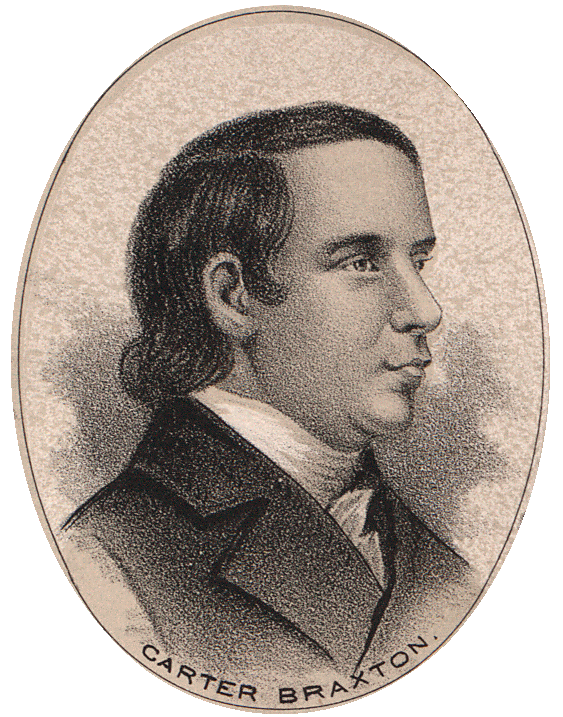
Carter Braxton of Virginia reported on 14 April:
Independency & total Seperation from Great Britain are the interesting Subjects of all ranks of Men & often agitate our Body.
Notably, Morris and Braxton both opposed independence that spring. But they weren’t averse to discussing it.

Nonetheless, the next part of Adams’s letter was an almost necessary part of his post-Presidency memories: everyone disliking him because of his far-sighted and courageous stances.
It soon became rumoured about the City that John Adams was for Independence; the Quakers & Proprietary Gentlemen, took the alarm; represented me as the worst of men, the true-blue Sons of Liberty pitied me; all put me under a kind of Coventry. I was avoided like a man infected with the Leprosy. I walked the streets of Philadelphia in solitude, born down by the weight of care and unpopularity. But every ship for the ensuing year, brought us fresh proof of the truth of my prophesies and one after another became convinced of the necessity of Independence. I did not sink under my discouragements; I had before experienced enough of the Wantonness of popularity in the trial of Preston and the Soldiers, in Boston.
I’ve previously noted how there’s actually no contemporaneous evidence of Bostonians shunning Adams in the early 1770s because he represented Capt. Thomas Preston and the soldiers after the Massacre

Likewise, documents from 1775 and early 1776 show that Adams’s fellow Congress delegates continued to put him on many committees and to dine with him. No doubt it was awkward when the royal authorities intercepted and published letters in which he criticized colleagues like John Dickinson, but really Adams brought that on himself.

TOMORROW: Drafting the Declaration at last.

Tuesday, August 19, 2025

“Hang Together” on the Restoration Stage

Yesterday I alluded to a Professor Buzzkill podcast as my spur to look for the statement “We must hang together or separately” in a letter by the Virginia politician Carter Braxton.

That same episode from 2022 stated that the “hang together” wordplay can be traced further back to “John Dryden’s 1717 book, The Spanish Fryar, where it is referred to as a ‘Flemish proverb.’”

Dryden (1631–1700) produced his play The Spanish Fryar, or The Double Discovery in 1681, and it was reprinted often after that. In Act IV, Scene 1, one character says, “I’ll not hang alone, Fryar,” and Friar Dominick eventually replies, “in the Common Cause we are all of a Piece; we hang together.”

Dryden wasn’t the only playwright to play on the phrase “hang together” in 1681, however. Aphra Benn (1640–1689, shown here) wrote this exchange in The Round-Heads; Or, The Good Old Cause (Act III, Scene 1):
Fleet. My Lords and Gentlemen, we are here met together in the Name of the Lard———

Duc. Yea, and I hope we shall hang together as one Man—a Pox upon your Preaching. [Aside.
Unsurprisingly, Dr. Samuel Johnson chose Dryden over Benn to demonstrate the use of “hang together” in his dictionary.

As for Professor Buzzkill’s remark about a “Flemish proverb,” I can’t find any mention of that phrase in three early editions of Dryden’s Spanish Fryar. Perhaps that was an annotation by the editor of a later edition based on the 1717 text. Or perhaps separate references to a “hang together” saying got muddled together.

It would be striking if the “hang together” witticism came from another language because double meanings of that sort are often hard to translate. Indeed, the Rev. E. O. Haven’s 1869 textbook on Rhetoric uses Edouard Laboulaye’s unsuccessful attempt to render the saying (credited to Benjamin Franklin) in French as evidence for his warning “Puns usually Untranslatable.”

Be that as it may, the idea that a “Flemish proverb” was the seed of this American quotation has taken hold and now appears several places—all apparently after 2022. I welcome any earlier reference.

TOMMOROW: A post-Revolutionary reference.

Monday, August 18, 2025

“It is a true saying of a Wit”

In 2014 and again in 2016, I noted that the Pennsylvania lieutenant governor Richard Penn was the first Revolutionary figure credited with this remark:
An evidence of this was the pleasantry ascribed to him, on occasion of a member of Congress, one day observing to his compatriots, that at all events “they must hang together:”

“If you do not, gentlemen,” said Mr. Penn, “I can tell you that you will be very apt to hang separately.”
More recently, the Professor Buzzkill podcast called my attention to a letter the Virginia delegate Carter Braxton wrote on 14 Apr 1776:
Upon reviewing the secret movements of Men and things I am convinced the Assertion of Independence is far off. If it was to be now asserted, the Continent would be torn in pieces by Intestine Wars and Convulsions. Previous to Independence all disputes must be healed and Harmony prevail. A grand Continental league must be formed and a superintending Power also. When these necessary Steps are taken and I see a Coalition formed sufficient to withstand the Power of Britain, or any other, then am I for an independent State and all its Consequences, as then I think they will produce Happiness to America. It is a true saying of a Wit—We must hang together or separately.
Less than three months later, Braxton voted for independence.

Did Braxton have a particular “Wit” in mind? Alas, he didn’t say.

TOMORROW: Flemish roots?

Friday, October 25, 2019

“Count Brown” of King William County, Virginia

In 1767, William Burnet Brown moved out of Massachusetts.

He sold his father’s country house on Folly Hill, “Browne Hall,” to his cousin William Browne, by then one of Salem’s representatives on the Massachusetts General Court. [That meant this property went from William Browne to his son William Burnet Brown to his cousin William Browne, causing immense headaches for future chroniclers.]

It looks like Brown sold his mansion in Salem to his aunt Elizabeth, mother of William Browne, who had remarried Epes Sargent and then been widowed again. She eventually sold that property to her son Paul Dudley Sargent, later a colonel in the Continental Army.

William Burnet Brown, his wife Judith, and their infant children moved to her home colony of Virginia. He bought the King William County estate called Elsing Green from Carter Braxton, a politician who would become one of the signers of the Declaration of Independence. Braxton might have needed cash in 1767 because he was caught up in treasurer John Robinson’s embezzlement of colonial funds.

The mansion house of Elsing Green is shown above. It was built beside the Pamunkey River in the late 1710s. Around it were dependencies, one of those buildings dating to the 1690s; gardens; and fields of tobacco. The estate rested, of course, on the backs of the black workers enslaved there. In the early 1780s the state tax assessors counted seventy-five people working a thousand acres.

Soon Brown brought his sister Mary, his only surviving sibling, to live at Elsing Green. Their voyage in late 1767 was delayed by a storm that blew their ship aground near Stonington, Connecticut. The 24 Dec 1767 Boston News-Letter reported that all the passengers and “the Baggage and Horses of Mr. Brown” were safe.

Living in colonial Virginia was quite different from living in colonial Massachusetts, but the shift was probably not so drastic for William Burnet Brown as it would have been for others. He was an Anglican, not a Congregationalist, so the church worship was the same. He had grown up immensely rich and being served by enslaved black domestic servants. He now had to run a large agricultural plantation, but his wife and her Carter relatives no doubt helped him adjust to the Virginia way of doing things. He became a justice of the peace, and eventually his neighbors called him “Count Brown” for his wealth.

Brown still owned real estate up north. An attorney advertised in the 27 Jan 1769 Connecticut Journal of New Haven about a large amount of property for sale in that colony.

Brown was probably visiting Boston on business of that sort in September 1769 when he happened to witness the fight between James Otis, Jr., and John Robinson (no relation to the late Virginia treasurer). Why he got involved, swinging his cane and striking John Gridley, is unclear. But it caused some legal difficulties in the following weeks, as I’ll soon discuss.

Brown returned to Virginia, and I’ve seen no evidence that he ever visited Massachusetts again. He was never politically active. The only time his name appeared in the newspapers during the Revolutionary War was in 1779 when he advertised “a fine black horse” called Othello for either stud (“will cover mares for 20 dollars the leap”) or sale (for three payments spread out over up to ten years).

William Burnet Brown died in the spring of 1784, aged only forty-five. He was buried at Elsing Green. His daughter Judith married Robert Lewis, a nephew of George Washington. Without surviving sons, Brown willed the plantation to a grandson on condition that the child take his name. The name of William Burnet(t) Brown(e) has therefore been passed on to this day.