J. L. BELL is a Massachusetts writer who specializes in (among other things) the start of the American Revolution in and around Boston. He is particularly interested in the experiences of children in 1765-75. He has published scholarly papers and popular articles for both children and adults. He was consultant for an episode of History Detectives, and contributed to a display at Minute Man National Historic Park.

Subscribe thru Follow.it


•••••••••••••••••


Showing posts with label Benjamin Thompson (Count Rumford). Show all posts

Wednesday, May 13, 2026

“Stimuli to induce him to be useful to this Country”

One of the questions asked after yesterday’s talk on young Benjamin Thompson’s life in America was whether he interacted with any representatives of the U.S. of A. during his European career.

For example, did the former Woburn farmboy, royal government undersecretary, and British cavalry officer cross paths with John Adams, minister to Britain in the 1780s?

It appears that the two men never met since the first letters they exchanged, in 1796, show no personal acquaintance. By then Thompson had become the celebrated Count Rumford, and he was sending Adams a volume of his scientific papers and a large sum to endow a prize through the American Academy of Arts and Sciences. Rumford continued sending volumes to Adams through the Rev. William Walter.

In 1799, Abigail Adams wrote of “Rumfording our Chimney’s, which I shall be for trying. I am persuaded half the expence of fuel may be saved, and Rooms kept equally warm.” The Woburn native had become famous enough to be a verb.

In 1820, John Adams sent off multiple letters pursuing the theory that “the late learned ingenious scientific public Spirited and benevolent Count Rumford” was a descendant of “the well known Rev. William Tompson of Braintree.” (He was not.)

But the most striking intersection between Rumford and Adams arose in June 1799, when Adams’s secretary of war, James McHenry, wrote about inducing the count to offer his talents to the U.S. Army:
I think it was mentioned to you, some time last winter, by the Secretary of State [Timothy Pickering], in consequence of a letter he had just received from Mr. [Rufus] King [minister to Britain 1796–1803 and 1825–26], that Count Rumford intended to visit his native country, at which you seemed pleased, and expressed yourself favourably of his talents.

Mr. King has renewed the subject to the Secretary of State, and in a letter to me, which I have the honour to inclose. As the reference of the subject to me, can only be meant so far as it respects the military department, I beg leave to submit for your consideration, whether it would not be to the advantage of the United States to make such a proposal to the Count, which if accepted, would ensure to the army the full benefits of his skill and experience.

There is still a vacancy of Lt. Colonel, to be filled for one of the Regiments of Artillerists & Engineers. . . .

1. He may be offered the vacant commission of Lt. Colonel and be made also Inspector of Artillery. Or if he prefers it. 2d. He may be invited to accept of the office of Engineer…

As I consider him to be less of an Engineer than an Artillerist, altho in this I may be mistaken I should think it most adviseable to give a preference to the first proposition. If he accepts of it, he can also superintend the establishment of a military academy which the laws so far contemplate, as to have made provision for books, instruments, and teachers.

At any rate, if the Count should refuse himself to either office, the offer cannot be otherwise than grateful, and if he wanted any stimuli to induce him to be useful to this Country, to the extent of his talents, it might have its effect.
Adams had no idea that back in 1775 Thompson had been slipping secret intelligence to Gen. Thomas Gage—a fact that would probably have changed his admiration for the man.

As for Rumford, it’s hard to imagine that a man who had administered an entire country in Europe could be swayed by the prospect of being a lieutenant colonel in America. He never did come back.

Monday, May 11, 2026

“Not playing cards but fondling and kissing each other”

In preparation for tomorrow’s talk about Benjamin Thompson’s early years, I’ve been reviewing the evidence of his affair with Mary (Dill) Thomas, wife of printer Isaiah Thomas.

When Isaiah moved to divorce Mary in 1777 by petitioning the Massachusetts Council, he submitted testimony from several people who had seen his wife traveling with the militia major from New Hampshire in February 1775, behaving like man and wife.

The printer’s file also offered an affidavit from Mary Fowle of Londonderry, New Hampshire, who had stayed with the Thomases in Boston from 20 Sept 1774 to 16 April 1775.

In Sex and the Scientist, Jane Merrill quotes Fowle describing how “Major Thompson [was] then a refugee in Boston who borded in a house opposite.” Mary Thomas started visiting him several times a day even though (or because) she had two children under the age of three.

One Saturday the printer’s wife “dressed herself, shifting her Linen, which I knew was not her custom,” said her house guest. Mary Thomas came home with “a small piece of parchment, on which a Lady’s face had been drawn with a black lead pencil. . . . the Major had taken much pains with it.”

Soon Mary Thomas visited Thompson’s ”bed-chamber, where they staid the whole afternoon and part of the evening.” Fowle stated, “I could not but think there was more intimacy between them than I before tho’t of.” She observed the couple “kissing each other, laying in each others laps, speaking fondly of each without regarding me.”

One day Isaiah came home from business after his wife had gone to play cards with Maj. Thompson. Mary Fowle and a household servant went across to fetch her. They found the couple “not playing cards but fondling and kissing each other, she often laying her head on the Major’s shoulder, and their arms round each other.”

As if that wasn’t clear enough, in February 1775 Mary Thomas insisted on taking that trip to Newbury with Maj. Thompson, first having her hair “in the greatest taste much powdered.” Later the printer gathered testimony from several innkeepers about that journey. At the time, however, he just seems to have felt trapped.

On one Sunday, Isaiah Thomas and Mary Fowle went to church. When they came home, his daughter Mary Ann, who turned three years old that March, showed them a “copper” that Maj. Thompson had given her to go into another room. Fowle stated the little girl said, “The major kissed her Mama and felt her bosom.” In response, little Mary Ann’s mother told her she was lying and threatened to whip her.

Isaiah finally demanded that Mary admit to what was going on. She acknowledged having a sexual affair. And when did it start? True to Benjamin Thompson’s character, he first got into Mary Thomas’s bed right after writing a letter to his own wife back in Concord, New Hampshire.

I won’t bother asking if these marriages can be saved.

TOMORROW: Who was Mary Fowle?

Tuesday, May 05, 2026

Upcoming Talks in Woburn and Stoneham

As April started, I planned to spend just a few days on the capture of the Elizabeth, one of the Loyalist evacuation fleet.

I expected to focus on that brig’s two most prominent passengers, Crean Brush and William Jackson, and then sail on.

But then other passengers—the Wheatons, the Hills—turned out to have their own stories, which hit some of my prime interests: espionage, mythmaking, and other suspect behavior.

So here it is early May, and I haven’t even gotten to the legal wrangling around the Elizabeth and its cargo, which took months to settle in 1776 and could take many days to recount.

But I’ll break off from that topic to announce a couple of public talks next week (speaking of espionage, mythmaking, and other suspect behavior).

Tuesday, 12 May, 6:30 to 8 P.M.
Before He Was Count Rumford: Benjamin Thompson’s American Youth
Woburn Public Library, Fireplace South Gallery

Even as a teenager and young man, Woburn’s own Benjamin Thompson was intelligent, ambitious, and full of trouble. This talk tracks the future count through his failed apprenticeships (he blew himself up only once) to his youthful marriage, dealings with royal governors, and first known affair. The outbreak of war in Massachusetts presented young Thompson with bigger dangers—and opportunities.

This talk is free to the public. Register for a seat here. There are no plans to record this talk.

Thursday, 14 May, 7 to 8:30 P.M.
George Washington’s Spy—and Stoneham’s Minister?
Stoneham Historical Society and Museum

Twelve days after arriving in Massachusetts as the new commander-in-chief of the Continental Army, George Washington paid a man to go into Boston and secretly report on British “movements & designs.” For two centuries that person’s name remained hidden. Recent research reveals that he was John Carnes, a grocer with an unusual past: he had started his career in the 1750s as Stoneham’s minister. This talk uncovers Carnes’s background, his role in the first Continental spy network, and what happened to him when the British commander had his own spy among the Massachusetts Patriots.

This event is free, with donations welcome. Doors will open at 6:45 P.M. for museum viewing, and there will be a brief historical society business meeting at 7:15 before the presentation at 7:30. Again, I don’t think this talk will be recorded. [UPDATE: There are now plans to record this talk for sharing later on StonehamTV.]

Monday, May 04, 2026

The Hill Brothers Settle in Canada at Last

On 27 Apr 1782, Elizabeth Hill died, “greatly lamented by her Family and Neighbours,” the New-York Gazette reported two days later.

In that news item her husband, John Hill, had “Esq.” after his name, a genteel reflection of his service to the Crown inspecting the Brooklyn ferry.

Also by that time, the Americans had won the war. Gen. Guy Carleton was about to be appointed commander of the British forces, charged with holding things together till the end. Gen. George Washington’s Continental Army was pressuring New York City, but not trying anything too risky. Lt. Col. Benjamin Thompson was getting his combat experience by leading dragoons on Long Island. But basically people were waiting for the final peace terms to be settled.

John’s brother Richard led one of the first contingents of Loyalists to leave New York, embarking in June 1783. He was in Carleton, Nova Scotia (which would become St. John, New Brunswick), in September when he wrote back to John about a ship captain named John Mason who had tried to make off with the vessel under his command.

Richard Hill was described as the first Loyalist to build a frame house in the town of Digby, Nova Scotia. He became a justice of the peace and a vestryman.

John Hill and his family evacuated New York late in 1783, eventually joining his brother in Digby. By the next year, John had remarried. His household consisted of him, his wife, a child over age ten, and three “servants” over age ten.

In 1786 the Loyalists Commission held hearings at Halifax. John Hill applied for “half pay, as a Quarter Master, but was told by their Honors that Pensions, and Half Pay, was to be Settled in England.” Four years later he was in London, petitioning for support for himself and his brother. Returning to Digby, he managed a store and was first treasurer of the local Freemasons’ lodge.

People think that Richard Hill died around 1803, three years after his wife Jane (her gravestone shown above).

John died on 23 Nov 1817—forty years after he had been released from the Boston jail, accused of helping to loot the town during the evacuation.

Sunday, September 12, 2021

“After what is past, a reconciliation is impossible.”

By the first anniversary of his marriage to Marie Anne Lavoisier, Count Rumford was calling her “a female Dragon.” (Though, as quoted yesterday, he insisted that was a “gentle name.”)

We have only a couple of samples of what Madame de Rumford called her husband. The Countess de Bassanville wrote that Rumford’s “conversation was largely made up of his own experiences,” rather than anyone else’s concerns. His wife would whisper to her guests that he “was a veritable sample card.”

But that wore thin. The count’s daughter Sally, of all people, reported her stepmother saying, “My Rumford would make me very happy could he but keep quiet.”

Around the second anniversary of the marriage, in October 1807, Rumford sent his daughter this story:
A large party had been invited I neither liked nor approved of, and invited for the sole purpose of vexing me. Our house being in the centre of the garden, walled around, with iron gates, I put on my hat, walked down to the porter’s lodge and gave him orders, on his peril, not to let anyone in. Besides, I took away the keys.

Madame went down, and when the company arrived she talked with them, she on one side, they on the other, of the high brick wall. After that she goes and pours boiling water on some of my beautiful flowers.
By April 1808, Rumford was looking for someplace else to live. But he didn’t leave. It appears the couple disagreed over the financial terms of a separation, which probably meant the count wanted more money. He wrote, “I have the misfortune to be married to one of the most imperious, tyrannical, unfeeling women that ever existed, and whose perseverance in pursuing an object is equal to her profound cunning and wickedness in framing it.”

Madame de Rumford’s many friends, however, felt the count was behaving like “a domestic tyrant” while she remained “the most amiable woman in the world.”

As of late 1808, Count Rumford was taking most of his breakfasts and dinners in his room, his only companion Mary Sarah Aichner, the little servant girl he’d brought from Bavaria, who ate at a sideboard. But Madame was still entertaining regularly, as the count complained:
Three evenings in the week she has small tea-parties in her apartment, at which I am sometimes present, but where I find little to amuse me. This strange manner of living has not been adopted or continued by my choice, but much against my inclinations. I have waited with great, I may say unexampled, patience for a return of reason and a change of conduct. But I am firmly resolved not to be driven from my ground, not even by disgust.

A separation is unavoidable, for it would be highly improper for me to continue with a person who has given me so many proofs of her implacable hatred and malice.
But still he continued to live in the Lavoisier mansion.

By 1809 the strain of fighting with his wife and not winning had made Rumford ill. The couple finally separated with a legal agreement on 30 June. The count declared those last six months to be “a purgatory sufficiently painful to do away the sins of a thousand.” He continued to complain about his ex:
  • “that tyrannical, avaricious, unfeeling woman.”
  • “Never were there two more distinct beings than this woman (for I cannot call her a lady) before and after marriage.”
  • “She is the most avaricious woman I ever saw, and the most cunning—things which I could not possibly know before marriage.”
Rumford moved to a rented house in the Auteuil neighborhood of Paris. In one letter he told his daughter, “Madame de Rumford is well. I see her sometimes, though very seldom. After what is past, a reconciliation is impossible. She now repents of her conduct, but it is too late.” I’m not convinced that’s reliable.

All this time, Rumford had continued to report on his scientific investigations into heat and light. He became convinced that white clothing retained heat better than dark, so in the winters he dressed head to toe in white. He equipped his carriages with wheels six times wider than usual, again on scientific principles. In 1813 he fathered another child out of wedlock, a son.

Benjamin Thompson, Count Rumford, died in Paris in 1814, sixty-one years after his birth in Woburn. Among the witnesses to his will was Lafayette; the two men had fought on opposite sides in the Revolutionary War. Rumford left an annuity to his daughter, on top of the pension she was receiving from Bavaria, and a larger bequest to Harvard College, where he had sat in on lectures as a curious teenager.

Far from being avaricious, Madame de Rumford signed over the count’s London mansion, which came to her under their marriage contract, to his daughter Sally. She provided Mary Sarah Aichner with a wedding present of twenty thousand francs. She continued to host friends and notables in her salon, and everyone remembered her as charming.

Marie Anne Paulze Lavoisier de Rumford died in 1836 at the age of seventy-eight. Born under Louis XV, she had outlasted France’s Revolutionary governments, Napoleon’s Empire, the senior branch of the House of Bourbon, and her second husband.

Saturday, September 11, 2021

“Never ought to have thought of marrying”

Only three months after marrying Marie Anne Paulze de Lavoisier, Count Rumford told his daughter in America there were problems in the marriage.

The first bone of contention was: “Already I am obliged to send my good Germans home—a great discomfort to me and wrong to them.” In another letter Rumford elaborated on those servants:
Aichner and his family have returned to Munich. I was obliged to hire a place for them some time before they went away. They did not agree with Madame de Rumford’s servants, though mine were not in the least to blame, for never were there more honest people than Aichner and his wife. It would have been a great comfort to me to have kept them to the end of my life.
Obviously there was some sort of dispute between Rumford’s Bavarian servants and Lavoisier’s French staff, but was one side really blameless?

Earlier the count had described one of the Aichners’ daughters, Mary Sarah, as “very small of her age, considered a dwarf. But she is very clever and interesting, and excites universal attention. Madame seems to take quite a fancy to her, allowing her to dine with us at a sideboard when we have no company.” That little girl stayed on in the Paris household. So whatever happened seems more complex than Rumford’s complaint about the French servants driving his away.

We have the count’s side of the story in letters to his daughter, but few equivalent remarks from Madame. We therefore need extra work to imagine her side. For example, Rumford was very proud of making improvements to the Lavoisier house as soon as he moved in, and later emphasized how much he had spent on those. But had she asked him to change her house? Did the results benefit her?

In the marriage arrangements Lavoisier had specified that she could keep her first husband’s name, becoming Mme. Lavoisier de Rumford. Some observers later suggested that was a cause for friction. However, the couple’s friends were soon calling her Mme. de Rumford, and she used that name for the rest of her life, so that couldn’t have been a lasting issue.

Probably the best diagnosis of the problem came from Count Rumford himself, in a letter he sent to his daughter in October 1806, one year after the marriage:
I am sorry to say that experience only serves to confirm me in the belief that in character and natural propensities Madame de Rumford and myself are totally unalike, and never ought to have thought of marrying. We are, besides, both too independent, both in our sentiments and habits of life, to live peaceably together—she having been mistress all her days of her actions, and I, with no less liberty, leading for the most part the life of a bachelor. Very likely she is as much disaffected towards me, but I call her a female Dragon—simply by that gentle name! We have got to the pitch of my insisting on one thing and she on another.
Even though the couple had known each other for almost four years before their wedding, and had discussed and prepared for their marriage for years, they hadn’t lived together in Paris during that time. Instead, they had been traveling in the German states or Switzerland.

Once they settled in Mme. Lavoisier de Rumford’s house, she returned to living the way she had before, with crowded dinners, afternoon teas, and soirĂ©es. But the count had decided that he was done with social climbing and wanted to spend all his time on scientific investigations of heat.

One might think that work could have brought the couple together. After all, Marie Anne Lavoisier had worked closely with her first husband—taking notes on experiments, sketching equipment and set-ups, preparing work for publication. Instead, Count Rumford kept his wife out of his laboratory. So naturally she spent even more time with her friends.

TOMORROW: From bad to worse.

Friday, September 10, 2021

“I have the best-founded hopes”

By the middle of 1804, as I recounted yesterday, Benjamin Thompson, Count Rumford (shown here), and Marie Anne Lavoisier had agreed to marry.

But under the new emperor Napoleon’s new law code, the fifty-one-year-old count had to secure certificates from America attesting to his birth, his first wife’s death, and his mother’s permission for him to marry. That took a while.

In the meantime, international affairs swirled around them. France and Britain had been at war for more than a year. In 1804 British prime minister William Pitt started signing up allies. Eventually this coalition included Sweden, Russia, the Holy Roman Empire/Austria, Naples, and Sicily.

France was also seeking allies. The Elector of Bavaria decided that Austria was being too pushy and elected to side with Napoleon.

That made it possible for Rumford to easily return to Bavaria in August 1804 and consult with the Elector—son of the man he’d worked for in the 1780s and ’90s—about setting up a Bavarian Academy of Arts and Sciences.

Rumford had helped to establish a similar organization, the Royal Institution, in London in the late 1790s. But by this time he had quarreled with most of his colleagues in that enterprise and, by living in France while it threatened Britain, made himself generally unpopular with his own countrymen. So it was time for something new.

The count was in Munich for about a year, returning to Paris by September 1805. He brought with him a longtime servant named Aichner, his wife, and four of their children. Rumford declared, “I succeeded in so winding up my affairs in Bavaria as in the future to be able to live where I please.” 

That same month, France (and Bavaria) attacked Austria. Napoleon won a major victory at Ulm in October and another an Austerlitz in December.

From Paris, Count Rumford announced to his daughter on 25 October that he and Mme. Lavoisier had finally married the day before. “I have the best-founded hopes of passing my days in peace and quiet in this paradise of a place, made what it is by me—my money, skill, and directions.” Of course, that place was Lavoisier’s home.

Two months later, on 20 December, the count wrote:
You will wish to know what sort of a place we live in. The house is rather an old-fashioned concern, but in a plot of over two acres of land, in the very centre and finest part of Paris, near the Champs Elysées and the Tuileries and principal boulevards. I have already made great alterations in our place, and shall do a vast deal more. When these are done I think Madame de Rumford will find it in a very different condition from that in which it was, that being very pitiful with all her riches.

Our style of living is really magnificent. Madame is exceedingly fond of company, and makes a splendid figure in it herself. But she seldom goes out, keeping open doors; that is to say, to all the great and worthy, such as the philosophers, members of the Institute, ladies of celebrity, &c.

On Mondays we have eight or ten of the most noted of our associates to dinner. Thursdays are devoted to evening company, of ladies and gentlemen, without regard to numbers. Tea and fruits are given, the guests continuing till twelve or after. Often superb concerts are given with the finest vocal and instrumental performers.
That doesn’t sound like “peace and quiet” at all.

On 6 January, two and a half months after the wedding, Count Rumford told his daughter:
Between you and myself, as a family secret, I am not at all sure that two certain persons were not wholly mistaken, in their marriage, as to each other’s characters. Time will show.
TOMORROW: Can this marriage be saved?

Thursday, September 09, 2021

“To complete in a legal manner some domestic arrangements”

In late 1801, as I’ve been relating, Woburn native Benjamin Thompson, now a knight of the British Empire and Count Rumford of the Holy Roman Empire, traveled to Paris and made the acquaintance of the widow Marie Anne Lavoisier.

At the time, his country of Britain and hers of France were at war but talking peace. In March 1802, the two governments signed the Treaty of Amiens, ending the wars that had started with the French Revolution.

By that point Napoleon Bonaparte was firmly in control of France, and a bit more beyond. In August the country adopted a new constitution and made him First Consul for life.

In May 1803, however, Britain declared war on France again. Bonaparte quickly invaded Hanover, George III’s other kingdom. International affairs once again made Rumford and Lavoisier’s personal affair awkward.

Late in 1803 their friend Sir Charles Blagden (1748-1820, shown above) wrote to a colleague:
Count Rumford has sent me a letter from Mannheim dated the 13th of September. He had applied for leave to pass through France to England, but was refused. I suppose the French Government thought that he…would act the spy.
Rumford had indeed spied for the British army back in 1775.

In December 1803 Blagden told Rumford’s daughter Sally Thompson in New Hampshire:
Your father had applied to the French Government for leave to come to England through France, but was refused. In consequence he remained at Mannheim till the middle of October when, having by some means, I do not know how, induced the French Government to change their resolution, and allow him to travel in France, he set out for Paris; and I know that he was in that city on the 1st of November.

In the last letter I received from him, which was written the day before he set out from Mannheim, he said that he had great hopes of being in England before the end of this year. Since that time I have heard nothing from him.
This was the same letter in which Blagden told Sally Thompson that her father planned to “marry the French lady.” In January 1804 the count told her himself, as I quoted back here.

But of course the lady had a say in the matter. Blagden’s next letter to Sally was dated 12 Mar 1804:
The last account I received of your father was dated the 19th of January. He was then at Paris very assiduous in his attentions to the French lady, with whom, indeed, he spent most of his time. But I believe she had not then determined to marry him, and I am still inclined to think she never will.

In the meantime he is entirely losing his interest in the country [i.e., his standing in Britain]. His residence at Paris this winter, whilst we were threatened with an invasion, is considered by everyone as very improper conduct, and his numerous enemies do not fail to make the most of it. He has quarrelled with Mr Bernard and others of his old friends at the Royal Institution, and they do all they can to render him unpopular.
The fact that Lavoisier had turned down a proposal from Blagden himself may be one reason he believed she’d never remarry. He was also in the process of falling out with the count.

Unknown to Blagden, in February Count Rumford and Mms. Lavoisier had begun to spell out legal arrangements for a marriage. She ensured her financial independence by establishing an annuity for herself of 6,000 livres per year. She put another 120,000 livres in an interest-bearing account to go to whoever lived longest—herself, the count, or Sally in New Hampshire. Her house in Paris and his near London were likewise to go to the surviving spouse.

But then Napoleon Bonaparte came back into the picture. On 21 Mar 1804 he instituted a new Civil Code for France, what we call the Napoleonic Code. That gave Count Rumford more hoops to jump through. In a bit of a pet he wrote to his daughter on 2 July:
In order to be able to complete in a legal manner some domestic arrangements of great importance to me and to you, I have lately found, to my no small surprise, that certificates of my birth and of the death of my former wife are indispensably necessary. You can no doubt very easily procure them—the one from the town clerk of Woburn, the other from the town clerk of Concord. And I request that you would do it without loss of time, and send them to me under cover, or rather in a letter addressed to me and sent to the care of my bankers in London.
Rumford then wrote out how he thought each certificate should be worded. Plus, he needed to show the authorities “the consent of my Mother,” then seventy-four years old. He enclosed a form for her to sign in duplicate. I imagine him gritting his teeth as he wrote, “The new French Civil Code renders these formalities necessary.”

I suspect that Sally Thompson’s feelings were mixed. Her father had deserted her mother (“my former wife”) when she was an infant, and now he was asking Sally to obtain a death certificate so he could marry someone else. But Sally had come to admire her father. Once the letter reached her from across the Atlantic, she set about collecting all that paperwork.

TOMORROW: Second marriages and the Third Coalition.

Tuesday, September 07, 2021

“I really do think of marrying”

As I wrote yesterday, Benjamin Thompson left a wife and infant daughter behind in New Hampshire when he joined the British side of the Revolutionary War.

Someday I’ll discuss how Thompson got reacquainted with his daughter Sally (shown here) in the 1790s, after he had become a count of the Holy Roman Empire and her mother had died.

For our current storyline, what matters is that when Count Rumford met Marie Anne Lavoisier in 1801, he was exchanging letters with his daughter. That correspondence is one of our main sources about the budding relationship between the two scientists.

At the same time, Rumford didn’t tell Sally as much as she wanted to know, so she pumped his friends for more information. By 1803 she was wondering if her father planned to remarry, a question that affected both her present family and her future prospects.

Sir Charles Blagden wrote back to Sally on 8 Aug 1803 to say:
I am still as much at a loss as I was in June to answer your question whether your father be going to marry. He is now, as I told you in that letter, making the tour of Switzerland with a very amiable French lady. But I have no reason to think that they have any idea of matrimonial connexion. When the Count comes to England, she is to return to Paris; at least so he writes me word.
But on 10 December Blagden reported:
All I can tell you about your father is this: He continued travelling with the French lady till about the middle of September, when she left him at Mannheim and returned to Paris. . . . I know that he was in that city on the 1st of November. . . . He continues very intimate with the lady, but whether it will end in a marriage I cannot say. My own opinion is rather inclined to the negative, yet I have no good foundation for it.

Since this was written I have received a letter from your father, dated at Paris, November 11. By this it is evident that he expects to marry the French lady, though nothing is yet finally determined.
Count Rumford himself finally broke the news that Sally already knew in a letter dated 22 Jan 1804:
I shall withhold this information from you no longer. I really do think of marrying, though I am not yet absolutely determined on matrimony. I made the acquaintance of this very amiable woman in Paris, who, I believe, would have no objection to having me for a husband, and who in all respects would be a proper match for me.

She is a widow, without children, never having had any, is about my own age, enjoys good health, is very pleasant in society, has a handsome fortune at her own disposal, enjoys a most respectable reputation, keeps a good house, which is frequented by all the first Philosophers and men of eminence in the science and literature of the age, or rather of Paris. And what is more than all the rest, is goodness itself. . . .

She is very clever (according to the English signification of the word); in short, she is another Lady Palmerston. She has been very handsome in her day and, even now, at forty-six or forty-eight, is not bad-looking; of a middling size, but rather en bon point than thin. She has a great deal of vivacity and writes incomparably well.
In another letter Rumford added: “She is fond of travelling, and wishes to make the tour of Italy with me. She appears to be most sincerely attached to me, and I esteem and love her very much.”

“Lady Palmerston” was Mary Mee Temple, wife of the second Viscount Palmerston. According to Rumford’s modern biographer Sanborn C. Brown, she and the count had an affair in the 1790s.

Obviously Rumford still admired Lady Palmerston enough to hold her up to his daughter as an exemplar of a clever woman. He remained in touch with the viscountess during his courtship, writing that he expected to marry by May 1804. In none of these letters, however, do I see Mme. Lavoisier’s name. One had to know.

COMING UP: The paperwork.

Monday, September 06, 2021

A Suitable Suitor for the Widow Lavoisier?

On a very bad day in May 1794, Marie Anne Pierrette Paulze Lavoisier lost both her husband and her father to the guillotine.

Within a couple of years, however, more moderate French governments were restoring her property and clearing those men’s names.

Lavoisier kept busy editing her late husband Antoine’s scientific papers into an authoritative collection. She also wrote a denunciation of one of the officials who had sent her relatives to their execution, though she didn’t publish that under her name.

Multiple men proposed marriage to the wealthy, intelligent widow, including Pierre du Pont, who in 1799 emigrated to the U.S. of A. with his family, and Sir Charles Blagden, secretary of the Royal Society. However, it would take an exceptionally talented and determined man to win Mme. Lavoisier’s hand.

One candidate arrived in Paris in 1801. He had spent eleven years, from 1785 to 1796, as a minister of all trades for Prince Charles Theodore, Elector of Bavaria and Count Palatine. While in Munich he had reorganized the state’s army, reformed its poorhouses, invented a cheap but nourishing soup, designed public parks, developed a way to calculate a substance’s specific heat, and made other breakthroughs in thermodynamics (refuting some of Antoine Lavoisier’s ideas). For such services and feats the prince had named him Reichsgraf von Rumford, or Imperial Count Rumford.

Before that job in Germany, the count had served as an officer in the British army, commanding Loyalist cavalrymen on Long Island in the last years of the American War. Before that, he was secretary to Lord George Germain, Britain’s Colonial Secretary and the chief architect of the empire’s military policy from 1775 to 1782. Those activities had won him a British knighthood.

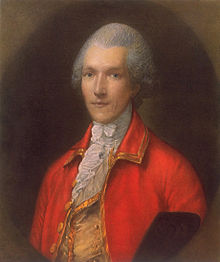
And before attaching himself to Germain, the count had been a young man from Woburn, Massachusetts, who through brains, hard study, ambition, a lucky marriage, and minimal scruples had transformed himself into a New Hampshire country gentleman with a wealthy wife by the time he turned twenty years old. Yes, it was our old friend Benjamin Thompson (shown above in 1783).

Thompson had left his wife and infant daughter Sally in New Hampshire when he ducked behind British lines in the fall of 1775, worried that he’d be outed as one of Gen. Thomas Gage’s spies. (Remarkably, Americans didn’t tumble to this aspect of Thompson’s career until the 1920s.) In the 1780s Thompson resumed correspondence with some of his American connections, including his mother and his friend Loammi Baldwin, but he was adamant they not tell his wife where he was.

In 1789 Thompson had a second daughter with the Countess Baumgarten, also mistress of Prince Carl Theodore. The count also had a long sexual relationship and friendship with Countess Baumgarten’s sister, Countess Nogarola. In the 1790s Rumford had an affair with Lady Palmerston while Viscount Palmerston had an affair with Emma, Lady Hamilton, later the love of Lord Horatio Nelson. In other words, Count Rumford had entered an aristocratic circle that wasn’t really committed to the traditions of marriage.

Even Count Rumford’s presence in France raised some eyebrows. After all, he was a former British army officer, still on half-pay, and Britain and France were technically at war. The armies of Revolutionary France had also invaded Carl Theodore’s territory twice while Rumford worked for the prince. But First Consul Napoleon Bonaparte was busy consolidating his victories with peace treaties. Starting in March 1802, everyone was supposed to be friendly.

Count Rumford met Marie Anne Lavoisier in Paris on 19 Nov 1801. In the spring of 1802 he made a brief visit back to Britain, then traveled to Bavaria with Sir Charles Blagden. There the new Elector offered him government jobs. On 30 November the count sent a letter to his daughter Sarah in New Hampshire that she summarized like this:
he alludes to his love concern; says he has got into full employment at Munich, but would rather be in Paris; and the certain lady would rather have him there.
In 1803, Mme. Lavoisier joined the count in Munich.

TOMORROW: To marry or not to marry?

Thursday, February 08, 2018

More Special Events in February

Here are a couple more events this month that caught my eye.

On Sunday, 11 February, at 12:30 P.M. the Pickering House in Salem will host a presentation on “17th- & 18th-Century Food and Cookery” by Karen Scalia of Salem Food Tours.
What would the Pickerings and their contemporaries have been eating back then? How would it have been cooked? What about spices? Utensils? Where did they get their ingredients? How dangerous was standing over a fire? What about our friend, the Rumford Roaster?
(That would be the type of oven invented by Benjamin Thompson of Woburn, later Count Rumford, shown here.)

This lecture includes a “mini spice tasting.” The cost is $25, or $20 for Pickering House members. Advance registration required through pickeringhouse1@gmail.com.

Down in New Jersey, Somerset County’s Heritage Trail Association will offer its “Five Generals Tour” on Sunday, 18 February.
The popular bus tour…gives participants an opportunity to visit five of the existing houses where Generals George Washington, Henry Knox, Baron Von Steuben, Nathaniel Greene, and William Alexander were headquartered during the Middlebrook Cantonment of 1778-79. The historic homes include the Abraham Staats House in South Bound Brook, the Jacobus Vanderveer House in Bedminster, the Wallace House in Somerville, the Van Veghten House in Finderne, and the Van Horne House in Bridgewater.
At the Vanderveer House, Bob Heffner of the American Historical Theatre in Philadelphia will portray Gen. Knox (as shown at right). The artillery commander used that house as his headquarters in the winter of 1778-79. Knox also established America’s first military training school in nearby Pluckemin.

The tour begins at the Van Horne House, 941 East Main Street in Bridgewater. Docents will welcome visitors at each home. The bus will return to the Van Horne House between each visit for refreshments. The entire tour will take a little less than three hours, with departures on on the hour from 11:00 A.M. to 2:00 P.M. Each tour is limited to twenty people. The cost is $25 for adults, $15 for students, free for children under age six. Register through the Heritage Trail Association.

Friday, September 22, 2017

Elias Boudinot’s Story of Gunpowder and Spying

In his memoirs of the Revolution, New Jersey politician Elias Boudinot included this ancedote, headlined “Scarcity of Powder at Boston”:
When our Army lay before Boston in 1775, our Powder was so nearly Expended, That General [George] Washington told me that he had not more than Eight Rounds a Man, Altho’ he had then near 14 miles of line to guard, and that he dare not fire an Evening or Morning Gun.

In this situation one of the Committee of Safety for Massachusetts, who was privy to the whole secret, deserted and went over to Genl [Thomas] Gage, and discovered our poverty to him.
This was apparently how Boudinot understood the story of Dr. Benjamin Church’s treachery. Church had indeed been a member of the Massachusetts Committee of Safety, and in that position had shared crucial information with Gen. Gage in early 1775. (I wrote about his disclosures in The Road to Concord.)

However, Church didn’t cross to the British side of the siege lines with news of the gunpowder shortfall. Instead, he was exposed and confined in Cambridge around the end of September.

Dr. Church had sent written messages into Boston during the siege, including one that traveled by Washington’s own secret communications channel. But it appears that Church never informed Gage about the Continentals’ gunpowder problem. In the letter that was deciphered and exposed him, Church told a British contact exactly the opposite, exaggerating the Continental supply:
Twenty tons of powder lately arrived at Philadelphia, Connecticut & Providence. Upwards of 20 tons are now in camp. Salt petre is made in every colony. Powder mills are erected and constantly employed in Philadelphia & New York.
Church even used those words at his trial to argue that he was trying to fool the British command, concealing the harmful information. However, Church had written that letter in July, weeks before the gunpowder shortage was recognized.

Of course, Washington and his fellow generals had to wonder if Church had disclosed their crucial secret in another way. Furthermore, Benjamin Thompson, who had been traveling around the siege lines, did desert to the British that fall; he didn’t know about the gunpowder, but the Continentals didn’t know he didn’t know. So Washington had to assume the worst and hope for the best, waiting for the British to act.

Here’s how Boudinot continued the story:
The fact [of the gunpowder shortage] was so incredible, That Genl Gage treated it as a stratagem of war, and the informant as a spy: or coming with the express purpose of deceiving him & drawing his Army into a snare, by which means we were saved from having our Quarters beaten up.—
There was no way for Boudinot or Washington to know how Gage responded to Church’s messages, Thompson, or any other intelligence source. They were, after all, on opposite sides of the war. Boudinot’s story about Gage looks like an assumption made to explain why the British weren’t more aggressive in the fall of 1775.
I was the chairman of the Committee of safety at Elizabeth Town, and had about six or Seven Quarter Casks of Powder, which on urgent application from Genl Washington were sent to Boston, with what could be spared from New York.
Boudinot could thus feel good about helping to prevent the British from “beating up” the Americans around Boston. But in fact by that time both Gage and his successor, Gen. William Howe, had given up on breaking out of Boston by land. Washington feared an attack that would never come, based on a disclosure that never happened.

Friday, April 21, 2017

We Actually Have Two New American Revolution Museums

The Museum of the American Revolution in Philadelphia isn’t the only new museum focusing on that important national transition. Last month I attended one of the opening days of the other one, the American Revolution Museum at Yorktown. And it’s well worth a visit.

Like the M.O.A.R., this museum is a new building for an established location and a new home for an old collection, in this case those of the Yorktown Victory Center. But the curators have been bringing in many new items:
Recent acquisitions, all selected to illustrate specific exhibit themes, include such iconic artifacts as a Declaration of Independence broadside dating to July 1776; a June 1776 Pennsylvania Gazette printing of the Virginia Declaration of Rights, which directly influenced the composition of the U.S. Declaration of Independence; an official portrait of King George III in his coronation robes; an eagle-pommel sword inscribed with the year 1776 and the name of its owner; one of the earliest known portraits done from life of an African who had been enslaved in the British colonies that became the United States; and a first edition of Phillis Wheatley’s 1773 “Poems on Various Subjects, Religious and Moral,” the first book to be published by an African American.
Another acquisition is a portrait of Benjamin Thompson of Woburn, later Count Rumford.

Though this museum is at the site of a particular event—the Yorktown siege of 1781—it covers the entire Revolutionary conflict, starting with the imperial situation of the 1750s and running to the expansion of the U.S. of A. in the 1790s. The galleries have the themes of “The British Empire and America”; “The Changing Relationship—Britain and North America”; “Revolution,” meaning the war; “The New Nation”; and “The American People.”

The museum also uses a lot of interactive technology. I didn’t watch the introductory film, “Liberty Fever,” but I was impressed by many of the smaller video displays. One standout was the museum’s Liberty Tree, a metal sculpture draped with “20 electronic lanterns that display liberty messages from all over the world.” Visitors in person and online can type out short remarks (no more than 108 characters) about what liberty means to them, and those appear on the lanterns.

Beside the museum building there’s a feature I remember from Yorktown decades back, a recreation of the Continental Army camp during the siege of 1781. Alongside that is an eighteenth-century farm raising vegetables and herbs; it includes a tobacco barn, representing colonial Virginia’s main crop, but apparently no tobacco fields.

The American Revolution Museum is allied with the Jamestown Settlement, a recreation of the first lasting British settlement in North America—not to be confused with the actual site of that settlement, which is a different attraction. And of course they’re all within a moderate drive of Colonial Williamsburg. As I said, well worth a visit.

Sunday, July 17, 2016

Jerks, Shockers, and Lucky Dogs at the J.A.R.

The Journal of the American Revolution has just concluded one of its popular group interviews, in which chief editor Todd Andrlik asks a bunch of us contributors for our opinions on various questions. Sometimes we agree, sometimes there are almost as many answers as respondents.

This week the questions were:
The J.A.R. also recently opened an online shop selling unique Revolutionary-themed T-shirts, posters, and books, including The Road to Concord.

Monday, August 11, 2014

Celebrating Benjamin Thompson

On Sunday, 17 August, the Rumford Birthplace Museum in Woburn will celebrate two anniversaries:

  • the 300th of the construction of the house’s oldest rooms.
  • the 200th of the death of the man who made that house famous enough to be preserved: Benjamin Thompson, later Count Rumford.
Thompson is one of our favorite Revolutionary characters here at Boston 1775.

As part of the day’s celebrations, a member of His Majesty’s 10th Regiment reenacting unit, Lincoln Clark III, will portray Thompson describing his military actions with the King’s American Dragoons late in the Revolutionary War. (Presumably this Thompson will keep his activity as a spy in 1775 under wraps.)

Living history interpreter Dean Howarth will describe Thompson’s achievements as a scientist. (His equally impressive achievements as a social climber, civil administrator, and rouĂ© will probably wait for another year.)

There will also be presentations on items and displays in the house, including “an old artifact that was stolen, located, disappeared, found, and used for scrap.” And there will be a demonstration of eighteenth-century social dance.

Since Thompson was a Loyalist who rose high within the British government and army, the museum is particularly interested in having people who portray the king’s supporters at the anniversary. The event is scheduled to last from 2:00 to 4:00 P.M.

Thursday, June 05, 2014

Illuminating the Illuminati Myth

I quite enjoyed Mike Jay’s recent article at Public Domain Review on the birth of our understanding of the Illuminati. The crucial text was the subtly titled Proofs of a Conspiracy against all the Religions and Governments of Europe, published in 1797 by Prof. John Robison of Edinburgh (shown here).

Jay, also author of A Visionary Madness: The Case of James Tilly Matthews and the Influencing Machine, writes:
Robison’s vast conspiracy needed an imposing figurehead, a role for which Adam Weishaupt, the founder of the Bavarian Order of the Illuminati, seemed on the surface to be an unpromising candidate. Obsessive and domineering, Weishaupt had from the beginning found difficulty in attracting members to his secret society, where they were expected to adopt mystical pseudonyms chosen by him, jump through the hoops of his strict initiatic grades – Novice and Minerval, Illuminatus Minor and Major, Dirigens and Magus – and take up subservient roles in his grandiose but unfocused crusade for world domination. After 1784, when the Order had been exposed and banned by the Elector of Bavaria, Weishaupt had exiled himself to Gotha in central Germany, since when he appeared to have done little beyond producing a series of morose and self-justifying memoirs of his adventures.
As for Robison himself:
In 1785 he had begun to suffer from a mysterious medical condition, a severe and painful spasm of the groin: it seemed to emanate from beneath his testicles, but its precise origin baffled the most distinguished doctors of Edinburgh and London. Racked with pain and frequently bed-ridden, by the late 1790s he had become a withdrawn and isolated figure; he was using opium frequently, a regime which according to some of his acquaintances made him vulnerable to melancholy, confusion and paranoia. As the successive crises of the French Revolution shook Britain, the panic was particularly intense in Scotland, where ministers and judges whipped up constant rumours of fifth columnists and secret Jacobin cells. . . .

The physical sciences were in the grip of another French revolution, led by Antoine Lavoisier. During the 1780s Lavoisier had overthrown the chemistry of the previous century with his discovery of oxygen, from which he had been able to establish new theories of combustion and to begin the process of reducing all material substances to a basic table of elements. Lavoisier’s revolution had split British chemistry: some recognised that his technically brilliant experiments had transformed the science of matter, but for others his new and foreign terminology was, like the French metric system and the revolutionary Year Zero, an arrogant attempt to wipe away the accumulated wisdom of the ages and to eliminate the role of God. The old system of chemistry, with its mysterious forms of energy and its languages of essences and principles, had readily contained the idea of a life-force and the mysterious breath of the divine; but in Lavoisier’s cold new world, matter was reduced to inert building-blocks manipulated by the measurable forces of pressure and temperature.

Robison had never accepted the French theories, and by 1797 had worked the new chemistry deep into his Illuminatist plot. For him, Lavoisier – along with Britain’s most famous experimental chemist, the dissenting minister Joseph Priestley – was a master Illuminist, working in concert with infiltrated Masonic lodges to spread the doctrine of materialism that would underlie the new atheist world order. Madame Lavoisier’s famous salons, at which the leading Continental philosophes met, were now revealed by Robison to have been the venues for sacreligious rites where the hostess, dressed in the ceremonial robes of an occult priestess, ritually burned the texts of the old chemistry.
I can’t resist noting that after Lavoisier’s death during the Terror, his widow went on to marry Woburn’s own Benjamin Thompson, Count Rumford. (That marriage couldn’t be saved.)

TOMORROW: Warnings about the Illuminati come to America.

Sunday, September 08, 2013

A New Look at Benjamin Thompson

This week HistoryTube.org announced [trademark symbol and all]: “A portrait of Benjamin Thompson, one of the most prominent scientists of the late 18th century, will be exhibited in the new American Revolution Museum at Yorktown® galleries to help tell the story of Loyalists.”

The announcement included a biography of Thompson that I thought could benefit from some translation. It said:
In the 1770s he lived in Concord (earlier called Rumford), New Hampshire, and became an officer in the 2nd Provincial Regiment.
After Thompson at age nineteen married a rich widow, Gov. John Wentworth made him a major in the New Hampshire militia.
He developed close associations with prominent British officers, incurring the wrath of citizens opposed to British rule.
He enticed deserters from the British army to his farm, worked them very hard, and alerted the royal authorities to come collect them when they started to miss army life (probably just before he had promised to pay them). He had an affair in February 1775 with Patriot printer Isaiah Thomas’s wife. By May, Thompson was sending Gen. Thomas Gage spy reports written in invisible ink.
Thompson made the decision to leave America and had a successful career as a scientist and inventor in Britain and on the Continent, known principally for his work in thermodynamics.
Thompson slipped behind the British lines soon after Dr. Benjamin Church was detected as a spy. In November 1775 he wrote a detailed report on the American army for Gen. William Howe, then sailed for England. Thompson worked his way into the household and office of Lord George Germain, possibly through sexual favors, and by 1780 was a top bureaucrat in the British government. He returned to America as a British army officer very late in the war, then went back to Europe for good.

Thompson was indeed an inventive scientist, as well as a capable and visionary administrator in Bavaria. He co-founded the Royal Institute in London. He and his one legitimate child, Sarah Thompson, left some substantial bequests to American institutions, causing them to be remembered well—until Thompson’s early spy reports were identified in the 1920s.

I don’t know if this portrait had previously been linked to Rumford; I don’t recall ever seeing it before. The HistoryTube.org article concludes:
The 18- by 24-inch oil-on-canvas painting by an unknown artist dates to 1785, a fact revealed during conservation. The portrait was acquired by the Jamestown-Yorktown Foundation specifically for the American Revolution Museum at Yorktown, which will replace the Yorktown Victory Center by late 2016.
Rumford was a brilliant, fascinating figure, but I hope no one visiting this new museum takes him to be a typical American Loyalist, or typical in any way.

Friday, July 06, 2012

“Great but fruitless interest for the commission in the artillery”

Yesterday I quoted a few phrases from Alexander H. Everett’s address on the sixtieth anniversary of the Battle of Bunker Hill. He spoke in Charlestown “at the request of the young men, without distinction of Party,” according to his lecture’s title page. (Makes you wonder what political dispute had disrupted previous years.)

Here’s a choice passage from Everett about the American artillery, comparing its performance to the fabled British failure:

But where in the mean time are the reinforcements of artillery? Where is Major [Scarborough] Gridley with his battallion? Is he too slumbering in the lap of some beauteous Delilah? Ah, gallant, learned Rumford! could your thorough science, your vigorous and energetic action have done justice to the orders of the veteran hero of Louisburg, there would have been no want of amunition: powder enough would have found its way to the redoubt, and the day might still have been ours. But America must pay the penalty of Col. [Richard] Gridley’s parental partiality, as Britain does of Gen. [Samuel] Cleveland’s superannuated gallantry.—
Col. Richard Gridley, commander of the Massachusetts artillery, had insisted that the Massachusetts Provincial Congress make his youngest son, Scarborough, a major in the regiment. But, as Everett hinted, Scar Gridley wasn’t up to the challenge of the Battle of Bunker Hill. (I’ll discuss that tomorrow.)

Who did Everett think would have done a better job? “Gallant, learned Rumford!” Everett relied on Samuel Swett’s History of Bunker Hill Battle, published about a decade before. Swett in turn appears to have talked to Massachusetts governor John Brooks (1752-1825, shown above), who reported that he’d been on Breed’s Hill on the morning of 17 June 1775 and was sent back to Gen. Artemas Ward’s headquarters ask for reinforcements. Swett wrote:
Maj. Brooks was retained at Cambridge by Ward, till the last reinforcements were sent to Charlestown, when he marched with the two remaining companies of his regiment, and met at the neck the Americans retreating. Benjamin Thompson, better known as Count Rumford, attended him as a volunteer. He was assisting the army by his mathematical learning, his estimates and surveys, but had solicited an appointment in vain, and had made great but fruitless interest for the commission in the artillery which was bestowed on Maj. Gridley.
Some authors later wrote that Brooks and Thompson (1753-1814) were schoolmates, others that they were both teen-aged medical trainees under Dr. Simon Tufts. Thompson did briefly go to school in Medford (Brooks’s home town), but he studied medicine under Dr. John Hay of Woburn, not Tufts. Supposedly Brooks and Thompson maintained a friendly correspondence all their lives, but I’ve never seen a citation for any of those letters.

According to modern biographer Sanborn C. Brown, there’s evidence that Thompson was in Woburn on 15 June, and thus less likely to be in Cambridge two days later. Still, authors of the nineteenth century accepted Brooks’s statement that Thompson was tagging along during the Battle of Bunker Hill, having fruitlessly offered to help the American artillery corps.

By the 1800s, Thompson had become famous and respected in Europe as Count Rumford, government administrator and scientist. Why hadn’t the Massachusetts army accepted his services? Why had his home town’s committee of correspondence kept him confined on suspicion of being a Tory? “America must pay the penalty” for that stubbornness, Everett said.

Neither Thompson’s contemporaries behind the American lines nor the nineteenth-century authors knew that in early May Thompson had sent Gen. Thomas Gage a spy report written in invisible ink. Was Thompson really angling for a high rank in the provincial artillery at the same time? Was he hanging around Gen. Ward’s headquarters and accompanying Maj. Brook to the front lines? If so, that wouldn’t have been good for the Americans.

Wednesday, March 28, 2012

Secrets of the Federal Street Theatre

Today the Massachusetts Historical Society opens a new exhibit on the first public theater in Boston, a matter of great controversy back in 1794. The society’s Events webpage says:
“The First Seasons of the Federal Street Theatre, 1794-1798” documents the battle over the Federal Street Theatre through playbills from early performances as well as the letters and publications of supporters and opponents of public theater in Boston. The M.H.S. show is a satellite display of an exhibition titled “Forgotten Chapters of Boston’s Literary History” on display at the Boston Public Library.
The Federal Street Theatre exhibit will be on view through 30 July, and is free to people visiting on 10:00 to 4:00 on weekdays.

The first manager of that theater was John Steele Tyler, older brother of the playwright and jurist Royall Tyler. And his history is even slippier than his little brother’s. John Steele Tyler was a major early in the Revolutionary War, then a lieutenant colonel in the Massachusetts forces during the Penobscot expedition. In 1780, he sailed to Europe with John Trumbull, another former American officer, who wanted to study painting.

Tyler and Trumbull were sharing rooms in London late that year when Benjamin Thompson, secretary to Secretary of State Lord George Germain (and slipperiest of all), ordered their arrest as suspected spies. Loyalist friends warned Tyler, and he slipped away to France while Trumbull went to jail. The next year, Tyler wrote to Germain saying that the French alliance had turned him against the American cause and that he’d defect to the Crown for £1,000.

That letter didn’t come to light until Lewis Einstein’s book Divided Loyalties in 1933, so Tyler was able to return to America in the 1780s with a solid reputation. Privately John Adams called him “a detestible Specimen” (for unknown reasons), but publicly Tyler was an upstanding veteran and businessman. Family tradition says he’d even undertaken spy missions for Gen. George Washington. And perhaps that’s what Tyler really was up to in London. But that family’s voluminous traditions are sometimes contradictory and self-serving.

In any event, Tyler’s outward respectability made him a good public face for the institution that broke Boston’s long-standing taboo against theater.

(The image of the Federal Street Theatre above comes from the Boston Public Library’s Flickr collection.)

Sunday, January 29, 2012

My “Marital Infidelity and Espionage” at the M.H.S., 7 February

On Tuesday, 7 February, the Boston Area Early American History Seminar will meet at the Massachusetts Historical Society to discuss my paper “Marital Infidelity and Espionage in the Siege of Boston.”

The description:
This paper will examine patterns in the popular linkage between marital and political infidelities over a range of espionage cases from the start of the Revolutionary War. Drawing on new findings about such spies as Dr. Benjamin Church, Benjamin Thompson, and the Rev. John Carnes, it will address the topic from multiple perspectives, including actual cases, the use of marital disloyalty as a metaphor for political disloyalty, and how stories of family splits were hidden, preserved, or retold.

Each side of the political conflict tried to portray the other’s leaders, up to and including Thomas Gage and George Washington, as unfaithful husbands. Betrayal in the home, such reports suggested, led to betrayal of the public. Some men involved in espionage did indeed make a habit of extramarital affairs, but others appear to have undertaken their risky ventures to support their wives and children. Both at the time and in later generations, Americans have been selective about which family splits they recorded, and thus which side’s agents appeared most treacherous.
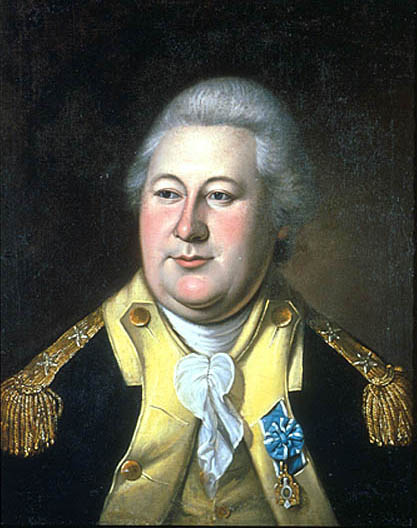
In addition to the names dropped above, the paper discusses Henry Knox (shown above) and his in-laws and the shadowy past of the American artillerist Thomas Machin. And in the final version I focused just on people secretly providing intelligence for the American side, so Benjamin Thompson, always a slippery fellow, escaped into a footnote.

As usual in this seminar series, the paper will be available at the M.H.S. for reading in advance. The seminar begins at 5:15 P.M. with Prof. Robert Allison of Suffolk University commenting on my draft. Then there will be a more general discussion with everyone invited to participate, followed by sandwiches. The society asks people to email if you plan to attend so they know approximately how many sandwich fixings to put out. I look forward to chatting with folks there!