J. L. BELL is a Massachusetts writer who specializes in (among other things) the start of the American Revolution in and around Boston. He is particularly interested in the experiences of children in 1765-75. He has published scholarly papers and popular articles for both children and adults. He was consultant for an episode of History Detectives, and contributed to a display at Minute Man National Historic Park.

Subscribe thru Follow.it


•••••••••••••••••


Showing posts with label Benjamin Kent. Show all posts

Wednesday, July 03, 2024

For and Against the Committee of Correspondence
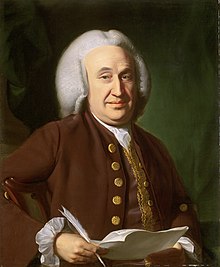
During Boston’s town meeting session on 27 June 1774, town clerk William Cooper didn’t record who spoke.

But the merchant John Rowe did.

In his diary, Rowe listed the defenders of the standing committee of correspondence as:
Aside from Kent, those names are familiar to Boston 1775 readers. They were most of the town’s most visible Whig leaders. All but Kent had been named to the committee of correspondence back in 1772.

Speaking “against the Behaviour of the Committee” were:
Those men were evidently representing Boston’s merchants, not the friends of the royal government. Most of them weren’t politically active. Only Harrison Gray, Green, and Goldthwait had signed the addresses to the royal governors that spring. Gray and Goldthwait did have major government appointments, but they tried to present themselves as moderate centrists serving both the people and the Crown.

We don’t know what paths Thomas Gray would have chosen when war broke out and when the British military left Boston because he died after a carriage accident in November 1774. But we do known the political choices of all the other men.

Harrison Gray, Amory, and Green left Boston with the redcoats, becoming Loyalists. Amory and Green eventually returned to Massachusetts, however.

Elliot, Barrett, Payne, and Goldthwait stayed in Massachusetts, some serving in civic offices under the new republican order. Barrett appears to have thrown in with the Patriots just a couple of months after this town meeting, participating in the Suffolk County Convention and taking on wartime tasks for the state. In contrast, Goldthwait retired from public life.

The argument of this group was likely that, while it was important to stand up for liberty and protest unjust laws, the Boston committee of correspondence’s methods had been too confrontational and led the town into trouble. It was time to back off, settle accounts for the Tea Party, and reopen for business.

John Rowe himself wrote privately: “the Committee are wrong in the matter. The Merchants have taken up against them, they have in my Opinion exceeded their Power.” But he didn’t speak up in the meeting himself.

COMING UP: Mutual resentments.

Monday, June 19, 2023

“I should not have chose this town for an Asylum”

On 17 June 1775, as I quoted yesterday, John Adams complained that five friends from Massachusetts hadn’t sent him any letters with news about the province since he’d left for the Second Continental Congress.

I decided to look into what those men did in the previous two months.

The Rev. Dr. Samuel Cooper had fled from Boston on 9 April, halfway through Sunday services, wary that Gen. Thomas Gage might order his arrest. He settled in with Samuel P. Savage in Weston. By the end of the month Cooper had his wife, daughter, and clothing with him, but not his library or all his letters.

In early May, Cooper arranged to stand in as the minister in Groton. Or rather, since that town was far away and he liked being near the seat of Patriot power, he made deals with other ministers to go out and preach in Groton while he preached in their churches close by. For a while, at least, he could coast on his celebrity as Boston’s most silver-tongued minister and recycle his old sermons.

Prof. John Winthrop of Harvard College lived in Cambridge. As the king’s troops marched through town on 18–19 April, he and his wife Hannah fled for safety, first to the Fresh Pond area, then further the next day, fearing the redcoats would return.

Later Hannah Winthrop wrote to her friend Mercy Warren:
Thus with precipitancy were we driven to the town of Andover, following some of our acquaintance, five of us to be conveyd with one poor tired horse & Chaise. . . .

I should not have chose this town for an Asylum, being but 20 miles from Seaports where men of war & their Pirates are Stationed, but in being fixd here I see it is not in man to direct his steps. As you kindly enquire after our Situation, I must tell you it is Rural & romantically pleasing.
Back in Cambridge, militia companies arrived en masse, taking over the college buildings and larger mansions. Most of the townspeople left.

By mid-June, however, the Winthrops were back home, though only temporarily. The professor helped to pack up the Harvard College library and scientific equipment. College classes resumed in Concord in October, and the Winthrops settled there for the rest of the school year.

Adams’s list started with three lawyers, all from Boston. All also had ties of family or friendship to Loyalists, and that complicated their choices as the war broke out.

Benjamin Kent at some point got a pass out of Boston and, according to his profile in Sibley’s Harvard Graduates, stayed with various friends in the countryside through the siege. Though he remained in the U.S. of A. through the war, in the mid-1780s he moved to Canada to spend his last years with his children.

William Tudor was just starting his legal career. He was also courting Delia Jarvis, a young lady from a Loyalist family. According to a family memoir, after the fighting started, Tudor tried to wrangle passes for himself, her, and her family from the Adm. Samuel Graves’s secretary, but that effort was fruitless.

On 12 May, Tudor “broke from Boston by the roundabout way of Point Sherly” in Chelsea (now Winthrop), leaving Delia and her family behind. He sought a position in the Patriot service. With John Adams championing him, Tudor became the Continental Army’s judge advocate general in the summer of 1775.

TOMORROW: The legend of Samuel Swift.

Sunday, June 18, 2023

“I have lamented excessively the Want of your Correspondence”

In his letter to Abigail Adams on 17 June 1775, which I started quoting yesterday, John Adams continued:
I have never been able to obtain from our Province, any regular and particular Intelligence since I left it. [Benjamin] Kent, [Samuel] Swift, [William] Tudor, Dr. [Samuel] Cooper, Dr. [John] Winthrop, and others wrote me often, last Fall—not a Line from them this Time.
Adams was referring to his time away at the First Continental Congress in late 1774, when he felt well informed.

Three days later, he wrote directly to Tudor:
I have lamented excessively the Want of your Correspondence ever since I have been here. Not a Line from Dr. Winthrop, Dr. Cooper, Mr. Kent, Swift, Tudor, from some or other of whom I was accustomed the last Fall, to receive Letters every Week. I know not the state, the Number, the Officers of the Army—the Condition of the poor People of Boston or any Thing else.
I decided to look into John Adams’s complaint, using the Adams Papers and Founders Online. He and his heirs were unusually conscientious about saving letters, so we’re at least very close to seeing all the correspondence he received.

To begin with, this chiding wasn’t fair to William Tudor (1750–1819, shown here later in life), who was Adams’s former law clerk. All the other men were senior to Adams, so he couldn’t nag them the same way.

Furthermore, back in the fall of 1774, those older gentlemen had actually sent Adams rather few letters. Tudor had sent more than all the other men combined. He’d also traveled to Philadelphia himself, carrying the only letter that Cooper wrote to Adams in that season.

The first two men Adams named were Benjamin Kent (1708–1788) and Samuel Swift (1715–1775), senior figures in the Boston bar. Indeed, Kent had founded the bar association and liked to preside over its get-togethers. Each man had written Adams one letter in the fall of 1774, and Swift had sent another to the whole Massachusetts delegation. Neither wrote Adams in spring 1775.

As I said above, young Tudor had brought Adams a letter from the Rev. Dr. Samuel Cooper (1725–1783) in October 1774. That minister didn’t send anything in the spring of 1775.

Finally, no 1774 letters to Adams survive from Prof. John Winthrop (1714–1779) of Harvard College. But four days after Adams’s initial complaint on 17 June 1775, Winthrop did send him one. Tudor wrote a few days later. Both men described what had happened on the same date when Adams complained—namely, the Battle of Bunker Hill.

Because while Adams was aching to know how the war was going, all the men he wanted to hear from were actually living in the war zone. They had other things on their minds besides correspondence.

TOMORROW: Getting out of Boston, and getting news from Boston.

Sunday, January 21, 2018

“At my trial for caning Gill”

In April 1768 John Mein went on trial for assaulting rival printer John Gill. In fact, he faced two trials—in criminal and civil court.

On 19 April the local magistrates cited Mein for criminal assault and fined him 40 shillings, or £2. Not a huge amount, but a judgment that he had disturbed the peace of Boston.

At the same time, Gill sued Mein for £200 in damages. John Adams represented Gill. The case was tried on 28 April, and the 2 May Boston Post-Boy reported the verdict:

after a long Hearing the Jury found a Verdict in favour of the former [Gill], for one Hundred and thirty Pounds Lawful Money Damages, and Costs of Court. From which Judgment we hear both Parties appealed to the next Superiour Court. 
I’m skipping further ahead of the Sestercentennial anniversaries to finish this story. The appealed case came up in the March 1769 session of Massachusetts’s highest court. Benjamin Kent and Robert Auchmuty were Mein’s attorneys. On Gill’s side, Adams was joined by James Otis, Jr.

Kent was a Whig with many Loyalist relatives; though he stayed in Massachusetts through the Revolutionary War, in 1785 he went to spend his last years with them in Nova Scotia. Auchmuty was one of Boston’s leading attorneys supporting the royal government. Otis and Adams were of course active opponents of that government.

The John Adams Papers contain his notes from the trial, but those don’t provide a useful summary, with disconnected phrases like “Kick upon the A—se” and “Distinction between Bump and Tumour.”

The facts of the assault don’t seem to have been in doubt, or even the question of whether Mein was in the wrong. Rather, the question was how much was he in the wrong. Had he planned the attack for days? Had the Gazette provoked Mein, so Gill was partially at fault? How big was the stick, and how big was Gill?

In the end, the jury found for Gill but awarded him £75 and costs—a smaller award than before, but still a “Large Sum,” as Harbottle Dorr wrote. At some point Mein wrote that his decision to cane Edes or Gill had “cost me about £100 St[erling].” He filed for a new trial but later withdrew that motion. By November 1769 Mein had worse to worry about.

Mein later wrote, “Otis at my trial for caning Gill, bandied about this Liberty of the Press as the Salvation of America, and said, that in beating him I had endeavoured to shutt up that great Source of freedom.” Seeing Otis in court must have particularly irked Mein because he was convinced that “Americus,” the anonymous newspaper writer who had called him disloyal and set off the whole affair, was Otis himself.

Tuesday, August 25, 2009

The Case of Edward Jackson v. Josiah Cotton

In September 1752, the Rev. Edward Jackson filed suit against his cross-Woburn rival, the Rev. Josiah Cotton, for calling him “a vile, wicked man, a fornicator, and unfit to be a minister.” And all because Cotton’s brother Roland had said he’d seen evidence that Jackson had fathered a child by his housekeeper, Kezia Hincher.

For his attorney, Jackson hired Edmund Trowbridge (1709-1793), a scholarly lawyer from Cambridge. (Both men had grown up in Newton.) At some point midwife Hannah Poole and her husband gave him a written statement that, contrary to report, they had never heard Hincher identify Jackson as the child’s father.

Josiah Cotton hired Benjamin Kent (1708-1788) of Charlestown to defend him. According to Woburn historian Samuel Sewall, Cotton

rested his defense, not upon any direct answer to what had been alleged against him in Mr. Jackson’s Declaration, but upon the denial of some promise that Mr. Jackson had averred that he (Mr. Cotton) had made him
I suspect Cotton argued that he’d never promised Jackson a public apology like that already delivered by his brother Roland, which should have been enough to restore Jackson’s reputation.

At the Court of Common Pleas, Jackson won a judgment of £1,000, plus court costs of £1.16s.6d. That was a huge sum by any measure. The magistrates might have meant to pressure Cotton into a public apology before things went any further.

Instead, Josiah Cotton appealed to the Superior Court. The ministers had another chance to settle, but let the case go to a jury. And then Jackson lost almost everything he had won.

In January 1753, the jurors decided that Jackson should not receive any damages and owed Cotton legal costs, implying that his libel suit was baseless and that he was indeed the father of Hincher’s child, then about one year old.

Perhaps the Cottons had mounted a firmer defense at this level, gathering evidence that they hadn’t had before. In the next century Sewall would hear this story from a man named Bartholomew Richardson:
Two of them [enemies of Jackson] in particular, according to a tradition derived from a source of high respectability, encouraged Mrs. Henshaw to go before a magistrate, and swear to the truth of the report which she had put in circulation [about Jackson fathering her child]; and that when she had taken an oath to this effect, they were seen by a friend of Mr. Jackson who was looking on, to put money into her lap.
However the Superior Court verdict came about, Jackson’s reputation was now even lower than before. Reportedly, an official council of ministers gathered to deliberate on his standing.

TOMORROW: But Jackson hadn’t given up.

Monday, September 18, 2006

Benjamin Kent's "speedy Provincial Encampment"

This is another extract from the third volume of The Papers of Robert Treat Paine, issued last year by the Massachusetts Historical Society. Benjamin Kent (1708-1788) was a Boston lawyer, a solid Whig but not a political leader or a radical. Indeed, after the war, Kent retired and moved in with his son-in-law in Canada. Which makes it all the more interesting to see Kent suggesting in the fall of 1774 that the best solution to the crisis in Massachusetts would be a show of armed force by the locals.

On 16 October, Kent wrote to Robert Treat Paine at the First Continental Congress about the situation in Boston. The month before, it had become clear that royal governor Thomas Gage had no authority past Boston neck. Gen. Gage began to fortify that narrow route into town, all the while assuring both inhabitants and neighbors that the cannons pointing out at the province were for their own good. The first Massachusetts Provincial Congress met in early October and protested the general's action. Here is what Kent suggested should happen next. (I've once again broken up the block of text into shorter paragraphs.)

You will see our Provincial Address to the Genrl. & next Monday or Tuesday we expect his Ansr. but are as satisfied, as if he had told us, that it is out of his power to demollish the Fortifications, therefore after a day or two, it will be peremptorily demanded of him by our Provincial Congress. I suppose he will pay no regard to it.

The Consequence will be, a speedy Provincial Encampment. without any Intention of Coming to Blows, & we are well assured the Regulars will not begin hostilities, but it’s probable they will continue to fortify; & if they should; I believe it will be impossible to keep our hands off from 'em.

Many members of our Provl. Congress think we cannot carry on an Encampmt. before we have some Established form of civil Government: & that can’t be done but by the Grand Congress. I tell 'em an Encampmt. may & I think must be made, by all the Towns and Districts, Enlisting their Quota of men & voting 'em pay.

If that should be our Case: Their Deserters, will know where to run, then the Genrl. will immediately send Home & a Cessation of Arms will take place. The Grand Congress must not rise or adjourn before they have settl’d a form of Governmt. for all the Colonies, & know what will be finally done by Britain.
So Kent was suggesting that the Massachusetts militias gather and take positions outside Boston—starting a siege immediately, as it were. He didn't believe the provincials would actually start shooting, and he didn't think the regulars would, either. Still, an encampment outside the town gates would have been a sign of open armed rebellion. No wonder Kent made sure not to sign this letter.

Yet it's also telling that Kent felt that such an encampment would actually avoid a war, not start one. In his mind, such a response to the governor's actions would signal the provincials' resolve, and make the situation untenable for the regular army. It would force Gage to advise the government in London to capitulate. Many other American gentlemen seem to have shared this view: that if they just didn't back down before ministerial measures, eventually the London government would relent or change with no war or split in the Empire. Things didn't work out that way.