


J. L. BELL is a Massachusetts writer who specializes in (among other things) the start of the American Revolution in and around Boston. He is particularly interested in the experiences of children in 1765-75. He has published scholarly papers and popular articles for both children and adults. He was consultant for an episode of History Detectives, and contributed to a display at Minute Man National Historic Park.

Subscribe thru Follow.it


•••••••••••••••••


Showing posts with label Oliver Goldsmith. Show all posts

Friday, September 22, 2023

“The first English children’s novel” and Its Arrival in America

This month the Smithsonian Magazine website published V. M. Braganza’s article “The Revolutionary Influence of the First English Children’s Novel.”

What novel is that? Braganza writes:
Before her name became synonymous with sickly-sweet virtue, Goody Two-Shoes was the protagonist of the first English children’s novel, The History of Little Goody Two-Shoes. First published in 1765, the book was a groundbreaking work. It tells the life story of an orphaned girl, Margery Meanwell, whose poverty reduces her to rags—and to wearing just one shoe. When her fortunes improve and she acquires some new footwear, her excitement earns her the nickname “Goody Two-Shoes.” . . .

The book appeared in many editions in England and the United States, and it was beloved among famous writers like Robert Southey and Jane Austen, who kept her childhood copy until her death. One of the earliest works of children’s literature, Margery Meanwell’s adventures offered a striking alternative to prevailing gender norms. Over the course of the novel, Margery teaches herself to read, foils a major robbery, founds a school, earns her own living, stands up for animal rights and overcomes accusations of witchcraft. She was everything that 18th- and 19th-century British society thought women shouldn’t be: poor, well-educated, self-made and unmarried (at least until the last few pages).

Margery was wildly popular and one of the first heroines whom juvenile readers admired. It’s no stretch to say that the novel launched and definitively shaped children’s literature as a genre intended to entertain young readers while teaching foundational values like generosity, hard work and the virtues of education. It continues to exert an enormous, if forgotten, influence on culture today: Anyone who unconsciously quotes its title has been shaped by this book without knowing it.
The first edition of The History of Little Goody Two-Shoes was published in London by John Newbery, whose name the American children’s book field appropriated over a century later for its highest award. Writers attributed the story to Oliver Goldsmith, or possibly the brothers Griffith and Giles Jones; all of them wrote for Newbery.

I’ve found the book advertised in Philadelphia in 1769 along with other “LITTLE BOOKS, Adorned with a great Variety of PICTURES, calculated for the Improvement and Amusement of Children.”

Hugh Gaine published his own edition of Goody Two-Shoes in New York in 1775. Because people now expected children’s books to have pictures, that meant commissioning new woodblocks. The photo above shows one of two surviving blocks from this edition, sold by Heritage Auctions from the Justin G. Schiller collection in 2020.

A century ago some studies credited Isaiah Thomas as the first to publish the book in America, but Thomas’s edition appeared in 1787 and followed at least three other American editions.

Berganza has more to say about the storytelling and influence of Goody Two-Shoes, and Wilbur Macey Stone’s 1939 study in the American Antiquarian Society Proceedings can be downloaded here.

Sunday, December 18, 2022

“Not only relishing the sociable but actively contriving it”

Like the Georgian Papers Programme, Digit.En.S is a study of eighteenth-century Britain funded by the E.U. and based at a continental university.

Digit.En.S hosts the Digital Encyclopedia of British Sociability in the Long Eighteenth Century, designed to “Explore the wide range of topics related to British Sociability from 1650 to 1850 and learn about the circulation of models of sociability that shaped European and colonial societies.”

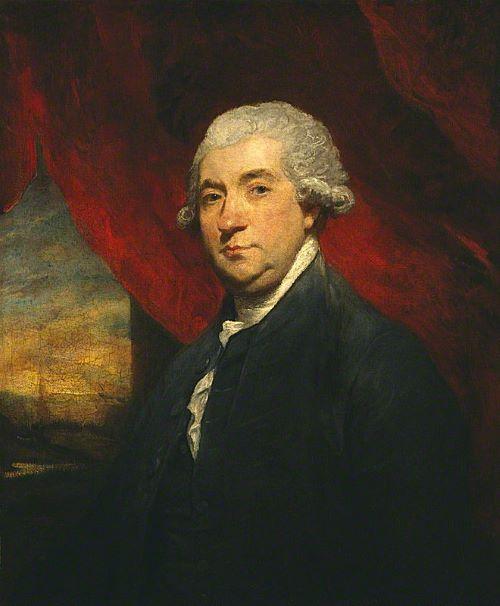
Be that as it may, I enjoyed Allen Ingram’s profile of James Boswell:
…he was, quite simply, good company – attentive, amusing, intelligent and above all lively. [Samuel] Johnson, most clearly, and [Pasquale] Paoli, once exiled in England, became lifelong friends and were pleased to see him often during his annual spring visits to London from Edinburgh. Through Johnson in particular, Boswell became friends with a set of men he might not otherwise have met, or met so soon and so favourably. These included Edmund Burke, David Garrick, Joshua Reynolds and Oliver Goldsmith; but other friends, like John Wilkes, and various members of the Scottish nobility, were already part of Boswell’s circle, and would remain so – indeed, he even contrived a dinner in London in May 1776 that brought Johnson and Wilkes, the bitterest of political rivals, together in an atmosphere of sociability and mutual good humour, though the good humour found its focus in making jokes at Boswell’s expense.

But this was part of Boswell’s talent, not only relishing the sociable but actively contriving it. He could be immensely self-promoting, often in a highly embarrassing way, as at the annual dinner of the Company of Grocers in London in November 1790, in the presence of Prime Minister William Pitt, an honorary member of the Company, when Boswell sang the semi-satirical ballad, ‘William Pitt, The Grocer of London’, six times, apparently by popular acclaim, in a misguided attempt to curry favour from Pitt in his political ambitions. But Boswell seems to have been utterly beyond embarrassment, especially at large social occasions, and especially after consuming alcohol. . . .

Drinking for Boswell almost always took place within a social context. He was not particularly choosey, though, about the nature of that context, or about the location of his drinking. As long as there was company, he would drink: with lords and ladies, as at Northumberland House, where Trafalgar Square now is, where the set surrounding the Duke and Duchess of Northumberland congregated, as he did in London during his visit of 1762-1763; or with politicians and genteel tradesmen, as at the Grocers’ dinner cited above; or with his legal friends and acquaintances back in Edinburgh, as he did all his life; or with prostitutes in London, or Edinburgh, or anywhere, as he also did all his life; or, as he did returning to Edinburgh from Auchinleck in March 1777 with an old friend, Richard Montgomery, ‘at some low ale-house’, where ‘I drank outrageously’ and ‘arrived at Edinburgh very drunk’.

Boswell’s taste in women and in female society was if anything even wider than his taste in alcohol and his expectations of the kind of sociability that was possible from it changed the further down the social scale he went. Few if any of his sexual relationships were with women of the highest social class. With such women his expectations were similar to the sociability he enjoyed with men, with the bonus of their being female: he enjoyed their company and was able to flirt as an amusement rather than as a preliminary to anything. . . . [In contrast,] His relationship with the actress ‘Louisa’ (Anne Lewis) in London in 1762-1763…observes all the polite social niceties, with a mix of gallantry, wit and deference:
‘Madam, I was very happy to find you. From the first time that I saw you, I admired you.’ ‘O, Sir.’ ‘I did, indeed. What I like beyond everything is an agreeable female companion, where I can be at home and have tea and genteel conversation. I was quite happy to be here. ‘Sir, you are welcome here as often as you please.’ (London Journal 115)
The pay-off, however, when it comes is a level of physical reality far beyond ‘tea and genteel conversation’: ‘A more voluptuous night I never enjoyed. Five times was I fairly lost in supreme rapture. Louisa was madly fond of me; she declared I was a prodigy.’
Boswell published essays, travel accounts, and his biography of Johnson in his lifetime, but he came back to life only in the 1900s when his private diaries were discovered and put into print.