


J. L. BELL is a Massachusetts writer who specializes in (among other things) the start of the American Revolution in and around Boston. He is particularly interested in the experiences of children in 1765-75. He has published scholarly papers and popular articles for both children and adults. He was consultant for an episode of History Detectives, and contributed to a display at Minute Man National Historic Park.

Subscribe thru Follow.it


•••••••••••••••••


Showing posts with label Charles Inglis. Show all posts

Monday, December 29, 2025

Wartime with “A New-York Freeholder”
“A New-York Freeholder” didn’t continue his newspaper debate with Israel Putnam, quoted over the last two days.

Hugh Gaine had published long essays from the “Freeholder” addressed “To the Inhabitants of North-America” in five successive issues of the New-York Gazette from 12 September to 10 October. One of those essays even crowded out other items.

The main target of the “Freeholder” was the Continental Congress and the ideology that led to it. His last essay criticized military preparations in New England and calls for non-importation. He treated Putnam’s letter about the “Powder Alarm” as simply a symptom of a deeper problem.

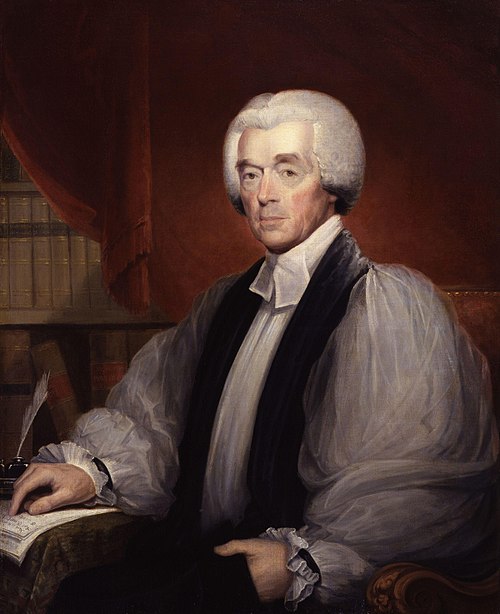
The “New-York Freeholder” was the Rev. Charles Inglis (1734–1816), recently made the senior curate at Trinity Church in New York. He was a native of Ireland but attached to the Anglican Church, even arguing for the unpopular idea of bishops in North America.

(This was not the Charles Inglis who commanded H.M.S. Lizard in 1770–71, H.M.S. Salisbury in 1778–80, and H.M.S. St. Albans in 1780–83, and who made one previous appearance on Boston 1775.)

According to the Rev. Mr. Inglis, he ceased his “Freeholder” essays after deciding that the Congress was hopelessly committed to “revolt and independency,” based on its adoption of the Suffolk Resolves and the proclamations it issued in mid-October 1774. So he never responded to Putnam.

After Thomas Paine issued Common Sense in early 1775, Inglis composed a reply titled The Deceiver Unmasked, printed by Samuel Loudon. Soon after copies were advertised for sale, Patriots broke into Loudon’s shop, seized all the copies, and burned them. Inglis was able to have the pamphlet reprinted in Philadelphia under the title The True Interest of America Impartially Stated.

In mid-1776, Gen. George Washington attended Trinity Church. As the minister told it, a lesser American general asked him to omit the usual prayers for the king from the service. Inglis defiantly refused. A few months later, the British military kicked the Continentals out of the city.

Inglis spent the rest of the war inside British-occupied New York, having become the rector of Trinity Church. In June–July 1782 he pulled out the “New-York Freeholder” name again for six essays in Rivington’s New-York Gazette.

The next year Inglis and his family moved to Britain, though most of the Trinity Church congregation went to Halifax. In 1787 the Crown sent him back across the Atlantic to be bishop of Nova Scotia—the first Anglican bishop in North America.

Sunday, December 28, 2025

“Under the hieroglyphical similitude of tropes and figures?”

As a prominent gentleman in Connecticut, Israel Putnam couldn’t ignore what “A New-York Freeholder” wrote about him in the New-York Gazette, as quoted yesterday.

However, Putnam faced a couple of challenges in replying. First, if he appeared to be flying off the handle, that would simply validate what the “Freeholder” had written.

Second, Putnam wasn’t a highly educated man, and in particular his spelling and punctuation were even more irregular than the eighteenth-century norm.

Even Putnam’s biographers acknowledge that he probably had help in shaping his reply in the 7 October 1774 Connecticut Gazette of New London, either from a friend or from printer Timothy Green. Because it doesn’t look like his usual writing.

The preface reads:
Mr. GREEN,

As my letter to Capt. [Aaron] Cleveland, wrote in consequence of the late alarm, has circulated far and wide, and made unfavourable impressions on the minds of some, ’tis desired that you and the several printers in the other colonies upon the continent, would give the following piece a place in your paper, and you will oblige
Your humble Servant,
ISRAEL PUTNAM.

POMFRET, 3d. October 1774.
The first line of the ensuing essay makes clear what it was really responding to: “In Mr. [Hugh] Gaine’s New-York Gazette of the 12th of September…”

Putnam described how the rumor of a British military attack on Boston had reached him through “Capt. Keyes”—most likely Stephen Keyes (1717–1788, gravestone shown above courtesy of Find a Grave). Keyes had heard the news from “Capt. Clarke of Woodstock,” who heard from his son in Dudley, Massachusetts, who heard from an Oxford man named Wilcot, who heard from his father and also found confirmation in Grafton.

With “only four gentlemen,” Putnam rode toward Boston, traveling “about thirty miles from my house.” In Douglas, Massachusetts, the party met the local militia captain, probably Caleb Hill (1716–1788), who with his company had just returned from their own march to “within about thirty miles of Boston.” Having thus learned that the earlier report was false, Putnam returned home, spreading the new word.

Putnam posited that the false alarm started with Customs Commissioner Benjamin Hallowell having “informed the army that he had killed one man and wounded another” while escaping from Cambridge. Hallowell’s own account of the “Powder Alarm” said nothing of the sort.

As for presenting himself as a gentleman in prose, Putnam acknowledged that he’d written his letter passing on that misinformation in haste and not in high style; he said he “aimed at nothing but plain matters of fact, as they were delivered to him.”

But Putnam also showed himself capable of deploying complex sentences and classical allusions in response to the “New-York Freeholder”:
Paying all due defference to this author’s learning, and his undoubted acquaintance with the rules of grammar and criticism, I would beg leave to ask him, whether he does not betray a total want of the feelings of humanity, if he supposes in the midst of confusion, when the passions are agitated with a real belief of thousands of their fellow countrymen being slain, & the inhabitants of a whole city just upon the eve of being made a sacrifice by the rapine and fury of a merciless soldiery, and their city laid in ashes by the fire of ships of war, he or any one else could set down under the possession of a calmness of soul becoming a Roman senator, and attend to all the rules of composition, in writing a letter, to make a representation of plain matters of facts, under the hieroglyphical similitude of tropes and figures? . . .

Now I submit it to the determination of every candid unprejudiced reader, whether my conduct in writing the aforementioned letter, merits the imputation of imprudence asserted by said writer; or whether they would have had me tamely set down, and been a spectator to the unhuman sacrifice of my friends and fellow-countrymen, or (in other words) Nero like, have set down and fiddled, while I really supposed Boston was in flames, or exerted myself for their relief?
Well, when he put it that way…

TOMORROW: Who was the “New-York Freeholder”?

Friday, July 22, 2022

“We shall not fail of informing our readers thereof”

Prof. Carl Robert Keyes, a historian of print culture and advertising at Assumption University, alerted me to a free database of the Maryland Gazette during the Revolutionary period, courtesy of that state’s government.

That made me think back on my look at newspapers that George Washington might have read at Mount Vernon at the start of 1773. [And looking back made me realize that posting had never posted while I was traveling last week, but it’s up now.]

The Virginia Gazettes carried only the barest news about the Crown’s investigation into the Gaspée affair. In contrast, the Pennsylvania Journal reprinted incendiary reports and commentary New England. What did Anne Catherine Green (shown here) and her son Frederick tells readers of their Maryland Gazette?

Their 31 December issue didn’t mention the Gaspée by name anywhere. But it reprinted items from the 14 December Boston Evening-Post, including:
Last Thursday evening an express came to town from New-York (which left that place the Sunday morning before) with dispatches brought thither by the Cruizer sloop of war, Capt. [Tyringham] Howe, who sailed from English the beginning of September, destined to this port; but meeting with bad weather, &c., was obliged to put away for South-Carolina, where he arrived the 10th of November, and has since got to New-York.

In consequence of the above dispatches, the Lizard frigate, Capt. [Charles] Inglish, with some of the armed schooners, which lay unrigged in this harbour, received orders from the admiral on Saturday morning to be immediately fitted for the sea, and accordingly before night were equipped ready for sailing, with a design (as we are told) to repair to Lord Hillsborough’s loyal colony of Rhode-Island.

The same morning an express set off from hence for New-York, with like orders for the Arethusa to sail for the same place, and letters to Gen. [Thomas] Gage and Governor [William] Tryon. Another express was sent to Capt. [Robert] Keeler, commander of the Mercury frigate at Newport: but the consequence of this unexpected naval manoeuvre we must leave for time to discover; though should any thing of importance transpire, further than that his Majesty’s ships lay this winter in the harbour of Newport with the same security from storms and tempests that they have hitherto done in that of Boston, we shall not fail of informing our readers thereof.

It is also further said, that two regiments are to be sent to Rhode-Island from New-York; and that a motion was intended to be made at the next session of Parliament to have the charter of that colony vacated.
These paragraphs suggested that the British military, both navy and army, was converging on little Rhode Island, and that Parliament was even going to change its constitution.

And for what? With no mention of smugglers attacking H.M.S. Gaspée, these measures looked even more tyrannical.

Of course, none of that happened. But rumors like these both reflected and raised the political tensions in North America, and perhaps at Mount Vernon.