J. L. BELL is a Massachusetts writer who specializes in (among other things) the start of the American Revolution in and around Boston. He is particularly interested in the experiences of children in 1765-75. He has published scholarly papers and popular articles for both children and adults. He was consultant for an episode of History Detectives, and contributed to a display at Minute Man National Historic Park.

Subscribe thru Follow.it


•••••••••••••••••


Showing posts with label Beacon Hill. Show all posts

Sunday, June 30, 2024

When Adams Chaired the Boston Town Meeting
Friday, 17 June 1774, turned out to be the last day the Massachusetts assembly met under the Crown.

Before Gov. Thomas Gage shut them down, Samuel Adams and his allies used that session to authorize a delegation from the colony to the Continental Congress, as I’ve just recounted.

On the same day, there was the continuation of a town meeting in Boston. Some of that port’s merchants had started to grumble against the Whigs’ insistence that no one should pay for the tea destroyed in December (or in March, for that matter).

Adams was officially the moderator of that ongoing meeting. Expecting “a warm engagement” with the conciliatory party, Dr. Joseph Warren urged Adams to return to Boston to wield the gavel. But he was was stuck “at Salem, attending the Business of the General Court.”

At 10:00 A.M., the meeting began in Faneuil Hall. The first order of business was appointing a temporary moderator in Adams’s place. The gathering’s unanimous choice was James Bowdoin, a wealthy merchant, learned man, and genteel political leader for the Whigs.

A committee of three men went to Bowdoin’s home near Beacon Hill. He wasn’t there.

The meeting then selected merchant John Rowe to moderate. This was an unusual choice because Rowe was not a Whig stalwart. Nor was he really a Loyalist stalwart. He was a “trimmer,” adjusting his political sails according to the prevailing winds and what looked most advantageous to his business.

Perhaps the public remembered Rowe’s remark back in December about mixing tea and saltwater—the first public suggestion of that method of resolving the standoff over the East India Company cargo. Secretly Rowe appears to have regretted that remark and tried to keep a low profile afterward. So he would hardly want to chair a town meeting making controversial decisions.

In his diary Rowe wrote: “I was much engaged & therefore did not accept.” But he added a remark showing his real attitude: “The People at present seem very averse to Accommodate Matters. I think they will Repent of their Behaviour, sooner or later.”

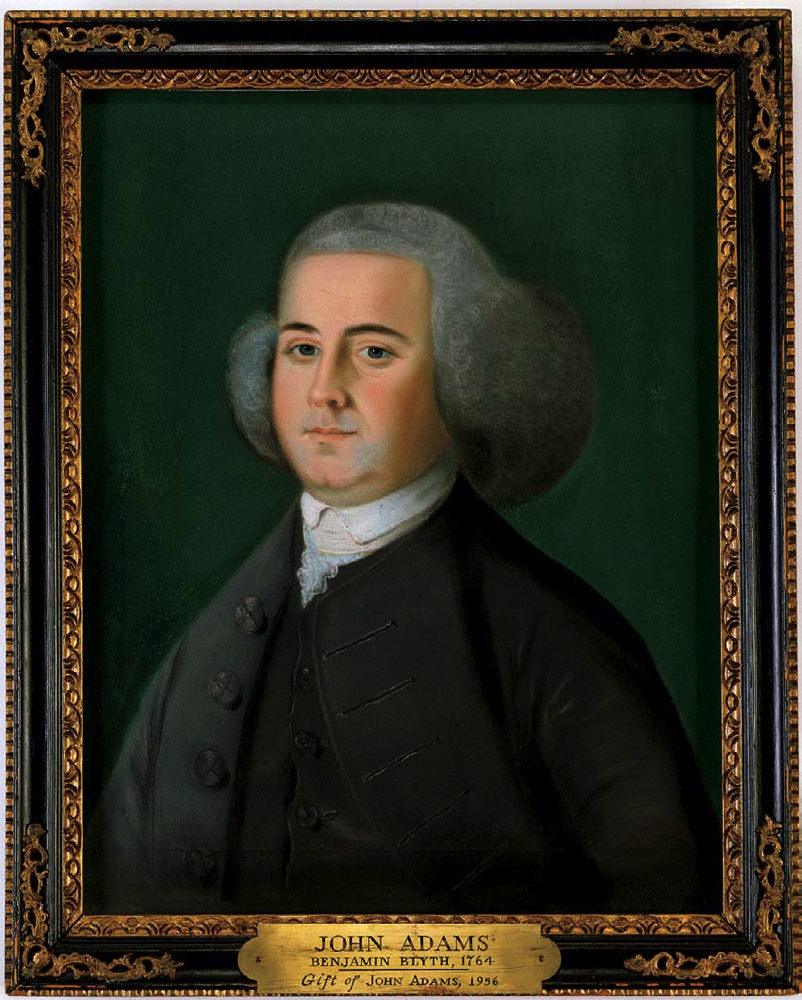
Back at Faneuil Hall, the gathering moved on to vote for a gentleman who had never moderated the Boston town meeting before. In fact, he later said he usually kept away from town meetings. But he had represented Boston for one year in the Massachusetts General Court.

This was John Adams. Per the record, “a Committee of three Gentlemen” went to him with news of their choice, and Adams “gave his Attendance accordingly.”

TOMORROW: John Adams in the chair.

Saturday, March 14, 2020

“As plenty in King-street as the paving stones”

On 14 March 1770, 250 years ago today, Josiah Collings went to magistrate Edmund Quincy to swear to this deposition, which he then had published in the 26 March Boston Gazette:
To the Inhabitants of the Town of BOSTON,

WHEREAS by some evil minded person or persons, it has been diverse times since the public massacre in King-street on the evening of the 5th day of March current, reported, That a blacksmith who works near the foot of Beacon-hill, did swear that some of the Inhabitants of the said town of Boston did say at the time of the said massacre, that the dollars which should be taken out of the Custom-house would be as plenty in King-street as the paving stones:——

And whereas it as been surmis’d of me the subscriber, who have for some time past work’d as a blacksmith near the said place, that I had spoken as above.——

I do now hereby declare, That I have never heard any of the inhabitants of this town say any thing touching a design upon the Custom, or any money, or other thing thereto belonging; and that a thought of that nature was never in my mind.

JOSIAH COLLINGS.
Just as the Boston Whigs had their conspiracy theories about royal appointees, those bureaucrats had conspiracy theories about the Whigs and the crowd. They theorized that a mob had attacked Pvt. Hugh White on King Street not because he’d clubbed apprentice Edward Garrick for speaking disrespectfully of Capt. John Goldfinch but because they really wanted to attack the Customs House and loot it.

The Whigs and other defenders of Boston’s reputation of course sought to squelch any idea of nefarious purposes—on their side, at least. When some people said Collings was spreading the story around, he felt enough pressure from his neighbors to issue this public denial. In sum, the blacksmith was denying a rumor about spreading a rumor.

I don’t have much more information about Joseph Collings. He married Mary Wallace in 1763 and Elizabeth Granger ten years later. He may have been the Joseph Collins appointed as a town watchman in December 1774, or maybe not.

Saturday, September 15, 2018

“To cause the barrel to be forthwith removed”

What about that turpentine barrel on top of the pole on top of Beacon Hill?

The beacon pole had been standing since the 1630s. It got blown down sometime in the 1760s, and in late 1767 Boston’s selectmen put it back up. (Gov. Francis Bernard grumbled that he hadn’t been consulted.)

Then on the night of 10 Sept 1768, as the town digested news that army regiments were on their way, someone placed a barrel in the platform atop the beacon. People recognized that barrel as holding sometime flammable, turpentine or tar. They knew that a flaming beacon was a signal for the country militia to arm and march to fight off invaders. So that barrel provoked thought.

On Sunday, 11 September, the Council and the selectmen both had emergency meetings about the barrel. The selectmen decided to do nothing. The Council decided to do nothing besides asking the selectmen to take down the barrel. The selectmen received that message and again decided to do nothing. On Monday, Boston started a town meeting, received the Council’s message as forwarded from the selectmen, and decided to do nothing on a larger scale.

According to Lt. Gov. Thomas Hutchinson, someone finally took action on Thursday, 15 September:
The council, thereupon, advised the governor to direct the sheriff to cause the barrel to be forthwith removed. The sheriff, in the most private manner he could, executed his order, taking six or seven men with him just at dinner time, and in about ten minutes, luckily as he thought, effected his purpose.
Sheriff Stephen Greenleaf was a royal appointee, so he owed his position to the governor. He was Anglican, another common indicator of support for Crown policy. But when Greenleaf carried out the governors’ orders in this tumultuous period, he usually acted slowly or gently enough to avoid the wrath of the crowd.

The date of the sheriff’s action isn’t clear from Hutchinson’s account. As I wrote earlier, the newspaper printers didn’t touch the story. Historians John Miller and Hiller B. Zobel, the latter appearing to cite the diary of Capt. John Corner of the Royal Navy, state that Greenleaf acted on the 15th—250 years ago today.

One more thing—the barrel had been empty all along.

TOMORROW: Other news.

Wednesday, September 12, 2018

“It hath been Reported in this Town Meeting”

At 9:00 A.M. on Monday, 12 Sept 1768, Bostonians (well, white men with enough property to qualify for the vote and the economic freedom to take a morning off from work) gathered at Faneuil Hall for an emergency town meeting.

The event started with a prayer from the Rev. Dr. Samuel Cooper, brother of town clerk William Cooper. The voters chose James Otis, Jr., to moderate. In other words, the proceedings were firmly in the hands of the upper-class Whigs.

Or, as Gov. Francis Bernard put it, “the Faction appeared surrounded with all its forces: there were very few of the principal Gentlemen there; such as were, appeared only as curious & perhaps anxious spectators.” By “principal Gentlemen” he meant those who supported him and the Crown. Bernard worried “the Faction” planned to attack Castle William or the coming army regiments. More likely, Boston’s political leaders wanted to organize the most forceful opposition the province could muster without edging into violence.

The gathering took up the reason for the meeting: “it hath been Reported in this Town Meeting that his Excellency the Governor has intimated his apprehensions, that One or more Regiments of his Majestys Troops are dayly to be expected here.”

The meeting then chose several gentlemen to “be a Committee to wait upon his Excellency if in Town, humbly requesting that he would be pleased to communicate to the Town the grounds and Assurances he may have thereof.” That committee consisted of town representatives Thomas Cushing, Samuel Adams, and John Hancock; attorneys Richard Dana and Benjamin Kent; merchant and selectman John Rowe; and young Dr. Joseph Warren.

A couple of nights earlier, some Bostonians had made another response to news of troops coming by hoisting a flammable barrel onto the beacon pole atop Beacon Hill, a symbolic preparation for war. Sometime that Monday morning, perhaps before the meeting, the Boston selectman had received “A Letter from the Secretary [of the province, Andrew Oliver] inclosing a Vote of Council relative to the Tar Barrel.” The Council wanted the selectmen to take the barrel down.

Those elected officials instead turned the issue over to the town. At this point the official records of the town meeting state: ”A Vote of the Honble. Board respecting a Tar Barrel, which was the other Night placed in the Skillet on Beacon Hill, by Persons unknown Was communicated to the Town but not acted upon.”

The version of the minutes released to the newspapers, as shown here in Harbottle Dorr’s newspaper collection, doesn’t mention that agenda item at all. The town and the selectmen were happy to leave that barrel hanging over the town, but they didn’t want people outside Boston to know about it.

Instead, the meeting took up a petition that Otis, Adams, Warren, and others had probably drafted a couple of days before, asking that Gov. Bernard call the Massachusetts General Court back into session. The reason was “the critical state of the publick Affairs, more especially the present precarious situation of our invaluable Rights & Privileges Civil and Religeous”—the threat of the regiments again. The meeting designated the same committee of seven to deliver that petition to Gov. Bernard.

Finally, the meeting chose six of those men (all but Kent) plus several more to “take the state of our publick Affairs into Consideration, and Report at the Adjournment the Measures they apprehend most salutary to be taken in the present emergency.” That larger group included such confrontational merchants as Daniel Malcom and William Molineux—plus Adino Paddock, captain of the town’s growing “train” or militia artillery company.

And then the men adjourned until the next day at 10:00 A.M. to hear about Gov. Bernard’s responses.

TOMORROW: Town meeting, day two.

Tuesday, September 11, 2018

The Barrel on the Beacon

On 11 Sept 1768, 250 years ago today, Bostonians awoke to see a barrel newly positioned in the iron platform atop the pole on Beacon Hill. Everyone knew that a flame from that beacon would signal for the countryside militia to assemble in arms. The barrel was clearly a response to the preceding week’s news that the London government had sent orders for army regiments to move into Boston.

How did the townspeople react? Most of them went to church. Because that 11 September was a Sunday. By law, no one was supposed to do business on Sunday—but two legal bodies met about the beacon.

Gov. Francis Bernard was spending the day at his country estate in Jamaica Plain. He later reported to Lord Hillsborough, the Secretary of State in London:
the Council sent to me on Sunday afternoon to desire I would order a Council, which I held at a Gentleman’s House halfway between me and Boston. Here It was debated what Means should be used to take the barrel down; & it was resolved that the Select men should be desired to take it down
The editor of the Bernard Papers published by the Colonial Society of Massachusetts says that the gentleman who hosted this impromptu Council meeting was George Erving (1738-1806), son of Council member John Erving. The Ervings were merchants who started as Whigs in the 1760s but gradually moved into the Loyalist camp.

Meanwhile, inside Boston selectman John Rowe noted in his diary: “After Church the Selectmen met about a Cask that was fix’d on the Saddle of the Beacon.” The record of that meeting states that only four of the seven selectmen attended. In addition to Rowe, they were Joseph Jackson, John Ruddock, and John Hancock, and they probably met at Faneuil Hall.

The discussion was recorded simply as: “Information was given the Selectmen that a Tar Barrel had been put in the Beacon.” Those elected officials made no move to take the barrel down.

That evening, the printers of the Boston Gazette, Boston Post-Boy, Boston Chronicle, and possibly even the Boston Evening-Post prepared the next day’s newspapers. As far as I can tell, none of those papers reported on the barrel perched high above the town, ready to be set on fire.

TOMORROW: Boston’s town meeting.

Monday, September 10, 2018

“A strange, mad proposal, if such a one were ever made”

Yesterday I quoted Gov. Francis Bernard reporting to London about a big meeting in Boston on Friday, 9 September, where some people advocated resisting the coming army regiments by force.

There was another gathering the next evening, Bernard wrote:
the other meeting, as I am informed, was very small & private on Saturday Night, at the House of one of the Cheifs; and there it wa[s] resolved to surprise & take the Castle on the Monday night following. I dont relate these Accounts as certain facts but only as reported & beleived.
In The Life and Public Services of Samuel Adams, William V. Wells stated that in fact “[James] Otis, Samuel Adams, and [Dr. Joseph] Warren met at the house of Warren…to draw up resolves, arrange for the proceedings, and prepare the order of debate” for the town meeting scheduled for Monday.

Wells’s citation for that statement was “Capt. Corner’s Diary, kept aboard the war-ship Senegal in Boston Harbor, now in the London State-paper Office.” However, John Corner was the captain of H.M.S. Romney, not the Senegal. In addition, Wells wrote in the same paragraph that the Senegal had left port three days before this meeting. But perhaps the British National Archives does hold a journal from Capt. Corner recording intelligence, or at least gossip, about the meeting on the evening of 10 September. [Anyone care to check?]

It was common for Whig political leaders to draft resolutions and make plans before an official meeting. Furthermore, those men were probably eager to avoid disorder and destruction, to channel Boston’s opposition to the troops into the most productive, least unruly form of resistance.

Bernard, however, believed the worst. Back on 9 July, he had dismissed reports of a possible attack on Castle William, where the Customs Commissioners were hiding, as “idle rumours.” But now the situation seemed more dire. In his history of Massachusetts, Thomas Hutchinson wrote:
Information was brought to governor Bernard, that at one of those meetings it had been proposed by Mr. [William] Molineux, at the head of five hundred men, to surprise the garrison at the castle; a strange, mad proposal, if such a one were ever made. This the governor mentioned in one of his letters to the ministry, but he was not at liberty to make known the evidence of the fact. He believed it to be true.
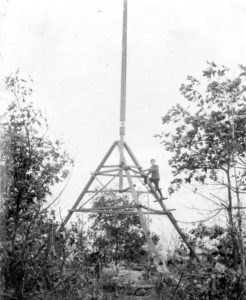
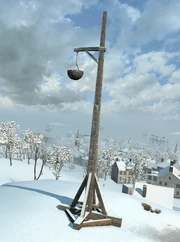
On the same evening of 10 September, another sign of trouble appeared on Beacon Hill. On that peak on the western side of the peninsula, Boston’s early English settlers had erected a tall beacon as part of their military alert system. In case the town came under attack—most likely by sea from another European power, but perhaps from Natives—the authorities would set fire to something inflammable atop that pole. Settlers in other communities would see the beacon flare up and rush to help. All very Return of the King.

Alas, in the words of local historian William W. Wheildon, “there is no evidence that it was ever used for any such purpose, or that there ever was any fire in its skillet.”

In fact, back on 18 Nov 1767 Boston’s selectmen had noted that the beacon pole had been “thrown down by the Wind,” and the wood had proven “too rotten to serve again.” They therefore chose John Hancock and William Phillips as a committee to erect a new beacon. (Gov. Bernard told London that the beacon had been “erected anew in a great hurry by the Selectmen without consulting me.”)

The town owned the top of Beacon Hill and the narrow path up to it. On one side of that path lived John Hancock. On the other side lived William Molineux.

Sometime on the night of 10 September, someone passed between those gentlemen’s houses, climbed the pole, and left a turpentine barrel at the top, ready to set aflame.

TOMORROW: A busy Sunday in Boston.

[The picture of Boston’s beacon above comes from the Assassin’s Creed videogame. The Blackstone Valley Historical Society shares a photo of a beacon recreated in Cumberland, Rhode Island.]

Sunday, December 14, 2014

What’s Inside the State House Time Capsule?

On 7 Aug 1855, workers were building an addition onto the Massachusetts State House and strengthening its foundation on Beacon Hill. They were surprised to find that the cornerstone in the building’s southeast corner  was damaged—and that something had been crudely cemented to it.

The workmen found “a few copper coins and two pieces of sheet lead loosely put together,” according to a Freemasons’ magazine. The silver plate laid down by Gov. Samuel Adams and Paul Revere in 1795 sat between those lead sheets, along with more coins. Those metal artifacts were “corroded with rust” but soon “restored to their original condition”—possibly with acid.

The managers of the construction projects quickly had the other side of the plate engraved with this text:
The Corner Stone of the Capitol having been removed in consequence of alterations and additions to the Building, The original deposit together with this inscription is replaced by the Most Worshipful Winslow Lewis, M.D., Grand Master and other Officers and Brethren of the Grand Lodge of Massachusetts, in the presence of His Excellency, Henry J. Gardner, Governor of the Commonwealth, on the 11th day of August, 1855, A. L. 5855.
Instead of simply laying that plate on the ground again, the state government commissioned a “securely prepared metal box hermetically sealed.” The term “time capsule” hadn’t been coined yet, but that’s what they were making. Inside they placed the silver plate, the copper coins, and…some other things.

Only four days passed between when workers discovered the 1795 plate and coins and when they placed those things back inside the State House walls. There was no big public ceremony because the site was then a construction zone—only government officials attended. The original cornerstone was replaced with a granite block on a new foundation, and the metal box was placed inside a “newly hammered granite ashlar” on top of that block. This was the time capsule recently rediscovered during another repair process.

So what, besides the artifacts from 1795, might be in that box? The Freemason’s Monthly Magazine reported in detail on the 1855 developments, and it listed the contents.

First, there were the coins from 1795, showing the transition from state to federal currency with the adoption of the new Constitution:
  • “a Massachusetts cent, (commonly known as bearing an Indian on one side and an eagle on the other,) of the year 1787” [above]
  • “another of the year 1788 two half cents of the same currency and bearing the same dates”
  • “cents of the United States, coined in 1793, and 1794”
  • “New Jersey cent (Nova Caesarea,) of the year 1787”
  • “an old half penny of the time of George the Second
  • “a half dollar of the United States currency, 1795”
  • “half dime of the same currency and year”
  • “a pine tree shilling, of the currency established in Massachusetts in 1652”
  • “a copy of the small medal struck in England in 1794 in honor of Washington, bearing the following on the obverse, head and bust of Washington in regimentals, with the legend.—‘George Washington, born in Virginia, Feb. 11, 1732,’ the parallel lines, ‘General of the American Armies 1776. Resigned 1783. President of the United States 1789.’” [below]
To which the statesmen of 1855 added:
  • “The silver coins of the U. States currency of the present year”
  • “copper cents and half cents of the last four years”
  • “an impression of the State seal”
  • “the title page to the first volume of the newly printed Massachusetts Colony Records”
  • “morning papers of the day”
Sam Doran of Lexington found a newspaper article from 1855 snapping that Gov. Gardner, from the American or Know Nothing Party, had included “the Bee, the American Crusader, and two other Know Nothing sheets.” After all, this was the Massachusetts State House—there had to be a political complaint.

The time capsule was carefully removed by a Museum of Fine Arts preservation specialist, so soon we’ll know how accurate that list of objects is, and how well they’ve survived the last century and a half.

Saturday, December 13, 2014

Under the Cornerstone of the State House

The big Boston historical news this week was the discovery of a time capsule sealed in the cornerstone of the State House, laid in 1795. Or rather, the rediscovery of the eighteenth-century artifacts inside that capsule because they were previously found in 1855.

But let’s start at the beginning. The first news reports, such as this C.N.N. dispatch referred to “a time capsule believed buried by Samuel Adams and Paul Revere.” My first guess was that a whole bunch of prominent Bostonians had attended the cornerstone-laying in 1795 and journalists scanning the list of attendees simply pulled out the two men who had become brand names.

But no, Adams and Revere really were the two most prominent dignitaries at the event on Independence Day in 1795. Adams was seventy-two years old and the governor of Massachusetts, having succeeded John Hancock two years earlier. Revere, for his part, had recently become Grand Master of Massachusetts’s Freemasons. Even though few of those Masons were really masons, they participated in a lot of stone-laying then.

Other notables at the event included the Rev. Peter Thacher, chaplain of the state senate; architect Charles Bulfinch; and builder/politician Thomas Dawes. Fifteen white horses, representing the fifteen states then in the U.S. of A., drew the cornerstone through the streets and up to Beacon Hill.

The 8 July 1795 Columbian Centinel reported that Adams and Revere placed a silver plate under the stone which said:
This Corner Stone of a Building, intended for the use of the Legislature, and Executive Branches of Government of the Commonwealth of Massachusetts, was laid by his Excellency Samuel Adams, Esq., Governor of said Commonwealth.

Assisted by the Most Worshipful Paul Revere, Gr. Master, And Right Worshipful William Scollay, Dp. G. Master, The Grand Wardens and Brethren of the Grand Lodge of Massachusetts.

On the 4th day of July, AN. DOM., 1795. A. L. 5795.

Being the XXth Anniversary of American Independence.
Note that the twentieth anniversary of independence would actually come a year later.

The main speaker that day was a young lawyer named George Blake (1769-1841), whose speech was printed and sold by Benjamin Edes. A Jeffersonian, Blake spoke about how Royal Navy ships were once again preying on American crews. He went on to serve in both houses of the Massachusetts legislature and as U.S. Attorney for the district from 1802 to 1829.

Gov. Adams’s brief remarks on the new building included:
May the superstructure be raised even to the top stone without any untoward accident and remain permanent as the everlasting mountains. May the principles of our excellent Constitution founded in nature and in the rights of man, be ably defended here. And may the same principles be deeply engraven on the hearts of all citizens and there be fixed unimpaired and in full vigor till time shall be no more.
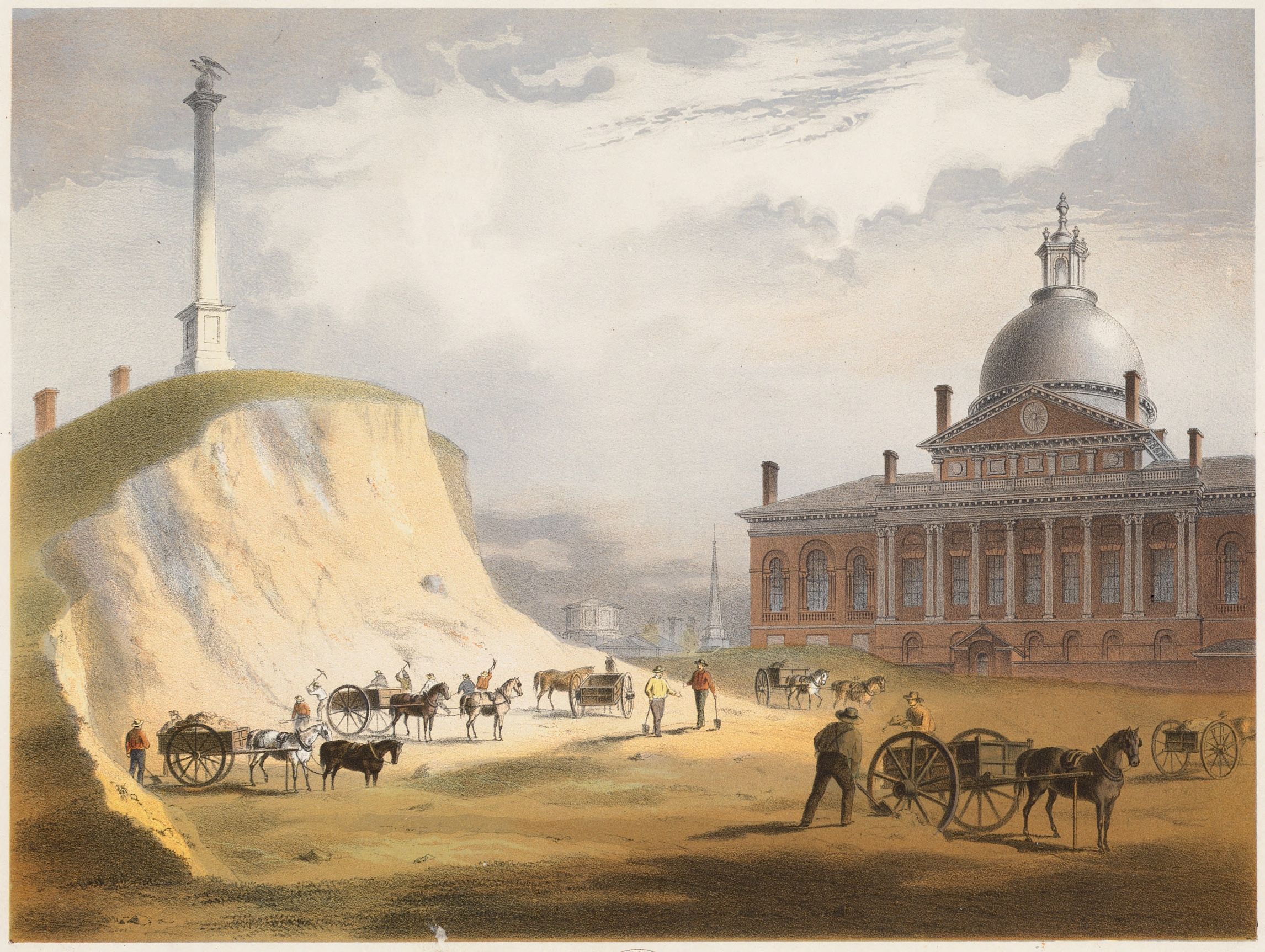
I think the constitution Adams referred to was the state’s, not the federal; the state’s was more explicit about natural rights. As to “permanent as the everlasting mountains,” less than two decades later developers began to cut down the crest of Beacon Hill, as shown above. And then in August 1855 a construction crew dug up that corner of the State House to repair the foundation.

They discovered the silver plate set between two sheets of lead—along with some other objects that the 1795 newspaper hadn’t mentioned.

TOMORROW: An expanded time capsule.

Tuesday, December 31, 2013

From the News Boys of the Massachusetts Mercury

It’s a Boston 1775 tradition around New Year’s to quote from the verses that newspaper apprentices printed and sold around that holiday. This year’s lines come out of a rather long piece of poetry set by the youth of the Massachusetts Mercury to greet the new year of 1800.

Looking at other verses from that year shows it had become common for the apprentices to work their employer’s address into their verse. The Massachusetts Mercury was published out of State Street, as you’ll be able to guess. This poem also alluded to a landmark on Beacon Hill—the memorial column with an eagle at the top—before drawing a helpful picture of how Bostonians consumed their newspapers in 1799:
Each proper morn, in routine way,
When Beacon’s EAGLE spies the day,
We sally forth from Street of State,
And as at breakfast board you set,
Present the sheet, t’inform, amuse—
You coffee sip and read the News.
Reclin’d at ease in elbow chair,
You smile at this, at that you stare;
And as the columns you pursue,
Lo, the whole World comes in review.
You, like the SUN, o’er Nations glance,
Nor rest at Russian, Britain, France.
You soon discern who basely Prints,
That “RORA’s” cloudy, “ARGUS” squints;
That the pert “BEE”’s a worthless dunce,
Sans sting or honey of his own.
But dropping anger, loud you laugh,
At signals false of “TELEGRAPH.”
Those latter lines look like trash-talking about Jeffersonian rivals. Boston had a new newspaper called The Constitutional Telegraphe, discussed back here. The other references appear to be to Philadelphia’s American Aurora, New London’s Bee, and New York’s Greenleaf’s New Daily Advertiser, which had Argus on its masthead. Others Boston carrier verses for this year also refer to their rivals or the pseudonyms of their usual contributors; before the war, such verses usually bad-mouthed foreign enemies and extolled patriotic unity rather than playing out domestic political quarrels.

The Mercury boys’ verse continues:
Perhaps at Store our sheet you view,
Or in some Office learn what’s New
—To us the toils the same—the treat to you.

Say, who besides, for Public Good,
Like the News Boys have yet withstood
The fretting Snows—the bruising Hail,
And the North-wester’s freezing Gale?
The drenching Rain—the sultry Air,
The Thunder’s Roar—the Light’nings Glare?
Too much for us small Lads to bear,
Did not HOPE lend her potent cheer.
She points us to your purse and face—
There’s pence, she cries, and there is grace.
The purpose of these broadsides, you may remember, was to remind customers that New Year’s was the traditional time to tip one’s newspaper carriers.

But the turn of the year 1800 wasn’t just any year.

TOMORROW: A hastily written extra.

Wednesday, November 21, 2012

America’s First Telegraphes and Telegraph

Yesterday I noted how the late 1790s brought a spate of new American newspapers called the Telegraphe, most of which went out of business in Thomas Jefferson’s first term. Which is a little odd considering that most of them were pro-Jefferson. And that Samuel Morse didn’t invent what we know as the telegraph for another three decades.

The key to those puzzles appears in Boston’s Columbian Centinel newspaper for 15 Nov 1794, in an item headlined “THE TELEGRAPHE”:
The plan of the new French instrument for conveying intelligence (the Telegraphe,) is by beacons on heights, at the distance of 12 or 15 miles from each other; in all of which are placed glasses. The words to be conveyed, are exhibited on the first, read, and exhibited by a short process at the second, and so on through the whole line. What the process is for copying the words so expeditiously, and for throwing such a body of light as to make them visible at such a distance, does not yet appear; but it is clear that the experiment has complete success.

Conde surrendered at six o’clock in the morning. At the meeting of the Convention at nine o’clock the same day, it was announced to them by the Telegraphe from Lisle. They instantly changed its name to Nord Libre, and resolved that the Northern army continued to deserve well of their country. These resolutions were ordered to be conveyed to Lisle by the Telegraphe. They were so; and before the Convention separated for dinner, they received the answer that their resolutions had arrived at Lisle, so that the very same day the army received the thanks of the nation for their achievement.
The beacon on Beacon Hill could send only one signal: lighting the tar barrel atop that pole meant Boston was in danger. Claude Chappe and his brothers had developed a much more sophisticated and flexible system, and it remained part of France’s communications infrastructure for half a century. Low-tech Magazine, Boing Boing, and of course Wikipedia have more detail on how it worked.

So to Americans of the 1790s, a “telegraphe“ was:
  • the latest, most advanced technology for transmitting news over a distance…
  • particularly news about threats to the republic…
  • developed in Revolutionary France.
No wonder Jeffersonian printers adopted that term for their newspapers! They spent the last part of George Washington’s Presidency and all of John Adams’s warning about Federalist encroachments on Americans’ rights and lauding the French republic. Once Jefferson won the top office, those newspapers changed their titles (or their proprietors got political jobs).

A few years later, Massachusetts had another sort of “optical telegraph,” invented by Jonathan Grout (1737-1807) of Belcherstown, a Revolutionary War veteran and anti-Federalist who had represented part of Massachusetts in the first federal Congress. In 1801 he built an optical telegraph that sent shipping news from Boston to Martha’s Vineyard via Hull, Scituate, Marshfield, and other towns. Caleb Bingham’s Historical Grammar (Boston: 1802) said Grout’s telegraph
is upon a plan entirely different from, and far superior to, any ever used in Europe. With this Mr. Grout has asked a question, and received an answer from a distance of 90 miles, in ten minutes.
Grout’s system doesn’t appear to have lasted for long after his death, however.

Tuesday, August 16, 2011

Marking the Bounds of John Singleton Copley’s “Farm”

“Mapping Revolutionary Boston” Week at Boston 1775 starts with a look at the “Copley Farm,” one of the pins in the upper part of the map on that website/app from the Bostonian Society and Wellesley College.

That land was property on the western slope of Beacon Hill assembled by John Singleton Copley in the early 1770s, after he’d established himself as North America’s premiere portraitist and married into the wealthy Clarke family. Some of the buildings on that land appear in the upper left of Christian Remick’s picture above.

In 1795 Copley’s younger half-brother (and former model and assistant) Henry Pelham wrote to him about that property:
I now return you an answer to your several inquiries respecting your land on [i.e., facing on] the Common, in Boston, which I have particularly known for upwards of thirty years, having, when a boy at school, almost constantly bathed at the strand upon the western side of it. But from the time of your purchasing the western part from Mr. [Peter] Chardon I have been intimately acquainted with it, having twice had it under my care.

First, in the year 1771, while you were in New York, when I renewed part of the fences, and, with the concurrence of the selectmen, laid out a broad road from George’s Street [Hancock Street] to the water, and planted a row of trees in continuation of those in front of Governor [John] Hancock’s ground; and, next, in the year 1775, when I inclosed the whole with a Portland rail fence, to replace the former fence, which had been demolished for fire-wood by the troops, who, the winter before, were quartered in Boston. . . .

At the northwest corner of the field was a very high, steep cliff of loose, rolling gravel, which made it necessary to run the fence upon the upper edge of it,…both for the safety of cattle and for the ease of fencing. . . .

I can testify that you had such possession till your leaving the country in 1774; that in the year 1775 I inclosed the grounds on your behalf, and held the possession for your use till hostilities commenced between Great Britain and America, when those grounds were occupied by the British troops for encampment and erecting fortifications.
Copley had written to Pelham for that confirming information because he was about to start a lawsuit to get back that land. He had lived in England since a few months before the Revolutionary War began, meaning that Massachusetts’s laws confiscating the property of Loyalists who left during the war didn’t affect him. As agent for his Boston property, Copley had chosen Samuel Cabot, husband of one of his wife’s cousins.

In 1795 Cabot reached a deal to sell that land to the Mount Vernon Proprietors for five times what Copley had paid. At first, the painter was quite pleased. Then he learned that the new Massachusetts State House was to be built nearby. Copley decided that Cabot could have gotten a better price, and might have colluded with the buyers. He sent his son, a young lawyer, to Boston to contest the sale in court, but lost. And that was the start of the posh neighborhood of Beacon Hill west of the State House.

Monday, June 20, 2011

“Colonel Prescott will fight you to the gates of Hell!”

In The Whites of Their Eyes, his new book on the Battle of Bunker Hill, Paul Lockhart treats the story (dramatized here) of Abijah Willard recognizing Col. William Prescott on the redoubt on Breed’s Hill dismissively. In fact, he relegates the tale to a footnote. (Well, at least it’s not an endnote.)

Lockhart writes:
It’s a stirring anecdote, to be sure, but undoubtedly apocryphal. The closest [Gen. Thomas] Gage could have been to the fighting was Copp’s Hill—and if he was there, neither [Gen. Henry] Clinton nor [Gen. John] Burgoyne remarked upon it. And at that distance—over one thousand yards lay between Copp’s Hill and the summit of Breed’s—the idea that Willard could have seen and recognized Prescott, given the primitive optics of the day and the amount of gunsmoke that must have hung in the air, seems implausible at best.
Since I’m rather fond of that anecdote, I decided to check into when it appeared on the scene. The earliest version I’ve found appeared in the back of Memoirs of His Own Time, by Alexander Graydon, published in 1846. That book was edited by John Stockton Littell, who added appendixes about Revolutionary events and figures. In one of those, Littell wrote:
Gage, with his officers and others in whom he had confidence, went up to Beacon Hill to reconnoitre; after having looked through his telescope for some time, he handed it to a Mr. Willard, a mandamus counsellor, and describing the leader of the American troops as head and shoulders above the works, asked him who it was, and if the rebels would fight. Willard told him, that it was his brother-in-law, Prescott; “as to his men,” said he, “I cannot answer for them; but Colonel Prescott will fight you to the gates of Hell!”
Littell stated that his source for those facts was “a MS. of his friend, the late estimable and Reverend Edward G. Prescott, a grandson of Colonel Prescott.”

TOMORROW: But I found other versions as well.

Tuesday, February 01, 2011

Events to Dig Out For

Back here I featured the Old South Meeting House’s January events devoted to fabric arts in the eighteenth century. Lynne Bassett’s program “Out of Whole Cloth: Quilting in the Pre-Industrial Era” had to be canceled because of last week’s snowstorm. So it’s rescheduled to this Thursday, 3 February, at 12:15 P.M.—just after this week’s snowstorm. If the weather cooperates long enough to let this show go on, admission to the Old South costs $6, and is free for members. Bring your own quilts to bundle up in!

Also on Thursday, the Massachusetts Historical Society will host the acronym-resistant Boston Area Early American History Seminar, starting at 5:15 P.M. This month the discussion will be about Jason Sharples’s paper The Politics of Fear: Slave Conspiracy Panics, Community Mobilization, and the Coming of the American Revolution,” available at the M.H.S. for reading in advance. The main response will come from Ben Carp of Tufts University, and then the discussion will become general.

On next Wednesday, 9 February, at 6:30 P.M. Alex Goldfeld will speak at the Boston Public Library in Copley Square on “From the North End to Beacon Hill: Boston’s Black Community Since 1783”. His announcement says:

Spanning the time from the Revolution to the Civil War, this is an illustrated presentation about the dynamic, African-American neighborhood on the north slope of Beacon Hill, an area once considered part of the old West End.
Last March, Alex spoke about Boston’s pre-Revolutionary free black community, centered in the North End, to a capacity crowd. This event is free and open to the public, and more information is here.

[The photo of the hub of the solar system getting in buried in snow like my car tires comes from maliciousmonkey via Flickr under a Creative Commons license. It’s actually three years old, but the thought’s what matters.]

Thursday, July 15, 2010

Enjoying Boston’s Outdoor Spaces, Then and Now

This is a picture of the Boston Common in 1768, based on a watercolor by Christian Remick. At the rear is Beacon Hill, with John Hancock’s mansion and estate on the right and a trio of houses that John Singleton Copley soon bought at the left. The tall pole on the far right is the beacon that gave the hill its name.

In the middle ground is the Common. I believe the small building at the left is the town’s gunpowder storage house. At the right are tents and a military unit drilling—presumably representing the British army regiments that arrived that October. Meanwhile, other figures are strolling and riding in arcadian comfort. There should also be some livestock grazing.

In the foreground is a feature that the British immigrants who set aside the Common probably didn’t foresee: a line of trees producing a shady mall for walking. Those trees represented the beginning of the Common’s shift from functional agricultural land to public park, preserving a quasi-natural landscape for urban citizens to enjoy.

Boston’s outdoor parks and resources are the focus of several free public talks in the next few weeks. I’m hoping that kinder weather will make it comfortable to enjoy those places, but even if the heat returns we can enjoy these talks in air-conditioned comfort.

On Thursday, 15 July (that’s tonight) at 7:00, Todd Forman will present “Legacies in Stone,” an illustrated talk on Boston’s public statuary at the main library in Newton. Local sculptor Nancy Schön, who produced the ducklings in the Public Garden and gets to reproduce one every ten years or so, will also be on hand.

On Thursday, 22 July from 6:30 to 8:30, Christopher Klein will talk about his book Discovering the Boston Harbor Islands: A Guide to the City’s Hidden Shores at the Community Boating Boathouse on the Esplanade. Chris wrote about the fight over the Boston Light as a Boston 1775 guest blogger back in 2008.

On Thursday, 29 July at 7:00, Meg Muckenhoupt will will present a slideshow and talk based on her new book Boston’s Gardens and Green Spaces at the Westborough Public Library.

Finally, on Thursday, 12 August at 7:00, Christopher Klein will be at the Westborough library to discuss Discovering the Boston Harbor Islands once again.