J. L. BELL is a Massachusetts writer who specializes in (among other things) the start of the American Revolution in and around Boston. He is particularly interested in the experiences of children in 1765-75. He has published scholarly papers and popular articles for both children and adults. He was consultant for an episode of History Detectives, and contributed to a display at Minute Man National Historic Park.

Subscribe thru Follow.it


•••••••••••••••••


Showing posts with label chocolate. Show all posts

Saturday, June 27, 2026

New Boston Museum Exhibits to Visit During the Sestercentennial

Two venerable Boston museums are unveiling big reworked exhibit spaces for the Sestercentennial.

At Revolutionary Spaces’ Old South Meeting House, “Ruckus!” opens formally on 2 July. This is a 25-minute “immersive” show that
drops you right into the heart of the debate and defiance that once filled this iconic space, where ordinary people set extraordinary change in motion.

From the floorboards to the balconies, you will be surrounded by dynamic sound, lighting, and projected animations of fiery revolutionaries, determined citizens, and some unlikely troublemakers whose courage shook these walls.
Revolutionary Spaces encourages people to buy tickets in advance since space at each showing is limited. Arrive around the top of the hour, and the show begins at fifteen minutes past. Tickets include admission to all of Old South’s exhibits and the Old State House.

“Ruckus!” includes loud noises and dynamic lighting to reflect the intensity of the story it tells. It therefore might not be comfortable all visitors. Revolutionary Spaces also offers “Sensory-Friendly Mornings” at the Old State House each month.

The Museum of Fine Arts has reopened its “Art of the Americas: 1700–1800” galleries with a new, hemispheric approach. Thomas Sully’s massive painting of Washington crossing the Delaware stayed where it is, but lots of other iconic artworks are arranged in a new way.

The museum says:
The MFA’s reimagined galleries of 18th-century Art of the Americas bring together works from across North, Central, and South America, and the Caribbean—including works by Native American and Indigenous makers. Together, the eight spaces in this suite, organized by theme, explore how artists have contributed to, or in some cases resisted, ideas of nationhood and identity. Visitors can immerse themselves in expansive versions of familiar stories, discovering the interconnectedness of the Americas and its history, institutions, and people.
The galleries have the themes of “Power and Resistance,” “History and Mythmaking,” “Asian Styles in the Americas,” “Boston’s World,” “Something’s Brewing” (not revolutions but caffeinated beverages), “Communities of Makers,” “Families at Home,” and “Copley’s Ambition.”

Monday, July 29, 2024

“Instead of the Agreement which the people have signed”

By the first week of July 1774, people in Westboro had started to sign the Solemn League and Covenant, promising not only not to buy goods from Britain but not to do business with anyone who did.

The town’s minister, the Rev. Ebenezer Parkman, had shown that he didn’t think that was a good idea. He wasn’t coming out and condemning this latest boycott, either, though. He just wanted to avoid controversy.

Supporters of the non-consumption movement kept up pressure on Parkman, presumably because if he came out on their side it would be even easier to sign up everyone else in town. Members of Westboro’s committee of correspondence visited Parkman again on 7 July, as he recorded in his diary:
Messrs. Daniel Hardy, Edwards Whipple etc. here. The former is disturbed that I would not so much as read, at the late Town-Meeting, what their Committee had prepared to be signed. I gave him some Reason for my refusing: namely that I was aware that if I heard it, I must either approve or condemn it — but do which I will, I must of necessity be blamed.

If I approved of their Draught, I must have exposed my Self to the resentments of Authority which I must teach all Men to avoid: for I must teach and injoin that “every soul be subject to the higher powers” — “to obey Magistrates” — as Rom. 13.1 and Tit. 3.1. If I Should dislike it, I was aware that they would not be easily turned aside notwithstanding from what they had done. I was not o’ mind to render my Self Obnoxious either way.
Soon Parkman received word from his son that “at Boston and other Towns, they did not conform to the Governors late proclamation etc.” Gov. Thomas Gage’s threats were having little effect.

Rather than openly oppose the boycott, some people suggested that communities shouldn’t commit to any action until they heard what the upcoming Continental Congress recommended. But that body wouldn’t meet for another two months. Some towns instead added clauses to their Solemn League and Covenant votes saying that they could revisit the details based on that congress’s resolves.

Parkman continued to try his own delaying tactics on 18 July:
The Town Met again on the Article of Signing the Engagement to break off the Commercial Dealings with Great Britain. They Send their Committee to Me to let me see what they have drawn up; and if I pleased in Order to my Signing it. I sent my Regards to the Town, with my Request, that it might be suffered in my Hands a little while for my Review, and I will make them Some Return before or at their next Meeting.
Nine days later, Dr. James Hawes of the town committee and his wife visited the minister in the afternoon. Avoiding another political sore spot, Parkman offered chocolate instead of tea. Hawes left a copy of Westboro’s agreement.

The next day, Parkman wrote:
Transcribed the Towns Agreement for my own use. I cannot, as it is, like it: It is ill draughted.
Ah, there was the problem! The prose. (Not.)

On 1 August, the minister once again recorded a gathering “on the Affair of Subscribing the Agreement” that didn’t make it onto the official record of town meetings. His own son Breck “found it necessary to subscribe,” he wrote.

By this point Parkman had come up with his own form of the pledge (which I don’t think survives). But the men of Westboro no longer cared about what their minister thought. “I went to the Meeting House with a paper fit to be subscribed and read it to a Number of persons,” he wrote; “but the Town were busy and did not call for it.”

At that same meeting, Westboro agreed to help pay for the Massachusetts delegates’ expenses going to Philadelphia; that money was being collected outside the province’s regular taxation process to avoid the governor’s veto. Ministers were usually exempt from taxation, but Parkman wrote: “I sent my Quota thereto.” He was willing to avoid this extralegal equivalent of tax to avoid controversy. (This was also the day Calvin Piper got badly hurt falling from a horse.)

Finally Parkman recognized he wouldn’t convince anyone but himself about the boycott. On 4 August he wrote:
N.B. Instead of the Agreement which the people have signed, I have drawn up what I think may be more Safe for me, if I shall be obliged to Sign any thing.
The town had yet another unrecorded meeting “upon some of their Liberty Affairs” on 8 August. Four days later, Parkman stated that he had received an issue of the Boston Gazette with news of the Massachusetts Government Act.

For years the province’s Whigs had been warning people that there was a conspiracy to take away people’s legal rights. This new law curbed town meetings, eliminated the elected Council, increased the royal governor’s appointive powers, and limited jury pools. The radicals’ dire warnings, which moderates like Parkman had thought overblown, appeared to be coming true. In his diary he wrote: “May God Sanctifie to us this heavy stroke! and help us rightly to improve such privilege and Libertys as remain!”


Wednesday, December 21, 2022

“How to tell the story of chocolate and trade and enslavement”

Boston.com offers an article by Madeleine Aitken detailing an important shift in historical storytelling by the Old North Church’s historical wing, now called Old North Illuminated:
Nearly a decade ago, the church opened a Colonial-themed chocolate shop where re-enactors in traditional costumes ground cacao by hand and told tourists about the chocolate trade and its relevance to Boston. The store was called Captain Jackson’s Historic Chocolate Shop, named for Captain Newark Jackson, who they believed to be a key figure in both the historic church and Boston’s 18th century chocolate trade with the British.
The church commissioned Prof. Jared Hardesty to do some deeper research into Jackson for the chocolate-shop employees to use.
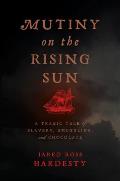
This research eventually turned into “Mutiny on the Rising Sun: A Tragic Tale of Slavery, Smuggling, and Chocolate,” a book Hardesty released in the fall of 2021 [review quoted here]. The book exposed Jackson as not only being a cacao trader, but a human trafficker and a slave holder — he transported, owned, and traded enslaved people. . . .

“The board made the decision to take Captain Jackson’s name off of the shop and off of the program, but there was a strong desire to still tell the story, just in an honest and comprehensive way,” said Nikki Stewart, executive director of Old North Illuminated, the organization that works to preserve and share the church’s story.

Maddy Rodriguez, the chair of the board of Old North Illuminated, said finding out about the true history of Jackson was a “shock.”

“I think it was really jarring because of the fact that up to that point, the chocolate program had been super successful. It was a unique opportunity for guests, especially families, to engage with the history of Old North,” Rodriguez told Boston.com. “To hear that the person that we had decided to name the exhibit after was involved in smuggling human beings in the slave trade was just completely opposite to that intent, that mission, that previous feeling that we had had.”

So they pivoted, re-envisioning how to tell the story of chocolate and trade and enslavement.
That admirable decision has resulted in several educational units for different grades, a new interpretive plan, a revamped audio tour, and a “complete redesign of the exhibit and signings inside the church,” scheduled to debut in the summer of 2023.

Sunday, December 11, 2022

Thompson on Hardesty, Mutiny on the Rising Sun

Last month the H-Early-America list shared Mark L. Thompson’s review of Mutiny on the Rising Sun: A Tragic Tale of Slavery, Smuggling, and Chocolate by Jared Ross Hardesty.

Here’s a taste:
…Hardesty draws on this Dutch and Atlantic research but offers something new: a microhistorical account of a single smuggling venture and the wide cast of characters who were involved in and touched by it. If most contraband trade was a prosaic affair that attracted little notice, this ill-starred voyage from Barbados to Suriname in 1743 proved in several respects to be quite the opposite, as it led to murder trials, official investigations, gory printed accounts, and transcontinental legal wrangling.

Working from the long paper trail that followed in the Rising Sun’s bloody wake, Hardesty and a team of researchers in New England and the Netherlands (in particular, Ramona Negrón, a doctoral candidate in history at Leiden University) have been able to trace out the story in many directions through extensive archival research. The result is a detailed account that weaves together multiple historical threads into a well-constructed narrative.

Although the book calls itself a tragedy, it borrows its form (and appearance) from true crime with a splash of gothic horror. The dust jacket is printed in muddy black and brown tones with blood-red accents (while the cloth cover beneath is bright red with golden print along the spine). True to form, the introduction begins with an apparently placid but foreboding scene—the Rising Sun’s boatswain steering the ship on a calm June night—but by the third page the captain, supercargo, and clerk have been stabbed about twenty times, chopped with an axe, sliced with a cutlass, and, in the case of the captain, thrown overboard, “scream[ing] as he plunged into the dark abyss”. . . .

The epilogue, meanwhile, offers a fascinating account of the origins of the book, which began as an earnest effort to learn more about the namesake of “Captain Jackson’s Historic Chocolate Shop,” a tourist attraction and heritage site associated with the Old North Church along the Freedom Trail in Boston. In a strange turn of events, the research for the book (sponsored in part by the candy company Mars Wrigley Confectionary) actually led to the shutting down of the chocolate shop. . . . Today the eighteenth-century Clough House that once marketed historic chocolate is home to a colonial-style print shop and an artisanal gift store. Captain Jackson’s lurid past has been well scrubbed away.
I think that last sentence could easily be read as suggesting Old North “scrubbed away…Jackson’s lurid past.” The bloody story of this voyage was scrubbed away centuries ago; Boston historians didn’t know about it.

Hardesty and his team, with the support of Old North, have brought that “lurid past” back into the light. To be sure, knowing more about Edward Jackson means his name is no longer attached to a church shop selling candy to tourists and school groups, but that seems like a Good Thing.

Thompson’s full review can be downloaded here.

Monday, August 24, 2020

“Material Culture of Sugar” Webinar from Historic Deerfield, 26 Sept.

Way back in April, Historic Deerfield was going to host a one-day forum on sugar in early New England culture. But then people recognized the Covid-19 virus had started to spread in this country, and institutions postponed their public events for a few months.

The virus is still spreading, the national government hasn’t committed to an effective strategy to stop it, and even in parts of the country where the pandemic seems more under control we have to be careful. Responsible institutions have therefore reconciled themselves to smaller gatherings and online events.

Historic Deerfield has now announced that “The Bitter and the Sweet: The Material Culture of Sugar in Early New England” will be a digital event on Saturday, 26 September. Here’s the event announcement:
I own I am shocked at the purchase of slaves
I pity them greatly, but I must be mum,
For how could we do without sugar and rum?
—William Cowper, Bristol Gazette, June 12, 1788
Sugar is a sweet part of our everyday lives, but one with a bitter history. The insatiable demand for sugar transformed the global economy, generated new sources of commercial wealth, and fueled an unprecedented human diaspora. Domesticated in New Guinea more than 10,000 years ago and first processed in India and the Middle East, sugar emerged as a New World commodity in the 15th century. At first a rare and expensive luxury restricted to the elite, demand for sugar as an indispensable product increased exponentially during the 17th and 18th centuries in tandem with the rising popularity of the tea, coffee, chocolate, and punch it sweetened.

Grown and processed by enslaved Africans in the Caribbean, sugar formed one of the three legs of the trans-Atlantic triangular trade that flourished from the 16th through the 19th centuries. New England merchants sent barrel staves, building materials, provisions, and livestock to the West Indies enabling plantation owners to convert every available acre to sugar cultivation. Ships carried sugar and molasses from the plantation colonies of the Caribbean to New England rum distilleries. Merchants then shipped rum to Africa in exchange for ever-larger numbers of enslaved people carried back to the Caribbean to produce more and more sugar.

This one-day forum brings together a diverse group of historians, curators, and archaeologists to focus on the material culture and history of sugar in New England, including issues of wealth, power, refinement, status, social justice, and politics.
The speakers will include:
  • Mark Peterson on how the rise of large-scale sugar production in Barbados rescued the New England colonies from economic collapse and provided dynamic growth through the colonial period.
  • Brandy S. Culp on the material world fueled and shaped by sugar, encompassing the history of the trade and its human impact to the goods generated around its use.
  • Justin DiVirgilio on the social and political context in which rum distilleries operated, using archeological evidence about a distillery in mid-18th-century Albany.
  • Amanda Lange on the varieties of cane sugar used in 18th- and 19th-century New England households and the objects associated with tea, coffee, chocolate, and punch.
  • Dan Sousa on the museum’s newly acquired group of anti-slavery ceramics, reflecting how sugar production was intimately bound up with slavery.
  • Barbara Mathews on maps and artifacts demonstrating the relationships between Brazil, the Sugar Islands, New England, and the leading European powers.
The cost for the all-day program is $60—less than for the in-person forum, but then you’re providing your own lunch and there’s no hearth-cooking demonstration to produce a snack at the end of the day.

See the event announcement for more details, including the exact schedule, biographies of the speakers, and how to register.

Monday, October 14, 2019

“Slavery and Its Legacies at Old North” panel, 16 Oct.

On Wednesday, 16 October, the Old North Church hosts a panel discussion on “Slavery and Its Legacies at Old North: Confronting the Past, Envisioning the Future.”

The event description says:
Captain Newark Jackson was a merchant, mariner, and congregant of Old North Church in the 1730s and 1740s who made and sold chocolate near Clark’s Shipyard in the North End. In 2013, Old North Church & Historic Site opened a living history chocolate experience named after the seemingly innocuous seafarer and cacao importer. Over the past seven years, Captain Jackson’s Historic Chocolate has become an integral part of the historic site and a beloved gem along the Freedom Trail. The story of colonial chocolate and Jackson is woven into the story of Old North Church.

In 2016, historian Jared Hardesty became intrigued with this man about whom very little was known. So began a three-year international research project that revealed significant insights into Old North’s past that affects its future. Jackson’s personal history, as that of Old North and the city of Boston, reveals a complicated past involving slave owning and slave trading that weighs upon the present and alters our sense of ourselves.
The panelists include:
  • Prof. Hardesty, author of Unfreedom: Slavery and Dependence in Eighteenth-Century Boston, now at Western Washington University
  • Prof. Jonathan Chu of University of Massachusetts, Boston
  • Madeleine Rodriguez, associate at the Foley Hoag law firm
  • Rt. Rev. Gayle E. Harris, Bishop Suffragan of the Episcopal Diocese of Massachusetts
Their conversation will address “how a historic site comes to terms with information that alters its self-identity, its interpretation, and its public face,” examining “the complexity of past narratives, the impact of the past upon the present, and the necessity of history in correcting a fractured identity.” There will be time for questions and comments from the audience.

The event is scheduled to take place from 6:30 to 8:00 P.M. It is free, but attendees can register to attend through this page.

Saturday, November 18, 2017

Preserving the Memories of Lesser-Known Bostonians

This month the city of Boston announced that it had established a “pattern library” for city websites and applications.

One purpose is to ensure that city websites have a common look so citizens recognize them as official and familiar. Another is to cut down on the number of decisions that city employees and contractors must make in setting up a new webpage.

Boston’s pattern library is named Fleet. That name also probably has two purposes. One is to signal the speed that it’s supposed to bring to the task of communicating with constituents.

The second is to keep alive the memory of Peter Fleet, the enslaved engraver and printer who worked on the Boston Evening-Post and many books and pamphlets in eighteenth-century Boston. In making that announcement, the city linked to this Boston 1775 posting about Peter Fleet.

So that’s cool.

Another piece of news this week: The Old North Church has received a generous “Mars Wrigley Confectionery US, LLC Forrest E. Mars, Jr. Chocolate History Research Grant” to fund new research into the life of Capt. Newark Jackson, owner of a chocolate mill in the North End in the early 1700s, and to share that work with the public in various forms, including a comic. I played a small part in that grant application and look forward to tasting the results.

Tuesday, September 06, 2016

Jared Ross Hardesty Lecture and Seminar, 14-15 Sept.

On Wednesday, 14 September, Old North Church will host a lecture by Jared Ross Hardesty, author of the new book Unfreedom: Slavery and Dependence in Eighteenth-Century Boston. Hardesty is an Assistant Professor of History at Western Washington University and blogs through the African American Intellectual History Society website.

Old North’s announcement for this talk says:
Hardesty takes us inside the lives and worlds of enslaved Bostonians in the 18th century. In doing so, this lecture will reconstruct an 18th-century Atlantic world of unfreedom that stretched from Europe to Africa to America. Boston’s slaves lived in this place that was characterized by many different forms of dependence and oppression, including Indian slavery, indentured servitude, and apprenticeship. In this hierarchical and inherently unfree world, enslaved Bostonians were more concerned with their everyday treatment and honor than with emancipation, as they pushed for autonomy, protected their families and communities, and demanded a place in society.

By reassessing the lives of Boston’s slave population as part of a social order structured by ties of dependence, Hardesty not only demonstrates how African slaves were able to decode their new homeland and shape the terms of their enslavement, but also tells the story of how marginalized peoples engrained themselves in the very fabric of colonial American society.

The book is of particular interest to Old North as Hardesty describes the black congregation of Old North, both free and enslaved, in some detail. Hardesty also describes the role of slave owners, including Old North’s chocolatier, Captain Newark Jackson, the namesake for Captain Jackson’s Historic Chocolate Shop.
Prof. Hardesty is scheduled to speak at 6:30 P.M. in Old North. There will be a book signing and reception afterwards. The event is open to the public, but attendees are asked to register and consider a donation to the church.

Scholars and educators who attend Hardesty’s talk on Wednesday are also invited to participate in a “small, intensive seminar” he’ll lead on Thursday, 15 September, from 1:00 to 5:00 P.M. at the Royall House & Slave Quarters in Medford. The “New Perspectives on Slavery in New England” seminar is free, but participants must register.

Saturday, February 06, 2016

Judith Sargent Murray’s “Love Notes” in Salem, Feb. 6

Tonight the Bridge at 211 Bridge Street in Salem is presenting an evening of words and music recalling a love story from the early years of the U.S. of A.

“Love Notes” features the letters from Judith Sargent Murray to the Rev. John Murray, her friend for fourteen years and then her husband for twenty-seven, set to music on the organ and harp. John is known as the Father of Organized Universalism in America. Judith was a pioneering female essayist. They were an early example of an “eqalitarian” marriage in the new American republic.

Bonnie Hurd Smith, author of Mingling Souls Upon Paper: An 18th-Century Love Story about this couple, will read from that correspondence. Catie Canale will play the harp, as she has with the Chicago Symphony Orchestra, Cambridge Symphony Orchestra, and New Bedford Symphony Orchestra, among others. Patricia Clark, Director of Music Ministries at the First Church in Swampscott, will play the organ.

“Love Notes” will take place on Saturday, February 6, from 5:00 to 6:30 P.M. Light refreshments and non-alcoholic beverages will be served. There is a suggested donation of $10. This is one of many events in Salem’s So Sweet Chocolate & Ice Sculpture Festival this weekend, which appears to be designed to help couples get a jump on Valentine’s Day.

Tuesday, December 03, 2013

More from Bruce Richardson on the History of Tea

Here’s more of my exchange with Bruce Richardson, Tea Master for the Boston Tea Party Ships & Museum. He’s coming to Boston to speak about “Five Teas that Launched a Revolution” at the Old South Meeting House on Thursday, 5 December. That event will also be the debut of the new expanded edition of Jane Pettigrew and Bruce’s book A Social History of Tea, originally published by the National Trust of Britain.

Are there any common misconceptions about the tea involved in the Boston Tea Party?

The visitor’s center at Monticello says the tea was in brick form. That’s not true. The English, and hence the Americans, had no taste for brick tea. See this blog post for more about tea bricks.

Chocolate meant something very different in eighteenth-century cuisine from how we think of it today—it was a hot drink, not particularly sweet, and often for breakfast. Are there significant differences in the way people consumed tea between the 1770s and today? Did tea have a different symbolic or cultural connotation?

In the stylish homes of Boston and throughout provincial America, the ritual of taking tea reenacted and reinforced the growth of an Anglo-American culture. But it was a culture based on a global circulation of goods. Tea drinking, often dispensed from specially designed tables, gathered together goods from around the globe–tea and porcelain from China, sugar from the Caribbean, sweetmeats flavored with spices from Indonesia, all arrayed on a Turkish carpet and served by an African slave to gentlemen and ladies dressed in fabrics from India and China.

These Boston tea settings were similar to those found in the fine homes of London or Bath. The ensemble of objects might also have included Asian-modeled cane chairs and have been set off by Chinese-style wallpaper. Bostonians understood tea not as an exotic curiosity, but as one of the many global products that signaled their participation in a polite and worldly culture modeled after the lifestyles of their English cousins.

Some museums in Boston contain small bottles of tea said to have come from the Tea Party, gathered either from participants’ clothing or from the water. If you had access to those tea samples, would there be any way to tell if that tea was actually from 1773?

I would love to see those. I could probably tell whether it was machine- or hand-rolled which might negate its authenticity, but not confirm it.

And a bonus that’s a little out of period: What do you think of the theory that the Earl Grey mixture of tea and bergamot was an adulteration later gussied up with a noble name?

I don’t drink Earl Grey, but we tea-blenders all say it pays the mortgage. The most famous of all flavored teas was named after Charles, the 2nd Earl Grey (1764–1845) who was British Prime Minister from 1830 to 1834. The original recipe for this blend simply calls for black tea with the addition of oil of bergamot, squeezed from tiny lemons grown in the Mediterranean region. China black tea was first used as the base until English blenders began using India or Sri Lankan black teas as those gardens developed through the second half of the 1800s.

The stories about the origin of the blend are many and varied. Some say the recipe was given in thanks to a British diplomat when he saved the life of mandarin—or perhaps the mandarin’s son—while in China on a mission for the Prime Minister. Some say it was Earl Grey himself who was travelling in China and saved the mandarin. Neither story has ever been substantiated. You can read more in this blog posting.

Thanks to Bruce Richardson for sharing his knowledge of tea here, and at Old South and the Tea Party Ships!

Readers might be able to tell that the Boston 1775 staff doesn’t care much for Earl Grey tea. Here’s an article from World Wide Words discussing the mysterious origin of that term.

Saturday, April 13, 2013

This Week in the North End

Patriots Day is a busy time in the North End of Boston, where Paul Revere’s journey on 18-19 Apr 1775 began, as well as out here in Middlesex County, where it ended.

A new addition to the North End is Captain Jackson’s Colonial Chocolate Shop, in the Clough House on Unity Street. This shop explains the role of chocolate in the eighteenth century. It’s named after Newark Jackson, a chocolate maker who was part of the Old North Church’s congregation (his family owned pew 13 before James Smithwick). The enterprise is sponsored by Old North, the Freedom Trail Foundation, and Mars Chocolate North America. See more of the shop’s opening at North End Waterfront.

In the same building, the Print Shop of Edes & Gill is opening for the season this weekend. Stop in to see Gary Gregory demonstrate how type was set and engravings printed. Printers were a vital part of the American Revolutionary movement—probably even more vital than chocolate, though I wouldn’t want to have to choose between them. Both shops will be open on weekends only until mid-June, then most of the week through October.

Nearby is the venerable Paul Revere House, with a full schedule for both tourists and families enjoying the spring school vacation. Its events include:

  • Paul Revere Pottery Hands-on Activity, Saturday, 13 April, 1:00-3:00. In the early 1900s, immigrant girls decorated tiles, plates, and bowls in a pottery named for Revere. Clay artist Anne Bowen, who reproduces these pieces, invites visitors of all ages to try that work.
  • Henry Wadsworth Longfellow, Sunday, 14 April, 1:00-4:00. Longfellow himself (portrayed by literary historian Rob Velella) helps visitors young and old learn how to read and understand poetry better. At 1:00 and 3:30, he will present “Paul Revere’s Ride” and his reasons for writing it.
  • From North Square to Old North Church: A Paul Revere Walking Tour, Tuesday, 16 April and Thursday, 18 April, 2:00-3:30. A new guided walking tour of North End sites related to Revere, ending with a visit to the church’s bell-ringing chamber and the story of the Midnight Ride. Recommended for families with children in grades 5-8. Reservations required through 617-523-2338. $10 for adults, $6 children aged 5-17. A self-guided visit to the Revere House is included.
  • Midnight Ride Storytelling Program, Wednesday, 17 April, 2:00-3:30, and Friday, April 19, 10:30-12:00. Find out what really happened on Paul Revere’s ride! Separate facts from myths, then retrace Revere’s route from his home to the banks of the Charles River. Participants don hats and carry props as they go, taking on the roles of Paul and Rachel Revere, their children, British soldiers, rowers, John Hancock, and Samuel Adams. Particularly appropriate for kids in grades K-4. Reservations required through 617-523-2338. $4.50 for each adult and child age 5 and up.
  • Patriot Fife and Drum, Saturday, 20 April, 1:00-3:00. A lively concert of music that accompanied colonists as they marched, danced, wooed, and waged war. David Vose and Sue Walko provide insight into each selection they perform.
Visit the Paul Revere House website for a preview of its May events on spinning, gilding, basket-weaving, and Revolutionary War medicine.