J. L. BELL is a Massachusetts writer who specializes in (among other things) the start of the American Revolution in and around Boston. He is particularly interested in the experiences of children in 1765-75. He has published scholarly papers and popular articles for both children and adults. He was consultant for an episode of History Detectives, and contributed to a display at Minute Man National Historic Park.

Subscribe thru Follow.it


•••••••••••••••••


Showing posts with label Dr. William Cullen. Show all posts

Tuesday, June 15, 2021

Nostalgia “a frequent disease in the American army”
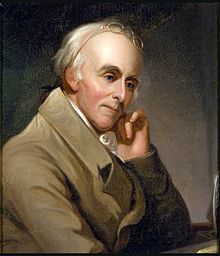
The words “nostalgia” and “nostalgic” don’t appear in any of the letters and other sources available at Founders Online. But of course most of those writers weren’t physicians.

American doctors did use the diagnosis of nostalgia, learning it from European medical authorities. Their uses reflected the original meaning of the word as homesickness rather than how we use the term today.

In “An Account of the Influence of the Military and Political Events of the American Revolution upon the Human Body” (published with other essays in 1789), Dr. Benjamin Rush wrote:
THE NOSTALGIA of Doctor [William] Cullen, or the homesickness, was a frequent disease in the American army, more especially among the soldiers of the New-England states. But this disease was suspended by the superior action of the mind under the influence of the principles which governed common soldiers in the American army.

Of this General [Horatio] Gates furnished me with a remarkable instance in 1776, soon after his return from the command of a large body of regular troops and militia at Ticonderoga. From the effects of the nostalgia, and the feebleness of the discipline, which was exercised over the militia, desertions were very frequent and numerous in his army, in the latter part of the campaign; and yet during the three weeks in which the general expected every hour an attack to be made upon him by General [John] Burgoyne, there was not a single desertion from his army, which consisted at that time of 10,000 men.
Rush’s essay was as much political as medical. He wanted to make the case that, while the disruptions of revolution and war caused stress and illness, the best remedy was more republicanism. Nothing cured the New Englanders’ nostalgia quicker than the imminent prospect of being hanged as traitors by an invading monarchical army.

Rush’s memory may have been faulty about dates. He said Gen. Gates told him in 1776 that nostalgia cleared up because of the threat from Gen. Burgoyne. In that year, Gen. Guy Carleton was in command, with Burgoyne serving under him. Burgoyne led the bigger advance from Canada in 1777. Rush may have amalgamated the events in his mind, but such detail doesn’t matter much to how Rush understood nostalgia.

Dr. James Thacher of Plymouth served the entire war as a surgeon’s mate and military surgeon for the Continental Army. Decades later, in 1823, he adapted his wartime diaries into A Military Journal During the American Revolutionary War.

In that book Thacher wrote under the date of late June 1780:
Our troops in camp are in general healthy, but we are troubled with many perplexing instances of indisposition, occasioned by absence from home, called by Dr. Cullen nostalgia, or home sickness. This complaint is frequent among the militia, and recruits from New England. They become dull and melancholy, with loss of appetite, restless nights, and great weakness. In some instances they become so hypochondriacal as to be proper subjects for the hospital.

This disease is in many instances cured by the raillery of the old soldiers, but is generally suspended by a constant and active engagement of the mind, as by the drill exercise, camp discipline, and by uncommon anxiety, occasioned by the prospect of a battle. 
Rush and Thacher didn’t use the term “nostalgia” in a way that we can easily map onto the modern diagnosis of post-traumatic stress disorder. Thacher definitely saw signs of anxiety and depression with physical manifestations. Rush linked the condition to desertions. But they didn’t see nostalgia as a reaction to combat.

Both of these doctors described nostalgia as prevalent in soldiers away from home (particularly from New England), not in those soldiers who had been through hard fighting. In fact, both of these American doctors saw “the prospect of a battle” as dispelling nostalgia, and Thacher viewed “old soldiers” as less prone to it than fresh militiamen.

It’s possible that other American doctors diagnosed Revolutionary soldiers or veterans with nostalgia based on symptoms and circumstances that correspond better with what we call P.T.S.D. I’ve looked for such cases, haven’t found any, and would welcome references.

TOMORROW: A British case study.

Monday, June 14, 2021

A Mistaken Idea of Nostalgia’s Origin

As I discussed yesterday, in 1688 the medical school graduate Johannes Hofer (1669-1752) published a dissertation proposing a new diagnostic term: nostalgia.

The symptoms of this condition, Hofer wrote, included:
continued sadness, meditation only of the Fatherland, disturbed sleep either wakeful or continuous, decrease of strength, hunger, thirst, senses diminished, and cares or even palpitations of the heart, frequent sighs, also stupidity of the mind—attending to nothing hardly, other than an idea of the Fatherland
The young doctor medicalized (and Hellenized) a condition that his fellow German-speaking Swiss were already calling Heimweh.

Over the next few decades other Swiss physicians wrote about the same condition. Some of them described spotting those symptoms in Swiss soldiers working far from home as mercenaries. They debated causes, with J. J. Scheuchzer (1672-1733) theorizing that the problem was the change in altitude from the Alps. No one appears to have blamed the experience of war, however.

Eventually the concept of nostalgia or Heimweh traveled to other European countries. It became mal du pays in French-speaking Switzerland and then France, listed in a French medical manual by 1754.

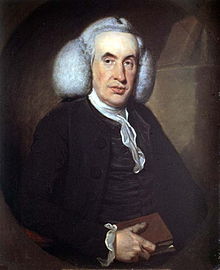
The word “homesickness” appeared in English in 1756, just a little too late for Dr. Samuel Johnson’s dictionary. The Scottish physician and professor William Cullen (1710-1790, shown above) eventually included two forms of nostalgia, simplex and complicata, in his Synopsis Nosologiae Methodicae. Again, doctors saw this problem arising from being away from home, not from experiencing trauma.

In the last decade of the eighteenth century, Revolutionary and Imperial France produced armies larger than Europe had ever seen, armies that swept across other countries as far as Moscow. When some of those soldiers began to demonstrate signs of anxiety and depression, and—what militaries most care about—stopped being able to fight, physicians looked for reasons. Nostalgia was one diagnosis they discussed, hypothesizing that the symptoms would disappear when the men returned home. Today we might instead suspect those soldiers were suffering from post-traumatic stress disorder.

Over the next century, nostalgia evolved to mean something separate from homesickness. It came to refer to yearning for another time more than another place. It became a cultural condition, not a psychological or physical malady. By 1975 the origin of the term was so obscure that George Rosen published a paper titled “Nostalgia: A ‘Forgotten’ Psychological Disorder” in Psychological Medicine.

I don’t have access to that paper, so I can’t assess how Rosen described the original characterization of the condition. Four years later Fred Davis wrote in A Sociology of Nostalgia:
Coined by the Swiss physician Johannes Hofer in the late seventeenth century, the term was meant to designate a familiar, if not especially frequent, condition of extreme homesickness among Swiss mercenaries fighting far from their native land in the legions of one or another European despot. The “symptoms” of those so afflicted were said by Hofer and other learned physicians of the time to be despondency, melancholia, lability of emotion, including profound bouts of weeping, anorexia, a generalized “wasting away,” and, not infrequently, attempts at suicide.
As reported yesterday, Hofer’s dissertation defining nostalgia did not address “extreme homesickness among Swiss mercenaries.” His case studies involved civilians. Davis, and perhaps others before him, projected back from the interest in nostalgia among Swiss and later French military physicians in the 1700s to make soldiers part of the condition’s 1688 origin story, a crucial element of the diagnosis.

Meanwhile, in post-Vietnam War America, psychiatrists were recognizing what we now call post-traumatic stress disorder. And historians of medicine were recognizing that earlier generations of doctors had viewed much the same symptoms in earlier generations of war veterans, coming up with such diagnoses as soldier’s heart, shell shock, and combat fatigue.

We thus had two concepts that appeared to fit together perfectly:
  • Seventeenth-century doctors coining the term “nostalgia” to describe signs of anxiety and depression in Swiss soldiers.
  • A pattern of war-related P.T.S.D. cases lurking in the medical literature under other names.
It thus seemed logical to conclude that “nostalgia” was one of those names. Since the 1990s at least, that statement is common in discussions of both P.T.S.D. through history and the changing ideas of nostalgia. And for American authors, an eighteenth-century medical term must have been applied during the Revolutionary War.

But a look at Johannes Hofer’s dissertation shows that the first of those two concepts is mistaken. There is no link between his original diagnosis of nostalgia and military service. Hofer’s description didn’t go beyond what we now consider homesickness to mention soldiers or other people who had suffered trauma. It may well be that eighteenth-century war veterans suffered from P.T.S.D. and were diagnosed with nostalgia, but that doesn’t mean all or even most cases of nostalgia from that time were triggered by military trauma.

TOMORROW: Three Revolutionary War discussions of nostalgia.

Sunday, December 01, 2019

Of Course They Had to Try Bleeding

I’ve been looking at how young Gershom Spear drowned in 1762 but got better. Finding some way to resuscitate drowning victims was a consuming topic in the Age of Sail. Not just because of the loss of life, but also the fear that someone presumed dead might accidentally be buried alive.

Two days ago I quoted a letter from Capt. John Bell about how British diplomat Gabriel Hervey had revived an apparently dead sailor in Portugal by rubbing him with salt. That 1761 letter was not only published all over the British Empire but also translated into French and published in Paris.

In reprinting the letter, the London Magazine and the Annual Report referred readers to other methods of reviving drowned people discussed in their pages. In a 1745 article the magazine had recommended these treatments for a man feared dead by drowning:
  • rolling him around in a bottomless cask
  • making him vomit by “thrusting several Times a Quill with its feathers down his throat”
  • keeping the body warm
  • shaking the body, or picking it up and dropping it
  • pouring spirits or pepper into his mouth
  • blowing tobacco smoke into his nose, mouth, or anus
  • bleeding from the jugular vein or “Trachian Artery”
The Annual Register for 1759 had reported on how a French doctor resuscitating a drowned “servant maid” by covering her in ashes. That doctor noted that “dry salt” would work just as well, and that might have been the inspiration for Hervey’s 1761 attempts.

In 1774 two London doctors, William Hawes and Thomas Cogan, set up a “Society for the Recovery of Persons Apparently Drowned,” showing the ongoing interest in the challenge. Eventually that organization was renamed the Royal Humane Society. Its mandate expanded to include rescues and swimming lessons.

In 1776, the Gentlemen’s Magazine published an article by royal physician William Cullen (shown above) on a “Method of Recovering Persons Apparently Dead by Drowning.” Cullen said the top priority was to heat the body. Among other methods, he recommended keeping “bags of warm and dry salt” around to heat over a fire in an emergency. That advice was reprinted for decades.

However, in 1792 Dr. James Curry wrote in Observations on Apparent Death from Drowning, Suffocation, &c. that “The practice of rubbing the body with salt or spirits, is now justly condemned,” despite its apparent efficacy in those two cases from the early 1760s. He still recommended warmth, though.