J. L. BELL is a Massachusetts writer who specializes in (among other things) the start of the American Revolution in and around Boston. He is particularly interested in the experiences of children in 1765-75. He has published scholarly papers and popular articles for both children and adults. He was consultant for an episode of History Detectives, and contributed to a display at Minute Man National Historic Park.

Subscribe thru Follow.it


•••••••••••••••••


Showing posts with label evacuation of 1776. Show all posts

Saturday, April 25, 2026

“That the said Hill be immediately apprehended”

John Hill was yet another of the Loyalists captured aboard the brig Elizabeth.

[I feel like I’m never getting away! Then again, that’s probably how those passengers felt when they were brought back to New England after trying to evacuate.]

According to recent research shared in the Loyalist Directory, John Hill was born in Ireland about 1737. He moved to New York City in the early 1770s and ran an inn.

In March 1775, Hill came to the aid of William Cunningham during a fight near New York’s Liberty Pole (shown here). Hill later told the Loyalists Commission that “a Mob…beat us with Clubs, and stoned us.” The two men were thrown into prison and put on trial in April. But the foreman of the jury, John Wetherhead (another future Loyalist), kept them from being convicted and punished.

Cunningham and Hill “escaped to Boston,” reaching the besieged town by 5 May. They enlisted in the militia company of James Forrest, another man from Ireland. Hill said he was “appointed Quarter Master to the same Company.”

In March 1776, Gen. William Howe decided to evacuate the town. He ordered Crean Brush to confiscate all cloth that could be useful to the Continental Army. Brush enlisted Richard Hill, formerly sheriff in his county of northeastern New York (which would become Vermont), as an assistant. Richard presumably brought his younger brother, John Hill, onto that team.

As ships pushed off from Boston’s wharves, John Hill and his family squeezed onto the Elizabeth along with Brush, most of the confiscated goods, a squad of British soldiers, and other Loyalists. In Hill’s words, “on the 17th of March 1776, he left Boston, with the Royal Army; but was taken at Sea, by the Rebels.”

The brig, its property, and its wealthiest passengers were sent to Portsmouth, New Hampshire. The Hill family and several others were landed on Cape Ann by 7 April. The Massachusetts authorities summoned John Hill to Watertown for questioning.

On 19 April, the Massachusetts Council reported:
The Committee appointed to examine sundry Persons taken on board the Brigt Sally [sic] bound to Hallifax, & sent to the Council by the Committee of Marblehead…examined [John] Hill who informs your Committee that he is a native of Ireland that he came to New York three or four years since that he came to Boston about ten months ago on the removal of the troops from New York to Boston for the recovery of monies due to him from them and that for the same purpose he was going to Hallifax having acted as a Sutler among the troops.
Sailing off to Canada out of political loyalty was suspect. Sailing there just to collect debts from soldiers seemed more reasonable to these office-holders.

The Council agreed that Hill should be allowed to go free after providing a “written parole not to bear arms against the United Colonies, nor in any way aid or assist the Enemies of the said Colonies.” He probably headed back to Cape Ann to find his wife and at least one child.

In Boston, however, some merchants were still seething at how Brush and his assistants had taken their property. That property itself was up in Portsmouth, being sorted by Continental agent Joshua Wentworth. More information filtered back to Watertown.

On 25 April, 250 years ago today, the whole Massachusetts General Court passed a new resolve:
WHEREAS a certain John Hill, lately taken Prisoner by Commodore [John] Manly, in a Vessell bound from Boston to Hallifax, and brought into Portsmouth, was examined before the Council; and no Evidence then appearing against him, he was discharged & set at Liberty;

And whereas it hath since been made to appear to this Court; that the said Hill, at the time he was taken, as aforesaid, had in his possession Chests, Trunks & Packages of Goods and Merchandizes to the value of three hundred pounds Sterlg. supposed to have been stolen from the distressed Inhabitants of the Town of Boston; and was an Assistant to Crean Brush in his late unwarrantable and highhanded Thefts & Robberies
Therefore

Resolved, That the said Hill be immediately apprehended, wherever to be found, & brought before this Court for Examination, touching the Premises, and all Sheriffs, Constables & other executive Officers, and all the good People of this Colony, are hereby directed & impowered to apprehend the said Hill, wherever he may be found, and bring him forthwith before this Court, in order that he may be dealt with for his aforesaid highhanded Crimes, as to Law & Justice appertains.
TOMORROW: The manhunt was on!

[Boston also had a justice of the peace named John Hill, very involved in events surrounding the Boston Massacre. Unfortunately, the same tag applies to both men, but I think context will make it easy to sort out their stories.]

Wednesday, April 22, 2026

“They were much insulted by the people”

Yesterday we left William Jackson on the road from Portsmouth, New Hampshire, to Boston, having reached the town of Newburyport on 11 April 1776.

Jackson and dozens of fellow Loyalists had been captured aboard the brig Elizabeth while trying to sail to Halifax with the rest of the British evacuation fleet.

Most of the king’s army, and most of the Loyalists inside Boston, had managed to get away. Which meant popular anger about those people focused on the prominent few remaining—like Jackson.

In Newburyport, an angry crowd surrounded the tavern where the captives were eating, objecting to how they were riding in carriages. Carriages that Jackson, ship captain Peter Ramsey, and the others had hired.

Jackson later recounted:
we sent for the Committe of safety to Appease them, but all to no purpose, finding our selves in such a situation we comply’d, the Committe not thinking it safe they Appointed a Guard of five Men and Obliged us to pay the Expence the rest of the Journey,

as soon as we came out of the Inn we received Blow’s, mud, stones, Eggs, and every other abuse and proceeded to Boston being 40 miles on foot
In Salem, the lawyer William Pynchon (1723–1789) wrote in his diary:
Wm. Jackson, merchant, and others, with some regular soldiers, went thro’ Salem on foot for Boston, under guard; ’t is said they were much insulted by the people (it must be presumed to be the rabble) at Newburyport, in their way hither; that Jackson was stopped and obliged to leave his carriage, and walk on foot from Newbury to Salem, and thence to Boston
Pynchon then said: “in Newbury street he was stopped again and obliged, after his hat was knocked off, to fall on his knees and beg pardon of the mob and of the Country, and to say whatever was required of him.” At first I thought that might be a reference back to the streets of Newbury, but the placement suggests this story described when Jackson reached Newbury Street in Boston’s South End. Jackson himself didn’t specify such an incident.

Fellow gentlemen—merchants, professionals, landowners—sympathized with Jackson for coming under fire from crowds of poorer citizens. On 16 April, Isaac Smith, Sr., wrote to John Adams from Salem:
You have heard of Bill Jackson’s being taken. He received some Insult on the road which am sorry for and lamented by all, persons of any consequence. He is in Boston goal, but I dont learn he has behavd any way Ill att Boston dureing the seige.
Indeed, Jackson’s letter complained that after reaching Boston:
we was again carried to Wartertown 9 miles before the late Councill and being each seperately ask’d a few Question’s and not properly Examined was sent back to Boston and committed on a supposed Crime of being concern’d with Crean Brush denied the Use of pen Ink and paper and Candle light not suffer’d to speak to any one but in presence of the keeper whare we have been ever since 13th April
That accusation must have been especially galling to Jackson since one month before he’d been trying to stop Crean Brush from taking away Cyrus Baldwin’s goods.

TOMORROW: In the Boston jail.

Tuesday, April 21, 2026

William Jackson “shipt on board the Brig Elizabeth”

When I started to look at the Continental capture of the brig Elizabeth in early April 1776, I didn’t expect to find so much drama and mystery in the Wheaton family.

I thought they’d be a one-day diversion before I got back to the main storyline, following the other Loyalists on that ship—those sent to Portsmouth, New Hampshire.

Instead, the Wheatons’ story took me right through Patriots Day. But now I’m returning to the others—which also means resuming the Saga of the Brazen Head!

On 6 July 1776, the brazier William Jackson wrote to the Continental Congress, describing his experience of trying to evacuate Boston. His letter started with a bunch of special pleading about not intending to be political when he signed two documents that marked him as a Loyalist. Mind you, that was five years after he’d put himself among the “Enemies of their Country” for not signing the Boston Whigs’ non-importation agreeement.

Eventually Jackson got to his escape narrative:
General [William] How’s quiting this Town in so short a time as he did must of Consequence be attended with the utmost Confusion and gave no one time to settle his thoughts what to do with themselves or property, but the past unhappy situation we had been in this Town I finally concluded to take the Opportunity to go to Halifax their to have tarried or gone from thence to England untill the unhappy disputes whare settled leaving my Property behind,

but upon the proceedings of Mr. [Crean] Brush takeing away the property of the people of this Town as you will see by the copy of paper’s accompanying this which I have related to the Hon’ble Councill of this Province [Massachusetts], I then alter’d my mind and concluded to carry my Goods with me which I shipt on board the Brig Elizabeth being Twenty-Six packages

on the Passage was taken by three of the United Colony Vessell’s and brought in Portsmouth New Hampshire
The Congress had appointed the merchant Joshua Wentworth (1742–c. 1809) as its agent in that port. His job included using the admiralty court to “condemn” captured ships, then selling them and their cargo for the benefit of the government and the mariners who’d made those captures. Wentworth’s house—since expanded, moved, and restored—appears above.
Upon my landing your agent Mr Wentworth Inform’d me he must Examine my Baggage as also what Money and Paper’s I had, from the former he has detain'd about £35- LMy [lawful money] and from the latter five setts of Bills of Exchange amounting to £100- stirlg payeable to my self Only,

after he Examined my Baggage had his leave to carry it with me but haveing no Acquaintance in the Town accepted his Offer of his store, and haveing tarried one day upon Parole the next morning the Master [Peter Ramsey] and two other passenger’s and my self haveing provided Carriadge’s at our own Expence and being attended by a Man sent with us by Mr. Wentworth we set of for head Quarter’s,

but upon our reaching Newbury Port about 20 miles whare we stopt to refresh our selves the popular Assembled and swore we should not ride and threatened to destroy the Carriadge
This was the anti-Loyalist sentiment I wrote about yesterday.

TOMORROW: Escape from Newburyport.

Saturday, April 11, 2026

“Itt’s said she has a large quantity of the Stolen goods”

It didn’t take long for New England Patriots to realize that Cdre. John Manley’s capture of the Elizabeth on 2 April 1776 was a big deal.

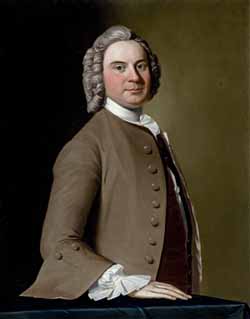
On 6 April, Isaac Smith, Sr. (1719–1787, shown here courtesy of the Yale University Art Gallery), wrote to his niece Abigail’s husband, John Adams, from Salem:
Commodore Manleys fleet has taken a brigantine bound to Halifax on board of which is Bill Jackson and all his Effects and itt’s said she has a large quantity of the Stolen goods—

and there is on board likewise One Greenbrush, receiver general of the stolen goods and has distinguisht himself in that way by demanding People’s propaty from them. Itts said he came from York and itts said those Carpenters and runagarders from that way has behaved worse than any Others.—

A sloop is on shore at the Cape, beleive nothing very Valuable on board but itt Appears they (the inhabitants) went away in a most dismal Cituation, not haveing even Water sufficient and crowded and some sick with the small pox.
That sloop was the Sally, commissioned by Jolley Allen and captained by no one who knew what he was doing, as described back here.

As a merchant in Boston before the siege, Isaac Smith knew William Jackson and his troubles well. But Smith wasn’t familiar with Crean Brush, who had arrived from New York after the siege began—hence his reference to the man as “One Greenbrush.”

John Rowe was all too familiar with Brush, having watched that royal appointee confiscate some of his property. On 8 April he wrote in his diary with surprising calm:
Capt. Manly is come to Town & brings the Accot. of his Taking Crian Brush Wm. Jackson & Twenty other passengers in A Brigg bound with The Fleet—

This Vessell tis Said has Twenty five Thousand pound Sterling On board—in English Goods & Other Merchandise—

among the Prisoners is A Sergiant & 12 Men of the Kings Troops
On 8 April Rowe added:
There is a Confirmation of Crean Brush & Wm. Jackson being taken & also My Negro Fellow Adam
Adam was one of the four enslaved people found aboard the Elizabeth. Remarkably, this is the only time in his published diary that Rowe mentioned the man. We therefore have no clue about how he came to be on the brig. Had Adam asked to evacuate the town, or had Rowe sent him away?

TOMORROW: Following the money.

Friday, April 10, 2026

“With an Irony which inflamed their resentments”

As Crean Brush was seizing linen and woolens for the British military in March 1776, some of the wealthy merchants who owned that cloth complained to Gen. William Howe’s headquarters.

Brush responded with a memo to Gen. James Robertson, who was overseeing the evacuation:
if any Articles were removed which did not answer the description [in Howe’s order] the Parties are only to blame they being repeatedly called on to declare the Contents of each which they obstinately refused—

These People your Memorialist are irritated against him but your Memorialist begs leave to assure your Honor he is fully able to prove that his Conduct toward them was governed with politeness coolness & moderation

true it is that when attempts were made to engage his attention in tedious dissertations on Magna Charta & the rights of British Subjects with intent to retard him in the execution of his Office he did interrupt such Harangues & with an Irony which inflamed their resentments complimented them on their Eloquence which had in Town Meetings been so successful as to throw all America into confusion but that I was upon Business which I was determined to execute without interruption—

The Goods I received from the Stores were taken on board & stowed away with all the care & attention my peculiar Situation would possibly admit and I solemnly aver that from the 5th to the 13th March my own Assiduity was so great that I did not in any one Night allow Myself more than two Hours Sleep…
With the help of his assistants plus “two boys and a man” on board the Elizabeth, Brush managed to pack that brig. Some of Cyrus Baldwin’s goods went onto the Minerva.

At some point Brush’s assistants—Charles Blasquet, Richard and John Hill, and David Cunningham—appear to have asked what arrangements he’d made to get them and their families out of Boston. To his credit, he didn’t just ask what arrangements they’d made for themselves. Instead, Brush recognized that they’d “neglected their own Concerns to serve Government at my request.”

Crean Brush hustled those men and their families onto the Elizabeth into “a small space between Decks.” He later told Gen. Howe they had all brought their own provisions so they “cannot be the least convenience to any Person on board.” Basically, he asked for forgiveness instead of permission.

Brush’s memos to Robertson and Howe, published in the Naval Documents of the American Revolution, document the hurry and disorder of the evacuation. He was managing goods that merchants had asked him to store, goods that he’d seized from Patriots who had left Boston, the cloth that he’d been commissioned to keep out of rebel hands, and his own property. And he was trying, at least on paper, to keep these all separate and safely stored.

Conflict continued even on the Elizabeth. Brush had loaded nineteen barrels of flour on board, on “Major Hutchinsons orders”—I think this was Maj. Frances Hutcheson of the 60th Regiment, the army paymaster. Brush told Robertson:
the second Barrell which was opened I sent for some [flour] which when discovered by Mr [Caleb] Wheaten he imperiously flourished [his sword] over me while in Bed & told me he was surprized at the assurance I dared to shew in giving directions to have any,

Upon which I told him he was an insignificant inpertinent Puppy.

Captain [Peter] Ramsey at that instant came in declared he would not hear one word of the occasion which provoked me to use the words I have mentioned but that if I uttered three words more he would send me Prisoner on board the Commodore—
While dealing with such quarrels, Capt. Ramsey got the Elizabeth out of Boston harbor with the rest of the evacuation fleet by the end of March.

And on 2 April three American schooners captured the ship.

TOMORROW: In custody.

Thursday, April 09, 2026

“This Party behaved very Insolently & with Great Rapacity”

Samuel Austin, quoted yesterday, wasn’t the only Boston merchant to complain about how Crean Brush had confiscated cloth in March 1776.

Capt. Samuel Dashwood also groused about Brush. As cited by Eric Wiser, the captain described how Brush pushed through the back door of his house, strode past the family, and opened their front door for his assistants. At the end of the day, Dashwood determined he was missing nine trunks and two chests of silks and cloth.

Dashwood made a point that Brush had been wearing a sword (as many gentlemen did). “If any person should presume to interrupt,” Dashwood quoted his unwanted visitor saying, “[soldiers] would thrust their bayonets into such a person.”

Capt. Dashwood wasn’t above violence himself, though. Back in 1769, he was among the merchants who challenged printers John Mein and John Fleeming on King Street. And the next year, during an anti-import protest, Theophilis Lillie described Dashwood as “in a great rage, challenging me to come out of my house and he would break my neck, my bones, and the like.”

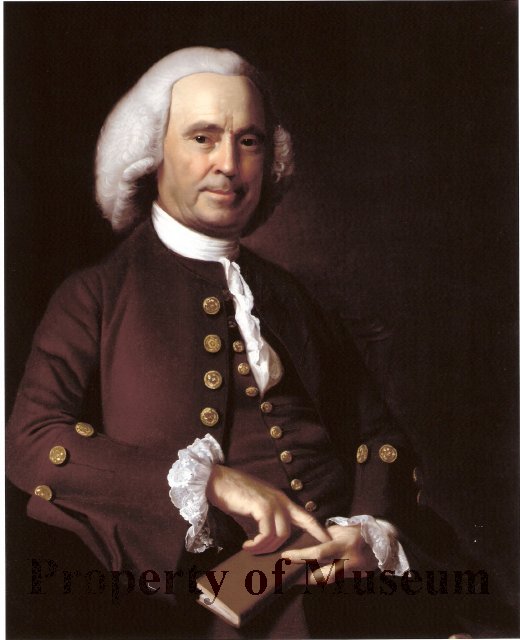
While Dashwood was a virulent Patriot, John Rowe (shown above) was a trimmer, trying to stay neutral. He lamented the outbreak of war, lived in Boston through the siege, and then chose to remain as the king’s military left. But he also objected to Brush’s actions.

I quoted Rowe’s complaints about how Crean Brush seized property on 11 March back here. At that time I assigned “Mr. Hill” the first name William, but now I think it was more likely either Robert or John.

The next day Rowe collected a receipt for his goods from Brush but wrote, “[I] dont expect—much Good from it.”He told his diary, “This Party behaved very Insolently & with Great Rapacity & I am very well Convinc’d exceeding their orders.”

The next few days were even worse, however. Rowe found other men breaking into his warehouses and stealing more goods, not just the cloth that Gen. William Howe had authorized Brush to take. And of course those men left no receipts at all.

Between Rowe’s diary, documents that Brush signed, and postwar legal filings, we can identify a few more people besides those I’ve already discussed who lost property to Crean Brush’s team: selectman John Scollay, Capt. Samuel Partridge, “Widow [Mary?] Newman,” “John Barret & Sons,” and Dr. Thomas Bulfinch.

TOMORROW: Brush’s response.

Wednesday, April 08, 2026

“The officer (Crean Brush) who took my goods”

As quoted back here, on 10 Mar 1776 Gen. William Howe authorized Crean Brush to seize linen and woolen goods inside Boston to ensure they would be carried out of town and not fall into the hands of (or be sold to) the rebel army.

By that point, most of the wealthy people inside besieged Boston were Loyalists, and they planned to leave with the British military. But many adherents to the Patriot cause had left their goods in the town months before. And a few men had stayed to look after their property, their family, or their constituents.

Selectman Samuel Austin was in the last category. Nine years later he told John Adams, who had once employed his son as a law clerk and was now the U.S. of A.’s minister to Great Britain, what he remembered about those days:
I apprehend it needless to Say anything about the Rude, and insulting behavior of the officer (Crean Brush) who took my goods, all which I was oblidg’d to Submit to.—

Suffice it to say that on the 11th. March 1776 Crean Brush, an officer appointed by Genl. How, and by his written Orders…did by force and Arms, with near Twenty Soldiers, with their Guns and Bayonets enter my House and took from me in goods & Merchandize to the amount of Two Thousand Four hundred and Thirty Pounds 18/7 Neat Sterling Cost, to which I have aded Fifty per ct. Advance, which would not pay the Insurance & Freight, as also Interest on the same, untill paid. . .

I had an Opportunity of Conversing with [Gen. Howe] on the Subject of taking my goods from me in the manner he did, He Expressd himself with great Surprize and Indignation, that I should even think he mean’t to Alienate the Property of my goods, by no means he said, he mean’t no such thing, on the Contrary, he assured me in the most Sollemn manner my goods should all be Returnd me again, or the Cash paid for them. He aded it was a Common thing for an Army when Retreating and another army Pursuing, for the Retreating Army to take from the inhabitants, every thing that might any ways be servicable to the Pursuers, but that as soon as the Confusion was over, the inhabitants had their goods Return’d or the money paid them, to the amount of what was taken away, and this he Asur’d me should be the case with mine.—

He said further that what he had done was in Conformity to orders Rec’d from the Minster, to Prevent the Rebels as he calld them from being benifitted by them. Accordinly in a letter he writes Lord Dartmouth (which I have seen) given him an Accot. of Evacuating the Town, he has these words, “all the Woolen good also, that I could find Room for belonging to those who chose to stay behind, the want of which is more distress to the Enemy than any other Article whatever, has been shipd, Inventories of them taken in the best manner Possible, and Put under the Charge of proper persons, in order hereafter to be stor’d.”

Agreeable to this, is his Orders to Crean Brush when he took the goods (Coppy of which you’ll have withe Papers sent you from Congress) in which are these words, “You are hereby Authorizd, and Requir’d to take into your Possession, all such goods as Answer this discription, to give Certificates to the owners that you have Reciev’d them for their use, and will deliver them to the owners orders, Unavoidable Accidents Excepted.”

Both the above Extracts, Plainly Evince, that it was never the intention, or design either of Genl. How or the Minister, that such goods so taken, should be look’d upon as forfited goods, on the Contrary, they were to be inventoried and Stored, and taken Proper care of, for the bennefit of the owners, and to be deliverd to their Orders, all which is Exactly agreeable to Genl Hows declaration to me, that they or the money should be Return’d.
Austin’s point in 1785 was that the British government still owed him for the value of his confiscated goods. London merchants were pushing him to repay his debts from before the war, so he wanted that money—or he wanted to be able to tell those creditors that they should go after their own government for repayment instead of him.

TOMORROW: More complaints about Crean Brush.

Tuesday, April 07, 2026

Crean Brush’s Team

To help him collect goods from Bostonians, loyal and otherwise, Crean Brush hired four men.

I can’t tell whether Brush assembled this team in late 1775, when Gen. Thomas Gage first gave him a commission, or in March 1776, in the busy days after Gen. William Howe led an evacuation, as discussed yesterday.

In March, Brush gave Gen. James Robertson the names of four assistants: Charles Blasquet, Richard Hill, John Hill, and David Cunningham.

According to John J. Duffy and H. Nicholas Muller III’s Inventing Ethan Allen, the Hills were Brush’s cousins who came from Ireland to farm on his New York land grants in what would become Vermont.

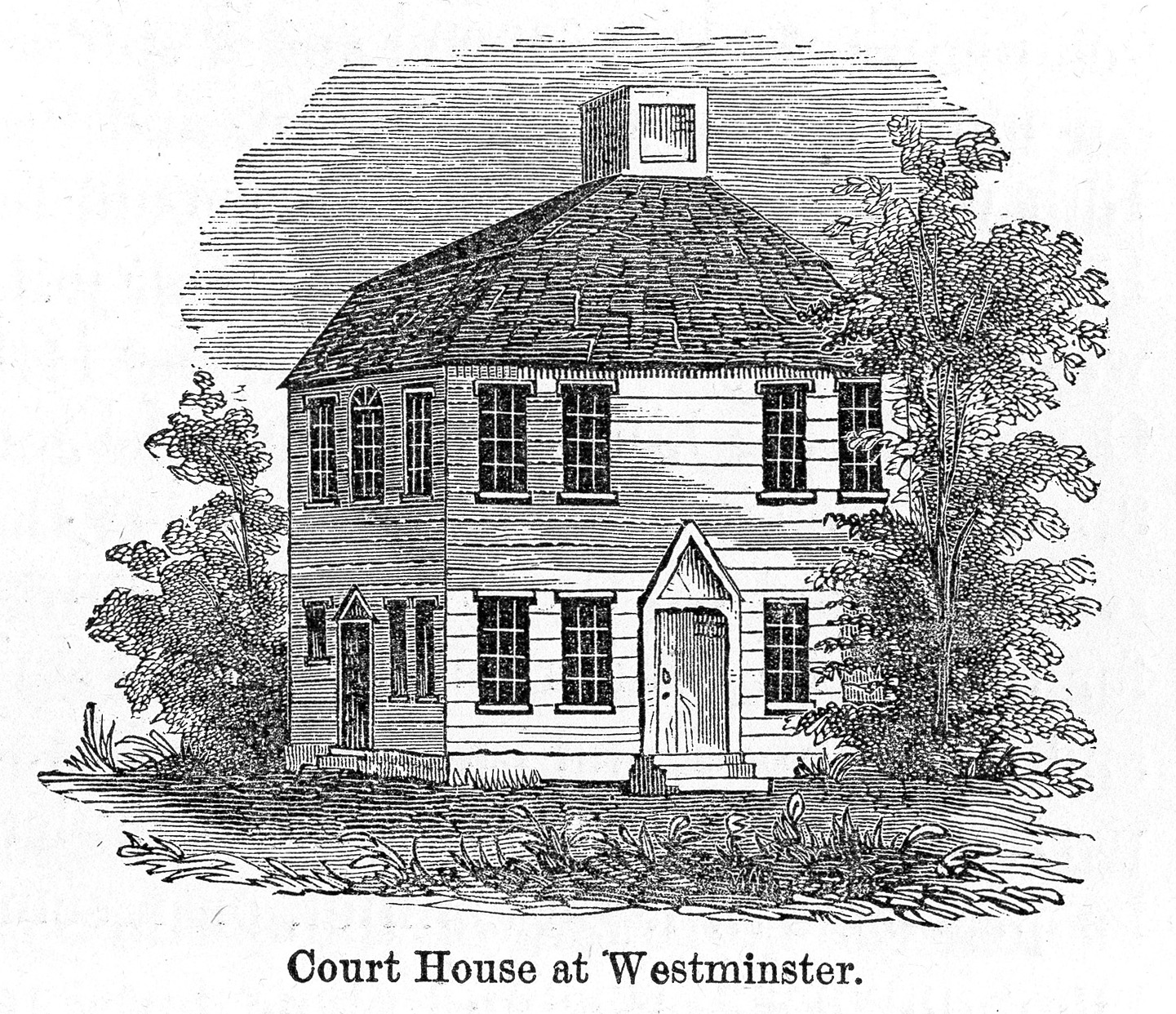
During the March 1775 fighting around the Westminster courthouse (shown above), Richard Hill aided the New York sheriff before being grabbed by the Green Mountain Boys. A Northampton committee set him free, and he hot-footed it to Boston.

As for John Hill, historians identify him as the man who was in New York City with William Cunningham on 6 March when they got into a fight with Patriots under the Liberty Pole. After being roughed up, Hill and Cunningham headed for Boston with their families. William Cunningham served as provost marshal there and later back in New York, becoming notorious among American prisoners of war.

In American Migrations, 1765-1799 Peter Wilson Coldham reports that David Cunningham was a baker in New York (earning £5 sterling per month, he said) who in 1775 was “forced to shelter at Westminster, a remote part of the country, with Mr. Richard Hill.” He may have been related to William Cunningham, but I found no indicators of that.

Charles Blasquet eludes me altogether. But it looks like Crean Brush hired men who had been his protégés in Westminster and/or his poorer relatives, and who had reasons to resent the Patriots.

TOMORROW: Search and seizure.

Monday, April 06, 2026

“All good Subjects will use their utmost Endeavors to have all such Articles convey’d”

When Crean Brush came to him after confiscating Cyrus Baldwin’s goods in March 1776, Gen. William Howe was looking ahead to the next phase of the war.

The British military was about to leave Boston. The American rebels lacked a lot of manufactured goods, from cannon down to woven cloth. Gen. Howe didn’t want them to find such useful material in the town.

In the coming days, the Royal Artillery would damage or spike all the cannon they left behind or pitch them into the water. Local Patriots would congratulate themselves on restoring those guns, but that took a lot of effort, and some of that ordnance was never as good again.

As for cloth, Gen. Howe issued this proclamation on 10 March:
By His Excellency
WILLIAM HOWE,
MAJOR GENERAL, &c. &c. &c.

AS Linnen and Woolen Goods are Articles much wanted by the Rebels, and would aid and assist them in their Rebellion, the Commander in Chief expects that all good Subjects will use their utmost Endeavors to have all such Articles convey’d from this Place:

Any who have not Opportunity to convey their Goods under their own Care, may deliver them on Board the Minerva at Hubbard’s Wharf, to Crean Brush, Esq: mark’d with their Names, who will give a Certificate of the Delivery, and will oblige himself to return them to the Owners, all unavoidable Accidents accepted.

If after this Notice any Person secretes or keeps in his Possession such Articles, he will be treated as a Favourer of Rebels.
That announcement was important enough to be printed, probably by John Howe (no relation).

Gen. Thomas Gage had already put Brush in charge of seizing abandoned property, but this order extended the New York lawyer’s mandate to cover linen and woolen from anyone in Boston.

TOMORROW: Assembling a team.

Sunday, April 05, 2026

The Weakness of Cyrus Baldwin’s Power of Attorney

As it became clear that the British military was about to pull out of Boston, Crean Brush moved to seize more property from absent townspeople, as Gen. Thomas Gage had commissioned him to do.

On the morning of 9 Mar 1776, Brush went to the store of Cyrus Baldwin, who had left for Woburn months before. Cyrus’s brother Loammi was even an officer in the Continental Army.

Baldwin’s neighbor, William Jackson, came out of the next shop, the Sign of the Brazen Head. He explained that Baldwin had asked him to look after his property, sending a power of attorney. Jackson had already chided people squatting in another nearby house for “the iniquity” of breaking into Baldwin’s.

Brush “pronounced Baldwin a rebel,” according to Benjamin H. Hall’s History of Eastern Vermont. He demanded that Jackson turn over the key he’d received from Baldwin’s clerk.

Back in 1770 the Sons of Liberty had declared William Jackson an enemy to his country for continuing to import goods from Britain. He had signed one complimentary address to a royal governor after another. He clearly leaned toward the Loyalist side. Nonetheless, Jackson felt honor bound to protect Baldwin’s property.

Jackson went off to find Gen. William Howe for support. Spotting an aide-de-camp, he lodged his complaint, explaining about the power of attorney. The officer sent an orderly sergeant back with Jackson to speak to Brush.

According to Jackson, however, the sergeant told Brush not to touch Jackson’s goods only. Jackson insisted that Baldwin’s goods should be protected as well. “Brush refused to receive the correction unless it was made in writing and by the proper authority.”

Jackson headed back to Gen. Howe’s headquarters, but this time he couldn’t get in to see anybody. By the end of the day Brush and his assistants had broken into the Baldwin storehouse and carted most of the contents to the brig Elizabeth.

According to a newspaper report in April 1776, William Jackson owned or chartered that ship for his departure from Boston. That looks like a mistake. Hall’s account says he ended up on that ship only because “he had determined to remain with his property”—and Baldwin’s property.

Meanwhile, Crean Brush got in to see Gen. Howe.

TOMORROW: A new commission.

Friday, April 03, 2026

All Aboard the Elizabeth

When Cdre. John Manley captured the brigantine Elizabeth, evacuating from Boston, in April 1776, he saw that he’d hooked an important—and potentially lucrative—prize.

Manley sent some of the people aboard that ship to Gloucester on the Lee under Capt. Daniel Waters. He kept the rest on the Elizabeth and escorted that ship to Portsmouth, New Hampshire.  

That harbor was appropriate since it was the Elizabeth’s home port. Back in October 1775 H.M.S. George had captured that brig on its way back from Montserrat. The local merchant Richard Hart (c.1744–1820) was glad to see his ship return.

The Elizabeth was still carrying the seventeen hogsheads of rum and four hogsheads of sugar that it had picked up in the West Indies. And it was loaded with other cargo. There were household and mercantile goods that passengers were taking with them from Boston and, most valuably, a large quantity of linen and woolen cloth.

Sadly, the property on board the ship also included four enslaved people, listed in a public document a couple of months later as:
A negro man named Adam, John Rowe, Esq owner.
A negro man named Scip, Harrison Gray Esq: owner.
A negro woman named Belinder, Benjamin Austin Esq: owner.
A negro woman named Brada, a widow Kitpath, owner.
Rowe, Gray, and Austin were all rich Boston merchants, but they were in different political situations. Gray, also royal treasurer of Massachusetts, had left with the fleet. Austin was on the Patriot side. And Rowe was trying to find his usual place in the middle, having stayed in Boston through the siege but then stayed in town after the siege as well. (I can’t identify the widow.)

The Elizabeth was also carrying “a Serjeant & twelve privates of the 4th or Kings own Regiment,” who were now prisoners of war. At least some of those soldiers had wives and children with them.

In all, there were forty-six civilians on board the Elizabeth, including the ship’s captain, Peter Ramsey, and the crew. The most prominent of the Loyalist passengers were:
And Brush had made himself notorious inside besieged Boston.

TOMORROW: Where those woolens came from.

Thursday, April 02, 2026

“The Continental Arm’d Schooner Hancock, Came up, and Gave me a Broadside”

Last week I recounted the Loyalist evacuation of Boston as tragedy. This week I’m retelling it as farce.

Capt. John Manley was the first American naval hero of the Revolutionary War, lauded for capturing several British supply ships in the fall of 1775.

After that success, Manley was made commodore with authority over other armed ships launched under Gen. George Washington’s authority. (Soon that little fleet would become part of the Continental Navy.)

In the spring of 1776 Manley was commanding the Hancock, Capt. Daniel Waters the Lee, and Capt. John Ayres the Lynch. They patrolled the waters off Cape Ann.

On 2 April, 250 years ago today, those three schooners spotted a 140-ton brigantine named the Elizabeth. It had sailed out of Boston with the evacuation fleet but fell behind.

Months later, the captain of the Elizabeth, Peter Ramsey, described the action this way:
on or about the 21st of March A D 1776 in Boston in the Colony of the Massachusetts Bay your Deponent then and there received verbal orders from Admiral [Molyneux] Shuldham to go On Board said Brigantine Elizabeth and take the Charge of her and Navigate her to Halifax,

and on Friday the 29th of said March Between the Hours of three & four oClock P M I came to Sail with said Brigantine under Convoy of His Majestys Ship Niger, and Sabbath Evening about six or seven oClock I parted from said Convoy, and proceeded on my Voyage to Halifax,

and about Four or Five oClock P M on the next Tuesday following Commodore John Manly in the Continental Arm’d Schooner Hancock, Came up, and Gave me a Broadside, and I Returned the Fire with Small Arms, Capt Danl Waters in the Continental Arm’d Schooner and Capt John Ayres in the Continental Arm’d Schooner Came up when I struck to the Commodore,

and your Deponent then saw no other vessel besides the before mentioned, and your Deponent in said Brigantine was Brot by the Commodore and Capt Waters into the River of Piscataqua
That was the harbor for Portsmouth, New Hampshire. Ramsey’s testimony was necessary to resolve disputes over who could claim the value of his vessel and its cargo.

Because there was a lot of cargo.

TOMORROW: On board the Elizabeth.

Wednesday, April 01, 2026

“This captain of ours was at the greatest loss”

Yesterday I started to tell the story of how Jolley Allen evacuated Boston with the British fleet in March 1776—or tried to.

Quoting Allen’s own narrative of course gives away the fact that he survived to tell his tale. But it’s such a sarcastically detailed account that I can’t resist.

We left Allen on the morning after the British ships left Boston harbor. Along with his large family and almost two dozen other people, he was on sloop Sally, and it was sinking.

Allen had come to the realization that the man he’d hired to captain that vessel, Robert Campbell, knew nothing about navigating the ocean or even how a sailing ship worked.

That meant for a tense few hours in the early morning of 28 Mar 1776. But then at seven o’clock Campbell “said he saw a vessel.”

Allen urged Campbell to chase after it. Campbell replied that “did not understand steering the vessel he was in, so well as he knew how to give directions to another.” Allen pointed out that he hadn’t hired anyone else who knew how to steer it any better.

Some time later, Campbell announced “he thought he never saw so large a Ship before.” Allen looked and saw the man was pointing at a stretch of land.
I applied to him and asked him what land he thought it was. He told me that he was fully convinced that it was Nantucket. I told him, if that was the case, we must all perish very soon; for the amazing rocks and shoals that lay off Nantucket I could remember very well, as I saw them above Twenty-Two years ago on my passage when I came from London. . . .

This captain of ours was at the greatest loss to know what to do in this situation, seeing land, for want of a map (which I am of opinion had there been one on board he knew no more what to do with than a rat).
The two men called everyone up on deck to discuss what to do. Some passengers feared drowning most. Some had more fear of falling into rebel hands—though Nantucket would prove to be neutral territory for most of the war. Allen advocated running the sloop on shore. Campbell suggested going back out to sea and hoping a Royal Navy ship would come by. Showing their confidence in the captain, the group voted to try the shore.

With the help of a handy current, the Sally moved inland, then struck a sandbar “violently either seven, eight, or nine different times.” Waves lifted the sloop over the bar, but the anchor caught for a while. About 2 P.M. the sloop reached calmer water
with all our sails hoisted, as we had hoisted in Nantasket Road; some all the way up, some half the way up, and some not a quarter of the way up; torn, to appearance, into ten hundred thousand pieces, all flying.

The captain says to me, by way of adviseing with me, seeing no boat come off to us, whether or no we had not better hoist a signal of a white sheet or table-cloth, to let them know we was in distress for want of a boat. The answer I made him was that I thought the above signals was quite sufficient
Eventually a man appeared on shore. The people on the Sally waved. More men appeared. Those men stood and talked with each other.
At last, to our great joy, we saw a cart with a boat (or cano) in it drawn by ten oxen, and six men more, which came down to our assistance. They soon got the boat into the sea, and two men in it to know from whence we came.
Those two oarsmen hadn’t had smallpox, and one of the women on board was dying from the disease (though Allen didn’t come right out and say that). So the passengers had to wait for two different men with immunity to bring out the rowboat. At about seven in the evening the locals started to ferry the people on the Sally to shore. Allen wrote:
I asked them the name of the place; they told me it was Cape Cod. I told them my captain told me, and insisted upon it, that this place was Nantucket. They answered me that Nantucket was above four days’ sail from Cape Cod with a fair wind.
Allen and Campbell hadn’t managed to escape rebel Massachusetts. They hadn’t even managed to get out of Cape Cod Bay.

TOMORROW: More Loyalists at sea.

Tuesday, March 31, 2026

“I told him I was sorry we had not a boat”

Not everyone who evacuated Boston in March 1776 actually got to Halifax.

Back on 11 March, the British-born merchant Jolley Allen rented a sloop called the Sally to evacuate with his wife and seven children. It looks like his party also included “Sally Bradford; servant maid,” and “Lilla Coppinger, belonging to Mr. Allen’s family.”

To command that ship Allen hired a man named Robert Campbell, and Campbell hired a small crew. Allen also authorized his captain to sell space to other passengers: five women, three of them with children along. When the Sally left the dock on 14 March, it carried thirty people, only six of them men.

Capt. Robert Campbell was an experienced mariner working out of New York, as shown by many newspaper entries. Unfortunately, in March 1776 that man was stuck on Antigua, contesting the seizure of his ship America by Capt. Samuel Graves of H.M.S. Viper, as he described at length.

The Robert Campbell whom Allen had hired was, according to New Brunswick Loyalist Journeys, “a farmer and tavern keeper in Monmouth County,” New Jersey, who for political reasons had fled to New York and then to Boston in October. Campbell’s tavern in Freehold continued to be a landmark until at least 1780, so perhaps Robert’s wife Mary and children stayed to run it after he left.

This Robert Campbell’s lack of seagoing experience wasn’t evident when boats towed the Sally out past the Castle on 17 March, then down to the Nantasket Road. The sloop was assigned to be part of the second division of the evacuation fleet, receiving the signal to sail for open waters on 27 March. And then everything started to go wrong.

First the Sally suffered two collisions in Boston harbor, its bowsprit ripping off parts of two larger ships. Then the sloop ran aground. It fell behind the rest of the fleet. Darkness came, and the small crew lost sight of the other ships ahead. By this time Allen had discovered that Campbell couldn’t tell which way the tide was flowing without an almanac, tie a sailor’s knot, or assemble the pumps.

By midnight a corner of the main sail had ripped loose and been jury-rigged to the pumps. The barrel of fresh water had leaked out. The kitchen apparatus (the “cabose”) was knocked overboard. Ice was coating the lines and the deck. And by the early hours of 28 March, “a plank in the side of the vessel had given way, and the sea was pouring in, and the vessel was sinking.”

Allen wrote:
I then desired the Captain to come upon deck with me, which he did; and I asked him whereabout he thought we was at sea.

He told me he could not tell.

I then asked him what distance we was from land.

He said that was impossible for him to tell, for he had not kept any reckoning, and the reason he gave me for it was that he had forgot to bring pens, ink, and paper.

I told him, if he had applyed to me, I had all these things.

He then made me answer he had never learned navigation, and that he never was on salt water before; but he knew how to row a boat in a river;

on which I told him I was sorry we had not a boat, that we might save our lives at the sinking of the vessel, and at the same time I told him, if we had a boat with oars, it was my opinion he knew as little of it as he did of navigation
The two men stayed on deck the rest of the night, not speaking to each other.

TOMORROW: Can this sloop be saved?

Monday, March 30, 2026

“The Prospect of this Country is very Sterile”

Capt.-Lt. Archibald Robertson, British military engineer, sailed out of Boston harbor on 25 Mar 1776.

Robertson’s ship was an army transport called the Thames. It was in the first contingent of vessels heading for Halifax—forty-nine in all, per his count.

Three days later, Robertson recorded in his diary, the Thames crew spotted Cape Sable, the island at the southernmost corner of Nova Scotia. The next day, the ship “made the light house west of the harbour of Halifax and came to an Anchor about 2 o’clock off Chebucto point in the harbour.”

On 30 March, 250 years ago today, Robertson’s ship moored alongside a wharf, and Loyalist refugees presumably started to disembark at their new home.

The young officer examined his new base with an eye for its defenses. He wrote:
The Prospect of this Country is very Sterile and unimprovable, The Bay very good and extensive and if the Ground was Cultivated or Capable of being so would be very beautifull.

The Town which is long and Stragling built of wood on the side of a hill, and the Dock Yard, are so Commanded by Different heights that it appears to me to be impossible to fortify them without a Multiplicity of Works and more troops than could possibly be spared.

The Ships in the Harbour opposite the Dock Yard could Easily be drove away from either side and the Dock Yard destroy’d from the East side which is not above 1400 Yards across.
Adm. Molyneux Shuldam, Gen. William Howe, and most of the rest of the evacuation fleet arrived from Boston on 2 April.

The picture above is Robertson’s “Sketch of the Harbour & Town of Halifax with our fleet turning up,” now in the collections of the New York Public Library.

Friday, March 27, 2026

“Here I took my leave of that once happy country”

Even after the destruction of Castle William, described yesterday, Judge Peter Oliver’s ship Pacific remained in Boston’s outer harbor, waiting for the right weather.

On 24 March, Oliver recorded, the night was so cold “that the vessell’s bows and cables were loaded with ice.”

The next day the winds were more favorable. A packet ship sailed for London, carrying Oliver’s son Peter, Jr., and his wife Sally; Sally’s brother Thomas Hutchinson, Jr., and his wife Sarah (who was also the judge’s niece); and their children among the passengers. At the same time, the “first Division” of the Loyalist fleet headed toward Halifax.

Still, Oliver’s ship remained. On 26 March he was rowed over to H.M.S. Renown and dined with “Commodore [Francis] Banks,” that ship’s captain.

On 27 March, 250 years ago today, Adm. Molyneux Shuldam (c. 1717–1798, shown above) was ready to sail, his flagship H.M.S. Chatham leading a fleet of Royal Navy warships, army troop transports, and merchant vessels to Nova Scotia. But first he wrote out orders for Capt. Banks:
You are hereby required and directed to employ His Majesty’s Ship under your Command, in such manner as you shall judge best, either by Cruizing or Anchoring occasionally in preventing all communication or Commerce with the Town and Harbour of Boston; And whereas many Vessels are daily expected here with Stores and Provisions for the use of His Majesty’s Fleet and Army, which are in extreme want of them; You are to take under your Command the Ships and Vessels mentioned in the Margin and employ them in Cruizing between the Latitudes of Cape Cod, and Cape Anne at such distance from the Shore, where they are most likely to fall in with the above Expected Vessels, which you are to direct them to see in safety to Halifax, and then return to you.

You are also hereby required and directed on the Arrival of any of His Majesty’s Ships and Vessels at Nantasket (except those you have Orders to take under your Command) to give their Commanders Orders to proceed immediately to join me at Halifax, or where ever else you shall from good Authority hear I may be.

You are to take, sink, burn, or destroy, all Rebel Armed Vessels you may meet with, and to continue upon this Service till further Order, Governing yourself in the Executing of it, by the General Code of Orders and Instructions, you have already received from me, sending all Vessels you may seize or detain to Halifax, to be proceeded against according to Law, and giving me an Account of your Proceedings by all opportunities that offer.
The naval ships that the admiral listed in the margin were the frigates Lively, Niger, and Fowey; the sloop Swan; the brigs Hope and Bolton; and the schooner Dispatch. That flotilla would remain to limit New England shipping.

Judge Oliver wrote in his diary for that day:
I sailed from Nantasket, abt. 3 o’clock, afternoon, in the 2nd and last Division of the fleet, about 70 sail, for Hallifax, under convoy of the Chatham, Admiral Shuldham, and of the Centurion, Capn. [Richard] Braithwaite.

Here I took my leave of that once happy country, where peace and plenty reigned uncontrouled, till that infernal Hydra Rebellion, with its hundred Heads, had devoured its happiness, spread desolation over its fertile fields, and ravaged the peacefull mansions of its inhabitants, to whom late very late if ever, will return that security and repose which once surrounded them; and if in part restored, will be attended with the disagreeable recollection of the savage barbarities, and diabolical cruelties which had been perpetrated to support rebellion, and which were instigated by Leaders who were desperate in their fortunes, unbounded in their ambition and malice, and infernal in their dictates.

Here I drop the filial tear into the Urn of my Country.

O fortunatos nimium, sua si bona norint—Nov-Anglicanos!

And here I bid A Dieu to that shore, which I never wish to tread again till that greatest of social blessings, a firm established British Government, precedes or accompanies me thither.
Oliver’s Latin riffed off of one of Virgil’s lines in Georgics, saying that the farmers (or New Englanders) would count themselves lucky if only they knew how good they had it.

Peter Oliver was one of the wealthier Loyalists, as well as having a royal appointment (and salary). He soon moved on from Halifax to London, where he lived the rest of his life until 1795.

Oliver’s diary of departing Massachusetts was published in a volume of his friend and in-law Thomas Hutchinson’s diary and letters. Oliver also left of bitter, detailed, and gossipy account of the coming of the Revolution, written in the early 1780s and finally published in 1961. (Highly recommended.)

Thursday, March 26, 2026

The Last of Castle William

On 10 Mar 1776, the last royal chief justice of Massachusetts, Peter Oliver, boarded a ship called the Pacific, which usually sailed between India and Britain. He called it “a very commodious vessell, which General [William] Howe was so polite as to appropriate to the accomodation of my friends and me.”

For the next week, Oliver recorded periodic artillery exchanges between Boston and the Continental lines. On 17 March, he wrote, “The troops at Boston embarked, and about 20 sail fell down into King Road by 11 o’clock this morning.” The next day, he watched the army start to destroy Castle William.

One of the Royal Artillery engineers involved in that operation was Capt.-Lt. Archibald Robertson. In his diary that officer wrote, “In the Morning went to Castle William to see the mines prepar’d; found them ready for Loading.” 

The next day, Robertson “found the mines all loaded but 12 which were again unloaded as the General wanted them not to be ready for some days.” Gen. William Howe was shifting some troops onto transport ships that had just arrived from Halifax, and the 64th Regiment was still holding the Castle, exchanging cannon fire with the mainland.

That night, Judge Oliver reported, the “south Blockhouse of the Castle was burnt, and some of the walls of it blown up.”

On 20 March, Capt.-Lt. Robertson wrote:
At 3 o’clock Colonel [Alexander] Leslie came to the Castle from the General with orders to load the mines. We began immediately and had 63 done by 7 o’clock.

As the night had the Appearance of Rain and the wind fair it was thought proper for the 64th to Embark. . . . Accordingly at 8 o’clock 6 Companies Embark’d and the Boats lay off untill the mines were fired, which was done 1/2 an hour Afterwards and they had a very good Effect.

The Barracks and other houses were then set on fire, and at 9 the Rear Guard consisting of 3 Companies, the Artillery, etc. Embark’d, and we got all safe on board the Transports.
Judge Oliver’s description of this spectacle was:
The blowing up of the Castle Walls continued: and at night all the combustible part of the Castle was fired. The conflagration was the most pleasingly dreadful that I ever beheld: sometimes it appeared like the eruption of Mount Etna; and then a deluge of fire opened to the view; that nothing could reconcile the horror to the mind, but the prevention of such a Fortress falling into the hands of rebels, who had already spread such a conflagration of diabolical fury throughout America, which scarce anything can quench but the— metu tremefacit Olympum.
That Latin phrase meant “He makes Olympus tremble,” hinting at a supernatural power.

Capt.-Lt. Robertson’s watercolor of Castle William being consumed by fire appears above; “a very good Effect” indeed.

TOMORROW: Leaving America behind.

Wednesday, March 25, 2026

“Near or quite fifty Sail are got out to Sea”

Lt. Nahum Ward, son of Gen. Artemas Ward, carried Gen. George Washington’s letter (quoted yesterday) to Josiah Quincy, Esq. (shown here), of Braintree on 24 Mar 1776.

The squire, encouraged, started to make detailed notes about what the British fleet was doing out on the Nantasket Road, the shipping channel in the outer harbor.

“The Admiral [Molyneux Shuldam] has a Signal now flying at his main top mast Head,” Quincy wrote the next day, 250 years ago today. “I wish it was in my Power to construe it.” Yes, that would have been more helpful.

But then he saw movement.
11 OClock. This Moment an Explanation of the above Signal occurrs: Part of the Fleet are come to Sail: I shall proceed, journalwise, to inform your Excellency of their Movements, ’till the Bearer, who is gone to see Colo. [Benjamin] Tupper, returns.

1 OClock They are still coming to sail: near or quite fifty Sail are got out to Sea; about half of them Brigs, Schooners, and Sloops; one or two Frigates, and the remainder Transport Ships; their Course shaped for Cape Cod: May not this Division be bound for Martha’s Vineyard, and the Islands in that Sound to procure fresh Provision for the Fleet, which is to rendevous at Hallifax, and from thence to proceed to Quebec?

3 OClock My Servant, who was directed to take an Account of the Number that have sailed, informs me, there are in all fifty two: One transport Brig: is just arrived: . . .

5 OClock The Adml has just now hoisted another Signal a Pendant under his Flagg two more Ships are under Sail going out of the Harbor: 7 O’Clock, Mr Ward & Colo. Tupper are just arrived: They are of Opinion, that the Ships which sailed to Day, have carried off the Tories, and are bound with them to Lewisburgh.

Tuesday Morng [26 March] Mr Ward’s tarrying in Town, gives me a further Opportunity to inform your Excellency that the Fleet, consisting of about 100 Sail, chiefly large Ships, remain as they were last Night.

10 OClock The same Signal is now flying at the Admiral’s Main top mast Head as was hoisted yesterday morning: Scarce hoisted before it was lower’d again, & in abt ½ an hour a blew [blue] flag is flying at mizen Top mast Head and a Pendant at his mizen Peek.

11 O’Clock The above Signals are changed, for a red Ensign hoisted just under his Mizen Yard: A signal is just now hoisted upon the Top of the Light House, for Vessels in the Offing; and immediately followed, by a blew broad Pendant from the middle of the Tower: In less than 10 Minutes the Signal first mentioned vizt a Pendant is flying from his main top mast Head.

12 O’Clock A red Ensign is now flying at his mizen top mast Head; a blew Ensign at his starboard mizen Shrouds, and a pendant thrown out between, by hand, & immediately taken in again.

2 OClock The 60 gun Ship in King Road is come to Sail & going down to Nantasket: The Admiral’s red Ensign is struck; the blew one remains: a large transport Ship and a Brig are just arrived within the Light.
Quincy wasn’t sure all that detail could be useful, but he promised Washington he’d keep sending it until the general said otherwise. He really wanted to be part of the effort to defeat the British.

About half of the fleet had moved off, heading for the safe port of Halifax, Nova Scotia. Most of the rest would follow by the end of 26 March. A few warships stayed behind to patrol Boston harbor.

TOMORROW: Aboard one of those ships.

Tuesday, March 24, 2026

“Fire Ships and fire Rafts, covered by the Smoke of Cannon”?

After evacuating Boston on 17 Mar 1776, the British military was gone—and yet not gone.

The troops, their families, their support staff, royal appointees, and more than a thousand Loyalists had embarked on more than a hundred ships, but those ships were bobbing in the outer harbor.

People worried that the army or navy would attack Boston or other coastal towns, either for supplies or for revenge. The Continental forces had a few armed schooners, good for capturing isolated merchant ships but not up to taking on a royal frigate, much less a fleet.

On 21 March, Josiah Quincy wrote to Gen. George Washington about what he could see from Braintree:
Since the Ships and Troops fell down below, we have been apprehensive of an Attack from their Boats, in Pursuit of live Stock; but, yesterday in the Afternoon, we were happyly relieved, by the Appearance of a number of Whaleboats, streching across our Bay, under the Command (as I have since heard) of the brave Lieut. Colo. [Benjamin] Tupper, who in the forenoon had been cannonading the Ships, with one or more field Pieces from the east Head of Thompson’s Island; and, I suppose, last Night cannonaded them again from the same Place, or from Spectacle Island.

This judicious Manœuvre had its genuine Effect; for, this Morning, the Admiral [Molyneux Shuldam], and all the rest of the Ships, except one of the Line came to sail, and fell down to Nantasket Road; where a countless Number is now collected:

In Revenge for their burning the Castle last Night; were we provided with a sufficient Number of fire Ships and fire Rafts, covered by the Smoke of Cannon from a few Row Gallies; this Night, might exhibit, the most glorious Conflagration, that was ever seen upon the watery Element, and the probable Consequences of it, a Period to the present War, otherwise, Humanity revolts at the Destruction of so great Number, even of our Enemies.
A fireship, as Samuel Johnson defined it, was “A ship filled with combustible matter to fire the vessels of the enemy.” Sometimes they carried not just combistibles but explosives. The tactic was to send such a ship toward a group of enemy vessels, set it afire, and get off safely while it continued on. A flaming fireship was probably the most fearsome single weapon of eighteenth-century warfare. Even if it didn’t damage enemy ships, they had to scramble to stay out of its way, and captains might decide to move on.

It seems significant that the Americans at this time wrote mostly about “fire Rafts.” That seems like a cheaper form of fire ship, not able to carry as much or be steered as easily, dependent on prevailing currents.

Quincy was a senior member of the Massachusetts Council and energetic supporter of the war. Gen. Washington wrote back to him on 24 March, 250 years ago today: 
The continuance of the Fleet in Nantasket Road affords matter for Speculation—it surpasses my comprehension—and awakens all my Suspicions—I have taken every step in my power to guard against Surprizes, but the temper of your People, seems to me to be, to apprehend no danger till it stares them in the Face—

I do not think there is cause to apprehend such Marauding parties as you dread—if any stroke is aimd, it will be a capitol one, for which reason I wish to be much upon my guard; & therefore have appointed Guard Boats, lookouts, &ca—there is one evil I dread, & that is their Spies, I could wish therefore that the most attentive watch was kept to prevent any Intercourse between the Ships & Main
He urged Quincy to set up a shore guard watching for such infiltrators, promising to pay those men’s wages.

Washington sent that reply through Gen. Artemas Ward and added this order for his second-in-command:
As these favourable Winds do not waft the fleet from Nantasket, my Suspicion’s are more and more roused. I wish therefore the Fire Rafts talkd of by Colo. Tupper, could be attempted in a Windy, or dark Night, I think this would discover their designs if no other good effect resulted from it.
TOMORROW: The next day’s action.

Monday, March 23, 2026

“The troops quitting the town was a beautiful sight”

From yesterday we continue with Robert Woolf’s reminiscence of being a teen-aged businessman caught in the siege of Boston in the spring of 1775:
I had not been many days settled with the family of a gentleman in the custom house when, early on the morning of June the 17th (1775), we were awakened by a smart cannonade from one of the ships of war!

This was no less than the prelude to the famous and bloody battle of Bunker’s Hill, so well recorded in all the public documents of the time that it requires no comment. I, however, lost a valuable friend, Major [John] Pitcairn, killed on the field, and the cries and groans of the great number of wounded brought into the town, as they passed our house, were heart-rending.

Affairs now remained quiet until the following year, the town strictly blockaded by the Americans, the troops and remaining inhabitants suffering many privations up to the beginning of March, 1776. Then began a heavy cannonade and bombardment, many of the shot falling so close to my quarters that we were obliged to remove to a more distant part of the town, and soon afterwards orders were issued by the Governor [actually Gen. William Howe] for the troops and loyal inhabitants to evacuate the place.

This was accordingly done without molestation by the enemy, and all embarked safely in transports provided for the occasion. The troops quitting the town was a beautiful sight, the whole coming off at one and the same time by signal!
I hadn’t seen anyone praise the British soldiers’ departure that way before. In fact, contemporaneous sources are clear that the some troops went on board ships days before others. Perhaps Woolf was remembering one particular day, such as the last embarkation on 17 March, and all the redcoats left in town at that time.
All then proceeded to Halifax, Nova Scotia, which, being a small place, caused no little confusion. The troops, however, remained but a few days [more like weeks] and then proceeded to attack the Americans at New York, leaving two battalions in Halifax, with whom I was stationed, and became one of the mess of the second battalion, and there I remained for two years, thus having an opportunity of exploring some parts of that wild and (at that time) unsettled country, the extensive and impenetrable woods coming within two miles of the town.

At last we embarked for England with part of the marines, and after a most boisterous passage (at one time being five days unable to carry any sail, or to cook any victuals) we landed safely at Plymouth, where I remained a week, and then, proceeding to Portsmouth, a few days more saw me safely set down again in London! October, 1778.
By 1779 Woolf moved on to India, eventually becoming accountant-general for the East India Company. He married Anna Maria Smart, whose father painted the miniature of her shown above. They had nine children.

In 1848 a granddaughter of the couple moved to the province of New Brunswick, bringing some family papers and art. That’s why the portrait is in the National Gallery of Canada and Woolf’s memoir was published by the Women’s Canadian Historical Society despite having no mention of women.