J. L. BELL is a Massachusetts writer who specializes in (among other things) the start of the American Revolution in and around Boston. He is particularly interested in the experiences of children in 1765-75. He has published scholarly papers and popular articles for both children and adults. He was consultant for an episode of History Detectives, and contributed to a display at Minute Man National Historic Park.

Subscribe thru Follow.it


•••••••••••••••••


Showing posts with label Edward Cane. Show all posts

Saturday, February 18, 2023

“Find out the Officer that gives intelligence to this Camp”

One of the most intriguing parts of Dr. Benjamin Church’s espionage letter on 24 Sept 1775 was his discussion of a possible American spy inside Boston.

The doctor’s contact, Maj. Edward Cane, had hunted such spies back in June, when he was involved in the arrest of schoolteachers James Lovell and John Leach.

In September Church wrote to him:
It has not yet been in my power to find out the Officer that gives intelligence to this Camp, and you must think me much Mistaken, that there is no such Man, but I am as Certain you have such a person as I am of my Existance, when ever there is an opportunity some one that is well knowing how things are like to go Convay it to General Washington by some person that is coming out of town, there was a letter came out last Saterday in a private manner that was instantainusly sent of to the General, the intimations given by one of the Communitty [committee?] concieved how, and from what Quarter it came, remember I now inform you of what you may know.
Evidently Dr. Church suspected an “Officer” in the British military was slipping useful information to Gen. George Washington, but Maj. Cane was skeptical. Was the doctor feeling a little paranoid, given his own situation as an informant? Was the major too quick to trust his fellow officers?

In fact, Gen. Washington had sent a secret informant into Boston in July. That was John Carnes, a former minister who had been running a store in the South End for a few years.

Church had even taken advantage of the communication channel to Carnes to slip his own note to his handlers. But he hadn’t used that message to expose the courier or spy; he probably just asked for money.

Carnes was still in Boston and sending out information as of mid-August. Perhaps he was also the source of the letter that “came out last Saterday in a private manner,” as Church wrote. Or perhaps Washington had other sources of information. Or perhaps that letter wasn’t what Church thought.

Carnes family tradition held that he came to be “suspected by General Gage” and expelled from Boston. Thomas Gage sailed for Britain in early October. If that tradition is true, therefore, Carnes’s espionage career was nearly over.

But so was Dr. Church’s.

TOMORROW: Final words.

Sunday, February 05, 2023

“I shou’d loose my life if it was known by these people”

In the before times, not only before the pandemic but before I launched Boston 1775, I looked at the 24 Sept 1775 letter from Dr. Benjamin Church, Jr., that I’ve started analyzing.

It’s in the Thomas Gage Papers at the Clements Library in Michigan. I was there doing some of the research that eventually became The Road to Concord.

At the time I wasn’t so interested in events after the war had started, so I didn’t transcribe the letter. I merely noted that this document was in the same handwriting as other letters from Church.

That was before cell phones had cameras in them. These days, many researchers spend more time in archive reading rooms photographing than reading, taking home lots of images to decipher later.

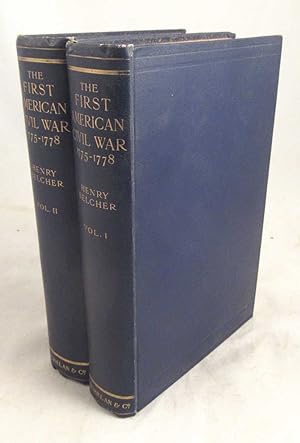
Fortunately for me, Henry Belcher transcribed the letter and published it in The First American Civil War (1911), and that’s now available for everyone. He called the document only “An American Spy’s Report,” not recognizing Church as the spy.

Allan French’s General Gage’s Informers (1932), which confirmed Church (and Benjamin Thompson) as secret agents for Gage, didn’t discuss this letter. Neither did John Nagy’s 2013 biography of Church.

I’m sorry if I’ve missed another study, but as far as I know yesterday’s posting was the first discussion of this letter in the context of Church’s espionage career. So over several days I’m going to analyze all the parts of this letter.

Toward the end is a passage that reveals something of Church’s spycraft:
If I am to Continue in your Service Major be so good to send me out a little Cash, Charly the ferry Man if you can trust him may give it me—Slyly—by heavens Major I shou’d loose my life if it was known by these people.

I attempted some time ago to write you, over Chalsey ferry but the Committy would not let me go down to the ferry ways so as to see Charls. After that I did not try but went to Newport and from thence wrote. I am forced to act with the greatest Caution in this Matter, but now Sir I think a way is open by which I can let you know how matters go with us if you Requist it, If you do not, I am very much obliged to you for your kindness and friendship attested toward me & am Yrs &c. &c.
The “Major” whom Church wrote to was almost certainly Maj. Edward Cane of the 43rd Regiment. He was the addressee on Church’s ciphered letter that I discussed in the last couple of days. Back in June, Cane had participated in the arrest of a couple of suspected spies within Boston.

Almost all of Church’s surviving spy reports include a plea for money, like this one. That pattern strongly suggests that money motivated Church’s betrayal of the Patriot cause.

The passage above also shows the doctor clearly knew he was committing a hanging offense. Yet from the moment of his arrest to when he was sent into exile, Church denied being a spy.

TOMORROW: The ferrymen.

Saturday, June 29, 2019

“Masters Leach and Lovell were brought to prison”

On 29 June 1775, John Leach, a mariner in Boston’s North End, began to keep a journal. He started it out of anger because he had just been arrested by the British military authorities and he wanted to document what was happening to him.

Leach wrote:
Memorandums, began Thursday, June 29th, 1775.—At 3 this afternoon, a few steps from my House, I was seized upon by Major [Edward] Cane, of the Regulars, accompanied by one [Joshua] Loring, who is lately made a Sheriff: they obliged mo to return to my House, where Major Cane demanded my Keys of my Desks, and search’d all my Drawings, Writings, &c, and told me I had a great deal to answer for.

I replyed, it was very well, I stood ready at a minute’s warning to answer any accusation; I had a drawn Hanger, I could have took hold of in a moment, and cut them both down. I had both Courage and inclination to do it, tho’ they had each their swords by their sides, but I suddenly reflected, that I could not escape, as the whole Town was a prison. God wonderfully restrained me, as I should have lost my Life, either by them, or some of their Companions.

They then conducted me from my House to the Stone Gaol, and after being lodged there 20 minutes, the said Cane and Loring brought in Master James Lovell, after searching his Papers, Letters, &c. as they had done mine.

Cane carried my drawings to show Gen. [Thomas] Gage, next day, and returned them.
Leach’s diary was printed in the New England Historical and Genealogical Record in 1864.

Already in the Boston jail since 19 June was eighteen-year-old Peter Edes, son of the radical printer Benjamin Edes. The elder Edes had slipped out of town just before the war began and set up a press in Watertown.

Peter was also keeping a diary, and on 29 June he wrote:
Masters Leach and Lovell were brought to prison and put into the same room with me and my companions.
Peter Edes’s diary, which shares text with John Leach’s, was published in 1901.

Leach and Lovell both received the title “Master” because they kept schools. Leach taught navigation and other skills privately in the North End. Lovell was actually the usher, or assistant teacher, to his father, Master John Lovell, at the South Latin School, but the town valued him enough to pay him far more than any other usher. Lovell had also delivered the first official town oration in memory of the Boston Massacre back in April 1771.

The imprisonment of Lovell and Leach is one more thread of the story of Bunker Hill. And not just because the officer who arrested them was being promoted to major in the 43rd Regiment only because Maj. Roger Spendlove had died in that battle. (Spendlove had survived wounds at Québec, Martinique, and Havana, but not Charlestown.)

Lovell and Leach were locked up after the battle because the British commanders thought one of them was a spy.

TOMORROW: Incriminating letters.