


J. L. BELL is a Massachusetts writer who specializes in (among other things) the start of the American Revolution in and around Boston. He is particularly interested in the experiences of children in 1765-75. He has published scholarly papers and popular articles for both children and adults. He was consultant for an episode of History Detectives, and contributed to a display at Minute Man National Historic Park.

Subscribe thru Follow.it


•••••••••••••••••


Showing posts with label Hannah Lincoln. Show all posts

Friday, December 18, 2020

“See the Court cheat the injurd people With a Shew of Justice”
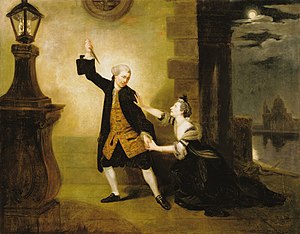
It should be no surprise that Bostonians continued to wrangle over the Boston Massacre trials even after they ended with two manslaughter convictions and eleven acquittals.

One response was recounted by Thomas Hutchinson in the last volume of his history of Massachusetts, published decades after his death:
A few days after the trials, while the court continued to sit, an incendiary paper was posted up, in the night, upon the door of the town house, complaining of the court for cheating the injured people with a shew of justice, and calling upon them to rise and free the world from such domestick tyrants. It was taken down in the morning, and carried to the court, who were much disturbed, and applied to the lieutenant-governor [i.e., Hutchinson himself], who laid it before the council
The text of the “incendiary paper” as eventually published:
To See the Sufferings of my fellow
Townsmen and own my self a man, to
See the Court cheat the injurd people
With a Shew of Justice which yet we
never can taste of, drive us like wrecks
down the rough tide of power while
no hold is left to save us from destructi-
on. All that Bear this are slaves, and we are
such, not to rise up at the great Call of
Nature and free the world from such Domestic
Tyrants.
The Council advised acting governor Hutchinson to issue “a proclamation with a reward for discovering the offender.” He did so on 13 December, offering £100 to anyone who could identify the person who posted the notice. The historian Hutchinson later wrote, “there was no room to suppose [that] would have any effect.”

The 17 December Boston Gazette responded:
A very abusive Paper, which was said to be posted upon the Door of a public Building a few Mornings ago, we are told was taken verbatim from a Play called Venice Preserved; and that Mr. Otway was actually the Author. He and his Accomplices have been dead long ago, and can never be punished for it in this Life, unless the Doctrine of Transmigration is true.

The impertinant Man who posted it up, deserves all the Punishment which the Law can inflict, for so heinous a Crime—We will not dive into the Heart of this imprudent Man; but if he really intended, as some say, to reflect upon the Powers that be, and to inflame the Minds of the People against them, he has missed his Aim; and always will, while every one so clearly sees, that they are, if we may be allow’d to quote the Scripture Language, “Terrors to Evil Doers, and a Praise to THEM that do WELL.” It will be the Wisdom of this People, as it is their Duty, to have a Guard upon their Passions, and be peaceable.
Thomas Otway’s 1682 play Venice Preserv’d was quite popular among the British, its setting long interpreted as a stand-in for their own country. Of course, local law prevented the drama from being performed publicly in Massachusetts, but people read it. Hannah Quincy discussed it with young John Adams. Josiah Quincy, Jr., alluded to it in a letter.

In fact, enough people knew Venice Preserv’d to take issue with the claim in Edes and Gill’s newspaper that the handbill on the Town House was merely a “verbatim” quotation from it. On 20 December Richard Draper of the Boston News-Letter printed “a Copy of that that was posted up, and also the Lines from Otway, whereby our Readers may judge for themselves.”

Otway’s original lines were:
To see the Sufferings of my Fellow-creatures,
And own myself a Man; to see our Senators
Cheat the deluded People with a Shew
Of Liberty, which yet they ne’re must taste of.
They say, by them our Hands are free from Fetters,
Yet whom they please, they lay in basest Bonds;
Bring whom they please to Infamy and Sorrow;
Drive us like Wrecks down the rough Tide of Power,
Whilst no Hold is left to save us from Destruction.
All that bear this are Villains: and I one,
Not to rouze up at the greatest Call of Nature,
And check the Growth of these domestic Spoilers,
That make us Slaves, and tell us ’tis our Charter.
The News-Letter thus displayed the complaint about the Massacre trials to many more people than saw it when it hung on the Town House for a few dark hours.

TOMORROW: Responses, legal and literary.

[The picture above shows David Garrick and Susannah Cibber performing Venice Preserv’d, as painted by Johan Zoffany.]

Monday, October 26, 2020

Miss Quincy, Mrs. Lincoln, Mrs. Storer, and the Adamses

In the fall of 1761, Hannah (Quincy) Lincoln (shown here, courtesy of the Harvard Art Museums) struck up a correspondence with Abigail Smith, the seventeen-year-old daughter of the minister of Weymouth.

At the time, Lincoln was twenty-five years old and had been married a little over a year. She apparently set out to mentor the teen-aged girl in finding a beau.

On 5 October, Abigail wrote back (in a version probably regularized in spelling and punctuation before being published in 1840):
You bid me tell one of my sparks (I think that was the word) to bring me to see you. Why! I believe you think they are as plenty as herrings, when, alas! there is as great a scarcity of them as there is of justice, honesty, prudence, and many other virtues. I’ve no pretensions to one.
Back in 1759, a young lawyer named John Adams had accompanied his friend Richard Cranch on a visit to the Smith household. Cranch would eventually marry the oldest daughter, Mary. But Adams had come away unimpressed by the Smith girls—“Not fond, not frank, not candid.” In his eyes then, they didn’t compare to “H.Q.,” whom he thought “Tender and fond. Loving and compassionate.”

As I quoted back here, Adams came close to proposing to Hannah Quincy, but didn’t. Which of course meant that she may have had no idea how interested he was. She married Dr. Bela Lincoln instead.

On 30 Dec 1761, a little less than two months after Abigail had told Mrs. Lincoln she had no beaus, John Adams wrote with Cranch to her older sister to say, “our good Wishes are pour’d forth for the felicity of you, your family and Neighbours.—My—I dont know what—to Mrs. Nabby.” He was trying to flirt. Within three years, John Adams and Abigail Smith were married.

Both the Adamses remained friendly with Hannah Lincoln—she was, after all, a cousin of Abigail’s; a sister of John’s legal colleagues Samuel and Josiah Quincy, Jr.; and a neighbor back in Braintree after the death of her first husband.

In October 1777 Abigail was pleased to report to John that “our Friend Mrs. L——n of this Town” was engaged “to Deacon S——r of Boston, an exceeding good match and much approved of.” Everybody liked and respected Ebenezer Storer.

As Abigail Adams traveled away from Massachusetts in the 1780s and 1790s, Hannah Storer continued to correspond with her on topics like social events, children, and fashions. Her political comments were general, though she expressed indignation at John Adams being turned out of the Presidency.

Ebenezer Storer died in 1807. Abigail Adams died in 1818. Their widowed spouses lived on in Boston and Braintree, evidently not seeing each other regularly if at all.

Josiah Quincy, Jr. (1802-1882), Hannah Storer’s great-nephew, wrote in his memoir Figures of the Past about bringing them together sometime in the 1820s:
Among my boyish recollections [of Braintree] there is distinctly visible a very pretty hill, which rose from the banks of the river, or what passed for one, and was covered with trees of the original forest growth. This was known as Cupid’s Grove; and it had been known under that title for at least three generations, and perhaps from the settlement of the town. The name suggests the purposes to which this sylvan spot was dedicated. It was the resort of the lovers of the vicinage, or of those who, if circumstances favored, might become so. The trunks of the trees were cut and scarred all over with the initials of ladies who were fair and beloved. . . .

I, a young man, just entering life, was deputed to attend my venerable relative on a visit to the equally venerable ex-President. Both parties were verging upon their ninetieth year. They had met very infrequently, if at all, since the days of their early intimacy.

When Mrs. Storer entered the room, the old gentleman’s face lighted up, as he exclaimed, with ardor, “What! Madam, shall we not go walk in Cupid’s Grove together?”

To say the truth, the lady seemed somewhat embarrassed by this utterly unlooked-for salutation. It seemed to hurry her back through the past with such rapidity as fairly to take away her breath. But self-possession came at last, and with it a suspicion of girlish archness, as she replied, “Ah, sir, it would not be the first time that we have walked there!”
Mrs. Storer could still flirt. And President Adams, he was still trying.

Sunday, October 25, 2020

Ebenezer Storer, at Your Service

In December 1774, a few months after Hannah (Quincy) Lincoln’s husband Bela died, a Boston merchant named Ebenezer Storer was also widowed.

Storer appears here in a pastel portrait rendered by John Singleton Copley in the late 1760s, now at the Metropolitan Museum of Art.

Ebenezer Storer was known for his piety, his meticulous attention to business, and his willingness to do committee work.

After earning degrees from Harvard, he had joined his father’s firm and married Elizabeth Green in 1751. They had at least six children between 1752 and 1764.

In business, Storer became his father’s partner in 1754 and inherited the firm five years later. Storer also followed his father as a deacon of the Brattle Street Meeting from 1759 to 1773, and people referred to him as “Deacon Storer” well after that.

For the town of Boston, Storer served at various times as a warden, selectman, Overseer of the Poor, and member of many town committees. In 1770 he was in the delegation that visited Capt. Thomas Preston in jail and the group of merchants who tried to cajole towns in Essex County back to non-importation.

Other organizations Storer helped to run included the Hopkins Foundation, the Massachusetts Society for Propagation of Christian Knowledge, the New England Company, the Company for Promoting Good Order (Religious), and the Society for Encouraging Trade and Commerce.

A few months after Elizabeth Storer died, the war broke out and Boston was besieged. Ebenezer found refuge in Needham but in February 1776 went back into Boston under a flag of truce. People didn’t doubt his loyalty, though. The town made him a selectman and Overseer again for another year as it recovered.

Another institution that called on Storer’s talents at this time was Harvard College. John Hancock had neglected his work as college treasurer under the heavy, and enticing, responsibilities of politics. Storer took over that job in July 1777 and stayed at it through the currency fluctuations of the 1780s and all the way to 1807.

Four months later, Storer married widow Hannah Lincoln at her father’s house in Braintree. In the following years she gave birth to her only children—daughters Hannah (1779), Anna (1780), and Susan (1783).

The family settled into the Storer mansion on Sudbury Street in Boston. Ebenezer continued to keep the books for all sorts of enterprises, including the Second Massachusetts Regiment, the American Academy of Arts and Sciences, and the Society for Propagating the Gospel in North America.
 
Meanwhile, the Storer business was failing. Ebenezer couldn’t keep up his usual trade with London. He invested in Continental bonds, then had to turn them over to creditors in the 1780s for a fraction of their value. The result, he told President George Washington, was “almost a total loss of my property.” However, he kept his father’s big house and his social standing.

Eventually the John Adams administration found Ebenezer Storer a job and steady income as a regional inspector in the U.S. excise office. After Thomas Jefferson became President, he shifted over to be treasurer of the town of Boston.

The Storers hosted many gatherings of relatives and friends. Future mayor Josiah Quincy described his aunt and uncle as “a hospitable, pleasant family, entertaining their friends most agreeably,” with regular parties on Sunday nights. (He met his wife at one of those events.) 

Ebenezer and Hannah Storer were known as a generous, genteel, and happy couple until he died in his sleep in January 1807.

TOMORROW: A widow once more

Saturday, October 24, 2020

The Career of Dr. Bela Lincoln

When Bela Lincoln was growing up in Hingham in the 1740s, his father—a wealthy farmer, town official, and militia colonel—insisted on sending him to Harvard College.

Some people didn’t think Bela had the smarts for it. Others felt that his talent was merely hidden by "a natural bashfulness.”

Bela Lincoln did fine at Harvard. After graduating in 1754, he returned to Hingham to study medicine with Dr. Ezekiel Hersey. In 1756 he took a province job as doctor for the community of Acadian exiles (“French neutrals”) resettled in Sherborn.

Young Dr. Lincoln was building his practice during the time he became engaged to Hannah Quincy, from a similarly upper-class family in Braintree. Most of our information about their courtship comes from the diary of John Adams, who also entertained thoughts of proposing to Quincy and therefore wasn’t a neutral observer.

Bela Lincoln and Hannah Quincy married on 1 May 1760. Yesterday I shared Adams’s alarmed description from that December of how rudely the doctor behaved toward his wife, her parents, and the entire gathering. Whatever bashfulness Lincoln had shown as a child, he didn’t show it that night—though perhaps he was overcompensating.

I don’t know of other evidence of strains in the Lincolns’ marriage, though, unless their lack of children counts. I haven’t found anyone else writing of Bela Lincoln as such an obnoxious, overbearing man.

Dr. Lincoln’s career seemed to advance steadily. In 1761, Gov. Francis Bernard appointed him a justice of the peace for Middlesex County. The men of Sherborn elected him to the Massachusetts General Court.

In late 1764 Lincoln sailed to Britain for more medical training, also carrying messages from speaker of the house Thomas Cushing to the province’s agent. He came back the next year with an M.D. from King’s College in Aberdeen, which reflected some combination of study and payment.

Now looking even more prestigious, Dr. Lincoln returned to Hingham to resume his practice. The governor made him a justice in Suffolk County. He trained younger doctors, including the hapless schemer Amos Windship, whom he set up in practice in exchange for a mortgage on an inheritance.

Then Dr. Lincoln fell ill. In the summer of 1771 Edmund Quincy described him as “in a very dangerous State.” At the time he and Hannah were on Georges Island in Boston harbor, perhaps for his health. They had been married more than a decade.

Dr. Bela Lincoln finally died in Hingham on 16 July 1774, leaving his wife Hannah a widow at age thirty-five. (His older brother Benjamin went on to have a distinguished political and military career.)

TOMORROW: A better prospect?

Friday, October 23, 2020

“Dr. Lincoln and his Lady”

Earlier this month I discussed how John Adams, the Rev. Anthony Wibird, and Dr. Bela Lincoln of Hingham competed for the attention of Hannah Quincy in north Braintree.

Sometime in the spring of 1759 John wrote that he almost proposed to Hannah, only to be interrupted before he could speak by her sister Esther and his friend Jonathan Sewall—who were becoming a couple.

That “gave room for Lincolns addresses,” Adams wrote, clearly indicating that the doctor had won the contest.

But in the summer of 1759, Adams quoted Lincoln in his diary as saying:
My father gave me a serious Lecture last Saturday night. He says I have waited on H.Q. two Journeys, and have called and made Visits there so often, that her Relations among others have said I am courting of her. And the Story has spread so wide now, that, if I dont marry her, she will be said to have Jockied me, or I to have Jockied her, and he says the Girl shall not suffer. A story shall be spread, that she repelled me.
Evidently Dr. Lincoln and Miss Quincy weren’t as sure about their engagement as all their relatives and neighbors.

On 1 May 1760, however, the nuptials were celebrated. Just seven months later, on 2 December, Adams described what he considered a horrifying display of rudeness at the house of Col. Josiah Quincy, the bride’s father:
About the middle of the Evening Dr. Lincoln and his Lady came in. The Dr. gave us an ample Confirmation of our Opinion of his Brutality and Rusticity. He treated his Wife, as no drunken Cobler, or Clothier would have done, before Company. Her father never gave such Looks and Answers to one of his slaves in my Hearing. And he contradicted he Squibd, shrugged, scouled, laughd at the Coll. in such a Manner as the Coll. would have called Boorish, ungentlemanly, unpolite, ridiculous, in any other Man. . . .

His treatment of his Wife amazed me. Miss[tress] Q. asked the Dr. a Question. Miss[tress] Lincoln seeing the Dr. engaged with me, gave her Mother an Answer, which however was not satisfactory. Miss[tress] Q. repeats it. “Dr. you did not hear my Question.”—“Yes I did, replies the Dr., and the Answer to it, my Wife is so pert, she must put in her Oar, or she must blabb, before I could speak.” And then shrugged And affected a laugh, to cow her as he used to, the freshmen and sophymores at Colledge.—She sunk into silence and shame and Grief, as I thought.—

After supper, she says “Oh my dear, do let my father see that Letter we read on the road.” Bela answers, like the great Mogul, like Nero or Caligula, “he shant.”—Why, Dr., do let me have it! do!—He turns his face about as stern as the Devil, sour as Vinegar. “I wont.”—Why sir says she, what makes you answer me so sternly, shant and wont?—Because I wont, says he. Then the poor Girl, between shame and Grief and Resentment and Contempt, at last, strives to turn it off with a Laugh.—“I wish I had it. Ide shew it, I know.”—

Bela really acts the Part of the Tamer of the Shrew in Shakespear. Thus a kind Look, an obliging Air, a civil Answer, is a boon that she cant obtain from her Husband. Farmers, Tradesmen, Soldiers, Sailors, People of no fortune, Figure, Education, are really more civil, obliging, kind, to their Wives than he is.—She always is under Restraint before me. She never dares shew her endearing Airs, nor any fondness for him.
Adams felt the smart, flirtatious woman who had beguiled him two years before was being beaten down psychologically.

TOMORROW: Can this marriage be saved?

[The picture above shows the actor Henry Woodward (1714-1777) costumed as Petruchio for the play Catharine and Petruchio, adapted from Shakespeare by David Garrick in 1754. In Britain it became far more popular than the original. But Adams, as a young Massachusetts man, had read Shakespeare and never seen either version on stage.]

Friday, October 16, 2020

Bachelors in Braintree

When Anthony Wibird came to Braintree to be the minister of the north parish in 1755, the congregation offered him £80 a year and £120 as a lump sum in “settlement money” when he married.

Wibird held out instead for £100 a year with no extra help in setting up a household.

We can do the calculation and see that after six years as a bachelor Parson Wibird would be ahead.

Which is not to say the minister didn’t talk about marriage. In fact, that seems to have been a major topic in his conversations when the young lawyer John Adams slept over one Tuesday in January 1759. Adams wrote in his diary:
Met Mr. Wibirt at the Coll’s door, went with him to his Lodgings, slept with him and spent all the next day with him, reading the Reflections on Courtship and Marriage, . . .

In P[arson] Wib[ird] s Company, Something is to be learned, of human Nature, human Life, Love, Court Ship, Marriage. He has spent much of his Life, from his Youth, in Conversation with young and old Persons of both sexes, maried and unmaried, and therefore has his Mind stuffed with Remarks and stories of human Virtues, and Vices, Wisdom and folly, &c. But his Opinion, out of Poetry, Love, Court ship, Mariage, Politicks, War, Beauty, Grace, Decency &c. is not very valuable. His Soul is lost, in a dronish effeminacy. Ide rather be lost in a Whirlwind of Activity, Study, Business, great and good Designs of promoting the Honour, Grandeur, Wealth, Happiness of Mankind.

He says he has not Resolution enough to court a Woman. He wants to find one that will charm, conquer him and rouse his spirit. He is like a Turkey, retiring to Roost. . . .

Wib[ir]t exposes very freely to me his Disposition, the past and present state of his mind, his susceptibility of Impressions from Beauty &c., his Being amourous, and inclined to love, his Want of Resolution to Court, his Regard, fondness, for O., his Intimacy and dalliance with her &c. He has if I mistake not a good many half born Thoughts, of courting O.
“O.” was Adams’s code for the young lady he called “Orlinda”: Hannah Quincy (1736-1826), eldest daughter of Col. Josiah Quincy. [The house the colonel built in 1770 appears above as a stand-in for the family’s previous house.]

Adams himself was beguiled by Hannah Quincy, filling his diary with their dialogues and analyzing how she treated young gentlemen.
She lets us see a face of Ridicule, and Spying, sometimes, inadvertently, tho she looks familiarly, and pleasantly for the most part. She is apparently frank, but really reserved, seemingly pleased, and almost charmed, when she is really laughing with Contempt. Her face and Hart have no Correspondence.

Hannah checks Parson Wibirt with Irony.—It was very sawcy to disturb you, very sawcy Im sure &c.

I am very thankful for these Checks. Good Treatment makes me think I am admired, beloved, and [my] own Vanity will be indulged in me. So I dismiss my Gard and grow weak, silly, vain, conceited, ostentatious. But a Check, a frown, a sneer, a Sarcasm rouses my Spirits, makes me more careful and considerate. . . .

Mr. Wibirt has not an unsuspicious openness of face. You may see in his face, a silly Pain when he hears the Girls, a whispering, and snickering.
For his part, in the summer the parson declared, “Out of H[annah] and E[sther Quincy, her cousin] might be made a very personable Woman but not a great soul.”

Adams likewise began to resent Hannah Quincy’s behavior:
Should have said, H. you was dissatisfied with your situation and desirous of a Husband. In order to get one, you Wheedled Wibirt; you wheedled Lincoln. You gave each of them hints and Encouragement to Court you. But especially you wheedled me. For 6 months past you and I have never been alone together but you have given me broad Hints, that you desired I should court you, &c. &c.
Adams once came close to proposing to “Orlinda,” but he never did. The rival he called “Lincoln”—Dr. Bela Lincoln (1734–1773) of Hingham, brother of Benjamin Lincoln—proposed first. He and Hannah Quincy wed on 1 May 1760.

In his diary Adams assured himself that he’d made a narrow escape, that he didn’t really want to marry “Orlinda” anyhow:
[Jonathan] Sewal and Esther [Quincy] broke in upon H. and me and interrupted a Conversation that would have terminated in a Courtship, which would in spight of the Dr. have terminated in a Marriage, which Marriage might have depressed me to absolute Poverty and obscurity, to the End of my Life. But the Accident seperated us, and gave room for Lincolns addresses, which have delivered me from very dangerous shackles, and left me at Liberty, if I will but mind my studies, of making a Character and a fortune.
A couple of years later, Adams met young Abigail Smith of Weymouth, and they married in 1764. That same year, Adams’s friend Jonathan Sewall married Esther Quincy after a long engagement. Another of their circle, Robert Treat Paine, finally married Sally Cobb in 1770, two months before their first child was born.

TOMORROW: And Parson Wibird?

Wednesday, November 11, 2015

Meeting the Quincy Women, 12 Nov.

In January 1759, John Adams paid a call to Col. Josiah Quincy’s house in Braintree (shown here).

There the young lawyer found his host’s daughter Hannah (1736–1826) and her first cousin Esther Quincy (1738–1810).

Referring to Hannah Quincy as “O.” in his diary, Adams compared the two young ladies:
O. thinks more than most of her Sex. She is always thinking or Reading. She sitts and looks steadily, one way, very often, several minutes together in thought. E. looks pert, sprightly, gay, but thinks and reads much less than O. . . .

O. makes Observations on Actions, Characters, Events, in Popes Homer, Milton, Popes Poems, any Plays, Romances &c. that she reads and asks Questions about them in Company. What do you think of Helen? What do you think of Hector &c. What Character do you like best? Did you wish the Plot had not been discovered in Venice preserved? These are Questions that prove a thinking Mind. E. asks none such.
But really they were both flummoxing him: “I talk to Hannah and Easther about the folly of Love, about despizing it, about being above it, pretend to be insensible of tender Passions, which makes them laugh.”

Hannah Quincy married Dr. Bela Lincoln of Hingham the next year. Esther Quincy married Adams’s friend and fellow lawyer Jonathan Sewall in 1764. That same year, Adams married Abigail Smith, whose mother was a Quincy.

On Thursday, 12 November, Nancy Carlisle will speak at Old North Church in Boston on the topic “From the Revolution to the Close of the Nineteenth Century, the Remarkable Women of the Quincy Family.”
In a family where six successive generations of Quincy men held prominent public roles in the civic life of Boston and New England, the women in the family have long been overshadowed. But in reality it is because of them that we know as much as we do about their husbands, fathers, and brothers. When we shine a light on the lives of the Quincy wives and daughters we learn about the role that intelligent, articulate, and engaged women played in the political and cultural life of the region.
Carlisle is the Senior Curator of Collections for Historic New England. For the past three years she has focused on the Quincy House and its inhabitants as part of a major reinstallation.

This talk is scheduled to start at 6:30 P.M. It is free, but Old North asks people to reserve seats through this site. There will be a reception afterwards.