J. L. BELL is a Massachusetts writer who specializes in (among other things) the start of the American Revolution in and around Boston. He is particularly interested in the experiences of children in 1765-75. He has published scholarly papers and popular articles for both children and adults. He was consultant for an episode of History Detectives, and contributed to a display at Minute Man National Historic Park.

Subscribe thru Follow.it


•••••••••••••••••


Showing posts with label Thomas Flucker. Show all posts

Saturday, June 29, 2024

“Their Orders were to keep the Door fast”

On Friday, 17 June 1774, inside the Salem courthouse, the Massachusetts assembly discussed sending five men to what would become the First Continental Congress.

According to the official tally, there were 129 members present. That was only about half the number of representatives that towns had elected in May, but the royal governor’s order to move the legislator to Salem had probably cut attendance. (And truth be told, the Massachusetts House rarely saw full attendance anyway.)

Of those 129 representatives, only twelve voted against the proposal. While some of the rest may have abstained, that number suggests that the Loyalist party commanded only a tenth of the chamber. Though there were lots of political arguments in Massachusetts during these tears, there were few close votes.

Nonetheless, Gov. Thomas Gage had a power stronger than democracy. Under the charter of 1692, he could simply declare the legislative session over, halting all bills.

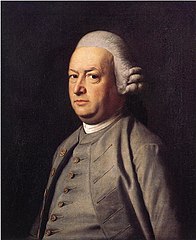
As soon as he learned what was happening in the House, Gage sent the provincial secretary, Thomas Flucker (shown above), to Salem with just such an order.

The 20 June Boston Gazette reported:
His Excellency the Governor having directed the Secretary to acquaint the two Houses it was his Excellency’s pleasure the General Assembly should be dissolved and to declare the same dissolved accordingly; the Secretary went to the Court House and finding the Door of the Representatives Chamber locked, directed the Messenger to go in, and acquaint the Speaker [Thomas Cushing] that the Secretary had a message from his Excellency to the Hon. House, and desired he might be admitted to deliver it;

The Messenger soon returned, and said he had acquainted the Speaker therewith, who mentioned it to the House, and their Orders were to keep the Door fast:
According to John Sanderson’s profile of Samuel Adams, published about half a century later:
The door keeper seemed uneasy at his charge, and wavering with regard to the performance of the duty assigned to him. At this critical juncture, Mr. Adams relieved him, by taking the key and keeping it himself.
Flucker proceeded with his royal duty, as the newspaper reported:
Whereupon, the following proclamation was published on the stairs leading to the Representatives Chamber, in presence of a Number of Members of the House, and immediately after in Council.
To be clear, the Rev. William Gordon wrote that the secretary “read the proclamation upon the steps leading to the representatives’ chamber.” It’s unclear whether this was before or after the assembly’s vote, but the legislators didn’t acknowledge the governor’s proclamation until Adams opened the doors.

The Massachusetts General Court was officially dissolved. Yet the assembly had officially passed the resolutions sending delegates to the congress and seeking money to pay for that trip. That packet of resolutions was quickly sent to the newspapers, which printed it before Gov. Gage’s proclamation.

TOMORROW: Meanwhile, in Faneuil Hall…

Wednesday, February 28, 2024

“I cannot shew any Countenance to it”

When the Massachusetts house informed Gov. Thomas Hutchinson on 25 Feb 1774 that it had voted to impeach Chief Justice Peter Oliver, his first response was that “he desired the Message may be reduced the Writing.”

The house named Samuel Adams, Joseph Hawley, and Robert Treat Paine a committee to do that reduction, then a larger committee to deliver the paragraph to the governor.

That afternoon, they asked where Hutchinson’s promised response was. Secretary Thomas Flucker replied that the governor had gone home to Milton.

The next morning the house received this message:
Gentlemen of the House of Representatives,

By your Message of Yesterday you informed me that you had Resolved to Impeach Peter Oliver, Esq; Chief Justice of the Superior Court, &. before the Governor and Council of High Crimes and Misdemeanors, and that you had prepared Articles of Impeachment, and you prayed that I would be in the Chair that you might then have the Opportunity of laying them before the Governor and Council.

I know of no Species of High Crimes and Misdemeanors nor any Offence against the Law committed within this Province, let the Rank or Condition of the Offender be what it may, which is not cognizable by some Judicatory or Judicatories, and I do not know what the Governor and Council have a concurrent Jurisdiction with any Judicatory in Criminal Cases, or any Authority to try and determine any Species of High Crimes and Misdemeanors whatsoever.

If I should assume a Jurisdiction and with the Council try Offenders against the Law without Authority granted by the Charter or by a Law of the Province in pursuance of the Charter, I should make myself liable to answer before a Judicatory which would have Cognizance of my Offence, and His Majesty’s Subjects would have just Cause to complain of being deprived of a Trial by Jury, the general Claim of Englishmen except in those Cases where the Law may have made special Provision to the contrary.

Whilst such Process as you have attempted to commence shall appear to me to be unconstitutional, I cannot shew any Countenance to it.

T. Hutchinson.
Milton, 26 Feb. 1774.
The assembly sent their articles of impeachment up to the Council anyway.

On 1 March the assembly produced a longer version and sent that up as well. The impeachment was entirely based on Oliver’s refusal to accept the legislature’s salary instead of the Crown’s; now the legislature also voted not to pay the chief justice any salary, so there. 

John Adams spent that evening talking politics. In his diary he wrote: “Much said of the Impeachment vs. the C.J.—and upon the Question whether the Council have the Power of Judicature in Parliament, which the Lords have at home, or whether the Governor and Council have this Power?” The next day he wrote out the arguments against and for the Council being able to act alone.

Adams also wrote:
Lt. Govr. [Andrew] Oliver, senseless, and dying, the Governor sent for and Olivers Sons. Flucker has laid in, to be Lieutenant Governor, and has perswaded Hutchinson to write in his favour. This will make a difficulty. C. J. Oliver, and Fluker will interfere.
On 3 March, Lt. Gov. Andrew Oliver died.

TOMORROW: End of an impeachment.

Saturday, November 25, 2023

“And all servile Labour is forbidden”

Thursday, 25 Nov 1773, 250 years ago today, was a holiday in Massachusetts.

About a month earlier, Thomas Hutchinson had issued this proclamation, printed on broadsides as shown at University Archives auction house:
Massachusetts-Bay. }

By the Governor.

A PROCLAMATION for a Publick Thanksgiving.

Whereas it is our incumbent Duty to make our frequent publick thankful Acknowledgement to Almighty GOD our great Benefactor, as well for the Mercies of his common Providence as for the distinguishing Favours which at any Time he may see meet to confer upon us:

AND WHEREAS among many other Instances of the Favour of Heaven towards us of a publick Nature in the Course of the Year past, it hath pleased God to continue the Life of our Sovereign Lord King GEORGE—of our most Gracious Queen CHARLOTTE and of the rest of the Royal Family—to succeed His Majesty’s Councils and Endeavours for Preserving Peace to the British Dominions—to continue to us a good Measure of Health—to prosper our Husbandry, Merchandize, and Fishery:

I HAVE therefore thought fit to appoint, and I do, with the Advice of His Majesty’s Council, appoint Thursday the Twenty-fifth Day of November next to be a Day of Publick Thanksgiving throughout the Province, exhorting and requiring the several Societies for Religious Worship to assemble on that Day, and to offer up their devout Praises to GOD for the several Mercies aforementioned, and for all other Favours which He hath been graciously pleased to bestow upon us, accompanying their Thanksgivings with fervent Prayers that, after they shall have sang the Praises of God, they may not forget his Works.

And all servile Labour is forbidden on the said Day.

GIVEN at the Council-Chamber in Boston, the Twenty-eighth Day of October, in the Fourteenth Year of the Reign of our Sovereign Lord GEORGE the Third, by the Grace of GOD, of Great-Britain, France, and Ireland, KING, Defender of the Faith, &c. Annoq; Domini, 1773.

By His Excellency's Command,
Tho’s Flucker, Secr’y.

T. Hutchinson.

GOD Save the KING.

BOSTON: Printed by RICHARD DRAPER, Printer to His Excellency the Governor, and the Honorable His Majesty’s Council. 1773.
New Englanders expected to observe some autumn Thursday as a Thanksgiving, with sermons in the daytime and a big family dinner. However, the date of that holiday wasn’t set by the governors until the fall.

In 1773, between the governor’s proclamation and Thanksgiving Day there had been two small riots over tea, Hutchinson’s sons and the other consignees were keeping low profiles, and everyone was on tenterhooks waiting for the first East India Company cargo to arrive.

According to merchant John Rowe, that Thanksgiving saw “Dull heavy Raw Weather.”

Thursday, May 04, 2023

Where Did Lucy Flucker and Henry Knox Marry?

As I wrote yesterday, the marriage of Henry Knox and Lucy Flucker appears on the records of King’s Chapel, Boston’s most upper-class Anglican church, dated 23 June 1774.

The next week’s newspaper reports confirm that the rector of that church, the Rev. Dr. Henry Caner, presided at the wedding.

There’s another disagreement about that marriage, however: where it took place. Writers have come to different conclusions.

The most likely site would seem to be King’s Chapel itself. Nothing in its records suggests the Knoxes’ wedding was any different from others. Most biographers who describe the ceremony state that it happened in the chapel.

However, in The Revolutionary War Lives and Letters of Lucy and Henry Knox Phillip Hamilton wrote that the marriage took place in the building on Cornhill that Henry was renting as his house and shop. Lucy’s older sister Hannah Urquhart and “Aunt Waldo” attended, but her parents didn’t.

Hamilton appears to have relied on Henry Knox’s 29 August letter to his close friend Henry Jackson, which I haven’t seen in full. It’s now in the collection of the Gilder Lehrman Institute. Barring new discoveries, that’s the closest contemporaneous source about the young bookseller’s strained relationship to his new in-laws.

There are also a couple of memoirs written in the nineteenth century by members of the extended family that preserve their understandings about the marriage.

The Massachusetts Historical Society holds a manuscript called the “Winslow Family Memorial.” It was written by Isaac Winslow (1774–1856), a first cousin of Lucy Knox, and his daughter Margaret Catharine Winslow (1816–1890). The oh-so-handy transcript (P.D.F. download) offers this story of the marriage:
they were married at the house of her uncle Mr [Isaac] Winslow in Roxbury. I always understood, that he rather favor’d this union, and aided in its favorable issue. For this friendly disposition Gen Knox, as I have been led to think, from the little I know of the circumstances of the case, evinced more grateful feeling’s towards Mr Winslows family than his lady, who though not unkind to her cousins, yet when living in a good deal of style, after the peace in Boston, did not much notice her cousins, who were then in quite narrow circumstances
Hamilton’s citations show he looked at this manuscript, but he didn’t accept its statement that the Knox wedding took place in Roxbury.

Finally, the “Reminiscences” of the Knoxes’ longest lived daughter, Lucy Knox Thatcher (1776–1854, shown above), is held at the headquarters of the National Society of the Daughters of the American Revolution in Washington, D.C. Nancy Rubin Stuart quoted from it in Defiant Brides. It agrees that Lucy’s parents didn’t attend the wedding but says her sister Hannah and their half-sister Sallie did. Again, I’ve seen only a bit of this document and plan to check it out on a future trip.

(The portrait above shows Lucy Knox Fletcher in the mid-1800s. Because there’s no portrait of Lucy Knox, and because of the similarities of the mother’s and daughter’s names, websites often mistakenly present this as a picture of Henry Knox’s wife.)

Wednesday, November 23, 2022

“Last Monday evening Miss Hannah was married to Mr. Fluker”

On 27 Dec 1750, Boston ministers announced that Hannah Waldo and Thomas Flucker (shown here) intended to marry.

The Rev. Jonathan Mayhew presided over the wedding on 14 Jan 1751 at the West Meetinghouse.

In reporting that wedding, the Boston Evening-Post called the bride “a Lady of great Beauty and Merit.” The Boston Post-Boy said she was “an agreable and virtuous young lady.”

That coverage strongly implies most people sympathized with Hannah in her decision to call off her engagement to Andrew Pepperrell the preceding fall after he had delayed their wedding one too many times. They didn’t blame her as the fickle one.

Flucker was a young merchant, seven years older than his bride. He had previously married a sister of James Bowdoin and been widowed in May 1750. Aside from his daughter named Sally born out of wedlock on a date I don’t know, Hannah and Thomas appear to have had a solid genteel New England marriage, with their first baby, also named Hannah, arriving at the end of 1751. Flucker went on to become the province’s royal secretary.

Andrew Pepperrell’s cousin William Tyler sent him the news:
I inform you that last Monday evening Miss Hannah was married to Mr. Fluker and appeared a bride at the West Church, New Boston, brought in her chariot. The talk is almost over, for everybody thinks and tells me they believe it is what you wanted, but more of this when I see you.
Pepperrell doesn’t appear to have pined after his lost fiancée. He went back to his mansion in Kittery, Maine, and his rural social life. While returning from a ball in Portsmouth, New Hampshire, in February, he caught a cold. That became pneumonia. The Boston Evening-Post announced that he died on 1 March “after a short Indisposition.” The local minister preached a sermon in his memory.

Later authors wrestled with why Andrew Pepperrell had strung Hannah Waldo along for so long. Was he prone to ill-timed “despondency” or depressions? Was he interested in someone else? Did he resent and resist his father’s arrangements? Most of Andrew’s papers were destroyed, making it even harder to know. (Not knowing the facts didn’t bother other authors who exaggerated the young man’s death, suggesting he went mad or died of a broken heart two days after Hannah Waldo’s send-off.)

Sir William Pepperrell was left without a son to carry on his name. He made the eldest son of his daughter Elizabeth Sparhawk heir to his fortune and baronetcy on the condition that that young man take the surname Pepperrell. The first Sir William Pepperrell died in 1759. The second became a Loyalist exile.

Hannah’s father, Samuel Waldo, also died in 1759 while overseeing his property in Maine. Most of his descendants became Loyalists, but one exception was Thomas and Hannah Flucker’s daughter Lucy, who married Henry Knox. Through careful management of family claims, the U.S. Secretary of War gained (nominal) control of most of the Waldo Patent.

And that couldn’t have happened except for the long, unhappy engagement of Hannah Waldo and Andrew Pepperrell.

Thursday, October 06, 2022

“They understood he was not the person intended”

One of the minor but telling disagreements between Josiah Quincy, Jr., and the government ministers he met in London in November 1774 involved the new lieutenant governor of Massachusetts, Thomas Oliver.

After meeting with Quincy, the secretary of state, Lord Dartmouth, described their conversation to former governor Thomas Hutchinson.

Among other things Quincy warned that the people of Massachusetts were strongly opposed to the new Council, appointed by writs of mandamus from London rather than elected. Specifically, he said:
the new Counsellors were in general persons the most exceptionable to the Province, of any which could have been pitched upon, and only one whom the people were satisfied with, which was the Lt. Governor, and he by chance, for they understood he was not the person intended, but that the name of the Ch. Justice was mistaken.
That new appointee, Thomas Oliver, was only in his forties and had not been active in politics before. Massachusetts Whigs suspected that the government in London really meant to name Chief Justice Peter Oliver to succeed his late brother, Andrew Oliver (shown above). Or at least that bureaucrats believed Thomas Oliver was a member of the same family.

I thought the same thing, and said so, in presentations about the “Powder Alarm,” in which Thomas Oliver played a central role. There just didn’t seem to be any other explanation for how the man attracted any attention in London.

But then John W. Tyler, who’s busy editing the Correspondence of Thomas Hutchinson for the Colonial Society of Massachusetts, alerted me to a 29 Mar 1774 letter, to be published in an upcoming volume. In that dispatch to Lord Dartmouth, Gov. Hutchinson discussed candidates to replace Andrew Oliver. William Browne of Salem preferred a seat on the bench. Hutchinson’s next choice was Customs Commissioner William Burch. The provincial secretary, Thomas Flucker, might be persuaded to exchange his hard job for an easier one with a slightly smaller compensation.

And then:
There is a gentleman of the same name with the late Lieut. Governor but of another family Thomas Oliver Esq. of Cambridge, now Judge of the Provincial Court of Admiralty which he must quit in case of his appointment. He has a handsome Estate, is a very sensible man & very generally esteemed. He is Cousin German to Mr. [Richard] Oliver the Alderman and City Member [of Parliament]. I know not how the Alderman stands affected to Government but this Gentleman has been steady in his opposition to all the late measures and I think the Administration in case of the absence of the Governor may be safely trusted with him.
Thus, when the secretary of state appointed Thomas Oliver to be Massachusetts’s new lieutenant governor, he had heard about the man and knew he wasn’t part of the same family.

How did Lord Dartmouth respond to Josiah Quincy suggesting the new lieutenant governor was nothing but a big mistake? According to Hutchinson, “Ld. D. interrupted him here and said it was strange the people of N.E. should suppose the Ministry so inattentive as not to ascertain the names of the persons they appointed.”

Quincy doesn’t seem to have recognized that that was a polite aristocratic way of telling him he was talking through his hat.

As with so many of these conversations, Quincy’s outlook was so far away from how the ministers saw things, and all the men were so certain about their beliefs, that they were speaking past each other.

TOMORROW: A failure of communication.

Wednesday, March 17, 2021

Evacuation Day Lecture Now Online

I’ve put “The End of Tory Row,” my Evacuation Day talk for Longfellow House–Washington’s Headquarters, online at YouTube.

Because this was an online talk, I loaded my PowerPoint up with more graphics. I hope those survive my clicking while speaking, the Zoom recording, and finally the compression for YouTube.

One thing I said in the talk is that no one could figure out why the Crown chose Thomas Oliver to be Massachusetts’s new lieutenant governor in 1774. At forty years old, he was hardly a senior figure among supporters of the royal government, and he hadn’t been active in politics. The best explanation seemed to be, I said, that bureaucrats in London got him mixed up somehow with the family of his predecessor, Andrew Oliver.

After the talk, John W. Tyler, currently editing The Correspondence of Thomas Hutchinson for the Colonial Society of Massachusetts, sent me the text of Gov. Hutchinson’s letter to the Earl of Dartmouth on 29 Mar 1774. That document shows that I wronged Thomas Oliver—at least one person in Massachusetts thought he could be a capable lieutenant governor.

This letter shows that after Andrew Oliver’s death Hutchinson sent four names of possible stand-ins to the Secretary of State’s office. The governor wanted someone who could back him up, not knowing that he would soon be superseded by Gen. Thomas Gage.

The four names Hutchinson proposed were:
  • William Browne of Salem. As of 29 March, he asked to be considered for a seat on the Massachusetts Superior Court instead, and was indeed appointed to that bench just in time for the courts to be shut down.
  • William Burch, a Customs Commissioner born in England and based in Massachusetts since 1767—Hutchinson’s top choice.
  • Thomas Flucker, the provincial secretary.
  • Thomas Oliver.
About the last, Hutchinson wrote:
There is a gentleman of the same name with the late Lieut. Governor but of another family Thomas Oliver Esq. of Cambridge, now Judge of the Provincial Court of Admiralty which he must quit in case of his appointment. He has a handsome Estate, is a very sensible man & very generally esteemed. He is Cousin German to Mr. [Richard] Oliver the Alderman and City Member. I know not how the Alderman stands affected to Government but this Gentleman has been steady in his opposition to all the late measures and I think the Administration in case of the absence of the Governor may be safely trusted with him.
Lord Dartmouth’s office thus had a little information about Thomas Oliver and knew that he wasn’t from the same family as Andrew and Peter Oliver. His distant cousin Richard Oliver was about to speak out against the Boston Port Bill in Parliament, but the government didn’t hold that against Thomas.

Hutchinson was anxious to have a lieutenant governor in place because if he died, became ill, or left the province without one, the power of acting governor would fall to the Council, led by its senior member, and the Council was more and more ranged against him. Again, Hutchinson didn’t know that in August that elected Council would be replaced with one appointed from London.

Thus, I was mistaken in saying no one in Massachusetts considered Thomas Oliver to be lieutenant governor material. He was at the bottom of Hutchinson’s short list, but he was on the list.

Wednesday, December 30, 2020

“The breach of a most essential privilege of this Board”

On 12 Oct 1770, eight members of the Massachusetts Council delivered their depositions about what had happened on 6 March, the day after the Boston Massacre.

Harrison Gray, who was also the provincial treasurer, dated his testimony 9 October while the other depositions were all dated on the 12th. Samuel Danforth, the senior Councilor present, and Royall Tyler provided solo accounts. Three men signed one deposition and two another, very similar, which doesn’t really add up to independent evidence.

The focus of controversy was provincial secretary Andrew Oliver’s report that Tyler had said of prominent men in Massachusetts, “they had formed their plan, and that this was a part of it to remove the Troops out of town, and after that the Commissioners.” And the main issues were—

1) Did Tyler really refer to the Customs Commissioners? Witnesses saying he did included Capt. Benjamin Caldwell, R.N.; deputy secretary John Cotton; and clerk Francis Skinner. Lt. Col. William Dalrymple said, “Something of that kind was mentioned by some Gentleman of the Council during the debates; but I cannot say whether it was by Mr. Tyler.” All eight Councilors said they had no recollection of that remark, some said they would definitely have remembered such a thing, and some argued that mentioning the Commissioners made no logical sense.

2) When Tyler spoke of a ”plan,” did he mean a plan formed before the shooting on 5 March or in the twelve to eighteen hours that had elapsed since it? Again, all the Councilors agreed that they didn’t see how anyone would take Tyler’s words to mean the first. To be sure, they had to work through some logical and semantic brambles to get there, as the scholarly Samuel Danforth showed:
whereas the mention made by Mr. Tyler of a plan that had been formed, (considering that the interval of time between those outrages and Mr. Tyler’s narration was scarce sufficient wherein to form such a plan and the knowledge of it to reach Mr. Tyler) may by some be understood to refer to a plan formed before those outrages were committed, this deponent testifies that nothing said by Mr. Tyler, in his hearing, did convey to him any idea of such a plan formed previous to those outrages; and how incautiously and madly so ever some individuals highly incensed, might have expressed themselves, and what apprehensions so ever Mr. Tyler (thro’ misinformation or otherwise) might then have of a plan formed for removing the troops from the town, in any other way than by prevailing with their officers to remove them, this deponent verily believes that no combination had ever been formed, or plan concerted for the purpose of removing the troops, either in the town of Boston or elsewhere; having never heard it suggested by any other person then Mr. Tyler either then or at any time since
On this point, witnesses Cotton and Skinner agreed that Tyler hadn’t appeared to mean a plan made before the Massacre. However, no one disputed that Tyler had spoken of a “plan.” 

3) Was Oliver wrong to send to London a description of the Council meeting that went beyond the official minutes? The secretary declared that he could, and indeed should, provide a full report on the Council to Sir Francis Bernard, still the official royal governor. The Councilors felt Oliver had broken a norm and cast the province in a bad light just like Bernard’s letters to London, exposed the year before.

That bad light was the real issue, of course. Especially since Bernard had Oliver’s account printed (not unlike how the Boston Whigs had published his letters). Massachusetts politicians had been trying to portray Boston as a peaceful, loyal British town unfairly maligned by royal officials and subjected to an unnecessary military presence. That argument was harder to make if the Council—the governor’s top local advisors—had been close to threatening armed rebellion.

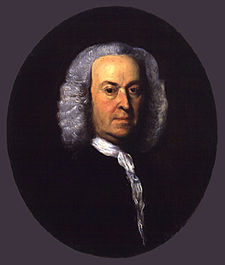
After collecting all the statements, on 16 October the Council named a committee to report on the matter. This consisted of five Councilors not present on 6 March: William Brattle; James Bowdoin (shown above); James Otis, Sr.; John Bradbury; and Stephen Hall.

According to acting governor Thomas Hutchinson, Bowdoin had already revealed his response to Oliver’s account by telling Thomas Flucker, “Why this Deposition of the Secretary has defeated every thing we aimed at by the Narrative & Deposition sent home.”

Sure enough, on 24 October the Council adopted a detailed report, penned by Bowdoin, that went over every disputed detail and ended in four resolutions:
I. RESOLVED unanimously, That Andrew Oliver, Esq; Secretary of this Province, by secretly taking minutes at Council, of what was said by the members of Council, in their debates, also by signing a paper containing those minutes, and further by giving his deposition to the truth of it, has in each and all those instances acted inconsistent with the duty of his office, and thereby is guilty of a breach of trust.

II. RESOLVED unanimously, That the said Andrew Oliver, Esq; inasmuch as such proceedings are destructive of all freedom of debate, is guilty of the breach of a most essential privilege of this Board.

III. WHEREAS the said Andrew Oliver, Esq; has suggested in his said deposition, that because his draft was allowed strictly to express the truth, it would not stand well on the Council records, and was therefore rejected by the Council; RESOLVED unanimously, That by such suggestion he has injured and abused the members composing that Council, and by so doing has reflected great dishonor on this Board.

IV. RESOLVED, That an attested copy of this report, and the petitions and depositions, to which it relates, be sent to Mr. Agent [William] Bollan, in order that he may make the best use of them he can, for the benefit of this Province.
Oliver responded with a letter protesting his honor and repeating that he’d reported the truth. The Council sent back a letter rejecting that claim and had the whole collection of documents printed as Proceedings of His Majesty's Council of the Province on Massachusetts-Bay, Relative to the Deposition of Andrew Oliver, Esq. Just one more dispute between the Massachusetts Whigs and the royal authorities with no resolution, just a feeling of grievance on both sides.

TOMORROW: A family feud?

Monday, August 10, 2020

“My succeeding to the post he holds from the crown”

Almost three years after Nathaniel Rogers died suddenly, he was back in the news.

Rogers was the author of one of the “Hutchinson Letters” that Benjamin Franklin leaked to the Boston Whigs in the spring of 1773.

Gov. Thomas Hutchinson wrote only six of those letters. Another six came from his friends and political allies (four from Andrew Oliver, shown here, and one each from Charles Paxton and Robert Auchmuty), and the last from his nephew, Rogers.

Those letters were collected by Thomas Whately, a Member of Parliament interested in the administration of the American colonies. Many of the writers discussed the challenges of governing Massachusetts, with some hints or recommendations about changing its constitution.

In contrast, Rogers’s letter was all about wanting the job of provincial secretary. It reveals just how such appointments were negotiated in this period, with a lot of discussion about money and little about the public interest or policy.
Boston, Decem. 12th 1768.

My Dear Sir,

I wrote you a few days ago, and did not then think of troubling you upon any private affair of mine, at least not so suddenly; but within this day or two, I have had a conversation with Mr. [Andrew] Oliver, secretary of the province, the design of which was my succeeding to the post he holds from the crown, upon the idea, that provision would be made for governor [Francis] Bernard, and the lieutenant governor [i.e., Uncle Hutchinson] would succeed to the chair, then the secretary is desirous of being lieutenant governor, and if in any way, three hundred pounds a year could be annexed to the appointment.

You are sensible the appointment is in one department [i.e., the Colonial Office], and the grant of money in another [the Treasury, funded by Customs revenue under the Townshend Act]; now the present lieutenant governor has an assignment of £200 a year upon the customs here; he has not received any thing from it as yet, and is doubtful if he shall; he has no doubt of its lapse to the crown, if he has the chair; if then by any interest that sum could be assigned to Mr. Oliver as lieutenant governor, and if he should be allowed (as has been usual for all lieutenant governors) to hold the command of the castle, that would be another £100. This would compleat the secretary’s views; and he thinks his public services, the injuries he has received in that service, and the favorable sentiments entertained of him by government, may lead him to these views, and he hopes for the interest of his friends.

The place of secretary is worth £300 a year, but is a provincial grant at present, so that it will not allow to be quartered on: And as I had a view upon the place when I was in England, and went so far as to converse with several men of interest upon it, tho’ I never had an opportunity to mention it to you after I recovered my illness—I hope you will allow me your influence, and by extending it at the treasury, to facilitate the assignment of the £200 a year, it will be serving the secretary, and it will very much oblige me.——

The secretary is advanced in life, tho’ much more so in health, which has been much impaired by the injuries he received, and he wishes to quit the more active scenes; he considers this as a kind of otium cum dignitate, and from merits one may think he has a claim to it.

I will mention to you the gentlemen, who are acquainted with my views and whose favourable approbation I have had. Governor [Thomas] Pownall, Mr. John Pownall, and Dr. Franklin.—My lord Hillsborough is not unacquainted with it—I have since I have been here, wrote Mr. [Richard] Jackson upon the subject, and have by this vessel wrote Mr. [Israel] Mauduit.

I think my character stands fair—I have not been without application to public affairs, and have acquired some knowledge of our provincial affairs, and notwithstanding our many free conversations in England, I am considered here as on government side, for which I have been often traduced both publickly and privately, and very lately have had two or three slaps. The governor and lieutenant governor are fully acquainted with the negociation and I meet their approbation; all is upon the idea the governor is provided for, and there shall by any means be a vacancy of the lieut. governor’s place.

I have gone so far, as to say to some of my friends, that rather than not succeed I would agree to pay the secretary £100 a year out of the office to make up £300, provided he could obtain only the assignment of £200—but the other proposal would to be sure be most eligible.

I scarce know any apology to make for troubling you upon the subject; the friendship you shewed me in London, and the favourable expressions you made use of to the lieut. governor in my behalf encourage me, besides a sort of egotism, which inclines men to think what they wish to be real. I submit myself to the enquiries of any of my countrymen in England, but I should wish the matter may be secret ’till it is effected.

I am with very great respect and regard, my dear sir,

Your most obedient, and most humble servant,

NATH. ROGERS.
Rogers thus privately lobbied for annual payments to Oliver as lieutenant governor that would be equal to the secretary’s salary and thus make it worthwhile for him to vacate that post. If those arrangements couldn’t work out, Rogers even promised to pay Oliver £100 a year himself until the man (already “advanced in life”) died. These days we’d consider this scheme a kickback, a sinecure, and taxation without representation. In the British patronage system of the eighteenth century, it was common.

Rogers’s planning helps to explain why, despite his Whiggish political philosophy, he accepted the Townshend Act and resisted the non-importation effort to stop it. And his string-tugging worked. When Rogers died, the London government was preparing a commission to make him provincial secretary. Instead, in his absence the job went to Thomas Flucker.

After this letter became public in 1773, the Boston radicals interpreted it as more evidence of the Hutchinson circle scheming to take powerful positions and Customs revenue for themselves. John Adams judged that Hutchinson and Oliver had been among “the original Conspirators against the Public Liberty, since the Conspiracy was first regularly formed, and begun to be executed, in 1763 or 4,” but “Nat. Rogers, who was not one of the original’s,…came in afterwards.”

Sunday, June 28, 2020

“Tom Gage’s Proclamation” Parodied

The Readex newspaper database I use offers this page from the 28 June 1775 issue of the Pennsylvania Journal and Weekly Advertiser.

In fact, it offers two images of this page, apparently identical.

Obviously, someone clipped an item out of the copy of that newspaper which was photographed decades ago for a microfilm publication and then digitized for this database. I hope there’s an intact copy of this printed sheet somewhere.

Fortunately, through other sources I confirmed what was missing (on this side). It was a response to the preceding item in that same newspaper, Gen. Thomas Gage’s 12 June proclamation of amnesty to anyone in arms against the Crown government except Samuel Adams and John Hancock.

Somebody went to great pains to parody the general’s announcement in rhymed verse:
TOM. GAGE’S PROCLAMATION,
Or blustering DENUNCIATION,
(Replete with Defamation,)
Threatning Devastation,
And speedy Jugulation,
Of the New-English Nation.---
Who shall his pious ways shun?

WHEREAS the Rebels hereabout,
Are stubborn still, and still hold out;
Refusing yet to drink their Tea,
In spite of Parliament and Me;
And to maintain their bubble, Right,
Prognosticate a real fight;
Preparing flints, and guns, and ball,
My army and the fleet to maul;
Mounting their guilt to such a pitch,
As to let fly at soldier’s breech;
Pretending they design’d a trick,
Tho’ order’d not to hurt a chick;
But peaceably, without alarm,
The men of Concord to disarm;
Or, if resisting, to annoy,
And ev’ry magazine destroy:---

All which, tho’ long oblig’d to bear,
Thro’ want of men, and not of fear;
I’m able now by augmentation,
To give a proper castigation;
For since th’ addition to the troops,
Now re-inforc’d as thick as hops;
I can, like Jemmy and the Boyne,
Look safely on---Fight you Burgoyne;
And mowe, like grass, the rebel Yankees.
I fancy not these doodle dances:---

Yet e’er I draw the vengeful sword,
I have thought fit to send abroad,
This present gracious Proclamation
Of purpose mild the demonstration,
That whosoe’er keeps gun or pistol,
I’ll spoil the motion of his systole;
Or, whip his breech, or cut his weason,
As haps the measure of his Treason:---

But every one that will lay down
His hanger bright, and musket brown,
Shall not be beat, nor bruis’d, nor bang’d,
Much less for past offences, hang’d;
But on surrendering his toledo,
Go to and fro unhurt as we do:---

But then I must, out of this plan, lock
Both SAMUEL ADAMS and JOHN HANCOCK;
For those vile traitors (like debentures)
Must be tuck’d up at all adventures;
As any proffer of a pardon,
Would only tend those rogues to harden:---
But every other mother’s son,
The instant he destroys his gun,
(For thus doth run the King’s command)
May, if he will, come kiss my hand.---

And to prevent such wicked game, as
Pleading the plea of ignoramus;
Be this my proclamation spread
To every reader that can read:---
And as nor law nor right was known
Since my arrival in this town;
To remedy this fatal flaw,
I hereby publish Martial Law.
Mean while let all, and every one
Who loves his life, forsake his gun;
And all the Council, by mandamus,
Who have been reckoned so infamous,
Return unto their habitation
Without or let or molestation.---

Thus, graciously, the war I wage,
As witnesseth my hand,---------TOM. GAGE.
By command of MOTHER CARY,
THOMAS FLUCKER, Secretary.
That’s the text as it was reprinted in the 10 July 1775 Norwich Packet. Many other American newspapers also picked up the poem. It was anthologized in the 1800s, often in rewritten forms. So far as I can tell, no one ever identified the poet.

Now for translations and annotations:
  • “Jugulation”: killing by cutting the throat.
  • “bubble”: a “false show,” one of several contemporaneous meanings provided by Dr. Samuel Johnson.
  • “Jemmy and the Boyne”: the 1690 battle where the forces of William and Mary defeated James II.
  • “doodle”: “A trifler; an idler,” wrote Dr. Johnson.
  • “systole”: heartbeat. 
  • “weason”: an old Scottish word for the throat or gullet. 
  • “toledo”: a well made Spanish sword. 
  • “debentures”: financial bonds. 
  • “Mother Cary”: a supernatural personification of the dangerous ocean. 

Tuesday, January 15, 2019

“An Officer carried a manuscript to Henry Knox”

I step away from The Saga of the Brazen Head at a moment of calamity to consider a passage in merchant John Andrews’s letter to a Philadelphia relative on 15 Jan 1775:
A few days since an Officer carried a manuscript to Henry Knox for him to publish; being an answer, as he said, to General [Charles] Lee’s pamphlet (which you sent me). He told him he did not mean to confute every part, as the principal of it was unanswerable.

Knox perus’d a few pages of it and found it to be rather a weak performance, and therefore declin’d undertaking the publishment—excusing himself as its being out of his way.
In November 1774, the New York printer James Rivington published A Friendly Address to All Reasonable Americans by Thomas Bradbury Chandler (1726–1790), a Yale graduate who had become an Anglican minister. That pamphlet argued for conciliation with the Crown. The Mills and Hicks print shop issued a Boston edition. Replies came quickly from John Adams (apparently never published), Philip Livingston, and, most successfully, Charles Lee.

Lee’s Strictures upon a “Friendly Address to All Reasonable Americans” was first published in Philadelphia and then reprinted in New York, Newport, New London, and twice in Boston. It was one of the most widely read pamphlets of the year. Among other points, Lee argued that the British army was not really that formidable; the 17 Jan 1775 Essex Gazette suggested that he had erased New Englanders’ fear of the redcoats. We can therefore understand this officer’s wish to respond to Lee.

More interesting is what this story tells us about Henry Knox (shown here). As far as I can tell, no biography of Knox has discussed this incident. Authors have generally echoed Charles Savage, writing in 1856, in portraying Knox as an active Whig before the war: “he discovered an uncommon zeal in the cause of liberty.” But there’s actually little evidence of political activism by Knox.

In fact, this anecdote shows that a British military man expected Knox to support the royalist perspective by publishing and selling his pamphlet. That belief was no doubt due to Knox’s recent marriage to Lucy Flucker, daughter of the province’s royal secretary, Thomas Flucker. Why would a poor man with ambition marry into such a family and not be or become a Loyalist?

I think this is part of a pattern of evidence showing that in the crucial months of late 1774 and early 1775, Knox let Loyalists believe he was one of them. That made him privy to their gossip, which could be useful to the Patriots.

This anecdote also shows Knox concealing his true assessment of the pamphlet (“rather a weak performance”) by giving the author a different reason for not publishing (“its being out of his way”). But that was just being polite.

TOMORROW: The author.

Thursday, May 24, 2018

“One of the leaders of the Disaffected in this town”

In May 1768, as I quoted yesterday, Boston’s town meeting took a stand against letting the Commissioners of Customs dine in Faneuil Hall on Election Day. If Gov. Francis Bernard wanted to invite those tariff-collecting officials to the day’s traditional dinner, he’d have to find somewhere else to dine.

One Bostonian was in an even sharper feud with the Customs service that spring: John Hancock. I’ll save the meat of their dispute for an anniversary next month. For now, I’ll simply say that Hancock had declared that he wouldn’t participate in any dinner that involved the Customs Commissioners. That meant not joining the usual military escort for the governor as an officer in the Company of Cadets, the province’s most prestigious militia company.

On 12 May the Commissioners complained about the situation in a letter to London, as Neal Nusholtz quoted in this article at the Journal of the American Revolution:
We cannot omit mentioning to your Lordships that Mr. Hancock before named is one of the leaders of the Disaffected in this town, that early in the Winter he declared in the General Assembly that he would not suffer our officers to go even on board any of his London Ships and now he carries his opposition to Government to even a higher pitch.

Being Major of his company of Cadets which distinguished itself in the year 1766 [actually September 1765] by putting a stop to the riots, and it being usual for the Governor to invite all the servants of the Crown to Dine with him on the Day of their general election, which happens on the 25th instant, a Majority of his Corps met together a few days ago and came to a resolution to acquaint the Governor, that they would not attend him on that occasion as usual if he invited the Commissioners of the Customs to dine with him, and this being signified to His Excellency, he answered that he would enter into no stipulation with them, and positively required their attendance.
Gov. Bernard liked the Cadets because they had helped keep the peace after the worst Stamp Act riot. He had given the company commander, Leonard Jarvis, some very good introductions before he sailed to London in late 1767. Now the governor summoned the acting commander, Lt. Col. Joseph Scott. (Scott took over formally in 1769. He makes a notable appearance in The Road to Concord because he was an ironmonger who sold artillery ordnance.)

According to a detailed account signed “Marmaduke Myrmidon” and published in the 9 May Boston Gazette, Gov. Bernard told Scott that the Cadets’ disrespect for his office “would tend to anarchy and confusion, and erase the very shadow of military discipline.” He ordered Scott to summon the entire company and ask each man in turn if he would report on Election Day. If anyone said no, the lieutenant colonel should respond that “the G[overnor] thank’d him for his past services, and dismiss’d him from any further employment.”

The Cadets balked at the governor’s demand. The Gazette article said “a very few” promised to attend, “some” said they wouldn’t, and most refused to answer either way. The Customs Commissioners said, “Mr. Hancock thereupon tore the seal off his Commission, and all the rest of the Company except nine Declared they would not continue any longer in the service.”

On 12 May, the same day as the Commissioners’ letter, the bulk of the Cadets met without Scott. They talked about replacing him with a commander they preferred. The next day those men sent a committee out to Gov. Bernard’s home in Jamaica Plain to tell him of their preference. The day after that, the governor’s secretary, John Cotton, replied that the ex-Cadets were just piling one affront on top of another. (“Marmaduke Myrmidon” would publish Cotton’s note in the 23 May Gazette.)

However, at the end of that week, with Election Day coming closer, men moved to patch things up. On 18 May, Cotton wrote to Hancock “conveying the Governor's displeasure at the unlawful assembly of the Cadets and Hancock after the latter’s dismissal” but opening the door to a dialogue. (That description comes from the catalogue of the Cadets’ papers at Boston University.) Bernard was willing to meet and clear up misunderstandings—as long as there was a witness present. At noon on Sunday, 22 May, Council member Thomas Flucker invited Hancock to come to his house “immediately after sunset” to meet with the governor.

On 23 May, the Boston town meeting confirmed their vote against letting Gov. Bernard use Faneuil Hall for any dinner involving the Customs Commissioners. Later that day, the Boston Evening-Post carried a two-paragraph announcement from Joseph Scott, desiring “The Gentlemen of the Cadet Company under my Command” to report that evening and the next at Faneuil Hall, presumably for drill and inspection, and then to gather “at the usual Place of Parade” at 9:00 A.M. on Wednesday—Election Day.

TOMORROW: Election Day at last.

Monday, October 13, 2014

Daigler Speaks on Intelligence at Minute Man Park, 15 Oct.

On Wednesday, 15 October, Kenneth Daigler will speak on the topic of his book Spies, Patriots and Traitors: American Intelligence in the Revolutionary War at the Minute Man National Historical Park’s Visitor Center in Lexington. This event will start at 7:00 P.M. and end with a book signing.

Daigler is a retired career C.I.A. operations officer who has degrees in history from Centre College of Kentucky and the Maxwell School at Syracuse University. C-SPAN recorded one of his earlier talks.

One of our early first-hand sources on Revolutionary War espionage is a letter that Paul Revere wrote in 1798 to the founder of the Massachusetts Historical Society. Among many other things, he said
In the Fall of 1774 & Winter of 1775 I was one of upwards of thirty, cheifly mechanics, who formed our selves in to a Committee for the purpose of watching the Movements of the British Soldiers, and gaining every intelegence of the movements of the Tories. We held our meetings at the Green-Dragon Tavern. We were so carefull that our meetings should be kept Secret; that every time we met, every person swore upon the Bible, that they would not discover any of our transactions, But to Messrs. Hancock, Adams, Doctors Warren, Church, & one or two more. About November, when things began to grow Serious, a Gentleman who had Conections with the Tory party, but was a Whig at heart, aquainted me, that our meetings were discovered, & mentioned the identical words that were spoken among us the Night before. We did not then distrust Dr. Church, but supposed it must be some one among us. We removed to another place, which we thought was more secure: but here we found that all our transactions were communicated to Governor Gage. (This came to me through the then Secretary [Thomas] Flucker; He told it to the Gentleman mentioned above).
The M.H.S. has shared the images and text of that letter.

Some of the details of that letter have become distorted in the retelling. For example, Revere said that his group started meeting in the Green Dragon Tavern, but moved out after “About November” because it didn’t seem secure enough. He didn’t say where the group met in 1775, but we know it wasn’t the Green Dragon. Yet that tavern gets all the credit.

William Hallahan’s The Day the American Revolution Began says that Revere’s group was “called the Committee of Observation.” Boston 1775 readers may recall how little I think of that book, and that’s yet another statement with no basis in eighteenth-century documents. New York Patriots formed a “Committee of Observation” to enforce the boycott on British goods. New England Patriots talked about creating an “Army of Observation” in early 1775, which was a euphemism for not quite going to war, like “military advisors.” But neither Revere nor anyone else used that term for this self-appointed committee.

Daigler’s book refers to Revere’s group as “the Mechanics,” as if that were their formal name. That’s rather like calling a small group “the Working Class” or such. In fact, Revere’s phrase “cheifly mechanics” suggests that not all those men came from that social stratus, though whether the exceptions were genteel merchants, mariners, or something else isn’t clear. Again, Revere named no names, even fifteen years after the war ended. Such secrecy makes the topic of Revolutionary War espionage all the more intriguing.

Thursday, July 19, 2012

Henry Knox and Paul Revere: Pretending to Quarrel?

I seem to be on a roll with Henry Knox, so I might as well continue. A while back, I laid out my argument that Knox’s 1774 marriage into the family of Thomas Flucker, royal Secretary of the province of Massachusetts, prompted some people to assume he’d favor the Crown like his father-in-law.

Knox’s name doesn’t appear on the lists of Whig activists from before the war. His most prominent public activities—testifying about the Boston Massacre and helping to found a militia grenadier company—give no good clues about his leanings in the context of the town. We have few papers from Knox before his marriage, and their few political comments are middle-of-the-road for a Boston businessman.

So authors filled the vacuum. Margherita Arlina Hamm’s Builders of the Republic, published in 1902, states:

Governor [Thomas] Gage had started a system of espionage and surveillance upon all suspected rebels, in which category was the young bookseller. . . . with a group of patriots [he] established a counter espionage upon the officials and their spies. With him in this work was his friend Paul Revere the engraver.

At the time Revere was not suspected, and on account of his business relations with Knox could come and go from the latter’s store without arousing suspicion. He took the precaution however, always to bring a plate when he visited the bookseller, and if there were any spies or British officers about, to have a make-believe quarrel in regard to imaginary work. Time and again when they had the wrong kind of an audience, he would denounce Knox at the top of his lungs, and Knox would give as good as he received, until they were alone. They carried out this comedy so successfully that on several occasions Revere was asked by British spies for information respecting the rebel bookseller.
Unfortunately, Hamm’s book didn’t include any citations at all. There’s no equivalent for this story in Noah Brooks’s biography of Knox, published two years earlier, or Elbridge H. Goss’s biography of Revere, published in 1891. Nor is there any contemporaneous document to support Hamm’s statement that the royal authorities were watching Knox or sought information about him from Revere.

In fact, Revere advertised his print of the Massacre in 1770, one of many harsh Whig political cartoons he engraved and sold. In 1771, newspapers reported, he hosted a commemoration of the Massacre at his house. John Adams’s diary shows that Revere attended political organizing meetings at the Boston Gazette office. The records of the North End Caucus show he was active in that political organization.

In November 1773 Revere was second man in line to volunteer to patrol the docks and ensure nobody unloaded the tea ships. In September 1774 he carried the Suffolk Resolves to the First Continental Congress in Philadelphia. All told, it’s very hard to imagine that “Revere was not suspected” of being a radical Whig. In fact, he should have been high on the royal authorities’ list.

Furthermore, in 1798 Revere wrote a detailed account of his intelligence and counterintelligence activity before the war, and it didn’t mention Knox. (I contend Revere hid Knox’s help in November 1774—help that was possible only if Knox still had his father-in-law’s confidence.)

Hamm’s anecdote fits the common picture of Knox as a stalwart Whig well before the war. It has the “fool the silly British officers” structure that American have long loved. It continues to appear in Knox biographies, including those by North Callahan and Mark Puls (neither of whom cites Hamm specifically). But there’s no reason to believe it.

Wednesday, April 11, 2012

Henry Knox in Balance

I’ve been exploring the documentary record of Henry Knox’s activities just before the outbreak of the Revolutionary War. I don’t think it supports the picture that his biographers have painted: that he was, and was widely known as, a stout Whig.

In fact, I suspect that Knox’s June 1774 marriage to Lucy Flucker, daughter of Massachusetts royal secretary Thomas Flucker, made some people think that the young man would soon lean toward the Crown. He had much better prospects with the Fluckers’ support than on his own.

As I quoted here, after hearing about that marriage, the pro-Crown New York printer James Rivington stepped up his correspondence with Knox. Rivington also recommended his shop to officers of His Majesty’s 23rd Regiment of Foot, on its way to Boston. Knox’s New London Book Store became known as a gathering-place for British officers—which could only have reinforced any public impression that Knox was in the Crown camp.

Whether he intended that outcome or not, Knox’s contact with the royal forces proved useful to the Massachusetts Whigs. On 3 Jan 1775, Josiah Quincy, Sr., of Braintree wrote to his son, Josiah, Jr., then visiting England, with sensitive news:

Mr W— brings intelligence from Boston, that the seamen on board the fleet are grown mutinous;—that one of the navy officers, meeting with a land officer at K—x’s shop, told him that on board all the ships their men were grown so uneasy and tumultuous, that it was with great difficulty they could govern them. Upon which the land officer observed, that the uneasiness among the soldiers was full as great, if not greater, than among the seamen.
The way Quincy dropped Knox’s name (disguised with a dash) suggests that the bookseller himself was a conduit of this gossip.

I’ve already written how it seems likely that Knox was the man who warned that royal officials—in particular, his father-in-law—knew what Paul Revere’s intelligence network was discussing in November 1774. (See “Who Tipped Off Paul Revere?”) Again, that suggests Knox supported the Whigs, but not loudly.

In his business letters Knox expressed strong hopes for a political change in London, but he avoided radical rhetoric and talk of armed conflict. Like most people, he probably hoped for a peaceful solution to the crisis. He probably wanted to avoid harsh conflict within his family and with trading associates. But when the Whigs needed intelligence, he provided it.

In his memoirs William Heath looked back circumspectly on how Henry and Lucy Knox left Boston:
His military genius and acquaintance with our General [i.e., Heath] led him to be importunate with Capt. Knox to join the army: not did he need persuasion to join in the cause of his country. His removal out of Boston, and the then state of his domestic concerns, required some previous arrangement; as soon as this was effected, he joined the army.
I suspect there was a lot of family drama involved in those vague sentences. Were there arguments and tears? Or did Henry and Lucy make their plans in whispers, not telling the rest of her family? As it turned out, Lucy would never see her parents again.

In the spring of 1775, Henry Knox discarded the opportunities that came from marrying into the Flucker family and became an unpaid engineer for the provincials. I don’t see that as an easy, foregone decision. Knox could probably still have chosen to stick with his wife’s family and take advantage of their wealth and contacts. Having that option made his decision all the more dramatic.

Friday, April 06, 2012

James Rivington: “for fear of hurting your interest”

Yesterday I quoted from the correspondence of Boston bookseller Henry Knox and New York printer James Rivington. Their professions made them natural business associates, with Knox selling what Rivington printed.

Eighteenth-century booksellers and printers didn’t confine themselves to selling printed matter. In his second latter to Knox, dated 26 June 1774, Rivington asked the younger man if he wanted to be the Boston agent for “Maredant’s Antiscorbutic Drops.”

In June 1774, Knox married Lucy Flucker, daughter of the royal secretary of Massachusetts. Soon after hearing that news, Rivington sent three letters, longer than any previously, congratulating the young bookseller on his marriage. At the same time, Rivington:
  • told Knox that he’d recommended his shop to officers of the 23rd Regiment of Foot (the Royal Welch Fusileers), then being transferred from New York to Boston.
  • sent him four chests of contraband tea to sell.
In October Rivington offered to host Henry and Lucy, whom he’d called a “most beauteous bride” and an “amiable Lady” (I don’t think they’d met), when they visited New York.

In that city, Rivington was already known in mid-1774 as a pro-Crown printer, though he still did jobs for Patriots as well. I suspect he thought that Knox’s marriage would draw the young bookseller into the Loyalist party in Boston. So he was throwing business in Knox’s direction.

On 1 December, Rivington sent Knox 300 copies of a Patriot pamphlet by Philip Livingston (shown above) titled “The Other Side of the Question; or, A Defence of the Liberties of North-America: In Answer to a Late Friendly Address to All Reasonable Americans, on the Subject of Our Political Confusions.” He told Knox that he hadn’t enclosed the original, Loyalist pamphlet:
The friendly address I do not send to you for fear of hurting your interest, it was forwarded to me by [Boston printers] Mills & Hicks to be printed, my reasons for not troubling you with these very warm, high seasoned pamphlets, is that your very numerous friends, on the patriot Interest, may be greatly disgusted at your distributing them; but if you are not so very nice as I apprehend from the state of your interest &c and are willing to have these sort of articles I will secure them for you from time to time. A piece is printing, in the Hudibrastic stile which will sell but I greatly fear you will not like. Pray explain yourself on this head directly, for I mean to shew every expression of my attention to you.
Thus, although Rivington recognized that Knox’s “interest” and “very numerous friends” were on the Patriot side, he dangled the prospect of business selling Loyalist material. Undoubtedly that would have pleased Lucy’s father, Thomas Flucker, and his colleagues in the royal government.

I don’t think Knox’s response to this invitation survives. When he discussed politics in earlier letters, his tone was moderate and his positions were Whig but not radical. He tried to maintain friendly ties. The only hint that Knox might become a Loyalist was his marriage with the financial prospects it brought—but apparently that was enough for Rivington to send out feelers.

COMING UP: The value of Knox’s position.

Tuesday, April 03, 2012

“Large promises had been held out to Knox…”

Yesterday I quoted the passage from Noah Brooks’s 1900 biography of Henry Knox in which he wrote, “Large promises were held out to young Knox to induce him to take a commission in the royal cause; he was regarded as too desirable a man to be lost from the military service of the King.”

Brooks didn’t cite a source or evidence for that statement. He also used the vague passive voice: “promises were held out,” “he was regarded.” That suggests he was working from equally vague and perhaps wishful traditions rather than documents.

North Callahan extrapolated from Brooks’s passage in his 1958 biography of the artillery general, writing that Knox received an offer of a British army commission “through the influence of Thomas Flucker,” his father-in-law (shown above). Subsequent authors repeated the same statement, relying on Callahan and Brooks.

But what was the basis of Brooks’s statement? I looked for confirming evidence in the first biography of Knox, published by Francis S. Drake in 1873. He wrote even more vaguely, and without citing sources:
Large promises had been held out to Knox to induce him to follow the royal standard, as it was thought of consequence to prevent so talented a young man from attaching himself to the provincials; but his patriotism was as sincere as it was ardent, and he did not for a moment hesitate, but embarked heart and hand in the patriot cause.
Interestingly, two years before that, Horatio Bateman’s Biographies of Two Hundred and Fifty Distinguished National Men began its entry on Knox by saying:
He married the daughter of a staunch loyalist, and was an officer in the British army when the struggle of the Revolution commenced. . . .
We know that’s wrong. It suggests that there was a long tradition in New England of saying that Knox turned away from opportunities on the royalist side because he supported the Whigs. But it also shows that tradition was hazy and liable to exaggeration.

I’m skeptical that the Flucker family actually arranged for an army commission for Knox. Such a regular army commission was a big deal, and a big expense, and it should have left a thicker paper trail. Promises of a higher rank in the Massachusetts military seem more likely, and well within Flucker’s reach as the province’s royal secretary. But even then there’s no evidence of how solid such promises were, or what Knox’s immediate response was.

COMING UP: Henry Knox and five chests of tea.

Saturday, February 26, 2011

James Otis Tries a New Type of Politics

In 1760, Boston’s four representatives to the lower house of the Massachusetts General Court were John Phillips, Royall Tyler (father of the author who took the same name), Thomas Flucker, and Samuel Welles.

In early 1761, Flucker moved to Charlestown. Phillips, who had served off and on for decades, apparently decided not to run again; he had by far the highest vote total in 1760, and I know no reason he wouldn’t have been reelected.

That opened up two slots for other gentlemen. At a town meeting in May 1761, the qualified voters chose:

Boston’s merchants, and the mariners and businessmen who depended on them, no doubt trusted Cushing and Otis to represent their interests.

Before that moment, Otis had filled appointive offices in the royal patronage system rather than elected offices that depended on maintaining popularity with the voters. These were two parallel tracks for rising within government in the eighteenth-century British Empire. As a brilliant, learned man who was sometimes snobbish and moody, Otis made a better fit for the patronage track. Royall Tyler reportedly had to give him tips on winning over voters.

But Otis had apparently soured on the patronage system when the new governor, Francis Bernard, had dismissed the previous governor’s promise to appoint James Otis, Sr., as chief justice. He resigned his royal appointment in the Vice Admiralty court system and offered his services to the Boston merchants. That party in return supported his election to the Massachusetts House, where the senior Otis was already a representative for Barnstable and the Speaker.

The legislative records aren’t as clear as we might want, but they say that the younger Otis began to serve on lots of committees, a sign of influence. Within a short time he was recognized as a leader of the “country party” or Whigs who usually opposed the royal governor’s policies. Cushing also rose in the House, becoming Speaker in 1766. (Oxenbridge Thacher, Otis’s co-counsel in the writs case, would join them in the House in 1763, but died in 1765 before the Revolutionary arguments really heated up.)

TOMORROW: The next round of the writs of assistance argument.

Wednesday, April 11, 2007

Who Tipped Off Paul Revere?

Next week brings the anniversary and commemoration of the Battle of Lexington and Concord (not in that order), so I’ll devote some postings to mysteries and myths of that event. And just as I’ve previously defined “myths,” I should explain what I mean by “mysteries”: basically, stuff I’d like to know more about. These questions seem significant to me, though they might have had little bearing on how things turned out.

And the first mystery to ponder is: Who was Paul Revere’s counter-counterspy in November 1774? In 1798, the founder of the Massachusetts Historical Society asked Revere about his experiences in the months, days, and hours leading up to the war. In his reply, Revere described how he and other craftsmen collected information on the British military, and how a counterspy seemed to relay their intelligence to Gen. Thomas Gage:
In the Fall of 1774 and Winter of 1775 I was one of upwards of thirty, cheifly mechanics, who formed our selves in to a Committee for the purpose of watching the Movements of the British Soldiers, and gaining every intelegence of the movements of the Tories.

We held our meetings at the Green-Dragon Tavern [owned by the St. Andrew’s Lodge of Freemasons]. We were so carefull that our meetings should be kept Secret; that every time we met, every person swore upon the Bible, that they would not discover any of our transactions, But to Messrs. [John] HANCOCK, [Samuel] ADAMS, Doctors [Joseph] WARREN, [Benjamin] CHURCH, and one or two more.

About November, when things began to grow Serious, a Gentleman who had Conections with the Tory party, but was a Whig at heart, acquainted me, that our meetings were discovered, and mentioned the identical words that were spoken among us the Night before. . . . We removed to another place, which we thought was more secure: but here we found that all our transactions were communicated to Governor Gage. (This came to me through the then Secretary [Thomas] Flucker; He told it to the Gentleman mentioned above). It was then a common opinion, that there was a Traytor in the provincial Congress, and that Gage was posessed of all their Secrets.
The full letter is transcribed on the M. H. S. website.

Revere devoted lots of space in this letter to Dr. Benjamin Church, Jr., who he and other Massachusetts Patriots had sadly come to believe was Gage’s double agent. In late 1775 the doctor was caught sending coded letters into Boston. The Americans didn’t have enough evidence to be certain of his guilt, though, so the next year they banished him from America. Church sailed away, and his ship disappeared at sea. Not until the 1900s, when Gen. Gage’s intelligence files came to the University of Michigan and were opened to scholars, did Americans have definitive evidence that Church was indeed passing information to the British commander in early 1775, and perhaps in the fall of 1774 as Revere believed.

But who alerted Revere and his comrades that Gage was onto them? Obviously, Revere knew and trusted that man, but in his letter he took pains not to state his name. Instead, he left these clues:
  • “a Gentleman who had Conections with the Tory party, but was a Whig at heart”
  • “This came to me through the then Secretary Flucker; He told it to the Gentleman mentioned above.”
Flucker (shown above) was number three in the Massachusetts royal government’s executive branch. I’ve found a couple of other anecdotes of him gossiping. But in this case he revealed a very important secret, and must have trusted the man he spoke to. Who was he?

A number of authors have posited that that gentleman was Henry Knox, who in June 1774 had married Flucker’s daughter Lucy. When I first read this hypothesis (I think it was in Esther Forbes’s Paul Revere and the World He Lived In), I thought it was an interesting possibility, but also perhaps an example of picking out the most interesting possibility from all the equally likely possibilities. Was it like spotting a familiar face in a crowd and focusing on it, ignoring all the other faces? We remember Henry Knox; we don’t remember other gentlemen whom Flucker might have spoken to. And didn’t most people write of Knox as a firm Whig? If Flucker knew his son-in-law was on the opposite political side, why would he have revealed this news?

But the more I’ve read about Knox, the more I lean toward accepting this theory. We’ll probably never know, but he does seem like the most likely candidate. He had the family connection to Flucker. He also had an appointment as a militia officer, and his London Book-Store was said to have customers from the royal government and army as well as the Whig upper class.

And was Knox known as a Whig before the war? He doesn’t appear on any of the surviving lists of politically active men: the North End Caucus, the Boston Committee of Correspondence, even the far-too-lengthy lists of men at the Tea Party. Knox was at the Boston Massacre, warning Capt. Thomas Preston not to have his men fire, and testified for the prosecution (i.e., the Whig side) in Preston’s trial. But his testimony was so helpful to the captain that when the soldiers went on trial their attorneys called him as a defense witness.

All in all, I think in late 1774 Knox’s political views may not have been obvious. He was still only twenty-four years old. He hadn’t held public office. His business relied on upper-class patronage. He’d connected himself by marriage to a top government appointee, which meant that under the Crown’s system of patronage politics he might eventually have been in line for some royal appointments himself. Given his son-in-law’s position, Flucker might well have felt safe speaking candidly to him.

After the war started, Henry and Lucy Knox slipped out of Boston. The exact date is uncertain, but the earliest biography of him (published by Francis S. Drake in 1873) says the couple arrived at the provincial lines one year after their marriage, meaning 16 June 1775. At that point, Henry had committed himself to the Patriot cause. His wife never saw the rest of her family again.

Knox had a remarkable rise in the Continental Army after leaving Boston. Drake says he volunteered his services to Gen. Artemas Ward on the day of the Battle of Bunker Hill and, though not involved in that fighting, “was actively engaged in reconnoitering service.” By 5 July, Knox was laying out fortifications in Roxbury and had met Gen. Charles Lee and the newly arrived commander-in-chief, Gen. George Washington. In November, Washington recommended that Congress make Knox colonel of the artillery regiment, appointing him above the regiment’s senior officers, most of them older and more experienced, and other hopefuls.

Part of Knox’s rise was no doubt due to his intelligence and charm. The artillery regiment had demonstrated a lot of dysfunction, so appointing someone totally new turned out to be a good idea. But Knox’s strongest support came from Massachusetts Whigs, as seen in John Adams’s letters to James Warren on 23 July 1775 and to Knox himself on 11 Nov. Did those men see Knox as committed to their cause and deserving of support for a reason they couldn’t spell out? Had he quietly provided crucial intelligence before the war?

If that was so, why would Revere have still kept his informant’s name secret in 1798, after the war ended and Flucker died, both in 1783? By then Knox was a retired Secretary of War, managing large tracts of land in Maine that Lucy had inherited from her father. It may have seemed unseemly to describe Knox as taking advantage of his father-in-law’s trust. But perhaps Revere’s dropped Flucker’s name in his letter as a clue that he expected contemporaries to pick up.