


J. L. BELL is a Massachusetts writer who specializes in (among other things) the start of the American Revolution in and around Boston. He is particularly interested in the experiences of children in 1765-75. He has published scholarly papers and popular articles for both children and adults. He was consultant for an episode of History Detectives, and contributed to a display at Minute Man National Historic Park.

Subscribe thru Follow.it


•••••••••••••••••


Showing posts with label John Corner. Show all posts

Thursday, December 05, 2019

The Career of Captain Dundas

Once I saw that “Captain Dundas” had come up in the dispute between James Otis, Jr., and John Robinson, I had to figure out who that was and what role he played in the coming of the Revolution.

In September 1769, Otis called Dundas “a well known petty commander of an armed schooner,” meaning he was in the Royal Navy. (The Customs service had just lost its one and only armed schooner, the Liberty.)

Fortunately, the Royal Navy keeps good records, and websites like Three Decks make that information available as long as one keeps running searches. So here’s what I’ve put together.

Ralph Dundas was born on 12 Oct 1732, the eldest son of Ralph and Mary Dundas of Manour, Scotland. He was serving in the Royal Navy by 1748, when he was in his mid-teens, and passed the exam to be a lieutenant in October 1757.

Lt. Dundas received his first command in 1764: H.M.S. St. Lawrence (also spelled St. Laurence). In British Warships in the Age of Sail 1714-1792 Rif Winfield writes that this schooner was “purchased on stocks at Boston [or Marblehead?],” though J. J. Colledge and Ben Warlow’s Ships of the Royal Navy says the Royal Navy bought it in Halifax, Nova Scotia.

It carried thirty men, six three-pounder cannon, and twelve swivel guns—by no means a fearsome warship but powerful enough for peacetime patrols, carrying messages, and supporting larger vessels as a “tender.” Among the crew was master’s mate John Whitehouse, who later sailed under Capt. James Cook.

On 28 July 1766, the Boston Evening-Post reported:
Friday last arrived a Schooner from Louisbourg, by whom we learn, that some time before he sail’d fro thence, his Majesty’s armed Schooner the St. Laurence, commanded by Lieut. Dundas, was struck by Lightning as she lay at Anchor there, which set Fire to the Powder Magazine in the Fore Part of the Vessel and blew her up, by which Accident three Men were instantly killed, and several others terribly wounded, two of whom died the next Day:

We hear that the Officers on board, being in the Cabin, escaped unhurt; and that the Bows of the Vessel being carried away by the Explosion, she sunk in a few Minutes after.
The Boston Post-Boy of the same date said the explosion happened “between two and three Weeks ago.” The Narrative of American Voyages and Travels of Captain William Owen, R.N. names the site of the wreck as Neganishe, now probably called Ingonish.

Commodore Samuel Hood then bought a merchant’s sloop called the Sally, renamed it St. Lawrence, and assigned it to Lt. Dundas.

In the spring of 1768, the St. Lawrence accompanied H.M.S. Romney from Halifax to Boston. On 23 May, the Boston Chronicle carried Lt. Dundas’s advertisement for four deserters. Keeping the sloop fully manned was a challenge. Within a month the town was upset about a “man pressed by Capt. Dundas, and carried down to Halifax.” Capt. John Corner of the Romney and Councilor Royall Tyler sat down to discuss that issue and others, according to the 27 June Boston Chronicle.

The Boston News-Letter and Post-Boy show that over the next several months the St. Lawrence sailed back and forth along the northeast coast: off to Halifax in August, back to Boston in November and then heading off to Halifax again, collecting military stores at Canso and Louisburg over the winter, then back to Halifax. The St. Lawrence returned to Boston again in August 1769.

That put Lt. Dundas in town for the busy fall of 1769. He probably wasn’t in the British Coffee-House when Robinson and Otis started hitting each other with their canes on 5 September. Otis hinted that he participated in the fight, but Robinson denied that. Otis also said rumor had it Dundas “swore last year that the whole Continent was in open Rebellion.” However, the lieutenant’s name doesn’t appear to have come up again in this or other political disputes, which suggests that Otis’s Whig allies didn’t think they could make a case against him, even to their own followers.

The next month brought the Neck Riot on 24 October, followed four days later by the attacks on printer John Mein and sailor George Gailer. In the next couple of weeks, Royal Navy captains helped to hide Mein from the crowd. On 11 November, provincial secretary Andrew Oliver reported to Gov. Francis Bernard that Mein “thinking it unsafe for him to continue in Tow has taken his passage for England with Capn. Dundass.” In fact, it looks like Mein sailed away on another ship, but Oliver’s letter indicates that Dundas left Boston early in the month.

In April 1770, the sailmaker Ashley Bowen wrote in his diary that Dundas’s schooner had come into Marblehead harbor. However, the diary’s annotations suggest he mistook that ship for the Magdalen under Lt. Henry Colins. That suggests how common it was for New Englanders to see Dundas’s schooner. The 16 July 1772 Massachusetts Spy stated that Dundas had sailed the St. Lawrence to the Bahamas, and the 17 June 1773 Boston News-Letter reported that it had come back from the Bahamas to Boston.

As of June 1774, the Royal Navy listed the St. Lawrence, with six guns and thirty men, at Boston. It was small part of the big fleet under Vice-Admiral Samuel Graves sent to enforce the Boston Port Bill. In November Lt. Dundas sailed for London; part of a letter he carried was forwarded to Lord North as useful intelligence in January 1775.

That was the last voyage of that St. Lawrence, at least as a naval schooner. In May 1775, immediately after the war began, Graves reported that he had bought and armed two schooners at Halifax and planned to call one the St. Lawrence. He assigned it to a new commander. Lt. Dundas’s ship was sold off in London the next year.

Ralph Dundas became commander of the new fourteen-gun sloop Bonetta in April 1779, then the new sixteen-gun sloop Calypso (shown above) in December 1782. He served in that post until 1787. Dundas died that year at age fifty-four, having spent about four decades in the Royal Navy. He was buried at St. Clement Danes in Middlesex County. He left no known wife or children.

Commander Dundas served during two wars, but his naval career was overshadowed by his little brother George (1756-1814), who rose to be a rear admiral—having presumably joined the navy with Ralph as inspiration. An intervening brother, David (1749-1826), became a doctor to George III and a baronet.

Monday, September 10, 2018

“A strange, mad proposal, if such a one were ever made”

Yesterday I quoted Gov. Francis Bernard reporting to London about a big meeting in Boston on Friday, 9 September, where some people advocated resisting the coming army regiments by force.

There was another gathering the next evening, Bernard wrote:
the other meeting, as I am informed, was very small & private on Saturday Night, at the House of one of the Cheifs; and there it wa[s] resolved to surprise & take the Castle on the Monday night following. I dont relate these Accounts as certain facts but only as reported & beleived.
In The Life and Public Services of Samuel Adams, William V. Wells stated that in fact “[James] Otis, Samuel Adams, and [Dr. Joseph] Warren met at the house of Warren…to draw up resolves, arrange for the proceedings, and prepare the order of debate” for the town meeting scheduled for Monday.

Wells’s citation for that statement was “Capt. Corner’s Diary, kept aboard the war-ship Senegal in Boston Harbor, now in the London State-paper Office.” However, John Corner was the captain of H.M.S. Romney, not the Senegal. In addition, Wells wrote in the same paragraph that the Senegal had left port three days before this meeting. But perhaps the British National Archives does hold a journal from Capt. Corner recording intelligence, or at least gossip, about the meeting on the evening of 10 September. [Anyone care to check?]

It was common for Whig political leaders to draft resolutions and make plans before an official meeting. Furthermore, those men were probably eager to avoid disorder and destruction, to channel Boston’s opposition to the troops into the most productive, least unruly form of resistance.

Bernard, however, believed the worst. Back on 9 July, he had dismissed reports of a possible attack on Castle William, where the Customs Commissioners were hiding, as “idle rumours.” But now the situation seemed more dire. In his history of Massachusetts, Thomas Hutchinson wrote:
Information was brought to governor Bernard, that at one of those meetings it had been proposed by Mr. [William] Molineux, at the head of five hundred men, to surprise the garrison at the castle; a strange, mad proposal, if such a one were ever made. This the governor mentioned in one of his letters to the ministry, but he was not at liberty to make known the evidence of the fact. He believed it to be true.
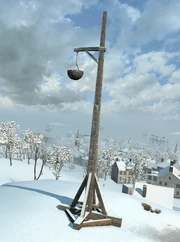
On the same evening of 10 September, another sign of trouble appeared on Beacon Hill. On that peak on the western side of the peninsula, Boston’s early English settlers had erected a tall beacon as part of their military alert system. In case the town came under attack—most likely by sea from another European power, but perhaps from Natives—the authorities would set fire to something inflammable atop that pole. Settlers in other communities would see the beacon flare up and rush to help. All very Return of the King.

Alas, in the words of local historian William W. Wheildon, “there is no evidence that it was ever used for any such purpose, or that there ever was any fire in its skillet.”

In fact, back on 18 Nov 1767 Boston’s selectmen had noted that the beacon pole had been “thrown down by the Wind,” and the wood had proven “too rotten to serve again.” They therefore chose John Hancock and William Phillips as a committee to erect a new beacon. (Gov. Bernard told London that the beacon had been “erected anew in a great hurry by the Selectmen without consulting me.”)

The town owned the top of Beacon Hill and the narrow path up to it. On one side of that path lived John Hancock. On the other side lived William Molineux.

Sometime on the night of 10 September, someone passed between those gentlemen’s houses, climbed the pole, and left a turpentine barrel at the top, ready to set aflame.

TOMORROW: A busy Sunday in Boston.

[The picture of Boston’s beacon above comes from the Assassin’s Creed videogame. The Blackstone Valley Historical Society shares a photo of a beacon recreated in Cumberland, Rhode Island.]

Sunday, June 10, 2018

John Hancock’s Busy Month of May 1768

On 9 May 1768, A couple of weeks after the Customs Commissioners failed in their attempt to have John Hancock prosecuted for interfering with their employees, another of Hancock’s ships arrived in Boston harbor.

“Barnard from Madeira,” reported the Boston Gazette’s shipping news. That meant that Capt. Nathaniel Barnard on the Liberty had arrived from Madeira, a Portuguese island. Though Madeira wasn’t part of the British Empire, for over a century the laws had made an exception for importing Portuguese island wine, and North American ships could even trade there directly.

The Sugar Act of 1764 specified the duty to be paid on that wine:
For every ton of wine of the growth of the Madeiras, or of any other island or place from whence such wine may be lawfully imported, and which shall be so imported from such islands or place, the sum of seven pounds
Capt. Barnard declared that he had brought in 25 casks of wine. Two tide waiters from the Customs service watched the unloading and certified the next day that they had seen nothing unusual.

On that same day, 10 May, Hancock lost a captain. The 16 May Boston Gazette reported:
Tuesday Morning last died very suddenly, Capt. JOHN MARSHALL, in the 32d Year of his Age: For several Years Commander of the Boston Packet in the London Trade.—His Funeral was attended last Friday Afternoon.
The Boston Packet was Hancock’s regular back-and-forth ship to London, and Marshall appeared often in his correspondence from the mid-1760s.

Later in May, as I described in postings starting here, Hancock got into a dispute over whether his militia company, the Cadets, would serve as an honor guard for a banquet that included the Customs Commissioners. While that argument ended peacefully, it exacerbated the bitter feelings between the young merchant and the men in charge of the Customs office. In those same weeks, Hancock was voted onto the Council but then vetoed off by Gov. Francis Bernard.

Meanwhile, on 17 May H.M.S. Romney arrived in Boston harbor. This was a fifty-gun warship that required a crew of over 300 men. In the Royal Navy’s time-honored way, Capt. John Corner began stopping merchant ships and drafting men from their crews to serve under him.

Lt. Gov. Thomas Hutchinson recognized that this spelled trouble:
It is unfortunate that in the midst of these difficulties the Romney has been impressing seamen out of all inward-bound vessels and although he does not take men belonging to the Province who have families, yet the fear of it prevents coasters [ships trading along the coast] as well as other vessels coming in freely, and it adds more fewel to the great stock among us before. It is pity that in peaceable times any pressing of seamen should be allowed in the colonies.
Gov. Bernard was likewise arguing against impressment, and thinking he should get more credit in Boston for doing so.

On Sunday, 5 June, locals threw rocks at boats from the Romney to keep them from landing, fearing that those sailors were coming to impress men. A couple of days later they rescued a sailor away from a press gang. As both a merchant and a politician, Hancock was involved the official protests against the navy’s practice.

As all that happened, Hancock’s Liberty was being loaded with its outgoing cargo: 200 barrels of whale oil and 20 barrels of tar. It was ready to sail. And then on 9 June, one of the tide waiters who had watched the Liberty in May declared that in fact he had seen it used for smuggling.

TOMORROW: What the tide waiter saw.