J. L. BELL is a Massachusetts writer who specializes in (among other things) the start of the American Revolution in and around Boston. He is particularly interested in the experiences of children in 1765-75. He has published scholarly papers and popular articles for both children and adults. He was consultant for an episode of History Detectives, and contributed to a display at Minute Man National Historic Park.

Subscribe thru Follow.it


•••••••••••••••••


Showing posts with label Paul Revere. Show all posts

Friday, July 10, 2026

Musical Offerings across Massachusetts

Theaters on either side of Massachusetts are offering Revolutionary musicals in this Independence Day season.

Through Sunday, 19 July, at the Kathleen E. McDermott Auditorium in Great Barrington, John Alan Segalla’s new musical Rebel Town is being staged under the direction of Michael Siktberg.

This show is set in 1773 and looks at the disputes leading up to the destruction of the tea. The main characters are carpenter William Grey, his wife Sarah, and apprentice Peter Slater, presumably based on the ropemaker’s boy of that name. Among the historical figures in the cast are Mercy Warren, Samuel Adams, John Hancock, Paul Revere, Francis Rotch, Gov. Thomas Hutchinson, and Gen. Thomas Gage.

On Cape Cod, the Academy of Performing Arts in Orleans is producing 1776, with music and lyrics by Sherman Edwards and a book by Peter Stone. This production, directed by Joan Baird, also runs through 19 July.

Staged on Broadway in 1969 and filmed in 1972, 1776 dramatizes the process of declaring independence. Most of the characters are delegates to the Continental Congress, starting with John Adams, Thomas Jefferson, Benjamin Franklin, and John Dickinson. Abigail Adams and Martha Jefferson appear as well.

In Boston’s North End, the Paul Revere House is hosting a hammered dulcimer concert by Dave Neiman on Saturday, 18 July, from 1 to 3 P.M.

Tuesday, June 16, 2026

Act Worthy of Yourselves at King’s Chapel, 18–20 June

King’s Chapel has brought back Act Worthy of Yourselves, a sixty-minute drama set around the funeral of Dr. Joseph Warren in April 1776.

The teaser copy says:
The British army has finally left Boston. Now, nearly a year after his death, friends and family can finally hold a funeral for Dr. Joseph Warren.

Inside King’s Chapel, his brother, his fiancée, and his good friend Paul Revere gather to mourn Warren and to make sense of their loss. Outside the Chapel, two Black abolitionists wonder what this revolution will mean for them. A play about memory, legacy, and the potential and pitfalls of the American Revolution.
While anchored in April 1776, the play flashes back to episodes in the life of Dr. Warren earlier in the 1770s. In addition to the doctor’s brother John and his fiancée, Mercy Scollay, the characters include the black businessmen Lancaster Hill and Prince Hall, Paul and Rachel Revere, Abigail Adams, merchant and Freemason John Rowe, medical trainee William Eustis, rising young lawyer Perez Morton, and Christopher Monk, badly wounded at the Boston Massacre.

This play was written by Noah Good and Kaitlin Rose, and directed by Anjie Echemendia. With that large cast and many scenes set at different times and places, it’s a complex undertaking. Last year, as I recall, many of the performers came from the King’s Chapel interpretive staff rather than Boston’s professional theatrical scene.

The remaining performances for this year are on 18–20 June at 7:30 P.M. and on Saturday, 20 June, at 2:00 P.M. Tickets cost from $40 to $15 depending on the view, and are available through this website.

Tuesday, June 09, 2026

“Paul Revere and Plan B” in Medford, 11 June

On Thursday, 11 June, I’ll speak to the Medford Historical Society on the topic of “Paul Revere and Plan B: Planning and Improvisation in the Lexington Alarm.”

Our event description says:
After the Battle of Lexington & Concord on April 19, 1775, Massachusetts resistance leaders portrayed the uprising as a mostly spontaneous response to the army’s incursion into a peaceful countryside. Decades later, Henry W. Longfellow presented “Paul Revere’s Ride” as nearly a one-man show.

In truth, the Massachusetts Patriots had prepared for months to resist the Crown military. Revere was part of a network of organizers, informants, and alarm riders. At the same time, Revere and his colleagues succeeded by being able to respond to contingencies by changing their plans.

Drawing on new research, this talk will shed light on one of independent America’s oldest stories—and how the day could have turned out differently.
I developed an earlier, short version of this talk for the 19th of April several years ago, and now I’m backloading it with more about Revere’s pre-war propaganda and espionage work.

The society will meet at the Charlotte and William Bloomberg Medford Public Library starting at 7 P.M. This event is free and open to the public.

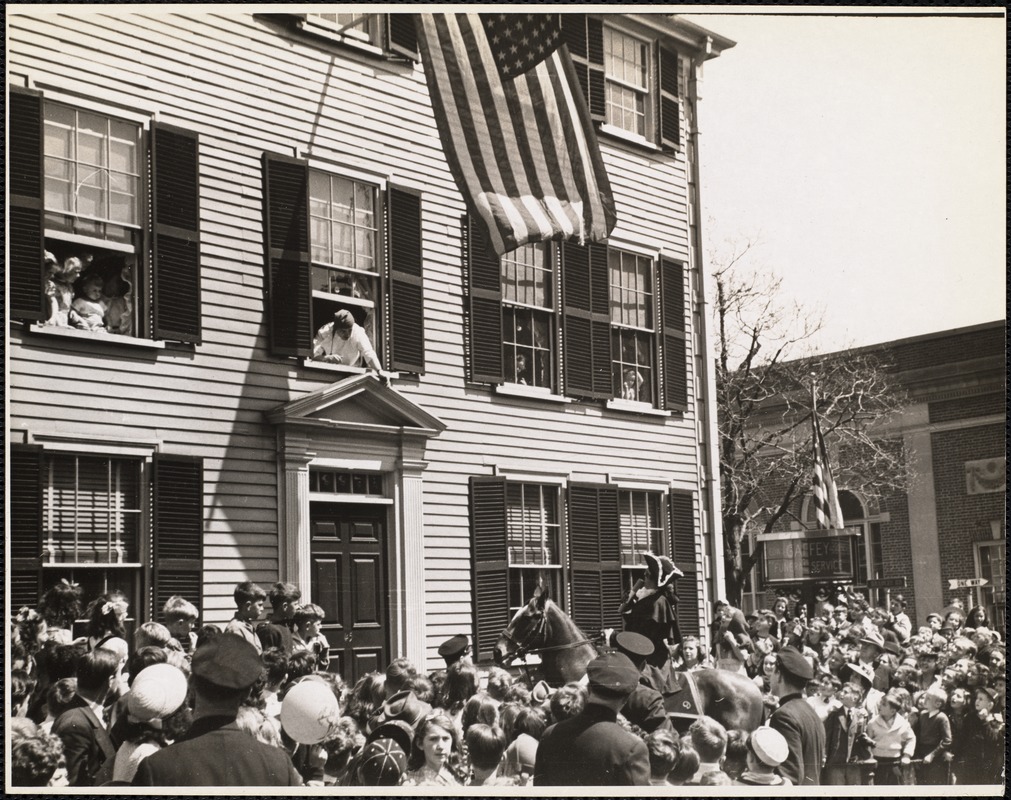
(The photograph above, which comes courtesy of Digital Commonwealth, shows the reenactment of Paul Revere’s stop at the Isaac Hall House in Medford sometime in the mid-1900s.)

Monday, December 22, 2025

New Foreword for Stark’s Loyalists of Massachusetts

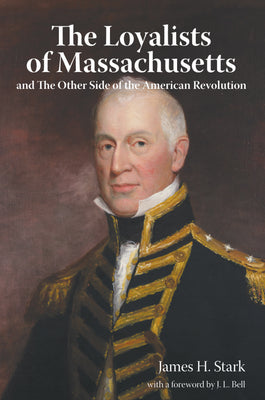
American Ancestors has just reissued James Henry Stark’s The Loyalists of Masssachusetts with a new foreword by me.

I came across a copy of Stark’s Loyalists of Massachusetts in my local library when I was early in my research on eighteenth-century Boston. I was struck by its combination of detailed research on exiled families and apparently still-hot resentment at how the whole Revolution thing turned out.

One notorious detail of this book is an illustration of Paul Revere on horseback—complete with fringed buckskin coat, beard, and vicious snarl.

In researching the publication of The Loyalists of Massachusetts for this foreword, I realized that Stark didn’t commission that and the other full-page illustrations. He reused them from an earlier history of the Revolution. He did, however, change the captions to make their message more pointed.

Stark published through his own printing company, which he had cofounded with a former “spirit photographer.” That gave him the freedom to devote hundreds of pages to “The Other Side of the American Revolution,” as his subtitle said.

I also looked into the reception of the book in 1910. Some reviewers thought Stark, a childhood immigrant from Britain, was too harsh on the Patriots. The press magnified that controversy. The argument became a front-page story in newspapers well outside New England as editors enjoyed the spectacle of elite Bostonians arguing over their ancestors’ actions.

Another of Stark’s interests was yachting. In fact, he was on a cruise when the controversy over his book broke out. I think he’d be pleased that the cover of this new edition shows Sir Isaac Coffin, alumnus of Boston’s South Latin School and admiral in the Royal Navy.

Saturday, November 01, 2025

Revolutionary Music Coming out of the North End

Our favorite Revolutionary sites in the North End are concatenating again with two musical events coming up early this month.

Wednesday, 5 November, 7 to 8:30 P.M.
Music-Making in Colonial Boston
Laura Zoll
Online from Old North Illuminated

Colonial Boston was home to a rich soundscape of music that helped define the lives of early New Englanders. Music-making set the tone and tempo of militia, home hospitality, tavern frivolity, and community singing circles. This talk will explore questions like:
  • What did music sound like during the colonial era?
  • Who played it?
  • What sort of instruments were played?
  • How did music reflect contemporary culture and beliefs?
Laura Zoll is a musicologist with degrees in Music Theory and Medieval Musicology. She plays numerous modern and historic instruments.

Register for the link to this event with a donation of any amount.

Thursday, 13 November, 7 to 8:30 P.M.
A Revolutionary Concert: Paul Revere, the Man, the Myth, and the Music
Regie Gibson and Ensemble
Converse Hall, 88 Tremont Street

Join the Paul Revere Memorial Association, Massachusetts Poet Laureate Regie Gibson, and Paul Revere for an engaging and immersive free program to commemorate the 250th anniversary of the Midnight Ride. From the loyalist anthems of the Tories to the fiery songs of the Revolutionaries and original 19th-century compositions written to further Revere’s legacy, this program brings 18th- and 19th-century America to life through the music of the times. The evening will include performances by some of Boston’s finest musicians.

Blending rich narration, historical images, and live music, this program offers a fresh, moving, and insightful take on one of the Revolution’s most misunderstood heroes. Far more than just a messenger on horseback, Paul Revere was a devoted family man, a savvy businessman, and a respected civil servant. This special evening promises to be a powerful journey through sound and story, separating fact from folklore while painting a vivid portrait of one of America’s most iconic patriots.

This concert is free, but please register for a seat here.

Saturday, October 18, 2025

“Who Cares About the Midnight Ride?” in Boston, 21 Oct.

On Tuesday, 21 October, the Paul Revere House and GBH Forum will host a panel discussion on the topic “Who Cares About the Midnight Ride?: Perspectives on an American Legend.”

The event description says:
What does Paul Revere’s Midnight Ride mean today, and who does it matter to? In this panel, a university professor, a high school teacher, and a public history content creator will discuss how the Midnight Ride resonates (or doesn’t) with their audiences. They will compare perspectives on societal trends that influence whether a historical event like this feels relevant today.
The panelists will be:
  • Ahsante Bean, creator of Bean Thinking, a YouTube channel exploring American politics through history, psychology, and ideology. She is a recent Us@250 Fellow with the New America Foundation.
  • Eileen Ka-May Cheng, associate professor of history at Sarah Lawrence College and author of The Plain and Noble Garb of Truth: Nationalism and Impartiality in American Historical Writing, 1784-1860
  • Kerry Dunne, now in her fifth year as the head of the History/Social Studies Department at Lexington High School and an adjunct instructor of education coursework at area universities.
  • Noelle N. Trent (moderator), a public historian has worked with the National Park Service and the Smithsonian Institution’s National Museum of African American History and Culture.
This discussion will start at 6:30 P.M. in the Commons on the 5th floor of Suffolk University’s Sargent Hall, 120 Tremont Street in Boston. It will also be streamed lived on the GBH Forum Network and recorded for later viewing.

Speaking of which, my own talk earlier in this series can be viewed on this page.

Saturday, October 11, 2025

Two Talks on Thursday, 16 Oct.

It used to be that when two historical organizations scheduled talks on the same night you had to choose between them.

Now, thanks to live-streaming, it’s may be possible to catch both events and not even leave the house to watch them.

Here are two interesting talks scheduled for this upcoming Thursday.

Thursday, 16 October, 6 P.M.
“Within the compass of good citizens”: Paul Revere’s Masonic Journey
Steven C. Bullock
Scottish Rite Masonic Museum, Lexington

From the son of an immigrant to speaking beside the governor on Beacon Hill, Paul Revere traveled far in his extraordinary life. His membership in the Freemasons played an important role in that journey. This talk will consider how the fraternal order fit into Revere’s life—and into the development of Boston and the new nation of which they were a part.

Bullock is a Professor of History at Worcester Polytechnic Institute and author of Revolutionary Brotherhood: Freemasonry and the Transformation of the American Social Order, 1730–1840. This lecture is produced in partnership with the Paul Revere House. It will take place in person at the museum and be livestreamed on YouTube by LexMedia.

Thursday, 16 October, 7 P.M.
I Am So Tired of Waiting, Aren’t You?: Revisiting Black Majority
Peter H. Wood
American Antiquarian Society, Worcester

Black Majority: Race, Rice, and Rebellion in South Carolina, 1670-1740, first published in 1974, marked a breakthrough in understanding of early American history. This landmark book chronicles the crucial formative years of North America’s wealthiest and most tormented British colony. It explores how West African familiarity with rice determined the Lowcountry economy and how a skilled but enslaved labor force formed its own distinctive language and culture.

In this annual Robert C. Baron Lecture, an A.A.S. member who has written a seminal work of history reflects on its impact since publication. The series was endowed to honor Robert C. Baron, founder of Fulcrum Publishing and chairman of the A.A.S. council for a decade. Wood will speak in person at the A.A.S., and people can register to watch online.

Friday, October 03, 2025

“To Ring the Bells for two hours Each Time”

Yesterday I described the arrival in 1745 of a set of eight bells from Gloucester, England, for the steeple of Christ Church, now also called Old North Church.

Those bells were tuned to different notes and made for change ringing, the first such set to arrive in British North America. Few Bostonians had heard that style of bell-ringing. Even fewer knew how to do it.

The church’s website states:
Reverend Timothy Cutler had a difficult time finding any experienced bellringers. They sat idle and unused for five years—that is, until 1750, when a group of teenage boys living in the North End was contracted to ring for two hours per week for one year. Each of them was paid 2 pennies a week for their work.
Those boys formed a collective, and its charter agreement survives in the church archive:
We the Subscribers Do agree To the Following Articles Viz

That if we Can have Liberty From the wardens of Doctor Cuttlers church we will attend there once a week on Evenings To Ring the Bells for two hours Each Time from the date here of For one year

That will Choose a Moderator Every three Months whose Business shall be to give out the Changes and other Business as Shall be Agreed by a Majority of Voices then Present

That None shall Be admitted a Member of this Society without a Unanimous Vote of the Members then Present and that No member Shall begg Money of any Person In the Tower on Penalty of Being Excluded the Society

and that will Attend To Ring at any Time when the Warden of the Church Aforesaid shall desire it on Penalty of Paying three Shillings for the good of the Society (Provided we Can have the whole Care of the Bells)

That the Members of this Society Shall nott Exceed Eight Persons

and all Differences To be decided By a Majority of Voices

John Dyer
Paul Revere
Josiah Flagg
Barthw. Ballard
Jonathan Law [Low?]
Jona. Brown, junr.
Joseph Snelling
For some of these names there are multiple candidates in the Boston vital records, and I have no candidate at all for Law/Low. But it looks like all of these signers were in their late teens in 1750 except Dyer, born in 1730. Revere, born at the start of 1735, and Flagg, born two years later, were the youngest. (Nonetheless, Revere signed with a fancy paraph.)

Here’s a question I haven’t seen discussed before. Seven boys signed that agreement to ring the bells—but there were eight bells. They seem to have recognized that in limiting their society to “Eight Persons.” Shouldn’t they have brought in someone else? Or did the sexton of Christ Church join them in pulling a bell rope since sextons usually rang the bells in Boston?

The church’s statement that each boy was named 2d. a week suggests that payments might show up in the account books. It would be interesting to see how long the payments and thus the bell-ringing society might have lasted.

TOMORROW: The fading of Boston’s bells.

Sunday, September 28, 2025

A Last Word on Boston’s Sedan Chairs

Originally I flagged Alun Withey’s blog post about sedan chairs in Britain just because I thought it had interesting details about daily life in the eighteenth century.

But then I got interested in the question of whether those details also applied in Boston.

Looking for sedan chairs locally led me into the smallpox epidemic of 1764, and thus to the name “Williston” appearing over and over in the selectmen’s records. So I had to figure out who Thomas Williston was.

So, having spent nearly a week on what I’d thought was a one-day topic, I’m coming back around to complete this sedan chair trip with some familiar names.

In 1769 the smallpox virus flared up again in Boston, though not nearly as badly as five years before. On 21 June the selectmen’s minutes reported:
Mr. Thomas Cunningham living near Dr. [Jonathan] Mountforts gives information to the Selectmen, that one Joseph Hading who came to his House on Satturday last, from a Vessel which then arrived here from Philadelphia is suspected of having the Small Pox broke out upon him.

Dr. [Joseph] Warren was in consequence of the above information sent to the said Cunninghams house to examine into the same, who having done it, makes Report that the Person has got the Small Pox.

Whereupon the Sedan was sent to carry him to the Hospital at New Boston.
“Mountforts Corner” was the site of a well-known apothecary shop in the North End. The Jonathan Mountfort running it in 1769 was a son of the man with the same name who’d set it up. When he died in 1781, the business passed to his own son, also named Jonathan (born in 1746 and painted as a kid by the young John Singleton Copley, as shown above courtesy of the Detroit Institute of Arts). That third Jonathan Mountfort died only four years later, but the name survived for at least another decade.

In late July 1769 the selectmen sent the town sedan chair to carry more smallpox victims to the province hospital: “Mr. Jabez Searl,” “a Child a Daughter of Abijah Lewis,” and “Capt. Timothy Parker…between the Hours of Two & Three OClock in the morning.” (Others, such as “a Negro Woman Servant to Mr. William Wingfield,” were simply ordered to be removed to the hospital, and it’s not clear how that happened.)

These people were surprised to be catching smallpox. They must not have volunteered to be inoculated with what doctors believed was a mild strain. Health statistics stretching back decades showed that contracting the disease “in the natural way” was more deadly than being inoculated. And indeed, by 9 August, Searl and Parker had both died.

A few months later, the army drummer Thomas Walker was carried to the hospital in what he called “the Machine for the Conveniency of Removing the Sick.” He didn’t have the smallpox; instead, he’d been injured in the fight between soldiers and ropemakers on 2 Mar 1770. I wonder if that “Machine” was the town sedan chair or if the army had its own equipment.

My next milestone in the story of sedan chairs in Boston comes in 1799. In that year the town established its first board of health. Paul Revere was board president, the silversmith’s highest civic office. On 8 Apr 1800, the selectmen’s records say: “On application from the Board of Health, order’d that the Sedan Chairs belonging to the Town be delivered to them for their use”.

Thus, in eighteenth-century Boston, sedan chairs were ambulances. We can find a few individual sedan owners in the records, but they appear to have been in poor health. The appearance of a sedan chair on your street signified not luxury but illness.

Sunday, September 14, 2025

“Lost and Legendary Riders” in Boston on 16 Sept.

On Tuesday, 16 September, I’ll deliver a talk for the Paul Revere Memorial Association on “Lost and Legendary Riders” from the 19th of April in ’75.

The event description says:
Beyond Paul Revere and his companions, Americans have passed along stories of other notable riders on April 19, 1775. Historian J. L. Bell investigates the facts and fiction behind such figures as Hezekiah Wyman, the dreaded “White Horseman;” Abel Benson and Abigail Smith, children said to have helped raise the alarm in Middlesex County; and Israel Bissell, the post rider credited with carrying news of the fight all the way to Philadelphia.
I’ve spoken on this topic before, but I’ve collected new information on some of those figures—and on some of the real people around them.

This event is free and open to the public. It will start at 6:30 P.M. in Smith Commons on the 5th floor of Sargent Hall, Suffolk University, 120 Tremont Street in Boston.

That’s a short walk from the King’s Chapel Burying Ground, where every years thousands of visitors pay respects to the very real rider William Dawes, who was never actually buried there and thus might also qualify as “lost.” Dawes was first buried in what’s now called the Central Burying-Ground on the Common and then moved to Forest Hills in Jamaica Plain in 1882. The William Dawes grave near King’s Chapel was his father’s.

Here are the upcoming lectures in the same series at Suffolk University.

Tuesday, 30 September, 6:30 P.M.
William Dawes’s Midnight Ride
William Dawes Schulz, journalist

Tuesday, 21 October, 6:30 P.M.
Who Cares About the Midnight Ride?: Perspectives on an American Legend
Moderated by Dr. Noelle Trent, Museum of African American History, Boston
Ahsante Bean, Creator and Storytelling Strategist
Dr. Eileen Ka-May Cheng, History Faculty, Sarah Lawrence College
Kerry Dunne, History & Social Studies department head, Lexington High School

Tuesday, 28 October, 6:30 P.M.
Who Was Paul Revere, Really?
Dr. Robert Martello, Professor of the History of Science & Technology, Olin College of Engineering
Dr. Jayne Triber, Independent Scholar
Nina Zannieri, Executive Director, Paul Revere Memorial Association

Other organizations sponsoring this series are GBH, the Suffolk University History Department, Old North Illuminated, Lexington History Museums, Evanston History Center at the Charles Gates Dawes House (Evanston, IL), and Made by Us, with funding from the Lowell Institute.

Thursday, September 11, 2025

Johnny Tremain on the Screen and the Page

Esther Forbes’s Johnny Tremain remains the foremost American novel on the Revolution, its coming-of-age story for the title character mirroring how the society around him moves toward independence.

In the next week some North End institutions will celebrate the cultural heritage of that book.

Friday, 12 September, 7 to 9:30 P.M.
A Revolutionary Movie Night
Christopher Columbus Park

Join the Paul Revere House and the Friends of Christopher Columbus Park for a free movie night in honor of the 250th anniversary of Paul Revere’s Midnight Ride. Come meet Paul Revere, enjoy 18th-century tunes on the Fife and Drum, and then watch an outdoor screening of Thomas Edison’s silent short movie “The Midnight Ride of Paul Revere” followed by the iconic Disney classic Johnny Tremain. Popcorn will be provided by Joe’s Waterfront; bring your own seating for the lawn.

Wednesday, 17 September, 7 to 8:30 P.M.
Book Chat: Johnny Tremain with Patrick O’Brien
On Zoom through Old North Illuminated

Written in 1943 by Esther Forbes, Johnny Tremain is among the best-selling children’s books of the 20th century. Intended for middle schoolers, the novel’s protagonist is 14-year-old Johnny Tremain, an apprentice silversmith working in Boston in the 1770s. When Johnny’s dreams of becoming a silversmith are dashed by a tragic accident, he takes a new job as a horse-boy, riding for the patriotic newspaper the Boston Observer and as a messenger for the Sons of Liberty. Soon, Johnny is involved in the pivotal events of the American Revolution, from the Boston Tea Party to the first shots fired at Lexington, while he encounters historical figures like John Hancock, Samuel Adams, and Dr. Joseph Warren. The book won the 1944 Newbery Medal and was adapted as a Disney film in 1957.

Patrick O’Brien, a history professor at the University of Tampa, will deliver a short presentation on the historical context surrounding the novel and then lead a discussion exploring themes from the book and what it means today as we approach America’s 250th anniversary. The discussion will be kind of like a virtual book club! This event is perfect for anyone who remembers reading Johnny Tremain as a child and for teachers and educators who would like to teach this novel with their students.

Register for this online discussion here while making a donation to Old North Illuminated for any amount. You’ll receive a Zoom link for the event.

Here are a couple of observations of my own. First, Johnny Tremain is certainly accessible to middle-school readers, and it won the Newbery Medal for best children’s book of the year. However, it was explicitly published as “A Novel for Old & Young.” That line has been dropped from the title page of more recent editions. [I have three copies of the book, in case you wonder.]

I don’t recall how it happened, but Johnny Tremain came up in my online talk for Old North Illuminated back in June. At the end of the novel the newly independent Johnny learns that his father was a Frenchman, and he experiences an emotional reconciliation with his departing Loyalist “cousin” even though her father cheated him. Symbolically, I observed, Forbes was bringing together American, French, and British—right in the middle of World War 2.

As for the movie, it’s definitely the “Disney version” of the novel. It made Johnny more admirable at the outset and his injury less long-lasting. It focused on rousing group politics and left out the deaths of some major characters. The movie also falls neatly into two halves because it was produced to be two episodes of The Wonderful World of Disney, though the studio did give it a cinema release. Folks can enjoy the movie for nostalgia, but shouldn’t miss out on the greater depth of the novel.

Here are more of my ramblings over the years on Johnny Tremain, the book (mostly) and the movie.

Thursday, August 28, 2025

“By Doctor Church I send”

As recounted yesterday, after returning from besieged Boston on 23 Apr 1775, Dr. Benjamin Church told Paul Revere that he’d been detained by Gov. Thomas Gage’s troops and kept in a North End barrack for most of his time in town.

Church’s Patriot colleagues accepted that story, probably even admired his daring. They chose him to travel to Philadelphia and consult with the Continental Congress, and the Congress in turn made him Surgeon-General of its army.

However, the documentary record I explored earlier this week casts doubt on Church’s story. While in Boston he was clearly communicating with relatives of his colleagues and offering to deliver letters for them.

On 22 April, Edmund Quincy gave Church two letters to carry out of town: to his daughter Dorothy and to her fiancé, John Hancock. The letter to Dolly Quincy refers to the “opporty (unexpected) by Doctr. Church” to communicate. There’s no apparent worry about Church being under the royal authorities’ control.

In addition, Edmund’s son Henry Quincy wrote a letter to the elder Dr. John Sprague in Dedham, shown here. That too stated: “Dr. Church Arrived here this PM. from Concord on Business with the General is Allowed in the Morning to Return.”

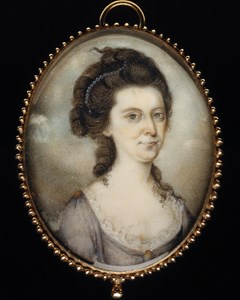
In further addition, Rachel Revere (shown above) wrote a short, undated note to her husband Paul. That began “by Doctor Church I send a hundred & twenty five pounds”—probably devalued Old Tenor currency.

All those documents are in the files of Gen. Gage. Did soldiers seize them from Dr. Church as he left Boston? That wouldn’t explain how those same files contain Dr. John Homans’s note to Dr. Joseph Gardner asking for surgical knives, which Church carried into town. 

When Allen French explored Church’s activities in General Gage’s Informers (1932), the letter from Rachel Revere was one of the prime pieces of proof that the doctor was cooperating with the royal authorities. I wrote about the Homans letter in an article for New England Ancestors in 2006. The Quincy letters add more evidence to that pile.

I wonder what Dr. Church told his colleagues when he arrived back in Cambridge, knowing that their relatives inside Boston would eventually mention that they’d given him letters to deliver. Presumably to maintain his cover the doctor spoke ruefully of having the big, bad soldiers take all his papers away. No one appears to have spoken of those missing documents as evidence of Church’s treachery, even after Gen. George Washington put him under arrest in October.

All the documents I’m speaking of remain in the Thomas Gage Papers at the Clements Library in Michigan. The library has just released digital scans of Gage’s correspondence in the weeks after the start of the war (along with poor computerized transcriptions which I’ve largely ignored). I’m sure there are some surprises to be found, as well as more evidence for what we already know.

Wednesday, August 27, 2025

“Are you serious, Dr. Church?”

In a letter to the Rev. Dr. Jeremy Belknap, Paul Revere recalled a dramatic moment on 21 Apr 1775:
The Friday evening after [the Battle of Lexington and Concord], about sun set, I was sitting with some, or near all that Committee [of safety], in their room, which was at Mr. [Jonathan] Hastings’s House at Cambridge. Dr. [Benjamin] Church, all at once, started up—

Dr. Warren, said He, I am determined to go into Boston tomorrow—

(it set them all a stairing)—

Dr. [Joseph] Warren replyed, Are you serious, Dr. Church? they will Hang you if they catch you in Boston.

He replyed, I am serious, and am determined to go at all adventures.

After a considerable conversation, Dr. Warren said, If you are determined, let us make some business for you. They agreed that he should go to git medicine for their & our Wounded officers.

He went the next morning; & I think he came back on Sunday evening.
As part of his medical mission, Dr. Church carried in a note from Dr. John Homans of Brookline to his mentor Dr. Joseph Gardner, asking for surgical knives.

Revere recalled speaking to Church after his return:
After He had told the Committee how things were, I took him a side, & inquired particularly how they treated him? he said, that as soon as he got to their lines on the Boston Neck, they made him a prisoner, & carried him to General [Thomas] Gage, where He was examined, & then He was sent to Gould’s Barracks, & was not suffered to go home but once.
In Igniting the American Revolution, Derek W. Beck guessed that the Gould of “Gould’s Barracks” was Lt. Edward Thoroton Gould, who on that day was a wounded prisoner of war outside of Boston. But I think the answer appears in a letter of merchant John Andrews on 11 January:
This morning the soldiers in the barrack opposite our house, left it, and took quarters with the royal Irish in Gould’s auction room or store—in the street leading to Charlestown ferry.
Bostonians often referred to barracks by the name of the local landlord who had rented those buildings to the army, making “Gould’s barracks” a big building on Back Street in the North End.

Robert Gould was a merchant who in August 1773 announced that the Boston selectmen had authorized him to set up as an auctioneer. He advertised heavily over the next several months (usually signing those notices “R. Gould”) before the Boston Port Bill hit. Renting his store to the army might have seemed like the best possible deal.

Robert Gould had also invested in Maine land along with Francis Shaw, Sr., a settlement that became Gouldsboro. He had trained Francis Shaw, Jr., in business, and newspaper ads in 1770 show that the younger man was selling ceramics out of “the store lately improved by Mr. Robert Gould.” In June 1776, Francis, Jr., and his wife Hannah had a boy they named Robert Gould Shaw. That man would pass the name on to his grandson, the Civil War hero.

Robert Gould remained in Boston after the British evacuation, but the Patriot authorities were suspicious of his dealings with the king’s army. The selectmen recommended detaining him for questioning, but the Massachusetts General Court decided to drop him from the list. Gould went back to advertising as a regular merchant in late 1776. But then he died unexpectedly, intestate and in debt, in January 1777, aged 57.

TOMORROW: The doctor’s documents.

Saturday, August 02, 2025

William Jasper and the Resistance

First in Boston 1775 postings and then in this article for the Journal of the American Revolution (also printed in this volume), I posited that Dr. Joseph Warren’s crucial informant on the night of 18 Apr 1775 was a British-born cutler named William Jasper.

I also laid out that argument in this talk for the Colonial Society of Massachusetts in April.

In collecting information about William Jasper, I looked for ties between him and the Boston activists. Of course, he couldn’t appear too close to Dr. Warren’s network in 1774–75 or else he wouldn’t have made a good spy. But I kept hoping for some documented link between Jasper and Boston’s resistance movement.

This summer I stumbled back into this page of signatures on a non-importation agreement from October 1767, protesting the new Townshend duties. It’s at Harvard’s Houghton Library.

And there’s William Jasper’s signature. He pledged to join this boycott several months before his June 1768 marriage to Ann Newman, previously the earliest sign I’ve found that he’d moved from New York to Boston.

What’s more, William Jasper’s signature appears right after John Pulling’s, and on the same sheet as Paul Revere. Those men were probably all in the same neighborhood, or even at the same neighborhood meeting. This sheet thus includes the signatures of three men involved in spreading the alarm on the night of 18 Apr 1775.

Thursday, July 17, 2025

Skinner on “Paul Revere’s Ride” in Boston, 19 July

On Saturday, 19 July, the Paul Revere House will host the launch of Paul Revere’s Ride: An Illustrated History, by Cortney Skinner.

There have been many illustrated editions of Henry W. Longfellow’s “Paul Revere’s Ride,” the artists wrestling to different degrees with its historical inaccuracies.

Skinner took a different path. He’s illustrated Revere’s own account of his ride, our most detailed source on it. And he’s gone to great effort to paint its scenes with as much historical accuracy as possible.

Opposite each painting is a page discussing the historic details, mysteries, and artistic choices Skinner made. Like a good historian, he shares his sources and explains how he decided on visual details, from the household furniture to the angle of the moonlight.

At this event, Skinner will discuss the process of creating Paul Revere’s Ride: An Illustrated History and sign books. It’s scheduled from 1:00 to 3:00 P.M. The book can also be ordered from the Paul Revere House gift shop.

Also at the Paul Revere House that afternoon will be reenactors of Captain Amasa Soper’s Company, a unit that volunteered to defend Boston from attack by sea after the siege of the city ended in March 1776.

Saturday, July 05, 2025

“Siege and Liberation of Boston,” 7–8 Aug.

Registration is open for the third Pursuit of History Weekend that I’ve helped to program, this one on “The Siege and Liberation of Boston” on 7–8 August.

Organized with the folks who manage History Camp, these sessions are designed to offer in-depth looks at developments 250 years ago through expert speakers and visits to the actual sites where the history happened.

We’ll start on the slope of Breed’s Hill in Charlestown, exploring what turned out to be the decisive battle of the first campaign of the Revolutionary War. Sam Forman and Mary Adams will introduce two of the leaders of the American forces, Dr. Joseph Warren and John Stark. We’ll walk the battlefield and hear about ongoing investigations of the landscape from Boston City Archaeologist Joe Bagley. Then we’ll take a road trip to other places that the Continental Army fortified, which few visitors see. That day we plan to have meals at two restaurants that go back to the eighteenth century.

On the following day, we’ll move into the North End, collaborating with the Paul Revere House, the Old North Church, and veteran tour guide Charles Bahne to offer an in-depth look at the experience of living inside besieged Boston. Finally, I’ll speak about George Washington as a new commander-in-chief, what he thought his job was, and what he really learned.

The Pursuit of History webpage for this event has a video of me explaining more. Sam Forman and I are also scheduled to talk about the siege and this event in the History Camp discussion series on Thursday, 10 July, at 8:00 P.M.

This Pursuit of History Weekend is not, in fact, on a weekend but on a Thursday and Friday. That’s to allow people to also attend History Camp Boston on Saturday, 9 August, and even the related tours the next day if their history interests are still unsated.

And speaking of History Camp Boston 2025, I’ll be speaking there, too. My topic is related to the end of the Boston siege. That talk is called “Henry Knox, Loyalist?” It offers a new interpretation of that American general’s rise to prominence.

Saturday, May 03, 2025

“Eads escaped out of town last night”

I got interested this week in how printers exited Boston around the start of the war because of a question from a Boston 1775 reader about Benjamin Edes.

The standard understanding of Edes’s departure goes back to the 1901 biography of his son, Peter Edes, Pioneer Printer in Maine. Samuel Lane Boardman wrote:
In the spring of 1775, the town of Boston being in possession of the British troops, Mr. Edes contrived to evade the vigilance of their guards and went to Watertown with an old press and one or two imperfect fonts of type. The escape was made by night in a boat up the Charles river.
We know Edes reestablished the Boston Gazette in Watertown on 5 June 1775, and the shortest distance between Boston and Watertown is indeed up the Charles River.

But Edes’s journey was more complicated than that. Let’s start with a letter from Peter Edes that Boardman reprinted later in his biography, the same letter that I quoted a couple of days ago in regard to the Tea Party.

Writing to a grandson in 1836, Peter Edes said his father:
made his escape by disguising himself as a fisherman, and getting on board a fishing boat; and when they were a few miles from town he was landed on one of the islands, from which he made his escape to the main land.
To escape from Boston on a fishing vessel and to land on an island meant heading out into the harbor or beyond, not up the Charles River.

That detail matches a couple of contemporary reports from south of Boston, both sent to John Adams.

First, on 7 May Abigail Adams told her husband:
Poor Eads escaped out of town last night with one Ayers in a small boat, and was fired upon, but got safe and came up to Braintree to day. His name it seems was upon the black list.
On the same day James Warren wrote to his friend:
By the way I have Just heard that Edes has stole out. I wish his partner was with him. I called on Mrs. Adams as I came along. Found her and Family well.
Thus, Benjamin Edes left Boston in disguise on the night of 6 May. He may have brought out printing equipment, though these early sources don’t say that. I’d love to identify “Ayers,” but I’m not even certain of that spelling.

Edes must have landed somewhere off the south shore, given how Patriots in Braintree heard about his arrival within a day. Did Warren tell Adams, or did Adams tell Warren?

Then Edes made his way back toward the siege lines, settling in Watertown to be close to the Massachusetts Provincial Congress, its news, and its printing jobs.

Edes’s partner, John Gill, didn’t get out of Boston. Instead, in the wake of the Battle of Bunker Hill he and the teen-aged Peter Edes were arrested and held in the Boston jail for several weeks.

COMING UP: Under one roof.

Saturday, April 19, 2025

Counterfactual 4: If No One Had Died at Lexington or Concord

Building on my counterfactual of what might have happened if Paul Revere and William Dawes had never brought their warning to Lexington, I reached the moment when the militiamen of Concord saw smoke rising above their town.

Under the scenario so far, the lack of urgent alerts out of Boston had no effect on the safety of John Hancock and Samuel Adams (who were never in great danger, despite their worries) or the quantity of military supplies the redcoats found (since James Barrett and his crew had already moved most of that stuff).

But that counterfactual situation would have delayed the response from towns around Concord, meaning fewer militia companies would have joined the local men on the hill overlooking the North Bridge.

We know those men were of two minds about confronting the regulars. They stayed on that hill for about two hours, marching down only after thinking other soldiers had set fire to the center of town. Then, after a fatal exchange of fire had chased the company from the bridge, they pulled back for another couple of hours.

Given those real-life details, I posited yesterday that the militia men would have been more wary about marching down on the bridge if there had been fewer of them. And eventually the smoke from town would have stopped, lessening the urgency.

In real life, after the shooting the militia companies moved around the north side of Concord and then massed east of the town. At Meriam’s Corner, once the regulars had left the most populated area, the provincials started to shoot at the column. Would that have happened the same way in this what-if scenario?

The very big difference in this counterfactual is that no one has yet been killed. There was no shooting in Lexington or at the North Bridge. Neither side had seen deaths to avenge. As long as the two groups of armed men remained at a distance, neither would have felt themselves to be under imminent threat.

In that case, the afternoon might have proceeded like the end of Lt. Col. Alexander Leslie’s raid on Salem in February: with the regulars marching in order back to where they came from while the local militia regiments watched sullenly to be sure they left. Lt. Col. Francis Smith’s men would have met Col. Percy’s reinforcement column somewhere in west Cambridge, and they would all have returned to Boston.

As it happened in April 1775, the bloodshed along the Battle Road motivated a militia siege of Boston. The committee of safety and its generals didn’t have to choose that policy; it came about naturally as militia companies massed off the peninsulas of Boston and Charlestown. Without deaths, the provincials wouldn’t have felt so much fervency, so the situation might have remained as it was: no military siege, but the countryside beyond Boston outside of royal control.

In the ensuing days, the Patriot press would have made the most of the army incursion into people’s homes while also trumpeting how the raid had found so little. The newspapers would have celebrated the escape of Hancock and Adams. They would have lauded the strong unified response of the Massachusetts militia.

As for Gen. Thomas Gage, he would have been pleased not to lose any men but frustrated at not capturing all the artillery pieces and other weapons he wanted to destroy. And how would he explain the mission to his superiors in London after they’d advised him to do something else?

Of course, that scenario doesn’t include any of the near-random events that can ignite violence, like the first shot at Lexington. What if British troops and Massachusetts militia did bump into each other somewhere? What if military patrols stopping Revere or Dawes before they got to Lexington meant that one of those popular Bostonians had wound up dead?

And even if the 18–19 April expedition did end without bloodshed, the conflict and tensions in Massachusetts would have remained unresolved. Gen. Gage’s next mission could have started the war instead, just a few weeks later.


Friday, April 18, 2025

Counterfactual 3: If Prescott Hadn’t Alerted Concord

Continuing my speculation about what might have happened if Paul Revere and William Dawes hadn’t alerted Lexington about the regulars coming out, I’m now going to look at Concord.

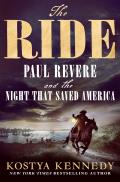
This post was prompted by the suggestion in Kostya Kennedy’s book The Ride that if Revere hadn’t ridden out on 18 April “the munitions at Concord could have been seized.”

That’s mistaken because militia colonel James Barrett, his helpers, and his family had started moving the most valuable military supplies out of town days before the British army march. In part because Revere had brought a warning from Boston on an earlier ride. 

On 6 April, James Warren was in Concord for a meeting of the Massachusetts Provincial Congress, and he wrote to his wife Mercy: “This Town is full of Cannon, ammunition, stores, etc., and the Army long for them and they want nothing but strength to Induce an attempt on them.”

But when the redcoats arrived, Ens. Henry DeBerniere said, they “did not find so much as we expected.” Specifically, he reported:
Capt. [Mundy] Pole of 10th regiment…knock’d the trunnions off three iron 24 pound cannon and burnt their carriages; they also destroyed a quantity of flour, and some barrels of trenchers and spoons of wood for their camp.
At Barrett’s farm the soldiers burned some more carriage wheels. But the town was obviously no longer “full” of military stores. And that change had taken days, not a few hours.

If the British expedition hadn’t paused in Lexington but marched straight through, as I posited yesterday, the vanguard would probably have arrived in Concord less than half an hour earlier. Some of the local militia might have been on alert, but without Dr. Samuel Prescott’s warning, it probably wouldn’t have been at full force.

But would that have mattered at first? When the regulars approached the town, the Concord militia marched away and took a position on a hill west of the North Bridge. Other men and then other town companies joined them there while the redcoats searched both the town and Barrett’s farm.

Without the earlier alerts from Revere riding west from Medford to Lincoln and the Prescott brothers riding out of Concord, those militia companies from other towns wouldn’t have joined the Concord companies as quickly as they did. It’s thus possible there would have been significantly fewer men on that hill when smoke began to rise from the center of town, where redcoats were burning carriage wheels (and, briefly, the town house).

The Concord men might have been just as upset by the sight of that smoke, but might not have felt their numbers were strong enough to do anything about it. And eventually the smoke would have dissipated as people in town succeeded in dousing the fire. So the provincials might never have made their fatal march down to the bridge, with the Acton company in the lead.

TOMORROW: The battle that never was.

Wednesday, April 16, 2025

Counterfactual 1: If Revere Had Never Reached Lexington

For the Journal of the American Revolution, Jim Piecuch just reviewed The Ride: Paul Revere and the Night that Saved America by Kostya Kennedy.

Piecuch writes:
Kennedy begins his book by posing an intriguing question: What might have happened if Massachusetts militia had not been present at either Lexington or Concord when British troops arrived on April 19? He speculates that John Hancock and Samuel Adams could have been captured or killed, that the munitions at Concord could have been seized, and that such events might have put the American Revolution on a completely different, perhaps even unsuccessful, course.

In Kennedy’s view, the question that gives rise to this hypothetical scenario can also be stated as: What might have happened had Paul Revere not made his ride to warn the inhabitants of towns outside Boston that British regulars were coming? While it is impossible to answer such a question, Kennedy uses it to underscore the importance of Revere’s ride, declaring that “Perhaps no night was more critical to [America’s] fate” (page 4).
I’ve been cogitating along similar lines but not coming to the same firm conclusions.

Let’s start with the question of what would have happened if Paul Revere had been satisfied with arranging for the signals from the North Church steeple to his colleagues in Charlestown. The rider they sent west toward Lexington never made it, probably stopped by a British mounted patrol. We don’t even know who that man was. But let’s imagine Revere went to bed thinking he’d sent the warning as Dr. Joseph Warren had asked.

Or we can imagine Revere heading out of Boston as he did but being stopped by the H.M.S. Somerset, or by that same mounted patrol in west Charlestown. If Revere had never made it past Medford, how would that have affected events the following day?

In that case, Dr. Warren’s warning would have reached Lexington about half an hour later than it did, as soon as William Dawes arrived in town. Since it took hours for Adams and others to persuade Hancock to leave Lexington, and since the regulars didn’t arrive until hours after that, those thirty minutes probably wouldn’t have made a big difference.

TOMORROW: But what if neither Revere nor Dawes had reached Lexington?