J. L. BELL is a Massachusetts writer who specializes in (among other things) the start of the American Revolution in and around Boston. He is particularly interested in the experiences of children in 1765-75. He has published scholarly papers and popular articles for both children and adults. He was consultant for an episode of History Detectives, and contributed to a display at Minute Man National Historic Park.

Subscribe thru Follow.it


•••••••••••••••••


Showing posts with label Martha Washington. Show all posts

Monday, July 13, 2026

“Headquarters of a Revolution” in Cambridge, 19 July
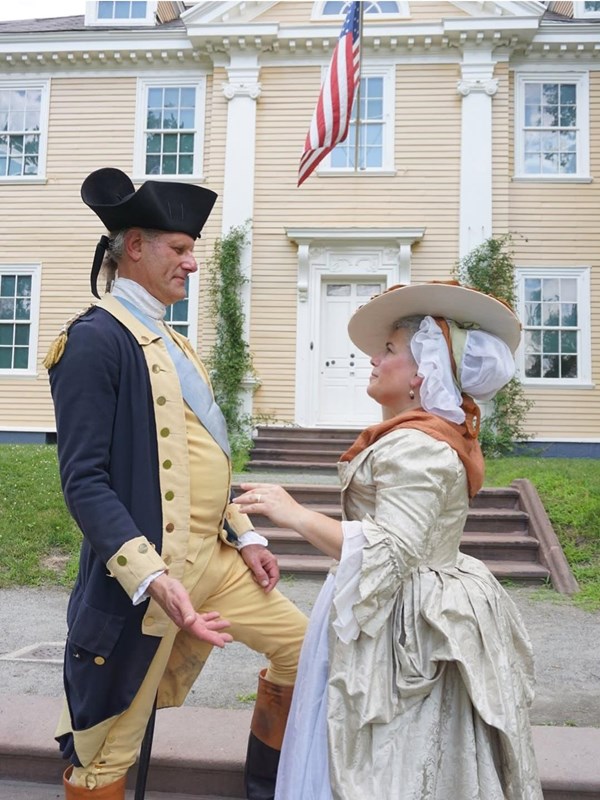
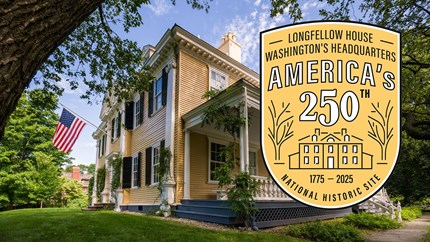
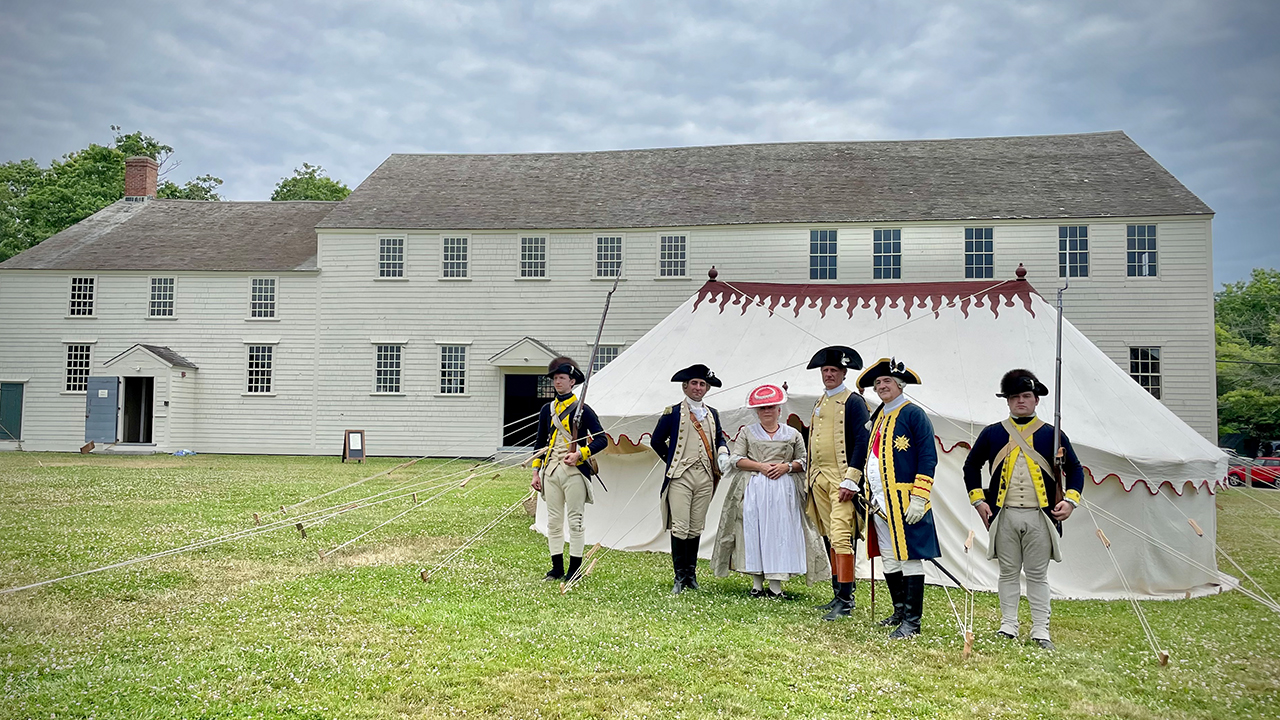
On Sunday, 19 July, the Longfellow House–Washington’s Headquarters National Historic Site in Cambridge will host a commemoration called “Headquarters of a Revolution: Washington’s Arrival in Cambridge,” coinciding with the 251st anniversary of the new commander-in-chief’s first week living in that mansion.

Here are the events scheduled for that day, including two from me.

10 A.M. to 3 P.M.
Living History
On the Lawn

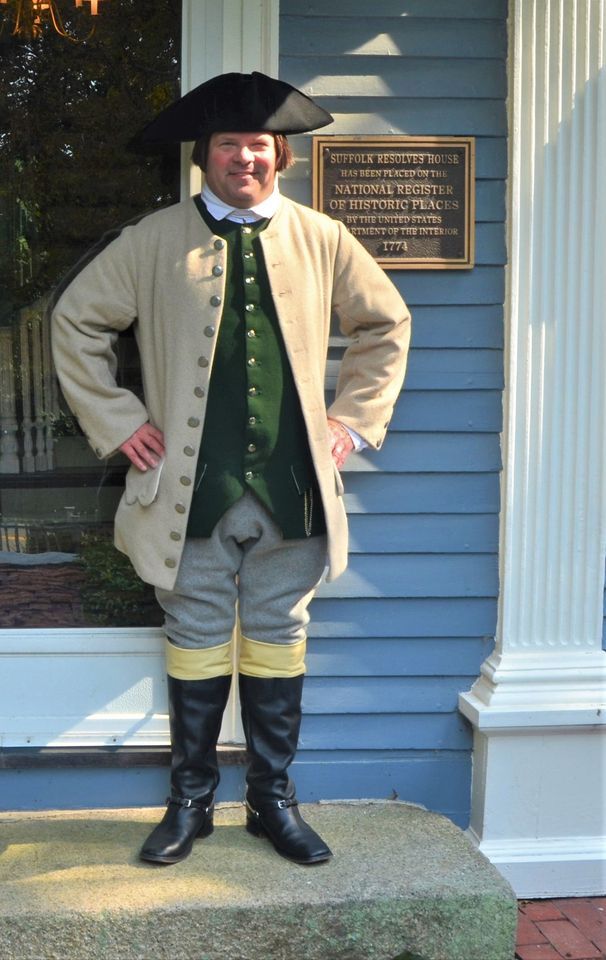
Interact with living historians John Koopman (as George Washington) and Sandy Spector (as Martha Washington), including a noontime Q&A with Mrs. Washington. Free family activities and a story walk available all day.

10 and 11:30 A.M., 2:30 P.M.
House Tour: Headquarters of a Revolution
Starting in the Visitor Center

General George Washington’s Cambridge headquarters was a testing ground for many of the ideals, institutions, and questions that still define our nation. This conversational tour with an N.P.S. ranger explores Cambridge Headquarters as a hub of revolutionary activity, where generals, enslaved people, paid laborers, poets, Indigenous diplomats, politicians, and soldiers shaped history—and how later generations would shape its memory.

10:15 A.M.
Get Ready with Martha
Carriage House

Learn all about the clothing of 1775 as Mrs. Washington finishes dressing for her day. There will be some stories and some gossip, too! Sandy Spector is a Boston-based historian, researcher, and interpreter, and has been a Revolutionary War reenactor since 2000. She spends most of her time researching and interpreting Mrs. Washington and has been portraying Martha—alone or with George—in numerous states and venues for the past 10 years.

11:30 A.M. to 12:15 P.M.
The Last British Army to Come Through Cambridge
Carriage House

In November 1777, nearly 6,000 soldiers of the king arrived in Cambridge. With them came about a thousand women and children. These weren’t invaders but prisoners of war, British and German, captured at Saratoga. Top officers were housed in mansions along “Tory Row” while enlisted men went into the leftover barracks on Prospect and Winter Hills. Over the next few months Cambridge, Charlestown, and neighboring towns had to adjust to a new population under guard. J. L. Bell explores what we should remember about this “Convention Army” as we approach the 250th anniversary of its arrival.

12:30 to 1:15 P.M.
“Though Dwelling in a Land of Freedom”
Carriage House

Join poet, educator, and Darby Vassall descendant Denise Washington for an exploration of Revolutionary-era freedom struggles surrounding Washington’s Headquarters through the lens of Anthony, Cuba, and Darby Vassall, as well as Phillis Wheatley Peters.

1:30 to 3 P.M.
The Black Patriots of Lexington – Silas Burdoo
Carriage House

This film explores the role that third-generation Lexington resident Silas Burdoo played in the Revolutionary War, starting with the battle on 19 Apr 1775. Burdoo was a grandson of Ann and Philip Burdoo, who married in Medford in 1704 and then purchased 40 acres in Cambridge Farms, which became Lexington. This film screening will be followed by a discussion with Zine Magubane, professor of historical sociology at Boston College, and Sean D. Osborne, producer of the Black Patriots of Lexington YouTube series.

3 P.M.
What Washington Saw on Cambridge Common
Walking Tour starting at the gate at the southern tip of the common

What did the center of Cambridge look like in July 1775? Since April, the town had been the base of the New England army besieging Boston, with war transforming the community. On this walking tour J. L. Bell looks at sites in and around the common, including the first headquarters, buildings turned into barracks, and the Continental artillery’s lost laboratory. How well do the Washington Elm and the Revolutionary monuments that dot the common memorialize the men who were actually there?

All of these events are free, as organized by the National Park Service.

Monday, June 08, 2026

“Washington and slavery have always been particularly instructive”

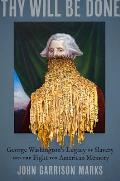
At Commonplace, Karin Wulf of the John Carter Brown Library interviewed John Garrison Marks about his new book, Thy Will Be Done: George Washington’s Legacy of Slavery and the Fight for American Memory.

Wulf started with an introduction reiterating that talking about the Washingtons’ slaveholding is far from new in American culture:
As anyone reading this will likely know, and as John Marks notes below, a remarkable volume of important research detailing George Washington’s (and Martha Dandridge Custis Washington’s, and their family’s) investment in slavery has been published over the last two decades. In conjunction with critical work on other “founders,” namely Thomas Jefferson, this work has helped usher in a shift in public perspective that has been greeted with angst by those who either didn’t know or don’t want to know about the foundational role of slavery at the founding, but also by relief among the many who did and do.

This book is different. It takes up the question of how this very specific issue about the first president—his role as an enslaver—was debated over centuries. In other words, this was not a phenomenon that leapt upon a settled historical narrative unbidden from the culture wars or the specific spate of racial violence that called forth the Black Lives Matter movement. For me, there was another dimension.

As soon as I heard about John’s project some time ago, I was intrigued in part because at one point I checked out a number of copies of Washington’s will printed in the 19th and 20th centuries. Why, I wondered, were so many people keen to have to hand a copy of what Washington willed? In part it has to do with the vexed issue of manumission. John shows, in this book that helps us to see historical memory in motion, Washington and slavery have always been particularly instructive.
In the interview, Marks noted three ways Americans have discussed George Washington’s connection to slavery. Some complain about exploitation and hypocrisy, some insist on reverence for the other things he did, and some argue we should focus on how he moved away from slavery over his lifetime. “What was really fascinating in researching the book was how early and consistently all three of these perspectives appeared in the record,” Marks added, finding examples of each approach in the period of his death.

Friday, May 08, 2026

“The only ‘emancipation’ relevant to this site was Ona Judge’s own”

On 21 April, the Philadelphia Inquirer shared an opinion piece about the President’s House exhibit by Sharon Ann Holt, a public historian recently retired from Penn State Abington.

Holt was previously director of education and interpretation at the Historical Society of Pennsylvania and director at the Sandy Spring Museum in Maryland. She’s the author of Freedom Pay: North Carolina Freedpeople Working for Themselves, 1865–1900.

The web headline for Holt’s essay is “We can’t give in to the Trump administration’s attempts to make the history of slavery invisible in Philadelphia.” I don’t know if it appeared in the newspaper’s print edition, and the webpage now behind a paywall unless one has a guest link. So here’s an extended extract:
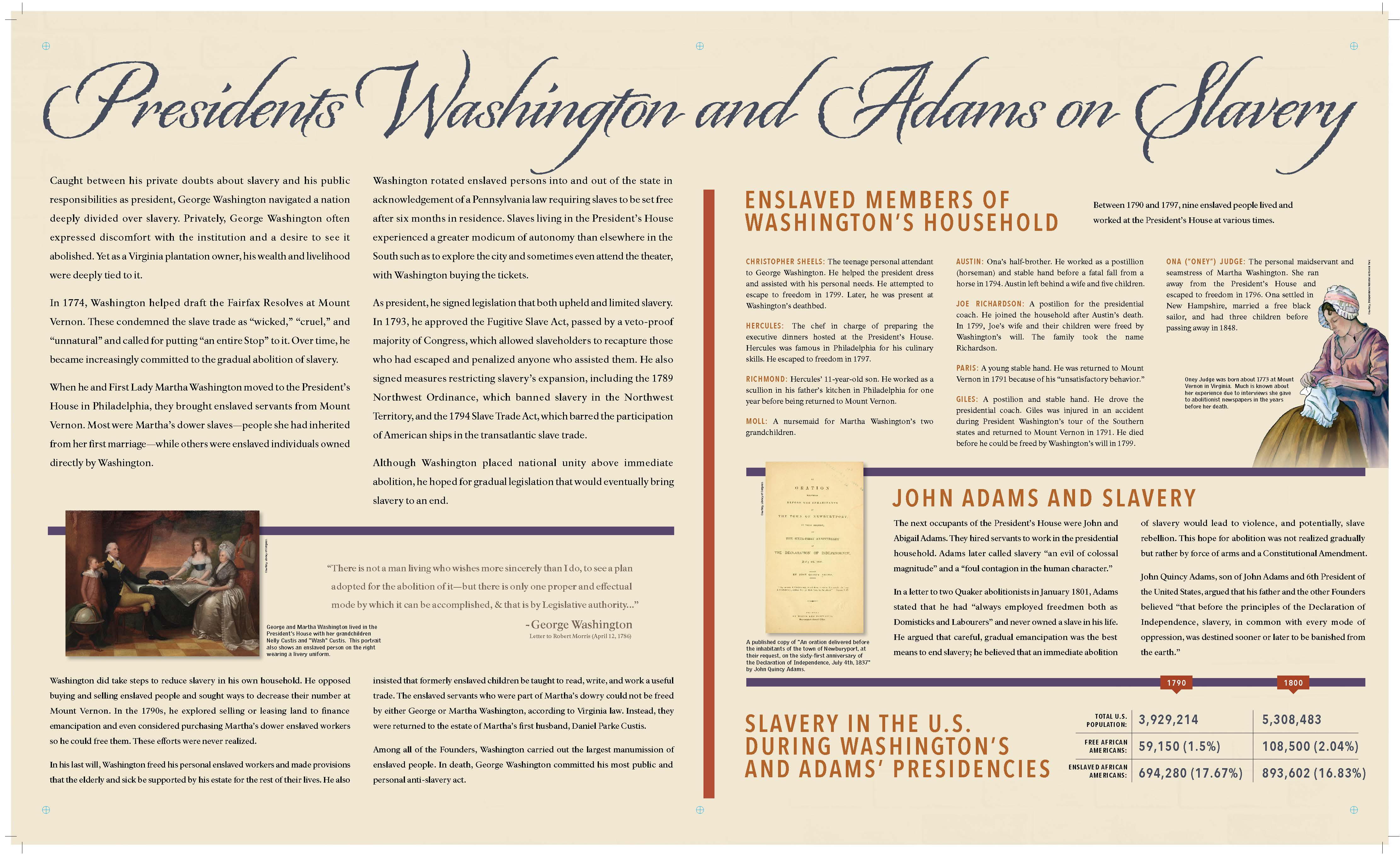
The digital images posted on the Park Service’s website make it clear that, under Donald Trump, the first priority of the Park Service seems to be to make enslaved people and slavery itself as invisible as possible. Panels that discussed the lives of urban enslaved people, Philadelphia’s free Black community, the Washingtons’ enslaved “family,” fugitives from enslavement (and the laws Washington signed to reclaim them) have all disappeared. The rich biographies of Christopher Sheels, Hercules, Richmond, Austin, Giles, Ona Judge, Joe Richardson, Moll, and Paris have shrunk to single sentences. . . .

So what stories are they telling? George and Martha’s determination to flout Pennsylvania’s six-month limit on holding people in slavery is reframed as a lovely gift of theatre tickets rather than their cynical move to get enslaved people across the river to New Jersey, thus restarting the six-month residential countdown. I’m surprised the Park Service left out the Washingtons’ “kind” willingness to let enslaved workers visit their families left behind in Virginia, which worked the same trick.

If Park Service bureaucrats value relevance, I challenge them to explain the transformation of the story about 18th-century slavery at the President’s House into a puzzling evocation of the Emancipation Proclamation of the 19th century and the Civil Rights Movement of the 20th century. Is it that, to them, all stories having to do with African Americans belong in the same place? They must think so, because they have randomly added completely irrelevant references to Frederick Douglass, the Civil War, the Rev. Dr. Martin Luther King Jr., the Underground Railroad, and Abraham Lincoln to the history of the President’s House.

Worse, the Park Service has embraced sentimental claims that Washington, Thomas Jefferson, and James Madison all “had their doubts” about slavery from the beginning.

None of those “doubts” persuaded the Founders to end slavery when they could have, either in our founding documents or in their own personal lives. None of the 19th- and 20th-century stories that the Park Service has shoehorned into their new panels ever involved the President’s House at all. The only “emancipation” relevant to this site was Ona Judge’s own self-liberation — the very story the Park Service has all but erased.

Speaking of irrelevance, the opening panels are even more laughable. Park Service interpreters have decided to feature discussions of the 1876 Centennial, the 1926 Sesquicentennial, and the 1976 Bicentennial, all of which happened long after the President’s House had been remodeled into oblivion or entirely demolished. . . .

If the judges choose these new panels to replace the ones taken down earlier this year, they will disparage millions of Americans who have struggled since 1776 to improve on the shaky foundations the founders laid. The President’s House should honor those struggles, alongside the nine people enslaved there by George and Martha Washington.
While Holt directs her critique at the National Park Service, which produced this revised signage, it’s clear that agency was working under directives from the White House. Based on what sort of historical presentations the White House has produced on its own, N.P.S. historians undoubtedly worked hard to drag this material into the realm of historical fact, even if it’s far from complete and relevant.

Thursday, May 07, 2026

A Closeup Look at the President’s House in Philadelphia

I’ve been following the story of the President’s House site within Independence National Historical Park.

That structure marks the residence of George Washington and John Adams before the District of Columbia was built and also memorializes the people enslaved to the Washingtons who lived and worked there.

In September, we first learned that White House policy was putting pressure on the park to change the signage on that site. In January, the signs were taken down.

In February, after the city of Philadelphia filed a lawsuit, a judge ordered the signs be put back up. But then a higher judge halted that process while also requiring those signs already restored to remain. The U.S. Circuit Court has upheld that stasis.

Last month I traveled to Philadelphia for the Pursuit of History’s weekend examining the creation of the Declaration of Independence. One morning I walked through the President’s House.

Most of the frames for signs are empty; the few panels that have been restored appear to be almost random. In some of the blank spaces people had posted small images of the missing signs. While I was there, a local taped a large sheet of paper in another space along with two markers, inviting people to share their own thoughts on the controversy. I presume those unofficial displays are taken down each evening and replaced each day.

In April the National Park Service unveiled new draft signage, created (by people unknown) to please the White House. Those panels now appear on the webpage for the President’s House Site. WHYY reported:
The new panels include references to slavery, the Underground Railroad and figures like Frederick Douglass. Like the previous panels, they also make mention of the nine enslaved people held by Washington while he was president and living in Philadelphia.

However, they would have changed the overall tone of the site, softening and significantly reducing references to slavery, and shifting the focus toward the “anti-slavery sentiments” of the slave-owning Founding Fathers. For example, text on one notes that the U.S. Constitution did not contain the word “slavery,” and another one argues that Washington had “doubts” about the institution.
Local critics called that revision “whitewashing” and “maliciously outrageous.”

TOMORROW: A historian’s take.

Sunday, August 31, 2025

“He died with the Effects of the Measles”

Henry Marchant (1741–1796, shown here) was a rising young lawyer in Rhode Island.

Born on Martha’s Vineyard, Marchant grew up in Newport and attended the College of Philadelphia (one of the schools that became the University of Pennsylvania in 1791).

In 1771 Marchant was appointed to be Rhode Island’s attorney general. He set sail for London to observe judicial practices there. His notes on James Somerset’s freedom case are an important document of that episode.

Marchant headed home in November 1772. On arriving in Boston, he received a boatload of bad news, as he told Benjamin Franklin in a letter. One loss was particularly close:
Mr. [Tuthill] Hubbart next informed me of the Death of my Third and only Son a Child of Three years old. He died with the Effects of the Measles, the Day after I left London. My two Daughters had been very ill with the same Disorder but are since happily recovered.
Measles was a common disease in colonial America. Martha Washington and other people at Mount Vernon caught it in 1760, and some of her enslaved workers in 1773. Benjamin Franklin’s grandson Benny caught measles in 1772, like little William Marchant. In 1788 Henry Knox reported that he had five children going through the disease.

In 1783 Abigail Adams reported that her son Charles had came down with the measles, adding: “it has proved very mortal in Boston. Tis said 300 children have been buried since last March.” Abigail’s sister Mary Cranch included a cousin’s descriptions of his symptoms in a letter in 1790:
I know you Will rejoice to hear that cousin Tom has got comfortable through the Measles. He caught them at Cambridge the day he arriv’d from new york— He came here the Monday after & told me he thought he had them but return’d the next day—promising to return as soon as he felt the Symtoms The Monday following his cousin William brought him home in a close carriage but he did not break out till Wednesday.

he was pretty sick but not very bad till they came out. He had Several faint turns before & sometimes felt as if he did not weigh a pound after they broke out— The rash came first but the measles soon follow’d thick enough, his cough was troublesome & his Fever pretty high but upon the whole I think he has had them light to what people in general have or to what you & I had. There are many People Who have them now extreamly bad & many have died with them—
Measles was overshadowed by smallpox, another disease that produced fever and spots, because smallpox was much deadlier. On the other hand, measles is much more contagious—spreading far more quickly and easily than Covid-19, H.I.V., and other viruses we’ve faced in recent decades.

We don’t have to worry about measles as much as past generations did because in 1954 medical scientists developed a vaccine. Cases in the U.S. of A. dropped precipitously after the government approved regular immunizations in 1963.

Unfortunately, the Trump administration’s Secretary of Health and Human Services, Robert Kennedy, Jr., has cockamamie ideas about vaccines. In fact, Kennedy was chosen for his cockamamie ideas—he has no other connection to health services. In particular, experts blame Kennedy for promoting a measles epidemic in American Samoa in 2019.

During his confirmation hearings Kennedy made noises about believing in vaccines, pointing out that all his children have been immunized. But as soon as he was in office and a media outlet gives him free rein to talk, Kennedy returned to spouting all sorts of lies about the nature of the vaccine, its effectiveness, and its side effects.

This past month, Kennedy demanded that the Centers for Disease Control adapt to his anti-vaccine beliefs, cancel highly promising research, and curtail the availability of Covid-19 boosters for Americans. When the head of the C.D.C. refused to go along, Kennedy and Trump forced her out, prompting the next level of managers to resign in protest.

There are many ways the Trump administration is harming people and causing deaths around the globe. The effects of Kennedy’s anti-vaccine crusade, if not stopped, will be among the most damaging. Parents will once again be feeling the same grief as Henry Marchant for no good reason.

Monday, June 30, 2025

“Headquarters of a Revolution” in Cambridge, 5 July


On Saturday, 5 July, the Longfellow House–Washington’s Headquarters National Historic Site will host the Sestercentennial commemoration of Gen. George Washington taking command of the Continental Army.

Washington arrived in Cambridge on the afternoon of 2 July and assumed command from Gen. Artemas Ward. Nineteenth-century tradition held that 3 July was the crucial day, imagining the new commander reviewing all his troops on Cambridge common, but that was at best an exaggeration. The 4th is of course claimed by an event from 1776. So Saturday the 5th is the most convenient date for a celebration this year.

Here’s the “Headquarters of a Revolution” schedule. Unless stated otherwise, all of these events start at 105 Brattle Street, the Longfellow–Washington site. Some offerings overlap, so it’s not possible to see everything. The talks are about half an hour long, the house tours almost an hour, the walking tours more like ninety minutes. Folks who need air conditioning or shelter from rain will no doubt prefer the talks and house tours.

10:00 A.M. to 3:00 P.M.
The New Generalissimo
John Koopman and Quinton Castle

On the mansion’s lawn, visitors can meet and talk with living historians portraying Gen. George Washington (Koopman) and his body servant, William Lee (Castle), as they assess the siege, the Continental Army, the political situation, and living arrangements in Cambridge. Photo opportunities.

10:15 A.M. talk in the Longfellow Carriage House
Get Ready with Martha
Sandy Spector

Learn all about the clothing of 1775 as Mrs. Washington finishes dressing for her day. There will be some stories and some gossip, too! Spector is a Boston-based historian, researcher, and interpreter known for bringing emotional depth, humanity, and a sense of humor to her portrayal of Martha Washington.

10:30 A.M. walking tour
Children of the Revolution: Boys & Girls in Cambridge during the Siege of Boston
J. L. Bell

Meet at the mansion’s driveway for a walk around the Tory Row neighborhood and Harvard Square viewing sites and hearing stories of young people caught up in the opening of the Revolutionary War: Loyalists forced from their homes, soldiers in their teens or younger, war refugees, and enslaved children seizing their own liberty.

11:00 A.M. talk in the Longfellow Carriage House
The Revolutionary War Diary of Moses Sleeper
Kate Hanson Plass

An almost-anonymous journal in the Longfellow–Washington site’s collection provides a look at daily life in the Continental Army in Cambridge. Cpl. Moses Sleeper spent most of the Siege of Boston encamped and building barracks around Prospect Hill. Hanson Plass, the Longfellow House Archivist, explains how Sleeper’s perspective adds to our understanding of the experience of the soldiers under General Washington’s command.

11:30 A.M. house tour
Deep Dive: Headquarters of a Revolution
National Park Service staff

Explore Gen. George Washington’s first headquarters of the American Revolution. That mansion became a testing ground for many of the ideals, institutions, and questions that still define our nation. This conversational tour explores Cambridge Headquarters as a hub of revolutionary activity, where generals, enslaved people, paid laborers, poets, Indigenous diplomats, politicians, and soldiers shaped history—and how later generations would shape its memory.

12:30 P.M. talk in the Longfellow Carriage House
Washington in the Native Northeast
Dr. Ben Pokross

This talk describes George Washington’s interactions with Indigenous people while he lived in the Vassall House. After a look back on Washington’s experiences as a surveyor in the Ohio River Valley, the presentation will focus on his diplomatic encounters with Abenaki, Haudenosaunee, Passamaquody, and Maliseet peoples, among others, during the Siege of Boston. Ben Pokross was a Mellon Humanities Postdoctoral Fellow at the Longfellow–Washington site researching its Indigenous history. In the fall, he will be a Visiting Assistant Professor of English at Trinity College in Hartford.

1:15 P.M. talk in the Longfellow Carriage House
On Managing a Headquarters that is Also a Household
Sandy Spector

Martha Washington made her own arrival in Cambridge in December 1775 and stayed until April, setting the pattern she would follow throughout the Revolutionary War: she spent every winter with her husband and the army, and during campaign season usually remained as close as she safely could. Spector describes how the commander’s wife maintained a genteel household in the midst of war.

1:30 P.M. walking tour
Cambridge as a Seat of Civil War
J. L. Bell

Meet at the Washington Gate on Cambridge Common. This tour explores how the Cambridge community split on religious, political, and class lines between 1760 and 1775, culminating in a militia uprising in September 1774 and the outbreak of actual war in April 1775. Hear how the wealthy and congenial Tory Row neighborhood fell apart and became a stretch of military barracks and hospitals.

2:00 P.M. talk in the Longfellow Carriage House
Phillis and George: Thoughts on Letter-Writing, Power, and Self-Representation
Dr. Nicole Aljoe

One famous event during Washington’s time in Cambridge was his exchange of letters with Phillis Wheatley, the young poet who had been kidnapped into slavery. Aljoe, Professor of English and Africana Studies at Northeastern University, explores this encounter in context. She is co-Director of The Early Caribbean Digital Archive and Mapping Black London digital project, Director of the Early Black Boston Digital Almanac, and author of multiple books and articles. 

2:30 P.M. house tour
Deep Dive: Headquarters of a Revolution
National Park Service staff

See above.

2:45 P.M. talk in the Longfellow Carriage House
Cambridge’s Black Community, 1775
Dr. Caitlin DeAngelis Hopkins

The American Revolution was a time of both possibility and peril for Black residents of Cambridge. Enslaved people could pursue their liberty but faced the threats of family separation, deadly epidemics, and violence. Whether moving far away, taking jobs at Washington’s Headquarters, or making complex legal arguments to claim pieces of their enslavers’ estates, Black residents used their knowledge and networks to protect themselves and their families. Hopkins is working with the descendants of Cuba and Anthony Vassall to document the Black history of 105 Brattle. She holds a Ph.D. from Harvard and was formerly the head researcher for the Harvard and the Legacies of Slavery Project.

This commemoration is funded by Eastern National, a non-profit partner of the National Park Service. It’s supported by friendly organizations like History Cambridge and the Friends of Longfellow House–Washington’s Headquarters.
Thursday, March 13, 2025

Chatting with Some Revolutionary Figures


Here are a couple of first-person interpretations of Revolutionary figures to enjoy next week.

Wednesday, 19 March, 7 to 8 P.M.
Affectionate Friends and Humble Servants: Martha Washington and Mercy Otis Warren in Conversation
Concord Museum

Set in the late 18th century, this forum presents a fictional dialogue featuring Martha Washington (portrayed by Sandy Spector), the First Lady, and Mercy Otis Warren (portrayed by Michele Gabrielson), a prominent playwright and activist. In a cozy parlor setting, they discuss their friendship, their respective roles during the revolutionary era, and the challenges they encountered.

Through a mix of dialogue and historical anecdotes, their conversation highlights their personal reflections and the broader political context, emphasizing the bond that contributed to their influence on the emerging nation.

Admission is $10, or free to museum members. This event will not be livestreamed. Click here to reserve seats.

Thursday, 20 March, 6 to 8 P.M.

Fireside Chat with Paul Revere
Wayside Inn, Sudbury

Join Paul Revere by the fireside at this historic tavern for a spirited review of the notoriously inaccurate Longfellow poem that immortalized his “Midnight Ride.” Heavy hors d’oeuvres included with the price of a ticket, and drinks will be available for purchase at the bar. For the last thirty minutes of this event, interpreter Michael Lepage will step out of character to answer questions about the work that goes into representing historical figures.

Tickets are $20 for members of the Wayside Inn Foundation or the Paul Revere House, $25 for nonmembers. Phone 978-443-1776×1 to reserve tickets at the member price. For general-admission tickets without the member discount, click here.

Thursday, December 26, 2024

Grand Union Flag Raising Commemoration in Somerville, 1 Jan.

On Wednesday, 1 Jan 2025, the city of Somerville will observe its annual Grand Union Flag Raising, 249 years after Gen. George Washington had a new flag flown in the fortifications atop Prospect Hill.

The program will begin at 11:30 A.M. with a procession from the City Hall to Prospect Hill. The public is invited to participate in this walk along with city officials and guests.

From noon to 1:00 P.M. there will be a ceremony on the hill in the shadow of the present monument. It will feature:
  • A reenactment of George III’s message to the rebellious colonies delivered by gentlemen from His Majesty’s 10th Regiment of Foot. This will presumably be part of the king’s speech to Parliament in the fall of 1775, which arrived in Massachusetts around the same time as the flag-raising.
  • Remarks from people interpreting Martha Washington, wife of the Continental commander-in-chief, and the poet Phillis Wheatley, who several weeks before had sent Washington a complimentary poem.
  • Members of the Ancient and Honorable Artillery Company.
  • A portrayal of Gen. Washington leading the ceremony to raise the new flag, usually interpreted to be the new Continental Navy flag: thirteen red and white stripes for the thirteen colonies at the Continental Congress with the Union Jack in the canton.
Attendees should be prepared for cold weather; this event takes place on a hill during the New England winter. Hot drinks will be available. Participants will also have a choice between small Grand Union flags to wave or blank flags to decorate.

If the weather cooperates, the tower on Prospect Hill will be open to the public following the ceremony. The Somerville Museum will be on hand with souvenirs representing the city’s historic assets.

Monday, November 18, 2024

“Illuminating” Symposium in Williamsburg, 7 Dec.

On Saturday, 7 December, the Dr. Joseph Warren Foundation will present a symposium in Williamsburg, Virginia, on the theme of “Illuminating the Role of Six American Founders.” The day’s presentations will include:

Christian Di Spigna: “Founding Martyr: Dr. Joseph Warren, the American Revolution’s Lost Hero.” A Phi Beta Kappa graduate from Columbia University, Di Spigna wrote the Warren biography Founding Martyr and is the Executive Director of the Dr. Joseph Warren Foundation.

Edward G. Lengel, Ph.D.: “First Among Many Founders: George Washington Guides the Revolution to Victory.” For many years Lengel directed the Washington Papers Project. He has written fourteen books on different periods of American history, including General George Washington: A Military Life and Inventing George Washington.

Elizabeth Mauer: “There Were Founding Mothers Too: Martha Washington Supports the Revolution.” Maurer is the Chief of Programs & Education at the National Museum of the United States Army, having previously held various roles at Colonial Williamsburg, Mount Vernon, the National Women’s History Museum, and the D.E.A. Museum. She’s a former editor-in-chief of the Journal of Museum Education.

Gordon Steffey, Ph.D.: “‘Better known than acknowledged’: Richard Henry Lee and the American Cause.” Steffey is the Director of Research and of the Jessie Ball duPont Memorial Library at Stratford Hall. For nearly twenty years he taught at Randolph College in Lynchburg, Virginia, holding an endowed chair in Comparative Philosophy.

Bruce M. Venter, Ed.D.: “Rough-hewn and Enigmatic Founder: Ethan Allen Does Some Crazy Things.” President of America’s History, L.L.C., Venter organizes an annual conference on the American Revolution that’s considered the premier symposium for Revolutionary War enthusiasts, public historians, and scholars. He’s the author of The Battle of Hubbardton: The Rear-Guard Action that Saved America.

Stephen Wilson: “‘Give me liberty or give me death!’: One of America’s Most Important Speeches Celebrates its 250th Anniversary.” As Executive Director at the St. John’s Church Foundation, Wilson highlights the effect of Patrick Henry’s famous speech in that building on 20 Mar 1775.

This Founders Illuminated symposium will take place in the Williamsburg Regional Library Theatre starting at 9:00 A.M. The $95 registration fee includes lunch at the Hound’s Tale and snacks. For more information and to register, follow this link.

Though this event isn’t associated with Colonial Williamsburg, folks attending it will also be able to see that historic museum’s first Grand Illumination, or fireworks show, of the season.

Thursday, August 22, 2024

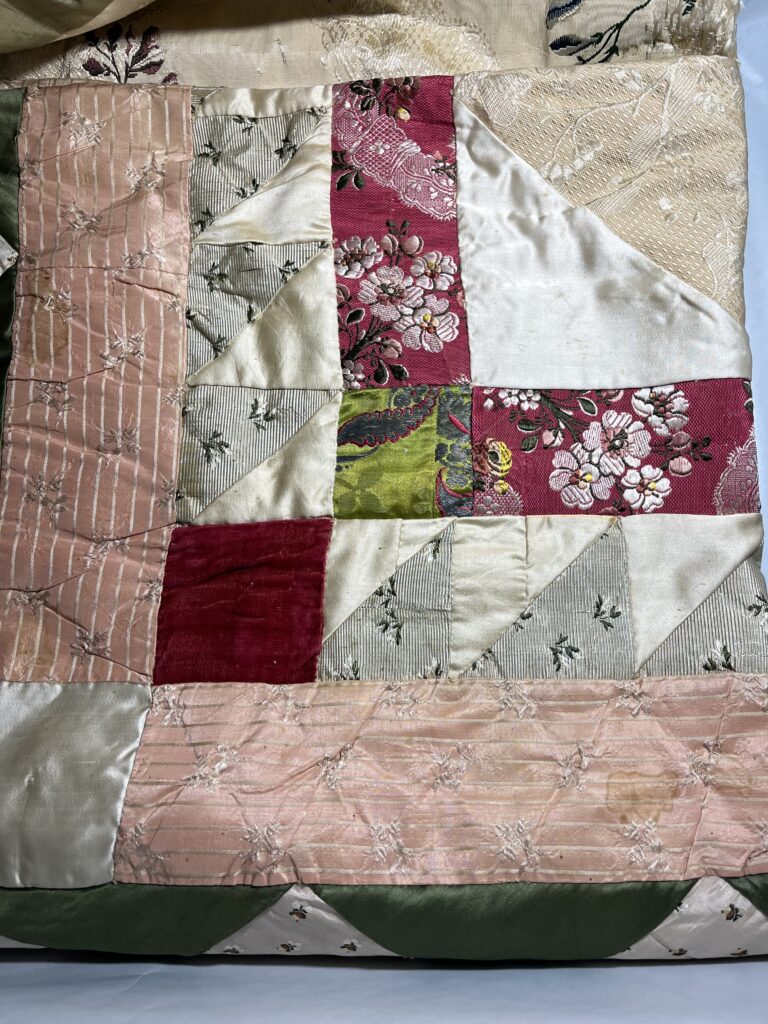
Picking at the Martha Washington Dress Quilt

In the Colonial Revival period, many Americans came forward with relics of the Revolution passed down in their families or discovered in attics.

And some of those were even authentic.

Others, however, were not. I retold the saga of a reputed Thomas Oliver portrait here, for example.

Among items donated to the Bostonian Society in its early decades, I’m skeptical about the machine-woven “Sons of Liberty flag.”

I worked with Dave Ingram on a report about a powder horn ascribed to Richard Gridley; we determined it was almost certainly a Colonial Revival–era creation.

The Old South Meeting House also became a public institution at that time and began receiving donations. In the 1890s one important supporter, Mary Hemenway, gave Old South “a quilt made from fragments of Martha Washington’s dresses,” as Lori Fidler, Associate Director of Collections at Revolutionary Spaces, recently described in this article.

That’s just the sort of object that Americans oohed and aahed over breathlessly during the Colonial Revival. From the Age of Homespun! Touched by the great Washingtons themselves! But how reliable is its lore?

We know the quilt came to Hemenway from Fannie Washington Finch, an actual great-grandniece of George Washington. Her story:
Fannie was born Frances Louisa Augusta Washington in Virginia in 1828. Her mother, Henrietta Spotswood, was the granddaughter of George Washington’s half-brother, Augustine, Jr., while her father, Bushrod, was the grandson of George’s brother, John Augustine. Fannie’s grandmother, Jane Washington, had made the quilt out of scraps she received directly from Martha.
We also know from Finch’s letters in 1884–1886 that she was selling heirlooms from Mount Vernon, including this quilt, because of her “pecuniary condition.” In other words, she needed money.

There are also intriguing details about the quilt itself:
In 1979, a textile curator at Boston’s Museum of Fine Arts examined the quilt, finding the silk pieces to be expensive English-made loom-woven fabrics, consistent with textiles worn by wealthy women of the 1700s. He mentioned that the designs represented a range of time periods, with larger floral patterns from the mid-18th century and tiny blossoms from the late 1700s. . . .

In May 2024,…[Zara] Anishanslin noted that a fabric used in the quilt appeared to be an Anna Maria Garthwaite design. Garthwaite was a female silk designer who lived and worked in the Spitalfields area of London in the mid-1700s.
Thus, Finch might have had a motive to concoct a connection between this quilt and Martha Washington—but the artifact itself really does contain the fabrics a wealthy British-American woman in the mid- to late 1700s would have owned.

Furthermore, Fidler reports, “In her writings, Martha Washington mentions cutting up her garments and distributing pieces to family members and friends as mementos.” Finch couldn’t have inserted that into the historical record.

So on this item, I’m inclined to accept the lore.

Tuesday, August 20, 2024

More Detail about William Costin

Back in 2016 I wrote about William Costin, then believed to be the son of John Parke Custis, Martha Washington’s son, and Ann Dandridge, her half-sister.

A couple of years ago Mount Vernon created an entry in its Digital Encyclopedia of George Washington on “The Ancestry of William Costin,” which I came across last week.

That in turn led me to David O. Stewart’s Journal of the American Revolution article “The Mount Vernon Slave Who Made Good: The Mystery of William Costin” from 2020.

The Mount Vernon page still identifies John Parke Custis as most likely to be William Costin’s father, based on a range of contemporaneous behavior and later statements.

The Custis family said nothing about that publicly at the time, of course, but they not only freed Costin and his relatives, they kept ties with them. Costin himself followed that family’s custom in giving his own children the middle name Parke.

The newer articles point out that there are no contemporaneous sources on a woman named Ann Dandridge, particularly from Mount Vernon, where the surviving records are unusually full. The earliest mentions of William Costin’s mother appear around the turn of the century when she was known as Nancy or Ann Holmes, formerly Costin.

It’s impossible to reconcile two statements about “Ann Dandridge” published in 1871—that she was a daughter of John Dandridge, Martha Washington’s father, and that she grew up as Martha’s playmate. Nancy/Ann (Costin) Holmes had children as late as 1801. It’s therefore just possible that her father was John Dandridge, who died in 1756. But she couldn’t have been about the same age as Martha Washington, born in 1731.

The Mount Vernon article posits that this Nancy/Ann had children by three men:
  • William by John Parke Custis in or around 1780. Custis died in 1781.
  • Four children between 1788 and 1795 by a man named Costin, possibly an overseer documented as working on a Custis plantation on Smith’s Island. William took this stepfather’s surname.
  • Two children by Joseph Holmes in 1799 and 1801.
Eventually Nancy/Ann Holmes and all her children became the property of Eliza Parke Custis Law, and her husband Thomas Law manumitted the extended family in the early 1800s.

Sunday, February 04, 2024

Upcoming Events on Revolutionary History at the M.H.S.

Here are three different types of online events coming up from the Massachusetts Historical Society.

Tuesday, 6 February, 5:00 to 6:15 P.M.
Pauline Maier Early American History Seminar Series
“The Social World of Revolutionary New England”
Panel discussion with:

  • Nicole Breault, University of Texas, El Paso
  • Christopher Walton, Southern Methodist University
  • Mark Peterson, Yale University
Nicole Breault’s research centers on Boston watchmen who walked the streets at night to monitor for signs of fire, distress, and disorder. Through night constables’ reports, orders governing watches, town records, acts of the General Court, and justice of the peace records, Breault’s paper examines local-level police training prior to the professionalization of law enforcement and more broadly, quotidian acquisitions of legal knowledge in early America.

Christopher Walton’s work examines how Congregational clergy in the Connecticut Valley ministered to their communities through suffering during the American Revolution. As the religious community dealt with sickness and death locally, it learned to respond piously to loss at the battlefront. Through suffering, religion became personal as individuals took solace in religious truth and cultivated piety.

Peterson, author of The City-State of Boston, will comment on Breault and Walton’s papers (which are available to seminar subscribers).

Register for “The Social World of Revolutionary New England” here.


Thursday, 15 February, 6:00 to 7:00 P.M.
“First Family: George Washington’s Heirs & the Making of America”
Cassandra Good, Marymount University,
in conversation with Sara Georgini, M.H.S.

While George and Martha Washington never had children of their own, they raised numerous children together. In First Family, we see Washington as a father figure, and also meet the children he helped to raise. The children of Martha Washington’s son by her first marriage—Eliza, Patty, Nelly and Wash Custis—were born into life in the public eye. Raised in the country’s first “first family,” they remained well-known not only as Washington’s family, but also as keepers of his legacy throughout their lives.

As the country grapples with concerns about political dynasties and the public role of presidential families, the saga of Washington’s family offers a human story of historical precedent.

Register for “First Family: George Washington’s Heirs & the Making of America” here. This is a free public event.


Monday and Tuesday, 19–20 February, 9:00 A.M. to 2:00 P.M.
“Perspectives on the Boston Massacre & the Legacy of Crispus Attucks”
Teacher Workshop

This two-day workshop is offered for Grade 3-12 educators with a focus on Grade 5, covering content relevant to Grade 5 Investigating History, Early U.S., 19th Century, and African American History.

On a cold night in March 1770, simmering conflict broke out into a riot between colonial Bostonians and British soldiers. Competing witness accounts from across all walks of Boston life made it difficult to know exactly what happened, but the night ended with the death of five colonists including Crispus Attucks, a Black and Indigenous sailor, and became a flashpoint in the conflict between colonists and British rule.

Eighty-five years later, Black historian and community leader William Cooper Nell brought Crispus Attucks back into the public’s consciousness, connecting Black participation in the Revolutionary Era to 19th-century abolitionists’ calls for emancipation and equal civil rights for Black Americans.

Using primary sources and resources from the MHS’ History Source, educators will:
  • Explore conflicting witness testimonies and multiple perspectives from a diverse array of Bostonians.
  • Investigate ways in which people of color have been both present for and critical actors in turning points in American history.
  • Discuss how and why public memory of the Boston Massacre has changed over time–and how point of view influences our interpretation of the past.
  • Model strategies for analyzing primary sources in the classroom.
This teacher workshop has a fee of $40 per person. Participants can earn P.D.P.’s or other professional credits—see the webpage for any additional fees. Register for “Perspectives on the Boston Massacre & the Legacy of Crispus Attucks” here.

Monday, July 10, 2023

“The French in Newport,” 14–15 July

On 14–15 July, the Newport Historical Society will host this year’s edition of “The French in Newport,” a historical reenactment in the heart of the city.

The society’s website explains:
In July 1780, thousands of French troops landed in Newport beginning an occupation that lasted for nearly a year. The presence of this new ally represented a turning point in the American Revolution and the start of the Franco-American Alliance. While French troops played a vital role in American victory at Yorktown in 1781, Newport citizens were far from welcoming upon their arrival. . . .

The French in Newport Event will feature living historians portraying recognizable figures such as George and Martha Washington, the Marquis de Lafayette and the Marquis de Chastellux along with the head of the French army, comte de Rochambeau. Dozens of costumed living historians representing both civilians and French soldiers will discuss the challenges of establishing this new alliance. 
One highlight will be the Museum of the American Revolution’s First Oval Office Project, a hand-sewn replica of Gen. Washington’s sleeping tent, exhibited at Washington Square.

Justin Cherry of Half Crown Bakehouse, resident baker at Mount Vernon, will offer 18th-century baking demonstrations and discuss the food rations available in 1780 Newport.

The Middlesex County Volunteers Fifes & Drums will close the event with a concert.

Here’s the schedule as it stands now.

Friday, 14 July, 11:00 A.M.
Washington Square
Dr. Iris de Rode on the French Efforts to Charm Rhode Island

Friday, Noon
Washington Square
Rochambeau’s Proclamation

Friday, 1:00 P.M.
Washington Square
Dr. de Rode on Tea Traditions

Friday, 2:00 P.M.
Colony House
Dr. de Rode interviews the Marquis de Chastellux

Friday, 3:00 P.M.
Washington Square
Meet the Marquis de Lafayette

Saturday, 15 July, 11:00 A.M.
Colony House
Dr. de Rode interviews the Marquis de Chastellux

Saturday, Noon
Washington Square
The First Cruise of General Washington, a Rhode Island Privateer

Saturday, 1:00 P.M.
Washington Square
Dr. de Rode on Tea Traditions

Saturday, 2:00 P.M.
Colony House
Dr. Matthew Keagle on French Military Uniforms

Saturday, 3:30 P.M.
in front of the Colony House
Fife & Drum Concert by the Middlesex County Volunteers

One appealing feature of this event is that, because most of the events take place outdoors in public parks, they’re free. Now we just have to hope for good weather.

Friday, June 30, 2023

Meet the Washingtons in Cambridge, 1 July

On Saturday, 1 July, the Longfellow House–Washington’s Headquarters National Historic Site in Cambridge will welcome George and Martha Washington, as portrayed by experienced living-history actors John Koopman and Sandy Spector.

Back in 1775, Gen. Washington arrived in Cambridge on 2 July, taking command from Gen. Artemas Ward.

The new commander moved into the John Vassall mansion on what is now Brattle Street a couple of weeks later, around 15 July. (The best indicator of the move is a payment in the headquarters account book for cleaning the house after troops had been living inside.)

At that time Gen. Washington expected that his wife wouldn’t join him, not because he didn’t want to see Martha but because he hoped the crisis would be over by winter.

When George first wrote home about his decision to become commander-in-chief, he said: “I shall rely therefore, confidently, on that Providence which has heretofore preservd, & been bountiful to me, not doubting but that I shall return safe to you in the fall.”

George imagined that Martha would want to live somewhere besides Mount Vernon when he was away:
If it should be your desire to remove into Alexandria (as you once mentioned upon an occasion of this sort) I am quite pleased that you should put it in practice, & Lund Washington may be directed, by you, to build a Kitchen and other Houses there proper for your reception—if on the other hand you should rather Incline to spend good part of your time among your Friends below, I wish you to do so—In short, my earnest, & ardent desire is, that you would pursue any Plan that is most likely to produce content, and a tolerable degree of Tranquility as it must add greatly to my uneasy feelings to hear that you are dissatisfied, and complaining at what I really could not avoid.
As you can see, he left the decision of where to live in Virginia up to her.

Five days later, George wrote another short note, still projecting a short stay: “in full confidence of a happy meeting with you sometime in the Fall.”

By October, the general had realized that the siege of Boston was going to extend into the next year, and he couldn’t leave. George therefore wrote to Martha about joining him in Cambridge. Since almost all of their correspondence was destroyed, we don’t know what they told each other directly and how they made decisions—whether, for example, Martha asked for an invitation to join George before George asked her to join him. But she made that journey in the fall, arriving on 11 December and setting a pattern for every winter of the war.

The reenacted Washingtons’ event at Washington’s Headquarters in Cambridge will take place from noon to 4:00 P.M. on Saturday. It also includes special tours and family activities. And it’s free to all.

Monday, June 05, 2023

Hearing about the Seven Years’ War, Top to Bottom

Yesterday by chance I listened to two podcast episodes about the French & Indian War that were so diametrically different in approach that they ended up being good complements of each other.

One recording was from the History Extra podcast, issued by B.B.C. History Magazine. It was in that podcast’s “Everything You Wanted to Know” series, interviewing an expert about a historical topic using basic, far-reaching questions drawn from listeners and internet searches.

(Though this “Seven Years’ War” episode is restricted on the magazine website, it appears to be freely available through advertising-supported podcast services.)

In this case the interviewee is Jeremy Black, professor emeritus at the University of Exeter. Prof. Black came through Lexington fifteen years ago, as I reported back here. He tends to speak with a great deal of authority, based on a great deal of knowledge. Among his remarks about the French & Indian War were:
  • It was really two wars laid on top of each other, one involving lots of countries on the European continent and one between Britain and France in their imperial territories (with Spain making a poor choice to join in late).
  • Though often called a “world war,” should we really apply that label when China’s huge population wasn’t involved? Hadn’t European powers fought in many parts of the globe simultaneously before?
Those remarks give the sense of how this conversation took a big-picture approach.

In contrast, the 2 Complicated 4 History podcast from Dr. Lynn Price Robbins and Isaac S. Loftus get into small details on “George Washington, The Seven Years’ War, & Post-traumatic Stress.” Their guest was Daniel Cross, who portrays Col. Washington for the Colonial Williamsburg Foundation (as shown above).

Using Washington, his fellow Virginians, and British army officers as case studies, Robbins, Loftus, and Cross looked at the painful effects of warfare, particularly Braddock’s defeat. They suggest that George Washington’s marriage to Martha Custis gave him not only wealth and status but also the stability he needed to recover from the turmoil of the preceding years. Other men weren’t so fortunate.

Thursday, March 09, 2023

Unabashed Gossip from William North

On 9 Mar 1784, the former Continental Army officer William North (1755–1836, shown here) wrote a catty letter to his close friend Benjamin Walker, part of which is now held by the Historical Society of Pennsylvania.

North was visiting their old commander-in-chief, George Washington, at Mount Vernon.

Only one sheet of what was at least a two-sheet document survives, so the text picks up in the middle. Based on the low-resolution scan on the society’s website, I think it reads:
She drank your health—but she has no breasts Ben! & then you know George Washington is to have her.

Here we are, three meals a day & quadrilles at night—The Great Man retires to his Study after breakfast, & us to our rooms. Could you believe it I have not hump’d a single Mollato since I am here, O tempora O Moses!

It now rains hard, & I pray God it may rain harder, the sooner the ice breaks, the sooner we set out. Miss Bassett & Madam Mew at each other like two cats, such a damned tune [?] I never heard. The Great man won’t stay long at home, he can’t bear this Solitude, this want of parade & flattery.

Poor Walker said Madam, he would only Stay 2 or three days with us & I declare I was sorry to part with him. The Women has a certain [?] goodness of heart, but then she is such a figure & squeaks so damnedly that there is no bearing her.

George Carter the son is married to Miss Skipwith, for to have fortune &c.

Lucy Randolph is at [???] I wish I was there too instead of here. The Byers [?] in [???].

The Baron makes a dive [?] at Congress on our return to annapolis, asks for nothing but his due, with months [?] of no plan or pension, retires to his farm & lives [blank] as usual.

With the favoring [?] of God I shall be with You soon.

Adieu May the Good Spirit comfort you
[Signature]
Mount Vernon
March 9th 1784
North apparently referred to his host as “the Great Man” and to Martha Washington as “Madam.” In the first line above “George Washington” meant the general’s nephew George Augustine Washington, who married Martha’s niece Fanny Bassett the following year.

“George Carter” is often referred to as George Hill Carter of Corotoman (1761–1788) to distinguish him from relatives. He married Oratrix Lelia Skipwith (1767–1837), daughter of a baronet. Her next husband was St. George Tucker.

Lucy Randolph might be the daughter of Peyton Randolph who married French consul Joseph Latil in 1787 before dying three years later. No idea about the rest of that paragraph above.

“The Baron” meant Gen. Frederick William de Steuben, who was both North and Walker’s mentor and their charge. Always in debt, Steuben was lobbying the Congress for a bigger land grant and/or pension. North and Walker no doubt expected to clean up his financial affairs.

When North wrote this letter to Walker, they were both bachelors, possibly still living with the baron in New York. North’s remarks about Fanny Bassett’s breasts, the women enslaved at Mount Vernon, and who was marrying whom reflected their social position as both young army buddies and eligible gentlemen. Walker married in August 1784, North three years later.

This letter offers an unusual perspective on the Washingtons, to be sure. I suspect the master of Mount Vernon would have been absolutely furious to know about it. I’ve seen a couple of lines quoted, but I don’t think it’s ever been published in full, and I don’t claim all my transcription is accurate.

Monday, July 18, 2022

Discussing the Women in Washington’s World

In 2018, Mount Vernon hosted a symposium on the theme “‘A sensible woman can never be happy with a fool’: The Women of George Washington’s World.”

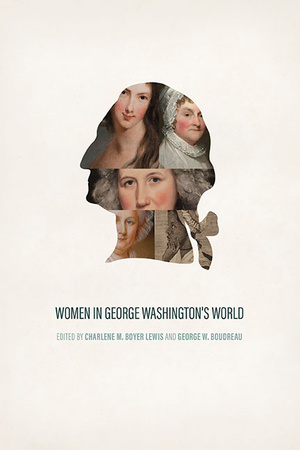
That has given rise to a collection of scholarly essays titled simply The Women of George Washington’s World, officially published later this month.

The women profiled include:
  • the first President’s mother, Mary Washington
  • his wife, Martha Washington
  • wives of significant colleagues like Margaret Arnold and Abigail Adams
  • friendly advisor Elizabeth Powel
  • poet Phillis Wheatley
  • enslaved servants Moll Judge, Ona Judge, and others
  • Ann Pamela Cunningham, the woman who preserved Mount Vernon with a nationwide fundraising campaign
The editors of this collection are Prof. Charlene M. Boyer Lewis of Kalamazoo College and George W. Boudreau of the McNeil Center for Early American Studies. The book’s publisher has shared a short interview with them.

For a longer interview, Roger S. Williams will host Boyer Lewis and Boudreau in the online History Author Talks series on Tuesday, 19 July, starting at 7:00 P.M. Register to listen to this convesation live here, or check back at History Author Talks in a few days for the video.

Monday, July 11, 2022

“A deathlike silence to Col. Washington”

Yesterday I quoted a letter that appeared in the Washington Republican newspaper in September 1822, describing a conversation at Mount Vernon almost fifty years before.

I found another version of the same anecdote, reportedly published in the Hagerstown Torch Light on 21 Dec 1818. Unlike the Washington Republican letter, this article didn’t spark any reprints in other newspapers that I could locate.

My access to back issues of the Hagerstown Torch Light being limited, I actually read this letter in Thomas J. C. Williams’s A History of Washington County, Maryland, published in 1906. (The following year, Williams abridged his text for an article in the Maryland Historical Magazine.)

Here’s the text as published in 1906, with added paragraph breaks:
A large company being at the supper table the last evening they were at Mount Vernon, Col. [George] Washington’s well known servant man, named Billy, entered the room from Alexandria, to which place he had been sent by Col. Washington for newspapers and letters, and delivered some newspapers to Col. Washington, who cast them about midway the table, and requested those who took them up to read aloud such articles of intelligence as they might judge would be desirable to the company.

I being seated in a chair which enabled me to lay my hand on one of the newspapers, took the liberty of so doing, and soon announced to the company a very interesting fact, to-wit: The destruction of the King of England’s sloop of war, called Gaspee, by a party of Yankees; she having when in close pursuit (heavy gale of wind) of a Brother Jonathan coaster (smuggling) missed stays and being so near to the shore, the commander of the Gaspee lost all command of her, and she was run ashore high and dry. The Yankees in a short space of time collected in sufficient force and burnt her.

Captain [Edward] Foye asked me to pass the newspaper from which I had communicated to the company the foregoing (I will venture to say to him) bitter pill read the article and instantaneously declared ore rotundo, that blood must be drawn from the Yankees before they would be taught to conduct themselves as obedient subjects ought to do; and insolently said that he, yes, that he would engage to put down all opposition to the execution of revenue acts which had been lately passed, by the King and Parliament of Great Britain; and moreover that he would undertake so to do at the head of five thousand British troops; which he would march from Boston to Charleston, South Carolina.

Col. Washington was engaged in perusing one of the newspapers, whilst Captain Foye was uttering these insulting and audacious words. Col. Washington withdrew his eyes from the newspaper, placed them steadfastly on Captain Foye, and observed that he (Col. W.) entertained no doubt that Capt. Foye could march at the head of five thousand British troops from Boston to Charleston, South Carolina, but added that he should be obliged to Capt. Foye to inform him (Col. W.) whether he meant as a friend or as an adversary! “If as an adversary,” said Col. Washington, “and you, sir would inform me of your intention so to do a few weeks previous to your entry into the ancient dominion, I would engage to give you a handsome check with the Virginia riflemen alone!”

There were on the supper table, at the time when Col. Washington favored Capt. Foye with the above stated retort courteous, twelve or fifteen wine glasses and two or three decanters of excellent old Madeira. At the instant that Col. Washington uttered the words Virginia riflemen alone, he struck the table with his right hand so violently that the decanters and glasses leaped from their proper places and I expected to have beheld them all prostrate on the table.

Capt Foye made no reply but immediately addressed his conversation to Mrs. [Martha] Washington, at whose left hand he was seated; and during the remainder of the evening he observed a deathlike silence to Col. Washington. Capt. Foye and Lord Sterling departed from Mount Vernon immediately after breakfast the next morning.
This anecdote is very similar to the one quoted yesterday, even including some of the same phrasing. There are also some differences in wording and level of detail, though nothing directly contradictory. That suggests the person telling this tale was rather practiced at it.

The biggest difference between the two versions is that this one didn’t include the paragraph about the Rev. Walter Magowan telling other guests at Mount Vernon that he’d never seen Washington so upset.

I don’t know whether the Hagerstown Torch Light included the name of the person who told this story, but Williams included it in his local history: Benjamin Galloway.

TOMORROW: Who was Benjamin Galloway?

Sunday, July 10, 2022

“He had never seen the master of Mount Vernon so displeased”

Last month I addressed the idea that George Washington attended fireworks in celebration of the second anniversary of the Gaspee attack in 1774.

I found that claim to be unsupported by any evidence in Washington’s writings or in the newspapers of Williamsburg, Virginia.

Taverns occasionally displayed fireworks, Washington occasionally attended, and in this case the date of a fireworks show simply coincided with the anniversary of an event in another colony many miles away.

Another source describes Washington showing a strong response to the Gaspee affair—or, more accurately, a strong response to a Crown official’s response to the Gaspee affair.

This story starts with the founding of the Washington Republican newspaper in August 1822 by the printer Thomas L. McKenny to support the political career of John C. Calhoun, then U.S. Secretary of War. McKenny invited his new readers to send material for him to print. Early the next month, someone from western Maryland supplied McKenny with this letter:
Mr. Printer: The authenticity of the following communication may be confidently relied on by the public, as there are now alive those who heard the person that now furnishes it, narrate the facts contained therein, immediately after his return from Mount Vernon to the city of Annapolis, precisely as he is now about to state them.
B. G.

Washington County, Sept. 5, 1822.

...just after the cloth was removed from the supper table, a man of colour named Billy, Col. Washington’s favourite servant, who had been sent by his master to Alexandria for letters and newspapers, entered the supper room and delivered to his master a large bundle containing letters and newspapers. Col. Washington, with a cast of his hand, placed the newspapers about mid way the supper table, around which there were then sitting a large company, Lord Sterling on the right, and Capt. [Edward] Foye on the left hand of Mrs. [Martha] Washington. When Col. Washington so placed the papers, he requested that if they contained any important information, it might be read aloud to the company.

It so happened that I laid my hand on an Eastern paper, which contained an article of intelligence to the following effect: “That a Yankee smuggler, being pursued by one of the King’s vessels of war, (and I think she was called the Gaspee,) hugged the shore so closely that the former (the wind then blowing extremely hard) missed stays, and ran plump ashore. The neighbouring brother Jonathans quickly collected in great numbers, the tide being at ebb, they soon boarded and burned her.”

I read said article aloud to the company, and was immediately requested by Captain Faye to pass the newspaper to him, who, when he had read the article, he had the audacity to declare that “The Yankees must be phlebotomized!” and that he, yes, that he, “would engage, at the head of five thousand British regulars, to march from Boston to Charleston, South Carolina, and put down all opposition to the revenue acts,” that had been recently passed by the British Parliament for the purpose of raising a revenue in the British colonies.

Col. Washington, at the close of this insulting declaration, instantly fixing his eyes on Capt. Foye, observed: “I question not, Sir, that you could march from Boston to Charleston, South Carolina, at the head of five thousand British regulars: but do you mean to say, Sir, that you could do so, as a friend, or as an enemy? If as the latter, and you will allow me a few weeks notice of your intention, I will engage to give you a handsome check with the Virginia riflemen alone.” When Col. Washington was uttering the words with the Virginia riflemen alone, he struck the table so violently with his clenched hand, that some wine glasses and a decanter near him with difficulty maintained their upright positions.

Captain Foye made no reply; but turned his face immediately towards Mrs. Washington, said a few words to her, looked very silly, and soon after requested to be showed to his chamber!

Col. Washington appeared to be very much displeased. Not a word was said by any of the company, in reference to said article of intelligence, while they remained in the room; but when the Rev. Walter Magowan, who was one of the company, and who had resided some years before in the Mount Vernon family as a private tutor to young [John Parke] Custis, had, with two other gentlemen and myself, arrived at our bed chamber, he remarked that, during the whole time he had lived in Col. Washington’s family, he had never seen the master of Mount Vernon so displeased as he appeared to have been that evening with Captain Foye.
I transcribed this from the 18 Sept 1822 Daily National Intelligencer, one of several newspapers that republished the Washington Republican item in late 1822 and early 1823. I couldn’t unearth the Republican itself. (As usual, I’ve broken the long block of text into paragraphs for easier reading on the web.) 

This letter has rarely been republished or cited since. In fact, I couldn’t find a single Washington biographer who quoted what this correspondent said he witnessed around the start of the year 1773.

TOMORROW: Another version of the same tale.

Tuesday, March 22, 2022

“Wishing you Every Blessing in Time and Eternity”

Among the documents in the Samuel Adams Papers at the New York Public Library is a letter from the politician’s second wife, the former Elizabeth Wells (1735–1808), on 12 Feb 1776.

Small portions of this letter have been transcribed and published, sometimes with an erroneous date and other errors. Here’s my best rendering at the whole text (with added paragraph breaks for easier reading).
Cambridge Feb 12, 1776

My Dear

I Receivd your affectinate Letter by Fesenton [express rider Josiah Fessenden], and thank you for your kind Concern for My health and Safty. I beg you Would not give your self any pain on our being so Near the Camp. the place I am in is so situated that if the Regulars should Ever take prospect hill (which God forbid) I should be able to Make an Escape, as I am Within a few stones Cast of a Back Road Which Leads to the Most Retired part of Newtown.

if a Large Reinforcement should Come in to Boston I propose to send the Best of my things into the Country, and have My Self Nothing but a bed and a few Necessarys, and be in Readiness to Move at an Minutes Warning—

Mr. [John] Adams made me a visit after I Wrote to you, so I Must aquit him of treating me with Neglect. I Should have sent a Letter by Him, but I was unexpectedly sent for three days to dine at Cambridge, With Samey [?] and was treated by General Washington and his amiable Lady With great Friendship.
I hadn’t included Elizabeth Adams on the list of people who visited the Washingtons in Cambridge before, but this letter shows she did.

I’m not sure about the name “Samey” or, if that’s the right transcription, who it referred to. Samuel Adams’s son by his first wife was also named Samuel, but at this point he was a grown man and a doctor serving in the army, and he and Elizabeth were usually more formal with each other.
I was in hopes I should had the opportunity of Returning the Compt. by inviting them to dine with you at our house, but by what Fesenton tells Me I fear I shall not see you so soon as I Flatterd My self. I beg (My dear) you would try to Come if the visit is Ever so Short——

I saw the Doct. [I think this is Dr. Samuel Adams, Jr.] this day he is Well and says he Wrote to you last Week. Jobs Father and his family is come out of Boston, but I have not seen him so that I Cannot tell what he has done with the things we left in his Care.
Job was a servant boy the Adams family had hired a couple of years before. I’ve written about wanting to identify him. This paragraph adds a clue: Job was from Boston, not a rural town, and his father was still alive in 1776.
a great Number of the poor Come out Every Week, and are taken good Care of by the Committe Chose for that Purpose——

I Supose you have heard that a great Number of tories are gone to England, old gray among them. young Mr [William] Peperell has lost his Wife. [Thomas] Flukers youngest Daughter [Sally] is an actress on the stage in Boston, and her Father and Mother gone home. Mr. [James] Otis daughter [Elizabeth] is Married to an Regular officer [Leonard Brown].

they have pulled down a great many houses for fire Wood among nothers in our Neighbourhood are old Mr. grays, Blairs Coles [?] and Walcuts and an Number in long Lain. you see that I Write you all the News however trifling.

that house that Mother Lived in of Mrs. Carnes is Burnt, and and [sic] all her goods taken away by the soldrs. I saw her last Week, she is Well, and Boards at one Mr Sanders at Waltham where she is treated very kind. She has her Board and Hannahs paid out of the donations. She sends you her best Love and Blessing.
Elizabeth Adams’s mother, Susanna Wells, was evidently accompanied by her daughter Hannah (c. 1755–1803), then unmarried.

In the following paragraph, “Polly” was someone Samuel Adams sent greetings to as “Sister Polly,” so I’m guessing she was Mary Checkley (b. 1721), sister of his late first wife. “Surry” was an enslaved woman given to the family, whom at some point Adams freed.
Polly desires her particular Regards to you and thanks you for the kind manner you Mention her in your Letters. We are all in good health. Surry and Job send their duty—after Wishing you Every Blessing in Time and Eternity, I subscribe My self yours
Elizah. Adams

PS. I beg you to Excuse the very poor Writing as My paper is Bad and my pen made with Scissors. I should be glad (My dear) if you should not come down soon, you would Write me Word Who to apply for some Monney for I am low in Cash and Every thing is very dear
—adieu
Back in June 1775, Samuel had closed a letter to Elizabeth, “when I am in Want of Money I will write to you.” The family’s only source of income was the Massachusetts government, which of course was in some flux.