


J. L. BELL is a Massachusetts writer who specializes in (among other things) the start of the American Revolution in and around Boston. He is particularly interested in the experiences of children in 1765-75. He has published scholarly papers and popular articles for both children and adults. He was consultant for an episode of History Detectives, and contributed to a display at Minute Man National Historic Park.

Subscribe thru Follow.it


•••••••••••••••••


Showing posts with label Joseph Dudley. Show all posts

Thursday, September 25, 2025

Boston’s “Sedan for Removing the Sick”
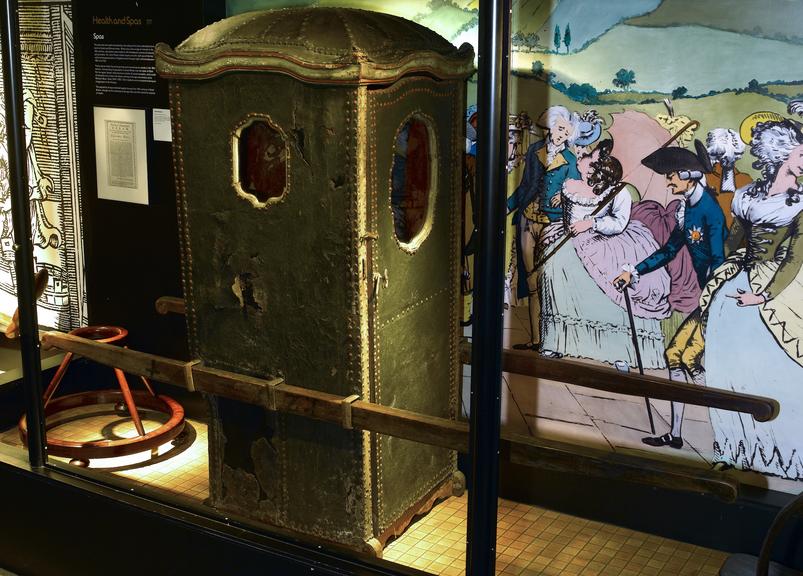
Lining up the sparse mentions of sedan chairs in colonial Boston reveals a clear pattern: they were used to transport sick people.

In 1674 the Rev. John Oxenbridge of the First Meetinghouse suffered a stroke while preaching the Thursday Lecture and “was carried home in a Cedan.”

Thirteen years later, Judge Samuel Sewall wrote in his diary: “Capt. Gerrish is carried in a Sedan to the Wharf and so takes Boat for Salem, to see if there he may find amendment of his Distemper.”

In May 1715, the newly reappointed governor Joseph Dudley was bed-ridden with gout. At the end of the month, Sewall wrote, he came to Boston and “was carried from Mr. Dudley’s to the Town-House in Cous. [William? Jeremiah?] Dummer’s Sedan: but twas too tall for the Stairs, so was fain to be taken out near the top of them.”

Yesterday I listed five times sedan chairs were advertised for sale in eighteenth-century Boston newspapers. I don’t think it was coincidence that four of those ads were estate sales, and the fifth seller died within two years. Those men might have acquired sedans as they or their wives became too ill to walk around.

Boston also had a public sedan chair, operated by the town itself. In March 1739, the Boston selectmen took note of “A Sedan, or Chair belonging to the Hon. Edward Hutchinson Esqr. which the Town has had the loan of for a considerable time.” One of those local elected officials was Thomas Hutchinson, and the sedan owner was his uncle. The selectmen decided that the chair “be effectually Repaired, and made fit for Use, in the best and frugal manner.”

That sedan chair became part of Boston’s public-health infrastructure. On 4 Jan 1757 the selectmen voted “that the Sedan for Removing the Sick be broke to Peices” and “Mr. [Isaac] Cazneau make a good Serviceable Sedan at the Charge of the Town.” Cazneau was a saddler.

In 1760 the Massachusetts General Court bought land in the sparsely populated western point of the Boston peninsula called “New Boston” for a new hospital. Four years later, the town suffered a serious smallpox epidemic. That appears in the selectmen’s records with an uptick in orders for the sedan chair to carry people to that hospital.
  • 16 Jan 1764: “Information was given the Select men by Dr. [Phillip] Cast, that One Hallet who came from Newfoundland a Month past, and Boards at Mrs. Nicholsons in Fitches Alley, has the Symptoms of the Small Pox upon him whereupon the Select men endeavour’d to perswade him to consent to his being removed, and having obtain’d such consent, he was accordingly removed in the Sedan to the Province Hospital at New Boston.”
  • 20 Jan 1764: “The Select men having prevailed with Mr. Adams to consent that his Child should be removed from his House to the Hospital at New Boston, they at about 12. OClock that Night took Mr. Williston and a number of hands with the Sedan to said House, when they received the Wet Nurse and Child and carried them to said Hospital”.
Similar entries appeared through August of that year.

TOMORROW: “Mr. Williston.”

(The picture above shows a sedan chair used to carry medical patients in La Paz, Bolivia, now in the Wellcome Collection in London.)

Thursday, February 22, 2024

Massachusetts’s First Impeachment

In 1706, the elected political leaders of Massachusetts were at odds with the appointed royal governor, Joseph Dudley.

There were many bones of contention, but Gov. Dudley looked most vulnerable for being in league with wealthy supporters who traded with the French in Canada even during Queen Anne’s War.

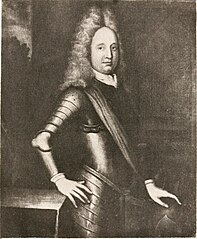
Dudley, a merchant named Samuel Vetch (1668–1732, shown above), and associates used the cover of arranging prisoner exchanges to ship goods, even weapons, to Acadia.

Through a London printer, the Rev. Dr. Cotton Mather published the documents of the case as:
A memorial of the present deplorable state of New-England, with the many disadvantages it lyes under, by the male-administration of their present governour, Joseph Dudley, Esq. and his son Paul, &c.:

Together with several affidavits of people of worth, relating to several of the said governour’s mercenary and illegal proceedings, but particularly his private treacherous correspondence with Her Majesty’s enemies the French and Indians.

To which is added, a faithful, but melancholy account of several barbarities lately committed upon Her Majesty’s subjects, by the said French and Indians, in the east and west parts of New-England.
Elected politicians made up the lower house of the Massachusetts General Court, or legislature. Under the colony’s original charter, that body really was a court—in fact, it was the highest court in Massachusetts.

Under the new charter of 1691, however, that legislature’s power was more limited. It no longer chose the governor. It no longer tried cases. But it did have this ill-defined power called “impeachment.”

The legislators decided to use that to get at Gov. Dudley. The lower house would indict his associates, as the House of Commons could, and the upper house, or Council, would try them.

That effort ran into trouble. The charter limited impeachment to a “High Misdemeanor,” not full criminal charges.

Then Chief Justice Samuel Sewall, a member of the Council, advised that the legislature really didn’t have jurisdiction. Sewall might have hoped the case would proceed in his own court, which could treat the behavior as criminal and even impose the death penalty.

Dudley stepped in and urged the Council to proceed anyway with their misdemeanor charge. That upper house found Vetch and his fellow defendants guilty. They weren’t sure what to do next, but eventually a joint legislative committee produced a “bill of punishment” imposing fines and prison time.

Vetch headed to England to argue his case and wield his influence with the imperial government. The privy council ruled the Massachusetts bill invalid, ruling that the General Court had exceeded its authority.

Vetch, having previously run guns to the Acadians, now presented the Crown with a plan to conquer Canada. Then he came back to Massachusetts to lead the invasion. New England Puritans were ready to get behind any plan to attack Catholics, so they went to war behind Vetch in 1710.

As for impeachment, the Massachusetts General Court didn’t try that again until 1774.

TOMORROW: Impeachment resurfaces.

Wednesday, October 27, 2021

The Expanding “Eleven Names Project”

Wayne Tucker began the Eleven Names Project, as he wrote on his website, to look into people documented as enslaved to the Dudleys of Roxbury, including a Massachusetts governor and a chief justice, in the seventeenth and eighteenth centuries.

By 1826, Tucker found, a crossroads in Roxbury was being called “Dudley Square” after the prominent family that once lived there. The Boston city government officially adopted that name around the turn of the next century, during the Colonial Revival.

In 1910 there was a proposal to name the square after Edward Everett Hale because no official “Dudley” signs had ever gone up. As if New Englanders need road signs! The Boston city council decreed that locals knew that place was Dudley Square and, more or less, that anyone who didn’t already know that didn’t really belong there.

Over the next century the surrounding neighborhood changed to become largely African-American. In December 2019, following a vote in nearby precincts, the city changed the area’s official name to Nubian Square. The Dudley family’s ties to slavery, both making it legal in the Massachusetts Bay Colony and practicing it, were factors in that decision.

Recently Tucker has expanded his research into tracking another set of enslaved people through the archives, those enslaved to two prominent men in Abington:
  • The Rev. Samuel Brown (1687-1749), the town’s first minister and a traditional “Old Light.”
  • Josiah Torrey (1720-1783), a wealthy farmer who married Brown’s widow and then married the widow of Brown’s successor.
Because Torrey’s death and will coincide with the Massachusetts high court’s decision to render slavery unenforceable in the state, the fates of this group of people also show how the local institution broke down.

Thus, Tucker writes about one mother and son:
Besse Goold was born into slavery on Reverend Brown’s farm in 1734 to the abovesaid Cesar and Flora; from whence the Goold surname came, it is unknown. Besse would in turn bear a child in 1759 named Brister Goold while living in bondage at the Torrey farm.

A search of probate file archives yields Josiah Torrey’s original 1783 will, said to be in his handwriting. Directly under a £3 donation to the Congregational church, he returns Besse her stolen freedom. Below that, we see Torrey returns the freedom of Brister upon his 25th birthday, which fell a year later in December of 1784. Surprisingly, Torrey further bequeaths Brister 15 acres of land.

Abington’s vital records show that Brister died in 1823, aged 63, where he is categorized as “a person of color”; luckily, his will survives in the archive, too. We see that he still owned property left to him by Torrey and that his widow Phebe is executrix of his estate.
The stories that Tucker has pieced together about Brister Goold, his wife Phebe Wamsley, and their children include preserved Native traditions, service in the Revolutionary War, and of course (given the nature of these sources) small-town bureaucracy.

That’s a reward of digging into the lives of ordinary people in New England communities: following all the connections eventually unearths a range of stories connected to nearly every part of society and nearly every endeavor.