J. L. BELL is a Massachusetts writer who specializes in (among other things) the start of the American Revolution in and around Boston. He is particularly interested in the experiences of children in 1765-75. He has published scholarly papers and popular articles for both children and adults. He was consultant for an episode of History Detectives, and contributed to a display at Minute Man National Historic Park.

Subscribe thru Follow.it


•••••••••••••••••


Showing posts with label historical fiction. Show all posts

Saturday, July 11, 2026

New Dramas at Old Places in Newport, Deerfield, and East Granby

This is a very busy summer for Plays in Place, which works with historic sites to create new plays built on their past, informed by their archives, and designed for their spaces.

At the Hunter House in Newport, Rhode Island, Newport Mansions presents Loyalty or Liberty, a trio of short plays set between 1778 and 1781 as control of that port changed hands.

“Dinah” by Ken Green follows an enslaved woman in a Loyalist household whose husband plans to enlist in the Continental Army, seeking freedom for the family. “For Love and Glory” by Patrick Gabridge dramatizes the conference between Axel von Fersen, aide-de-camp to Gen. Rochambeau, and Adm. de Barras, who has to be convinced to sail his fleet to Yorktown. “Where We Once” by Lily Mathews picks up the story of Dinah’s enslaver, Sarah Wanton, as she faces life in an independent republic. These plays are directed by Rachel Walshe and produced by Jessica Chace.

Loyalty or Liberty will run Tuesday and Saturday evenings through 1 September. Normally the plays will be staged outdoors, overlooking Narragansett Bay, but in bad weather the production will move into the Guild Hall at St. John’s Church. Buy tickets here.

Historic Deerfield is hosting A Stake in the Ground: 1774, three short plays about conflicts in that Loyalist-leaning town as Massachusetts slid out of royal control.

In the summer of 1774, Patriots brought a Liberty Pole into Deerfield. “The Liberty Lark” by Talya Kingston, “Jinny and Cato” by Valyn Lyric Turner, and “Sparks on Dry Tinder” by Patrick Gabridge explore the political divisions, tangled family relations, and complexities of enslavement stirred up by that political act and the protest against it. These dramas are directed by Brianna Sloane and produced by Talya Kingston.

Performances will take place on Friday and Saturday evenings and Sunday afternoons through 16 August. A Stake in the Ground will be staged outside, with the audience walking to each location and sitting on folding chairs. On 31 July–2 August, and in very bad weather, the same plays will be performed inside the Deerfield Community Center for a more traditional and accessible theatrical experience. Tickets available here.

At the Old New-Gate Prison & Copper Mine in East Granby, Connecticut, visitors can take in The Slippery Truth: Prisonbreak at New Gate by Patrick Gabridge, directed by Zoë Golub-Sass and produced by Nicole Young-Martin.

On 18 May 1781, a group of captive Loyalists rushed up a 35-foot ladder and overpowered their guards, killing one man before escaping into the night. Was this brave resistance by political prisoners or a desperate blow by criminals? Did they have inside help? Prison trustee John Forward interrogates guards and recaptured prisoners to find the truth.

The Slippery Truth will be produced indoors—to be precise, inside the mine. The audience will enter via 33 steps and a 100-yard loop starting at 35 feet below ground and descending to 75 feet below. The shortest tunnel is 4 feet. The mine is always 52 degrees and wet. Strollers, wheelchairs, walkers, and similar devices are not permitted, and visitors should consider their medical history and physical limitations before attending.

Performances will happen on Friday, Saturday, and Sunday evenings through 30 August. Tickets at this page.

Friday, June 26, 2026

Celebrating the Sestercentennial at Adams National Historical Park

Adams National Historical Park will host a full week of events commemorating the Sestercentennial of the Declaration of Independence, which John Adams had a little something to do with.

Unless otherwise noted, all these events will take place on the grounds of the Old House at Peace field, located at 135 Adams Street in Quincy.

Friday, 26 June, 6 P.M.
Slice of History
A night of pizza and rewatching the animated cartoon Liberty’s Kids. This event is intended for viewers ages 18–30, who might enjoy memories of the original broadcasts, but all are welcome.

Saturday, 27 June, and Sunday, 28 June
The Adamses and the American Revolution
Adams Farm at Penn’s Hill, 141 Adams Street
Ranger talks and special programs sharing the experiences of the Adams family during the American Revolution and their contributions to American independence.

Sunday, 28 June, 4 P.M.
Jefferson & Adams
This stage play by Howard Ginsberg dramatizes the friendship between John Adams, Thomas Jefferson, and Abigail Adams. Actors Bill Barker, Sam Goodyear, and Abigail Schumann bring to life the fifty-year relationship—often contentious, sometimes turbulent, and ultimately enduring.

Tuesday, 30 June, 6 P.M.
My Dearest Friend
Written by Peter Manos, this play reveals the American Revolution and the founding of the United States through the rich, witty, and passionate correspondence between Abigail and John Adams. They spent years apart, sometimes on separate continents, but stayed intensely in love for more than half a century.

Wednesday, 1 July, 10 A.M. to 4 P.M.
Stories of the American Revolution
Learn more about the many stories of the American Revolution through ranger talks and special programs.

Wednesday, 1 July, 6 P.M.
Quincy’s Women on the Page
Novelists Stephanie Dray, Laura Kamoie, and Jodi Daynard share their experiences bringing Quincy women, including Abigail Adams, to life through historical fiction.

Thursday, 2 July, 11 A.M., 1 and 3 P.M.
Independence Forever: The Continental Congress
Become a delegate to the Second Continental Congress and re-enact the passage of the Declaration of Independence. This interactive event is an invitation to adults and children to take part in the debate about whether to remain loyal to the British crown or to create a new nation.

Friday, 3 July, 11 A.M., 1 and 3 P.M.
John and Abigail Adams
The couple share their experiences during the American Revolution. Music by the Conchords at noon and 2 P.M.

Saturday, 4 July, 11 A.M., 1 and 3 P.M.
Readings of the Declaration of Independence
Lend your voice to these live public readings of the Declaration of Independence 250 years after it was adopted. The afternoon readings will be held at the Adams Farm at Penn’s Hill, the Adamses’ home during the American Revolution.

Sunday, 5 July, 10 A.M. to 4 P.M.
Stories of the American Revolution
Learn more about the many stories of the American Revolution through ranger talks and special programs.

These special programs are all free to attend and don’t require reservations. Parking is at the Visitor Center at 1250 Hancock Street, half a mile away. Also half a mile away is the Quincy Center station on the M.B.T.A. Red Line. Events may be modified or cancelled due to especially hot or stormy weather.

Wednesday, February 18, 2026

A Last Word on Basile Boudrot

Whenever I recount a story at length, I like to add some new sources, connections, or interpretations. I don’t want to just repeat what other writers have said.

But when I started researching suspected murderer Basile Boudrot, I couldn’t find that sort of material. I felt so stymied that I thought I’d have to confine the story to my Ko-fi updates, where I’ve started to share loose ends and research in progress. 

Ultimately, I spotted enough sources to fill the past several postings. But like everyone else who’s written about this case, I hit a brick wall in August 1776, when the Continental Congress voted to send Boudrot to Massachusetts.

As my closing thoughts, I’ll offer this scenario for how the sources fit together. Bear in mind that this is only one possible reconstruction, perhaps tinged by a fiction writer’s search for plot twists, liable to be upended with a single new document. But here goes.

February 1772: Capt. Thomas Parsons and his eight-man crew sail a schooner (name unknown) out of Newburyport, headed for the Caribbean.

March 1772: Parsons’s ship founders in a storm that blows a lot of vessels north. Meanwhile, Basile Boudrot boards a ship in France, heading to Nova Scotia. Along the way he opens a letter from his relative Marguerite Landry to the D’Entremont family, describing where their relatives hid money as the British expelled Acadians almost twenty years before.

April 1772: Boudrot reaches Nova Scotia and registers for his land grant on St. Marys Bay. But first he follows the directions in the Landry letter and unearths “1004 pieces of money.” Meanwhile, people in Newburyport worry about Thomas Parsons’s ship; no one reports seeing it in the Caribbean.

May 1772: Boudrot visits the D’Entremonts in Pubnico, assuring them that Marguerite Landry and her family are in good circumstances in France. Then he takes off for the province of Canada, abandoning his land since he’s already found a fortune with much less work. Benoni d’Entremont gets suspicious and writes to Landry in Cherbourg.

Summer 1772: The D’Entremonts ask questions in Nova Scotia about Boudrot. Passing ship captains from Massachusetts, including Hector McNeill, ask questions about the missing schooner. Locals talk about Basile Boudrot suddenly having a lot of money and no good explanation for it.

Fall 1772: Folks in Newburyport piece together information and conclude that Basile Boudrot was behind the disappearance of Parsons’s schooner, that he got suddenly rich from plundering that ship after killing all its crew.

Spring 1773: Marguerite Landry writes to the D’Entremonts from Cherbourg, describing the buried money and reporting that French sea captains have spotted Basile Boudrot in North America. In Massachusetts, the Parsons family presses for an inquiry into the alleged attack on the schooner.

Late 1773: Basile Boudrot has spent through most of his windfall. He picks up whispers that the D’Entremonts and Yankee mariners are all hunting him. He adopts the alias “Dugan” to work on ships around Montréal, Lake Champlain, and points west.

Fall 1775: Americans invade Canada, besieging Québec. Massachusetts mariners Hector McNeill and William Farris leave the city and go to work for the Continental Army.

Spring 1776: As the Continentals withdraw to Montréal, McNeill spots “Dugan” working on another supply ship. McNeill identifies this man as Basile Boudrot and demands his arrest.

Summer 1776: The Continental Army holds Boudrot prisoner in New York City until the Congress endorses Gen. Samuel Holden Parsons’s plan to send him to Massachusetts to stand trial.

Fall 1776: Soon after Boudrot reaches Massachusetts, the authorities realize the accusation against him doesn’t hold water: he wasn’t even in North America when Thomas Parsons’s ship disappeared. Out of embarrassment, they drop the case and never mention it again. People in Newburyport persist in believing that Nova Scotians plundered the schooner. Basile Boudrot disappears once more.

[The photograph above shows Smuggler’s Cove park on St. Marys Bay, Nova Scotia. Nothing says “law-abiding maritime community” like naming a place Smuggler’s Cove.]

Monday, January 19, 2026

“It was attributed to General Prescott”

After the British army and the New England provincials went to war in April 1775, people stopped worrying about political pamphlets like A Letter from a Veteran, to the Officers of the Army Encamped at Boston.

John Adams broke off his “Novanglus” essays. The New York printer Hugh Gaine struggled to remain politically balanced, literally printing on both sides of the conflict. Most prewar essays fell into obscurity.

Nearly half a century after A Letter from a Veteran appeared, William Tudor, Jr. (1770–1830, shown here), wrote about it in The Life of James Otis, of Massachusetts:
A few of the officers felt an esteem for the people, and were reluctant to engage in a civil war, which they knew would bring great misfortunes upon the country, and as they supposed, overwhelm it. There was to much folly and disgusting arrogance in many of the subalterns, and careless ignorance about the whole subject of dispute, that one of their superior officers published a small pamphlet, entitled, “A letter from a Veteran to the Officers of the army encamped at Botton.” It is remarkably well written, and while it justifies his own government, reproves the frivolity and rashness that treated the Americans with contempt. It was attributed to General Prescott.
Tudor didn’t state a source for this information, and the expression “It was attributed” suggests he wasn’t completely sure about it.

That book might have given the pamphlet more visibility. James Fenimore Cooper took a passage from A Letter from a Veteran (imperfectly cited) as a chapter epigraph in his 1825 novel Lionel Lincoln: or, The Leaguer of Boston. His protagonist was a British army officer with conflicting loyalties.

Tudor’s emphasis on how A Letter from a Veteran “reproves” British officers who showed contempt for Americans might also have given people a false sense of its overall argument. It expressed very little sympathy for New Englanders.

In 1860 a catalogue of the Massachusetts Historical Society library attributed A Letter from a Veteran to, of all people, Col. William Prescott, the commander of the provincial redoubt at Bunker Hill.

That made no sense. William Prescott was never a high officer in the regular British army or, so far as I see, any sort a general. He wasn’t a political writer, and he certainly wouldn’t have published a criticism of New England religious zealotry.

Nonetheless, the attribution to William Prescott was repeated in other American publications for the rest of the nineteenth century.

TOMORROW: General Prescott and General Prescott.

Saturday, November 29, 2025

Slocum’s “Authentic Narrative”

In 1844, John Slocum published An Authentic Narrative of the Life of Joshua Slocum: Containing a Succinct Account of His Revolutionary Services through a printer in Hartford.

This book fit into a growing genre: memoirs of unheralded Revolutionary War veterans looking back from old age. The most vital of these was Joseph Plumb Martin’s Narrative of Some of the Adventures, Dangers and Sufferings of a Revolutionary Soldier (1830), but I have a fondness for The Revolutionary Adventures of Ebenezer Fox, of Roxbury, Massachusetts (1838).

U.S. pension laws had encouraged veterans to write down their memories in order to authenticate their claims. I posit that that led men toward composing and then publishing these longer autobiographies. 

Joshua Slocum had died in 1816, at about the age of fifty-six, so he didn’t feel that impetus. Instead, his son John set down the veteran’s stories, shifting between third person, first person, and quoted documents.

Or so John Slocum claimed. He acknowledged pulling large sections of the book from other sources, such as the chapter on the capture of Fort Ticonderoga, which his father had no part in. But in truth he borrowed a great deal more. Over and over, the details in this Authentic Narrative just don’t add up, exposing a later perspective shaped by borrowed details and wishful thinking.

The book starts out by saying: “The subject of this sketch was born in the town of Franklin, Franklin county in the State of Massachusetts, in 1760.” The town of Franklin was never in Franklin County, and neither of those places legally existed in 1760. It’s possible Joshua Slocum was born in the town of Wrentham, which calved off Franklin during the war; there was a Slocum/Slocomb family there, but his birth doesn’t appear in the surviving vital records.

On the day after the town received news of the fighting at Lexington, the Authentic Narrative says, the “Franklin company” set out toward Boston. By the time those men made camp, “The intelligence of the surrender of Ticonderoga and Crown Point, with all their valuable stores, had already reached Roxbury.” That would mean the company took more than a month to travel fifty miles.

Somehow Joshua Slocum wrote a dramatic letter to his Loyalist father from Roxbury on 16 June 1775 but was also in one of the regiments based north of the Charles River that fought the Battle of Bunker Hill the next day.

In fact, Joshua was wounded—but he refused to leave his post! And a good thing, too:
Among the [British] killed was Major [John] Pitcairn, one of the flower of their army. I shall always believe that it was my rifle that sent him to his final account—for, as the enemy ascended the hill, I selected an officer answering his description, for a target, and as I took good aim, and my rifle seldom missing its object, I am very certain I killed him.
This account, then, is yet another claim to have killed Maj. Pitcairn. The narrator almost always refers to his weapon as a “rifle,” though such guns were almost unknown in New England at the time.

A month later, the narrator claims to have been about to volunteer for Col. Benedict Arnold’s expedition to Québec when he received a letter from a family friend dated 20 July. Since Arnold started to recruit in early September, that letter must have traveled even more slowly than the “Franklin company.”

The letter invited Slocum to leave the Continental Army camp, go out to the recruiting station at Worcester, and become a clerk in the friend’s company. Like most armies, the real Continentals frowned on soldiers deciding all by themselves where they’ll serve, but that’s what this account said Slocum did. 

And on it goes. Massachusetts Soldiers and Sailors of the Revolutionary War states that a Joshua Slocumb of Franklin served in the Rhode Island campaign of 1779–80. Ironically, the Authentic Narrative never mentions Rhode Island—most likely the one stint of military service by John Slocum’s father.

In 1882 Dr. Charles Elihu Slocum published A Short History of the Slocums, Slocumbs and Slocombs of America. Ordinarily such family histories are credulous toward sources that offer information and reflect well on members of the clan. But Dr. Slocum wrote of the Authentic Narrative:
This little book—of which but few copies can now be found—is written in a style interesting to the young, but it is open to criticism in some of its references to contemporaneous history.
In other words, don’t believe a word of it.

TOMORROW: The arrival of Washington through Slocum eyes.

Thursday, September 11, 2025

Johnny Tremain on the Screen and the Page

Esther Forbes’s Johnny Tremain remains the foremost American novel on the Revolution, its coming-of-age story for the title character mirroring how the society around him moves toward independence.

In the next week some North End institutions will celebrate the cultural heritage of that book.

Friday, 12 September, 7 to 9:30 P.M.
A Revolutionary Movie Night
Christopher Columbus Park

Join the Paul Revere House and the Friends of Christopher Columbus Park for a free movie night in honor of the 250th anniversary of Paul Revere’s Midnight Ride. Come meet Paul Revere, enjoy 18th-century tunes on the Fife and Drum, and then watch an outdoor screening of Thomas Edison’s silent short movie “The Midnight Ride of Paul Revere” followed by the iconic Disney classic Johnny Tremain. Popcorn will be provided by Joe’s Waterfront; bring your own seating for the lawn.

Wednesday, 17 September, 7 to 8:30 P.M.
Book Chat: Johnny Tremain with Patrick O’Brien
On Zoom through Old North Illuminated

Written in 1943 by Esther Forbes, Johnny Tremain is among the best-selling children’s books of the 20th century. Intended for middle schoolers, the novel’s protagonist is 14-year-old Johnny Tremain, an apprentice silversmith working in Boston in the 1770s. When Johnny’s dreams of becoming a silversmith are dashed by a tragic accident, he takes a new job as a horse-boy, riding for the patriotic newspaper the Boston Observer and as a messenger for the Sons of Liberty. Soon, Johnny is involved in the pivotal events of the American Revolution, from the Boston Tea Party to the first shots fired at Lexington, while he encounters historical figures like John Hancock, Samuel Adams, and Dr. Joseph Warren. The book won the 1944 Newbery Medal and was adapted as a Disney film in 1957.

Patrick O’Brien, a history professor at the University of Tampa, will deliver a short presentation on the historical context surrounding the novel and then lead a discussion exploring themes from the book and what it means today as we approach America’s 250th anniversary. The discussion will be kind of like a virtual book club! This event is perfect for anyone who remembers reading Johnny Tremain as a child and for teachers and educators who would like to teach this novel with their students.

Register for this online discussion here while making a donation to Old North Illuminated for any amount. You’ll receive a Zoom link for the event.

Here are a couple of observations of my own. First, Johnny Tremain is certainly accessible to middle-school readers, and it won the Newbery Medal for best children’s book of the year. However, it was explicitly published as “A Novel for Old & Young.” That line has been dropped from the title page of more recent editions. [I have three copies of the book, in case you wonder.]

I don’t recall how it happened, but Johnny Tremain came up in my online talk for Old North Illuminated back in June. At the end of the novel the newly independent Johnny learns that his father was a Frenchman, and he experiences an emotional reconciliation with his departing Loyalist “cousin” even though her father cheated him. Symbolically, I observed, Forbes was bringing together American, French, and British—right in the middle of World War 2.

As for the movie, it’s definitely the “Disney version” of the novel. It made Johnny more admirable at the outset and his injury less long-lasting. It focused on rousing group politics and left out the deaths of some major characters. The movie also falls neatly into two halves because it was produced to be two episodes of The Wonderful World of Disney, though the studio did give it a cinema release. Folks can enjoy the movie for nostalgia, but shouldn’t miss out on the greater depth of the novel.

Here are more of my ramblings over the years on Johnny Tremain, the book (mostly) and the movie.

Saturday, March 22, 2025

Anderson on Rebellion 1776 in Cambridge, 1 Apr.

Laurie Halse Anderson’s latest novel about the American Revolution is set in Boston: Rebellion 1776.

Anderson has won awards for her Seeds of America Trilogy (Chains, Forge, and Ashes), as well as her earlier novel Fever 1793 and the picture book Independent Dames: What You Never Knew about the Woman and Girls of the American Revolution.

She’s even better known for her contemporary novel Speak, which is frequently challenged in public schools and libraries because it addresses the problem of rape. She’s one of the handful of American authors who have won the Astrid Lindgren Memorial Award for children’s literature.

In an interview with Publishers Weekly, Anderson described the scope of this new book:
My book covers the traumatic effects of the Siege of Boston, the growing political divide within families and communities, and the frightening smallpox epidemic, which threatened everything. One reason I continue to write about this era is because I think we could do a better job depicting the state of the colonies at the start of the Revolution in recognizing that independence was not a done deal.
As a protagonist Anderson created a thirteen-year-old girl named Elsbeth Culpepper, orphaned but taking advantage of the chaos and need for labor in Boston after the British evacuation to keep herself away from the Overseers of the Poor.

Anderson’s long conversation with Horn Book editor Roger Sutton goes deep into her research and storytelling processes:
First I had to understand what the cultural, financial, and sociological constraints were then on a thirteen-year-old kitchen maid. But then came the chaos of the siege, then the changing of the armies, and then it took a while for Boston's government to get up and running again. That chaos opened the door for me and my character to break some rules, some constraints. And then as society gets its act back together, the walls and rules come back up again.
I recommend that interview for anyone writing historical fiction.

Anderson will be speaking and signing books at a ticketed event for Porter Square Books on Tuesday, 1 April. That will happen at the Marran Theater in Cambridge. Admission is $25 (which includes a signed book) or $10 (which doesn’t).

Monday, August 12, 2024

“Rebel Town” in Lenox through 18 Aug.

This week John Alan Segalla’s musical Rebel Town is being performed at the Duffin Theater in Lenox.

The ticket page says:
Rebel Town plunges you into the heart of Boston's political crisis in 1773. The story begins on the bustling wharfs, three days before the Boston Tea Party as Parliament’s Tea Act & the unlawful [sic] tax on tea ignites a firestorm of resistance led by charismatic Sam Adams, who rallies a town meeting to confront tyranny with three tea ships anchored in Boston Harbor.

Amidst the chaos, a 13-year-old apprentice Peter Slater Jr. dreams of joining the Sons of Liberty as carpenter William Grey and his comrades guard the ships, preventing customs officials from unloading the pernicious tea. With days to spare until the ships must be unloaded by law, the men and women of Boston make plans to deal with the tea in a manner that King George would never expect.

From lively gatherings and dance numbers at Liberty Tree to secretive schemes at the Bunches [sic] of Grapes Tavern, these passionate rebels—including John Hancock, Paul Revere, and Mercy Otis Warren—grapple with the weight of their defiance, knowing they risk being branded traitors or worse, being hanged for treason if caught. Daughters of Liberty including Sarah Grey, Abigail Slater and the women of the town play their own unique role in considering the consequences, their own rights, and aspirations for the future.
Segalla directed this production, as well as writing the whole show starting during the pandemic. It was supposed to be performed in May in the theater at Berkshire Community College, but those performances had to be canceled.

This week’s run through Sunday, 18 August, therefore appears to be the show’s debut. Naturally, Segalla hopes to bring Rebel Town to Boston.

Sunday, June 09, 2024

Revolution’s Edge Returns to Old North

Old North Illuminated has brought back Revolution’s Edge, its thought-provoking play set inside the church on 18 Apr 1775.

Patrick Gabridge wrote this drama to be performed in Christ Church, Boston, about actual people in that congregation in 1775, using the historical record and some dramatic imagination. It’s directed by Alexandra Smith and produced by Jess Meyer for Plays in Place.

It looks like there’s a new cast this summer. The Rev. Mather Byles, Jr., a Loyalist at odds with most of his flock, is being played by Eric McGowan and Tim Hoover. Cato, the African man enslaved by Byles and the play’s narrative voice, is played by Stetson Marshall and Joshua Lee Robinson. Captain John Pulling, Jr., a church vestryman and Patriot activist, is played by Dustin Teuber and Kevin Paquette.

I wrote about the play last summer. The approaching Sestercentennial anniversary of the day it depicts makes it even more resonant.

Revolution’s Edge lasts about forty-five minutes. It will be performed four nights a week through 10 August. For more information, a video preview, and tickets, visit Old North Illuminated.

Monday, March 18, 2024

“Dill” Screenplay Reading in Old South, 19 Mar.

On Tuesday, 19 March, Revolutionary Spaces’s Old South Meeting House will host a live reading of a screenplay, performed by local actors and accompanied by music and sound effects.

The drama is called Dill, described as “inspired by real people and real events on the Cape Ann Shore in Massachusetts during a tumultuous time on the cusp of the American Revolutionary War.”

At the risk of spoilers, I’m guessing the central character, “an enslaved woman named Dill, short for Deliverance, who…finds herself in a love triangle between two men,” is based Deliverance Symonds. Abram English Brown wrote a chapter about Symonds in Beneath Old Hearth-Stones (1897).

After the reading, there will be a discussion of the screenplay’s historical context featuring these experts:
  • Lise Breen, author of “Hidden City: Slavery and Gloucester’s Quadricentennial” in Gloucester Encounters: Essays on the Cultural History of the City 1623-2023 and coauthor of Objects of Myth and Memory: American Indian Art at the Brooklyn Museum.
  • Nerissa Williams Scott, producer of Dill and other films, C.E.O. and Lead Creative Producer of That Child Got Talent Entertainment (TCGT), and an affiliated faculty member at Emerson College in the Business of Creative Economy and Visual Media Art departments.
  • Beth Bower, formerly staff archaeologist at the Museum of Afro American History and archaeological and historic resources program manager for the Central Artery project, now studying the 1750–1850 African American community in Salem.
  • Jeanne Pickering, an independent scholar of slavery in eighteenth-century Essex County who maintains the research databases of NorthShoreSlavery.org.
The event announcement does not name the author of the screenplay.

This is a free event, but registration is requested. Doors will open at 6:30 P.M., with light refreshments available, and the performance is scheduled for 7:00.

Wednesday, August 23, 2023

Two Online Discussions of John Adams

Here are a couple of online events focusing on John Adams folks might be interested in.

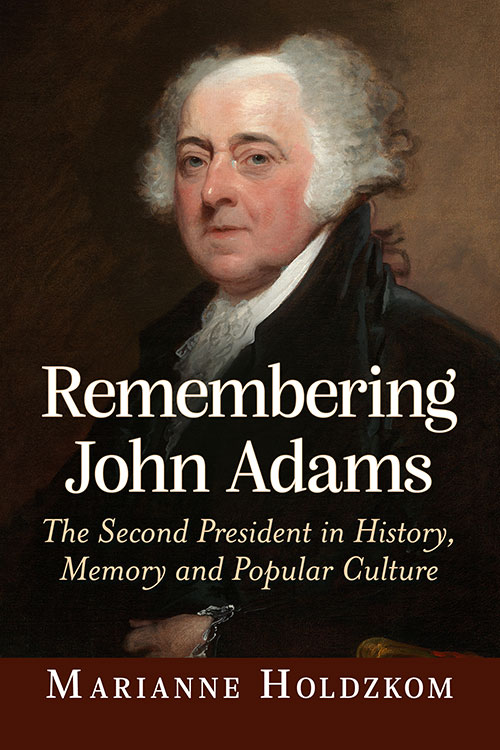
On Thursday, 24 August, the hosts of the History Camp discussions will talk about Remembering John Adams: The Second President in History, Memory and Popular Culture with author Marianne Holdzkom.

The copy for the book says, “The second president is one-dimensional at times, and perhaps best known to the public as ‘obnoxious and disliked,’ but he is always fascinating.” That phrase comes from the musical 1776, which gives Adams the central role. It doesn’t come from any of Adams’s contemporaries writing about him. Indeed, the closest antecedents are in memories Adams himself wrote about how his political opponents viewed him, and he tended to puff up the severity of the opposition he faced.

According to reviews like this one, Holdzkom considers how Adams appears in his descendants’ writings, in more recent historians’ books, in the two big Broadway musicals and the H.B.O. miniseries, and even in Ezra Pound’s Eleven New Cantos.

This discussion will become available through the History Camp website and allied pages at 8:00 P.M.

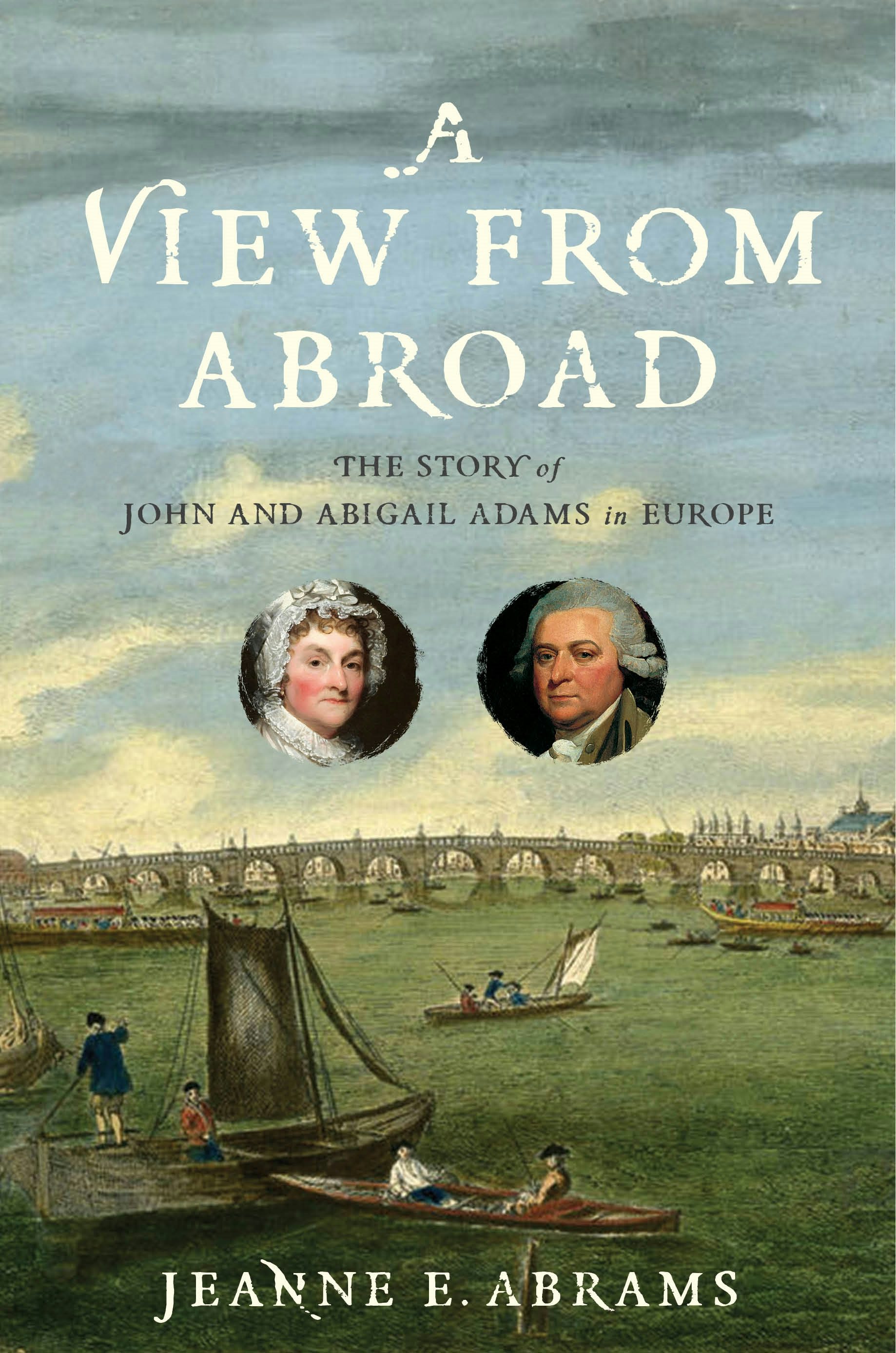
On Tuesday, 29 August, the American Revolution Institute will share an online lecture by Prof. Jeanne E. Abrams of the University of Denver based on her book A View from Abroad: The Story of John Adams and Abigail Adams in Europe.

The Adamses spent a few years together in Europe in the 1780s during his diplomatic work. Abrams will discuss how in this time “the Adamses and their American contemporaries set about supplanting their British origins with a new American identity.”

That event is scheduled to take place from 6:30 to 8:30 P.M., leaving ample time for questions. Sign up through this page.

Saturday, July 08, 2023

Peeking in on “Revolution’s Edge”

A month ago I noted the upcoming premiere of “Revolution’s Edge,” a play dramatizing the stresses affecting three men associated with Christ Church in the North End on 18 Apr 1775.

The three characters are the Rev. Dr. Mather Byles, Jr., planning to leave that church; his enslaved servant, Cato, worried about being removed from his family; and John Pulling, a merchant captain and vestryman who’s also interested in the movement of British soldiers. Byles is a Loyalist, Pulling a Patriot, and for Cato the lack of liberty cuts most deeply.

I attended that first performance at Old North and can recommend the show as a thoughtful exploration of how the Revolution’s big issues intersected with individual desires and needs. Performances run through 19 September.

WBUR’s report on the play included this passage:
Nathan Johnson, the actor who plays Cato, says it is one of the most important projects in which he’s been involved.

Johnson, who is Black, promised himself early in his acting career that he would never play an enslaved person. But the depiction of Cato, and the importance of the play’s message, made the role too compelling to pass up.

“I want everyone to see that we have all something to contribute to our history,” Johnson said. “I want everyone to see that it is not a matter of white and Black. It is a matter of America. It is a matter of progress. It is a matter of stakes, it is a matter of tension. And not just for Pulling and Byles, but for Cato as well.”
Cato is the least documented of the three characters. Playwright Patrick Gabridge had to gather vital records from Boston, Roxbury, and Nova Scotia, and then make an educated assumption that all those mentions of a man named Cato related to the same person.

To compound the challenge of building Cato’s character when none of his words survive, an enslaved man in a room with his owner wouldn’t have been able to speak his mind.

Gabridge turned that vacuum into an advantage by making Cato the character who addresses the audience, introducing the historic situation, the other characters, and his own unvoiced thoughts.

For folks who want to hear more, WBUR also ran an audio report.

The photo above of Johnson performing as Cato was taken by Evan Turissini, who plays Pulling, as he waited to enter.

Thursday, June 29, 2023

When Phillis Met Benjamin

On 7 July 1773, nearly two hundred fifty years ago, Benjamin Franklin wrote to his relative Jonathan Williams, Sr., in Boston:
Upon your Recommendation I went to see the black Poetess and offer’d her any Services I could do her. Before I left the House, I understood her Master was there and had sent her to me but did not come into the Room himself, and I thought was not pleased with the Visit. I should perhaps have enquired first for him; but I had heard nothing of him. And I have heard nothing since of her.
The “black Poetess” was, of course, Phillis Wheatley, in London to finalize arrangements for the publication of her Poems on Various Subjects, Religious and Moral.

Franklin Papers editors suggest that Nathaniel Wheatley kept away from the discussion because of the previous year’s Somerset v. Stewart case. Williams later apologized for having set up the meeting if the young man was going to behave that way. I think there could be any number of other reasons for his absence; we don’t have the Wheatleys’ side of this encounter.

Regardless of any awkwardness surrounding that event, Franklin’s letter shows that he and Wheatley did meet face to face. He came away with no reason to doubt what Bostonians reported about her intelligence and poetic skill.

Debbie Weiss wrote a play inspired by that event, “A Revolutionary Encounter in London.” It was an online presentation through the Massachusetts Historical Society a couple of years ago during the plague, and there are other videos online as well.

On Saturday, 1 July, the Lexington Historical Society will host a staged reading of “A Revolutionary Encounter in London,” directed by Weiss with Cathryn Phillipe portraying Phillis Wheatley and Josiah George as Benjamin Franklin. That presentation will start at 6:30 P.M. in the Lexington Depot. Tickets are $25, available here. Society members get a discount on tickets and can stay to talk with the actors and playwright-director over tea and desserts.

Weiss, Philippe, and George will next bring the show to the Boston Tea Party Ships & Museum on Thursday, 6 July, at 7:00 P.M. I think seats are included in the museum admission for that day.

Wheatley stayed in London for only about six weeks. Learning that Nathaniel’s mother Susannah Wheatley was ill, she left before her book was printed. The publisher shipped copies to Boston later in the year for her to sell.

Unfortunately, those books traveled on the Dartmouth, which also carried the first consignment of East India Company tea to reach Boston. Hence the Tea Party connection.

Thursday, June 01, 2023

Franklin and the Monks of Medmenham

Over forty years ago I bought a paperback copy of Murder in the Hellfire Club by Donald Zochert. It was a historical murder mystery written in 1978 that featured Benjamin Franklin as the detective.

I never finished that book, but I suspect I’ve still got it. Somewhere.

I recalled that book after recent reading about the mid-1700s “Monks of Medmenham Abbey”—a group which, as discussed here, was dubbed a “Hellfire Club” by authors only in the next century. Franklin’s alleged connection to that organization struck me as a good case study of what we actually know.

Several books about this “Hellfire Club” claim that Franklin joined the group in 1757 or shortly afterward. He came to Britain that year and stayed until 1762. The Medmenham group had not yet fallen apart over political offices. Franklin knew lots of people, so a connection was at least possible.

But as for evidence of a link between Franklin and the Medmenham Monks? Well, there really isn’t any. One author, Geoffrey Ashe, acknowledged this in a backhanded way in his 1974 book, The Hell-Fire Clubs: A History of Anti-Morality:
By the later 1750s a change had set in. Some of the senior brethren were losing interest, and were being replaced by a fresh intake. To this phase, if to any, belongs the reputed membership of Benjamin Franklin. He sounds a surprising person to meet in this setting, but he was more anti-clerical, heavier in his drinking, and laxer in his sexual habits and outlook than American hagiography cares to admit. Dodington’s pamphleteer James Ralph was a former comrade of his and accompanied him on his first trip to England. Later in the life of Dashwood we encounter Franklin on close and admiring terms with him, and staying as his guest at West Wycombe. It was in 1757, however, that Franklin made his second visit to England, which lasted five years; the Dashwood connection could have begun then, and the story of his admission to Medmenham has not been refuted.
Look at all the hedging: “To this phase, if to any”; “reputed membership”; “could have begun”; and the crowning “has not been refuted.”

Of course, accurate history doesn’t rest on repeating statements that haven’t been refuted. It depends on citing evidence for the statements one makes.

I searched Franklin biographies for such evidence. His close friendship with Baron le Despencer, formerly the baronet Sir Francis Dashwood, in the 1770s is well documented by letters, Franklin’s autobiography, even a book they wrote together. Twenty years earlier Dashwood had been a founder of the Medmenham group. But did he make Franklin a member, or invite him to meetings?

The most that Phillips Russell could say in The True Benjamin Franklin (1926) is:
In Lord le Despencer Franklin found the kind of man which he most looked up to. His lordship was elegantly wicked, and so was possessed of a quality which Franklin admired with his whole heart. There can be little doubt that membership in the Hell Fire Club, though perhaps not accepted, would have enticed him irresistibly. We already know how he loved clubs and good company.
In sum, Russell had no evidence Despencer invited Franklin to his Medmenham club and no evidence that Franklin accepted, but wasn’t it fun to imagine?

And then in 1958 an author published a book about the Medmenham Monks with tantalizing hints that Franklin was indeed involved.

TOMORROW: The crucial breakthrough?

Saturday, April 15, 2023

Watching April Morning with Experts

Since it’s Patriots’ Day season, I’m looking for appropriate content to share.

Just in time, this year brings us a video analysis of the 1988 television movie April Morning from Penn State Altoona history professor Jared Frederick and Minute Man National Historical Park ranger Jarrad Fuoss.

Howard Fast published April Morning in 1961, one of several novels set in the Revolution that he wrote over his long career. At the time Fast was coming out of the shadow of the H.U.A.C. blacklist, still leftist but having broken with Soviet Communism. Ideas of human rights show up a lot in the novel, though there’s some blur between eighteenth-century community rights and more modern ideas of individual rights.

The American Revolution is often presented as a national coming of age, and many novels about it are coming-of-age stories, April Morning among them. Structurally it’s interesting in that it takes place over about a day and a half, all in Lexington on 18–19 April 1775. Because of the young hero, straightforward narrative and writing style, and all-American backdrop, the novel has often been assigned in high school.

In 1988 the book was adapted for the Hallmark Hall of Fame series. Chad Lowe, then one of many handsome young actors vying for stardom, played the lead. Tommy Lee Jones provided weight as the hero’s father. Jones had won an Emmy for playing Gary Gilmore in 1983; he would make Lonesome Dove the next year and become a movie star with The Fugitive four years later. The supporting cast included Robert Urich and Rip Torn. (Trivia: Earlier in the decade Lowe had starred in a sitcom called Spencer while Urich starred in the detective show Spenser.)

Reel History is a YouTube channel that seeks to elevate the “reaction video” genre by adding informed historical commentary to movies set in the past. Or, as the creators’ website explains:
Jared often joined friends Andrew and Tracey Collins at their household for movie nights. Inevitably, historian Jared would initiate impromptu color commentary on historical films. One evening, Andrew declared, "Why don't we put a camera in front of you and start a YouTube channel?"
This discussion about April Morning is the first of a series within the series called “Reel History with a Ranger.” As a National Park Service veteran, Frederick is inviting people from the agency to analyze movies relevant to their sites. Fuoss brings both a lot of knowledge about the Battle of Lexington and Concord and a lot of experience explaining that history clearly to the public.

The resulting video is about an hour long, and only a little of that is the actual movie. Those scraps serve as pegs for Fuoss’s detailed description and analysis of the real battle, which is the real treat. You can watch the movie later if you still need to.

(Incidentally, this video could make American viewers feel their age. The commentators are named Jared and Jarrad. I can’t remember any classmate named Jared when I grew up, and indeed Social Security records show that it was rare for boys born in the same decade as me. But it was the 58th most popular male name in both the 1980s and 1990s before sharply declining in bell curve fashion. Thus, being in a room with two people named Jared is an experience familiar to one age cohort but not anyone older or younger.)

Sunday, January 29, 2023

Naming Names

In my recent sampling of historical fiction set in the Revolutionary period, I see authors having difficulty giving their characters authentic names.

Sometimes they fall into the trap of using given names familiar to us today but not in use then, such as “Suzanne” instead of “Susanna.” But more often writers go the other way and choose names that resonate with so much quaint historicity that we rarely see them today, such as “Norbert” or “Tristram”—but people of Revolutionary times didn’t see those names, either.

The problem is that the most common given names in Revolutionary times are quite familiar. Daniel Scott Smith showed this in a study of Massachusetts’s 1771 tax lists, published in the William & Mary Quarterly in 1994.

Among men, the names most frequently found were: John, Samuel, Joseph, William, Jonathan, Thomas, James, Benjamin, Daniel, and David.

Among women, the top names were: Mary, Elizabeth, Sarah, Hannah, Abigail, Lydia, Ann (or Anne or Anna), Rebecca, Martha, and Ruth.

All of those names are familiar today and have been familiar for a long time, meaning they don’t evoke any particular era. We have to go down the list to #11 for men and #12 for women before finding names we rarely use now: Ebenezer and Mehetabel.

What’s more, common names were more common in 1771—meaning that more of the men and women you met had the same popular given names. About 46% of all taxpaying men had one of those top-ten names listed above.

Among women, there was even less diversity. Slightly over two-thirds of all female taxpayers in Massachusetts shared the ten given names above. If you’ve ever done genealogy in this period, it feels like half of all the women are named Mary, Elizabeth, Sarah, Hannah, or Abigail. Smith’s number-crunching showed that’s actually a slight understatement. The correct figure is 52.8%.

In contrast, in the decades since World War 2, and especially in the decades since 1980, American parents have chosen an increasingly wider range of names, Sam Weinger reported through Medium. Notably, female names are now far more diverse than male names.

In 2014, a FiveThirtyEight article stated, “almost 30 percent of Americans have a given name that appears in the top 100 list.” Back in 1771, 30% of Massachusetts male taxpayers had a given name appearing in the top 5 list, and 27% of women were named either Mary or Elizabeth.

Monday, December 19, 2022

Button Gwinnett as a MacGuffin

Carolyn Wells wrote more than eighty books during her career as one of the most popular American mystery novelists of the first half of the 1900s (as well as another eighty books in other genres).

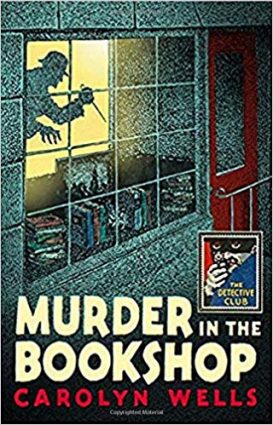
In Murder in the Bookshop (1936), Wells’s MacGuffin is a small book signed by Button Gwinnett, delegate to the Second Continental Congress from Georgia.

Gwinnett was one of the fifty-six men who signed the Declaration of Independence. He died less than a year later, on 19 May 1777, leaving behind a much sparser paper trail than his colleagues who didn’t engage in dueling.

In the nineteenth century, there was a craze for collecting historical autographs, which resulted in the mutilation of lots of letters and forms. Wealthy Americans competed to own a signature from each Declaration signer. Gwinnett was the rarest. As of 2016, only fifty-one examples of his signature were known to survive, with only ten of those in private hands.

It would thus make sense for a book signed by Gwinnett to be worth a lot of money, possibly even worth killing for. A character in Murder in the Bookshop describes the object of desire this way:
“It’s a small book, a pamphlet, but in fine condition. It is entitled Taxation Laws of Great Britain and U.S.A. Gwinnett was a student of Government and Politics and this was his book. He had not only autographed it on the fly-leaf but had signed it two other times and, moreover, had made annotations in his own hand on various pages. So you can grasp the importance of the book. Such finds do occur, but very seldom.”
My eyes perked up at that description, but not because I imagined the book as valuable. I knew that there were no ‘taxation laws of the U.S. of A.’ by the time Gwinnett died in 1777 or for many years afterward. The U.S. government didn’t become a legal entity until the adoption of the Articles of Confederation in 1781, and didn’t gain the power to levy taxes until after the new Constitution in 1789.

Thus, there couldn’t have been a copy of Taxation Laws of Great Britain and U.S.A. printed in time for Gwinnett to sign it. Was that a clue? Perhaps the detective would reveal this book was a fraud, and the finger of suspicion would swing toward the book dealer.

But as I read a little further, it became clear that all the characters in Murder in the Bookshop behave absurdly. No one comes across as a genuine, logical person.

Wells knew the world of book-collecting well—she amassed a top-notch collection of Walt Whitman material. She wanted to set a story in that milieu. But by this point in her writing career, she was putting out four mysteries a year, and it seems that she expected readers to value the right twists (secret lovers! second murder! kidnapping! masked genius!) more than logic.

Saturday, December 17, 2022

“The Secret of the Faculty Wife” at Contingent

Contingent is an online history magazine. It explains: “Our writers are adjuncts, museum workers, independent scholars—all people who work outside the tenure-track professoriate.” Learn more here.

Recently the Contingent editors commissioned a series of articles about the intersection between history and mystery stories. The article launching that “History & Mystery” series today is “The Secret of the Faculty Wife,” my look at Lillian McCue, who in her early forties created a career as mystery author Lillian de la Torre.

I wrote about De la Torre’s whodunnit stories about Dr. Samuel Johnson earlier this fall. This short article looks at the situation from another angle: the choices of a faculty wife, restricted by sexism and the employment policies of the Depression from fulfilling her own intellectual potential.

That situation has been in my head more since finding an essay my mother wrote around 1970 when she was in a similar situation. Her graduate studies in English literature had stalled out as she had two children, now my brother and I were going off to school, and it wasn’t clear what she should do with her time. As it turned out, Mom earned a doctorate in chemistry and later a nursing license, becoming college faculty in both fields. She finished her work life as a piano technician and knitting consultant.

That’s not the same plight as contingent faculty members, who have too much teaching to do for too little pay and not much hope of advancing up the professorial ladder. But it’s close enough that I thought the story of Lillian McCue’s career would speak to this audience.

I’m looking forward to seeing how other writers approached the “History & Mystery” theme.

Saturday, November 26, 2022

“Tea which fell into the shoes”

The 10 Nov 1821 issue of the Boston Daily Advertiser contained the fifth of a series of short essays headlined “Reminiscences.”

It told readers about the destruction of the East India Company tea in Boston harbor in December 1773, an event not yet dubbed the “Boston Tea Party.” The author wrote:
The destruction was effected by the disguised persons, and some young men who volunteered; one of the latter collected the tea which fell into the shoes of himself and companions, and put it in a phial and sealed it up;—which phial is now in his possession,—containing the same tea.
In 1835 an Independence Day orator identified the man who “preserved a vial full” of tea as Thomas Melvill, who had died three years before.

Twenty-one years later a literary chronicler stated that tea was “found in his shoes on returning from the vessel it was sealed up in a vial, although it was intended that not a particle should escape destruction!”

Back in 2018, I tracked that storied sample of tea to its present repository in Revolutionary Spaces’ Old State House museum.

As a historical artifact, that vial had some advantages over the tea reportedly collected on the Dorchester shore and being distributed to historical organizations by the Rev. Dr. Thaddeus Mason Harris before he died in 1842.

First of all, the Melvill leaves had an unbroken provenance leading back to the tea ships. Harris didn’t record who collected the tea in Dorchester or who gave it to him, but Melvill and his descendants presented a complete chain of custody.

Furthermore, Melvill’s tea came from a participant in the destruction of the cargo, not just someone who woke up the next morning and found wet tea leaves on a beach.

Of course, there was the matter of Melvill preserving tea that he was supposed to destroy. But he’d explained that—he “and companions” had brought home this tea inadvertently. That touch of irony made the story even more savory.

Now either lots of other men brought home tea in their shoes the same way, to be secretly preserved by their families until the late 1800s, or this story became an archetype that several other families duplicated.

For example, there’s a strong tradition that John Crane was part of the Tea Party, and he was certainly part of the right crowd. By 1893 the Bostonian Society was in possession of a:
Tea-caddy, with tea found in the pocket and boots of John Crane, one of the Boston Tea Party, when taken injured to his home, Dec. 16, 1773.
An old photograph of that tea-caddy appears above.

By that same year of 1893, the Essex Institute in Salem had received what a young St. Nicholas correspondent named Peggy described as:
two bottles of the tea that was thrown over board at the Boston tea-party,—it was found in the shoes of Lot Cheever after removing his disguise
The name of Lot Cheever is not otherwise linked to the Tea Party. Indeed, the only Lot Cheever I can find was born in Danvers in 1837. (Ezekiel Cheever was captain of the militia patrol that Bostonians appointed to keep the cargo from being landed on November 30.) Maybe Lot Cheever was the donor of this artifact, not the original creator.

The story of tea leaves coming home with a Tea Partier also appears in Robert Lawson’s novel Mr. Revere & I, in which Paul Revere’s mother shakes out his clothing to increase her supply of caffeine. That shows the appeal of this anecdote.

TOMORROW: Competing traditions.

Thursday, October 27, 2022

Four Decades of “Dr. Sam Johnson, Detector”

I’ve been discussing the historical background behind Lillian de la Torre’s mystery short story, “The Great Seal of England.”

In 1943 De la Torre was in her forties and known around Colorado Springs as Lillian McCue, wife of a Colorado College professor. Then she sold that story to Ellery Queen’s Mystery Magazine.

That launched De la Torre’s career as a writer. She was an Ellery Queen favorite for the next four decades. A couple of years after that first sale, she even visited Hollywood to consult on some movies. Eventually she served a year as president of the Mystery Writers of America.

With her “Dr. Sam Johnson, Detector” stories, Lillian De la Torre invented a new subgenre of whodunnits. Although Melville Davisson Post had written Uncle Abner mysteries set in the ante-bellum past starting in 1911, De le Torre innovated by basing her “detector” and the characters around him on actual historical figures, and crafting her plots around real events.

De la Torre’s first published book was a fictionalized analysis of what happened to Elizabeth Canning in 1753, called Elizabeth Is Missing. She wrote other books in this vein, such as The Heir of Douglas. Though these were originally published as fiction, De la Torre believed she had identified the correct solutions to those historical enigmas, and they’re now presented as “definitive accounts” of the underlying events. (Other authors would differ.)

For her stories about Dr. Johnson, De la Torre had the advantage of James Boswell’s extensive writings about the man. She produced an entertaining pastiche of Boswell’s voice, including not only his language and details but even dialogue structure.

To her credit, De la Torre also recognized the limitations of that narrative approach, as when Johnson’s other and closer biographer, Hester Thrale Piozzi, makes an appearance. “Boswell did not like Mrs. Thrale,” the author noted in an afterword; “he considered her his rival for ‘that great man.’” (Adam Gopnik wrote about Johnson and Thrale for the New Yorker.)

The stories jump around in time to take advantage of different events in George III’s realm. Some involve figures from the American Revolution, such as waxwork artist and spy Patience Wright and scientist and diplomat Benjamin Franklin. Mike Grost noted that De la Torre wrote about thefts as often as murders.

In some ways, De la Torre’s stories show the biases of her own time. Dr. Johnson had a servant and heir named Francis Barber (shown above), who had been freed from slavery in Jamaica. De la Torre brought Barber onto the scene in her first published story, but gave him no more life than a piece of furniture. Not until “The Blackamoor Unchain’d” (1974) did he become a full character, and then only for one tale. These days I’m sure authors would see much more potential in Barber’s own life.

There were four collections of De la Torre’s “Dr. Sam Johnson, Detector” stories, and the Mysterious Press has reissued them in digital form:
As of this writing, they’re on sale at a discounted price on the major ebook platforms.