






“15,000 people over 4,000 days”
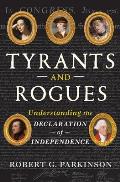
John Fea at the Way of Improvement Leads Home site interviewed Parkinson on the publication of his 2026 book, Tyrants and Rogues: Understanding the Declaration of Independence, looking at the grievances of the Declaration of Independence and the British officials blamed for them.
But the parts of the conversation that interested me most looked back and ahead:
JF: When and why did you decide to become an American historian?Four thousand days is just less than eleven years, not twenty, but the preceding nine will probably serve to establish the situation most Boston politicians viewed as better and wanted to get back to.
RP: At a very impressionable age, I lived halfway between Lexington Green and Plymouth Rock. Each weekend I tried to convince my parents to take me to one or the other. Early American history seeped into my bones from these public history sites in the years after the Bicentennial. (Hopefully, a similar process is happening among little boys and girls in these days after the 250th, too…)
JF: What is your next project?
RP: I am embracing that original thrill. Boston in the years before the Revolution was my first love. I’ve decided to return to that place in those years. Boston in the middle years of the 18th century was a very small place. And in just a few years a few among them recognized they had a political emergency on their hands and took steps to organize and craft an effective resistance campaign. How 15,000 people over 4,000 days faced (and refaced) a decision to either embrace resistance – or not – is a fascinating story. No one yet has tried to encompass the whole story of Boston’s Revolution. If you can explain Boston, you can learn a lot about the causes of the Revolution. By featuring the rivalry between the families fighting for control of the city’s politics – the Adams/Otis and the Hutchinson/Olivers – I propose to do just that in Boston’s Revolution, 1754-1774.
In 1755 William Shirley was not only governor of Massachusetts but commander-in-chief of the British forces on the continent. I think that let Bostonians think they still lived at the center of British North America, despite Philadelphia and New York growing larger and richer. That status changed during the war.
In the late 1750s the royal governor was Thomas Pownall, a Whig willing to cooperate with the local legislature. Pownall departed for his own career reasons in 1760. Lots of Massachusetts politicians viewed his brief administration as the way the province ought to be run.

No comments:
Post a Comment