The Continental Dollar Over Time, and Time Won
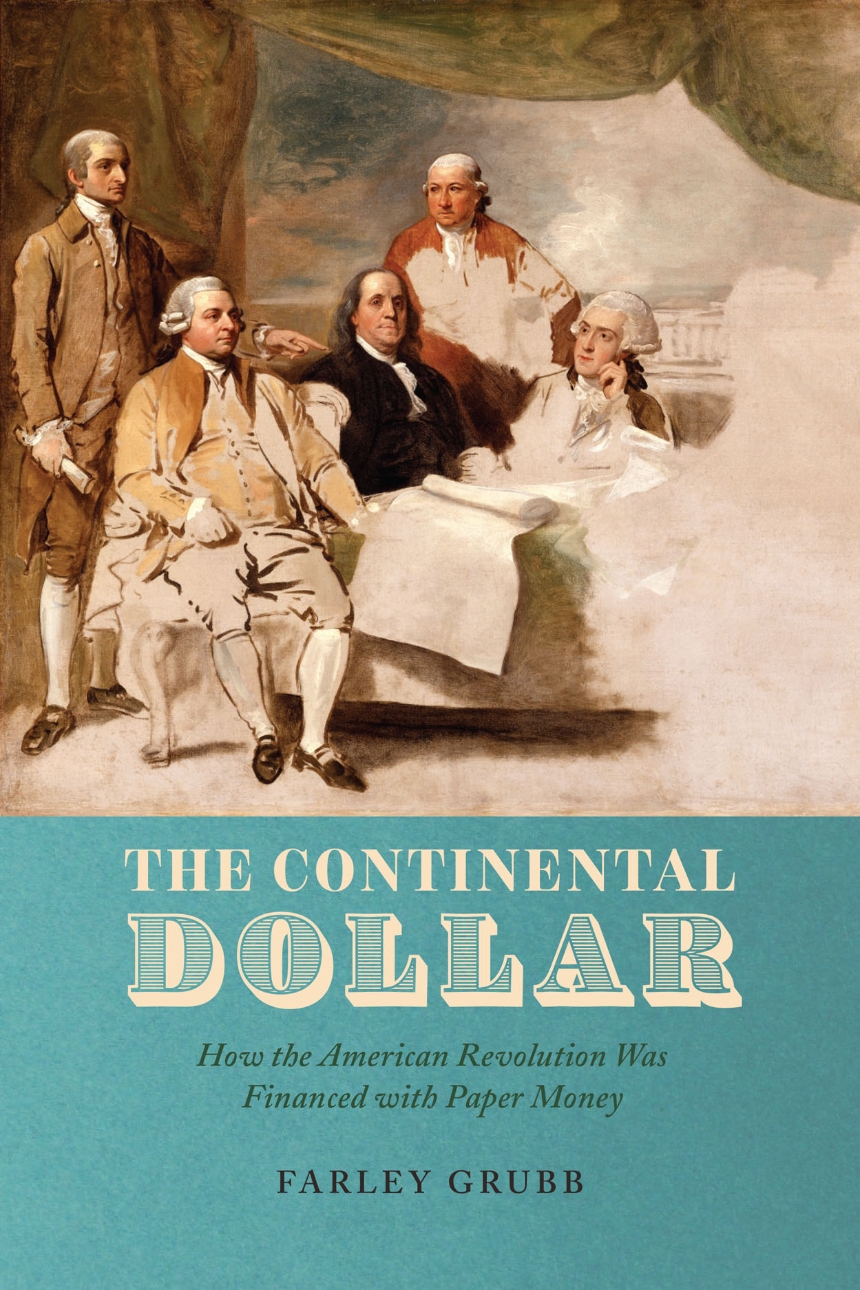
Grubb summarizes the traditional discussion of how the first U.S. became “Not worth a Continental” like this: “traditional historiography has told us that the Continental dollar was a fiat currency—an unbacked paper money,” and “Congress printed and spent an excessive number of these paper dollars from 1775 through 1780.”
Neville summarizes Grubb’s counternarrative like this:
In May 1775, Congress printed its first $3 million in paper Continental dollars. They were not like modern money nor were they intended to circulate as currency. They were very similar to what are now called “zero-coupon bonds”—bonds that pay no interest, but trade at a discount below their value at maturity. At the time, they were called “bills of credit.” Indeed, like a modern bond, they had maturity or “redemption” dates at which time they could be turned in for their face value in specie or specie equivalents.I suppose one could argue that the story Grubb tells isn’t that different from the traditional narrative he aims to refute: instead of Continental currency being entirely unbacked and overproduced, it was not realistically backed and carelessly issued. It’s not clear if the Congress could have produced better results with more care. After all, they were fighting a war for longer than anyone expected.
The colonies were responsible for using their own future tax revenue to redeem the bills, after which the collected paper was sent to the Continental Treasury to be burned. The system recognized that the colonies and Congress had little ability to raise actual money in wartime. Like all bonds, the dollars represented loans that would be paid back later. The first dollars would be redeemed in four annual tranches between 1779 and 1782, after the war was expected to be over and trade resumed. . . .
The system began to go awry with the third emission of bills. This time Congress failed to specifically set a redemption period. Congress and one of its committees each assumed the other was doing that job, and this important detail fell between the cracks (p. 118). People still had faith in the system, however, and the third redemption period was simply assumed to be 1787 to 1790, the four years following the second one.
Though it was still working, Congress fell into a pattern of rote issuance of currency while losing institutional memory and understanding of its own system. . . . No specific redemption period was set for eight consecutive emissions of dollars and at the end of that time, assuming the original system was still in effect, the final run of dollars could not be redeemed for specie until 1818. The result of this was a very deep time discount. The dollars issued in 1778 were only worth a tenth of their face value in the year they were issued.
This created a serious problem for Congress in financing the war. Congress was now using far more of its dollars to buy supplies on the market than to pay soldiers and the buying power of the newer bills was weak. Congress responded with an ill-conceived plan in 1779 that sent the dollar into a downward spiral. The redemption periods for all dollars were merged and made fungible. Congress announced that there would only be one final emission of dollars and the new redemption window for all outstanding dollars would be contracted and end in 1797. This was expected to reduce the time discount and increase the dollar’s value. It was also intended to reduce Congress’s reliance on debt. The plan, however, would have required the states to raise taxes “eighty times higher than what had historically been feasible.”(p. 168) Nobody believed that would happen and faith in the dollar collapsed.
Nonetheless, accuracy about details matters in economic history like every other sort of history, so I’m intrigued by this corrective.
Grubb is an economics professor at the University of Delaware. His book includes mathematical formulas as well as quotations from the Founders, and Neville says, “the vast majority of it is easily understood.”









,_The_Bostonians_Paying_the_Excise-man,_or_Tarring_and_Feathering_(1774).jpg)