J. L. BELL is a Massachusetts writer who specializes in (among other things) the start of the American Revolution in and around Boston. He is particularly interested in the experiences of children in 1765-75. He has published scholarly papers and popular articles for both children and adults. He was consultant for an episode of History Detectives, and contributed to a display at Minute Man National Historic Park.

Subscribe thru Follow.it


•••••••••••••••••


Friday, February 18, 2022

Quilts and Bed Covers to View in Old Lyme

Here’s a fragment of a quilted petticoat from the mid-1700s that shows a ship under sail.

This handsome fabric art, belonging to the D.A.R. Museum, is now on display in an exhibit at the Florence Griswold Museum in Old Lyme, Connecticut: “New London County Quilts & Bed Covers, 1750‒1825.”

Curated by Lynne Z. Bassett,  this museum show “examines the artistic excellence of these pieces within the context of design inspiration drawn from an array of transatlantic sources and explores the question of how the county fostered such exceptional work.” There’s a preview of the variety of quilts and covers on display on the museum website.

There’s also a stellar series of historical talks connected with the exhibit:
  • Lynne Z. Bassett, online lecture on “Something in the Water: Quilts & Bed Rugs in New London County, 1750–1825,” 24 February, 2:00 P.M.
  • Bassett, gallery talk on “Petticoats in New London County, 1750–1825,” 16 March, 11:00 A.M.
  • Camille Breeze, virtual presentation on “Under the Covers: Conservation of New England Bed Rugs,” 23 March, 11:00 A.M.
  • Linda Baumgarten, online lecture on “Wearing Quilts: Regionalism in Quilted Petticoats,” 8 April, 3:00 P.M.
  • Bassett, gallery talk on “Bed Rugs from New London County, 1750–1825,” 13 April, 11:00 A.M.
  • Marla R. Miller, online lecture on “Hidden Hands: Labor and Leisure in Early American Needlework,” 15 April, 3:00 P.M.
  • Laurel Thatcher Ulrich, online lecture on “‘The Second Scene of Mortality’: Courtship and Sexual Danger in Revolutionary Connecticut,” 22 April, 3:00 P.M.
  • Susan P. Schoelwer, online lecture on “Stitching Women’s Stories: New London County Needlework Traditions and Family Connections,” 29 April, 3:00 P.M.
The gallery talks are free with museum admission. The online events are $10, with a discount for registered museum members.

Thursday, February 17, 2022

Howard Pyle’s “Bunker Hill”

This is Howard Pyle’s painting of “The Battle of Bunker Hill,” created in 1897.

As Ian Schoenherr discussed here, Pyle had a commission to paint several scenes from the American Revolution for Scribner’s Magazine, which was publishing Henry Cabot Lodge’s The Story of the Revolution in serial installments.

Pyle tried to imagine the scene accurately from one spot on the slope of Breed’s Hill, with Copp’s Hill in the left background, the grenadiers of the 52nd Regiment of Foot in the center, and the smoke from H.M.S. Lively’s guns mixing with the smoke from burning Charlestown behind them. He reportedly sought information from the British Admiralty about military details (though I would have thought an army source would be more helpful).

Even then Pyle wasn’t satisfied with his first attempt. He slashed that canvas with a sword and started over. He then produced something close to this final image in four days.

Pyle sent the canvas to the Scribner’s office so it could be prepared for reproduction in black and white. But he still didn’t consider the picture to be complete, calling it “unfinished in all of its details” and “crude in color.” Balking at the publisher’s proposal to send his paintings on a publicity tour, Pyle asked for this canvas back so he could keep polishing the details.

Behind that anxiety was an ambition that this painting might hang in the Library of Congress or inspire a commission for a mural in the Massachusetts State House. But neither of those hopes panned out.

Pyle’s “Bunker Hill” is not a historically accurate portrayal of British battlefield tactics, as Don Hagist analyzed here. But as a history painting—an illustration of a semi-mythic story—it’s magnificent.

I’m struck by Pyle’s choice not to show any Americans, as other artists usually depicted this battle. Here, for example, is John Sloan’s picture of the provincials “At the Fence.” Even when Pyle had illustrated “Lord Percy’s Hunted Soldiers” a few years before, he put us beside a local militiaman. But in this picture the Americans are simply puffs of deadly musket fire at the top of the hill.

Those Sloan and earlier Pyle images are in the collection of the Delaware Art Museum, and Pyle’s “Bunker Hill” was there as well. No one knows where this canvas is now, and the F.B.I. would like to find out.

Wednesday, February 16, 2022

Grandmothers’ Tales and Grenadier Gibson

The story from Sarah H. Swan that I shared yesterday, about a British grenadier killed in the Battle of Lexington and Concord, has all the hallmarks of what I call “grandmothers’ tales.”

It was literally a story Swan heard from her grandmother, who in 1775 was Mary Stedman, wife of a Boston doctor. The anecdote comes in a meaningful shape, with a little lesson in fate and family patriotism that a good republican woman might want to pass on to her grandchildren.

I don’t think anyone involved in the story was still around when Mary Stedman first told it to the children of her second marriage, who passed it down. Mary’s first husband, Dr. John Stedman, was dead of yellow fever. Dr. Benjamin Church, Jr., to whom Stedman had reportedly passed intelligence, had been lost at sea. Dr. Joseph Warren, who dispatched the riders to Lexington, died at Bunker Hill. Of course the unfortunate Pvt. Gibson was dead, and his wife had probably left Boston in 1776. So no one could contradict this claim.

As I poked into the background of the tale, I was struck by how little information remains about Dr. John Stedman. He and his twin brother Ebenezer were the sons of a well established Cambridge farmer, tavern-keeper, militia officer, and town official. They both graduated from Harvard College in 1765, having lived at home instead of in the dorms. The college granted them the usual M.A. degree three years later.

Ebenezer became the Cambridge schoolmaster and his father’s heir while John went into Boston and trained to be a doctor. In 1769, according to a family historian, he wrote in an almanac: “I am a young man just entering into the world with nothing to recommend me but my education and a few friends whom I obtained while I was assistant to a noted Physician in Boston who has recommended me to the world.”

In 1773, Dr. Stedman married Mary Quincy, daughter of merchant Henry Quincy. They moved into a house on Marlborough Street. But I can’t find mentions of Dr. Stedman as prominent in either political or medical circles. He unfortunately died too early for Dr. Ephraim Eliot’s rundown of the town’s medical men, published in the Massachusetts Historical Society’s Proceedings.

Was the “noted Physician in Boston” who served as John Stedman’s mentor Dr. Benjamin Church? In addition to this anecdote, I found another tenuous connection: In October 1776, when Dr. Church was locked up on suspicion of treason, Dr. Stedman bandaged Benjamin Church, Sr.’s head. (That bill was still unpaid after Stedman died in 1780 and the elder Church died a year later.)

If Dr. John Stedman was known to be a protégé of the duplicitous Dr. Church, then perhaps his widow and her descendants felt a need to burnish the family’s Patriot credentials. What better way than to say the Stedmans provided crucial intelligence that helped John Hancock and Samuel Adams evade capture in Lexington? (Even if it’s questionable whether Dr. Church would have passed on that information, and the redcoats weren’t searching for Hancock and Adams anyway.)

As for the unfortunate grenadier private, the name Gibson is common enough to seem plausible. Indeed, there’s a Gibson back in the Stedman family tree.

So Sarah H. Swan’s family lore might belong in the category of myth, a “grandmother’s tale” developed for entertainment or moral guidance that a later generation grew up believing whole-heartedly and inserted into the national history during the Colonial Revival. Some of those late-blooming tales flourished, like the story of Betsy Ross and the first flag. Others have long been dismissed.

But this tale comes with one more wrinkle. Don N. Hagist, author most recently of These Distinguished Corps: British Grenadier and Light Infantry Battalions in the American Revolution, amasses images from British army muster rolls in this period to track individual soldiers as much as possible. I asked him if those documents had information relevant to this story.

Don answered:
In the regiments for which we have complete muster rolls, there was no soldier named Gibson in the grenadier or light infantry companies. I haven’t looked at all at the regiments in Percy’s relief column, so there’s that possibility.

There are no known rolls for the Marines, and that battalion suffered the most casualties on April 19. And there are no rolls for the 5th Regiment for 1775, so we don’t know which men of that regiment died on or soon after April 19.

BUT: on the 5th’s rolls for the second half of 1774, prepared on 16 January 1775, there is a grenadier named John Gibson. And he’s not on the next set of rolls covering the first half of 1776. That’s true for a lot of men in the 5th, and I suspect most of the missing are Bunker Hill casualties, but it’s entirely possible that John Gibson was among the April 19 casualties.

Tuesday, February 15, 2022

“A grenadier in full regimentals knocked at the door”

Here’s another anecdote about how Bostonians learned about the British march to Concord, passed down in a family and first published in the 1880s.

The story is said to come from Mary Stedman (1752–1835), wife of Dr. John Stedman (1743–1780). In the 1770s they lived on the corner of Winter Street and Marlborough (now Washington) in Boston.

Three years after the doctor died, his widow married William Donnison (1757–1834). The Donnisons had four children, and Mary Donnison told them stories about the Revolutionary War. Their daughter Elizabeth Quincy Donnison (1794–1876) married the Rev. Richard Manning Hodges (1794–1878) of Bridgewater.

Richard and Elizabeth Hodges in turn had children, including Sarah (1825–1910, shown here). She grew up in Cambridge, married the minister John Augustus Swan (1823–1871), returned to Cambridge, joined clubs, and did charity work. As a widow, she wrote down the stories that her mother Elizabeth Hodges had passed on from her grandmother Mary Donnison.

Sarah H. Swan fed this particular anecdote to the creators of The Memorial History of Boston, a four-volume edifice published in the 1880s. The tale went into a footnote, credited to “a granddaughter of Dr. Stedman,” though in fact Swan was a step-granddaughter of the doctor. In 1897 she included a slightly different version of the family story in her New England Magazine article, “The Story of an Old House and the People Who Lived in It.”

Here’s the first telling of this story from 1775, in Elizabeth Hodges’s voice:
It was difficult at that time to obtain servants, and Mrs. Stedman had been glad to secure the services of a woman whose husband was a British soldier named Gibson.

On the evening of the eighteenth of April a grenadier in full regimentals knocked at the door and inquired for Gibson. On being told that he would soon be at the house, an order was left for him to report himself at eight o’clock at the bottom of the Common, equipped for an expedition.

Mrs. Stedman hastened to inform her husband of this alarming summons, and he at once carried the intelligence to Dr. Benjamin Church, who lived near by on Washington Street.

Gibson soon came in and took leave of his wife, pale with anxiety at the doubtful issue of this sudden and secret enterprise. “Oh, Gibson!” said my mother, “what are you going to do?”

“Ah, madam!” he replied. “I know as little as you do. I only know that I must go.”

He went, never to return. He fell on the retreat from Lexington. A few minutes before receiving the fatal shot he remarked to one of his comrades that he had never seen so hot a day, though he had served in many campaigns in Europe.
And the second:
In the early evening of April 18, 1775, the young wife [Mary Stedman] was somewhat startled by a peremptory knock at the outer door. She opened it herself, and saw a British grenadier, who inquired if Gibson were there. Gibson was a soldier, whose wife was Mrs. Stedman’s cook. She that he would probably be there soon. “Tell him to report at the foot of the common, equipped, at eight o’clock.”

Gibson soon came in to take Ieave of his wife and child. “Oh, Gibson, what does this mean?” exclaimed Mrs. Stedman.

“Ah, madam,” he said, “I know as little as you do.”

When Dr. Stedman returned home and heard of what had occurred he hastened to carry the intelligence to his neighbor, Dr. Benjamin Church, then a trusted member of the vigilance committee, and thus the warning of the approaching expedition was conveyed to [John] Hancock and [Samuel] Adams, who had taken refuge at Lexington.

Gibson never returned. He fell on the retreat from Lexington, just after remarking to a comrade that “altho’ he had served in many campaigns in Europe he had never known so hot a day.”
It’s a fine anecdote. It conveys two women’s perspectives on the outbreak of war, with most of the action taking place in the kitchen. It offered the pathos of the doomed soldier while appearing as upper echelons of U.S. society were feeling more sentimental ties to Britain than earlier. But it also gives the tellers’ grandmother a crucial role in the American response to the march.

TOMORROW: But is this story credible?

Monday, February 14, 2022

“Tools and Toolmaking” at the 2022 Dublin Seminar for New England Folklife

The Dublin Seminar for New England Folklife has announced the subject of this year’s conference: “Tools and Toolmaking in New England.”

This event will take place in Deerfield, Massachusetts, on 24-25 June 2022, in partnership with the Early American Industries Association, Historic Deerfield, the Eric Sloan Museum, and the Public History Program at the University of Massachusetts.

It will include a keynote address, “Tool Stories,” by Steven Lubar, Professor of American Studies, History, and the History of Art and Architecture at Brown University, and author of a book in progress exploring the cultural history of tools.

The Dublin Seminar invites all scholars to propose papers and presentations at this conference on “the history and historiography of tools and toolmaking before 1900 in the region that encompasses present-day New England and adjacent areas of New York and Canada.” The announcement says:
We encourage discussion of Indigenous Native American tools and technologies that predate colonial contact, colonial settler tools, archaeological finds, collections, and reproductions. The Seminar hopes to consider tools in the context of home, farm, and workshop in a variety of uses, including artisanal trades and settings of industrial production. Early examples of tools made and used in traditional trades and crafts employed in New England’s first mills also constitute an important area of interest.

Proposals might address any of the following questions:
  • How did Indigenous people devise and adapt specific tools and technologies utilizing regional resources?
  • How did Indigenous toolmakers resist, adapt, and/or incorporate European materials?
  • What can the sharing and giving of tools tell us about relationships in the past?
  • In what ways were tools and tool creation specific to age, gender, class, and ethnicity in New England before 1900?
  • How were innovations in tool making and work processes devised, shared, and circulated among different groups?
  • How did tools and their making affect lifeways and workstyles in the region?
  • How did patent law and legal considerations impact tool making and tool design?
  • How did small-scale tool making and use change in response to industrial systems?
  • How was training in tool usage accomplished?
  • How did innovations in tool making and work processes represent patterns of knowledge transfer and facilitate the adoption of new tools and methods?
  • In what ways did the making and use of hand tools reflect the shift from agrarian landscapes and small farms to commercial centers and large-scale industrial systems?
  • In what ways did tools lead to class stratification?
  • Why and when did early tools become a focus for antiquarian collectors?
  • In what ways did tools help shape, represent and/or transgress gender or other identities?

Additional topics might include:
  • artisanal efforts to recover and recreate specific modes of individual tool-making
  • the production and acquisition of commemorative and/or souvenir tools
  • tools in children’s or educational literature
  • the ad hoc creation, adaptation, or application of tools
  • the appearance of tools in fine or decorative arts
  • tools as they are uncovered archeologically
  • the hazards of tool usage, e.g. “tailor’s cramp” and other conditions
  • the alteration of tools to accommodate disabilities
The Dublin Seminar has always valued inclusion, both in studying the full gamut of New Englanders and their daily lives instead of the elite and in the researchers who participate, coming from a range of professional backgrounds and disciplines. By tools the committee means not just carpenter’s planes and new-fangled inventions but also knitting needles, fishing gear, and the hoops that children learned to use when fetching buckets of water, as shown above.

This will will be a hybrid conference, held on site in Deerfield and online. It will consist of a keynote address and approximately seventeen lectures of twenty minutes each. Dublin Seminar presenters are expected to submit their papers for consideration to the Annual Proceedings of the Dublin Seminar to be published about eighteen months after the conference.

To submit a paper proposal for this conference, send (as a single email attachment in Word or as a P.D.F.) a one-page prospectus that describes the paper and its sources and a one-page vita or biography by 11 Mar 2022 to dublinseminar@historic-deerfield.org. For the text of this call and additional information, see the conference page at Historic Deerfield.

Sunday, February 13, 2022

Kidder on Jacob Francis, 15 Feb.

Back in 2018, I wrote a series of blog posts that turned into the Journal of the American Revolution article “The General, the Corporal, and the Anecdote.”

It discussed the evolution of a story that appeared in the 1832 pension application of an African-American veteran named Jacob Francis.

As those posts appeared, William L. Kidder contacted me with the news that he was researching all of Pvt. Francis’s full life and military career. That, too, became a J.A.R. article, “The American Revolution of Private Jacob Francis.”

Now Larry Kidder has shared his full research in a book titled The Revolutionary World of a Free Black Man: Jacob Francis: 1754-1836.

On Tuesday, 15 February, at 7:00 P.M., Kidder will discuss this new book online as part of Roger Williams’s History Author Talk series. You can register for that event here.

One detail of Francis’s life that I find especially interesting is how he moved around a lot as a teenager indentured to a series of men. Born in New Jersey, he traveled south to the Caribbean and then north to Salem in 1768.

Thus, Francis witnessed the coming of the war in Essex County, enlisted in the Massachusetts army, and fought in the siege of Boston.

After two years as a Continental soldier, Francis settled back in New Jersey. He found his mother after years of separation, married, raised a family, and lived into his eighties. This new book has all the details of that long American life.

Saturday, February 12, 2022

More Praise for the Doctor’s Glassy-Chord

Last month I wrote about Benjamin Franklin’s musical invention, the glassy-chord or, as he rebranded it in 1762, the armonica.

Franklin brought one of those glass instruments back home to Philadelphia in the early 1760s and showed it to friends. He was already famous for his lightning rod, and this looked like another product of American scientific genius.

Among the people who heard the instrument was Nathaniel Evans, who turned twenty-one in 1763. Son of a merchant, he was one of the first boys to attend the Academy of Philadelphia, which Franklin had helped to found in 1750. Evans then served an apprenticeship in a mercantile countinghouse.

On coming of age, Evans decided he preferred the life of the mind and convinced the College of Philadelphia (the higher level of the academy, also co-founded by Franklin) to treat him as a graduate student. After earning a master’s degree in 1765, Evans sailed for London to take holy orders in the Church of England.

Franklin was back working in the imperial capital by then, too. He was no doubt pleased to see the poem that Evans placed in the London Chronicle for 31 Aug–3 Sept 1765. Indeed, Dr. Franklin might have had a hand in that publication.

Evans’s poem was headed “To Benjamin Franklin, esq; ll.d. f.r.s. Occasioned by hearing him play on the Armonica. Written in Philadelphia, 1763”:
Long had we, lost in grateful wonder, view’d
Each gen’rous act thy patriot soul pursu’d;
Our little State resounds thy just applause,
And pleas’d from thee new fame and honour draws.

Envy is now, by merit overthrown,
Oblig’d in thee superior worth to own.
The Muse to sacred virtue ever bound,
Beams the bright ray her glorious sons around;
And sure in thee those virtues are combin’d,
That form the true pre-eminence of mind.

How were we fixt with rapture and surprize,
When first you told the wonders of the skies!
By simple laws deducing truths sublime,
Before, deep-bosom’d in the womb of time.

With admiration struck, we did survey
The lambent lightnings innocently play,
And the red thunder from th’ ethereal round
Burst the black clouds and harmless smite the ground,
As down thy Rod was seen the dreaded fire,
In a swift flame to vanish and expire:
Blest use of art! apply’d to serve mankind,
The noble province of the sapient mind!

This, this be wisdom’s, this the sage’s claim,
To trace the godhead thro’ this wondrous frame;
For this the soul’s grand faculties were giv’n,
To search the chain connecting man with heav’n.
But not alone those weightier thoughts controul
Thy comprehensive far-pervading soul;
The softer studies thy regard command,
And rise with fair refinement from thy hand.

Aided by thee, Urania’s heavenly art
With finer raptures charms th’ extatic heart;
Th’ Armonica shall join the sacred choir,
Fresh transports kindle, and new joys inspire.
Hark! the soft warblings, rolling smooth and clear,
Strike with celestial ravishment the ear,
Conveying inward, as they sweetly roll,
A tide of melting music to the soul.

And sure if aught of mortal-moving strain,
Can touch with joy the high angelic train,
’Tis such a pure transcendent sound divine
As breathes this heart-enchanting frame of thine.
Shall not the Muse her slender tribute pay?
Her’s is no venal, but the grateful lay;
Apollo bids it, where such virtues shine,
And pours a graceful sweetness thro’ each line;
Her country too, responsive to the sound,
Swells the full note, and tells it all around.
After being ordained, Nathaniel Evans returned to America. With the sponsorship of the Society for the Propagation of the Gospel, he became the Anglican minister in Haddonfield, New Jersey. But the young Rev. Mr. Evans died only two years later of tuberculosis.

In 1772, the head of the College of Philadelphia, the Rev. Dr. William Smith, published a collection of Evans’s poems. The young minister had bequeathed a manuscript to Smith and a young lady he’d met on his trip home who also wrote poetry. The published collection included this poem about Franklin’s armonica, but a version that conveys the same message in less than two-thirds the length.

Friday, February 11, 2022

Looking Back on a Fun Month

I didn’t start this year planning to delve into the mystery of who told Dr. Joseph Warren about the British march to Concord.

After all, there’s so much of the Saga of the Brazen Head still to tell.

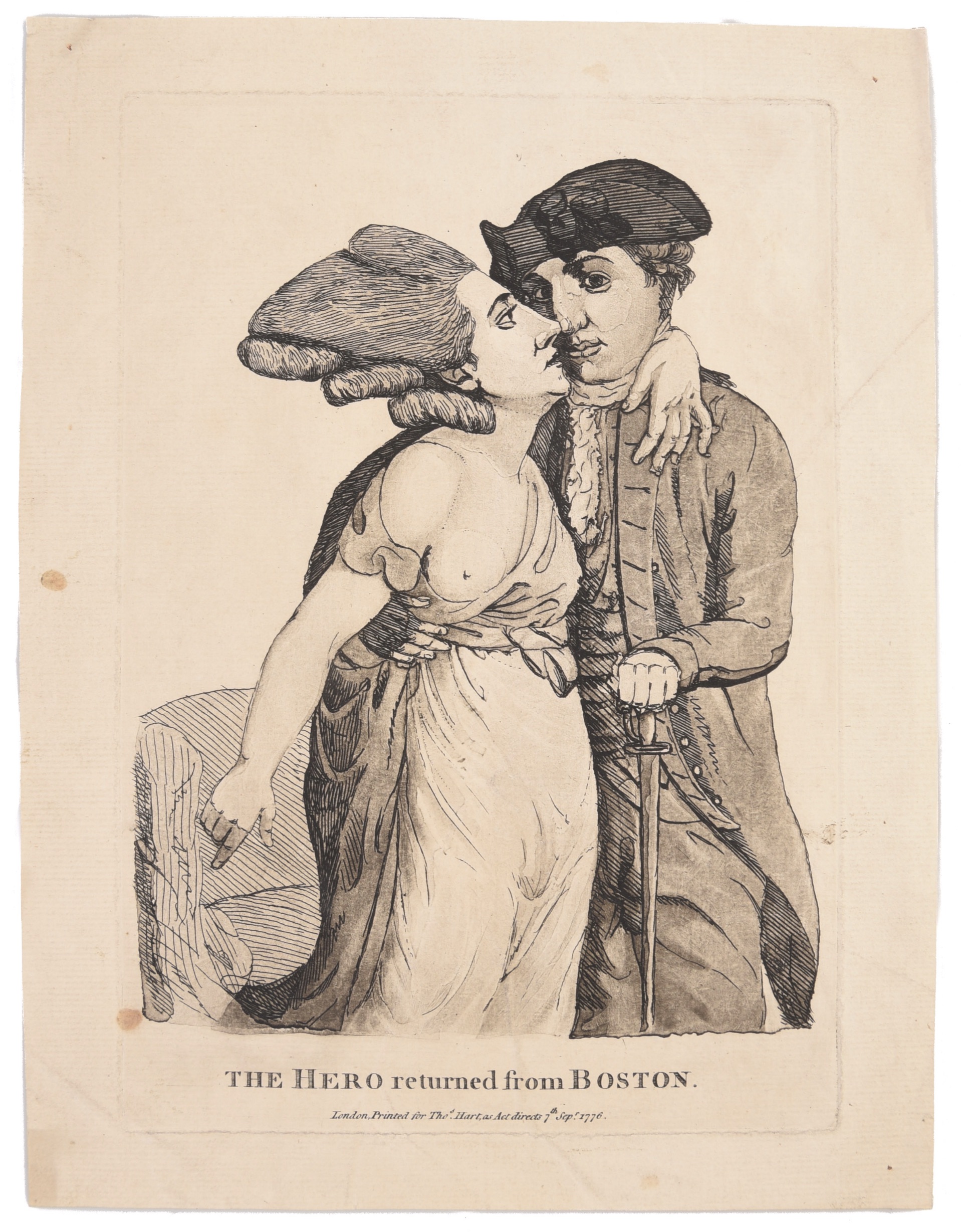
But I was intrigued by this essay at the American Revolution Institute about one of its recent acquisitions, an engraving titled “The Hero returned from Boston.”

That essay discussed the possibility that Warren’s informant was Margaret Gage, wife of the British commander. It also dismissed that idea as unlikely and unsupported. I wrote much the same years back, and didn’t think I had anything new to find out or share.

In its original form, however, that essay quoted a statement about the Gages I hadn’t seen before. That produced a jolting mix of emotions:
  • A relevant source I’ve missed? How exciting!
  • A relevant source I’ve missed? How embarrassing!
So a month ago I had to look into that source. I found it was actually an early-twentieth-century historian misquoted on a British website. (Phew!)

My posting about that prompted the director of the American Revolution Institute, Jack Warren, to revise the essay and to share thoughts in the comments of my posting on why that 1911 historian was so open to the idea of Mrs. Gage betraying her husband’s secrets.

Jack’s comments in turn prompted me to review all the evidence authors have used to point to Margaret Gage, starting in 1788, plus the milestones in the publication of that idea. To my surprise, I saw that for over a century almost every author who brought up that idea did so only to argue against it. So then I had to consider how the evidence came to appear stronger the further we were removed from the eighteenth century.

During that review I also came across a source that didn’t mention Margaret Gage, though it’s been used to bolster a case against her: the Rev. Jeremy Belknap’s diary from late 1775. And I was lucky enough to realize it could link to another source I discussed a couple of years ago, memories of tales told by Josiah Waters around 1800. If both those sources are reliable, they tell us exactly who Dr. Warren got information from and how: the completely overlooked knife-maker William Jasper.

All that, as I suggested above, was a pleasant surprise. It was the result of an intriguing artifact and essay, fortuitous timing, errors to be corrected (including my own), input from commenters, a new approach to the evidence, and the proliferation of digitized sources. 

And a bonus: This week Bob Gross alerted me that the Loyalists Commission claims are available digitized on Ancestry.com, so now I can go explore exactly what Thomas Beaman’s family said about him and a lot more. 

Thursday, February 10, 2022

“He collected many facts, for a history”

Another reason I suspect Josiah Waters, Jr., was the “Mr. Waters” who told the Rev. Jeremy Belknap about the Boston Patriots’ intelligence on the march to Concord is that it fits with what people tell us about Waters’s later behavior.

Waters was really interested in preserving military lore. By the mid-1780s he was colonel of the Boston militia regiment. He also served as treasurer of the Ancient and Honorable Artillery Company, and one of the first books about that organization’s members says:

He collected many facts, for a history, but never published them. The manuscript is lost. The older members used to speak of it as containing important facts, as well as anecdotes of members, now preserved in the imperfect recollection of survivors.
Specifically, we know that Waters was passing on stories about the beginning of the Revolutionary War before he died in 1804.

In fact, we have another account of how Dr. Joseph Warren learned about the British army mission that came ultimately from this Josiah Waters. It was published in the New England Historic and Genealogical Register in 1853, and I shared it back in 2020.

That account was transmitted orally through a couple of people before being written down: from Col. Waters to Joseph Curtis to Catherine Curtis and into the journal. As a result, some details got muddled—most notably, the name of William Dawes (Waters’s first cousin) morphed into Ebenezer Dorr.

Putting that account together with what Belknap wrote down in 1775 shows how the two complement each other. Here are the passages about the best-placed informant.

Belknap, 1775:
Mr. Waters informed me, that the design of the regular troops, when they marched out of Boston the night of April 18, was discovered to Dr Warren by a person kept in pay for that purpose. . . . [After gathering early indications something was afoot] Dr. Warren…applied to the person who had been retained, and got intelligence of their whole design; which was to seize [Samuel] Adams and [John] Hancock, who were at Lexington, and burn the stores at Concord.
Curtis, 1853:
The Americans obtained this news, through an individual by the name of Jasper, an Englishman, a gunsmith by trade, whose shop was in Hatter’s Square; he worked for the British, but was friendly to the rebels; a sergeant major quartered in his family and made a confidant of him, telling him all their plans. Jasper repeated the same to Col. Waters, who made it known to the Committee of Safety.
Looking at those sources together, I think it’s likely that the Boston Patriots’ paid informant was William Jasper (d. 1786), a maker of cutlery and surgical instruments from Britain. I gathered all the information I could find about Jasper here.

If these two accounts are basically reliable, Jasper rented rooms to a British sergeant major, who trusted him because of his British birth and his work repairing army weapons. But Jasper was also funneling information to Waters and Dr. Warren in exchange for money.

As I understand it, the British army didn’t formalize the duties of a sergeant major until the late 1790s. But it was already the designation of a senior sergeant with more authority than any other enlisted man in that unit. A sergeant major wouldn’t have been privy to Gen. Thomas Gage’s whole plan. But by late on the afternoon of 18 April he may well have been aware of some crucial variables:
  • The troops would leave Boston by water instead of over the Neck, indicating a destination to the northwest rather than, say, Worcester.
  • The troops were preparing to travel farther and stay out longer than the training marches of previous weeks.
The man may even have known about those mounted officers sent out as far as Lincoln on 18 April.

With solid but incomplete information, Warren dispatched Dawes and Paul Revere, as well as an anonymous and unsuccessful rider out of Charlestown, out to Lexington to warn Adams and Hancock. Patriots in Concord were already on alert, hiding most of the military supplies stored there. Those mounted officers tipped off Patriots in Cambridge and Lexington. And the result was war.

Wednesday, February 09, 2022

Josiah Waters, “very serviceable in this line”

Josiah Waters (1721–1784) was a painter by training who became a respected merchant in pre-Revolutionary Boston.

Waters joined the Old South congregation at age twenty. He was elected to several town offices, including constable, fence viewer, clerk of the market, and finally warden, one of the most prestigious. In 1747 he joined the Ancient & Honorable Artillery Company and filled many roles in that organization.

Also in 1747, Josiah and his wife Abigail had a son, Josiah, Jr. He grew up to work with his father in the firm of “Josiah Waters and Son” on Ann Street. In fact, it’s difficult to distinguish the two, but fortunately they seem to have acted as a unit, so that task isn’t so important. Josiah, Jr., also became a member of Old South and the Ancient & Honorables, and in 1770 he joined the St. Andrew’s Lodge of Freemasons.

In 1768, Josiah Waters invested in land in Maine, buying out partners to become the main proprietor of the Massabesick Plantation. That area included the modern towns of Alfred, Sanford, and what the family would modestly name Waterboro. The Maine Historical Society has digitized the Waters account book and map.

As of 1770, Josiah Waters, Sr., was a captain in the Boston militia regiment. By 1772, Josiah, Jr., was his lieutenant. (I told you they came as a unit.) According to Mills and Hicks’s British and American Register for the Year 1775, as war approached Capt. Waters’s brother-in-law Thomas Dawes was the regiment’s major, and the adjutant, or administrative officer, was their nephew William Dawes, Jr.

When war broke out in April 1775, it looks like the elder Waters quickly got his family out of town and followed by the 22nd. Then as a gentleman volunteer he took on the job of laying out the fort in Roxbury that was to keep the British army from marching over the Neck. In his memoirs Gen. William Heath listed Capt. Waters among the men “very serviceable in this line.” And of course Josiah, Jr., helped his father with those fortifications.

In October, Gen. George Washington and the Continental Congress started organizing an army for the coming year, with revamping the artillery regiment a big priority. John Adams was a fan of the Waters family. On 21 October, he sent James Warren a letter introducing a couple of Pennsylvanians visiting Massachusetts:
I could wish them as well as other Strangers introduced to H[enry]. Knox and young Josiah Waters, if they are any where about the Camp. These young Fellows if I am not mistaken would give strangers no contemptible Idea of the military Knowledge of Massachusetts in the sublimest Chapters of the Art of War.
Earlier in the same month he wrote to Gen. John Thomas asking about Josiah, Sr.’s work as a military engineer, among other men.

Gen. Thomas didn’t have good things to say, however. He wrote back to Adams that Waters
I Apprehend has no great Understanding, in Either [gunnery or fortifications], any further than Executing or overseeing works, when Trased out, and by my Observations, we have Several Officers that are Equal or exceed him…
Likewise, by 2 November Gen. Washington was writing candidly to Gov. Jonathan Trumbull of Connecticut:
I sincerely wish this Camp could furnish a good Engineer—The Commisary Genl [i.e., the governor’s son, Joseph Trumbull] can inform you how excedingly deficient the Army is of Gentlemen skilled in that branch of business; and that most of the works which have been thrown up for the defence of our several Encampments have been planned by a few of the principal Officers of this Army, assisted by Mr Knox a Gentleman of Worcester
Washington was impressed by Knox, whom he helped to maneuver into the artillery command, but not by Josiah Waters, father or son.

By that fall of 1775 it probably became clear to the Waterses that they hadn’t won over the commander-in-chief. They were unlikely to get appointments in the new army being organized for 1776, at least at the ranks they wanted. But they still had the respect of some New Englanders like Heath and Adams. They took on a new assignment helping to fortify New London, Connecticut. Based on how the state calculated the older man’s pay, he started that work on 25 November. Josiah, Jr., was his assistant, of course.

Before heading south, I posit, Josiah, Jr., traveled north to take stock of the family property in Maine. The Massabesick Plantation sat on the western side of that district. Just over the border in New Hampshire was the town of Dover. And the minister of Dover was the Rev. Jeremy Belknap.

I thus think the “Mr. Waters” who talked to Belknap on 25 October about how the war had started was Josiah Waters, Jr. (1747-1805). We know from Belknap’s later correspondence, preserved at and published by the Massachusetts Historical Society, that the two men were friends in the 1780s and ’90s. Waters collected orders for Belknap’s history of New Hampshire, for example. (By then everyone knew Waters as “Colonel Waters” for his highest militia rank.)

If Josiah Waters, Jr., told Belknap about how the Boston Patriots had learned of Gen. Thomas Gage’s plans, he wasn’t speaking as just some random guy in Dover. He came from Boston, where he had close connections with the town’s militia establishment. Even beyond that, his first cousin, William Dawes, was a key figure in both smuggling artillery out of occupied Boston and Dr. Joseph Warren’s alarm system.

The account Belknap wrote down in October 1775 is looking more reliable.

TOMORROW: More details from Mr. Waters?

Tuesday, February 08, 2022

“The infamous Capt. Beeman”

The Rev. Jeremy Belknap’s account of how Gen. Thomas Gage’s plan for the march to Concord leaked out to the Patriots, quoted yesterday, mentions four men by name.

Three of those people were well known Patriot leaders: Dr. Joseph Warren, Samuel Adams, and John Hancock.

The fourth was a Loyalist scout for the British troops identified as “the infamous Capt. Beeman.” Is there any more evidence about such a figure, especially evidence not publicized by October 1775? If so, that would suggest that Belknap truly heard some inside information.

And indeed we can identify “Capt. Beeman.” That must be Thomas Beaman (1729–1780), a Loyalist refugee from Petersham, Massachusetts.

Beaman was born in Lancaster. He joined Gov. William Shirley’s 1755 expedition against Acadia as a sergeant under Capt. Abijah Willard, and before the end of that war he was a captain under Col. Willard at the capture of Montréal. From then on people called him “Captain Beaman” even in peacetime.

In the 1760s Beaman was married and settled in Petersham. The first and so far only minister of that town was the Rev. Aaron Whitney (1714–1779). Unlike most of his Congregationalist colleagues in New England, Whitney strongly supported the royal government in the political disputes of the 1760s and 1770s.

So did Beaman. There was an argument and lawsuit over a schoolhouse around 1770 that I’ll save for later. Instead, let’s skip ahead to late 1774 after royal authority outside Boston broke down. According to Petersham town records, Beaman was among fourteen local men who banded together and agreed:
That we will not acknowledge or submit to the pretended Authority of any Congresses, Committees of Correspondence or other unconstitutional Assemblies of Men, but will at the Risque of our Lives, and if need be, oppose the forceable Exercise of all such Authority.
A 2 January Petersham town meeting summoned those men by name to explain themselves or repent. Only two showed up, defiantly maintaining their position. The meeting then determined:
Therefore as it appears that those persons still remain the incorrigable enemies of America and have a disposition to fling their influences into the scale against us in order to enslave their brethren and posterity forever, and after all the friendly expostulations and entreaties which we have been able to make use of, we are with great reluctance constrained to pronounce those, some of which have heretofore been our agreeable neighbors, traitorous paricides to the cause of freedom in general and the United Provinces of North America in particular…
The meeting urged townspeople not to have any commercial dealings with those men, even planning to print up 300 handbills at town expense. The Boston newspapers reported on that resolution.

Customs Commissioner Henry Hulton left this version of what happened next, starting in February 1775:
A number of Inhabitants in the town of Petersham, who had entered into an association for their mutual defence, finding the spirit of persecution very strong against them, assembled together in an house, resolving to defend themselves to the utmost.

The house was soon surrounded by many hundreds of the people, and they were obliged after some days to capitulate and submit. The people, after disarming them, ordered them to remain each at his own house, not to depart from thence, or any two of them to be seen together upon pain of death.
Petersham’s local historian says that siege concluded on 2 March.

Beaman then probably moved his family into Boston, as many other prominent Loyalists did. [ADDENDUM: Further research cited in the comments below shows that Beaman’s wife and children remained in Petersham until early 1779, when the Massachusetts legislature permitted them to travel through Newport to join him in New York City.] But according to the account his heirs later gave the Loyalists Commission, paraphrased in E. Alfred Jones’s The Loyalists of Massachusetts, “he, at the request of General Gage, frequently traveled the country to discover the real designs of the leaders of the rebellion.”

The Beaman family’s claim also stated that “he was a volunteer (as a guide to Lord Percy) with the military detachment to Concord.” Percy got only as far as Lexington, however. According to Belknap’s informant, Beaman was actually a scout for the first British column under Lt. Col. Francis Smith; those soldiers “landed on Phips’s Farm, where they were met by the infamous Capt. Beeman, and conducted to Concord.”

Furthermore, the New-England Chronicle newspaper of 12 Sept 1776 referred to “Capt Beeman, of Petersham (who piloted the ministerial butchers to Lexington).” And Lemuel Shattuck’s 1835 history of Concord, published before many Loyalist sources became available, stated: “It is also intimated that tories were active in guiding the regulars. Captain Beeman of Petersham was one.” Those sources suggest that locals recognized Beaman among the redcoats, as Belknap’s information implies.

Back in Boston, Gen. Gage rewarded Thomas Beaman in May by appointing him wagon-master to the army. Later in 1775 Beaman became a first lieutenant in the Loyal American Association, a militia company led by his old commander Abijah Willard, which never saw combat.

Beaman kept the position of wagon-master under Gen. William Howe. He traveled with the king's army, working in and around British-occupied New York until he died in November 1780. By then the state of Massachusetts had banished him and confiscated his property. Beaman's widow and children settled in Digby, Nova Scotia.

We thus have our first indication that Belknap’s October 1775 account of the march to Concord came from someone who had at least some reliable, little-known information.

Monday, February 07, 2022

“Got intelligence of their whole design”

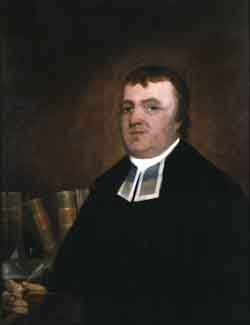
Getting back to the question of who told the Boston Patriots about the British army march to Concord, the first historian to gather evidence on that question was the Rev. Jeremy Belknap (1744–1798, shown here), founder of the Massachusetts Historical Society.

Indeed, Belknap recorded information so early that it might not even qualify as historical.

In the fall of 1775 Belknap visited the Continental Army camps around Boston, checking on the New Hampshire troops and observing the siege. He kept a diary during that trip, published by the M.H.S. in 1860.

A few days after returning to his town of Dover, New Hampshire, Belknap added this entry dated 25 October to his travel diary:
Mr. Waters informed me, that the design of the regular troops, when they marched out of Boston the night of April 18, was discovered to Dr. [Joseph] Warren by a person kept in pay for that purpose. That they had a design upon the stores at Concord the week before, and dressed victuals for their men; but, by the dressing an extraordinary quantity in the barracks, the design was discovered. They then marched out only as far as Watertown, as they had frequently done before in the day-time, for an airing, and returned before night.

But, on the night of April 18, they took every imaginable precaution to prevent a discovery. Their meat was dressed on board a transport-ship in the harbor. Their men were not apprised of the design, till, just as it was time to march, they were waked up by the sergeants putting their hands on them, and whispering gently to them; and were even conducted by a back-way out of the barracks, without the knowledge of their comrades, and without the observation of the sentries.

They walked through the street with the utmost silence. It being about ten o’clock, no sound was heard but of their feet; a dog, happening to bark, was instantly killed with a bayonet. They proceeded to the beach under the new powder-house,—the most unfrequented part of the town; and there embarked on board the boats, which had their oars muffled to prevent a noise, and landed on Phips’s Farm, where they were met by the infamous Capt. Beeman, and conducted to Concord.

Notwithstanding all this secrecy, the following circumstances contributed to their discovery. Numbers of people were jealous, and kept a vigilant eye upon them. It was observed, that, two days before, general orders were given out that the light infantry and grenadiers should be excused from duty. The boats were observed to be launched from the transports. In the afternoon of April 18, an uncommon number of officers were seen walking up and down the Long Wharf; and a party of nine rode out of town with their blue surtouts, and passed through Cambridge just before night, riding very slowly; and, being followed by a person who suspected some bad design, they damned him, and told him not to keep so near them. Late in the evening, a light-infantry man was seen in a retail shop with his accoutrements on.

These circumstances being communicated to Dr. Warren, he applied to the person who had been retained, and got intelligence of their whole design; which was to seize [Samuel] Adams and [John] Hancock, who were at Lexington, and burn the stores at Concord. Two expresses were immediately despatched thither, who passed by the guards on the Neck just before a sergeant arrived with orders to stop passengers. Another messenger went over Charlestown Ferry; so that the alarm was given several hours before the troops arrived at Lexington.
Historians have treated this source with skepticism. In fact, despite Belknap’s record being available in a leading historical journal since before the Civil War, almost no book has discussed the “person kept in pay” by Dr. Warren and his colleagues.

There seem to be two problems with that part of the story. First, I can’t help but suspect that American authors felt an ideological aversion to the idea of the Patriots bribing an informant. It was much more reassuring to stress the unity and perspicacity of Bostonians watching the soldiers prepare. And imagining Thomas Gage betrayed by his wife, or Margaret Gage torn by conflicting allegiances to husband and country of birth, is more dramatic.

That distaste opened the door to being skeptical about this account on grounds of provenance. How would this otherwise unidentified “Mr. Waters” in Dover, New Hampshire, have any reliable information on Dr. Warren’s secret source down in Boston? Was this statement anything more than well-traveled camp gossip festooned with unconfirmable claims?

David Hackett Fischer used Belknap’s statement in Paul Revere’s Ride, but only partially. He accepted that Dr. Warren “applied to” his best-placed source late on 18 April after hearing from other sources and before sending out William Dawes and Paul Revere, the “Two expresses.” But Fischer set aside the detail about “a person kept in pay” and instead focused on the possibility that that source was Margaret Gage.

In a 2014 article, Derek W. Beck, author of Igniting the American Revolution, discussed this source and concluded, “Mr. Waters’s statement sounds like an American concoction.” Unsupported by other evidence and judged against more reliable sources, Beck decided, this story reflected Waters’s wish to look like he had inside info and Belknap’s wish to believe him. 

To make this account into useful evidence, we need to answer questions like: Who was Belknap’s acquaintance, the mysterious “Mr. Waters”? Did this person really have connections in Boston’s Patriot leadership? Can any specific, non-public details of this account be confirmed by other sources? And does answering those questions lead us any closer to identifying the “person who had been retained”?

Answering those questions might require spending years studying small details of Revolutionary New England, looking at a plethora of sources both print and digital, and being crazy enough to think they matter.

TOMORROW: You rang?

Sunday, February 06, 2022

Spreading the Story of Benjamin Lay

Benjamin Lay (1682-1759) was one of the most unusual people in Britain’s early eighteenth-century American colonies.

Lay was only a little over four feet tall and hunchbacked, though fit enough to work as a sailor. He became a vegetarian and lived in caves. He owned hundreds of books, and he published scores of pamphlets, mostly jeremiads about social ills.

Born into an English Quaker family, Lay first encountered slavery on a large scale on Barbados. After that, he became a vocal abolitionist. At the time, the Society of Friends hadn’t yet adopted that position, much less Lay’s unwillingness to compromise on or shut up about it. 

After moving to Pennsylvania in 1731, Lay joined the Abington Friends Meeting, but that didn’t last. In 1737 he had Benjamin Franklin print his pamphlet All Slave Keepers That Keep the Innocent in Bondage, Apostates. As the modern meeting says on its website:
Benjamin Lay was written out of membership at Abington Monthly Meeting on the thirtieth day, eleventh month, 1737 (which by the Quaker calendar, while the Julian calendar was in use, would have been January 30, 1738), because his zealous actions were considered disruptive.

It is now known that at least two of the Friends who led the discernment about writing Benjamin Lay out of membership in the Society of Friends were slave-owners and were likely targeted by Benjamin Lay’s anti-slavery activism. Benjamin Lay was disowned decades before Quakers were disowned for being slave-owners.
Abolitionists such as Dr. Benjamin Rush, Roberts Vaux, and Lydia Maria Child wrote biographies of Lay in the early 1800s. Many featured portraits ultimately derived from a painting, shown above, that Deborah Franklin commissioned from William Williams (1727-1791) as a gift for her husband. But when slavery was no longer a burning political issue, Benjamin Lay became obscure again.

During the Bicentennial, that portrait was spotted at an auction and recognized. It was restored for the National Portrait Gallery. Nonetheless, Lay remained a footnote, occasionally profiled in an article or short entry in a larger book.

In 2010 Alexander Lagos, Joseph Lagos, and Steve Walker made Benjamin Lay a character in their two-volume Sons of Liberty graphic novel, a superhero story set in pre-Revolutionary Pennsylvania. Frankly, I didn’t think it was a good comic, but an uncompromising abolitionist dwarf mentor fit right into the genre.

Seven years later, Marcus Rediker published the first modern scholarly biography of the man, The Fearless Benjamin Lay: The Quaker Dwarf Who Became the First Revolutionary Abolitionist. He spoke at the Abington Friends Meeting, part of an effort coordinated with the organization to repudiate the disowning of 1737 and honor Lay for his egalitarianism. The meeting’s website details the results.

Rediker has now collaborated with David Lester and Paul Buhle to produce a graphic biography, Prophet Against Slavery, ensuring the memory of Benjamin Lay will continue to spread.

Saturday, February 05, 2022

Public Occurrences, Both Foreign and Domestic

Last month on H-Net, Tristan Stubbs reviewed D. H. Robinson’s The Idea of Europe and the Origins of the American Revolution, published in 2020 by Oxford University Press.

Stubbs wrote:
…this highly impressive work offers a genuinely new paradigm through which to view the years leading up to 1776. Americans made the fateful decision to secede not for the economic reasons offered over a century ago by Charles Beard and the Progressive historians; they were not the “radicals” drawn by Gordon S. Wood; and their motivations cannot be ascribed solely to civic republican ideals of virtue and liberty favored by the “canonical intellectual histories” of Bernard Bailyn and J. G. A. Pocock.

Instead, Americans had seen themselves for a long time before the Declaration of Independence as intimately connected to European geopolitics, took a deep interest in the balance of power across the ocean, and were disappointed by the metropolitan Tory government’s failure to shoulder its responsibilities in defending continental liberties against the overweening power of France and Spain. . . .

it spends an impressive amount of time on the effect on metropolitan and colonial opinions of Sweden’s 1772 reversal to absolutism and of the British government’s failure to support the Republic of Corsica against what colonists viewed as French attempts to impose Catholic “universal monarchy” not only on that Mediterranean island but throughout the French sphere of influence—including in America.
This hypothesis truly does seem like a “new paradigm,” in that I hadn’t considered inadequate protection from Catholic empires to be a major concern for the Americans resisting Crown measures from 1765 to 1775.

There would be at least a great irony if colonists adopted independence due to fear of France and Spain given how the young U.S. of A. soon allied with France and Spain. And then felt threatened by Spain/Napoleonic France as well as Britain on its new borders without the protection of a large empire.

To be sure, the Revolution in New England was fueled by suspicion of popery and ended with national freedom of religion, and the war in large slaveholding states was fueled by fear of slave uprisings and ended with slavery coming to an end in other parts of the country. So a paradoxical outcome doesn’t negate a possible cause of the conflict.

But the idea that colonial American discourse about European geopolitics strongly influenced resistance to Parliament’s new taxes and royal officials seems very tenuous. Ebenezer Mackintosh named a son after Corsican independence leader Pasquale Paoli and Loyalists claimed that William Molineux wanted “Paoli” as a nickname himself, but I really don’t see the farmers of Hampshire County shutting down their courthouse because they felt the London government hadn’t supported Paoli’s Corsican cause enough six years before. (Indeed, it was well known the British Crown granted Paoli a pension, supporting him as an asset against France.)

Today we Americans live in a much more democratic society, meaning more people are involved in political decisions. We’re privy to more news from around the world. Our economy is more globalized, as are our military forces. By all measures we should be more concerned with international relations than eighteenth-century farmers. And yet foreign policy is rarely a big factor in our politics, so was it a factor in theirs?

Robinson’s argument appears to rest on what he calls “the discursive evidence,” the same body of evidence that he says should also rule out historical hypotheses about the Revolution based on “relations between classes and genders...racism and material cultures.”

As Stubbs writes, “the discourse under investigation here was led primarily by white, male, anglophone professionals.” And in this case “professionals” appears to mean the sliver of educated, usually wealthy white men who wrote essays for the newspapers.

I have no doubt those essays used contemporary Sweden as an example of the danger of autocracy, the same way they used the Stuart monarchs and the Roman emperors. But I doubt those writings from such a narrow, well, class really got at all the forces driving political change at the time. And I’m skeptical that developments well outside the British Empire motivated colonial Americans to rebel as much as “pocketbook issues.” 

Friday, February 04, 2022

Digitizing Dr. Johnson

For a long time I’ve been fond of the online version of Samuel Johnson’s Dictionary. I even recommended it in a Journal of the American Revolution roundup.

And then the original site, which offered page images and highlights, turned into a completely searchable database. Even better! (Though I do miss the page images.)

Public Books has just published an essay by Carmen Faye Mathes, who was a “Co-Principal Investigator” in the total digitization effort, about the peculiar challenges of that work.
How you go about bringing a historical dictionary online is that, first, you stop really reading the entries. You have other work to do, like adding XML tags; comparing modern transcriptions against page images of Johnson’s original; and digitally cropping each entry so as to include an original image next to each transcribed entry—before concluding that, with at least 41,684 unique words, there must be a way to automate this.

The result is that even when I would exclaim over a new-to-me word (“Did you know that ‘pulverulence’ means an ‘abundance of dust’?”), it was never in the context of actually using the word—only proofing it, rendering it, clipping it, highlighting it, making it findable. Johnson defines lexicographer—a writer of dictionaries—as “a harmless drudge.” But I have come to relate to Johnson as more of a long-distance runner: an athlete whose particular facility lies in the way he marathons forth even as it pains him.
And then there’s the question of Johnson’s prodigious memory—how fallible was it?
When it comes to tracing the provenance of Johnson’s literary quotations—there are approximately 115,000 of them—the thing that felt most like a discovery was catching the lexicographer in a mistake. We wanted our online dictionary to make it possible to search for all the times Johnson cites particular authors or sources. So, we needed to ask, when Johnson says these lines belong to Shakespeare, do they?

Sometimes quotations would be followed by the title of the play, including act and scene, and sometimes merely by “Sh.” Johnson likes to condense longer quotations to save space. How close is his adumbrated version to the original? These and other, similar questions motivated our investigations. We needed to make the quotations discoverable by first discovering them ourselves.

Why don’t you start checking the accuracy of all the times Johnson quotes John Milton? seemed like as good a place as any to begin. When a spreadsheet with 12,000 supposed Milton quotations arrived in my inbox, my heart sank, but my ego accepted the challenge. I hit the jackpot almost immediately. In the entry for Autumnal, Johnson quotes Milton: “Thou shalt not long / Rule in the clouds; like an autumnal star, / Or light’ning, thou shalt fall.” He gives the source: “Milt. Par. Lost, b. iv. l. 620.” A few seconds later, the internet revealed the error: this is a quotation from Paradise Regained (1671), not the more famous Paradise Lost (1667).
And finally there’s that citation of Pamela that’s still floating out there, untethered to a text.

Thursday, February 03, 2022

Hagist on “British Soldiers in Concord,” 6 Feb.

On Saturday, 6 February, the Friends of Minute Man Park will host the group’s annual winter lecture online, featuring Don N. Hagist speaking on “The British Soldiers who Came to Concord.”

The event description says:
Some 700 red-coated soldiers marched from Boston to Concord on April 19, 1775. Who were the men in those uniforms? This talk will describe the ages, places of birth, background, and eventual fate of the British sergeants, corporals, drummers, fifers, and private soldiers who fought in the opening conflict of the Revolutionary War. Meet some of the individuals who enlisted in the British army and came to America to insure peace, only to find themselves thrust into war.
Don Hagist will no doubt be sharing the research from his latest book, These Distinguished Corps: British Grenadier and Light Infantry Battalions in the American Revolution. (Follow that link to order an autographed copy from Books on the Square in Providence.) All the soldiers who reached Concord were from those elite “flank companies.”

Don is the editor of the Journal of the American Revolution and author of several previous books on the British army during the Revolutionary War, including Noble Volunteers: The British Soldiers who Fought the American Revolution (2020), British Soldiers, American War: Voices of the American Revolution (2012), and A British Soldier’s Story: Roger Lamb’s Narrative of the American Revolution (2004). He’s also written about the Continental side, as in The Revolution’s Last Men: The Soldiers Behind the Photographs (2015).

This program is free for anyone who registers in advance. It will start at 2:00 P.M. on Saturday.

Wednesday, February 02, 2022

Why Must Margaret Gage Be the “One Person Only”?

As I wrote a couple of days back, since 1881 authors have discussed whether Margaret Gage might have divulged her husband’s plan for the April 1775 march to Concord to the Patriots, allowing them to send alerts into the countryside.

And the strongest piece of evidence for that hypothesis has remained an anecdote published in 1794, about Gen. Thomas Gage saying he’d revealed his plan to “one person only” before Col. Percy.

Why did it take a century for authors to interpret that story as pointing to Mrs. Gage? Why did it take another century before a major author argued that the story was more than jealous army officers sniping unfairly at the general’s wife?

One factor in the rise of this hypothesis might be Henry W. Longfellow’s publication of “Paul Revere’s Ride” in 1860. That poem was an enormous success, turning Paul Revere into a household name and making a fictionalized version of his activity on 18-19 Apr 1775 into a national myth. Details of that ride, including who alerted the Patriots to Gage’s plan, came to appear more significant.

Another factor was a shift from celebrating collective action to spotlighting individuals. Earlier histories of the Revolution took groups as their heroes: the Tea Party (at first a set of men, not an event), the Minutemen on Lexington common and at the North Bridge, and so on. Thinking of dozens of anonymous Bostonians observing clues about the British troops and combining that information fit the picture of collective action. But when our stories focus on crucial individuals, people want to know the identity of those individuals.

Most important, I now think, was the effect of feminism. The model of the companionate marriage promoted the assumption that a husband and wife would discuss important matters, even if those fell within the traditional male or female sphere of action. As the push for women’s rights and suffrage gained steam over the 1800s, it became clear that women were interested in politics. Even people who opposed granting women the vote described them as able to express themselves through discussion with their husbands, whose vote represented the whole family.

That environment meant there seemed to be a clear answer to the question of who the “one person only” Gen. Gage had discussed his secret plan with. Who else would that be but his wife Margaret? Who else could Percy and Charles Stedman, the former army officer who recorded that story, have been implying it was? The general’s closest confidante in all things, even military and political, must have been Margaret Gage.

In fact, we know people can have close, loving marriages and yet avoid sharing professional secrets. Today hundreds of thousands of people are preserving the confidentiality of their clients and patients when they tell their spouses about their workday. Lots of people toil deep in national security and other sensitive fields and don’t discuss details of their work at home, their loved ones understanding that that’s part of the job. Why must the Gages have been different?

Indeed, given what we know about expectations of male and female roles in the eighteenth-century British society, it was probably quicker for Thomas Gage to assume he wouldn’t discuss military strategy with his wife, and easier for Margaret Gage to accept that, than it was for authors of the late nineteenth century and later to picture such a relationship.

Furthermore, assuming that Margaret Gage was the only person Thomas discussed his expedition with requires believing he developed that plan and made all the arrangements for it without any staff help. The march to Concord involved 800 soldiers from eleven different regiments, supplemented by over a dozen scouts on horseback, equipped and supplied for a full day’s march, moved out of Boston in coordination with the navy. Did Gen. Gage write all those orders by himself?

We know that Gage didn’t tell his second-in-command, Gen. Frederick Haldimand, about the upcoming march; Haldimand learned about it the next day while being shaved. We know Gage didn’t tell his third-in-command, Col. Percy, until the evening of 18 April. But what about his adjutant, or chief administrative officer, Maj. Stephen Kemble (shown above)? That man’s job was to help the general carry out his military plans. What about Gage’s personal secretary, Samuel Kemble?

If that surname looks familiar, that’s because the Kembles were Margaret Gage’s brothers. The fact that the general gave his brothers-in-law high positions was one thing junior army officers complained about. But for Gen. Gage, keeping those arrangements within the family probably felt more secure. Stephen Kemble had worked closely with Gage since 1772, even traveling with him to Britain the following year. It looks like Samuel Kemble was a more recent addition to the staff, having been a merchant in New York.

In Spies, Patriots, and Traitors, Kenneth Daigler argues that the Kemble brothers’ positions actually support the idea that Margaret Gage was the most likely leaker. Even if the general’s “one person only” was one of those aides, Daigler writes, that Kemble could have told his sister, who could have told the Patriots. I think that skips over the more obvious suspects.

Let’s line up the usual points that people use to accuse Margaret Gage and consider all the Kemble siblings in Boston at the time.
  • Born and raised in America—Margaret, Stephen, Samuel
  • Expressed regret at the strife in North America—Margaret
  • Said to exercise too much influence over Gen. Gage—Margaret, Stephen, Samuel
  • Involved in making military plans—Stephen, maybe Samuel
  • Estranged from Gage after the war began—no one (Margaret had two children and a long married life with the retired general; Stephen remained on duty in America but maintained a very friendly correspondence with his former boss)
  • Settled in the U.S. of A. after the war—Stephen
That’s four items pointing to Stephen versus three to Margaret.

To be clear, I think it’s likely that Gen. Gage worked with Lt. Col. Stephen Kemble to prepare the march to Concord, but I don’t think Kemble informed the Patriots about that planning. I doubt the Boston Patriots needed a high-level source in the general’s household. They had been on edge about army raids for weapons since September 1774, and that April they were also already worried about arrests. It was impossible for the army to hide all its preparations for an expedition inside the crowded town. And out in the countryside Gage’s advance scouts, army officers dispatched to prevent alarm riders from getting through, ended up actually alerting locals along the march route that something was up.

Nonetheless, I am going to identify someone described as a crucial intelligence source in 1775.

COMING UP: The earliest source.

Tuesday, February 01, 2022

“Betrayed on this occasion and upon many other later ones”

So far as I can tell, no new evidence about Margaret Gage and her husband Gen. Thomas Gage’s secret plans came to light in the twentieth century, from either British or American sources.

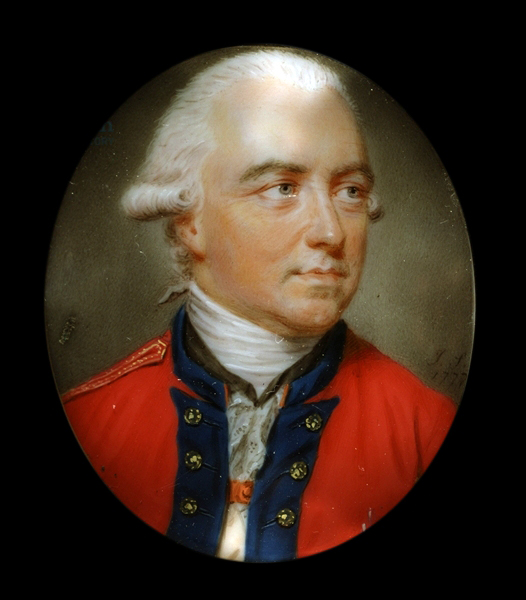
In the 1940s John R. Alden examined the papers of Gen. Henry Clinton (shown here) for General Gage in America. Though he concluded that the theory of Margaret Gage’s betrayal was dead wrong, Alden acknowledged, “Henry Clinton positively asserts that Gage was betrayed on this occasion and upon many other later ones.”

Had Clinton named his commander’s wife or offered specific details about this first betrayer, Alden would surely have included that fact. But a broad complaint of betrayal is a far cry from evidence against any specific person.

In Paul Revere’s Ride, David Hackett Fischer listed Clinton among witnesses in favor of Margaret Gage being a crucial leaker. Fischer wrote:
Many British officers, including Lord Percy and General Henry Clinton, believed that General Gage was “betrayed on this occasion” by someone very dear to him. Some strongly suspected his wife.
The citation for those sentences is “Henry Clinton, note, n.d., Clinton Papers, WCL [Clements Library]; quoted in Alden, Gage, 244.”

That suggests the phase “betrayed on this occasion” came directly from an undated note in Clinton’s papers. In fact, despite the phrase “quoted in Alden,” those were actually Alden’s own words. Neither Percy, nor Clinton, nor any other army officer is on record as voicing suspicion that Margaret Gage or “someone very dear” to the commander leaked his plans.

There have been a couple of books about Clinton since Alden wrote, and the Clements Library is digitizing his papers. So it’s possible someone has found or will find more definite evidence in that source. Since Clinton didn’t arrive in Boston until May 1775, however, it wouldn’t be first-hand information.

Other material could come to light, of course. But for now, the strongest evidence pointing to Margaret Gage as the Patriots’ source is still that anecdote published by Charles Stedman back in 1794, Gen. Gage telling Percy he’d discussed the Concord expedition with “one person only.”

But why would that person be Margaret Gage?

TOMORROW: How assumptions changed.