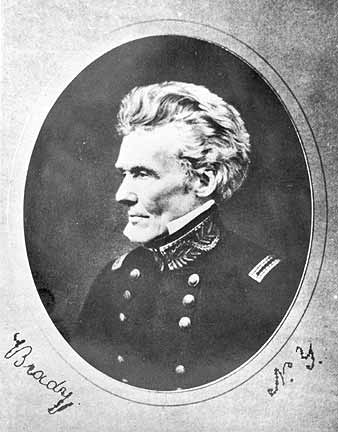
Benjamin Vaughan, Franklin Fanboy

Born in Jamaica, Vaughan was a grandson of the Massachusetts merchant captain Benjamin Hallowell, Sr. (The captain’s namesake son became one of the most hated of the royal Customs Commissioners in Boston.)
Vaughan’s immediate family were Unitarians, not fitting in with either New England Congregationalists or the established church in Britain. He attended dissenting grammar schools in Britain, and his faith limited the possibilities of a university degree.
Vaughan studied science under
When Shelburne became prime minister in 1782, he asked Vaughan to go to Paris and use his relationship to Franklin to create a sort of back-door channel for news and reassurances. He wasn’t officially part of the British diplomatic delegation but seems to have contributed to the peace of 1783.
Vaughan served in Parliament from 1792 to 1794. Despite coming from the left, he opposed the idea of ending slavery in the British West Indies (his own family’s fortune was of course based on slave labor). When the old rivalry between Britain and France heated up again, this time with France as a militant republic, Vaughan came under suspicion of being a French sympathizer and fled the country.
Unfortunately, he arrived in France just as the “Terror” gave way to the “Thermidor” reaction, consuming one set of leaders after another. Vaughan was locked up on suspicion of being a British spy—I can’t tell exactly when and how his treatment fit with the swift changes in the French government at the time. But after a brief stretch in prison Vaughan made it out to Switzerland, then sailed for Boston in 1795.
Vaughan soon settled for life in Hallowell, Maine, where he had inherited land through his mother. His personal library was said to contain 10,000 books, one of the largest in the country. In American politics Vaughan became a firm Federalist, thus on the right. He finally started practicing medicine and promoted the use of Francis Jenner’s smallpox vaccine. He also built up his area of Maine with mills, wharfs, and stores.
There are papers related to Vaughan and his family at the Massachusetts Historical Society, the American Philosophical Society, the Clements Library, and elsewhere, given his correspondence with many early American statesmen. Vaughan’s house in Maine is now a historic site, though it’s not open to tours this summer.