J. L. BELL is a Massachusetts writer who specializes in (among other things) the start of the American Revolution in and around Boston. He is particularly interested in the experiences of children in 1765-75. He has published scholarly papers and popular articles for both children and adults. He was consultant for an episode of History Detectives, and contributed to a display at Minute Man National Historic Park.

Subscribe thru Follow.it


•••••••••••••••••


Sunday, March 19, 2017

A Rifleman in New York

When we left Sgt. Henry Bedinger in mid-March 1776 yesterday, he and his company of Virginia riflemen had been ordered to march from Boston to New York.

He continued his diary, preserving information about how many miles the riflemen could cover in an early spring day and about the stops along the way. (When Bedinger noted a person’s name instead of a town, that was the tavern where the company stayed overnight.)
16th. Marched off to Deacon Ben. Woods the Hartford Road. 20 Miles, the roads were so Excessive Bad the Teams Could Not follow us. Staid awhile in Westborough. Saw Some warlike Stores, viz 17 pieces of fine Canon, two Mortars & 1 Cohorn—
Gen. George Washington had also ordered some of his artillery force to New York.

The relatively short distance that the riflemen marched on 17 March might have been because that was a Sunday. Or they might simply have taken time to resupply themselves.
17th. Drawed 6 Days allowance of Beef & Pork. Thence Marched to Mr. Sherman’s—7 Miles. Rec’d Intelligence that the Enemy had evacuated the town of Boston on Saturday after we Left Cambridge. Left a number of Canon Spiked up and Many other Stores. Left the town in Great Haste.

18th. Marched to Shumway’s—15 1/2 Miles.

19th. Marched to Woodstock—12 Miles.

20th. Marched to Wilson’s—25 Miles.

21st. Marched from Wilson’s to Hartford—17 Miles. This being the Metropolis of Conecticut, a seaport Town, Situate on Conecticut River. Very pretty place. Saw Some Regular officers [i.e., British prisoners of war] Taken at St. John’s, &c.

22nd. Took in fresh provisions, &c—112 Miles to Boston.

23rd. Marched from Hartford to Wethersfield, 4 Miles, thence to Wallingsford 22 Miles—26 Miles.

24th. Marched to New Haven, a large Seaport Town Beautifully Situated on the Sound, a Number of Vessels in the Harbour, a Brigg of 14 Guns on the Sound, and a Schooner fitting out of 12 Ditto.—13 Miles. Thence Marched to Millford, a small seaport Town Just fifty Miles from Hartford.

25th. Thence Marched to Stratford River—4 Miles, thence to Fairfield, a County Town, a place of Trade and Seaport.

26th. Marched to Norwalk, a small Seaport Town—12 Miles, thence to Stamford, fresh provisions. &c—14 Miles.

27th. Marched through Horseneck to Rye—10 Miles, thence to East Chester in New York Government—10 Miles—20 Miles.

28th. Marched Over Kingsbridge to New York—20 Miles.

29th. Viewed the City, the Numerous Canon Ready fixed. Every Street Towards the Water in all parts of the Town fortified with Breastworks, &c. East, West, North, and South of the Town are Forts.

Saw the King’s Effigy on a Horse in his proper Size on a large Marble Pillar Beautifully Gilded, Stands in Broad Street Near the old fortification in a Yard that is all picketed in with Iron palisadoes. Likewise Lord Pitt, the Earl of Chatham, in Broadway Enclosed in Like Manner. Saw all the Large Buildings, the City Hall, Royal Exchange, all the Beautiful Churches.
I love the thought of Bedinger, soldier from western Virginia, sightseeing on Manhattan.

That “Beautifully Gilded” statue of George III would last less than five more months. After the Declaration of Independence was read in New York on 9 July, the crowd pulled it down and converted most of it into musket balls. A few parts of the statue survive at the New-York Historical Society, as does the remnant of that statue of William Pitt, first Earl of Chatham.

At the end of June 1776, the Virginia rifle companies’ first enlistment period ended. Sgt. Bedinger volunteered to stay on, promoted to lieutenant. But he was captured at the Battle of Fort Washington in November and kept prisoner for four years. In March 1779, Bedinger reassured his mother, “I am much hardened and Can undergo almost Anything.” He was right; he lived over sixty more years.

Saturday, March 18, 2017

“Rec’d orders to be Ready to March tomorrow at 10 O’Clock”

Here’s more of Sgt. Henry Bedinger’s diary of the last days of the siege of Boston.

As I described yesterday, Bedinger served in one of the Virginia rifle companies. Those troops were rotated on and off the Dorchester peninsula in early March 1776 to defend against possible British landing parties.

The Royal Navy approached on 5 March, but a ship ran aground and a big storm stopped that foray.
6th. Nothing appeared as If we were going to be attacked, Capt. [Hugh] Stephenson Ordered us to March off the point About Two O’Clock in the afternoon in View of the Enemy. About 5 O’Clock came two Companies of Riflemen from Cambridge and Relieved those Who had been on the point with us, the Enemies fired a few Shott Towards the New forts but to no purpose only Hurt 3 Guns and then Quit Firing Entirely—

7th. This Day is appointed a Day of Prayer by the Legislature of this Colony. All the Riflemen are ordered on the point by 9 Oclock in the forenoon, &c. Came off at 3 O Clock.

8th. This Day a Flagg of Truce Came from the Enemy with a petition from the Select men of Boston to Gen’l [George] Washington, & By the Consent of General [William] Howe, the purport of which was that if our forces kept firing on the Town or Bumbardin it he would move off and Burn the City—but If he Did not Fire he (General Howe) will not Burn the Town. It Seems he is Determined to Move off at Any Rate.
I discussed that message from the selectmen and Gen. Washington’s response to it here, here, and here. Bedinger’s diary entry shows that even though the general refused to acknowledge the message as a point of protocol, everyone understood the unspoken understanding it communicated.

A couple of days after that exchange, however, Washington decided the British weren’t moving fast enough. He ordered his men to fortify and arm the corner of the Dorchester peninsula nearest to Boston to create a bigger threat. That prompted more maneuvers and firing.
9th. Orders Came that the riflemen Should hold themselves in readiness to March at an Hour’s warning—

10th. about 2 Hours after Dark the Enemy Began to fire on a party of our men who were throwing up a Breastwork on the Nearest point to Boston on Dorchester. They fired from a Small Vessel from Boston Neck, from the wharf, from Fort Hill, &c. Supposed they Fired 1000 Shott as it Lasted the whole Night. Our people Fired into Boston from Roxberry. The Firings Continued all Night. We had 1 Surgeon [Dr. Enoch Dole] & Three men Kill’d.

13th. Rec’d orders to be Ready to March tomorrow at 10 O’Clock.

14th. Set off with our whole Company for Cambridge.

15th. Friday. Were ordered to March to New York. The whole Battalion of riflemen were Ordered to March Ditto. Marched 9 Miles to one Flagg’s.
Once it became clear that the British army would not try to break through the Continental siege lines, Gen. Washington had to think about what territory to protect next. Sending the rifle companies to New York meant they would be ready to defend that city’s shores from a similar assault. That meant Sgt. Bedinger never got to see the actual evacuation of Boston.

TOMORROW: The riflemen on the road.

Friday, March 17, 2017

A Rifleman’s View of the End of the Siege

I’ve been writing about the Continental riflemen, and this is the anniversary of the British evacuation of Boston in 1776. So here is a rifleman’s view of the end of the siege.

Henry Bedinger (1753-1843) of Shepherdstown, Virginia (now West Virginia), was a sergeant in one of the Virginia rifle companies. Those and the Maryland riflemen were stationed on the southern wing of the Continental Army in Roxbury. And fortunately for us, Bedinger kept a diary.

March 2d In the Night of the 27th of Feb’y John Curry, one of our Riflemen Deserted to the Enemy, Took with him his Messmates Gunns, Shot Pouch &c, &c. This Day was two more Canon Fired at the Enemy Nearer Roxberry Street—

3d Last Night were thrown Bumbshells Into Boston the first Time, first from Lechmore’s point, thence from Roxberry Fort, Two Mortars were Brought into the fort, the one By Great Misfortune was Broke to pieces in throwing the first Shell, and unfortunately wounded Two Men, tho’ not Very Bad—Orders Came out to prepare for an Engagement—

4th Orders Came out to go on Dorchester Point and Intrench, two Rifle-Companies from Cambridge were ordered here. In the Evening as soon as Sun Down our Teams Began to Load with Intrenching Tools, Spears, Canon, about 100 Teams to Carry Facines and pressed Hay, accordingly 2000 men and upwards went and Began the work and about 1 O’Clock our five Companies of Riflemen Marched on, when the Others had already made Two Compleat Facine forts on the Top of the Two Hills, made Two Redoubts and a Cover along the Neck with hay.

We marched a Little Beyond the Forts and posted ourselves behind a hill Near the water Edge where we Remained as Silent as possible. Mean Time our Forts Fired Shot and Threw Bombs into Boston from Brookline, from Lichmore’s point & Cobble Hill. They were no Less busy In throwing as many Bomb Shells and Shott as we, which made no Small Noise, one Canon Ball Struck a Lieutenant [John Mayo] in the Back part of the thigh Next to his knee as he Stept out of the Door of a house in Roxberry from which wound he Died in about 4 hours—

5th. About 3 O’Clock the first 2000 men were Relieved by 3000 & upwards, who all Began to work at Intrenching and made Great progress: before 8 In the morning the Canon were fixed In Both the Forts and Redoubts, a Vast number of Barrels of Dust and Sand were Set around Each fort on the Top of the Hills in order to Roll Down to Break the Ranks of the Enemy If they offered to attack us, the Riflemen Lay Still at the hill.

(The) General Requested they should (remain) another Night and Untill the Tide went out on the Next Day which Capt Stephenson Consented to who Commanded the five Companies provided the Gen’l would send us another Day’s provision which he did Next Morning.

Towards the Evening a Schooner went out of the harbour toward the Castle But Run a Ground & the Tide Left her there pretty Near the Shore. Some of the Artillery Men with a small Brass Field piece went Down from the Hill to fire upon her, Accordingly they fired three Shott when through Great Misfortune the piece went off too soon, and Took off One Man’s hand and put out one Eye—At the Same Instant there Came Down to her Relief Two Brigs of war, so that put an End to our firing on the Schooner.

This Night we Expected an Attack but there arose Such a storm Towards Day that it was Impossible for them to Land, the men worked on Bravely and we Lay Still.
Shifting fresh troops onto the Dorchester peninsula to relieve those who had built and defended the fort was one reason that operation went more smoothly than the move onto the Charlestown peninsula the previous June. But the Continentals also had the good luck of that storm stymieing the counterattack. As of 6 March, the British command had decided on leaving.

TOMORROW: The riflemen move.

Thursday, March 16, 2017

“The rifle company divided and executed their plan”

Here’s a description of one of the Pennsylvania riflemen’s first actions in the Revolutionary War, as described in a letter written from Cambridge on 31 July 1775.

Indeed, there’s reason to believe this letter was written from the commander-in-chief’s headquarters, where I’ll speak about the riflemen tonight, by either Joseph Reed or Thomas Mifflin.

This letter was extracted along with others in the 9 August Pennsylvania Journal:
In the evening orders were given to the York county rifle company, to march down to our advanced post on Charlestown Neck, to endeavour to surround the enemy’s advanced guard, and to bring off some prisoners; from whom we expected to learn the enemies design in throwing up the abbates on the Neck.

The rifle company divided and executed their plan in the following manner: Capt. [Michael] Dowdle with 39 men filed off to the right of Bunker’s Hill, and creeping on their hands and knees, got into the rear of the enemies centries, without being discovered.—

The other division of 40 men, under Lieut. [Henry] Miller, were equally successful in getting behind the centries on the left, and were within a few yards of joining the division on the right, when a party of regulars came down the hill to relieve their guard, and crossed our rifle men under Capt. Dowdle, as they were lying on the ground in an Indian file.

The regulars were within 20 yards of our rifle men before they saw them, and immediately fired. The rifle men returned the salute; killed several, and brought off two prisoners and their musquets, with the loss of Corporal Crouse, who is supposed to be killed as he has not been heard of since the affair.
Cpl. Walter Cruise had actually been taken alive. He was locked up in the Boston jail, then taken to Halifax when the British evacuated, and kept prisoner until early 1777. For his trouble Cruise got a promotion in the Continentals, eventually becoming a captain.

The photo above, from Waymarking, shows a plaque in York, Pennsylvania, commemorating the muster of Capt. Doudel’s rifle company before they set out for Boston.

Wednesday, March 15, 2017

“Remarkably stout and hardy men”

On Thursday, as I announced earlier, I’ll speak at Longfellow House–Washington’s Headquarters National Historic Site about “Washington’s Riflemen: Heroes or Headaches?”

Here are extracts from two journals in the summer of 1775 showing both sides of those Continental soldiers from Pennsylvania, Virginia, and Maryland.

First, Dr. James Thacher, then a surgeon’s mate, under the date of August 1775:
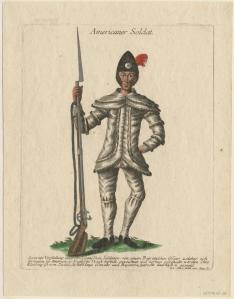
Several companies of riflemen, amounting, it is said, to more than fourteen hundred men, have arrived here from Pennsylvania and Maryland; a distance of from five hundred to seven hundred miles. They are remarkably stout and hardy men; many of them exceeding six feet in height. They are dressed in white frocks, or rifle-shirts, and round hats.

These men are remarkable for the accuracy of their aim; striking a mark with great certainty at two hundred yards distance. At a review, a company of them, while on a quick advance, fired their balls into objects of seven inches diameter, at the distance of two hundred and fifty yards.

They are now stationed on our lines, and their shot have frequently proved fatal to British officers and soldiers who expose themselves to view, even at more than double the distance of common musket-shot.
Second, Pvt. Aaron Wright of Pennsylvania, a rifleman himself, on 10 September:
Great commotion on Prospect Hill among the riflemen, occasioned by the unreasonable confinement of a sergeant by the adjutant of [Col. William] Thompson’s regiment; and before it was over, 34 men were confined, and two of them put in irons at headquarters in Cambridge; on the 12th, they were tried by a court-martial, and one was whipped 17 lashes, for stealing, and drummed out of camp.
Tomorrow night, we’ll look at both sides of those troops.

Tuesday, March 14, 2017

Asa Copeland’s Revolution

Yesterday I introduced Asa Copeland as a “young lad” apprenticed to the Boston carpenter Amos Thayer.

He opened his master’s door to a redcoat the night before the Boston Massacre and heard that soldier offer a warning to Thayer to keep safe off the streets for the next couple of days.

I wondered what happened to Asa Copeland in subsequent years. One of my interests is how the children of Boston were shaped by the political turmoil of the ten years before the war.

Tracking this Asa Copeland isn’t certain because there were other youths of that name. One was born in Braintree in 1756, son of Seth and Lydia Copeland, neighbors of John and Abigail Adams; that lad would have been a good candidate to be Amos Thayer’s apprentice in 1770 since Thayer was also from Braintree. But that Asa Copeland remained in Braintree after the war, long enough to apply for a pension.

Instead, I think the Asa Copeland who became an apprentice carpenter in Boston was the man described by descendants in volume IV of Genealogical and Memorial History of the State of New Jersey, edited by Francis Bazley Lee and published in 1910. That entry is based on a blend of family tradition and research in genealogical sources available at the time.

The descendants were certain this Asa was the son of Jacob and Abigail Copeland, who hailed from Braintree but were living in Boston when they had him. But they didn’t know when he was born. The profile describes Asa as “at the age of seventeen” during the Tea Party of late 1773 and “about nineteen” at the start of 1777, which doesn’t add up. Descendants understood that Asa was “present at the ‘Boston Tea Party’” (which this book misdates). He may well have been present; hundreds of Bostonians were, watching but not participating.

That profile gets on more solid ground when it discusses Copeland’s military service. In January 1777, Copeland joined Maj. Ebenezer Stevens’s artillery battalion of the Continental Army. Like Copeland’s master, Stevens had been a carpenter in Boston before the war. The artillery needed skilled craftsmen. Soon Asa Copeland was a sergeant, and then a sergeant-major.

In April 1779, Copeland was appointed a conductor of military stores, caring for the army’s weapons. Thus, in 1781 Gen. Henry Knox sent him instructions “to procure 1500 muskets, 3 tons of lead, and all of the pistols at New Windsor” and to send some stores to Philadelphia.

In September 1782, as the army wound down, Gen. Knox listed Copeland among the personnel “proper to compose the department of field commissary” in a letter to Gen. George Washington. Copeland reportedly produced “a survey or inventory of ordnance at West Point, New York, dated April 20, 1783” for Knox.

After the war, Copeland settled in Philadelphia rather than returning to Massachusetts. On 27 Feb 1783 the Rev. William White married Copeland to Amelia Price. Eventually the couple had eight children, four girls and four boys. The veteran appears to have gone into business trading goods, using the skills and contacts he developed during the war.

In the 30 Aug 1793 Pennsylvania Gazette Copeland advertised “the schooner Milley” for charter to the West Indies. In October 1794 the U.S. of A. was undertaking to build frigates, including the Constitution. Revenue commissioner Tench Coxe wrote to Knox, then Secretary of War:
in pursuance of the Idea entertained by you and my self in a late conference, I have engaged Mr. Asa Copeland a trader in this town, To go to Georgia for the purpose of assisting Mr. J. T Morgan in expediting the hauling &c. of Timber & dispatching the Vessels.
The country needed strong live oak for the frigates. Coxe told his boss Alexander Hamilton, “Mr. Asa Copeland…is expected to be very useful. He has been accustomed to the Coasting trade and to the procuring of ship Timber.” (But Coxe also had to tell Knox that Copeland, not being a shipwright, couldn’t simply take over Morgan’s job.) According to a Navy Department report at the end of 1794, Copeland’s pay was “three and one-third dollars per day.”

Asa Copeland completed that job for the federal government and returned to Philadelphia, but unfortunately he died on 23 Sept 1797. His family understood the cause to be yellow fever, even though the city’s big epidemic had occurred four years before. The Copelands’ last child was born the following month and died within a year.

So far as I know, we have no personal or political statements from Asa Copeland that preserve his thoughts about the Massacre, the Tea Party, and other events from his teen years in Boston. But it’s clear he committed years to the Continental Army and the United States, and that service gave him the standing to build a new life as a businessman in America’s capital city.

Monday, March 13, 2017

Pvt. Malone at the Thayers

On the evening of Sunday, 4 Mar 1770, a private soldier in the 29th Regiment of Foot knocked on the door of Amos Thayer.

Thayer was twenty-four years old, 5'7", a native of Braintree. He was a carpenter, as stated in town records from 1775 when he joined an augmented town watch, or housewright, as stated in a 1769 deed from his father.

Thayer didn’t open the door. Instead, his apprentice Asa Copeland did. According to Asa, the soldier
asked for the young man that lived in the house. I asked him what young man he meant; he said, the young man a carpenter. I supposing he meant my master, told him he was up stairs. He then asked me to go and call him, and said he wanted to speak with him:

I then went up and told my master that Malone was below and wanted to speak with him. My master told me to tell him he was engaged and could not go down, and said if he had any thing to say he must say it to his sister Miss Mary Thayer.
Mary Thayer, two years older than her brother, confirmed what the “young lad” Asa described: her brother “refused to come down or have any thing to say to” this visitor. But she was “going down on other occasion,” so she “said she would hear what the soldier had to say.”

Malone told Mary Thayer, “your brother as you call him is a man I have a very great regard for, and came here to desire him to keep in the house and not be out, for there would be a great deal of disturbance and blood between that time and Tuesday night at 12 o’clock.”

By this time Asa was back downstairs, and he and a second woman named Mary Brailsford later said that they heard the same warning.

Malone went on to say that “he had a greater regard for Mr. Thayer than any one in Boston, and on that account came to desire him to keep in the house, which if he did there would be no danger.” He repeated that advice, went to the door, and then turned around again. “My name is Charles Malone,” the soldier declared; “your brother knows me well.” According to Asa, Malone added that he “had drank with” Amos Thayer.

The following evening, other soldiers of the 29th Regiment fired into a violent crowd on King Street—what we now call the Boston Massacre. Twelve days later, Asa Copeland, Mary Thayer, and Mary Brailsford all testified about that conversation before magistrates. (In addition, Mary Brailsford’s husband John described hearing another soldier of the 29th Regiment provide another warning on the 5th.)

For the Boston officials assembling the town’s Short Narrative of the Horrid Massacre, such encounters were evidence that the soldiers had been planning to attack townspeople. The shooting on King Street was not self-defense or a brawl that got out of hand, they argued, but a concerted attack.

However, such stories are also evidence of friendly relations between individual soldiers, like Charles Malone, and individual Bostonians, like Amos Thayer. Or at least good enough that Malone stuck his neck out a bit to warn the young carpenter about possible violence (more likely thinking of brawls than shooting).

Though there’s a lot of mystery in Malone and Thayer’s behavior. The soldier evidently knew where that “young man a carpenter” lived, but not his name. No one else in the Thayer family recognized Malone, so he couldn’t have been a regular coworker. And Thayer, for whatever reason, really didn’t want to speak to the private that night. We could come up with all sorts of scenarios, but the secrets remain buried.

TOMORROW: Whatever happened to Asa Copeland?

Sunday, March 12, 2017

A Map of the Massacre to Explore

I mentioned this in a comment a few days back, but thought it deserved more space.

The Boston Public Library’s Rare Books and Manuscripts department has just made a digitized image of its overhead view of the Boston Massacre, credited to Paul Revere, available to everyone here.

The Town House (now called the Old State House) is at the upper center. The arc of circles at the right middle represents the soldiers in front of the Customs house.

As for the victims, they are laid out and labeled, with full sketches for the first four:
In addition, there’s one circle marked M without a number, a possible circle at upper right with neither number nor initial, and three victims without locations: Patrick Carr, John Green, and John Clark.

It might seem to make more sense for “4, G” to be John Green and one “M” or an unlabeled circle to be Samuel Maverick, but we know Maverick was shot at the back of the crowd where that “4, G” body is shown. Revere knew the Greenwood family in the North End, so he surely heard of the apprentice’s death on the morning of 6 March. On the other hand, he used the boy’s own initials, not the master’s, when he engraved a woodcut of four coffins for the Boston Gazette a few days later.

(For Charles Bahne’s analysis of this image in 2013, see this post.)

This diagram also labels the streets and alleys leading off of King Street, plus many of the shops and houses in that part of central Boston. We can thus get a sense of this neighborhood, with the homes of some high-powered businessmen like Edward Payne and Thomas Marshall, and shops that catered to them.

One theory suggests that Revere created this picture for use in one of the trials that followed the Massacre. There’s no mention of such a map in the court records, however, and we have unusually good documentation of those proceedings. Furthermore, by the time those trials started, Patrick Carr had died, so he should have been shown as well.

Another interesting detail is that some of the sketches of dying people resemble figures in Henry Pelham’s engraving of the Massacre, which we know Revere got his hands on and copied by the end of March. Did Pelham or Revere sketch miniature versions of the those figures on this view to create more drama than circles could impart?

Saturday, March 11, 2017

“Thare went 2100 on Dogster hill”

Joshua Gray (1743-1791) was born in North Yarmouth, in what is now Maine. His mother died when he was two, so he was raised in Yarmouth, Massachusetts, by his father’s sister, Hannah Mallett—supposedly because that town on Cape Cod was safer from attacks by aggrieved natives.

In 1766, Joshua married a local girl, Mary Hedge (1745-1822). A couple of years later the uncle who helped raise Joshua married Mary’s mother, both having been widowed. The uncle died a short time later, but for a while it was a tight little family. [Mary and I share common ancestors, so I’m part of the very extended family.]

When the Revolutionary War began, Joshua and Mary Gary had five children: Thomas, born in 1766 less than seven months after the couple’s marriage; Hannah; Sarah; Mary; and Phebe, born 10 Mar 1775 in the neighboring town of Barnstable.

That fall Joshua Gray was back in Barnstable, captain of a Massachusetts company guarding the town from attack by sea from July to December. In the winter of 1776, his militia company was called up to strengthen the siege lines around Boston. Capt. Gray was on duty during the Continental Army’s final push onto the Dorchester peninsula, which he described in letters to his wife:
Roxbaury Camp March 5: 1776

My Dear I Recevd your Letter 29 of Febury which in it I under stand that you and the children are all well which I Desiar to Beless god for and now Taken this opportunity to Let you No that Through marcy and Goodness of god I am a Live and well and I Desiar to Bless god for so gate a favur

march th 2 Day at night we Begain to fire Shot and Bumbard the Town of Borston and a Sunday Night Keep up the same fire

Munday morning I went on main Guarg In Roxbury Fort and at 7 at night Thair Begain a have fire and Bumbard on Both sides Bumbs and shot flue 6 and 7 at a time

the same Night Thare went 2100 on Dogster hill and att three aClock Nigt thay was Releved with 3000 and But a littel Damege Dun thare 2 men killed 5 or 6 wounded in the Whole of our Camps this Ends the 5 Day of march

march the 8, 1776 and Now we have got fortifyed on Dogster hill verey strong have Bulte to forts on Dogster hill and Cannan and Mortes Plast thair all Readey to Bumbard
(Ahem. That would be, “We have got fortified on Dorchester hill very strong; have built two forts on Dorchester hill, and cannon and mortars placed there all ready to bombard.”)
my Dear Keep up good Courrige hoping we shall Return home in Due time

I have some sick in my Company the men Names are as followes Lewies Thacher: Benoni Studley: Nathal. Hallet Miller Whilden has got a Bad Cofe/ at this Time

Dutey is werey Hard half of my People are on Dutey at a time —

and Now my Dear hoping these Lines will find you and The children all will and all friends give my Love to mother and Brother and Sister and all frinds Brother Hedge is well Brother hedge from Plymouth is hear Now and being in hast I must conclude you Loveing husband untill Death
And a few days later:
Roxbuary Camps March 11: 1776

My Dear The Tender Regards I have for you and the children wont Let me mis a oppertunity of Righting to you to Let you know that I am in health which I Desiar to Bless god for and hoping these Lines will find you and children the same my Dear

I understand by mr Baker That Thomas had the mumps and one of the Gales had Burnt her But Boath was Better

my Dear keep up good Corauge I hope I shall Return home in Due time

I would have Thomas see to things and not Let them sufer and Ezra [apparently a slave] and make him mind and Due his Dutey

Their was a havey Cannading Last Saturday Night which was 9[?] Instant thay firing to Dogster hill they kill four of our men at one shot and that was the most Damage we Recevid

our People Pickup [?] five or six hundred cannon Balls the Next Day

the shiping in Boston seems to be in a moving Postour one half is Gown Down Bilow the Castal

my Dear Right as ofen as you can couvantley so as I may hear from you so conclud your kind and Loving husband till Death

Joshua Gray

P.S. Remimber me to mother and to all frinds That Take Pains to aske after me.
On 17 March the British fleet sailed away. Four days later, Capt. Gray received orders to take his company onto the Dorchester peninsula to relieve others. He wrote to Mary that he expected to be discharged in early April and hoped she could “come you self” to meet him in Plymouth.

The Grays’ daughter Mary died in October 1776 at age three. They had two more girls and two more boys, all of whom lived well into the nineteenth century.

Friday, March 10, 2017

“Washington’s Riflemen” in Cambridge, 16 Mar.

On Thursday, 16 March, I’ll speak at Longfellow House–Washington’s Headquarters National Historic Site in Cambridge. This is the latest in a series of annual talks about some aspect of Gen. George Washington’s work there in 1775 and 1776.

This year my topic will be “Washington’s Riflemen: Heroes or Headaches”:
Soon after Gen. George Washington came to Cambridge in 1775, a new kind of Continental soldier started to arrive: the rifleman. Recruited in Pennsylvania, Virginia, and Maryland, the rifle companies did more than signal how those colonies were committed to New England’s war. They were touted as deadly marksmen, the key to quickly driving the British out of Boston. But those newcomers were also frontiersmen, many recent immigrants, far from home and rebellious. Soon Gen. Washington realized the riflemen were not his biggest weapon but one of his biggest problems to solve.
To show what sort of high expectations those riflemen engendered, here’s part of a letter that appeared in the Pennsylvania Gazette on 16 Aug 1775. It came from a gentleman visiting Frederick, Maryland, at the start of that month, who had watched the company commanded by Capt. Michael Cresap put on a shooting demonstration:
Yesterday the Company were supplied with a small Quantity of Powder from the Magazine, which wanted airing, and was not in good Order for Rifles; in the Evening, however, they were drawn out to show the Gentlemen of the Town their Dexterity in shooting;

a Clapboard, with a Mark the Size of a Dollar, was put up; they began to fire off hand, and the Bystanders were surprised, few Shot being made that were not close to or in the Paper; when they had shot for a Time in this Way, some lay on their Backs, some on their Breast or Side, others ran 20 or 30 Steps and firing, appeared to be equally certain of their Mark—

With this Performance the Company were more than satisfied, when a young Man took up the Board in his Hand, not by the End but the Side, and holding it up, his Brother walked to the Distance and very coolly shot into the white; laying down his Rifle, he took the Board, and holding it as it was held before, the second Brother shot as the former had done.—By this exercise I was more astonished than pleased.

But will you believe me when I tell you that one of the Men took the Board and placing it between his Legs, stood with his Back to the Tree, while another drove the Center.

What would a regular Army, of considerable Strength in the Forest of America do with 1000 of these Men…?
Of course, not everyone was equally impressed. A correspondent to Alexander Purdie’s Virginia Gazette on 15 November noted that report from Maryland and responded, “it is no more than what has been frequently done by the Virginia riflemen.” (As John Adams was fond of saying, “Virginian geese are always swan.”) One company of the Virginian riflemen was commanded by Capt. Daniel Morgan, shown above.

This talk is scheduled to start at 6:30 P.M., after on-street parking becomes available nearby. It is free and open to the public.

Thursday, March 09, 2017

A Whitehouse Briefing

Last week I wrote about Pvt. Joseph Whitehouse and his bride Jane Crothers, who each testified to events on the night of the Boston Massacre. (She more reliably than he, I believe.)

Don Hagist, author of
British Soldiers, American War and The Revolution’s Last Men, wrote with more information about Pvt. Whitehouse and the experiences of wives attached to the 14th Regiment of Foot, so I’m gratefully sharing that information as a “guest blogger” posting.

Joseph Whitehouse was thirty years old when he married Jane Crothers in March 1770. He was born in Birmingham, England, and had pursued a trade fairly typical for that industrial city; he was a smith. By the age of twenty-five he’d tired of that profession, and he enlisted in the army.

This was a common path for a British soldier; most of the men who served in British infantry regiments during the American Revolution enlisted in their early twenties, after having pursued one or more other lines of work. The army offered steady employment, the opportunity to travel, and a pension after long service—perquisites not offered by any other profession of the era.

After their marriage, and their testimonies about the troubles in Boston in 1770, Joseph and Jane Whitehouse probably stayed with the regiment at Castle William in Boston Harbor, but they may have had opportunities to visit the mainland. Some soldiers’ wives did, and the Boston Post-Boy of 25 February 1771 reported that two of them fell into misfortune:
On Friday last as two Women belonging to the 14th Regiment were crossing the Ice at the South End of Town, they both fell through, and altho’ they were soon taken out by the Assistance of the Town’s People, yet one of them, Susannah Mills, was so chil’d with the cold, that she expir’d immediately; the other is like to do well.
Conditions on Castle Island were crowded and brought challenges different that those posed by the hostile townspeople. Late in 1771, engineering officer John Montresor wrote:
There is a deficiency [of water] from the latter end of July unto the latter end of November. . . . the 14th is now 400 men – 70 women & 90 children. Obliged to employ a large Boat every other day – sent to Boston to Peck’s wharf & bought there at one shilling per Hogshead – One hhd serves one Company of the 14th Regt Two days.
The 14th Regiment didn’t have to endure these conditions much longer, but their next station was even more difficult. In 1772 they left Boston harbor for the island of St. Vincent in the West Indies, part of a force sent to quell a rebellion by island natives. There, disease took a toll on the regiment in addition to casualties from fighting. By 1774, the regiment was due to be sent back to Great Britain after eight years in North America, but rising tensions in the colonies forced those plans to be changed. The regiment was divided up among posts in Florida, Virginia, and the Bahamas. Their grenadier company suffered severely in the Battle of Great Bridge in December of 1775.

As the British war effort turned sour in the south, the 14th Regiment was sent to join the British army in New York that was enjoying great success in the waning months of 1776. The regiment was quite worn out by this time, so the decision was made to send them home, but first the able-bodied soldiers were transferred to other regiments campaigning in America. The officers, and the soldiers no longer fit for service, were sent home, the former to recuit and the latter to be discharged.
Among the soldiers of the 14th Regiment of Foot who were discharged in England in early 1777 was Joseph Whitehouse. On 29 April, he went before the out-pension examining board at Chelsea Hospital; their examination book recorded his age, place of birth, trade and length of service, as well as the malady that prevented him from remaining a soldier. During his twelve years in the army, he had contracted a hernia, called a “rupture” in the parlance of the day, and was deemed no longer fit for service. He was granted a pension, paid semi-annually at a rate of five-eighths of a soldier‘s regular pay, a modest sum but enough to subsist on. He was still living in 1808.

What became of his wife, Jane, is not known. She was entitled to follow him with the regiment, and to accompany him to Great Britain when he was discharged from the army, but at this writing we have no information about her fate.

Thanks, Don!

Wednesday, March 08, 2017

A Lady’s View of the Boston Massacre Trials

Today is International Women’s Day, and I’m still exploring the Boston Massacre. So this posting is about how that event looked through women’s eyes.

As Katie Turner Getty wrote this weekend at Emerging Revolutionary War, only three women were invited to testify in court about what they saw on King Street on 5 March 1770. And only two of those women’s testimonies were recorded in detail.

Jane Crothers, soon to become Jane Whitehouse, was on the street near the soldiers; she testified at the trial of Capt. Thomas Preston. Elizabeth Avery was upstairs in the Customs office, looking down on the crowd. With Avery was Ann Green, who corroborated her account during the trial of Customs officers—including Ann’s brother—for supposedly shooting down at the crowd from that same room.

Boston’s report on the confrontation, A Short Narrative of the Horrid Massacre, quoted many other women about how they interacted with soldiers in their houses. But it appears few had come out to King Street to help fight the fire or watch the confrontation between locals and soldiers, as many men did.

That reflects how eighteenth-century society saw women as outside the public political sphere, or at least that part of the political sphere that involved the use of force.

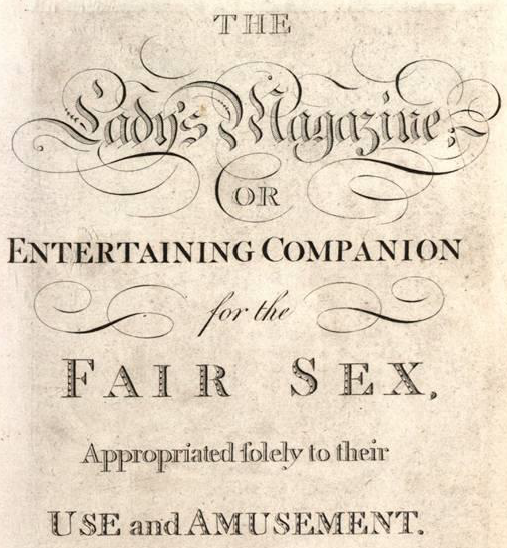
Nevertheless, the culture recognized that women were interested in political events. The February 1771 issue of a new British periodical called The Lady’s Magazine; Or, Entertaining Companion for the Fair Sex included this report:
AMERICAN NEWS.

Boston, New England, Dec. 10. At the Superior Court of Judicature, now holding at Boston, came on the trial of eight soldiers belonging to the 29th regiment, who stood indicted for the murder of the several persons on the 5th of March last, by firing their guns in King-street. The examination of witnesses took up five days; the Counsel for the Crown and the Counsel for the prisoners held about two days: On Wednesday the honourable Court summed up the case, when the jury brought in their verdict, two of the soldiers guilty of manslaughter, the other six not guilty. The two former were recommitted to gaol, imd the six were discharged.

The two soldiers convicted as above, have since been branded in the hand in open Court, and discharged.

Boston, Dec. 17. At the Superior Court held in this town last Wednesday, came on the trial of Edward Manwaring, Esq; an Officer of the Customs, Mr. John Munro, Notary Public, Hammond Green and Thomas Greenwood, who had been charged with firing guns out of the Custom-House on the 5th of March, and indicted by the Grand-Jury for the murder of those persons that were killed at that time, and for which Manwaring, &c. were imprisoned. After a few hours trial, they were acquitted.
That was the same text that appeared in many other British newspapers and magazines of the same month because printers thought that news would interest all their readers.

Tuesday, March 07, 2017

Watchman Langford “in King-street that evening the 5th March”

Yesterday we saw rookie town watchman Edward G. Langford dealing with the influx of British soldiers—and, more troublesome, British army officers—into Boston in 1768.

On 5 Mar 1770, Langford saw the conflict between the local population and the army come to a head in front of the Customs house on King Street, a short walk from the watch-house that was the base for his nightly patrols.

Langford was called to testify at the trials of Capt. Thomas Preston and the enlisted men. Here’s the record of his testimony from the latter trial, as taken down by John Hodgson:

Q. Was you in King-street that evening the 5th March?

A. Yes. The bells began to ring, and the people cryed fire: I run with the rest, and went into King-street; I asked where the fire was; I was told there was no fire, but that the soldiers at [James] Murray’s barracks had got out, and had been fighting with the inhabitants, but that they had drove them back again. I went to the barracks, and found the affair was over there.

I came back, and just as I got to the Town pump, I saw twenty or five and twenty boys going into King-street. I went into King-street myself, and saw several boys and young men about the Sentry box at the Custom-house. I asked them what was the matter. They said the Sentry [Pvt. Hugh White] had knocked down a boy [Edward Garrick]. They crowded in over the gutter; I told them to let the Sentry alone. He went up the steps of the Custom-house, and knocked at the door, but could not get in. I told him not to be afraid, they were only boys, and would not hurt him. . . . The boys were swearing and speaking bad words, but they threw nothing.

Q. Were they pressing on him?

A. They were as far as the gutter, and he went up the steps and called out, but what he said I do not remember.

Q. Did he call loud?

A. Yes, pretty loud.

Q. To whom did he call?

A. I do not know; when he went up the steps he levelled his piece with his bayonet fixed. As I was talking with the Sentry, and telling him not to be afraid, the soldiers came down, and when they came, I drew back from the Sentry towards Royal-exchange lane, and there I stood. I did not see them load, but somebody said, are you loaded; and Samuel Gray…came and struck me on the shoulder, and said, Langford, what’s here to pay.

Q. What said you to Gray then?

A. I said I did not know what was to pay, but I believed something would come of it by and bye. He made no reply. Immediately a gun went off. I was within reach of their guns and bayonets; one of them thrust at me with his bayonet, and run it through my jacket and great coat.

Q. Where was you then?

A. Within three or four feet of the gutter, on the outside. . . .

Q. How many people were there before the soldiers at that time?

A. About forty or fifty, but there were numbers in the lane.

Q. Were they nigh the soldiers?

A. They were not in the inside of the gutter.

Q. Had any of the inhabitants sticks or clubs?

A. I do not know. I had one myself, because I was going to the watch, for I belong to the watch.

Q. How many soldiers were there?

A. I did not count the number of them, about seven or eight I think.

Q. Who was it fired the first gun?

A. I do not know.

Q. Where about did he stand that fired?

A. He stood on my right, as I stood facing them: I stood about half way betwixt the box and Royal-exchange lane. I looked this man (pointing to [Pvt. Mathew] Killroy) in the face, and bid him not fire; but he immediately fired, and Samuel Gray fell at my feet. Killroy thrust his bayonet immediately through my coat and jacket; I ran towards the watch-house, and stood there.

Q. Where did Killroy stand?

A. He stood on the right of the party.

Q. Was he the right hand man?

A. I cannot tell: I believe there were two or three on his right, but I do not know. . . .

Q. Did you see any thing hit the soldiers?

A. No, I saw nothing thrown. I heard the rattling of their guns, and took it to be one gun against another. This rattling was at the time Killroy fired, and at my right, I had a fair view of them; I saw nobody strike a blow nor offer a blow.

Q. Have you any doubt in your own mind, that it was that gun of Killroy’s that killed Gray?

A. No manner of doubt; it must have been it, for there was no other gun discharged at that time.

Q. Did you know the Indian that was killed?

A. No.

Q. Did you see any body press on the soldiers with a large cord wood stick?

A. No.

Q. After Gray fell, did he (Killroy) thrust at him with his bayonet?

A. No, it was at me he pushed.

Q. Did Gray say any thing to Killroy, or Killroy to him?

A. No, not to my knowledge, and I stood close by him.

Q. Did you perceive Killroy take aim at Gray?

A. I did not: he was as liable to kill me as him.
Langford’s testimony was important in positively identifying Pvt. Mathew Kilroy as the soldier who had fatally shot ropemaker Samuel Gray. Kilroy was one of the only two defendants convicted of manslaughter and branded as a felon.

Edward G. Langford remained on the town watch payroll until November 1772. The last record I found of him showed that he died on 26 Mar 1777, aged thirty-eight. He was buried out of Trinity Church. Five years later a Mary Langford, perhaps his widow or his sister, was licensed to retail alcohol to support herself.

Monday, March 06, 2017

“Returning to our Watch House meeting with three Officers”

As I described yesterday, in the summer of 1768 Edward G. Langford started to work under Benjamin Burdick, constable of the Town House Watch.

As town employees, their assignment was to patrol the streets of central Boston at night. They called out the time and “All’s well” if all was indeed well, and raised the alarm if there were fires or other problems.

Neither Burdick nor Langford had roots in the town’s old Puritan establishment. Burdick was a Presbyterian, Langford an Anglican. Burdick was a barber by trade; I don’t know Langford’s profession, but he didn’t own much property or engage in trade. They were working-class men, doing a important but undesirable job when most of their neighbors were asleep.

And that job got harder in October 1768 when the first of four British army regiments arrived in town, sent to tamp down riots against the Customs department. For the watchmen, the problem wasn’t the soldiers—it was their officers.

In my paper about Boston’s pre-Revolutionary town watch published in the Dublin Seminar volume on Life on the Streets and Commons, I quoted a complaint that Burdick, Langford, and another watchman named John McFarland filed on 14 Nov 1768. They said two “Officers with their Swords under their Arms” had yelled at them for doing their jobs, threatened them with a “drubbing” from the soldiers, and said “they had Orders from his Majesty, and they were above the Selectmen.” (The whole complaint appears here.)

It turns out that wasn’t the first time Burdick and Langford had clashed with army officers. I recently found this deposition published in the Magazine of History in 1910:
Boston, November ye 5, 1768.

At two o’clock in the Morning Benjamin Burdick Constable of the Watch & Edward Langford a proper Watch Man being upon our rounds returning to our Watch House meeting with three Officers as we gave the Time of Night they gave the Time of Night in answer to us with a great noise in the streets and we hailed them & they came up to us & call’d us damd Scoundrels & swore by God they would put the Constable in Irons

then we retired to our Watch House

Then he went to the Guard gave the command not to suffer the Watch to hail any Body in the street

we told them our orders were to hail every Body that walked the streets & we should obey Our Order

then they replied God damne you you scoundrels I will pull you out of the House & put you in Irons & all the answer I gave them was as thus. Gentlemen I am sorry to see you behave in such a Manner in the Street & they still kept cursing and daming of us & we never receiv’d so much abuse in our lives.
Justice of the peace John Ruddock, who would have his own physical run-ins with the army, collected this testimony on 10 November, and both Burdick and Langford signed it. (I broke up the one big paragraph to make it slightly easier to follow, but I couldn’t do anything about the shifts between first person singular and first person plural.)

In those encounters the watchmen thought they, as “proper” employees of the town, had authority to hail all pedestrians at night. Army officers thought they, as officers and as gentlemen, shouldn’t have to answer to working-class civilians. Likewise, at checkpoints, army sentries were under orders to halt people and vehicles; Bostonians, especially those of higher social rank and Whig consciousness, resented having to answer to a standing army.

Those conflicts flared into violence many times during the regiments’ first months in Boston. On 18 Jan 1769, “several officers of the army” even attacked the watch-house on King Street, where Burdick and Langford worked. The violence became less frequent for most of 1769 but came roaring back at the end of that year and in early 1770.

Thus, when Langford and later Burdick arrived on King Street on 5 Mar 1770, they weren’t surprised to see a fight between locals and soldiers. They had been in the middle of that conflict for months.

TOMORROW: What Langford witnessed.

Sunday, March 05, 2017

Edward G. Langford, Town Watchman

One of the Bostonians caught up in the Boston Massacre was Edward Langford, who identified himself during the subsequent trials as a member of the town watch. What background brought him to patrolling Boston at night?

Notes taken at the trials identify that man as “Edd. Gambleton Langford” (Robert Treat Paine), “Edward Gambett Langford” (John Adams), and “Edward G. Langford” (shorthand transcriber John Hodgson). Later church records state that Edward Langford died on 26 Mar 1777, aged thirty-eight—meaning he was born in 1738 or 1739.

All that appears to connect the watchman with Thomas and Judith Langford, shown in the records of King’s Chapel (shown here) as having two sons baptized there: Edward Mortimore Langford on 24 Dec 1737 and John Gamberto [sic] Langford in 1740. Perhaps the first Edward died young and the parents gave the future watchman the same first name, plus a middle name he’d share with his brother. (The family was unusual for the time for using middle names at all.) Thomas and Judith Langford also appear to have also had sons Nicholas, born in 1724, and Arthur, and perhaps a daughter named Mary around 1725.

Judith Langford died before Edward turned nine, and on 14 Aug 1746 Thomas Langford married Mary Beatel. They had more children, most of whom died young:
  • Frances born in 1747.
  • Sarah born and died in 1749.
  • Nicholas born in 1750, baptized privately (often a hint of poor health), and died in 1751.
  • A second Sarah born in 1752.
  • A second Nicholas, born and died in 1754.
In 1757, close to his twentieth birthday, Edward Langford served as sponsor for the baptism of a baby named Ann Stone in King’s Chapel. That shows he continued to have ties to the Church of England. However, on 9 June 1761 the Rev. Samuel Checkley, Congregational minister of the New South Meetinghouse, married Edward Langford and Mary Gyles, several months after they first announced their intention to marry.

Edward and Mary Langford, along with a senior Mary Langford, sponsored the baptism of Arthur and Elizabeth Langford’s daughter Judith at King’s Chapel in 1765. (That’s why I suspect the senior Mary, Arthur, and Edward were all siblings, children of the late Judith Langford.) I haven’t found records of Edward and Mary having children of their own.

Nor have I found records indicating what profession Langford took up in the late 1750s and early 1760s. He appears to have been too poor to show up in real estate and town government records, too rich to be on the poor rolls. But on 27 June 1768, Boston selectmen’s records say:
Mr. [Benjamin] Burdick the Constable of the Watch presented Edward Langford as a suitable Person for a Watchman in the room of John Hyman who has left the Watch, and he was approved of by the Selectmen accordingly
Langford was thus hired to help Burdick patrol the middle part of the town at night, watching for fires or disturbances and calling out the time.

Three months later, British troop ships arrived in Boston harbor, bringing the first of four regiments of soldiers to patrol the town.

TOMORROW: So how did that go?

Saturday, March 04, 2017

When I Paint My Massacre

This week the history painter Don Troiani unveiled his depiction of the Boston Massacre. Troiani is known for his careful research, which includes collecting period artifacts and clothing. He was also assisted by some of the New England reenactors who depict this event outside the Old State House museum [in years when it’s not going to be 10°F].

Note the soldiers’ headgear. Cpl. William Wemys (in the dark surtout or overcoat at the left) and Pvt. Hugh White (next to him) were from the 29th Regiment’s regular infantry companies while the other men were from the grenadier company. Often they’ve all been lumped together as grenadiers.

In recent years researchers have speculated, based on the Henry Pelham engraving and on British army paperwork, that the grenadiers of the 29th wore cocked hats like regular infantrymen since their distinctive tall caps didn’t arrive before they sailed for Boston. However, new research suggests the grenadiers of the 29th did receive their caps in time, so Troiani depicted those men wearing period caps.

Troiani also made an artistic choice to depict the scene from behind the soldiers, putting the viewer literally on their side of the confrontation. We don’t see the men and boys—some aggressive, some not—being shot off the side of the canvas.

The press release announcing this painting seems to lean even further to the side of the soldiers. It says of Pvt. White, “Having witnessed Edward Garrick verbally assault Lieutenant – Captain [sic] John Goldfinch, he reprimanded the youth with a strike to his head with his firelock.” Thus, Garrick’s rude words become an “assault” while White’s actual violence is a “reprimand.”

The same paragraph goes on to quote John Adams’s description of the crowd that gathered in response to the violence: a “motley rabble of saucy boys, negroes and molattoes, Irish teagues and outlandish jack tarrs.” But it doesn’t cite Adams by name or note that he was speaking as the soldiers’ defense attorney—i.e., that description was one side of a courtroom argument. What, we might ask, would this same event look like from the other side?

Troiani usually makes his paintings available as prints through W. Britain, and I assume this one will appear there soon. Meanwhile, the research behind this painting will also be on display tonight at this year’s reenactment. [ADDENDUM: Alas, canceled because of the frigid forecast.]

Friday, March 03, 2017

Thomas on Louisa Catherine Adams in Quincy, 8 March

I’m breaking into the wall-to-wall Boston Massacre coverage for an extra posting about an event coming up in Quincy.

On Wednesday, 8 March, the Adams National Historical Park will host Louisa Thomas, author of Louisa: The Extraordinary Life of Mrs. Adams, the first full biography of Louisa Catherine Adams, the sixth U.S. First Lady.

The event description:
Born in London to an American father and a British mother on the eve of the Revolutionary War, Louisa Catherine Johnson was raised in circumstances very different from the New England upbringing of the future president. She was taught to consider herself an American and, more important, to marry one. John Quincy’s life had been dedicated to public service from the earliest age. They had a tempestuous courting yet fell in love despite their differences.

No longer residing in gilded England, she was on the road–a diplomat’s wife on a diplomat’s small stipend. Louisa and John Quincy lived in Prussia where they were viewed suspiciously as upstart rebels and in Tsarist Russia where Louisa was favored at the royal court by Alexander I. They experienced the height of the Napoleonic Wars, and Louisa famously traveled with her young son from wintry Russia to France, encountering hostile troops on the voyage. This lifestyle of traveling back and forth from America and country to country was difficult to bear; she suffered miscarriages, the death of her infant daughter, separation from her two eldest sons, and many illnesses.

Later, when permanently back in the United States, she began to form her own public persona by paying close attention to politics and the actions of former first ladies while keeping in mind John Quincy’s presidential aspirations. She supported his crusade and focused her own efforts on what she called “my campaigne”–hosting parties to promote her husband’s popularity. His presidency was a trying time for them yet it strengthened their already deeply close marriage, which would last half a century.

In her unpublished diaries and memoirs, Louisa writes not only the details of her days but also of, more significantly, her rich inner life, her thoughts and feelings, and her thirst for knowledge. Throughout her life Louisa often felt isolated. This was deepened by her views on gender equality, which were formed early and ripened over time. “I cannot believe that there is any inferiority in the sexes, as far as mind and intellect are concerned,” she wrote.
This program will start at 12:00 noon at the park visitor center, and a book signing will follow. Validated parking is available in the garage at Presidents Place Galleria on Hancock Street. The program itself is free and open to the public.

Pvt. Joseph Whitehouse’s Story about Capt. Goldfinch

Yesterday I described how Jane Crothers, an eyewitness to the Boston Massacre, married Pvt. Joseph Whitehouse of the 14th Regiment later in March 1770.

Whitehouse also went to Christ Church (Old North) that month for the baptism of a child of another 14th Regiment soldier, George Simpson, on 14 March. Christ Church was one of Boston’s three Anglican churches, preferred by the soldiers from Britain and Ireland.

By the end of that month, the 14th Regiment had moved to Castle Island in Boston harbor, thus no longer inside the town of Boston and in daily contact with its civilians. They were still there in August, and Pvt. Whitehouse was one of the soldiers who lined up to give testimony to justice of the peace James Murray (shown here) about how badly the locals had treated them.

On 25 August, Whitehouse stated:
That about the latter end of February 1769, he was assaulted in the Streets of Boston by a mob of the townsmen, throwing pieces of Ice and snow-balls at him, calling him Scoundrel, Lobster, bloody back’d dog and much more abusive language, to all which he made no reply.

And further deposeth, that on the 5th. March last in the Evening as he was going to the barracks, he saw a number of the inhabitants striking Capt. Goldfinch who was lying on the ground, his sword taken away, and his face very much bruised, on his attempting to assist him, the mob immediately fell on him, and beat him in such a manner, that it was with much difficulty he reached the barracks.
Capt.-Lt. John Goldfinch of the 14th also played a major role in the events that led up to the Massacre. According to George R. T. Hewes, an apprentice at John Piemont’s shop dressed the officer’s hair in December, and the barber promised that apprentice that he could have the payment for that job. But then Goldfinch didn’t pay immediately, nor, it seems, as soon as the bill came due in three months.

So as Capt. Goldfinch passed by the Customs house on King Street on the evening of 5 March, apprentice Edward Garrick heckled him about the bill. He “owed my fellow Prentice,” Edward called. In fact, by that evening Goldfinch had paid the bill—so recently he still had the receipt in his pocket. But he disdained haggling on the street with an apprentice, leaving Pvt. Hugh White to put an end to the topic by clonking Edward on the head.

Goldfinch was one of the many people who testified about what happened that night. He gave a deposition for A Fair Account of the Late Unhappy Disturbance at Boston, published in London. He testified at the soldiers’ trial. He had every reason to describe the Boston crowd as violent.

Yet Goldfinch never described being personally assaulted, knocked to the ground, “his face very much bruised.” He never described his sword being taken away. Instead, his story was about finding a brawl going on outside the barracks rented from Justice Murray, reestablishing order there, and then hearing the shots from King Street.

Was Pvt. Whitehouse mistaken about which British officer he saw “lying on the ground” and tried to help? That seems unlikely. And if that were so, we would expect to see Goldfinch or another officer complain about that assault on a colleague. The whole point of the Fair Account pamphlet and the depositions collected at Castle William was to paint the townspeople as violent. But there’s no complaint about such an incident on 5 March.

I suspect Pvt. Whitehouse correctly suspected what his superiors wanted to hear about the locals, and knew that Goldfinch was somehow involved in the King Street incident. So he came up with this story of the captain under attack. Whitehouse’s tale is one reason I’m as skeptical about the soldiers’ depositions as I am about the Bostonians’ testimony to their own friendly magistrates.

COMING UP: Don Hagist traces Pvt. Whitehouse’s military career.

Thursday, March 02, 2017

Jane Crothers, Witness to a Massacre

In early 1770, Jane Crothers lived near the head of Royal Exchange Lane, thus near the Boston Customs House. On the night of 5 March she heard noise outside. She went out to ask the army sentry guarding that building, Pvt. Hugh White, what was the matter.

White said he didn’t know—not mentioning that earlier in the evening he’d clubbed a teen-aged barber’s apprentice, Edward Garrick, on the head.

Then Crothers saw people coming from the direction of the Town House (now the Old State House). She heard them say, “There’s the Centinel, the bloody back Rascall, let’s go kill him!” Those people had been riled up by Garrick and his friends, hoping for justice.

Crothers would later testify in court about what happened next. There are two sets of notes about what she said, mostly in agreement. An anonymous notetaker recorded:
They kept gathering throwing Snow balls, Oyster Shells and chunks of Wood at the Centinel. Beat him from out of his Box to the steps.

A space after saw a party coming from the Main Guard, an Officer which proved to be Capt. [Thomas] Preston with them. He desired his Men to halt and the Centinel to recover his Arm, fall into his Rank and march up to the Main Guard. The Centinel fell in and the men wanted to move forward to the Guard house but could not for the Riot.

The people called out fire, damn you why dont you fire, you cant kill us [all]. I steppd to the Party. Heard a Gentleman ask the Capt. if he was going to order his men to fire. He said no Sir by no means, by no means. A Man—the Centinel—then pushed me back. I step’d back to the corner. He bid me go away for I should be killed.

A Man came behind the Soldiers walkd backwards and forwards, encouraging them to fire. The Captain stood on the left about three yards. The man touched one of the Soldiers upon the back and said fire, by God I’ll stand by you. He was dressed in dark coloured Cloaths. I don’t remember he had a Surtout or any lace about him. He did not look like an Officer. The man fired directly on the word and clap on the Shoulder.
This testimony, from one of the very few women on the scene that night, helped to exonerate Capt. Preston of having ordered the soldiers to fire.

By the time of Preston’s trial, Jane Crothers was no longer Jane Crothers. On 27 March, three weeks and a day after the Massacre, she married Pvt. Joseph Whitehouse of the 14th Regiment at Christ Church (Old North). She was thus attached to the army, though not identified as such in the trial records.

Instead, those notes record another unusual aspect of Jane Whitehouse’s testimony. Under Massachusetts law, witnesses could swear to tell the truth simply by holding up their hand and reciting or assenting to an oath. But someone “said that Jane Whitehouse thought there was no obligation from Oaths administred by holding up the hand.” She was therefore “Sworn upon the Bible.” I’ve tried to find a discussion of that distinction from the period in hopes that it would say something about the woman’s religion, and I haven’t.

TOMORROW: What Pvt. Whitehouse had to say.

Wednesday, March 01, 2017

This Year’s Saturday Night Massacre

This Saturday, 4 March, the Bostonian Society will host a full day of events in honor of the 247th anniversary of the Boston Massacre. Here are the scheduled events, the first three inside the Old State House and included with admission to the museum.

10:30 A.M. and 12:00 noon
Blood on the Snow
Discover the truth behind acting governor Thomas Hutchinson’s challenging decision in the aftermath of the Massacre. Actors will present a scene from this summer’s production of Blood on the Snow, an original drama by Boston playwright Patrick Gabridge. [For more about this show, which will return for another run this summer, see my article in Humanities magazine.]

11:00 A.M. and 2:00 P.M.
Trial of the Century
Space is limited; tickets available at 9:00 A.M. at the front desk of the museum.
Join patriot lawyers John Adams and Robert Treat Paine in the trial of the soldiers accused of murdering five Bostonians at the Massacre. Young visitors participate as the witnesses and jurors who decide the verdict in this celebrated case.

1:00 P.M. and 3:00 P.M.
Talk of the Town
Immerse yourself in Boston’s colonial past by meeting citizens who lived through the tumultuous period of British occupation. Visitors gain insight and perspective on real events by asking questions and hearing accounts from historic interpreters.

7:00 P.M.
Reenactment of the Boston Massacre
[ADDENDUM: Because of the forecast of frigid temperatures and bone-chilling winds, the 2017 Massacre reenactment has been canceled. All the indoor daytime activities listed above will go on as scheduled.]
Witness this infamous event, authentically recreated in front of the Old State House by living historians. Before the action unfolds, hear patriots, loyalists, and moderates talk about the events and attitudes that led to that fateful night.

The last event will take place in front of the Old State House and is free to the public. I’ll be there, once again providing the narration.

In addition, the dedicated reenactors who will portray the confrontation on King Street are also preparing other vignettes to be acted out on the streets of Boston during the day. So keep your eyes open for drama!

(The photo above was taken in 2013 by Matt Conti for NorthEndWaterfront.com. Here are his images from last year. Details may look different this year as the reenactors are constantly striving to improve the accuracy of their kit.)