J. L. BELL is a Massachusetts writer who specializes in (among other things) the start of the American Revolution in and around Boston. He is particularly interested in the experiences of children in 1765-75. He has published scholarly papers and popular articles for both children and adults. He was consultant for an episode of History Detectives, and contributed to a display at Minute Man National Historic Park.

Subscribe thru Follow.it


•••••••••••••••••


Tuesday, January 21, 2020

Ens. Eld Stops into a New York Coffeehouse

After participating in the skirmish over prisoners in the Westchester “neutral ground” on 18-19 Jan 1780, as I’ve been describing, Ens. George Eld of the Coldstream Guards went into New York City.

He might have expected a respite from fighting. Instead, this is what he wrote in his diary:
21st. Rode to New York. At twelve at night entering the Coffee house I was accosted by Lt. [Kenneth] Callender of the 42d. Regt., (with whom I had no acquaintance) who insolently asked me if I would drink some punch—I declined the offer, on this he observed, “ubi periculum ibi est gloria” [where there is risk of glory] & asked me if I wanted a translation—

I told him, no, but requested an explanation—

on this he drew a small sword—

I also drew mine which was a very short couteau [dagger]—

he perceived the superiority he possessed from the difference of the weapons, which seemed to stimulate his cowardice to the attack which he began by two lunges, which having parried, with all the fury & vigor I possessed I returned by cutting at him, without paying any attention to a guard—

he retreated the length of the Coffee house—I had now beat the point of his sword down & intended to have killed him, but was prevented by Capn. Peerie, who seized hold of my wrist & arrested the stroke—

I told him his interference was unmanly & ungentlemanlike as the contest was not finished—by this time some officers had taken Capn. Callenders sword from him—I declared if any person presumed to touch my sword I would run him thro’ the body.—

Capns. Peerie & Callender next morning asked my pardon.—I afterwards was informed that Capn. C.— being an uncommon good swordsman often insulted strangers in a similar manner.—

The disgrace he experienced from this contest, in some measure cured him.
I can’t identify “Capn. Peerie.” It’s possible he was another British army officer, a British naval officer, a privateer commander, or a Loyalist officer.

Adding to the uncertainty is how Ens. Eld didn’t know the other officers’ ranks—he referred to Callender as both a lieutenant and a captain, but the only officer of that surname in the 42nd Regiment was an ensign. That reflects how British army company officers didn’t wear insignia showing their rank. Fellow officers were just supposed to know.

After the war, Eld had a copy Lt. Col. Banastre Tarleton’s book about his southern campaign rebound with extra blank pages. Eld started to write his own commentary in that volume, as well as extracts from a journal. That book came to the Boston Public Library in 1879, and Eld’s writings were published by the Massachusetts Historical Society in 1880 and the Boston Public Library in 1892.

Monday, January 20, 2020

The Fighting Ground “between the Enemy & the American force”

Asa Lord was born on 29 June 1760 in Saybrook, Connecticut. Around the time he turned sixteen, he signed up for a few months of military service, and he continued to do short-term stints as the war continued.

Lord was eighteen years old in April 1779 when he enlisted in a Connecticut regiment for nine months. He was sent to Horseneck or Greenwich, on Long Island Sound, “employed in guarding the lines between the Enemy & the American force & in preparing materials for entrenchments.”

In January 1780 Lord was one of the Connecticut militiamen who raided the Morrisania, New York, house of Isaac Hatfield, Jr., a lieutenant colonel in the Loyalist militia, as I’ve been describing. Decades later Lord’s pension application stated:
On the 17th day of January, About one hundred & ten of their Soldiers, volunteered to go down to Morisena & Attack a British Guard Stationed there. They put themselves under Capt. Samuel Lockwood. They started about noon of the 17th—And about one oclock the next morning, attacked the Said Guard in front of their quarters. A hot engagement ensued & they finale killed most of the British guard, took nine or ten prisoners & Started on their retreat
However, one of the Loyalist officers who had been staying with Hatfield, Maj. Thomas Huggeford (also spelled Huggerford and Hungerford), slipped away from the Connecticut men. Someone who knew him after the war described Huggeford as “a large, fleshy, middle-aged man, active and humane,” but evidently he could move with stealth and speed.

The story continues in James Rivington’s Royal Gazette:
Major Huggerford soon after effected his escape, and returning, formed a small body of Refugees, consisting of thirty-five Dragoons, and twenty-eight Infantry, under the command of Capt. [Henry] Purdy, instantly pursuing the rebels with this detachment.

The Infantry took post upon the heights, beyond East Chester, and the mounted, consisting of Cornet Hilat, Adjutant [John] Pugsley, two Serjeants, and twenty-nine privates, under the command of Lieut. [Samuel] Kipp, continued the pursuit, and came up with their rear between New-Rochelle and Mamarroneck…
Because the Loyalists in that militia all came from the same communities, they had many ties. For example, captured with Isaac Hatfield was his sister Mary’s husband, Moses Knapp. The lieutenant who led the pursuing light horsemen, Samuel Kipp, was a brother-in-law of another of Isaac Hatfield’s sisters, Abigail. And eventually Samuel Kipp married Mary Knapp, daughter of Moses and Mary—i.e., his brother’s sister-in-law’s daughter.

Despite that strong motivation to rescue their friends and relatives, the pursuers were too late to free the men whom the Americans had taken captive. Isaac Hatfield stated that he was “carried to New England; [and] remained Prisoner about 3 months.”

But others in the raiding party moved more slowly, as Gen. William Heath wrote:
The militia after conducting this enterprize with much address and gallantry imprudently loitered in their retreat, were pursued & overtaken by a party of light Horse, a number of them shockingly cut
Rivington’s newspaper reported that the Loyalists had “killed 23, and took 40 prisoners, some of whom are wounded.” Furthermore:
We are assured that the only weapon used by Major Huggerford and his determined band of Refugees, in their attack and defeat of Capt. Lockwood’s party, was the Sabre,---and had not their horses been jaded to a stand-still, every one of the enemy would have fallen into their hands.
Among the prisoners was Asa Lord, who recalled in his 1832 pension application:
Between nine & ten oclock in the morning of the 18th Jany. they were overtaken by a detachment of Queens Guards, many of the Americans killed & the Declarant & Eight others taken prisoners, carried to New York & confined in The Old Sugar House. The Declarant was confined there ten months & three days.—He was then exchanged.
Yet another view of this clash comes from George Eld, who had joined the Coldstream Guards as an ensign—the equivalent of a second lieutenant—in March 1776. A copy of his diary is owned by the Boston Public Library.

The Coldstream Guards were sent to New York in 1779. Since Eld was born in America, that was some sort of homecoming, but unfortunately we don’t seem to have any information about exactly where or when he was born.

Ens. Eld was stationed on the British lines outside New York City, and at the start of 1780 he was put in command of a light infantry company. In his diary he wrote:
The two Light Infantry Companies of the Guards with the mounted refugees were ordered out under the Command of Colo. [Francis] Hall—after a march of 25 miles fell in with their [the enemy’s] rear guard—a trifling but general contest ensued—nine rebels were killed, sixteen taken prisoners, many wounded.—The rebels now appeared to the amount of 800, when on our taking an advantageous situation they retired—

we returned 12 miles & remained the night in some log houses & returned to the lines on being joined by a detachment sent out to Cover Our retreat.
That was the end of this seesaw skirmish in the “neutral ground” of Westchester County. Because there was so much territory between the army lines, such raids meant long marches—the Connecticut lieutenant colonel Matthew Mead wrote of his men marching “30 miles out,” and Ens. Eld recorded a 25-mile march and an overnight stop on the way back. And at the end of all the fighting, both sides had seen some men killed and more taken prisoner.

TOMORROW: Ens. Eld in the city.

Sunday, January 19, 2020

Raid on Isaac Hatfield’s House

As I described yesterday, in January 1780 Capts. Samuel Lockwood and Samuel Keeler of the Connecticut militia attacked the home of Isaac Hatfield, Jr., in Morrisania, New York.

Hatfield (1748-1822) had been born in America to a substantial farming family and raised in Westchester County. The notes of what he later told the Loyalists Commission say:
On breaking out of Troubles, from the first took part with Brit. Was required by rebels to serve in their Militia, & to sign their Association, which he refused. In consequence Of this he made himself Obnoxious. They fin’d him which he refused to pay, & he was obliged to quit home.
While he was away, Hatfield said, “he lost 18 Head Cattle, 4 Horses, farm horses, 50 Sheep.” He “Heard Of some being taken by one person, some by another, some for fines.” In other words, his neighbors were stripping away his property.

When the Crown forces landed on Long Island in the fall of 1776, Hatfield volunteered for the Queen’s Rangers, commanding a company in that Loyalist regiment. In 1777 he joined Gen. Oliver De Lancey’s Brigade. Then came commissions from Gov. William Tryon to be an officer in the Westchester County militia, ultimately a lieutenant colonel.

On 18 January, the Connecticut militia came for Hatfield. The raiders shot three sentries and killed his horse—“a very fine horse,” worth 40 guineas, Hatfield’s lieutenant, Thomas Kipp, recalled.

Hatfield and the men stationed with him raced to the upstairs chambers of the house. There, Lt. Col. Matthew Mead of Connecticut wrote, “they had prepared a number of Casks of salt, of Flour & other lumber” as barricades.

In his memoir Gen. William Heath described the fighting inside Hatfield’s house:
The Colonel and his men took to the chambers, and fired out at the windows and down stairs at those who had entered the house; it appeared difficult, if possible, to dislodge them, the house was instantly set on fire, by putting a straw bed into a closet [i.e., small room], which compelled the enemy to jump out at the chamber windows, to avoid the flames.
On 22 January, James Rivington’s Royal Gazette reported inside New York:
Early on the morning of the 18th instant, a detachment of Rebel Militia, collected from the neighbourhood of Horseneck [i.e., Greenwich], under the command of a Captain Lockwood, attacked ahouse between Kingsbridge and De Lancey’s Mills, in which Lieut. Col. Hetfield, Major [Thomas] Huggerford, Captain [Moses] Knap, a Quarter-Master, and ten private Refugees of the Lieutenant-Colonel’s corps, were quartered:

The house being bravely defended for fifteen minutes; the Rebels were enabled to set fire to it, from the having gained possession of the ground floor; in consequence of which, this small party were reduced to the necessity of abandoning their post, and laying down their arms; they were in course taken prisoners, and the enemy immediately began their retreat.
The Connecticut men had fifteen prisoners of war in all. They triumphantly headed back north to the Continental lines.

But then Maj. Huggeford escaped.

TOMORROW: Rearguard action.

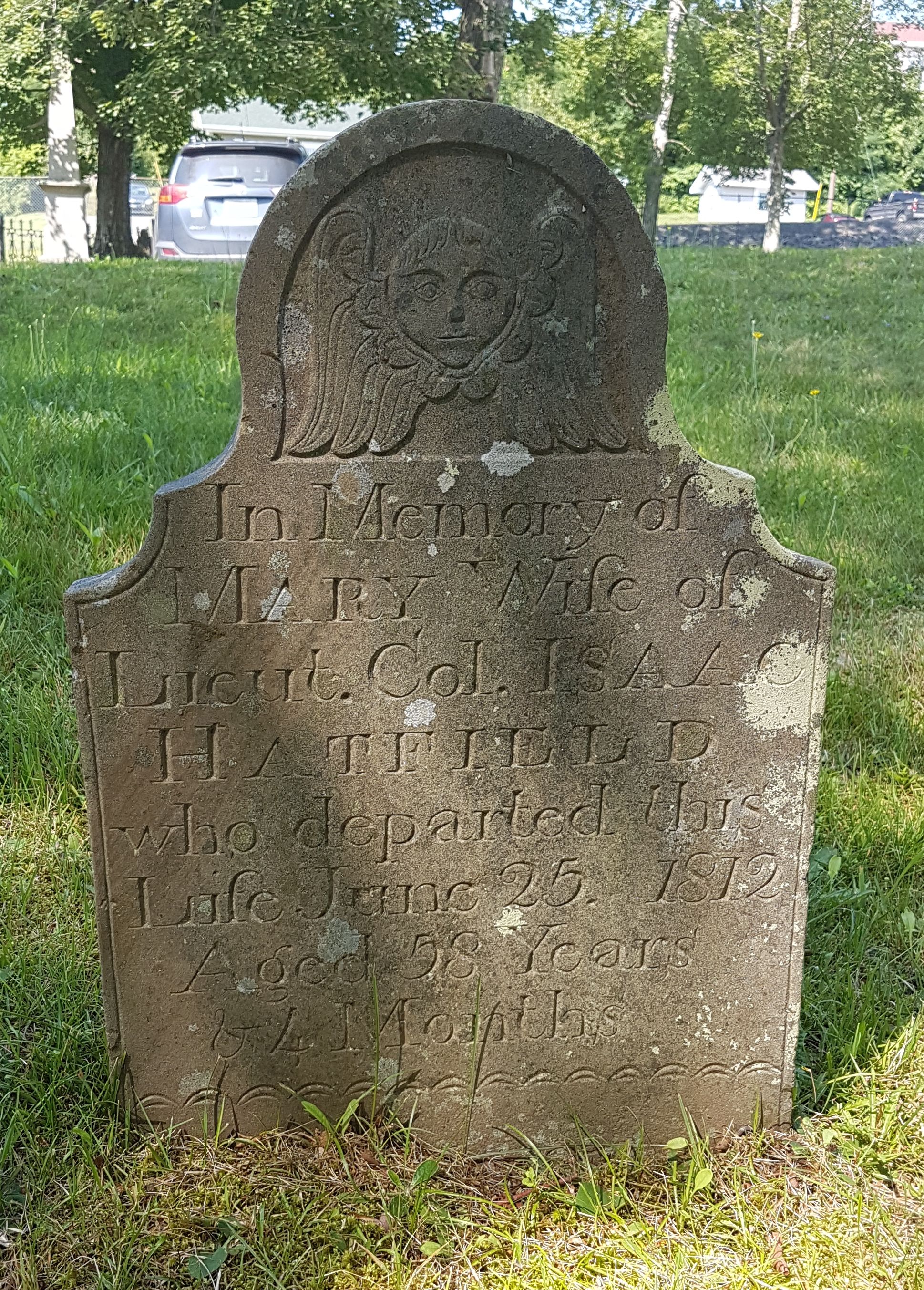
[The photo above, from Find a Grave, shows the headstone of Mary (Bayeux) Hatfield, whom Lt. Col. Isaac Hatfield married in 1786 after settling in Digby County, Nova Scotia.]

Saturday, January 18, 2020

Capt. Samuel Lockwood at War

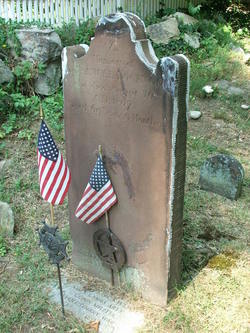
Samuel Lockwood (1737–1807, gravestone shown here courtesy of Find a Grave) of Greenwich, Connecticut, became a second lieutenant in the Continental Army in April 1775.

That fall, he joined Gen. Richard Montgomery’s invasion of Canada. On 5 November Lockwood’s commanders made him an assistant engineer with the rank of captain. The Continental Congress never recognized that rank but later voted to pay Lockwood a year’s salary as an engineer.

Lt. Lockwood’s specialty was really maneuvers on the water. He reconnoitered ahead of the army by boat during the march north and helped to capture eleven Crown vessels and Gen. Richard Prescott at Sorel.

The Battle of Québec didn’t work out so well for Lockwood, however. He was wounded, captured, and not released on parole until late in 1776.

As soon as Lockwood was formally exchanged in early 1777, the Congress commissioned him as a captain in Col. John Lamb’s artillery regiment. He served two years, resigning in 1779.

Capt. Lockwood was then done with the Continental Army, but he wasn’t done with the war. He remained active in his state’s military. In 1779 he commanded an armed vessel on Long Island Sound, attacking British ships in the Oyster Bay harbor in November.

On 17 Jan 1780, Capt. Samuel Lockwood led “forty volunteers from Greenwich” alongside Capt. Samuel Keeler and an equal number of Connecticut militiamen on a raid into New York. Their target was the home in Morrisania of Lt. Col. Isaac Hetfield, Loyalist commander of the Westchester County militia.

Gen. William Heath reported to New York’s Gov. (and Gen.) George Clinton about the Lockwood and Keeler raid a few days later:
they arrived at the place a little after one the next morning, attacked the picket, killed 3 and drove the others in, march’d to the House where Hatfield was, who, with his men took to the chambers [i.e., bedrooms] and kept up a fire down stairs and out at the windows; the militia behaved with great Bravery, call’d to Hatfield to Surrender or they would Set fire to the House…
TOMORROW: The view from inside Hatfield’s house.

Friday, January 17, 2020

Dublin Seminar to Look at “Living with Disabilities”

The Dublin Seminar for New England Folklife has announced the subject of this year’s conference: “Living with Disabilities in New England, 1630–1930.”

The conference will be held in Deerfield, Massachusetts, on the weekend of 19-21 June 2020. The Dublin Seminar strives to be a meeting place for scholars, students, and committed avocational researchers. Professional development points are available for public school teachers who participate.

The Dublin Seminar is now accepting proposals for papers and presentations at this conference that address the history of people living with disabilities in New England and adjacent areas of New York and Canada from the seventeenth to the early twentieth centuries. The principal topic examined by this conference is how children and adults with disabilities experienced disability in everyday life.

Proposals might address the following questions:
  • How was disability defined during this period?
  • How did gender, race, and class intersect with the experience and meaning of disability?
  • What was the relationship between the law and disability?
  • How did people with disabilities interact with institutions ranging from religious organizations to state-sponsored hospitals to schools?
  • What is the history of disability within the context of military or industrial settings?
  • How did people with disabilities interact with material culture and technology, including but not limited to assistive technologies such as artificial limbs and hearing aids; clothing; landscapes and buildings; and service animals?
  • What is the relationship between medical history and disability history?
The Seminar encourages papers that reflect interdisciplinary approaches and original research, especially those based on material culture, archaeological artifacts, letters and diaries, vital records, federal and state censuses, as well as newspapers, visual culture, business records, recollections, autobiographies, and public history practice or advocacy at museums, archives, and elsewhere.

The “Living with Disabilities in New England, 1630–1930” conference will consist of approximately seventeen lectures of twenty minutes each. Selected papers will appear as the 2020 Annual Proceedings of the Dublin Seminar to be published about eighteen months after the conference.

To submit a paper proposal for this conference, please submit (as a single email attachment, in Word or as a pdf) a one-page prospectus that describes the paper and its sources and a one-page vita or biography by 10 Mar 2020. Send proposals to dublinseminar@historic-deerfield.org.

Thursday, January 16, 2020

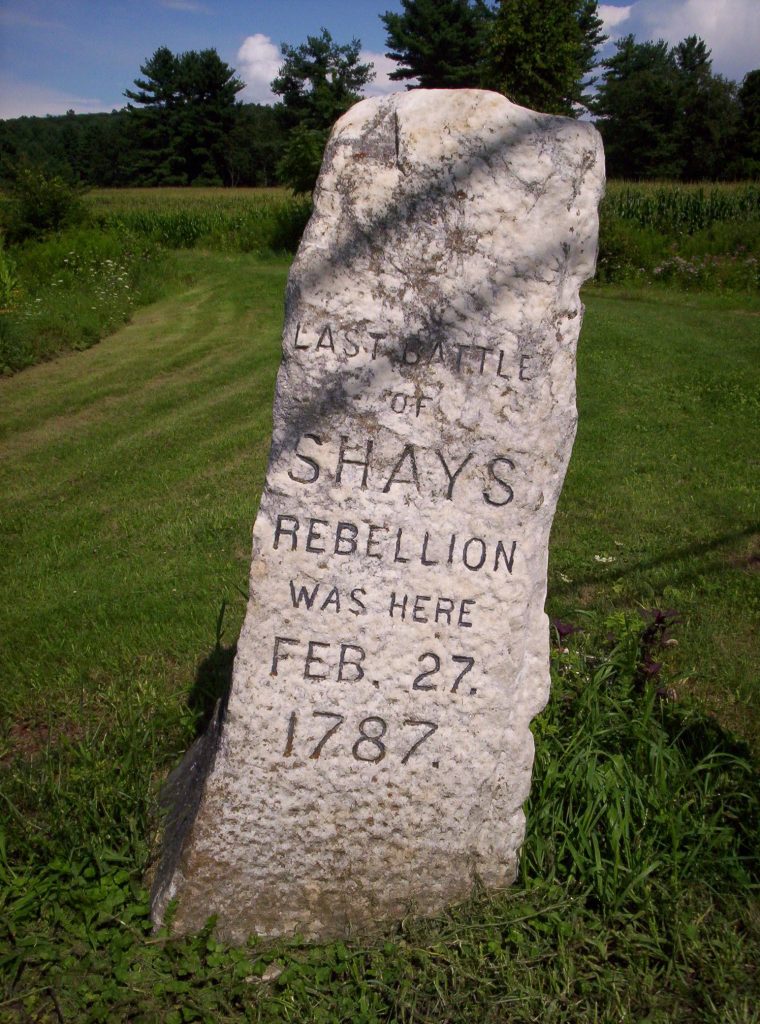
Shays Rebellion Symposium in Springfield, 25 Jan.

On Saturday, 25 Jan 2020, the Friends of Springfield Armory National Historic Site is hosting a symposium titled “Shays Rebellion: Perspectives on History.”

This event will take place on the campus of Springfield Technical Community College, and is co-sponsored by the National Park Service and the Pioneer Valley History Network.

There will be a day of presentations and discussion about the “regulation” in western Massachusetts in 1786 and 1787, the suppression of it, and the far-reaching effects.

The event description says:
While “Shays’ Rebellion” is often seen through an elite perspective of agrarian unrest by western Massachusetts farmers in 1786 and 1787, other viewpoints saw “Regulators” and their long campaign against unjust taxes. This crisis was by no means simple. It has a complex relationship not only with the history that preceded it, but also had a profound effect on the young United States moving forward. From the French and Indian War and the American Revolution to the Constitutional Conventions; from populist resistance movements to the exercise of a powerful centralized government, we may find that Shays’ Rebellion is not simply a local story with local meanings.
Scheduled presentations include:
  • “The Final Fight at Sheffield,” Tim Abbott, Regional Conservation Director, Housatonic Valley Association
  • “Shays Kerfuffle: A People’s Perspective,” Daniel Bullen, Ph.D.
  • “Archeology of the Shays Settlement,” Stephen Butz, Shays Settlement Project
  • “Three Men in Debt,” Tom Goldscheider, farrier, David Ruggles Center 
  • “More than a Little Rebellion,” Barbara Mathews, Ph.D., Public Historian and Director of Academic Programs, Historic Deerfield
  • “The Contested Meanings of ‘Shays Rebellion Day’ 1986,” Adam Tomasi, Northeastern University
Each bank of speakers will be followed by panel discussions and question and answer sessions.

The symposium will be held in the first-floor auditorium of Scibelli Hall (Building 2) at Springfield Technical Community College, One Armory Square in Springfield. That’s near the site of the largest clash of the uprising, where the Shaysites clashed with Massachusetts militia on 25 Jan 1787.

Presentations will begin at 9:00 A.M. with doors opening half an hour earlier. The program is scheduled to end at 4:00 P.M. Admission is $6 per seat, and box lunches are available for $10. Food options nearby are limited, so attendees should either order a box lunch or bring their own. In case of very bad weather, the event will be postponed to Sunday, 26 January.

Wednesday, January 15, 2020

The Legends of Sandy Flash Drive

The Philadelphia Inquirer just published an article about how two roads in the region—in areas where I’ve traveled, in fact—are named after a Revolutionary turncoat and highwayman.

This circumstance raises interesting questions about how we remember the past with public names and monuments.

Here’s a link to Rosemary S. Warden’s article “‘The Infamous Fitch’: The Tory Bandit, James Fitzpatrick of Chester County.”

James Fitzpatrick served with the Continental forces in 1775 and 1776, but then resisted further militia call-ups. In late 1777 he threw in with the British, serving as a scout around the time of the Battle of Brandywine and the seizure of Philadelphia.

For the next year, Fitzpatrick fought for himself as “Captain Fitz,” head of a band of highwaymen who targeted Whig officials, particularly tax collectors and militia officers. Chester County was a no-man’s land during the British occupation of the capital.

When Gen. William Howe withdrew to New York City in the summer of 1778, however, Fitzpatrick lost his refuge. He was captured in August, tried in September, and hanged—though not without special effort by the executioner.

Stories about Fitzpatrick grew into legends in the nineteenth century. In 1866 the novelist Bayard Taylor wrote The Story of Kennett based on those tales. Taylor called his recurring highwayman character “Sandy Flash.” In the romantic and credulous style of the Colonial Revival, the fictional tales of Sandy Flash soon became amalgamated with the real history of James Fitzpatrick.

Fitzpatrick’s crimes (and his treachery, when seen from an American point of view) thus became part of the exciting tableau of the American Revolution. Authors treated him as a Robin Hood, as an example of gallant bravado. There were rumors he’d left behind buried treasure. His story was deemed suitable for children’s literature.

As reporter Joseph A. Gambardello writes, in 1972 Pennsylvania laid out Ridley Creek State Park (which includes the Colonial Pennsylvania Plantation, a living-history museum, shown above) just in time for the Bicentennial. The state chose to name a main artery in the park after a man hanged for being a traitor to the state—Sandy Flash Drive. Later a new development in Kennett Square got streets named after Taylor’s characters, including another Sandy Flash Drive.

The issue of historical place names never fully goes away, but we’re at a moment of extra attention to those things. Do they always honor the people whose names they preserve? Do those people always deserve that honor? Here’s an example where the real figure, entwined with a fictional character and legends that might or might not be real, wouldn’t seem to merit official esteem.

But James Fitzpatrick’s history isn’t touching raw nerves—southeastern Pennsylvania isn’t being plagued by highwaymen. It may help that both Fitzpatrick and Sandy Flash were punished, providing a satisfyingly moral end to his tale. Still, we might ask why we like to overlook some historical figures’ misdeeds yet celebrate others.

Tuesday, January 14, 2020

The First David Center Research Fellowships

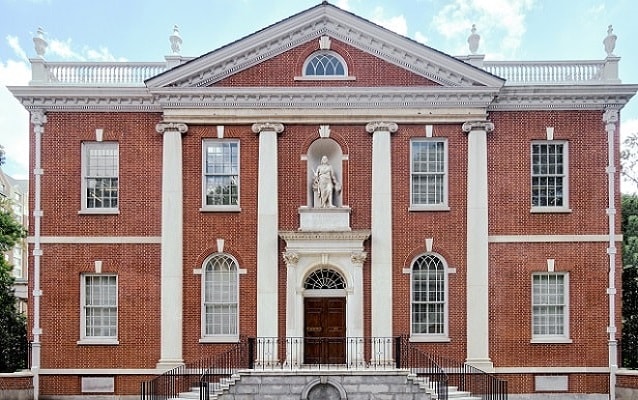
As discussed back here, the David Library of the American Revolution closed its facility in Washington’s Crossing, Pennsylvania, last year and merged with the American Philosophical Society in Philadelphia.

This week the new David Center for the American Revolution at the A.P.S. invited applications for its inaugural short-term resident research fellowships. The announcement says:
David Center Fellowships continue the 30-year tradition of the David Library awarding over 200 fellowships to scholars who have gone on to write hundreds of dissertations, academic articles, academic papers and books, and to teach at major institutions of higher learning worldwide, about the American Revolution and Founding Era. These funding opportunities provide one month of support for researchers in residence and are open to scholars in all fields who show a demonstrated need to use the collections for their project.

The David Center for the American Revolution integrates the rich manuscript, microfilm, and print collections of the David Library with the Early American history collections of the APS to create a one-stop-shop for the study of the American Revolution. . . . Comprehensive, searchable guides and finding aids to these collections are available online at www.amphilsoc.org/library and http://amphilsoc.pastperfectonline.com/.

Successful applicants are awarded a stipend of $3,000. The stipend is paid after the awardee arrives at the APS Library & Museum to begin their fellowship. The purpose of the stipend is to defray the costs of working in Philadelphia. Awards are taxable income, but the Society is not required to report payments. It is understood that recipients will discuss their reporting obligations with their tax advisors.

Fellowships may be taken starting any day no earlier than June 1, 2020 and must be completed by May 31, 2021. Fellows are required to be in residence for four consecutive weeks. Fellows do not have to decide on the dates of their fellowship right away; they have one year to decide, although most take their fellowships during the summer period.
Researchers who have already applied for an A.P.S. Library & Museum Short-Term Resident Research Fellowship will be automatically considered.

Applicants may be:
  • Holders of the Ph.D. or its equivalent.
  • Ph.D. candidates who have passed their preliminary examinations and are working on their dissertation research.
  • Degreed independent scholars (without current academic affiliation).
  • U.S. citizens or foreign nationals.
Candidates who live 75 or more miles from Philadelphia receive some preference.

All Applicants must submit:
  • A cover letter.
  • Curriculum vitae.
  • A research proposal (2 pages double-spaced) that outlines the status of your work and what you will research at the American Philosophical Society Library & Museum. Special attention must be made to specific collections that will be of use during your fellowship.
  • Two confidential letters of reference.
The application deadline is 6 Mar 2020. Notifications will be sent in April.

Monday, January 13, 2020

Glimpses of Early Blandford

As long as we’re out in Blandford with Henry Knox, we might as well enjoy the town’s eighteenth-century history.

Most of the first British settlers in the area were Scotch-Irish, moving west in a bunch from Hopkinton in 1736. They named their new community “Glasgow” or “New Glasgow.” The town’s first meetinghouse was Presbyterian rather than New England Congregationalist.

However, when the Massachusetts government formally incorporated the town in 1741, the new governor, William Shirley, insisted on naming it after the ship that he had just arrived on—the Blandford. Reportedly he had leverage because the town proprietors had claimed more land than they were entitled to, so they needed the governor’s approval more than the inhabitants’.

The name “Glasgow” survived in a few geographic names such as the “Glasgow or Westfield Mountain” that Knox referred to in his diary. The town reportedly lost a church bell that the city of Glasgow, Scotland, had promised if it kept its original name.

Blandford was on the Massachusetts frontier, thus at risk from the French and their Native allies. During 1749, almost every household fled to other towns for safety. In 1755, as war loomed again, the town petitioned the Massachusetts General Court for a swivel gun, a type of small cannon. It was stored at the house of the Rev. James Morton.

The town straddled one of the few roads through the Berkshire Mountains, so it saw a lot of traffic. In 1762 a tavern keeper named Joseph Clark petitioned the legislature to be forgiven for selling alcohol without paying the excise tax. His excuse:
That in the Year 1760 He purchased a licensed House and purchased a barrel of Rum, but being sick in August when he should have applied for a license, and his House lying in the Road used by Soldiers sold the same, out to them: and he boght the said Rum of a Retailer who had paid the Duties of excise thereon—
The Massachusetts House bought that argument. The Council disagreed.

Blandford grew quickly after the Revolutionary War. Growth brought change, as preserved in this family anecdote from local historian William H. Gibbs. He said that around 1791 Isaac Gibbs (1744-1823)
brought into town the first single wagon used here. The neighbors regarded it as a curiosity, and their horses as he drove to church the first Sabbath, being affrighted, fled with as much precipitation as they do in our own day at the sight of the steam engine. It was a matter so strange to the people, that they actually proposed to call a town meeting to prohibit the use of wagons.
But the problems of growth didn’t last long. In the 1800 U.S. Census, Blandford had a population of 1,778—the largest the town ever was.

Sunday, January 12, 2020

Henry Knox “after about three hours perseverance”

Here’s a link to the podcast recording of my conversation with Bradley Jay of WBZ last month about Col. Henry Knox and his mission to Lake Champlain to obtain more cannon for the Continental siege lines.

And here’s a timely question about Knox: Was 12 Jan 1776 the last day that he kept his diary of his mission to bring back cannon from the Lake Champlain forts?

The diary pages are visible on the Massachusetts Historical Society’s website. The last entries (pages 24-26) show Knox dealing with the Berkshire Mountains:
10th [January] reach’d [No 1,?] after have Climb’d mountains from which we might almost have seen all the Kingdoms of the Earth —

11th [January] went 12 miles thro’ the Green Woods to Blanford

It appear’d to me almost a miracle that people with heavy loads should be able to get up & down such Hills as Are here with any thing of heavy loads —

11th at Blanford we overtook the first division who had tarried here untill we came up—and refus’d going any further On accott that there were no snow beyond five or six miles further in which space there was the tremendous Glasgow or Westfield mountain to go down—but after about three hours perseverance & hiring two teams of oxen—they agreed to go
On the next page are a couple of receipts, the second apparently about those “two teams of oxen” that Knox hired:
Blanford Jany. 13. 1776—
Recd of Henry Knox eighteen shillings Lawful money for Carrying a Cannon weighing 24.3 p from this Town to Westfield being 11 Miles —

Solomon Brown
It looks to me like Knox arrived in Blandford on the 11th, catching up with men and horses he’d sent ahead. That evening or the 12th, he learned that those teamsters didn’t want to proceed because the lack of snow on the ground meant the road would be rough. In addition, they faced the steep slopes now in the town of Russell.

Knox overcame that problem with “three hours” of arguing plus two ox teams from Solomon Brown (1737-1786), a war veteran and a committee member for Blandford. Brown’s gravestone appears here at Find a Grave. I’m guessing that took place on 12 January, Knox remained in Blandford awaiting another set of men, and Brown returned to sign the receipt on 13 January.

And there are no more dated entries in that notebook.

TOMORROW: Blandford in the eighteenth century.

Saturday, January 11, 2020

When Boston Cracked Down on Drivers

On 11 Jan 1775, the selectmen of Boston sent an order to the Constables of the Town Watch to do what they could to curb “the driving of Slays thro’ the Town, with beat of Drum & other Noises at unseasonable times of the Night.”

That same meeting produced this order:
The following Advertisement was sent to Mr. [Isaiah] Thomas for a place in their Paper — vizt. —

Complaints have been made to the Selectmen that numbers of the Inhabitants have been greatly disturbed by the driving of Slays thro’ the Town, with the beat of Drums & other noises, at unseasonable Times of the Night; To prevent such Disorders for the future, Orders have been given the Constables of the Town Watch to stop such offenders and make Report of their Names, that they may be dealt with as the Law directs.

By Order of the Selectmen
William Cooper Town Clerk
Boston Jany. 11. 1775.
I don’t think that first line is an example of “their” taking a singular antecedent. Rather, Cooper was used to writing such orders for Edes and Gill, who had been the town’s preferred printers for many years. But in these months they were giving business to Thomas’s Massachusetts Spy.

So far as I can tell, the selectmen’s notice didn’t appear in the Spy. Instead, on 12 January Thomas reprinted the town’s traffic by-laws, as Edes and Gill had already done in the 9 January Boston Gazette. Here’s the text of those laws, as confirmed in 1757:
4. And it is further Ordered that henceforth no Cart Dray Trucks or Sled, drawn by either Horse or Horses, Horse & Oxen shall be suffered to pass through any of the Streets and Lanes of this Town but with a sufficient Driver, who shall during such Passage keep with his said Cart Dray Trucks or Sled, and carefully observe & attend such Methods as may best Serve to keep said Horse or Horses or Oxen under Command, and shall have the Thill-horse by the head; and whatsoever Carter or others undertaking to drive any Cart Dray Trucks or Sled, shall during such passing through the Streets and Lanes as aforesaid either ride in said Cart Dray Trucks or Sled, or otherwise neglect to observe and attend the Rules prescribed in this Order, such Carter Driver or Owner of such Cart Dray Trucks or Sled shall forfeit and pay the Sum of eight shillings for every such Offence.

5. And it is further Ordered that no Slay shall be drove in the Streets of this Town without Bells fastned to the Horses that draw the same, and whoever shall offend herein shall forfeit the Sum of ten shillings for every Offence. Great Dangers arising oftentimes from Coaches Slays Chairs and other Carriages on the Lord’s days as the People are going to or coming from the several Churches in this Town, being driven with great Rapidity, and the Public Worship being oftentimes much disturbed by such Carriages driving by the sides of the Churches with great force in time thereof.

6. It is therefore Voted and Ordered that no Coach Slay Chair Chaise or other Carriage shall at such time be driven at a greater rate than a foot pace, on Penalty of the Sum of ten shillings, to be paid by the Person driving, or if he be a Servant or Slave by his master or Mistress. . . .

9. And it is further Ordered that no Person whatsoever shall at any time hereafter Ride or drive a Gallop or other swift Pace within any of the Streets Lanes or Alleys of this Town, on Penalty of forfeiting the Sum of five shillings for every such Offence.
Was all this interest in traffic a response to the sailors’ procession with a plow on 6 January? Or perhaps the target was rowdy British army officers riding in and out of town. Either way, the “beat of Drum” shows that the selectmen saw a different type of nuisance from what their predecessors had dealt with.

Friday, January 10, 2020

“The notion of Vampyres” in Early America

The 1784 Connecticut Courant report about Isaac Johnson having the bodies of his children dug up, hoping to save other members of his family from consumption, didn’t use the word “vampire.”

Two years before, the Connecticut poet John Trumbull had used that word in the fourth canto of M’Fingal while discussing British prison commissary Joshua Loring:
Aloft the mighty Loring stood,
And thriv’d like Vampyre on their blood.
But Trumbull also included a footnoted explanation for his readers:
The notion of Vampyres is a superstition, that has greatly prevailed in many parts of Europe. They pretend it is a dead body, which rises out of its grave in the night, and sucks the blood of the living.
Clearly the concept of vampires wasn’t yet common knowledge for Americans, even those who read satirical poetry.

The word “vampire” appeared more often in American newspapers during the following decades. One source was European literature. In 1786, for example, the French author Louis-Sébastien Mercier published a collection titled Mon Bonnet de nuit, soon translated into English as The Nightcap.

On 24 Nov 1787 the Pennsylvania Evening-Post published one piece by Mercier called “Opulence: A Vision.” Its narrator described obtaining the philosopher’s stone, which leads to wealth and a pretty young wife. Then, when everything seems to be going well—
a crowd of Vampires entered the room, and began to unfurnish my apartment. In vain did I make signs to them to desist; they carried every thing away, making many low bows. . . .

Then I turned to my dearly beloved, and, in the effusion of my soul, said to her, “The Vampires have stripped me of all I had; but still I have thee.” She wept—I thought it proceeded from tenderness; but my wife so mild, so open, sprang from my arms, ran over the apartment with the looks and gesture of a fury, and, seeing it was stript, seized on a purse the Vampires had forgot in one of my waistcoat pockets, came to me, and, applying a vigorous stroke to my cheek, disappeared.

Stunned with this scene, I got up in bed, in order to run after my wife, for I loved her. I had grown fat from living well; but a little Vampire, thinner still than the others, sprang upon me, and began to suck me alive. He swelled on my body as I grew lank; he dried me up from head to foot, gorging himself with my blood, and I became so light, that the wind carried me off my magnificent bed with rich curtains through the window.
(Spoiler: It was all a dream.)

American newspapers also printed extracts from Dr. Erasmus Darwin’s Botanic Garden (composed 1789-1793), which made a poetic hero of Benjamin Franklin and included such lines as this:
So, born on sounding pinions to the West,
When Tyrant-Power had built his eagle nest;
While from his eyry shriek’d the famish’d brood,
Clenched their sharp claws, and champ’d their beaks for blood,
Immortal FRANKLIN watch’d the callow crew,
And stabb’d the struggling Vampires, ere they flew.
Darwin used vampires, sucking blood from innocents, as a political metaphor. American authors couldn’t resist doing the same:
  • Joel Barlow: “Courts and Kings, / These are the vampires nurs’d on nature’s spoils” (Gazette of the United States, 14 July 1792)
  • “The Versifier”: “You’ll foil that Treasury Vampire who from spite, / Sucks from our coin its blood night after night” (Connecticut Courant, 4 Feb 1793)
The word appeared in prose as well, such as this line from the 7 Mar 1800 Salem Gazette: “AMERICANS—Will you permit a few Democratic Vampires, which infect the United States, to lull you into a state of slumbering security, that they may suck the dearest blood of your country?”

In fact, one of the earliest uses of ”vampires” as a political metaphor in English had a link to the American Revolution. It appeared during debate over how Parliament should respond to the Boston Tea Party in April 1774, as reported in London newspapers and eventually the 9 June 1774 Massachusetts Spy:
Mr. [Edmund] Burke rose to explain, that he did not mean to cast the least slur upon the character of Mr. [George] Grenville; and concluded with saying, he would not raise the bodies of the dead, to make them vampires to suck out the virtues of the living.
That line isn’t as well remembered as the two-hour speech Burke had given earlier that day, usually titled “On American Taxation.” But it shows how the idea of vampires had penetrated British culture on its way to America.

Of course, poets and propagandists could write about vampires without believing that they actually existed. And New England farmers didn’t need to know the word “vampire” to hold out hope that digging up bodies and burning those that seemed too well preserved might cure the dying. But as the word became more common in the 1800s, the belief might have spread along with it.

Thursday, January 09, 2020

America’s First Vampire Investigators

The Connecticut Courant article I quoted yesterday named three men in addition to Isaac Johnson, the paterfamilias so distraught by tuberculosis in his family that he had two of his children’s bodies dug up in 1784.

One was the man who wrote the article for the newspaper, attesting to what he saw. Moses Holmes (1727-1811?) was an important figure in Willington, Connecticut. He deeded to the town some of the land that became the common. Holmes held multiple public offices and had represented the town in the Connecticut state legislature starting in 1776.

Holmes mentioned two doctors who examined the remains of the corpses: “Doctors Grant and West.” I set out to identify those men and found them on the list of men who founded the Connecticut Medical Society in 1792.

One impetus for chartering such medical organizations was to differentiate their members from “quacks” (though, given the state of eighteenth-century medicine, I’m not sure quacks were necessarily worse for patients than establishment doctors). Holmes’s letter likewise complained about a “Quack Doctor.”

The first of the two doctors at the exhumation was Miner (or Minor) Grant (1756-1828) of Willington. He appears to have been more of an apothecary than a surgeon, and is remembered for the shops he ran. The one in Willington, built in 1797, is now a private residence near the center of the town. Another he built for his son in Stafford in 1802 has been moved to Old Sturbridge Village—which means that outdoor museum can say it owns a building constructed for one of America’s first vampire investigators.

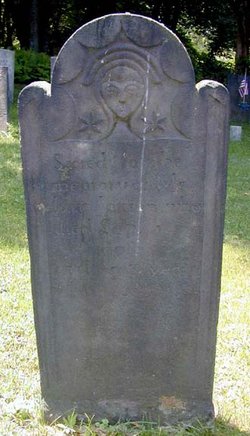
The other doctor was Jeremiah West (1753-1806, gravestone shown above) of Tolland, the larger town to the west of Willington. West graduated from Yale College in 1777, served as a Continental Army surgeon during the Revolutionary War, might have taken a little more training in Boston, and settled in Tolland shortly before the exhumations.

J. R. Cole’s 1888 History of Tolland County quoted an unidentified source saying:
In stature, Dr. West was full six feet, with a large and well proportioned frame. He became exceedingly corpulent during the latter part of his life, and is represented as being unusually large and heavy. Tradition says that he weighed about three hundred and fifty pounds, and that his step as he walked seemed to shake the ground. In social life he was cheerful, humorous and pleasant.
All three of these men—Holmes, Grant, and West—were politically active. In fact, they would all serve in the Connecticut house in 1786, a couple of years after the exhumation. Dr. West later participated in the Connecticut ratifying convention for the U.S. Constitution.

Thus, when Dr. Miner Grant and Dr. Jeremiah West came to witness the exhumation of the Johnson children, and Moses Holmes added his own observations about their graves and reported all that to the Courant in New Haven, that was the Willington authorities assembling to make a strong statement about the idea of vampirism. They didn’t like it. They wanted to stamp out that false belief before it spread.

But we know that didn’t work. There are scores of reports of similar exhumations from New England in the nineteenth century, with a bit of archeological evidence as well. At the S.H.E.A.R. panel I attended last summer, Michael Bell theorized that the persistence of that practice despite legal and print hostility means it was periodically reinvigorated with new believers from Europe. But we can trace the roots of the belief in America back to right after the Revolutionary War.

TOMORROW: Vampire vocabulary.

Wednesday, January 08, 2020

A Double Exhumation in 1784 Connecticut

On 22 June 1784, the Connecticut Courant ran an article which has become highly significant for hunters of vampires and vampire lore. It read:
WHEREAS of late years there has been advanced for a certainty, by a certain Quack Doctor, a foreigner, that a certain cure may be had for a consumption, where any of the same family had before that time died with the same disease; directing to have the bodies of such as had died to be dug up, and further said that out of the breast or vitals might be found a sprout or vine fresh and growing, which, together with the remains of the vitals being consumed in the fire, would be an effectual cure to the same family:----

And such direction so far gained credit, that in one instance, the experiment was thoroughly made in Willington, on the first day of June instant, two bodies were dug up which belonged to the family of Mr. Isaac Johnson of that place, they both died with the consumption, one had been buried one year and eleven months, the other one year, a third of the same family then sick---

on full examination of the then small remains by two doctors then present, viz. Doctors Grant and West, not the least discovery could be made; and to prevent misrepresentations of the facts, I being an eye witness, that under the coffin was sundry small sprouts about one inch in length then fresh, but most likely was the produce of sorrel feeds which fell under the coffin when put in the earth.

And that the bodies of the dead may rest quiet in their graves without such interruption, I think the public ought to be aware of being led away by such an imposture.

MOSES HOLMES.
June 1784.
The Connecticut Courant had mentioned vampires back in 1765, as described here. Sometime around then, printer Thomas Green brought on little George Goodwin (1757-1844) as an apprentice, and by 1784 Goodwin was co-publisher of the paper. However, Green and his first partner, Ebenezer Watson, had died, and there’s no indication that anyone in the print shop remembered the earlier article. It’s significant that this item did not include the word “vampyre,” though the belief in the value of digging up, examining, and burning a body was the same.

Moses Holmes’s report was reprinted in the Pennsylvania Packet and Salem Gazette on 29 June, and possibly in other American newspapers. It’s the earliest evidence that any New Englanders seriously entertained a belief in vampires of the sort described by European authors earlier in the century—as dead people who sapped the lives of those close to them from within their graves.

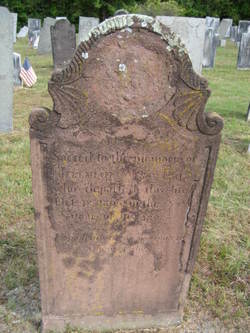
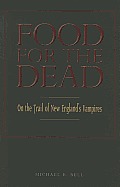
In the expanded edition of Food for the Dead, Michael Bell described finding records of Isaac Johnson of Willington, Connecticut. This man was born in Windham in 1735, married in Willington in 1756, and died in Hadley, Massachusetts, in 1808. His gravestone appears above, courtesy of Find a Grave.

Isaac and his wife Elizabeth had two children die within the specified period: Amos (1760-1782) and Elizabeth (1764-1783). There may have been other children sick at the time; this genealogy page for Isaac doesn’t include all the names that appear in Willington baptismal records published in the New England Historic and Genealogical Register in 1913.

Amos Johnson was the right age to have fought in the Revolutionary War. Unfortunately, there were multiple men of that name in Connecticut records, so I can’t connect him with any particular company.

Bell reported that he couldn’t find the Johnson children’s graves in Willington. He did, however, find that on the 1790 U.S. census the household included two white males over age sixteen, no white males under sixteen, two white females, no slaves, and seventeen “other free persons”—far more than any other home in the town. That’s unusual, but what it means is unclear.

This newspaper article also offers evidence for Brian Carroll’s thesis that the vampirism belief was brought to America by Hessian military surgeons. As The Travels of three English Gentlemen, from Venice to Hamburgh account shows, belief in such vampires was established in Hesse by 1734. Hessian prisoners of war were housed in Tolland, next to Willington, during the war. Was the unnamed “Quack Doctor, a foreigner,” mentioned in the article one of those Germans?

TOMORROW: The other doctors on the scene.

Tuesday, January 07, 2020

Norton on Benjamin Blyth in Boston, 9 Jan.

On Thursday, 9 January, the Boston Athenaeum will host a lecture by Bettina A. Norton on “A Foray into Forgery and the Boston Athenaeum’s Role in Exposing it.”

This talk concerns Benjamin Blyth (1746-1811), a portraitist from Salem best known for his mid-1760s pictures of John and Abigail Adams. In the Colonial Revival period, authors often eagerly identified Blyth’s pictures as John Singleton Copley’s, but they did that with every American artist who wasn’t Copley.

The event description says:
An over-zealous Boston art dealer in the early years of the 20th century made knowingly false attributions of 18th-century portraits from the Salem-Boston area. The attributions were promulgated by colleagues and later by art scholars until disproved by two other historians.
I can’t tell whether that means the dealer was identifying Blyth’s artwork as by other people, or other people’s artwork as by Blyth, or both. Presumably whatever worked best on the market.

In addition to the Adams portraits, scholars now credit Blyth with portraits of Abigail’s father, the Rev. William Smith; Gen. John Thomas; Lt. Gov. Azor Orne; Col. James Otis, Sr.; Loyalist judge Samuel Curwen; Salem merchants Richard Derby and his son, Elias Hasket Derby; Tea Party veteran Thomas Melvill; and Universalist minister Rev. John Murray, among others. Above is a portrait of Dr. Ezekiel Hersey, courtesy of the Harvard Art Museums.

Norton is preparing a book on Blyth that attributes more pastels, oils, and, for the first time, miniatures to him than previous studies. She has written books about other aspects of Boston art and architecture, and she was editor and publisher of The Beacon Hill Chronicle for several years.

This lecture will begin at 6:00 P.M. at the Athenaeum. After Norton speaks, attendees can visit the Vershbow Room upstairs to see Athenaeum documents that helped fill out the story. The event is free to members; admission for others is $15.

Monday, January 06, 2020

Twelfth Night in Occupied Boston

On Friday, 6 Jan 1775, the Boston merchant John Andrews reported:
This morning we had quite a novel sight. The Sailors belonging to the Transports [i.e., the ships that had brought army regiments to Boston] consisting of about 30 or 40 dress’d in white shirts ornamented with various color’d ribbons dispos’d crossways on their bodies with knots and garlands, paraded each side of a long rope dragging a plow, accompanied with one compleatly tar’d and feather’d, representing a he Devil, together with a She Devil, and an attendant, each furnish’d with a bag to collect money, stopping every person of genteel appearance to request a remembrance of Old England, wishing ’em a merry Christmas.

The former look’d as compleatly like the devil as the most fertile invention could form an idea of or picture. The General [Thomas Gage] gave them two half Joes, and it is suppos’d that they collected at least forty guineas. The design of it was to celebrate the twelfth night, or the breaking up of Christmas.
Those sailors were enacting a variation of the folk rituals that rural Britons traditionally performed on “Plough Monday,” the first Monday after Twelfth Night. That day signaled the end of the Christmas season and the return to fieldwork.

There were many ways to observe Plough Monday, but the one closest to this was described in a footnote in the December 1762 issue of The Gentleman’s Magazine:
On this day the young men yoke themselves, and draw a plough about with musick, and one or two persons, in antic dresses, like jack-puddings, go from house to house, to gather money to drink. If you refuse them, they plow up your dunghill. We call them here [Derbyshire?] the Plough-Bullocks.
Other sources describe the “color’d ribbons” tied into knots and roses like those the sailors wore. Early nineteenth-century authors identified the male and female figures as the Fool and Bessy.

Most Bostonians didn’t celebrate Christmas, of course, and therefore didn’t recognize Twelfth Night, either. But they should have seen some similarities between this ritual and a holiday they knew well: Pope Night. The procession, the requests for money, the strange costumes, the central tarred figures representing devils, the young man dressed as a female—those were all part of how Boston youth celebrated the Fifth of November.

Pope Night, Plough Monday, and the “Christmas Anticks” that appeared in Boston after the war were all variations on the British mumming tradition. Undoubtedly the sailors off the troop ships knew that Bostonians didn’t welcome Christmas misrule. However, by begging money in “remembrance of Old England” they were making the same sort of patriotic appeal that local youths invoked to justify their rowdiness in November.

Sunday, January 05, 2020

A Voice against “the sanguinary vampyres”

As I wrote yesterday, on 1 Apr 1765 the Boston Evening-Post ran a front-page article about vampires cribbed from an account of traveling in Germany published twenty years before. The Fleet brothers could have picked up that item from the Connecticut Courant.

That article prompted a stern response, as long as the original article, in the form of a letter “To the Publishers of the Boston Evening-Post.” So far as I know, this is the only writing about vampires to come out of colonial New England, or all of colonial America.

The letter started with the motto “Si populus vult decepi decipiatur” (If people are willing to be deceived, let them be deceived). After discussing the news business and how page-filling “speculation” can produce “useful knowledge” or “benevolent sentiments,” the letter gets to the point in paragraph 4:
…what an injudicious choice of speculation is that publish’d in the Boston Evening-Post of the 1st instant? Can any person capable of exercising his reason, once imagine, that the surprising account of those spectres called Vampyres, has any possible tendency to promote the forementioned very worthy purposes? nay, is it not rather plainly calculated, to frighten old women and children, to amuse the ignorant and superstitious, and the promote deism and infidelity in the world? Most certainly, neither the publishers themselves, nor any sober man and good christian, can believe there is one word of truth, in all that long, surprising, and terrific account exhibited in the aforesaid paper.

Besides, how ridiculous as well as impious must it be, to suppose that the Supreme Being would commit the keys of death to infernal spirits and demons, and suffer them to drag dead bodies of men from their graves, and make them instruments to destroy the living?

For my own part, I can as soon give credence to the most fabulous stories of witches and spectres, of demons and goblins stalking by moon-light; or believe the whole phenomena of the Salem witchcraft; the incubusses, the succubusses, the preternatural teats; with all the trumpery and wonders of the invisible world: Or the scene of witchcraft open’d at Woodstock, a few years ago, when 132 stones of different sizes, were said to be thrown into a room (close shut up) by the agency of infernal spirits;——I say, I can as soon give credit to all this, as to the surprising account of the sanguinary vampyres.
Of course all the Boston newspaper’s readers knew about the Salem witchcraft trials of 1692-93, which had become a notorious embarrassment for the New England Puritan leadership.

The “Woodstock” scene probably meant a legend from Woodstock, England, in 1649. In 1747 the British Magazine published a “Genuine History of the Good Devil of Woodstock,” which purported to debunk the myth. (H. A. Evans revealed that article itself to be a fraud in Notes and Queries in 1903.) Thus, for a well-read Bostonian in 1765, both the Woodstock and Salem stories were delusions and frauds, not real supernatural mysteries.

The letter thus declared the supernatural stories from central Europe about vampires were ridiculous on their face and conflicted with the supernatural system most people in Boston already shared.

But the writer didn’t leave it there. He (or she) dug into the original article’s scriptural references:
The remarks upon these incredible stories, may not be concluded without observing, that they are wickedly and profanely pretended to be supported and confirmed by sundry texts of sacred scripture: which, the the reader will be at pains to examine, he will find no more to the purpose, than the story of the witch of Endor, or that of Balaam’s Ass;—or in the account of the tour which the devil made on the unenlightened part of the globe. . . .

If the first broachers of the story under consideration, instead of prostituting those texts of cannonical scripture, to support their fiction, they refer’d their readers to a story in the apocrypha, it had been nearer the point, and something more to their purpose. The story may be read by the curious, in the 6th 7th and 8th chapters of the book of Tobit.
In those chapters an angel tells Tobias, “Touching the heart and the liver [of a fish], if a devil or an evil spirit trouble any, we must make a smoke thereof before the man or the woman, and the party shall be no more vexed.“ By doing so, Tobias survives a night with a young woman who had been promised to “seven men,” but they “all died in the marriage chamber.” That story wasn’t precisely like the vampire myth but had unmistakable similarities.

So what was the point of that final paragraph? One interpretation might be that vampire stories were as false as scripture that good Protestants had rejected, but the letter writer didn’t drive home that point. Another is that those vampire stories actually had some support in ancient religious literature, but that went against the message of the rest of the essay. I suspect that the letter writer just couldn’t resist showing off his (or her) scholarly knowledge of the Bible.

COMING UP: After the war.

Saturday, January 04, 2020

Vampire Reports in Colonial American Newspapers

The March 1732 issue of The Gentleman’s Magazine in London carried this news in its Foreign Advices section: “From Medreyga in Hungary, That certain dead Bodies called Vampyres, had kill’d several Persons by sucking out all their Blood.”

The ensuing paragraph described a man named Arnold Paul who had felt himself tormented by vampires, then after his death was deemed to have become a vampire himself.

Having found the man’s body too well preserved in the grave, his neighbors, “according to Custom, drove a Stake thro’ his Heart; at which he gave a horrid Groan. They burnt his Body to Ashes, and threw them into his Grave.” And to be safe, the people “served several other dead Bodies in the same manner.”

That article was widely reprinted and discussed in Europe. I’ve found only two American periodicals that picked it up, however: the Weekly Rehearsal of Boston on 5 June 1732 and the American Weekly Mercury in Philadelphia on 15 June 1732. Both stories ran on page 2, and no follow-up discussions appeared on this side of the Atlantic.

In October 1736 the French magazine Mercure Historique et Politique published a vampire report from Moldavia in eastern Europe. That news was translated into English within months, but it took another year before the New-England Weekly Journal of 14 Mar 1738 reprinted the tale. That two-page periodical promised “the Most Remarkable Occurrences Foreign and Domestick,” and its printers ran this story at the top of page 1.

In this incident, after several deaths a village came to suspect a vampire was lurking nearby. Imperial authorities exhumed several bodies and found one unusually well preserved. They “drove a Stake through his Heart, which done, a great Fire was kindled, and the Carcase reduced to Ashes.” Again, there was no follow-up in the Boston press.

On 21 Jan 1765, the Connecticut Courant of Hartford published a front-page article headed “The surprizing Account of those Spectres called VAMPYRES.” That newspaper stated:
These Vampyres are supposed to be the bodies of deceased persons animated by evil spirits, which come out of their graves in the night-time, suck the blood of many of the living, and thereby destroy them. Such a notion will probably, be look’d upon as fabulous: but it is related and maintained by authors of great authority.
The item then quoted “M. J. Henr Zopfius” as saying that a stake through the heart and a bonfire could solve the problem. The article noted a number of examples from 1693 through 1738 before closing with citations of Biblical verses.

That whole passage came right from The Travels of three English Gentlemen, from Venice to Hamburgh, being the grand Tour of Germany, in the Year 1734. It was inspired by a conversation those three travelers had in Laubach, Hesse, followed by some library research. This anonymous text was first published in the fourth volume of The Harleian Miscellany, a collection of manuscripts, pamphlets, and tracts from the Earl of Oxford’s library edited by Dr. Samuel Johnson and published in 1745.

In other words, this report wasn’t timely, useful information. Printer Thomas Green used a sensational old story to attract eyeballs. The next item in that issue of the Courant was “A comical MIRACLE” about a dug-up skull that fooled some French Catholics.

I’ve found only one American newspaper picking up the “surprizing Account” from the Connecticut Courant (or a common source). That was the 1 Apr 1765 Boston Evening-Post, and that date might be significant. Again, the Fleet brothers chose to run the as the first item in the issue. But this publication attracted a quick pushback.

TOMORROW: Wonders of the invisible world indeed.

Friday, January 03, 2020

New England Vampires at S.H.E.A.R.

One of last year’s highlights was the annual conference of the Society for Historians of the Early American Republic, conveniently in Cambridge.

At that meeting the panel I enjoyed the most was one I didn’t highlight back here because its Revolutionary roots weren’t then apparent to me: “Staking Your Life on It: Vampirism, Healing, and Consumption in the Early National Era.”

That session, organized by panelist Mary Fuhrer and moderator Joanne Pope Melish, offered the advantage of looking at a well defined topic from four different angles.

Fuhrer, who studies the dynamics of New England communities, spoke on “Consumption’s Vampire Grasp.” In the early republic tuberculosis caused 20-33% of adult deaths in New England, sweeping through families and frightening towns because of the region’s dense settlements. That made people desperate for a remedy, however far-fetched.

The next panelist was Brian D. Carroll, who emphasizes the transnational approach to history. His thesis, which I highlighted in 2015 tracks a belief in the “chewing dead”—corpses that chewed their burial shrouds and might also sap life from living relatives—from folk belief to Enlightenment medical writing, then from Hessian military physicians to prisoner-of-war settlements in Connecticut.

Nick Bellantoni, Connecticut state archeologist emeritus, then described the first archeological evidence for the New England practice, as opposed to the scores of documentary descriptions (usually critical). His study of a skeleton exhumed and rearranged a few years after death in Griswold, Connecticut, made the news shortly after the conference when D.N.A. evidence confirmed a guess about the man’s identity.

Finally, folklore scholar Michael Bell commented on the three papers. In Food for the Dead: On the Trail of New England’s Vampires, Bell was the first to pull together the evidence of the exhumation practice in New England. By now he’s counted 72 documented exhumations, 53 of which involve burning the corpse and 19 eating or breathing some remnant of it.

One major theme of the discussion is that looking back on the cultural phenomenon through the lens of “vampires” and the twentieth-century understanding of that myth might distort what we’re seeing. Although that term was known in America before the Revolution, people didn’t apply it to this worry about consumptive corpses until after the practice of emergency exhumation was nearly over.

A point of discussion and, it appeared, disagreement was how much of the exhumation practice in New England derived from Enlightenment medicine (top down) and how much from folklore (bottom up). I’ll share evidence from both sides this weekend.

TOMORROW: Sources from the 1700s.

Thursday, January 02, 2020

“Aged SAM. in dotage frail”?

Yesterday I quoted some lines from Dr. Lemuel Hopkins’s poem welcoming the year 1795 for the Connecticut Courant.

Having praised Federalist heroes from Massachusetts, Hopkins turned to attacking the state’s Jeffersonians:
But still no flowers of greatness grow,
Where thorny plagues lurk not below:
There swarms Honestus’ rabble throng,
And Lawyer Incest joins the song;
While Jarvis with his bob-tail crew,
Retreats before great AMES’s view.
“Honestus” was a pen name of Benjamin Austin, Jr. “Lawyer Incest” referred to Perez Morton, who had been caught having an affair with his wife’s sister. “Jarvis” was Dr. Charles Jarvis. They were all Jeffersonian politicians. Against them, Hopkins favored the Federalist party of Fisher Ames.
And now, O Muse! throw Candour’s veil,
O’er aged SAM. in dotage frail;
And let past services atone,
For recent deeds of folly done;
When late aboard the Gallic ship,
Well fraught with democratic flip,
He praying fell on servile knees,
That France alone might rule the seas;
While Sense and Reason took a nap,
And snor’d in Jacobinic cap.
This political attack had to start out more delicately. No one could deny Samuel Adams’s leadership during the Revolution. He was still popular enough to have just been elected governor. Finally, though Adams was senior voice for limiting federal power in Massachusetts and still saw potential in the French Revolution, he didn’t oppose all of President George Washington’s policies like some of his younger colleagues.

On the other hand, on 3 Nov 1794 Gov. Adams had issued a proclamation reminding Massachusetts officials of their obligations under Article Seventeen of the Treaty of Amity and Commerce between France and the U.S. of A. That agreement required American ports not to offer refuge to British naval vessels or formerly French ships that they had captured.

In doing so, Adams cited a recent message from Edmund Randolph, Secretary of State, who was struggling to maintain President Washington’s neutrality policy. Hopkins and his fellow New England Federalists revered Washington, but they leaned heavily toward Britain and disliked any accommodation of the French.

Therefore, Hopkins attacked Samuel Adams as “in dotage frail,” “on servile knees” about a “Gallic ship.” Because that’s the true spirit of the New Year.

Wednesday, January 01, 2020

“Where BOSTONIA lifts her spires”

It’s a Boston 1775 tradition to share a “carrier verse” at the turn of the year. Traditionally those were poems written and printed by newspaper apprentices as a way to cadge tips from their customers.

Often those apprentices commented on political concerns, but usually in a general, patriotic way, looking ahead to a better year. They didn’t want to put anybody in an ungenerous mood, after all.

In the early republic the high Federalist “Connecticut Wits” seized on the “carrier verse” form as a vehicle for their political satire. Without the same economic pressures as the apprentices, they dug deeper into domestic public affairs, lambasted their political rivals, and went on and on. And on.

Dr. Lemuel Hopkins (1750-1801, shown here as painted by John Trumbull, courtesy of the Yale University Art Gallery) wrote such a poem for the Connecticut Courant’s 1 Jan 1795 issue. Here’s just a snatch of it, the part dealing with Massachusetts politics:
Yet where BOSTONIA lifts her spires.
Like Phenix from devouring fires,
See federal Virtue take her stand,
And ward Destruction from the land.
Hail Nurse of Heroes! Statesmen sage!
The guard and glory of the age!
At the end of June 1794, a fire broke out in the ropewalk district of Boston’s South End. It consumed those proto-industrial buildings and many nearby houses before people could put it out. Hopkins praised Boston for rising above such disasters through the strength of its Federalist politics.
Above the mists of mouldering time,
Thy Fame, O ADAMS! soars sublime,
Who first the British lion spurn’d,
And gave the terms when peace return’d;
Cull’d from the lapse of ages past,
And fram’d a Work with time to last;
Display’d in truth’s celestial light,
How Freedom, Law, and Power unite.
Even though President George Washington hadn’t yet announced that he would not seek reelection, New England Federalists were coalescing behind John Adams as his obvious successor. These lines laud Adams’s early support for independence and his role in negotiating the 1783 Treaty of Paris. They couldn’t praise his accomplishments as Vice President since, of course, there weren’t any.
May choicest Sowers with tears bedew’d,
O’er thy brave WARREN’s grave be strew’d;
And long heroic LINCOLN stand,
The laurel’d bulwark of the land.
Here Hopkins referred to Dr. Joseph Warren and Gen. Benjamin Lincoln. Warren was a beloved martyr who for obvious reasons left no thoughts about the politics of the 1790s and therefore could be seized on by either party.

Lincoln had led the repression of the Shays Rebellion in between serving briefly as U.S. Secretary of War under the Congress and as lieutenant governor under John Hancock. Lincoln wasn’t really involved in politics anymore by this time, but he was a Federalist.

That praise out of the way, Hopkins turned to what the Connecticut Wits did best—saying nasty things about what they disliked.

TOMORROW: New Year’s wishes for one’s enemies.