J. L. BELL is a Massachusetts writer who specializes in (among other things) the start of the American Revolution in and around Boston. He is particularly interested in the experiences of children in 1765-75. He has published scholarly papers and popular articles for both children and adults. He was consultant for an episode of History Detectives, and contributed to a display at Minute Man National Historic Park.

Subscribe thru Follow.it


•••••••••••••••••


Saturday, February 04, 2017

“Instructions for my Son George”

Among the documents made public in the Georgian Papers Programme is a little booklet, bound with red string, titled “Instructions for my Son George, drawn by my-Self, for His good, that of my Familys, and for that of His People, according to the Ideas of my Grand-Father, and best Friend, George I.”

This document was signed by Frederick, Prince of Wales, on 13 Jan 1749, two years before his death. The wording suggests the prince already suspected he would not survive his own father, George II, and thus never succeed to the throne of Great Britain. Instead, his “Son George” would become George III.

The pages begin:
As I allways have had the tenderest Paternal Affection for you, I cannot give you a Stronger proof of it, than in leaving this Paper for your in your Mother’s hands, Who will read it to you from time to time and will give it to you when you come of age or when you get the Crown.
What is the main advice? Prince Frederick urged his son to “try never to spend more in the Year, than the Malt and two Shillings in the Land Tax.”

Britain’s malt duty was six shillings per bushel of malt from 1697. In 1760, the year George III ascended the throne, it was reduced to three shillings per bushel, which would have thrown off his father’s calculations. The land tax was likewise revised in George III’s reign; Charles Townshend hoped that the new duties on imports to America in 1767 would allow the government to reduce the tax paid by landowners in Britain.

By living within his royal means, Prince Frederick hoped his son would achieve two important related goals: “to reduce the National Debt” and to “lower interest.” One of the biggest impediments to that program, he warned, would be sycophants urging the king to live more lavishly. (To be sure, Frederick had been a bit of wastrel in his own youth, but now he was in advice-giving mode.)

The prince provided counsel useful for anyone in a position of power:
Flatterers, Courtiers or Ministers, are easy to be got, but a true Friend is difficult to be found. The only rule I can give You to try them by, is, if they will tell you the Truth, and will venture for Your Sake that of your Family or that of Your People (which three things I hope you will never Separate, nor ought they ever to be Separated) to risk some moments of disagreeable Constructions to your Passions, through which they may lose your Favour, if you are a Weak Prince; but will settle themselves firmer in it, if you turn out that man, which I hope God will make you.
This document reflects some other conflicts, or potential conflicts, that we don’t hear much about. One was the possible competing interests of Britain and the family’s other realm of Hanover. Prince Frederick urged his son to separate the two monarchies, which wouldn’t happen until Victoria became queen of Great Britain while a male relative took over in the German state.

The other conflict was the bitter feud between the Prince of Wales and his own father, George II. Frederick told young George that “unsteady measures, you see, my son, have Sullied and hurt the Reign of your Grand Father.”

Combined with his mother’s alleged advice to be a strong ruler, we can see the roots of George III’s insistence on a bigger revenue stream from America and firmer measures against the resistance there. His father wrote:
If you can be without War, let not your Ambition draw you into it. A good deal of the National Debt must be pay’d off, before England enters into a War. At the same time never give up your Honour nor that of the Nation.
As it turned out, George III’s long reign from 1760 to 1820 began during one war with France, then continued through more conflicts with the French in the American War, the wars of the French Revolution, and Napoleon’s wars—which sparked another American war.

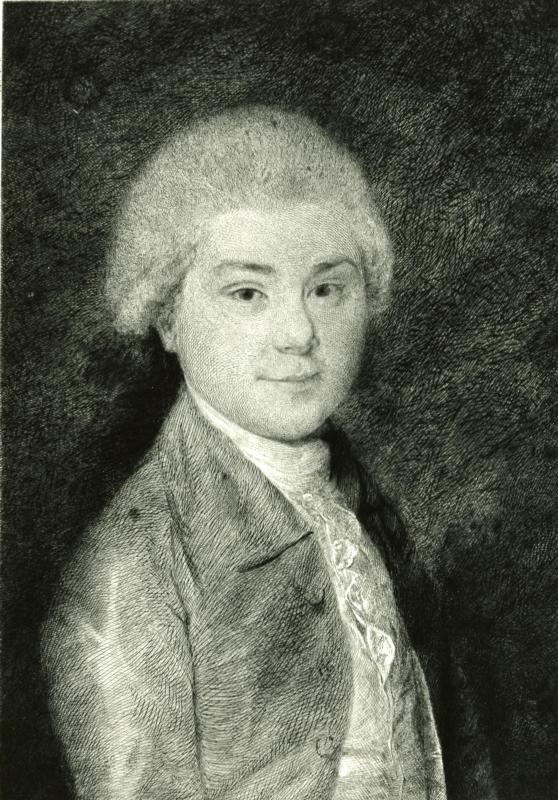
(Above is a sketch from the Royal Collection Trust showing the future George III at about age nine, two years before his father dictated these instructions.)

Friday, February 03, 2017

“World Turned Upside Down” in Warwick, 5 Feb.

On Sunday, 5 February, the CaptainCon gathering in Warwick, Rhode Island, will host a playing of “The World Turned Upside Down: An American Revolution Megagame.”

Okay, I just learned about this, so I’m relying on the game website for this information:
The World Turned Upside Down is a new megagame about the American Revolution. The people of the American Colonies are deciding whether they will remain loyal to the Crown or take arms against their oppressors. Players will either be a part of the British command or become a leader in one of the thirteen Colonies of America.

In each round players decide which role is more important for them to fill at that time. You could begin your revolution in Congress, helping sway opinion (and funds) to your side. Soon afterwards you may be called back to your home to defend it as a Commander in the Continental Army. You decide how to best use your time throughout the game.
In a megagame, “More than 50 players will play out an in-depth, immersive game in an five-hour event.” Here’s a Facebook gallery of people playing the game earlier in the year.

As for historical content:
Do I have to know anything about the American Revolution ahead of time?

Only that it happened! The game is designed with history in mind so you may discover interesting things along the way. This is also a megagame, so you'll be the one rewriting history as you see fit!

How historically accurate is this game?

We based certain events and game elements off of key moments in the American Revolution. By playing the game you may find out some interesting facts that you may not have been aware of. We’ve also taken steps to capture the emotion of the American Revolution through the gameplay and mechanics. Ultimately, the players have control of how the game plays out, so major events will not always play out the way it did in reality.
It looks like the game is still being tweaked based on feedback from players, so that could be part of the fun.

(Thanks to Donovan K. Loucks for alerting me to this unusual event.)

Thursday, February 02, 2017

The Illness of George III

The Georgian Papers Programme is an international effort to study the papers of George III, his family, and his two immediate successors.

In Britain the B.B.C. just ran a television show highlighting some of the early discoveries, and this article highlights a new theory about the nature of the king’s insanity aired on that show.

As the B.B.C. story says, for quite a while the prevailing diagnosis of George III’s illness has been porphyria. I remember learning that around the time of the Bicentennial. The only medical detail that stuck with me was that it caused the king to have blue or purple urine. (Hey, I was ten.)

This article presents a less colorful diagnosis:
Using the evidence of thousands of George III’s own handwritten letters, Dr Peter Garrard and Dr Vassiliki Rentoumi have been analysing his use of language. They have discovered that during his episodes of illness, his sentences were much longer than when he was well.

A sentence containing 400 words and eight verbs was not unusual. George III, when ill, often repeated himself, and at the same time his vocabulary became much more complex, creative and colourful.

These are features that can be seen today in the writing and speech of patients experiencing the manic phase of psychiatric illnesses such as bipolar disorder.

Mania, or harmful euphoria, is at one end of a spectrum of mood disorders, with sadness, or depression, at the other. George’s being in a manic state would also match contemporary descriptions of his illness by witnesses.

They spoke of his “incessant loquacity” and his habit of talking until the foam ran out of his mouth. Sometimes he suffered from convulsions, and his pages had to sit on him to keep him safe on the floor.
I wonder if other stylometric measurements, such as the use of pronouns or other tested variables, might indicate periods of depression.

But what about that memorable blue urine?
George III’s medical records show that the king was given medicine based on gentian. This plant, with its deep blue flowers, is still used today as a mild tonic, but may turn the urine blue.

So maybe it wasn’t the king’s “madness” that caused his most famous symptom. It could have simply been his medicine.
It’s notable that this hypothesis comes from a neurologist and a linguist. Historians have generally shied away from applying modern psychiatric diagnoses to figures of the past, both because of the distance in time and because of the way such diagnoses are culturally and historically defined. As certain conditions are more clearly linked to brain chemistry, that might change. I’ve discussed other possible cases of bipolar disorder in Revolutionary times.

Wednesday, February 01, 2017

Washington and the “Mahometan” World

A centerpiece of the Museum of the American Revolution opening in Philadelphia this April is Gen. George Washington’s second headquarters tent, purchased and used during the Revolutionary War.

The museum staff spoke of the challenges of conserving and displaying the tent in this C-SPAN video. It was erected in its new home this month, as covered in the New York Times. Interesting details about its history and construction can be found in this online article.

However, one of the most thought-provoking details about Washington’s tent appears at the end of this article by Cherie Hicks in the Altoona Mirror:
A circular stamp is on the inside of the tent made of linen, which was coming out of Egypt, a predominantly Muslim country by the mid-18th century.

“It appears to be a Quranic verse in Arabic script,” [museum director Scott] Stephenson said. “Somebody knew Arabic to craft that. It’s a very enigmatic stamp and another good reminder that there wasn’t just one type of experience of slavery in Colonial America.”
The rest of that article talks about another artifact, also to be displayed at the new museum, testifying to the presence of Muslims in America before the United States. Almost all of those people were enslaved, captured in western Africa.

Washington acknowledged the possibility of Islamic laborers at Mount Vernon, at least jocularly, when he wrote to former aide Tench Tilghman in 1784 about hiring new skilled workmen:
I am a good deal in want of a House Joiner & Bricklayer, (who really understand their profession) & you would do me a favor by purchasing one of each, for me. I would not confine you to Palatines [Germans]. If they are good workmen, they may be of Assia, Africa, or Europe. They may be Mahometans, Jews, or Christian of any Sect—or they may be Athiests—I woud however prefer middle aged, to young men. and those who have good countenances & good characters on ship board, to others who have neither of these to recommend them—altho, after all, the proof of the pudding must be in the eating. I do not limit you to a price, but will pay the purchase money on demand
According the Mount Vernon’s scholars, the people living and working at that slave-labor plantation probably already included some Muslims, judging by such names on the records as Fatimer and Nila. And Washington appears to have understood that, even on the west side of the Atlantic, he was touched by the people and products of of the Islamic world.

Tuesday, January 31, 2017

“The Road to Concord” Runs through Lancaster, 6 Feb.

Soon after the “Powder Alarm” of 2 September 1774, Massachusetts towns began to look into their military resources. Among those towns was Lancaster, in the center of the province.

It might seem surprising that a farm town of only 328 families and 1,999 people (in 1765) would need military resources. Lancaster didn’t even have a police force. But the colonial militia system spread out the responsibility for defending society with arms. And Gen. Thomas Gage’s seizure of gunpowder in Charlestown (though within his legal powers as royal governor) made New England Whigs want to strengthen their militia to fend off further moves.

On 5 September, the Lancaster town meeting voted to “raise fifty pounds, for to buy ammunition with, to be a town stock.” Later that month the town decided to “buy one field piece for the use of the town.” On 28 September, at the same meeting in which the townspeople agreed to send a delegate to the Massachusetts Provincial Congress, they raised their cannon order to “two field pieces instead of one.” And when Yankees agreed to spend money, they were serious.

By December, those guns must have arrived because Lancaster authorized a further expenditure: “to buy 5 hundred wt. of ball suitable for the field pieces.” Along with some Worcester County neighbors, the town was preparing to go to war. Lancaster was thus part of the movement I explore in The Road to Concord: How Four Stolen Cannon Ignited the Revolutionary War.

I’ll tell stories from that book and answer questions about how I came to write it on Monday, 6 February, at the Thayer Memorial Library at 717 Main Street in Lancaster. That event is scheduled to start at 6:30 P.M. It’s sponsored by the Seven Bridge Writers’ Collaborative speakers series, free to anyone who wants to attend.

Monday, January 30, 2017

2017 American Revolution Master Teachers Seminar

The American Revolution Institute of the Society of the Cincinnati will host eleven secondary-level teachers at its sixth annual American Revolution Master Teachers Seminar, to be held June 26 to July 1 in Washington, D.C.

The society’s announcement says:
The goals of the seminar are to enrich understanding of the American Revolution in ways that translate to the classroom, to introduce outstanding teachers to the resources of the Institute, to develop lesson plans that can be published on the Society’s website as a resource for teachers nationwide, and to recognize and reward outstanding history teachers.

Mornings in the seminar are occupied with lectures and discussions of the Revolutionary War and teaching strategies. Afternoons are spent exploring the rich library and museum collections of the Institute, which include rare books, pamphlets, maps, prints, manuscripts, art and artifacts from the revolutionary era. The week will close with a study trip to a local site. Teachers will receive a letter documenting sixty hours of professional development. The Institute will pay for room and board, along with travel to and from Washington.

This year’s seminar will emphasize the American Revolution as part of a broader global war between France and England. Interested teachers should submit an original Revolutionary War lesson plan that addresses a topic related to international dynamics of the war. The lesson should span two class periods and correspond to their own state standards. Participants will be selected based on the potential of their lessons to enrich student understanding and appreciation of the Revolutionary War and of the Society’s collections to enrich those lessons. Preference will be given to applicants who submit a preliminary bibliography using the Institute’s online catalog related to their chosen topic.
This seminar is a residential program, with participants staying at the palatial Anderson House. (Seriously, I’ve been through it. It’s palatial.)

The instructions say, “To apply, please submit a cover letter including how your participation would benefit your students, a résumé, and a draft Revolutionary War lesson plan.” Applications are due by 6 Feb 2017 to Eleesha Tucker, Director of Education, at etucker@societyofthecincinnati.org.

Sunday, January 29, 2017

The Art and Poetry of Shooting Flying

In 1727 George Markland, formerly a fellow at Oxford, published Pteryplegia: or, The Art of Shooting-Flying in London.

“Shooting flying” was the term for shooting birds as they flew, rather than bagging them when they were on the ground or in the water. That was a relatively new approach in Britain, brought back from the Continent late in the previous century by Charles II and his courtiers.

In Pteryplegia Markland aimed to introduce his readers to shooting birds on the wing in verse. But he didn’t so much describe the experience in poetic terms as provide a how-to that happened to come in rhymed couplets. A taste:
Our Sport almost at hand, we charge the Gun,
Whilst ev’ry well-bred Dog lies qui’tly down.
Charge not before. If over-Night the Piece
Stands loaded, in the Morn the Prime will hiss:
Nor Prime too full; else you will surely blame
The hanging Fire, and lose the pointed Aim.
Shou’d I of This the Obvious Reason tell,
The caking Pressure does the Flame repel,
And Vulcan’s lam’d again by his own Steel.
Yet cleanse the Touch-hole first: A Partridge Wing
Most to the Field for that wise purpose bring.
In Charging, next, good Workmen never fail
To ram the Powder well, but not the Ball:
One Third the well-turn’d Shot superiour must
Arise, and overcome the Nitrous Dust,
Which, dry’d and season’d in the Oven’s Heat
Has stood in close-mouth’d Jarr the dampless Night.
Now search for Tow, and some old Saddle pierce,
No Wadding lies so close, or drives so fierce.
And here be mindful constantly to Arm
With Choice of Flints, a Turn-screw, and a Worm;
The accidental Chances of the Field,
Will for such Implements Occasion yield.
And so it went on for 32 pages. There were further editions in 1735 and 1767. Gentlemen could buy the first and third editions for a shilling, the second for only sixpence. Now it’s free on Google Books.

If that approach doesn’t grab you, in 1766 Thomas Page offered The Art of Shooting Flying: Familiarly Explain’d by Way of Dialogue, also a mere shilling. This book took the form of a conversation between Aimwell, a practiced hunter and marksman, and Friendly, a gentleman young enough to have just asked his father for permission to learn to shoot.

Page takes issue with a lot of the tips in Pteryplegia. For example:
FRIENDLY.
Do you ram your shot as much as your powder? I think I have heard some that pretend to experience say, that they ram the powder well but not the shot. What is your opinion of this?

AIMWELL.
After some experience you will find, if your gun is clean, and the wad thrust but lightly down, that in walking the shot will be apt to get loose: and if you discharge the piece in that state, it will seem, by the small resistance it makes, as if there were no shot in it: and if you try one load pretty smartly rammed over the shot, and another with the wad thrust but lightly down, at a quire of paper, you will find the charge that is rammed will penetrate deepest, and that the shot will fly as regularly as the other which is not rammed.

FRIENDLY.
Well, Sir, it seems rational enough; and I shall follow your counsel, and try it at the first opportunity, because I think it is a point necessary to be thoroughly convinced of.
Aimwell assumes Friendly has enough money to buy quires of paper to shoot at. And he no doubt does. Both men bring servants to the lessons to silently lay out targets and carry their guns.

Such stilted dialogue continues for about thirty pages. Then Page had Aimwell just give advice for seven straight pages. Finally, the author shifted to a long appendix of technical information describing his gun tests, a form I sense he would have preferred to use all along.

Saturday, January 28, 2017

“In daily expectation of Colonel Knox’s arrivall”

Yesterday I quoted the Boston businessman and court official Ezekiel Price about Col. Henry Knox and the artillery he brought from Lake Champlain in January 1776.

At that time Price was a war refugee living at Thomas Doty’s tavern in what was then Stoughton (shown here). That was also the home town of Col. Richard Gridley, Chief Engineer of the Continental Army and, until the previous fall, the commander of its artillery regiment. Price socialized with the Gridley family. He also gathered up rumors from other sources.

Price’s diary entries make clear that people like him knew about Knox’s mission to retrieve cannon and were eagerly awaiting the result.
Thursday, Jan. 11. — Went down to Milton. Could hear nothing remarkable from the American Army. It is reported that Colonel Henry Knox is on his return from Crown Point; got back as far as Worcester, and has with him a number of brass cannon and other ordnance-stores, and was expected at Cambridge last night with his artillery. Mr. William Bant [a business associate of John Hancock] called here on his way to the army, &c. Son Zek spent the day with us. Mrs. Price, Polly, &c, went home with Zek in the chaise. The weather threatens snow or rain soon.

Friday, Jan. 12.— A light snow fell in the night. The weather is moderate, and the morning agreeable for the season. Towards noon, it began to grow cold. Mrs. Gridley and daughter Beckey stopt here, in their way to Cambridge to visit Scar Gridley, who, they hear, is dangerously ill. A soldier from the army below says that nothing material has happened there within a day or two past, except that he heard Colonel Knox was on his return to Cambridge, and that a number of cannon had reached there, which Colonel Knox sent before him. It is cloudy, and has the appearance of more foul weather soon.
I’m skeptical about that “number of cannon” reaching Cambridge; no other sources confirm that secondhand information, and it looks to me like Knox went ahead of the guns instead of the other way around.

On 13 January, Gen. George Washington was still awaiting his artillery commander. He told Col. Alexander McDougall of New York, “I am in daily expectation of Colonel Knox’s arrivall.”

That same day, Price wrote, “By advices from Canada, I think Governor [Guy] Carlton’s head is pretty near the noose: so that we may hope to see him soon at headquarters.” He was expecting news of American triumph at Québec City.

In the evening Thomas Crane, representative from Stoughton to the Massachusetts General Court, told Price “that Knox, with the cannon, was at Springfield.” Which of course contradicted the earlier reports that the colonel was much closer. But Price was still optimistic.

Meanwhile, Washington kept waiting. On 16 January, he received a progress report from Gen. Philip Schuyler in Albany and wrote back: “I am much pleased, that the artillery was like to be got over the River, and am in Hopes, that Colonel Knox will arrive with it in a few Days—It is much wanted.”

Late the next day, Gen. Washington received bad news: Gen. Richard Montgomery had died in an unsuccessful assault on Québec. Washington called his generals together for a council of war the next morning to decide how many soldiers they could spare to bolster that effort against Canada. Knox, according to Gen. William Heath, finally arrived later on the 18th.

Sometime that same day, Ezekiel Price also heard about Montgomery’s death. He held out hope that that “melancholy and unfortunate” report was false. But on the 19th everyone connected with the army told Price the same bad news, and he had more detail by the 20th. For the next two days he described troops preparing to head north. Despite all his anticipation of Knox’s arrival, Price never actually recorded that event or mentioned the new artillery until late February. The disastrous news from Québec completely overshadowed it.

Friday, January 27, 2017

Why Did Knox Stop His Guns at Framingham?

In response to my Wednesday posting about Col. Henry Knox’s arrival in Cambridge on 18 Jan 1776 (a week or so earlier than the traditional date), Boston 1775 friend Charles Bahne commented:
I still wonder how the town of Framingham fits into Knox’s route. The direct route to Boston (and Cambridge) from the west was the Boston Post Road, which in this area is basically today’s U.S. 20 with some minor detours. That road passes through Marlborough, Sudbury, Wayland, Weston, and Waltham. All of these, except Wayland, existed as towns in the 1770s; Wayland was still part of Sudbury. It would have been a significant detour — with all those heavy cannon! — to go to Framingham.

It’s more logical for John Adams and Elbridge Gerry to have passed through Framingham on their way from Cambridge to Philadelphia, since there was another road — today’s “Old Connecticut Path” — which branched off the Post Road at the Weston-Wayland line and headed directly to Hartford, bypassing Worcester and Springfield.
So we have a question of space as well as time. As part of my possible project on Knox, I’m reexamining the traditional stories about him. Among the most visible of those stories is his progress through New York and Massachusetts; the Knox Cannon Trail has been marked with large roadside stones starting in 1926. Yet much of that trail is based on assumptions about where Knox and his cargo passed because the records of his trip are incomplete. Some marker stones have had to be repositioned.

Following the first Knox biography, we assumed Knox brought his artillery from Springfield (a town he mentioned in a letter to Gen. George Washington) to Cambridge, arriving 24 January. And we assumed he took the straightest, most traveled route, which was the Boston Post Road. But that timetable is wrong. What if the route is an unsupported assumption as well—at least for the guns?

As shown in the map above (a detail from the 1775 “Seat of War in New England” map), the Boston Post Road leads east from Marlborough through Sudbury to Watertown. At Marlborough another road diverged southeast into Framingham toward Natick. It seems likely that Col. Knox directed his “noble train” along that second road. But why?

Gen. William Heath wrote in his diary that Knox “came to camp” on 18 January while the guns “were ordered to be stopped at Framingham.” To me that wording implies the order came from above—i.e., from Gen. Washington.

Another clue comes from the Gershom Foster orderly book at the Anderson House library of the Society of the Cincinnati. That’s an orderly book for the artillery regiment. The orders start to come from Col. Knox (in a big, dramatic way) on 28 January. So even though he was in Cambridge on 18 January and presumably received his commission as colonel then, Knox didn’t start directing the regiment for another ten days. What was keeping him busy?

I suspect Knox went ahead of the guns to meet with his commander-in-chief in Cambridge on 18 January, then hurried back west to meet the guns and stop them at Framingham, or divert them to that town. Why? Knox’s papers have a big gap at this point, and Washington’s surviving headquarters papers don’t mention him or the new artillery. (Notably, however, “Framingham” is one of the passwords of the day on 22 January.)

One possibility is that Knox always planned to take that road because he was aiming to deliver the cannon to Roxbury, not Cambridge. He had worked on the big fort in Roxbury. He might have expected to mount most of the guns in that part of the siege lines. In that case, the route through Framingham to Natick and thence to Dedham might make sense.

But it also seems likely that those cannon needed to be mounted and equipped for use in the siege. Washington may well have decided that Framingham was the place to do that work, far enough from the lines to be safe from the enemy. I haven’t found any mention of such work in Framingham, however.

It appears that Knox’s heavy cannon remained in Framingham for a month or so. On 26 February Ezekiel Price, a Boston official and businessman who collected many threads of gossip from his refuge in Stoughton, wrote in his diary:
It is said that the heavy cannon which were left at Framingham are brought down to Cambridge; the mortars are fixed in their new beds; the fort at Lechmere’s Point nearly finished; fascines going constantly to Dorchester; and every thing getting in readiness to make a push by our army.
Not all the gossip Price wrote down was that reliable (I’ll talk about that tomorrow). But it seems unlikely that he would have been wrong about the heavy cannon being left in Framingham for weeks.  And while it’s not clear what Price meant by saying they were brought “down to Cambridge” (Allston was still part of Cambridge then), this diary entry does suggest some of Knox’s artillery did indeed travel into that town. So there’s still a case for some of those markers.

Thursday, January 26, 2017

How Many Cannon Did Henry Knox Transport?

Another question about Col. Henry Knox’s mission to northern New York to collect artillery for the siege of Boston is how many pieces he brought. And how many did he leave behind?

We have a couple of counts of artillery-pieces in the region from Gen. Philip Schuyler:
Schuyler first counted 54 cannon at Fort Ti with sizes ranging from four-pounders to eighteen-pounders, but 29 of those were in a category called “Bad cannon.” By December Schuyler was counting 53 cannon in all. There were other artillery pieces as well, including swivel guns and mortars. The general sent some weapons north into Quebec with Gen. Richard Montgomery.

Henry Knox left at least three different listings of the artillery pieces he decided to transport back. The first, dated 10 Dec 1775, was transcribed in his earliest biography, by Francis S. Drake. It includes 59 pieces of artillery, including 43 cannon and 16 mortars of different sorts. Knox also determined that one brass cannon Schuyler had labeled an eighteen-pounder was instead a twenty-four-pounder; the difference in bore appears to have been less than half an inch.

On 17 December, Knox sent Gen. Washington a list of the guns he planned to bring east, probably so that Massachusetts blacksmiths could start making shot for them. That list contained only 55 guns—he left off 4 twelve-pounders from his earlier list.

Drake also transcribed the heading of Knox’s expense report for this trip:
For expenditures in a journey from the camp round Boston to New York, Albany, and Ticonderoga, and from thence, with 55 pieces of iron and brass ordnance, 1 barrel of flints, and 23 boxes of lead, back to camp (including expenses of self, brother, and servant), £520.15.8¾.
So we might think the colonel transported 55 cannon to Boston, including 43 cannon. But on 5 January he told Gen. Washington, “We got over 4 more dble fortified 12 pounders after my last to your excellency.” So his count was back to 59. Why Knox mentioned only 55 on his expense report is a mystery, but presumably his expenses were the same.

Yet another Knox document was transcribed in the first volume of the Harvard Illustrated Magazine, published in 1900.
Knox evidently made these notes during his journey, recording what ordnance went on a scow and what on a periauger. There are overlapping listings here, but at that point the freight included “42 Cannon of different Sizes” and “16 Mortars.”

Those numbers match the inventory that I quoted yesterday from John Adams, who viewed the train of artillery in Framingham in January 1776. (Of course, an editorial note indicates that the editors of the Adams papers used the Knox papers as a reference, so we should expect them to match.)

We also have Knox’s diary for the first part of his trip, and that tells us that he lost one cannon along the way. On the afternoon of 4 January, he wrote, he was “much alarm'd by hearing that one of the heaviest Cannon had fallen in to the [Mohawk] River at Half Moon Ferry.”

Three days later, near Albany, another cannon went “fell into the River notwithstanding the precautions we took.” Knox and the locals managed to get that gun out of the water the next day, but he’d had to leave the first sunken gun behind. That explains why he set out with one more iron eighteen-pounder than Adams saw.

Thus, Col. Knox set out from Lake Champlain with 59 artillery pieces, including 43 cannon; lost one eighteen-pounder; and arrived in eastern Massachusetts with the rest.

I’ve seen a report that the 59 artillery pieces Knox selected came almost evenly from Crown Point and Fort Ticonderoga. However, I haven’t found a source for that statement.

There’s also the story told in an article in the Bulletin of the Fort Ticonderoga Museum titled “History of a Wandering Cannon.” During work on a dam across the Mohawk River in the 1850s, an iron six-pounder with the royal monogram was dredged up. It was eventually displayed at the restored Fort Ti as the cannon Knox had lost back in 1776. But I’m not sure how it shrank from being an eighteen-pounder.

Wednesday, January 25, 2017

When Henry Knox Came Back to Cambridge

On Thursday, 25 January 1776, John Adams and Elbridge Gerry were on their way back to the Continental Congress in Philadelphia. The two Massachusetts delegates stopped at midday to dine in Framingham.

Adams wrote in his diary:
Coll. [Joseph] Buckminster after Dinner shewed us, the Train of Artillery brought down from Ticonderoga, by Coll. [Henry] Knox.

It consists of Iron—9 Eighteen Pounders, 10 Twelves, 6. six, four nine Pounders, Three 13. Inch Mortars, Two Ten Inch Mortars, one Eight Inch, and one six and an half. Howitz, one Eight Inch and an half and one Eight.

Brass Cannon. Eight Three Pounders, one four Pounder, 2 six Pounders, one Eighteen Pounder, and one 24 Pounder. One eight Inch and an half Mortar, one Seven Inch and an half Dto. and five Cohorns.
That’s fifty-eight pieces of artillery in all. (I’ll get back to that number tomorrow.)

Adams’s diary entry for this date in 1776 is notable because the traditional date for Knox reaching Cambridge with his “Noble train of Artillery” is 24 January. Here, for examples, is a Mass Moments page linked to that date. I stated that same date in my study for the National Park Service a few years back. And yet Adams tells us that on the following day all the colonel’s guns were still out in Framingham.

So did Knox leave the ordnance behind and go ahead to Cambridge to report to Gen. George Washington? That makes sense since Knox owed his position to Washington and was acting on orders he received directly from the commander-in-chief. And the historical record indicates that Knox did indeed leave his guns behind—but he did so the previous week.

Gen. William Heath’s memoirs, based on his wartime diary, state this for 18 January:
18th.–Col. Knox, of the artillery, came to camp. He brought from Ticonderoga a fine train of artillery, which had been taken from the British, both cannon and mortars, and which were ordered to be stopped at Framingham. 
At this time Heath was serving under Gen. Israel Putnam in east Cambridge. So “came to camp” almost certainly meant Knox came to Washington’s headquarters.

So where did the 24 January date for his arrival come from? It appears in the first biography of Knox, published by Francis S. Drake in 1873, but that doesn’t cite a source. And the Adams and Heath diaries say that:
  • Knox reached Cambridge six days before that date.
  • All the artillery pieces were still out in Framingham after that date.
So I apologize for repeating the 24 January date without foundation.

TOMORROW: How many cannon and mortars did Knox transport?

Tuesday, January 24, 2017

Upcoming History Workshops for Teachers

Here are a couple of teacher workshops coming up at historic sites.

The Massachusetts Historical Society is offering “Women in the Era of the American Revolution” on 22-23 February. It says:
Study the revolution through the words and artifacts of the women who lived it. Correspondence demonstrates that women like Abigail Adams, Hannah Winthrop, and Mercy Otis Warren were vital consumers (and boycotters) of imported goods, and functioned as heads of household while their male family members served in the military or traveled on political missions. They recorded important events of the day, and, in the case of Warren, interpreted those events for a public audience. Throughout the workshop we will explore the daily lives of revolutionary women, including those who served as soldiers and secret agents, or followed the army as cooks and laundresses.
The program includes a visit to the Museum of Fine Arts, presumably to view portraits of the women and artifacts from their lives. The registration fee is $40, and teachers can earn 45 P.D.P.’s and two graduate credits for an additional fee. For more information, contact education@masshist.org or call 617-646-0557.

Out in Deerfield this summer, the Pocumtuck Valley Memorial Association is presenting two sessions of “African Americans in the Making of Early New England.”

The workshop’s introductory description says:
African Americans in the Making of Early New England” will take place in the Old Deerfield Village Historic Landmark District and will focus on the 23 African American Historic sites in the District and on Royall House and Slave Quarters in Medford, MA, another National Historic Landmark. This workshop will bring together a wide range of primary resources—landscape, architecture, artifacts, documents, oral histories—along with secondary interpretations and lectures by specialists that will provide tools for K-12 educators to engage their students in learning about African Americans’ life experiences in early New England.
Here is a very detailed description of the planned program, which includes remarks by professors Gretchen Holbrook Gerzina (Mr. and Mrs. Prince: How an Extraordinary Eighteenth-Century Family Moved Out of Slavery and into Legend), Jared Hardesty (Unfreedom: Slavery and Dependence in Eighteenth-Century Boston), and Joanne Pope Melish (Disowning Slavery: Gradual Emancipation and “Race” in New England, 1780-1860).

Teachers selected to participate are eligible for a stipend, thanks to support from our National Endowment for the Humanities. The two sessions are on 9-14 July and 23-28 July. The deadline for applications is 1 March, with applicants notified if whether they are accepted by the end of that month.

Monday, January 23, 2017

John Quincy Adams’s College Entrance Exam

On 15 Mar 1786, John Quincy Adams finally took his entrance test for Harvard College. As I’ve quoted in recent postings, he had come back from Europe the year before to finish his education at his father’s alma mater. At age eighteen, he hoped to enter as a junior and to study law.

Here’s John Quincy’s description of the test from his diary:
Between 9 and 10 in the morning, I went to the President’s [Rev. Joseph Willard], and was there examined, before, the President, the four Tutors three Professors, and Librarian.

The first book was Horace, where Mr. [Eleazer] James the Latin Tutor told me to turn to the Carmen saeculare where I construed 3 stanza’s, and parsed the word sylvarum, but called potens a substantive.
Okay, a little slip there, but he can recover.
Mr. [Timothy Lindall] Jennison, the greek Tutor then put me to the beginning of the fourth Book of Homer; I construed Lines, but parsed wrong αλληλομς. I had then παραβληδην given me.
Uh-oh, the pressure might be getting to him.
I was then asked a few questions in [Isaac] Watts’s Logic [Logic, or The Right Use of Reason, in the Inquiry after Truth], by Mr. [John] Hale, and a considerable number in [John] Locke, on the Understanding [An Essay Concerning Human Understanding], very few of which I was able to answer.
This isn‘t looking good, is it?
The next thing was Geography, where Mr. [Nathan] Read ask’d me what was the figure of the Earth, and several other questions, some of which I answered; and others not.
He’s really going to have to catch up now.
Mr. [Samuel] Williams asked me if I had studied Euclid, and Arithmetic, after which the President conducted me to another Room, and gave me the following piece of English to turn into Latin, from the World.
There cannot certainly be an higher ridicule, than to give an air of Importance, to Amusements, if they are in themselves contemptible and void of taste, but if they are the object and care of the judicious and polite and really deserve that distinction, the conduct of them is certainly of Consequence.
Here’s that sentence published in the British essay series titled The World in 1756. A 1787 reprint identified the authors of some of those essays, but not that one. Can John Quincy pull this off?
I made it thus.
Nihil profecto risu dignior, potest esse, quam magni aestimare delectamenta, si per se despicienda sunt, atque sine sapore. At si res oblatae atque cura sunt sagacibus et artibus excultis, et revera hanc distinctionem merent, administratio eorum haud dubie utilitatis est.
(I take it from memory only, as no scholar is suffered to take a Copy of the Latin he made at his examination.)

The President then took it, was gone about ¼ of an hour, return’d, and said “you are admitted, Adams,” and gave me a paper to carry to the Steward [Caleb Gannett].
Yes! He did it!

Actually, there should have been little doubt of that outcome. John Quincy noted every mistake in his performance, but he probably did better than most applicants. He was already a well-traveled, educated, serious young man, with a father at the Court of St. James and a younger brother in a lower class. Among the gentlemen vouching for him were a friend on the faculty, Prof. Benjamin Waterhouse; Dr. Cotton Tufts; his uncle, the Rev. John Shaw; and his host in town and old employer, lawyer Francis Dana. There was no way the college would have rejected him.

We can see how the college president viewed his new student by how he arranged for him to share a room with Henry Ware, who had already graduated and was “keeping the town-school” in Cambridge—i.e., another mature young man. John Quincy wrote, ”He is very much esteemed and respected in college, and has an excellent chamber.”

As for the rest of the undergraduates, John Quincy’s diary entry also recorded this:
Spent the afternoon, and evening in College. The Sophimore Class had what is called in College, an high-go. They assembled all together in the Chamber, of one of the Class; where some of them got drunk, then sallied out and broke a number of windows for three of the Tutors, and after this sublime manoeuvre stagger’d to their chambers. Such are the great achievements of many of the sons of Harvard, such the delights of many of the students here.
He chose to return to Mr. Dana’s house that night instead of making new friends among the sophomores.

Sunday, January 22, 2017

John Quincy Adams Prepped for College

When John Quincy Adams prepared to enter Harvard College, he was not a typical college student.

At eighteen, he was older than most undergraduates in that period. He had already studied some subjects at the University of Leiden in Holland.

More important, the young man had worked and traveled in far higher circles than other teenagers, and than most Harvard professors. He’d been a diplomatic assistant to his father and then Francis Dana, the Congress’s minister to Russia. He’d seen several European capitals.

And, let’s face it, he was John Quincy Adams. His parents worried about his progress, but he was one of the smartest and more diligent young men around. Of course, there was still the formality of passing the college entrance exam.

As recorded in his diary (the diary he kept regularly until 1848), John Quincy arrived home in Massachusetts in the summer of 1785. Over the next several months, he visited various relatives, including his younger brother Charles, already at Harvard on the normal schedule.

As I quoted yesterday, John Adams had sent Prof. Benjamin Waterhouse a letter asking him to put in a good word for his eldest son. John Quincy finally connected with the man in Boston on 28 September, writing in his diary: “Upon Change I met Dr. Waterhouse; and found him the same man, he was four years, ago, when I was acquainted with him in Holland.” But to his sister Nabby he added:
I met on the exchange, Dr. Waterhouse, who has been at Providence these 6 weeks, delivering lectures upon natural Philosophy. He did not know me at first, and I was obliged to introduce myself to him. As soon as he found me out, he was as sociable as ever.
Waterhouse had lived with the Adams family in 1781, so clearly John Quincy had grown a great deal since he was fourteen.

The young man decided to enter the college at the end of April 1786, in time to take a couple of science classes. He would be ranked as a junior. That fall, John Quincy went out to Haverhill live with his aunt Elizabeth and her husband, the Rev. John Shaw, and refresh his knowledge before the entrance test.

And then the college sped up the schedule. In March John Quincy told his sister why he’d become too busy to write:
At the beginning of the year I was informed…I must come by the middle of March, in order to attend two courses of experimental philosophy. I might have waited till next commencement [in July], and then entered as senior;…but I should have missed one course of lectures. Besides, I had undertaken last fall, to be ready to enter before the class began upon natural philosophy.

When I found my time shortened, I determined to lay aside every thing else, and attend only to my present business. . . . And to enter here, it is not necessary to know any thing but what is found in a certain set of books, and I have heard it asserted, that some of the best scholars, after having taken their degrees, would not be received if they offered as freshmen, because they commonly forget those parts of learning which are required in a freshman. Since the first of January, I have not, upon an average, been four hours in a week (Sundays excepted) out of Mr. Shaw’s house.
So John Quincy had spent nearly the whole winter cramming.

TOMORROW: Entrance exam time at last.

Saturday, January 21, 2017

From Slaves to Soldiers at Rhode Island State House, 24 Jan.

On Tuesday, 24 January, the Rhode Island State House Library will host a book signing to celebrate the publication of From Slaves to Soldiers: The 1st Rhode Island Regiment in the American Revolution, by Robert A. Geake with Lorén M. Spears.

Here’s the publisher’s description of the book:
In December 1777, the Continental army was encamped at Valley Forge and faced weeks of cold and hunger, as well as the prospect of many troops leaving as their terms expired in the coming months. If the winter were especially cruel, large numbers of soldiers would face death or contemplate desertion. Plans were made to enlist more men, but as the states struggled to fill quotas for enlistment, Rhode Island general James Mitchell Varnum proposed the historic plan that a regiment of slaves might be recruited from his own state, the smallest in the union, but holding the largest population of slaves in New England.

The commander-in-chief’s approval of the plan would set in motion the forming of the 1st Rhode Island Regiment. The “black regiment,” as it came to be known, was composed of indentured servants, Narragansett Indians, and former slaves. This was not without controversy. While some in the Rhode Island Assembly and in other states railed that enlisting slaves would give the enemy the impression that not enough white men could be raised to fight the British, owners of large estates gladly offered their slaves and servants, both black and white, in lieu of a son or family member enlisting.

The regiment fought with distinction at the battle of Rhode Island, and once joined with the 2nd Rhode Island before the siege of Yorktown in 1781, it became the first integrated battalion in the nation’s history.
Robert A. Geake is the author of several books about Rhode Island history and proprietor of the rifootprints webpage. Loren M. Spears, M.Ed., is executive director of the Tomaquag Indian Memorial Museum; a veteran educator; and two-term tribal councilwoman of the Narragansett Tribe.

The Rhode Island Department of State will display items from its archives related to the Rhode Island Regiment, including the “original Regimental Book from 1781-83.”

The event will take place from 4:00 to 6:00 P.M. It is free and open to the public.

Friday, January 20, 2017

Bassett on “The American Sampler” in Medford, 22 Jan.

The Medford Historical Society and Museum is hosting an exhibit of needlework samplers from its collection with the title “Stitching and Learning.”

The society newsletter says:
Young women and children from the 16th, 17th and 18th centuries learned to sew and embroider a variety of stitches and become dexterous with the needle as they created a needlework or darning “sampler.” Good needlework was considered essential and an absolute necessity if you were wealthy or poor. Women made or supervised the making of all clothing and household goods and the decoration of these articles. It was a mark of honor to be admired for these skills.
On Sunday, 22 January, Lynne Bassett will speak at the museum on “The American Sampler: Needlework in New England, 1700-1850.” Bassett was curator of textiles and fine arts at Old Sturbridge Village for five years and is now a freelance museum curator.

Bassett is the editor of Massachusetts Quilts: Our Common Wealth and coauthor of Northern Comfort: New England’s Early Quilts, 1780-1850. She has spoken at Colonial Williamsburg, the Museum of Fine Arts, Winterthur, Historic Deerfield, and the Peabody Essex Museum, among other sites, and has been elected a fellow or member of the American Antiquarian Society, Massachusetts Historical Society, and International Quilt Study Center.

Lynne Bassett’s talk will take place at the society at 10 Governors Avenue in Medford starting at 2:00 P.M. The exhibit can be viewed on Sundays, 12 noon to 4:00 P.M., or by appointment, through 26 February.

(Shown above is a sampler made by Deborah Robins in 1750—not part of the exhibit, but an example of what young women in Boston were making in the mid-eighteenth century.)

Thursday, January 19, 2017

“I hope he will pass muster”

As John Quincy Adams planned his return to Massachusetts from Europe in 1785, with the hope of attending Harvard College, his father John wrote to one of the professors there, Benjamin Waterhouse (1754-1846).

Waterhouse had lived with the Adams family while studying medicine in Holland in the early 1780s. It was thus natural for John Adams to ask Waterhouse to look out his son, even though he was one of the college’s first professors of physic rather than of law.

As a father, Adams had some worries about John Quincy’s preparation for college. All in all, his letter reads like what a modern anxious “helicopter parent” might write to a college admissions officer, insisting that his son was a better student than he might seem and deserved some special understanding:
This Letter will be delivered you, by your old Acquaintance, John Quincy Adams, whom I beg Leave to recommend to your Attention and favour. He is anxious to Study Sometime, at your University before he begins the Study of the Law which appears at present to be the Profession of his Choice.

He must undergo an Examination, in which I Suspect he will not appear exactly what he is. in Truth there are few who take their Degrees at Colledge, who have so much Knowledge, but his Studies having been pursued by himself, on his travells without any Steady Tutor, he will be found aukward in Speaking Latin, in Prosody, in Parsing, and even perhaps in that accuracy of Pronunciation in reading orations or Poems in that Language, which is often chiefly attended to in Such Examinations.

It seems to be necessary therefore that I make this Apology for him to you, and request you to communicate it in confidence to the Gentlemen who are to examine him, and Such others as you think prudent. If you were to examine him in English and French Poetry, I know not where you would find any body his Superiour. in Roman and English History few Persons of his Age, it is rare to find a youth possessed of So much Knowledge. He has translated Virgils Æneid, Suetonious, the whole of Sallust, and Tacituss Agricola, his Germany and Several Books of his Annals, a great Part of Horace Some of Ovid and Some of Cæsars Commentaries in Writing, besides a number of Tullys orations. These he may Shew you; and altho you will find the Translations in many Places inaccurate in point of Style, as must be expected at his Age, you will See abundant Proof, that it is impossible to make those translations without Understanding his Authors and their Language very well.

In Greek his Progress has not been equal. Yet he has Studied Morcells in Aristotles Poeticks, in Plutarch’s Lives, and Lucians Dialogues, the Choice of Hercules in Xenophon, and lately he has gone through Several Books in Homers Iliad.

in Mathematicks I hope he will pass muster. in the Course of the last year, instead of playing Cards like the fashionable World I have Spent my Evenings with him. We went with some Accuracy through the Geometry in the Præceptor the Eight Books of Simpsons Euclid, in Latin and compared it Problem by Problem and Theorem by Theorem with Le Pere Dechalles in french, We went through plain Trigonometry and plain Sailing, Fennings Algebra, and the Decimal Fractions, arithmetical and Geometrical Proportions, and the Conic Sections in Wards Mathematicks.

I then attempted a Sublime Flight and endeavoured to give him some Idea of the Differential Method of Calculation of the Marquis de L’Hospital, and the Method of Fluxions and infinite Series of Sir Isaac Newton But alass it is thirty years Since I thought of Mathematicks, and I found I had lost the little I once knew, especially of these higher Branches of Geometry, So that he is as yet but a smatterer like his Father. however he has a foundation laid which will enable him with a years Attendance on the Mathematical Professor, to make the necessary Proficiency for a Degree.

He is Studious enough and emulous enough, and when he comes to mix with his new Friends and young Companions he will make his Way well enough. I hope he will be upon his Guard against those Airs of Superiority among the Schollars, which his larger Acquaintance with the World, and his manifest Superiority in the Knowledge of Some Things, may but too naturally inspire into a young Mind, and I beg of you Sir, to be his friendly Monitor, in this Respect and in all others.
It’s always remarkable to me how much John and Abigail Adams worried about John Quincy being a good scholar. With our hindsight, we know that he was one of the most studious, diligent, and at times humorless statesmen the U.S. of A. has ever produced.

COMING UP: John Quincy Adams reaches Cambridge.

Wednesday, January 18, 2017

“The Child whom you used to lead out into the common”

In April 1785, seventeen-year-old John Quincy Adams had finished his first job, as secretary and translator for American minister Francis Dana in the court of Catherine the Great.

Young J. Q. Adams returned to France, where his family was living during another diplomatic mission. He prepared to sail home to Boston and enter Harvard College.

On 27 April, John Adams wrote a letter for his son to hand to their cousin Samuel:
The Child whom you used to lead out into the common to see with detestation the British Troops and with Pleasure the Boston Militia will have the Honour to deliver you this Letter. He has since seen the Troops of most Nations in Europe, without any Ambition I hope of becoming a military Man. He thinks of the Bar and Peace and civil Life, and I hope will follow and enjoy them with less Interruption than his Father could.

If you have in Boston a virtuous Clubb, such as We used to delight and improve ourselves in, they will inspire him with Such sentiments as a young American ought to entertain, and give him less occasion for lighter Company. I think it no small Proof of his Discretion, that he chooses to go to New England rather than old [i.e., to a British university]. You and I know that it will probably be more for his Honour and his Happiness in the result but young Gentlemen of Eighteen dont always See through the same Medium with old ones of fifty.

So I am going to London [as U.S. minister to the Court of St. James]. I suppose you will threaten me with being envyed again. I have more cause to be pitied, and al[though I will] not say with Dr Cutler that “I hate [to be] pitied” I dont know why I should dread Envy.—I shall be sufficiently vexed I expect. But as Congress are about to act with Dignity I dont much fear that I shall be able to do something worth going for. If I dont I shall come home, and envy nobody, nor be envied. if they send as good a Man to Spain as they have in [John] Jay for their foreign department and will have in [Thomas] Jefferson at Versailles I shall be able to correspond in perfect Confidence with all those public Characters that I shall have most need of Assistance from and shall fear nothing.
The editors of the Adams Papers report that in his letters John Adams twice quoted “old Dr. Cutler” saying that he hated to be pitied. They posit that was an allusion to the Rev. Dr. Timothy Cutler (1684-1765), longtime minister at Christ Church (Old North) in Boston. I haven’t found any other source for the remark, nor confirmation, but Cutler was a well-known figure in New England, recognized for being haughty, so it seems like a good guess.

TOMORROW: Helicopter parenting from the land of the balloon.

Tuesday, January 17, 2017

Picking Up Pottery Pieces in Peabody

At the Early American Ceramics site, Justin W. Thomas just wrote about what he found at a site in Peabody, which in the eighteenth century was part of Danvers.

That site, Thomas knew, was once owned by a family of potters called Osborn. The business was established by a Quaker named Joseph Osborn in the late 1730s and grew over time; “there used to be multiple kilns located in this neighborhood, which were operated by multiple generations of Osborn family potters.”

In the early 1800s the family opened similar workshops in several other New England towns, expanding from Rhode Island to Maine and westward to New York. The Osborns sold the Peabody site to another pottery firm which stayed in business into the early 1900s.

That property is now mostly taken up by a senior citizen community center. Driving by, Thomas saw that a portion of it, never built on in recent decades, had been excavated to expand a parking lot. He got permission from the authorities to walk over the ground and pick up any artifacts on the surface that might be remnants of the early pottery works.

Thomas reported:
We discovered hundreds of artifacts. We found found kiln furniture, kiln bricks, wasters and sherds. I believe all of these objects are related to the Osborn Pottery instead of the businesses that operated afterwards. Collectively, I would say that these artifacts date from the circa 1740-1860 period.

I was amazed at some of the evidence that we were able to gather, which has never been tied to the Osborns before:

1) The abundance of thickly potted black-glazed wares: There were a number of thickly potted black-glazed utilitarian sherds with walls that were over one-inch thick, which appeared very-similar to black-glazed pottery that was produced in Buckley, England in the eighteenth-century. Were the Osborns trying to imitate the Buckley wares that were imported into places like Boston and Salem, Massachusetts in the 1700s? Are products in New England made by the Osborns mistaken for wares made in Buckley today?

2) Slip Decoration: It has been published in the past that the potters in Essex County, Massachusetts did not utilize a lot of slip-decoration in the eighteenth-century. However, I have found evidence that suggests otherwise. I think it is more a matter of tying slip-techniques to Essex County today that have been left unattributed or even attributed elsewhere in the past. I do not believe the Osborns have ever previously been linked to slip-decoration; although, we found accurate evidence of it yesterday.

3) Glazed Base: It has been published in the past that utilitarian red earthenware potters did not glaze bases in New England; however, I have recently proven that they did occasionally glaze bases in North Yarmouth, Maine. North Yarmouth was also a potter’s industry that was directly tied to Essex County. Yesterday, we found evidence of a black-glazed jug that was intentionally entirely glazed on the base by the Osborns. I have seen similar black-glazed bases in North Yarmouth.

4) A Fluid Glaze: We found evidence yesterday of a fluid glaze that was applied at the Osborn Pottery in Peabody. I have not seen this type of glaze previously associated with utilitarian potters in Essex County.

5) Glazes: We found an abundance of glazes yesterday that would not traditionally be tied to Essex County, Massachusetts today; although, Lura Woodside Watkins also confirms these type of Peabody (or South Danvers) glazes in Early England Potters and Their Wares. We found glazes that would normally be tied to Pennsylvania or elsewhere in New England (i.e., New Hampshire, Maine, etc.).
Thomas’s posting includes many photographs. The one above shows what he suspects might be the Osborns’ attempt to replicate thick black-glazed pottery from Britain.

Monday, January 16, 2017

Sylvanus Johnson in the Woods

As described yesterday, in 1754, at the age of six or seven Sylvanus Johnson was taken prisoner by Native Americans, probably Wabanaki, from Fort No. 4 in New Hampshire. (The image here, a detail from the photograph by Ann M. Little here, shows a young reenactor at that recreated fort.)

Sylvanus was adopted into a Native American family and remained with them for four years. The British authorities then “redeemed” him for cash, and Israel Putnam conducted him back to his family.

Johnson lived along the Connecticut River in New Hampshire for the rest of his life. He married and had children starting in the early 1770s. But Johnson always said the Native culture he experienced as a child was superior.

In his History of the Town of Rockingham, Vermont (1907), Lyman Simpson Hayes recorded traditions about “Uncle Vene” Johnson. The first is incredibly sad:
After paying the ransom, his white friends traveled a day’s journey and encamped for the night. So homesick was little Sylvanus for his forest home that he stole away in the darkness and followed the trail back to the wigwams of his masters. In doing so he had to cross a river, swimming over with his clothes tied on his head. His Indian friends would not speak to him or recognize him in any way. They had received the money demanded for his ransom and he was theirs no longer. During his whole life he so much preferred the modes of Indian life to the prevalent customs of civilization that he often expressed regret that he was ever ransomed.
Johnson lived into his eighties and was remembered in the region as quite a character.
The young men of North Walpole and Bellows Falls counted it a treat to be taken by Uncle Vene on a hunt. Often the old man would pretend to get lost almost in sight of home and keep the frightened and bewildered boys out all night in a shelter made in true Indian style. . . .

At one time he was crossing the river in his canoe, having indulged his appetite in the taverns at Bellows Falls. He was caught by the strong current and would have gone over the dam had not one of his neighbors put out in a boat and towed him to shore. The old gentleman was very indignant at being treated thus. When he was told that he would surely have gone over the dam he exclaimed, “Couldn’t I have put out a foot and braced?”
Adding more poignancy to that last story, two of Johnson’s sons drowned in the Connecticut River.