J. L. BELL is a Massachusetts writer who specializes in (among other things) the start of the American Revolution in and around Boston. He is particularly interested in the experiences of children in 1765-75. He has published scholarly papers and popular articles for both children and adults. He was consultant for an episode of History Detectives, and contributed to a display at Minute Man National Historic Park.

Subscribe thru Follow.it


•••••••••••••••••


Friday, July 13, 2018

Watching the Native Northeast Portal Grow

The Native Northeast Portal is still in early development but offers great promise. It addresses the challenge of how many primary-source documents about New England Native communities are unpublished, scattered, and difficult to access. As the website explains:
The Portal represents a scholarly critical edition of New England Native American primary source materials gathered presently from the partner institutions into one robust virtual collection, where the items are digitized, transcribed, annotated, and edited to the highest academic standards and then made freely available over the Internet, using open-source software. By providing annotated transcriptions, the Project’s editors provide the Series users with useful information within a well-researched and balanced context necessary to understand the complexities of the historical record.
As an example of this portal's resources, here's a petition from Jonathan Capen seeking the release of Isaac Williams from the Suffolk County jail in December 1776. Crisp images of the document with the Council's response written on it are accompanied by a transcription and a map showing the pertinent location.

Other sources fill out the story. Williams was "a Molatto" from Dedham who enlisted in Capt. Joseph Guild's company in May 1775 and served until the end of the year. Early that November Williams married Elizabeth Will, a member of the Punkapoag community in Stoughton.

Williams must have reenlisted in the Continental Army or was drafted for it in some way because on 14 Aug 1776 he was listed as a deserter from Guild's company. He was then said to be twenty-three years old and 5'10" tall. The army still listed him as coming from Dedham.

Apparently Williams had gone to his wife in Stoughton because the selectmen of that town had him arrested as a deserter and put in the Suffolk County jail. (That didn't mean the jail in Boston since Suffolk County then included all of modern Norfolk County.)

Capen was the agent for the Punkapoag community in its dealings with the government, so he petitioned on behalf of Elizabeth Williams. Capen wrote that her young husband was "in a very poor State of Health," which might well be why he had left the army. The Massachusetts Council approved that petition and ordered the selectmen to release Williams.

As for the end of Williams's story, I'm pleased to report that he recovered. According to genealogists David Allen Lambert and Jennifer Pustz, he lived until 1831. The Stoughton Historical Society owns the pieces of his gravestone. Elizabeth Williams lived until 1848, long enough to apply for a pension as a Continental Army widow. (Her application doesn't mention any service or arrest in 1776.) Among the people supporting the Williams pension claim with a shaky signature was Jonathan Capen, evidently the elderly son of the man who filed the 1776 petition.

Thursday, July 12, 2018

A Free Peek into the American Ancestors Databases

Since I'm on the road this week, I'm going to highlight some online databases that have caught my eye.

The New England Historical Genealogical Society has announced that all the databases at its American Ancestors website will be free through Tuesday, 17 July. People need to sign in as guest members to access the back issues of the New England Historic Genealogical Register, the Suffolk County probate records, biographies of the Massachusetts Society of the Cincinnati, the world's largest database of Mayflower descendants, Boston's Catholic records starting in 1789, and much more.

This is of course a push to induce people researching their ancestors to get hooked on those N.E.H.G.S. databases and become regular members. And that online access really is useful. Just this month I looked up the probate inventory of a Continental Navy veteran, discovering that he owned no real estate but a quarter of a ship and 3,000 pounds of coffee. He was, I conclude, a merchant captain who died unexpectedly before that last cargo was sold.

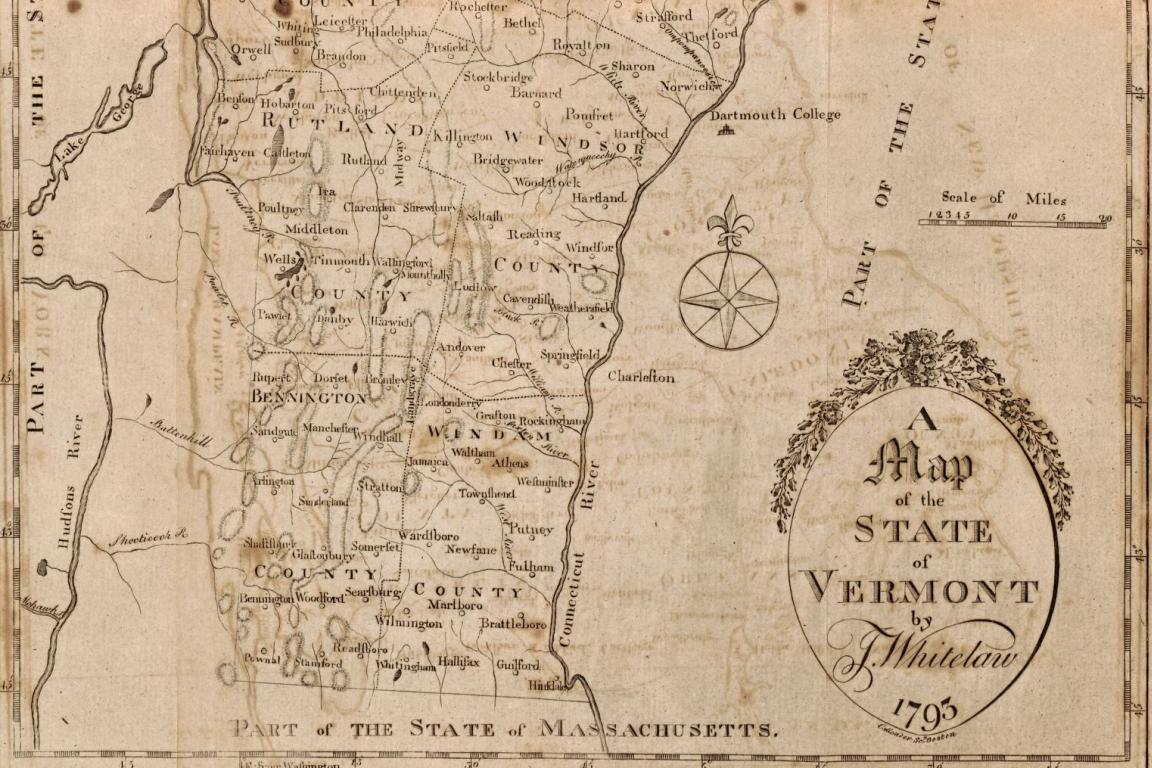
Among the N.E.H.G.S. databases available is the Early Vermont Settlers, 1700-1784 project directed by Scott Andrew Bartley. This week the society added 74 new profiles of heads of families from Hartland, Springfield, Hartford, and other towns in Windsor County, Vermont. For info on exactly who those people are, see these blog posts.

Wednesday, July 11, 2018

Representing Washington in Cambridge, 14 July

On Saturday, 14 July, the Longfellow House–Washington’s Headquarters National Historic Site in Cambridge will welcome three guests representing Gen. George Washington in different ways.

Washington used that Georgian mansion, originally built by friend of government John Vassall, from mid-July 1775 to early April 1776. Martha Washington joined him there in December. In those months the commander-in-chief made plans to reorganize the Continental Army for a wider campaign (including a reversal of his initial decision not to enlist any black soldiers), launched unusual attacks on the Crown at sea and in Canada, and learned crucial lessons about using his staff, working with civil governments, managing intelligence and counterintelligence, and more.

From noon to 4:00 P.M., John Koopman will portray Gen. Washington at the site, and Sandy Spector will join him as Martha. Visitors can converse with the Washingtons and ask questions about their wartime experiences, take and/or pose in photographs, play historic games, and enjoy other activities. Koopman plays the title role in Mount Vernon’s short movie “Washington’s War,” now available through various streaming services. (Alas, this presentation lacks the “snow” that falls in the Mount Vernon theater during winter scenes.)

From 1:00 to 2:00 P.M., Roxane Orgill will read from and speak about her new book Siege: How General Washington Kicked the British Out of Boston and Launched a Revolution. This is a novel in verse about Washington’s time in Cambridge. Though written with young people in mind, it evokes the difficult moments and decisions for all readers. Orgill is the author of the Boston Globe–Horn Book Award winner Jazz Day: The Making of a Famous Photograph, and other books.

At 2:30, a National Park Service ranger will lead a “Road to Revolution” walking tour of nearby sites involved in the “Powder Alarm,” the siege of Boston, the housing of the Convention Army, and other moments in the move toward American independence.

All these events are free and open to the public, as are tours of the mansion. The Longfellow–Washington site is at 105 Brattle Street, only half a mile from Harvard Square. Parking in this part of Cambridge is extremely limited, so plan to walk.

Tuesday, July 10, 2018

Rehabbing Colonial Massachusetts’s Granite Positioning System

The Massachusetts Department of Transportation recently announced the completion of its project to preserve the remaining milestones along the old Upper Boston Post Road.

Those stones were initially put in place as early as 1729 by rich men vying for political acclaim, such as justice Paul Dudley (1675-1751), soon to be chief justice. In 1767 the Massachusetts Council ordered more markers. Traffic, urban growth, and highway projects have moved or removed a lot of the stones so that by 1971 only forty were still around to be listed in the National Register.

In 2011, a marker in Brighton was damaged by a truck. That prompted the Transportation Department to explore conserving all the known remaining milestones. In 2014, the Watertown firm Daedalus Inc. was contracted to survey and preserve the markers. The company identified twenty-nine stones that needed repairs, cleaning, cracks filled, resetting, and/or moving back to their original locations. That work is now complete.

The department’s blog post contains a complete list of the surviving markers and their locations. As an example, here’s a stretch of stones in central Massachusetts:
  • Milestone Marker #35 is located at Dean Park on Main Street in Shrewsbury. This granite marker is inscribed with “Boston 35 Springfield 65 Albany 165”.
  • Milestone Marker #43 is located on Main Street at the I-290 ramp in Shrewsbury. This granite marker is carved with the inscription “43 Mile to Boston”. Marker #43 has been moved to a more accessible location on the Shrewsbury Town Common adjacent to Main Street.
  • Milestone Marker #47 is located on Lincoln Street in Worcester. This brownstone marker is carved with the inscription “47 Miles from Boston 50 Springfield”.
  • Milestone Marker #48 was formerly located at the Worcester Historical Society, but, as part of the project, has been reset at Wheaton Square Park on Salisbury Street in Worcester. This brownstone marker is carved with the inscription “48 Miles from Boston”.
  • Milestone Marker #53 is located on Main Street in Leicester. This brownstone marker is carved with the inscription “53 Mile from Boston”.
  • Milestone Marker #54 was formerly located inside the Leicester Public Library, but has been relocated to Washburn Square in Leicester, which is within the vicinity of its original site. This brownstone marker is carved with the inscription “54 Miles from Boston”.
Markers 56 to 74 (the numbers indicating the miles to Boston) have all survived. In contrast, only one marker to the west of that stretch remains, and it was moved into the Springfield Armory Museum.

For more about Massachusetts milestones, see this guest blogger post from Charles Bahne.

Monday, July 09, 2018

The World War of 1778 to 1783

An exhibit on “The American Revolution: A World War” just opened at the Smithsonian’s National Museum of American History. There is also a website showing some of the artifacts.

This exhibit focuses on the siege of Yorktown which, when we count sailors as well as troops on land, involved more Frenchmen than Americans.

Among the items on display are paintings of The Siege of Yorktown and The Surrender of Yorktown, both from 1786, and a Charles Willson Peale portrait of George Washington from the early 1780s. All three originally hung in the Comte de Rochambeau’s chamber as a reminder of his partnership with the American general. This is the first time the canvases have been together in more than two centuries.

Shown here is another early artistic celebration of the Franco-American alliance: a French porcelain figurine from the 1780s of King Louis XVI and diplomat Benjamin Franklin.

This exhibit is scheduled to remain on view until next July.

Sunday, July 08, 2018

Robert Burns’s “damn’d melange of fretfulness and melancholy”

Last month the B.B.C. reported on a published paper by Moira Hansen, Daniel J. Smith, and Gerard Carruthers about the moods of Robert Burns (P.D.F. download).

Specifically, the paper is titled “Mood Disorder in the Personal Correspondence of Robert Burns: Testing a Novel Interdisciplinary Approach.” Hansen is a graduate student at the University of Glasgow’s College of Arts while Smith is a Professor of Psychiatry and Carruthers co-director of the Centre for Robert Burns Studies.

As for the “Testing” aspect, it’s important to note that people have been writing about Burns’s periods of depression since, well, Burns. He described himself in November 1793 as feeling “altogether Novemberish, a damn’d melange of fretfulness and melancholy…my soul flouncing & fluttering.” Since his first biographer, Burns scholars have debated the causal links between his moods, his art, and his drinking. In the past few decades scholars have come back to interpreting Burns through the lens of psychological depression.

This team of researchers used Burns’s letters from November 1793 (and lack of letters in the following month) as a benchmark for depression. They had an independent party choose three random points elsewhere in the poet’s correspondence for further assessment and comparison—apparently by Hansen. As for the method of analysis:
Any of these symptoms [manic, hypomanic and depressive] might be evidenced in the text of the letters by a range of features including, but not limited to: explicit discussion; descriptive and figurative language; allusion; tone; coherence of flow of ideas; and length and quantity of letters written in any given period.
I wish the paper had more detail about the measurement of those qualities and how the researchers avoided subjective judgments.

The researchers concluded that there’s ”evidence to suggest Burns' mood cycled between depression and hypomania.” But really, I think, this was a test whether their methodology matched what they and others already knew. The real disputes here are probably whether (a) scholars can reputably diagnose mental disorders over a wide chronological and cultural gap, and (b) whether such conclusions are meaningful to the literary work.

This paper is part of a larger project with its own website. Hansen will go into more detail on Burns’s changing moods, how they affected his behavior and relations with others, and how they affected his poetry. She has the advantage of a large body of writing, collected early and kept reasonably intact. Can the method work with figures whose correspondence was not so assiduously assembled?

Saturday, July 07, 2018

Reviewing the “Townshend Moment”

A few weeks back, I attended a talk at the Colonial Society of Massachusetts by Prof. Patrick Griffin about his new book, The Townshend Moment: The Making of Empire and Revolution in the Eighteenth Century.

Here’s a review of The Townshend Moment by William Anthony Hay for the Claremont Review of Books.

Griffin posits that the rise of power in 1767 of two brothers—George and Charles Townshend—was a crucial juncture in the late-eighteenth-century British Empire. George, who had succeeded to the title of Viscount Townshend in 1764, took the job of Lord Lieutenant of Ireland. Simultaneously, Charles became Chancellor of the Exchequer and the government’s principal voice in the House of Commons.

Though the Townshends consulted closely with each other, they had grown up apart and were quite different men. Hay summarizes:
The brothers were the scions of a failed aristocratic marriage. After their parents separated, the eldest, George, was raised by his father while their mother raised Charles. George, “brave, clever and not devoid of good feeling,” was intemperate in his judgements, impatient with authority, and exaggerated his superiors’ faults. Charles’s talent matched his ambition, but Griffin describes him as fickle, uncertain which political faction to join, and thereby unwilling to be pinned down. The confident and well-connected brothers relied on each other almost exclusively.
In 1767 the goal they shared was to strengthen the authority of the London government over its dependent territories, both across the Irish Sea and across the Atlantic.

The Townshend Act(s), named after Charles, not only instituted tariffs on certain goods shipped to North America but also established that the primary purpose of those funds was to pay salaries for royal appointees in North America, this insulating them from local popular pressure. Charles Townshend died suddenly in late 1767, but the British government remained committed to that model, despite widespread protest from American colonists.

George, Lord Townshend, also ran into opposition from the local legislature—in his case, the Irish parliament. He clearly felt it didn’t deserve as much deference as the Parliament in London. He lasted five years in that job, returning to Ireland in 1773 to fight a duel with an Irish peer. After that, Lord Townshend amassed additional offices, military titles, and a higher peerage but never seems to have exercised as much authority again.

Given the brothers’ short tenure, I’m not sure how influential the Townshends really were. How far ahead of other British ministers were they, and how much did the programs they instituted depend on them? Indeed, the Townshends’ biggest influence appears to have been the antithesis to their plans—the pushback from locals who felt these new rules turned them into second-class subjects.

Hay concludes his review by noting the eventual results of the “Townshend moment” in 1767:
Neither Townshend brother would have intended the ultimate outcomes of their reform projects. Instead of rationalizing empire to make it more governable, those efforts challenged the underlying assumptions that had sustained order. Their reforms unearthed frustrations that ended up pulling the periphery of empire apart. Lord Townshend, who lived until 1807, saw the colonies win their independence. Irish patriots gained fragile autonomy in 1782, but failed to resolve contradictions in their own regime that made it ungovernable. Union with Britain in 1800 traded the fragile autonomy for the benefits of full participation.
Still, it’s always valuable to consider America’s Revolutionary conflict from the perspective of the British government and the men, however briefly, at its head.

Friday, July 06, 2018

The Final Fate of the Cerberus

Boston 1775 has periodically passed on news about the final resting-place of some Royal Navy ships notable in the Revolution:
Here’s another ship in that catalogue.

H.M.S. Cerberus famously arrived in Boston in May 1775 carrying three generals to assist Gov. Thomas Gage: William Howe, John Burgoyne, and Henry Clinton. A frigate named after a mythological three-headed monster could hardly have been a better gift for Patriot propagandists.

(The Earl of Sandwich, frequent First Lord of the Admiralty, liked naming warships after figures from classical mythology. Though he wasn’t in that office in 1758 when the Cerberus was launched, his preference had taken hold.)

The Cerberus was involved in the fight over Noddle’s Island and the Battle of Bunker Hill before returning to Britain with news of that disastrous victory. By the end of the year the warship was back along the American coast, patrolling east of New York’s Long Island. It helped the British military take over Newport in December 1776.

On 14 Aug 1777, the submarine inventor David Bushnell targeted the Cerberus off New London, Connecticut, with another invention: the floating mine. However, some of the warship’s sailors spotted one of Bushnell’s explosive barrels and hauled it aboard their boat. The device went off, killing three and wounding one.

In July 1778 H.M.S. Cerberus was back in Narragansett Bay when the first French fleet arrived. After several days of maneuvering, on 5 August it and three other frigates were chased down by two much larger French warships. The British captains chose to run their vessels aground and set them on fire rather than let them be captured.

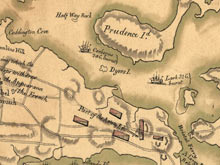
In the 1970s a graduate student in archeology discovered the wreck of the Cerberus off Prudence Island. Very little of the frigate was left. That site is now protected by federal law.

Thursday, July 05, 2018

Call for Essays on Eighteenth-Century Protest

Yvonne Fuentes of the University of West Georgia and Marc Malin of Randolph-Macon College have issued a call for essays for a scholarly anthology on the topic “Protest in the Long Eighteenth Century.”

This project stems from a panel at the 2018 meeting of the American Society for Eighteenth-Century Studies titled “They Were Warned, and yet They Persisted.” The conference invitation listed examples of popular protest, opposition, and resistance, such as food riots in England, France, and Spain; the Esquilache Riots in Madrid triggered by “new” policies on hats and coats; and the attacks on silk weavers’ looms in Spitalfields, London.

The presentations examined the causes of the protests, as well as the ways in which common artifacts such as poles, trees, drums, conchs, pamphlets, songs, and other alternative media of communication may operated as flashpoints for conflict.

A week before the conference, an editor contacted Fuentes and Malin to discuss expanding the session into an edited volume. Their goal now is to gather a collection of strong academic and research-oriented interdisciplinary essays on the theme. The volume would include between ten and fifteen essays (7,500-8,000 words including notes) distributed in chapters that explore topics such as:
  • the myths of placid tranquility
  • the contested right of protest
  • the legality of and theories on protest
  • strategies and goals of protest
  • the culture of protest and reaction
  • popular protests and unpopular policies
  • riots and riot control
  • audiences and targets of protest
  • allies and coconspirators
  • collusion and complicity
  • intersectionality
  • transatlantic and transnational boundaries
  • rural and urban forms of resistance and noncompliance
  • verbal and non-verbal means and mediums of protest
  • the limits of satire and parody
  • food and food prices as cause and means of protest
  • clothing, apparel, and fashion as means and provokers of protest
  • art, music, dance as forms of protest and resistance
  • environmental conflicts and social protest
  • common property and communal use of land
  • other forms, causes, artifacts, means of resistance
Fuentes and Malin invite authors from diverse backgrounds, fields, and approaches to submit proposals by 31 Aug 2018. Each proposal should consist of a 500-word abstract describing the topic and approach to the overarching theme, and the author’s condensed two-page curriculum vitae. Send that material to both yfuentes@westga.edu and mmalin@rmc.edu with the subject line: “VOLUME ON PROTEST + [your surname]”.

Wednesday, July 04, 2018

John Adams and America’s First Fourth

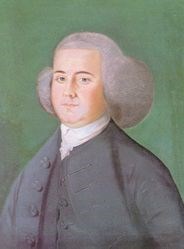
As many people know, John Adams lauded the Continental Congress’s vote for independence by writing home, “The Second Day of July 1776, will be the most memorable Epocha, in the History of America.”

Adams didn’t realize that the Congress’s public Declaration of why it had voted that way—a document he was contributing to—would end up being much more prominent than the actual vote and thus define independence in the American people’s minds.

I wondered how long it took for Americans, and for Adams in particular, to adopt 4 July as the important anniversary. And the answer is: not long at all.

On 5 July 1777 Adams wrote to his preteen daughter Nabby:
Yesterday, being the anniversary of American Independence, was celebrated here with a festivity and ceremony becoming the occasion. . . .

The thought of taking any notice of this day, was not conceived, until the second of this month, and it was not mentioned until the third. It was too late to have a sermon, as every one wished, so this must be deferred another year.

Congress determined to adjourn over that day, and to dine together. The general officers and others in town were invited, after the President [Thomas Wharton, Jr.] and Council, and Board of War of this State.

In the morning the Delaware frigate, several large gallies, and other continental armed vessels, the Pennsylvania ship and row gallies and guard boats, were all hawled off in the river, and several of them beautifully dressed in the colours of all nations, displayed about upon the masts, yards, and rigging.

At one o’clock the ships were all manned, that is, the men were all ordered aloft, and arranged upon the tops, yards, and shrowds, making a striking appearance—of companies of men drawn up in order, in the air.

Then I went on board the Delaware, with the President [Wharton again? or John Hancock, head of the Marine Committee] and several gentlemen of the Marine Committee, soon after which we were saluted with a discharge of thirteen guns, which was followed by thirteen others, from each other armed vessel in the river; then the gallies followed the fire, and after them the guard boats. Then the President and company returned in the barge to the shore, and were saluted with three cheers, from every ship, galley, and boat in the river. The wharves and shores, were lined with a vast concourse of people, all shouting and huzzaing, in a manner which gave great joy to every friend to this country, and the utmost terror and dismay to every lurking tory.

At three we went to dinner, and were very agreeably entertained with excellent company, good cheer, fine music from the band of Hes­sians taken at Trenton, and continual vollies between every toast, from a company of soldiers drawn up in Second-street before the city tavern, where we dined. The toasts were in honour of our country, and the heroes who have fallen in their pious efforts to defend her.

After this, two troops of light-horse, raised in Maryland, accidentally here in their way to camp, were paraded through Second-street, after them a train of artillery, and then about a thousand infantry, now in this city on their march to camp, from North Carolina. All these marched into the common, where they went through their firings and manoeuvres; but I did not follow them.

In the evening, I was walking about the streets for a little fresh air and exercise, and was surprised to find the whole city lighting up their candles at the windows. I walked most of the evening, and I think it was the most splendid illumination I ever saw; a few surly houses were dark; but the lights were very universal. Considering the lateness of the design and the suddenness of the execution, I was amazed at the universal joy and alacrity that was discovered, and at the brilliancy and splendour of every part of this joyful exhibition.

I had forgot the ringing of bells all day and evening, and the bonfires in the streets, and the fireworks played off.

Had General Howe been here in disguise, or his master, this show would have given them the heart-ache.
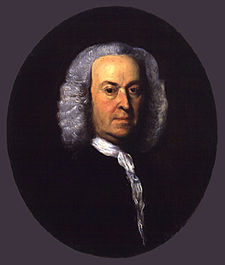
So as early as 1777 John Adams was calling the 4th of July “the anniversary of American Independence.” And for once, he wasn’t the grumpiest member of the Congress. The Connecticut delegate William Williams (shown above) wrote to Gov. Jonathan Trumbull the same day:
Yesterday was in my opinion poorly spent in celebrating the anniversary of the Declaration of Independance, but to avoid singularity and Reflection upon my dear Colony, I thot it my Duty to attend the public Entertainment; a great Expenditure of Liquor, Powder etc. took up the Day, and of Candles thro the City good part of the night. I suppose and I conclude much Tory unilluminated Glass will want replacing etc.
Within there months Gen. William Howe was in Philadelphia, as Adams had only imagined. The Continental Congress and Pennsylvania government had fled to Lancaster. And the U.S.S. Delaware was in British hands.

Tuesday, July 03, 2018

The Rise of John Adams, Boston Lawyer

Between the Liberty riot and the controversy over the Circular Letter, I had to neglect another significant Revolutionary development in June 1768: the entrance of John Adams into Boston politics.

Adams grew up in Braintree and returned to that town to establish his family and legal career. Because of how the Massachusetts Superior Court traveled from county to county, he visited Boston regularly. He had clients there, and he was friends with such significant figures as his cousin Samuel Adams and rising Crown supporter Jonathan Sewall. But for most of the 1760s Adams was a country lawyer, and he liked it that way.

Adams’s earliest public writing was an essay in the 14 Mar 1763 Boston Evening-Post signed “Humphrey Ploughjogger.” Writing in a rustic dialect, Adams lamented the political quarrels in Boston. A second “Ploughjogger” essay said that raising hemp was more important than factional politics. Adams responded to himself in the 18 July Boston Gazette using more genteel language and the new pseudonym “U,” agreeing that agriculture was more productive than arguing in the newspapers.

In August 1765 Adams sent the Gazette a long essay on the history of British law that Edes and Gill printed in installments with no title or signature. When Thomas Hollis republished that essay in London, he titled it A Dissertation on the Canon and Feudal Law. That work drew Adams closer to the political issues of the day, but he was still viewing them from a distance.

In September 1765 stamped paper arrived in Boston, producing a crisis point. Adams made his first direct contribution to the Patriot political argument by drafting his town’s instructions to its General Court representative to resist the Stamp Act. As toned down by Adams’s neighbors, the “Braintree Instructions” were printed in Boston newspapers. Contrary to what Adams wrote decades later, they didn’t really stand out from or influence the instructions from other towns. But that document did draw Adams into formal politics, and in 1766 he became one of Braintree’s selectmen.

In early 1768, Adams decided to move into Boston to advance his legal career. According to his not-always-reliable autobiography:
My Friends in Boston, were very urgent with me to remove into Town. I was afraid of my health: but they urged so many Reasons and insisted on it so much that being determined at last to hazard the Experiment, I wrote a Letter to the Town of Braintree declining an Election as one of their Select Men, and removed in a Week or two
He rented a white house on Brattle Street for himself, Abigail, their two children (Nabby and John Quincy), and servants.

The events of June 1768 yanked Adams into Boston politicking. First, on 6 June he was put on a “Committee of the Sons of Liberty” who initiated a correspondence with John Wilkes, the London radical leader.

A few days later came the Liberty seizure and riot. A long town meeting channeled the energy of that uproar into formal political actions. On 15 June, Adams was named to a seven-man committee to instruct Boston’s representatives to the General Court about how to respond. The other members were Dr. Joseph Warren, Richard Dana, Dr. Benjamin Church, John Rowe, Henderson Inches, and Edward Payne. Much later, Adams recalled:
I was solicited to go to the Town Meetings and harrangue there. This I constantly refused. My Friend Dr. Warren the most frequently urged me to this: My Answer to him always was “That way madness lies.” . . . Although I had never attended a Meeting the Town was pleased to choose me upon their Committee to draw up Instructions to their Representatives
Now those representatives were:
  • James Otis, Jr., moderator of that town meeting.
  • Samuel Adams, on a committee that had just drafted a resolution against the Liberty seizure for the town.
  • John Hancock, an interested party in the Liberty case.
  • Thomas Cushing, speaker of the house and a moderate only by Boston standards.
Those men really didn’t need instructions about how to vote. Rather, the instructions were meant for public consumption.

John Adams is credited as the main author of the document that his committee delivered on 17 June. However, he drew on the draft from his cousin’s committee, and his colleagues had input into the final wording of the instructions. Adams later wrote, “there is nothing extraordinary in them of matter or Style, they will sufficiently shew the sense of the Public at that time.” The document protested the Townshend Act, the Liberty seizure, and the impressment of sailors. Boston’s political leaders liked the result enough to ask Adams to draft the next set of instructions in the spring of 1769.

Also in 1768, Hancock, who had known Adams since they were both boys in Braintree, hired him to contest the Liberty seizure in court. It’s not clear when Adams took up that case because the records are spotty. He may have filed Hancock’s first legal responses in July, and he definitely handled the proceedings in Admiralty Court in November. With the Whigs sending one-sided dispatches about the case to newspapers in other ports, the Liberty seizure became a widely reported American grievance, and Adams became one of Boston’s most prominent attorneys.

Monday, July 02, 2018

Hogeland and Newton on Hamilton in New York

On Thursday, 12 July, the author William Hogeland will speak at the Federal Hall Monument in New York City.

Hogeland’s topic will be “The Hamilton Scheme: Enemies and Allies in the Creation of an American Economy.” This midday talk is part of a series cohosted by the Museum of American Finance and the Alexander Hamilton Awareness Society titled “CelebrateHAMILTON 2018,” but it may not be that celebratory.

Hogeland will speak on how Alexander Hamilton’s national financial plan worked, why the public remains generally unaware of the details, and why opponents such as Thomas Jefferson, James Madison, and Albert Gallatin couldn't fully dismantle it during sixteen years of Republican administration.

He promises to address these questions:
  • What was the Hamilton scheme anyway?
  • Why did Hamilton himself find the scheme so thrilling?
  • What were the astonishing, even unsettling measures he was willing—eager!—to take in its service?
  • Why don’t Americans know anything about how our founding economy worked?
  • Who were the populists who opposed the scheme, and what did they do about it?
There will be time for discussion.

Hogeland is the author of an essay in Historians on Hamilton (Rutgers University Press, 2018), Founding Finance, The Whiskey Rebellion, and most recently Autumn of the Black Snake. His next book will be on Hamilton.

This talk will take place from 12:30 to 1:30 P.M. at Federal Hall National Monument, 26 Wall Street. It is free and open to the public (which Hamilton wasn’t always).

The very next afternoon—Friday, 13 July—Michael E. Newton, author of Alexander Hamilton: The Formative Years, will speak at the same venue on the topic “Son of a Whore?: The Extramarital Affair of Alexander Hamilton’s Mother.” Drawing on his finding of court records from St. Croix in old Gothic Danish script, Newton will discuss the real details of Rachel Faucett’s extramarital affair. Was her estranged husband’s characterization fair and accurate?

Newton’s Federal Hall talk is also part of the “CelebrateHAMILTON” series, and it’s more likely to laud the man himself. This talk is also free, with questions and reception to follow.

Sunday, July 01, 2018

A Big Week for Folks who Love Boston History

Today the Printing Office of Edes & Gill opens in a new location: inside Faneuil Hall.

I met proprietor Gary Gregory when his main business was the Lessons on Liberty walking tours, but he was already interested in printer Benjamin Edes. Then he acquired an antique printing press and taught himself such skills of setting lead type by hand and printing engraved images.

Soon Gary opened a print shop in the North End, recruited and trained smart staff, and over six years gave thousands of visitors a look at how political broadsides were created in the 1700s. When he lost that spot, folks worried about the future of Edes & Gill. But Gary and his press have landed at one of the political and commercial centers of Revolutionary Boston.

The Edes & Gill print shop reopens just in time for Boston Harborfest, which runs through 5 July. Many historical sites and organizations are participating, including Boston by Foot with its Johnny Tremain and other tours, Old North Church with its ColonialFest, King’s Chapel, and the Freedom Trail. Ordinarily Harborfest is scheduled for Independence Day weekend. But with Independence Day falling squarely in the middle of this week, that gives us more days to celebrate, right?

This week will finish with a bang at History Camp Boston, held once more at Suffolk University’s Law School building on Tremont Street. I’ll speak at this event, as I have every year since Lee Wright of The History List launched History Camp. This year my topic will be “The Redcoats Have Come,” about the British soldiers who poured into the town in October 1768 and how locals responded to them.

Lots of other fine speakers and researchers are scheduled to be at History Camp, too, including none other than Gary Gregory.

Saturday, June 30, 2018

The Vote on the Circular Letter at Last

On 30 June 1768, 250 years ago today, the Massachusetts House and Gov. Francis Bernard finally had their showdown over the Circular Letter to other colonies’ legislatures.

Bernard reported to his superior in London, Secretary of State Hillsborough:

I went early to the Council to watch the Proceedings of the House, having been informed that they intended to originate an Invitation for another Congress [like the Stamp Act Congress]: In which Case the Moment I got Intelligence of it I intended to dissolve them.

The House kept themselves locked up all the Morning; the best Part of which was spent in preparing a Letter to your Lordship which I am told is very lengthy: but as I have not seen it and probably shall not be allowed a Sight of it ’till it is printed in the Newspapers, I will say no more of it than that I am told it is in the old Strain, complaining that they have been misrepresented; tho’ the present Censure arises from an Act of theirs which they have had circulated throughout his Majesty’s Dominions:
The representatives actually started the day with a few housekeeping items, certifying financial accounts and putting off petitions to a future session—preparing for the body to be dissolved. Only then did they turn to the royal government’s demand that they rescind the Circular Letter.

The House cleared the gallery of spectators, informed the Council they were going into debate, and told the doorkeeper not to call out any members or bring in any messages. A committee led by Samuel Adams and James Otis, Jr., presented the drafts of replies to the governor and Secretary of State.

The letter to Bernard is four pages long in the legislative record. The letter to Hillsborough, written for the signature of speaker of the house Thomas Cushing, is five and a half pages. Clearly those documents had been in the works for days as the House handled other business and stalled for time.

After the letter to Hillsborough was read twice, and perhaps tweaked, the legislators voted 92–13 to accept it. Then the House was asked whether it would rescind the Circular Letter, as London had ordered. Again, 92 representatives defied the royal orders, and only 17 voted to rescind. This was one of the rare “roll call votes” in the colonial House with every legislator’s choice recorded and published.

Bernard complained, “among the Majority were many Members who were scarce ever known upon any other Occasion to vote against the Government Side of a Question; so greatly has infatuation and intimidation gained Ground.” Clearly legislators thought that defiance would be popular with voters.

And the House wasn’t done. It then appointed Adams, Otis, Jerathmeel Bowers, Col. James Otis, and John Hancock to draft a petition “praying that His Majesty would be graciously pleased to remove his Excellency Francis Bernard, Esq; from the Government of this Province.” The vote on that motion was not recorded, and Bernard said it “was carried by a Majority of 5” only. But what a surprise! Adams had a two-page draft of that petition ready to go.

Rather than immediately dissolve the legislature, Gov. Bernard decided to wait until he had officially received the House’s response. He felt confident that this new committee wouldn’t be able “to cook up something” to present as an impeachable offense. Indeed, after some debate the House asked Adams and colleagues to “bring in the Evidence in Support” of their charges.

In late afternoon, Bernard sent a message to the House members to meet him in the Council chamber with their official answer to his demand. But even then there was a surprise. The night before, the Council had the named its own “Committee to consider the State of the Province,” including Whigs James Bowdoin, William Brattle, and Royall Tyler and government supporters Thomas Flucker and James Russell. That committee wanted to read their own petition to the king. Bernard wanted to go straight to shutting down the House. He reported the resulting dispute:
as soon as the House entered one of the Committee of the Council expostulated with me upon my calling up the House while the Council was proceeding on the Address and was so indecent as to appeal to the House. I silenced him: another Gentleman interposed; I stopt him also, and proceeded to the Prorogation.
The governor informed the assembled legislators which of the bills approved by both chambers of the General Court in the legislative session he had approved. Then secretary Andrew Oliver announced that Gov. Bernard prorogued the House, sending all the representatives home.

The conflict over the Circular Letter was officially over. The House had refused to retract it, and the governor had followed the orders from London to dissolve the body. Protests and petitions about the Townshend Act went on. But now the Massachusetts Whigs had a new grievance, and a new triumph. Soon Paul Revere engraved on the Sons of Liberty Bowl:
To the Memory of the glorious NINETY-TWO: Members
of the Honbl. House of Representatives of the Massachusetts-Bay
who, undaunted by the insolent Menaces of Villains in Power,
from a Strict Regard to Conscience, and the LIBERTIES
of their Constituents, on the 30th. of June 1768
Voted NOT TO RESCIND.

Friday, June 29, 2018

“The House then adjourn’d till To-morrow Morning”

At the end of the workday on 28 June 1768, Gov. Francis Bernard demanded that the Massachusetts House respond to his week-old message about their Circular Letter to other colonial legislatures.

The Crown—meaning Secretary of State Hillsborough speaking for the British government in the voice of King George III—was requiring that the House rescind that letter or the governor would dissolve the legislature for the year.

The House responded with the tested tactic of stalling for time. First they said they’d discuss the question at 10:00 A.M. the next morning—250 years ago today.

On that Wednesday morning, the legislators discussed a bridge in Westford, clarifying the province’s benefit of clergy law, burning old government securities, and their own attendance and travel records (so they could be reimbursed).

The representatives considered this question: “Whether the House will at this Time order a Tax-Bill?” The House voted no, 54 to 46. You may recall that Gov. Bernard was hoping the prospect of such a bill lowering voters’ taxes would be his leverage over the legislature, but the representatives narrowly took that off the table.

Only then did the House turn to the Circular Letter. And they asked for more time. As Bernard described:
The House sent me a Message desiring me to grant them a Recess that they might consult their Constituents respecting the Requisition.

I knew that such an Indulgence would be liable to great Abuse; but if I had thought it could have produced any good Effect, which I had not any Reason to expect, I did not think myself at Liberty to postpone the Consideration of this important Question.

I therefore returned an immediate Answer that I could not consistently with my Sense of my Duty prorogue or adjourn the Court untill I had received an Answer.
The committee sent to the governor to ask this favor didn’t include any of the House’s Whig firebrands. In fact, those designated members might have been on the fence, most eager to consult with their neighbors. But Bernard didn’t relent.

In the afternoon the House moved through bills on financing, Native communities, and other matters until the governor’s thirty-nine-word reply to its request was recognized and entered into the record. And in response:
The House then adjourn’d till To-morrow Morning at Eight o’Clock, the Members bring first enjoin’d to attend punctually.
Oh, the suspense!

TOMORROW: Can’t put it off any longer.

Thursday, June 28, 2018

“They did not desire to be knocked on the head”

On 21 June 1768, as quoted back here, Gov. Francis Bernard passed on the instructions from the Earl of Hillsborough, Secretary of State, that the Massachusetts House had to rescind its Circular Letter to other colonial legislatures.

Bernard didn’t think that would turn out well. All he heard over the next few days indicated that the legislators were preparing “the very reverse of disavowing the Proceedings of the late House.” He watched the action as closely as he could, ready to dissolve the General Court if it took steps to call another congress of colonies or something else radical.

Meanwhile, there was more fallout from the Liberty riot on 10 June. The town had calmed down after the big town meeting on 14 June, but that was because the Commissioners of Customs were out of sight and reach at Castle William.

Those officials wanted to return to their jobs collecting tariffs, and they wanted protection. Writing from their refuge on 15 June, the Commissioners nudged Gen. Thomas Gage in New York (and Col. William Dalrymple in Halifax) to send troops:
What Steps the Governor and Council may take we cannot tell, but having applied to them, we have received no Assurances of Protection, and we are persuaded the Governor will not apply for Troops without the Advice of his Council, which Measure We do not imagine they will recommend, and we now write, Sir, to acquaint your Excellency of the very alarming State of things at Boston, and leave it to your Judgement to act as you shall think proper for the Honour of the Crown and protection of its Servants here in the present Exigency.
Gen. Gage responded with a reminder that under the British constitution only the civil authorities could order the military to mobilize except in an emergency. At the same time, Gage wrote to Gov. Bernard about the Commissioners’ alarm and a promise that he would respond to any such call for troops:
As I have received no Letter from you on this Subject or any Requisition made by you, for the Aid and Assistance of His Majesty’s Forces on this Occasion; I have not ordered any Troops to move into your Province. Nor do I think it proper to order any of His Majesty’s Forces to march for the sole purpose of quelling a Riot; unless required thereto, by the Civil Power. You must be the best Judge of the situation of Affairs in your Government, and whether the Aid of Troops is wanted to enforce the Laws, and to preserve Peace and Tranquility in the City. The moment you shall judge it convenient to apply to me for the Assistance of the King’s forces, I shall order such a number to march as you shall have occasion for.
But Bernard didn’t want to act unilaterally. He wanted the Massachusetts Council, or some members of it, to endorse any call for military support. He wanted Gen. Gage to perceive the situation as an emergency and send regiments. But he didn’t want to be the one man blamed for bringing in soldiers.

The governor told the general on 2 July:
I have heretofore in times of great Danger put the question to the Council whether I should apply to the General for troops, & have received such answers as have convinced me that it is in vain ever to put that question again. And yet upon the late tumults I told the Council that I was ready to put the question for applying to the General for troops if Any two of them would propose it. I was answered that they did not desire to be knocked on the head.

I told them that I did not desire it neither; but I was ready to take my share of the danger with them, and if they would advise this Measure I would carry it into Execution. But I would not act solely in this & take the whole resentment upon myself, attended with a charge of acting unconstitutionally in not taking the Advice of the Council. . . .

Above a fortnight ago A Committee of both houses was appointed [the House chose its committee members on 18 June] to enquire into the foundation of a report that troops were coming hither. A Sub-committee was sent to me, who after Apologising for the question asked me if I had, or any one that I knew had applied for troops to come hither. I accepted the apology being desirous & prepared to answer the question. I told them that I neither had myself nor did I know that any one else had applied for troops; but that I was certain that troops would come here, not from any knowledge of applications or orders, but from the sure consequence of effects from Causes; and I beleived that when they did come, it would be Very satisfactory to most people of property in the Town, tho’ perhaps, they won’t own it. That for my own part I avoided as much as possible having Any hand in or knowledge of it: for if I wanted to have Troops here, I need not expose myself by Applying for them; the Sons of Liberty would save me that trouble.
Thus, the possibility of a military force in Boston—beyond H.M.S. Romney, already assisting the Customs office and protecting its staff—was hanging in the air as the summer began.

On 28 June, 250 years ago today, Gov. Bernard got tired of waiting for the House’s response about the circular letter and chose “to bring this Matter to a Crisis as soon as may be.” Working from the Council chamber of the Town House, he gave province secretary Andrew Oliver this note to be delivered to the other side of the building:
Gentlemen of the House of Representatives,

It is now a full Week since I laid before you his Majesty’s Requisition, signified by his Secretary of State: I must therefore desire you to come to a Resolution upon it, for I cannot admit of a much longer Delay, without considering it as an Answer in the Negative.
The House resolved to deal with that question the next morning at 10:00.

TOMORROW: A play for more time?

Wednesday, June 27, 2018

What the Circular Letter of 1768 Signified

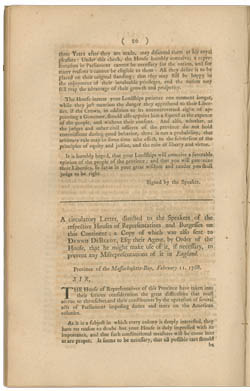
You may have noticed how in all these postings about the Massachusetts House’s Circular Letter of 1768, quoting politicians on the circular letter and on the debate over the circular letter, I’ve never actually quoted the circular letter.

That’s because the letter itself doesn’t strike me as particularly interesting or inciting. It went through the familiar argument that Parliament had no right to tax colonists because colonists couldn’t vote for Parliament. In February that position got the pithy formulation “No Taxation without Representation.”

The letter also complained about the new salaries that royal appointees were due to receive from the Townshend duties, asking whether “their having Salaries appointed for them by the Crown independent of the people hath not a Tendency to subvert the principles of equity.”

One fresh idea that the letter addressed was the notion of American colonists being represented in Parliament. Gov. Francis Bernard had floated that possibility privately in 1764, and later in 1768 a former governor, Thomas Pownall, would propose it in print. But the House ruled out the idea:
…considering the utter impracticability of their being fully & equally represented in Parliament, and the great Expence that must unavoidably attend even a partial Representation there; this House think that a Taxation of their Constituents even without their consent, grievous as it is would be preferable to any Representation that could be admitted for them there.
The letter also made several nods to the Crown’s primacy, including calling the colonial assemblies “a Subordinate Legislative” and concluding by “expressing their firm Confidence in the King, our common Head and Father, that the united & dutiful supplications of his distressed American Subjects will meet with his Royal and favorable acceptance.”

It’s possible that the first draft reported out of committee and voted down on 21 Jan 1768 was more confrontational in its language or proposals than the final text. Gov. Bernard reported that opponents of that draft argued that it “would be considered at home [i.e., in Britain] as appointing another congress” like the Stamp Act Congress of 1765. Which hadn’t actually accomplished much, but was seen as radical.

The only action the circular letter ended up proposing was that each colony’s legislature petition the Crown using the same arguments. As a result, the responses from other colonies to the Massachusetts House were positive but bland and pointed to no further action.

What turned the circular letter into the Circular Letter was the Earl of Hillsborough’s response to it in April. As a new Secretary of State, he wanted to strengthen the authority of the imperial government over the North American colonies. He interpreted Bernard’s reports on the Massachusetts legislature as even worse than they were. He didn’t think he could just ignore this document.

Once Hillsborough demanded that the Massachusetts House rescind the letter, however, he moved the argument beyond what would be a fair system of taxation in a worldwide empire. He turned the conflict into one over whether the Crown could compel some of its North American subjects into abjuring their established speech and principles.

TOMORROW: Time to vote.

Tuesday, June 26, 2018

“Such a prudent and proper Use of this Letter”

On 29 Feb 1768, as I described yesterday, the passengers on the Abigail finally made it to solid ground in Boston after a terrible fourteen-week voyage from London.

Among those passengers was a new Customs officer named Thomas Irving, who carried a letter of introduction to Gov. Francis Bernard. The economic historian John McCusker reports that letter was dated 23 Oct 1767 and marked as received on Sunday, 30 Jan 1768, which gives us a benchmark for other letters that may have traveled on the Abigail.

On Monday, 1 February, in the Representatives’ chamber:
The Speaker [Thomas Cushing] communicated a Letter from Dennys DeBerdt, Esq; which was read and communicated for Consideration to Mr. Speaker, Capt. [Edward] Sheaffe, and Brigadier [Timothy] Ruggles.
The Colonial Society of Massachusetts published a set of DeBerdt’s letters in 1911. One of those was dated 21 Oct 1767, shortly before the Abigail set sail, and addressed to Whig legislator Edward Sheaffe of Charlestown, appointed to the committee to reply. It’s possible that Cushing brought forward another letter that hasn’t survived, but this appears to be the most likely candidate.

In that letter DeBerdt pressed to be appointed as the official lobbyist for the whole Massachusetts provincial government, not just the House. He added, probably as a sign of his access, “I shall have a Conference with the Secretary of State in a few days…“

That likely reminded legislators of DeBerdt’s last letter to Cushing, dated 19 Sept 1767, in which he wrote about the Earl of Shelburne being sympathetic to the colonies and added:
He had also wrote to every Governour on the continent to behave with temper & moderation to the severl. Provinces over which they preside, & he had wrote to your Governour in particular to persue healing measures & was so condesending to offer shewing me Copy of his letter the next time I waited on Him
The Massachusetts Whigs had been so pleased with that assurance that London wanted their governor to act more moderate that they had the letter published in the 10 November Boston Gazette.

On Wednesday, 3 Feb 1768, the legislators were treated to a different message from London:
Mr. Secretary [Andrew Oliver, shown above], by Order of the Governor, came down and Read in the House a Letter from the Right Honorable the Earl of Shelburne to his Excellency [the governor], and then withdrew.
Bernard had just received a copy of Secretary of State Shelburne’s letter dated 17 September, forwarded from New York. (The signed original didn’t arrive until April, amazingly late.) This was the dispatch that DeBerdt had suggested would show Shelburne advising more “healing measures.”

Instead, that letter offered Bernard solid support for all the steps he had taken. Shelburne began, “I have the Pleasure to signify to you His Majesty’s Approbation of your Conduct, and to acquaint you that he is graciously pleased to approve of your having exerted the Power…” He went on to say:
I am to inform you, Sir, that it is His Majesty’s determined Resolution to extend to you His Countenance and Protection in every Constitutional Measure that shall be found necessary for the Support of His Government in the Massachusets Bay.
No doubt pleased, Bernard replied:
I shall make such a prudent and proper Use of this Letter, as I hope it will restore the Peace and Tranquility of this Province, for which Purpose considerable Steps have already been made by the House of Representatives.
The “prudent and proper Use of this Letter” that Bernard planned was to have Secretary Oliver read it to the House, pushing lawmakers to recognize the reality that he had the royal government behind him.

That didn’t work. Instead, the very next day the House decided to repudiate its earlier vote not to send a circular letter to the other colonial legislatures. Whatever “considerable Steps” toward “Peace and Tranquility” Bernard perceived on 2 February were gone two days later. The House decided to communicate with other colonial governments, even if that did breach protocol.

Furthermore, Massachusetts legislators focused on one phrase from Shelburne: “from your several Letters.” For the rest of the session, House leaders periodically asked Bernard for “a Copy of the Letter from the Right Honorable the Earl of Shelburn, lately read to the House by Order of his Excellency, and his own several Letters to which it refers.” The governor gave Cushing a copy of Shelburne’s letter but stonewalled on sharing his own, which is what the Whigs really wanted.

As discussed back here, Massachusetts politicians were convinced Bernard was writing bad things about them to London. All the more reason to form a united front with other colonial legislatures!

And all that time, nobody in Boston knew that the Earl of Shelburne’s opinions no longer mattered. There had been a shakeup in the British government. The Earl of Hillsborough had assumed responsibility for the North American colonies, and he was stricter than his predecessor.

TOMORROW: What was so important about the February 1768 circular letter.

Monday, June 25, 2018

What Prompted Reconsideration of the Circular Letter?

As I described here, on 21 Jan 1768 a legislative committee steered by James Otis, Jr., and Samuel Adams proposed that the Massachusetts House send a circular letter to the other colonial legislatures.

And the House voted that down.

But then on 4 February, the legislators voted to reconsider. And a week later, on 11 February, they approved the text of a letter that quickly went out to the other capitals.

What changed representatives’ minds before 4 February? I have a theory.

The Massachusetts House records tell us that two letters from London were presented to the chamber at the beginning of that month. On 1 February, speaker of the house Thomas Cushing shared a dispatch from Dennis DeBerdt, the body’s new lobbyist. And on the 3rd, province secretary Andrew Oliver read aloud a letter that the Earl of Shelburne, Secretary of State, had written to Gov. Francis Bernard.

The newspapers and Boston town records report that the brigantine Abigail, captained by James Harding Stevens, arrived late that January. That was the only ship that those sources reported had come from London since the start of the year, and possibly the only one since November.

(I must acknowledge that the 1 February Boston Chronicle also reported that two ships had arrived from Plymouth, England: the brigantine Commerce under Edward Sears and the schooner Nancy under John Choate. But I think those were less likely to have carried important mail from London politicians. In addition, some mail went to New York on the regular packet to that city and was then shipped up the coast. But the timing of the letters in question points strongly to the Abigail.)

Capt. Stevens and the Abigail carried, among other things:

  • an honorary diploma from the University of Edinburgh for the Rev. Samuel Cooper, according to the 8 February Boston Evening-Post.
  • “two beautiful Brass Field Pieces” for the Boston militia’s train of artillery. [In 1774, those two cannon were stolen from an armory under redcoat guard and eventually smuggled out to Concord. They survive today at local national parks as the “Hancock” and the “Adams.” Read all about them in The Road to Concord.]
  • Lt. William Haswell, retired from the Royal Navy, and his daughter, who would grow up to become the actress and novelist Susanna Rowson.
  • Thomas Irving (called “Robert Irvine” in the newspapers), Inspector of Imports and Exports for North America, a Customs officer.
  • three sea captains and three other mariners who worked out of Boston or the Piscataqua harbor.
  • various craftspeople, including a saddler, a joiner, a farmer, and a spinster. The 4 February Boston News-Letter said the passengers included “a number of weavers, wool-combers, cloathiers, and other manufacturers and mechanics,” but those don’t appear on the town’s official list of arrivals.
Usually a trip across the Atlantic took six weeks. The 22 Oct 1767 Boston News-Letter made special note when Capt. James Bruce “had but 4 Weeks Passage” from London. Capt. Stevens was not so lucky.

The Abigail left London in late October 1767, according to Boston newspapers of 1 Feb 1768. As of 9 November, it was still within sight of “the Downs” in southeastern England. The Boston Chronicle reported that Stevens “met with contrary winds the whole passage, and with such severe cold weather on this coast, that several of his ship’s company were frost-bitten.” The Boston Post-Boy added: “the Ship’s Company were at a short Allowance [of food] for 5 Weeks before their Arrival, being 36 Persons in Number Passengers Included.”

The Abigail entered Boston harbor on the night of 28 Jan 1768 during a snowstorm. And it wasn’t safe yet. As the Post-Boy reported, “by the Violence of the Wind, and the Weather being extreme cold, the Vessel drove ashore on Lovel’s Island.” The ship had to be partially unloaded before it could be floated again.

On that luckless brigantine, I hypothesize, came the two letters from London that were brought into the Representatives’ Chamber of the Town House early the following week.

TOMORROW: Looking at the letters.

Sunday, June 24, 2018

“I hereby send you a Copy of the other Part of the Letter”

On 23 June 1768, a committee from the Massachusetts General Court asked Gov. Francis Bernard for documents related to the House’s circular letter of 11 February.

House members wanted the whole text of a couple of specific letters from London they had heard about—plus, as the governor wrote to his boss, Secretary of State Hillsborough, “Copies of my Letters to your Lordship upon the Subject.” Bernard recognized that as a fishing expedition.

The next morning—250 years ago today—the governor sent the House a copy of the last two paragraphs of Hillsborough’s 22 April letter, which ordered him to end the legislative session if the House refused to rescind its circular letter.

In his cover message Bernard stated:
I should have communicated the whole of the Earl of Hillsborough’s Letter relating to the Business which I laid before you the 21st instant [i.e., of this month], if I had not been desirous that your Compliance with his Majesty’s Requisition might have its fullest Merit, by its appearing to be entirely dictated by a Sense of your Duty.

But since you desire to know what my further Orders are, I hereby send you a Copy of the other Part of the Letter relative to this Business, which contains all my Instructions thereupon. And as I know you will not expect that I should disobey the King’s positive Commands, I must desire that if you shall resolve to oblige me to execute them, you will previously to your giving your final Answer, prevent the inconveniences which must fall upon the People for want of the annual Tax-Bill, which I understand is not as yet sent up to the Board [i.e., the Council].

For if I am obliged to dissolve the General Court, I shall not think myself at liberty to call another, till I receive his Majesty’s Commands for that purpose, which will be too late to prevent the Treasurer [Harrison Gray] issuing his Warrants for the whole Tax granted by the Act of last year.

As to the Letter of the Earl of Hillsborough which I communicated to the Council, I must beg Leave to be the proper Judge of the time and occasion of communicating any papers I receive to the Council or the House. If I had then thought it expedient to lay it before the House, I should have then done so; when I shall think it so, I shall do it.

As to your Request of Copies of my Letters to the Secretary of State, you may assure yourselves that I shall never make public my Letters to his Majesty’s Ministers, but upon my own Motion, and for my own Reasons.
In sum, I didn’t show you the Crown’s orders right away because I know you dislike being made to do things. Also, you can’t make me do things.

As for the “Tax-Bill,” British legislatures had leverage over the executive because they constitutionally controlled taxation and thus the funding for governmental functions. But in this case, the governor pointed out, legislators had hopes of lowering their constituents’ taxes, and to do that they had to remain in session—which meant cooperating with him, since he had the power to dissolve the General Court.

With that message, Gov. Bernard had divulged all parts of Hillsborough’s 22 April letter except the first line:
I have received, and laid before the King, Your Letters to the Earl of Shelburne N[umber]s. 4. 5. & 6. with the Inclosures.
(The Secretary of State’s office and royal governors numbered their letters so that the other side would know if one had been lost or delayed in crossing the ocean.)

That seems like an innocuous sentence, but Bernard had a strong reason to keep it hidden. With those words the Earl of Hillsborough made clear that the negative view he had of Massachusetts and its legislature was based on the information his predecessor had received from the governor. Bernard had been assuring the province’s politicians that he presented them to his superiors in the best possible light. Most local Whigs didn’t believe him, but without access to his correspondence they couldn’t prove that suspicion. That’s why they had kept asking for his letters.

TOMORROW: What changed the House’s mind about the circular letter—a hypothesis.