






“The wider transatlantic workers’ struggle that helped make the American Revolution”?
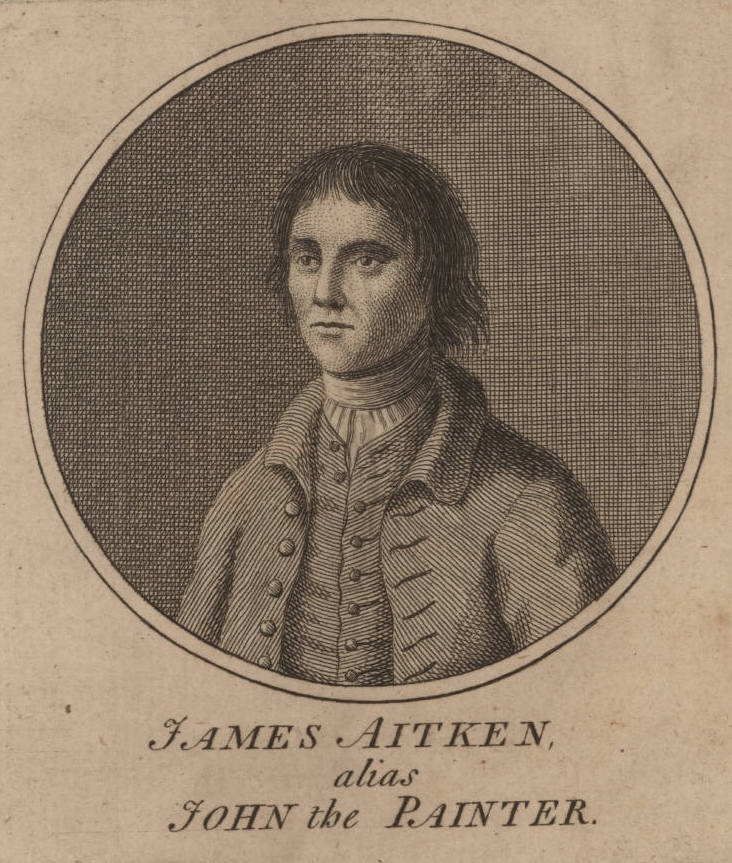
The article begins:
Late in 1776, with the War of Independence underway in the American colonies, a twenty-four-year-old housepainter named James Aitken walked into Britain’s most important naval dockyard and set it on fire. The damage was significant: estimates for repairs were twice the value of the tea destroyed at Boston harbor three years earlier.Aitken is the subject of one of my favorite books on the Revolution, Jessica Warner’s The Incendiary. But I’m not convinced he’s good evidence of a transatlantic political movement, even though he did start his life in working-class Scotland, was in Pennsylvania during the first years of the Continental Congress, and then returned to Britain to support the American cause. Aitken didn’t connect with other activists, except for Silas Deane in Paris. He seems to have been socially inept. Aitken was a movement of one.
The sense of threat experienced by Britain’s ruling elite was also profound. Few people today remember Aitken’s acts of sabotage against the British war machine. But they deserve recognition as part of the wider transatlantic workers’ struggle that helped make the American Revolution.
Likewise, something seems to be missing from the article’s description of the Gordon Riots:
In London too, the long-standing collaboration between laborers, artisans, and the commercial middle class proved a point of fracture as the possibility of revolution grew too close for comfort. When huge crowds took to the streets in the summer of 1780, burning the home of the Lord Chief Justice, throwing open prison gates, and attacking centers of imperial power like the East India Company offices, it seemed as though the “general effort” [Catharine] Macaulay had called for might finally be at hand.Those riots were spurred by support for a rather mad aristocrat’s protest against a new British law granting more political rights to Catholics. Though the violence threatened the political establishment, was it really for the benefit of the working class?
I expect Cutterham’s longer book addresses the details of these cases. And I don’t disagree that economic friction between the working class and their employers (still called “masters” in many fields) was part of the Revolutionary era. But so were a bunch of other factors that may have driven events more and certainly muddy the waters. Cutterham’s points are worth considering with care.

No comments:
Post a Comment