J. L. BELL is a Massachusetts writer who specializes in (among other things) the start of the American Revolution in and around Boston. He is particularly interested in the experiences of children in 1765-75. He has published scholarly papers and popular articles for both children and adults. He was consultant for an episode of History Detectives, and contributed to a display at Minute Man National Historic Park.

Subscribe thru Follow.it


•••••••••••••••••


Monday, February 17, 2020

“Boys insulting Every body who went in”

We don’t have inside information on the protests in front of the shops of people who defied Boston’s non-importation agreement in February 1770.

Instead, we have the reports of an unfriendly observer reporting to a Customs official. That person wasn’t privy to the Whigs’ planning. He (or she) was apt to ascribe bad motives to local political leaders. She (or he) might have been mistaken about what acts were planned and what were spontaneous.

All that said, within those reports I see evidence that top Whigs began those protests but then events went beyond those organizers’ direct control. Boys took over, making themselves visible participants in the movement.

The action started on 8 February, as described here, with a single sign erected beside the town pump. A painted hand pointed accusingly at William Jackson’s shop, identifying him as an “Importer.”

The informant noted that “a Number of Idle people…were standing by, with Clubs and Sticks in their Hands” and “a Number of considerable Merchants Stood at a Little distance, and seemed highly pleased with what was going on.” In particular, this witness named the radical merchant and protest leader William Molineux. So top Whigs closely supervised that initial action.

Protesters put up that sign at 10:00 A.M. and took it down at 1:00 P.M. The result was a brief, limited action on a busy Thursday when farmers brought their goods to market and the town schools let out early. That timing worked: “boys, and Country people,” came to watch.

Children had very little buying power, so they couldn’t participate in the boycott of the importers’ shops as the Whigs asked of adults. But they could show their support by making others obey the boycott. On that first day, the informant saw “Boys insulting Every body who went in, or out of the Shop, by Hissing and pelting them with Dirt.” Then more shops were vandalized over the following week.

The big question is how much those young people decided on their own to enter the political arena and how much they were used as tools by the adult Whigs.

Years later, the Rev. William Gordon wrote of this time in his history of the Revolution:
Boys, small and great, and undoubtedly men, had been and were encouraged, and well paid by certain leaders, to insult and intimidate those who had avowedly counteracted the combination, and still persevered.
But we don’t have further evidence of this, and Gordon didn’t arrive in Roxbury until 1771.

I think the evidence suggests that boys pushed into the political action, and in doing so pushed the political action further than the Whigs had planned—though Molineux and other radicals might well have encouraged the boys as they saw the result.

On 15 February, the picket line became more elaborate. The informant reported that the sign with the hand was joined by “the Effegies of some of the Importers.” Those effigies were the hallmark of the Pope Night processions, Boston’s annual eruption of youthful patriotic misrule (shown above). The town’s teen-aged boys brought out their political paraphernalia.

To be sure, there were probably still men watching over the protest. When four soldiers from the 14th tried to take down the sign and effigies, whoever pushed them away had to be fully grown. But the form of the protest was shaped by the youth culture.

Another sign that this protest was no longer fully coordinated with top Whigs was the threat on 15 February that effigies would “make their appearance on Liberty Tree the week following.” That didn’t happen. The adult Whig leadership kept control over that protest spot, taking down an unauthorized effigy in March 1768.

But there was still a clear threat of larger protests the next Thursday.

Sunday, February 16, 2020

“The Effects of Junius’ Letter”?

Throughout 1769, British politics was roiled by a series of public letters signed “Junius,” attacking the ministry of the Duke of Grafton and promoting William Pitt, by then the Earl of Chatham.

The letters combined erudite arguments, apparently inside knowledge of British politics, and personal attacks. The author’s identity has never been confirmed, but most evidence points to the Irish bureaucrat and politician Philip Francis, shown here.

The “Junius” letters made their way across the Atlantic to Boston, where the Whigs were already fans of Pitt and trying to form alliances with reformers in London.

In May 1769, Boston newspapers started to reprint letters from the “Junius” debate. Curiously, the first and, for a long time, only newspapers to do so were those closest to the royal authorities: Richard Draper’s Boston News-Letter and John Mein and John Fleeming’s Boston Chronicle. Other newspapers reported on the debate in London, passing on the occasional speculation about who “Junius” was.

On 16 October, the Boston Gazette joined in the fun by reprinting a letter from “Junius Americanus,” a pseudonym of the Virginia-born Arthur Lee. He wrote about issues that affected North American colonists directly.

In the 16 December London Evening-Post, “Junius” published a letter addressing George III. Such a direct public message to the king was a breach of traditional etiquette, arguably even illegal. The author presented this letter as a hypothetical letter written if the monarch had asked for frank and honest advice—and who could complain about that?

“Junius” expressed what the British Whigs saw as wrong with current London politics. There were several slaps at Scotsmen for supposedly being less loyal than Englishmen. There was a long defense of John Wilkes for attacking Scotsmen. There was support for the printers then taking the radical action of making the proceedings of Parliament available to the public. (Later in 1770 the first printer of the “Junius” letters was himself prosecuted, but the government lost that and similar cases.)

Toward the end of his letter to the king, “Junius” wrote: “The same pretended Power which robs an English Subject of his Birthright, may rob an English K[ing] of his C[rown].” That was as obvious a warning of justified rebellion as the British press could handle in those days.

Customs Collector Joseph Harrison’s anonymous informant reported that on 7 Feb 1770 “Capt. [Isaac] Cazneau arrived from London and brought with him Junius Letter to the K--g, which was published the next day in Drapers paper,” the Boston News-Letter. Draper also printed a much shorter reply from a “Junius” opponent signing himself “Modestus.”

Edes and Gill then reprinted the “Junius” and “Modestus” essays as a two-page supplement to their 12 February issue of the Boston Gazette, the same that included the expanded list of importers that I showed yesterday.

Three days later, the anonymous informant wrote: “Between the 8th & this date, most of the Importers had their Windows broke their Signs defaced, and many other marks of Resentment—in short the Effects of Junius’ Letter was Visible which way so ever you turned yourself.”

This was a top-down view of politics, all too typical of upper-class Loyalists. According to this perspective, a verbose, educated, well connected but unaccountably radical gentleman in London wrote a provocative letter. Once reprinted in Boston, it provoked common subjects who would otherwise be peaceful and content into violent attacks on supporters of Parliament’s new taxes.

Of course, Boston’s non-importation movement was over a year old by the time the “Letter to the King” came to town. The “Body of the Trade” meetings and the decision to call importers public enemies took place in January, before that letter arrived. Is it really believable that a long essay published in the News-Letter on 8 February prompted the “Importer” sign that went up at William Jackson’s shop that morning (possibly even before the newspaper came out)?

Both the Boston Whigs and the Boston Loyalists saw their cause as parallel, or even part of, the political conflicts in Britain. They were eager to draw connections between their struggles and the imperial capital. But in this case the cause-and-effect is more than tenuous.

It’s conceivable that the “Junius” letter and its reprint in the 11 February Boston Gazette, the town’s most popular Whig newspaper, fueled the larger demonstration four days later. But I think the energy was really coming from the bottom up.

TOMORROW: The shrill voices of the voiceless.

Saturday, February 15, 2020

Naming and Shaming the Importers

Last month I related how the “Body of the Trade” in Boston met over several days in January 1770 and wound up reenergizing the non-importation movement.

That meeting ended by naming certain merchants and shopkeepers as “importers” who refused to join the boycott of goods from Britain. Organizers had the resolves of the meeting printed as a broadside, about 14" by 5". Here’s a peek at that broadside.

The bottom of that sheet urged supporters “to paste this up over the Chimney Piece of every public House, and on every other proper Place, in every Town, in this and every other Colony, there to remain as a Monument of the Remembrance of the detestable Names above-mentioned.”

In addition, on 22 January Edes and Gill printed six importers’ names in big type at the top left of the front page of their Boston Gazette. On 12 February they ran an expanded list, as shown above. (For some reason, the first version had left out the locals who were the original focus of that public meeting: Nathaniel Rogers, William Jackson, Theophilus Lillie, and John Taylor.)

On 8 February, as described here, the Boston Whigs found another way to designate an “Importer”: with a sign in the shape of a hand set up outside Jackson’s shop. Schoolboys, let out early on Thursdays, formed a picket line under the Brazen Head, trying to keep customers away.

On 15 February, two and a half centuries ago today, Customs Collector Joseph Harrison’s anonymous informant told him: “Between the 8th & this date, most of the Importers had their Windows broke their Signs defaced, and many other marks of Resentment.” The public demonstration in the street became more elaborate that Thursday:
The Exhibition the same as last week with addition of the Effegies of some of the Importers, and below was wrote, that the Effegies of four Commissioners, five of their understrappers, with some people on the other side the water where [sic] to make their appearance on Liberty Tree the week following—
People “on the other side the water” meant officials in Britain.

There were still two army regiments in town, and that day “four soldiers of the 14th. Regt. attempted to take…down” the display. The informer stated those men were “bear of[f] and one of them much Hurt.” However, I don’t recall any soldier of the 14th Regiment complaining about this incident in the depositions they gave to Loyalist officials later that year. But the conflict was becoming more violent.

TOMORROW: What fueled those confrontations—“Junius” or juniors?

Friday, February 14, 2020

The Great 1770 Quiz Answers, Part 4

Here are answers to the final questions from the Great 1770 Quiz.

X. Match the following men to their experience of tarring and feathering in 1770.

1) John Adams
2) Robert Auchmuty
3) Henry Barnes
4) Theophilus Lillie
5) Patrick McMaster
6) William Molineux
7) Owen Richards
8) Jesse Savil

A) tarred and feathered by a mob in Gloucester
B) tarred and feathered by a mob led by a Connecticut captain
C) found his horse tarred and feathered
D) threatened in writing with tar and feathers while visiting Salem
E) found the outside of his shop tarred
F) carted around by a mob with tar and feathers but not tarred and feathered
G) filed suit against half a dozen people for tarring and feathering someone
H) defended a man accused of tarring and feathering someone

I discussed George Gailer’s lawsuit against the people who attacked him with tar and feathers in October 1769 back here. Robert Auchmuty was his lawyer (thus G) while John Adams defended David Bradlee (thus H).

Ben Irvin’s 2003 New England Quarterly article “Tar, Feathers, and the Enemies of American Liberties, 1768-1776” lists all the other incidents in its appendix. Other historians mention them as well. Owen Richards and Jesse Savil were low-level Customs officers. Henry Barnes, Theophilus Lillie, and Patrick McMaster were businessmen who defied the non-importation movement.

The threat to tar and feather William Molineux was an anomaly. Instead of enforcing the Customs laws or defying non-importation, he defied Customs laws and enforced non-importation. But that threat is recorded on the front page of the 20 Aug 1770 Boston Gazette, as shown here, right under a mention of tar and feathers being readied for importers in Woodbridge, New Jersey. By the sestercentennial of that news item, I hope to understand it a little better.

The correct answers are thus Adams (H), Auchmuty (G), Barnes (C), Lillie (E), McMaster (F), Molineux (D), Richards (B), and Savil (A). Once again, both Kathy and John got all the answers right.

XI. One of the most famous men in the British Empire visited Massachusetts in August and September 1770 and never left. Who was he?

This question offers so few specifics that I don’t think it’s Googlable. It’s a test of knowledge of the British Empire in 1770 and Massachusetts trivia.

The man was the Rev. George Whitefield. The popular British evangelist made many preaching tours through America. According to his 1877 biography and the 1903 edition of John Rowe’s diary, Whitefield’s final New England tour saw him preaching at:
  • Rhode Island: Newport (4-8 Aug), Providence (9-12 Aug).
  • Massachusetts: Attleboro (13 Aug), Wrentham (14 Aug), Boston at various churches (15-18 Aug), Malden (19 Aug), Boston again (20-24 Aug), Medford (26 Aug), Charlestown (27 Aug), Cambridge (28 Aug), Boston again (29-30 Aug), Jamaica Plain in Roxbury (31 Aug), Milton (1 Sept), Roxbury again (2 Sept), Boston again (3 Sept), Salem (5 Sept), Marblehead (6 Sept), Salem again (7 Sept), Cape Ann (8 Sept), Ipswich (9 Sept), Newburyport (10-11 Sept), Rowley (12-13 Sept), [laid low by diarrhea, 14-16 Sept], Boston again (17-19 Sept), Newton (20 Sept), [ill again, 21-22 Sept].
  • New Hampshire: Portsmouth (23-25 Sept).
  • Maine: Kittery (26 Sept), York (27 Sept).
  • New Hampshire: Portsmouth again (28 Sept), Exeter (29 Sept).
Whitefield returned to Newburyport, but he died at 6:00 A.M. on 30 September. Per his wish, the minister was buried in the crypt of the Newburyport meetinghouse, shown above.

Both John and Kathy answered this question correctly.

XII. Young servant Charles Bourgate accused his master Edward Manwaring, a Customs official, of shooting at the crowd during the Boston Massacre. At Manwaring’s trial in December, however, a jailhouse informant testified to hearing Bourgate say that Elizabeth Waldron had induced him to tell that lie. What did Waldron allegedly offer Bourgate for his testimony?

This question helpfully pointed to a specific moment of testimony, but of course the challenge is finding a record of that moment. A report on Edward Manwaring’s trial was printed alongside the transcript of the Rex v. Wemms et al. trial of the soldiers for the Boston Massacre—but not in every copy.

The copy of the trial record that Harbottle Dorr must have bought early and bound with his newspapers ends with an index of witnesses. But later copies like this one on archive.org have an appendix reporting on Manwaring’s acquittal.

I’ll discuss Charles Bourgate’s accusations next month. For now, I’ll just quote what a debtor named James Penny testified that the French boy had told him:
That what he testified to the Grand Jury and before the Justices…was in every particular false, and that he did swear in that manner by the persuasion of William Molineux, who told him he would take him from his master and provide for him, and that Mr. Molineux frightened him by telling him if he refused to swear against his master and Mr. Munro the mob in Boston would kill him: and farther that Mrs. Waldron, the wife of Mr. Waldron a taylor in Back-street, who sells ginger bread and drams, gave him the said Charles gingerbread and cheese, and desired him to swear against his master.
The answer to this question is thus “gingerbread and cheese.”

And it’s further evidence that William Molineux was everywhere in 1770 Boston.

Once again, Kathy and John both knew the putative bribe.

XIII. Three brothers from Massachusetts, two of them prominent in one of 1770’s most famous events, are said to have died at the same place, yet they were thousands of miles apart. Who were they, and how is this possible?

One of 1770’s most famous events was the Boston Massacre trial, and reports of that proceeding often note that Samuel Quincy (1735-1789) was one of the prosecutors while his younger brother Josiah Quincy, Jr. (1744-1775), was one of the defense attorneys.

Did they have a third brother? Yes, Edmund Quincy (1733-1768), who was a merchant rather than a lawyer.

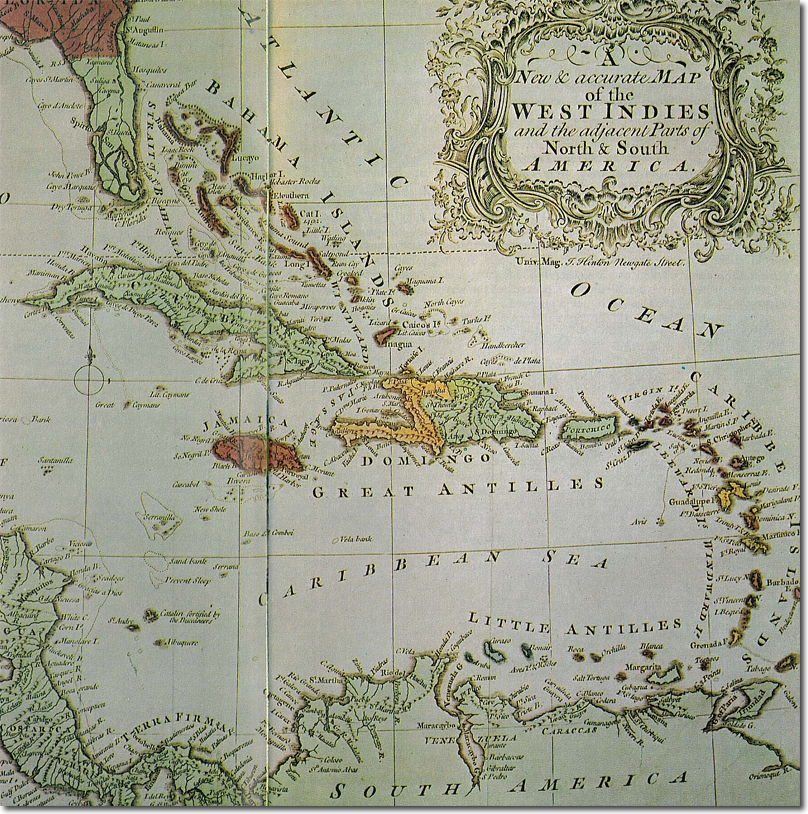
And where did the three men die? They all died “at sea,” but in different corners of the north Atlantic. Edmund was on a voyage to the Caribbean for his health. Josiah was returning to Massachusetts after meeting with British Whigs in the crucial winter of 1774-75. And Samuel, having become a Loyalist and taken a Customs service job in Antigua, was sailing to Britain with his second wife, again in hopes of restoring his health, and died off the African coast.

The Quincy brothers’ deaths was the tricky bit of trivia that got me thinking about making another quiz. I’m pleased that fact wasn’t too obscure for people to find. Or at least not too obscure for both John and Kathy.

By the narrow margin of a single question, John provided the most correct answers. Congratulations to him, to Kathy for an impressive performance, and to everyone else who puzzled over this quiz.

(John, please comment on this posting with your mailing address, which I’ll keep private, and I’ll send you a copy of The Atlas of Boston History provided by the University Press of Chicago.)

Thursday, February 13, 2020

The Great 1770 Quiz Answers, Part 3

Here are answers from the start of the second part of the Great 1770 Quiz.

VII. What were the real names of people in Boston behind these nicknames or pseudonyms used in 1770?

A) Determinatus
B) The Irish Infant
C) Michael Johnson
D) Paoli
E) Philanthrop
F) Shan-ap-Morgan
G) Vindex
H) William the Knave

One site to find almost all of these names is Boston 1775. Use the search box in the upper left corner of the screen (on the desktop design). I’ve discussed everything but “Paoli.” Of course, one should still confirm what I’ve written, but this site offers a quick start.

Three of those names are pen names used in newspaper essays. Samuel Adams wrote as “Determinatus” and “Vindex,” among many other pseudonyms. Jonathan Sewall signed himself “Philanthrop.” Many newspaper readers knew the identities behind those signatures; they weren’t actually concealing much.

Two other nicknames are examples of how people attacked their political enemies in newspaper essays. Adams called Customs Commissioner John Robinson “Shan-ap-Morgan” because he came from Wales. Boston Chronicle printer John Mein called William Molineux “William the Knave,” along with my favorite, “Admiral Renegado.”

It’s not clear which category “Paoli” belongs in. In 1769 the unsuccessful Corsican revolutionary Pasquale Paoli (1725-1807) was celebrated in Britain, where it was easier to cheer people rebelling against the French king than rebelling against one’s own. American Whigs toasted Paoli, Ebenezer Mackintosh named a child after him, and a Pennsylvania tavern with his name grew into a township (and 1777 battle site).

In an 18 Feb 1770 letter Thomas Hutchinson wrote about Molineux, “whom the Sons of Liberty have given the name of Paoli.” The Censor magazine for 14 Mar 1772 likewise referred to “the Bostonian who assumes the name of Paoli.” But those are Loyalist voices, not actually Molineux’s friends. In fact, they were his enemies, eager to make him seem conceited or alarming.

So did Molineux and his colleagues really use the nickname “Paoli” regularly and unironically? I’m not sure. But many historians have accepted Hutchinson as an accurate reporter and repeated that Molineux seized on the Corsican’s name.

On to “Michael Johnson.” In the week after the Boston Massacre, newspapers and coroners referred to one dead victim under that name. Then suddenly they started calling that tall mulatto man Crispus Attucks—without, unfortunately, offering any explanation for the change. Most historians suspect Attucks was living under an alias, but that’s still a guess.

Finally, in his autobiography John Adams recalled how the merchant James Forrest, “then called the Irish Infant,” asked him to defend the soldiers after the Massacre. Adams used the same nickname in an 1816 letter to Jedidiah Morse. He described Forrest in tears, so people have interpreted the nickname to mean Forrest, an Irishman, cried as easily as a baby.

That said, I haven’t found any other source describing Forrest by that name or trait. When Forrest told the Loyalists Commission about the services he’d rendered to the Crown, he didn’t mention securing the soldiers’ defense attorney. And the younger Abigail Adams used the phrase “the Irish infant” to describe a little person she saw in London in 1785. So there’s still a little mystery there.

Both Kathy and John matched all the nicknames to the right people.

VIII. After approving the Short Narrative of the Horrid Massacre, Boston voted to send a copy to about two dozen potentially sympathetic readers in Britain. Who was the only woman on that list?

Boston’s Short Narrative report can be found at many websites, and in multiple editions. The first printing, as shown by the copy Molineux sent to Robert Treat Paine and the Massachusetts Historical Society later digitized, ends with an index of witnesses. The town meeting authorized a committee to send copies to “the Duke of Richmond, General [Henry Seymour] Conway, and such other Gentlemen as they may think proper” in Britain.

On 16 May, the printers produced more copies with some new pages at the end listing the people in Britain that committee had chosen. A footnote explained, “This list and the following letter, are annexed to such copies only of this pamphlet, as are intended for publication in America.” Then more material was added for later printings. The longer copies were the basis of reprints in 1849 and 1870.

There’s one female name on that long list of recipients: the Whig historian Catharine Macaulay (shown above during her 1784-1785 visit to the U.S. of A.).

Both John and Kathy identified that supporter of the American cause.

IX. What site on the Freedom Trail came under new management in 1770?

There are a limited number of sites on the Freedom Trail, some of which didn’t even exist in 1770. So that narrows down the possibilities.

The Freedom Trail Foundation’s own webpage about those sites includes an entry that begins: “Built around 1680, the Paul Revere House, owned by the legendary patriot from 1770-1800…” A-ha!

A little research in biographies confirms that Paul Revere bought the North End house now named after him in late 1770. It was his home and place of business for several years, though he moved out for grander quarters well before he sold it.

Both Kathy and John correctly landed on that site.

TOMORROW: Tar, feathers, and death.

Wednesday, February 12, 2020

The Great 1770 Quiz Answers, Part 2

Here are the answers to the questions remaining from part 1 of the Great 1770 Quiz, along with the background and sources for each answer.

III. Match the person to the weapon he reportedly carried at the Boston Massacre.

1) catstick
2) cordwood stick
3) firelock and bayonet
4) Highland broadsword

A) Crispus Attucks
B) Benjamin Burdick
C) John Carroll
D) Christopher Monk

There are two ways to tackle this on Google, I think: pairing the phrase “Boston Massacre” with the men’s names, and pairing “Boston Massacre” with the weapons.

The first search shows that of these four people, John Carroll was a defendant in the trial—i.e., a soldier. We know those grenadiers were armed with firelocks (muskets) and bayonets.

From the other direction, “Highland broadsword” points to several sources naming Benjamin Burdick; “cordwood stick” to several naming Crispus Attucks; and “catstick” to this Boston 1775 posting about Christopher Monk.

One further comment on Burdick and his broadsword. Boston records show he was “Constable of the Town House Watch,” head of the nighttime patrol in the center of town. However, he never identified himself as such in his testimonies on the Massacre—I assume everybody at the time already knew.

As a result, until I wrote about Boston’s watchmen in a paper titled (after a quote from Burdick) “I Never Used to Go Out with a Weapon,” most people didn’t analyze his behavior through that role. The Highland broadsword wasn’t evidence of a man out for trouble; it was evidence of a man out to do his job of keeping the peace.

All four people commenting on this question—kmjones234, Kathy, Justin C, and John—put the weapons in the right hands.

IV. Followup: Who used “wouldring sticks” as weapons in March 1770?

Google the phrase “wouldring sticks,” and the only references that come up point to the ropemakers of Gray’s ropewalk during their brawl with redcoats on 1 March. The phrase appears in Boston’s Short Narrative of the Horrid Massacre in 1770 and in many accounts based on that source.

Those tools were also called “wouldering sticks” and “way sticks.” Ropemakers used them to help twist large cables tighter. But a thick, tapered stick could be useful in other situations as well.

Again, kmjones234, Kathy, Justin C, and John all answered this question correctly.

V. Which of the following men did the Boston town meeting elect to the Massachusetts house in May 1770?
  • John Adams
  • Samuel Adams
  • James Bowdoin
  • Thomas Cushing
  • John Hancock
  • James Otis, Jr.
  • William Phillips
According to Massachusetts’s charter, Boston could elect four men to the lower house of the General Court. Every other town could elect only two. (That meant Boston’s population, more than twice the size of any other town, was underrepresented. However, its representatives could easily attend sessions in Boston, and they had outsized influence.)

From 1766 to 1769 the town meeting elected the same four men to the legislature each year: Thomas Cushing, James Otis, Samuel Adams, and John Hancock. But the effects of his coffee-house brawl in September 1769 had addled Otis so much that in April he shot a pistol out of his window on School Street. He therefore needed to be replaced.

Over those same years James Bowdoin had served on the Massachusetts Council, but in 1769 Gov. Francis Bernard “negatived” or vetoed him along with a bunch of other troublemakers. That meant Boston had an active Whig politician without an official seat, and a seat needing someone to fill it. People sensed a solution.

Here’s the published record of Boston’s town meetings from 1770 to 1777. The election on 8 May 1770 is on page 21. That shows the four men elected that day were Hancock (511 votes out of 513), Cushing (510), Samuel Adams (510), and Bowdoin (439).

Those weren’t Boston’s representatives for the legislative year, though. When the Massachusetts General Court chose its new Council later in May, members once again named James Bowdoin to that upper chamber—and acting governor Thomas Hutchinson decided to accept him. That left his legislative seat vacant. On 6 June Boston had another town meeting (page 33), and Bostonians chose a young lawyer originally from Braintree to represent them: John Adams (418 votes out of 536).

In 1771 John Adams declined to run again, and Otis was reelected (page 53). Then Otis had another bout of insanity and lost the support of voters. In 1772 the town chose William Phillips as its fourth representative (page 78).

Kathy, Justin C, and John answered this question completely.

VI. Followup: In what building did the Massachusetts house meet in 1770?

To punish Boston and reduce the influence of its representatives, Gov. Francis Bernard convened the Massachusetts General Court in Cambridge in May 1769. That of course produced a lot of arguments about whether he was right to do so. Acting governor Thomas Hutchinson followed that lead and also convened the General Court in Cambridge.

The Massachusetts Secretary of State’s office has a webpage linking to the journals of the Massachusetts house as reprinted by the Massachusetts Historical Society. Those volumes have handy introductions about each year’s legislatives tussles. The title page of the 1770 volume states where the legislature was convened: “at Harvard-College in Cambridge, in the County of Middlesex.”

It takes a little more digging to determine in what building the house met. The 1770 minutes contain many references to messages or people going back and forth between the house and the Council. Gov. Hutchinson and the Council were in “the Philosophy Chamber,” and the lower house was in “the Chapel.”

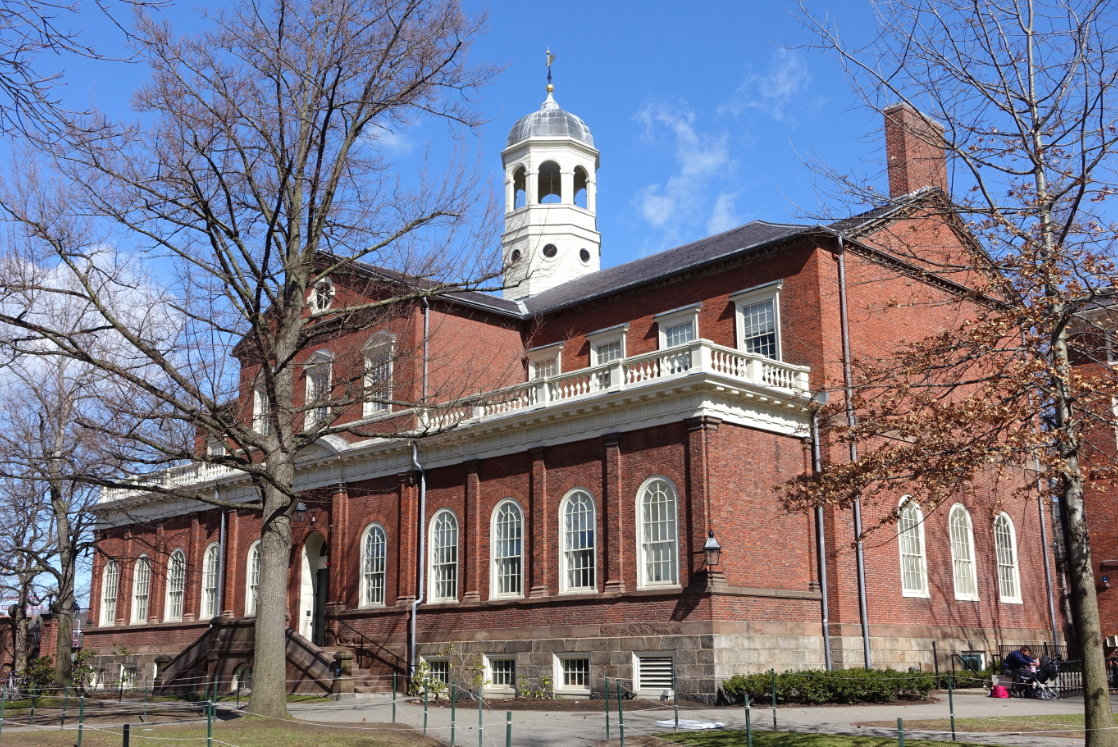
There’s some debate in the literature as to whether “the Chapel” meant Holden Chapel, built in 1744, or the ground-floor chapel of Harvard Hall, rebuilt in 1766. We know the Philosophy Chamber was in Harvard Hall. We also know the legislature had met in the previous Harvard Hall during the smallpox epidemic of 1764; in fact, a fire that started during that session was why the hall had to be rebuilt. Most important, we know the architect of the new building was none other that Gov. Bernard, who got to choose where the legislature met.

Thus, the consensus now, as this guide to Massachusetts legislators specifies, is that the Massachusetts house met on the ground floor of Harvard Hall.

Justin C and John both identified “Harvard College,” earning at least partial credit for this question.

TOMORROW: Pseudonyms and more.

Tuesday, February 11, 2020

The Great 1770 Quiz Answers, Part 1

Thanks to everyone who puzzled over the Great 1770 Quiz, whether or not you entered answers in the comments!

It looks like the competition is down to John and Kathy since they answered both parts. If I try this again I hope to remember the bunch all the questions in one posting.

In this Age of Google, it’s increasingly easy to find information—as long as one knows how to ask and how to assess sources. That means it’s also increasingly difficult to come up with trivia questions that can’t be answered with a few keystrokes.

This week I’ll share the answers to the questions and point to sources where people could find those answers. So let’s go!

I. Lord North became prime minister of Britain in January 1770. On March 5, the date of the Boston Massacre, what motion did he make in Parliament?

The answer is that on 5 Mar 1770 Lord North stood up and proposed in the House of Commons that Parliament repeal the duties on glass, paper, lead, and painter’s colors instituted by the Townshend Act.

Simply Googling the phrases “Lord North,” “Parliament,” and “March 5, 1770” (each phrase within quote marks, of course) brings up that answer in this essay at History Is Fun.

But of course an online tertiary source should be confirmed, ideally with period references that would pass muster in scholarship. The Annual Register for 1770 describes North’s proposal and the debate next to the date “March 5.”

Notably, that account doesn’t use Lord North’s name. It simply refers to “the government,” which he headed. British printers in this period were still testing the water of reporting Parliamentary debate, so they often didn’t identify speakers by name.

A few years later, however, an anonymous author rewrote the Annual Register into A View of the History of Great-Britain, during the Administration of Lord North, and that book was explicit about Lord North’s action:
One of the first acts of the new minister, was the bringing in a bill [footnote: March 5, 1770] for the repeal of so much of a late act of parliament as related to the imposing of a duty on paper, painters colours, and glass, imported into America; the tax upon tea, which was laid on by the same act, was still continued.

This repeal was made in compliance with the prayer of a petition, presented by the American merchants to the house of Commons, setting forth the great losses they sustained, and the fatal effects produced by the late laws, which for the purpose of raising a revenue in the colonies, had imposed duties upon goods exported from Great-Britain thither.
Both books report that some Members of Parliament proposed repealing the tea tax as well. Again, the names of those politicians don’t appear. But in a 1908 biography Charles A. W. Pownall credited his ancestor, former Massachusetts governor Thomas Pownall, with forcing a vote on that issue. Pownall lost, and the tea tax remained.

All four people who responded to this question—kmjones234, Kathy, Justin C, and John—answered correctly!

II. According to the records of King’s Chapel, which of the following events did NOT occur in that church in early 1770?
  • the funeral of Christopher Seider, killed by Ebenezer Richardson
  • the funeral of Patrick Carr, killed in the Boston Massacre
  • the baptism of Ebenezer Richardson, on trial for killing Christopher Seider
  • the marriage of John Murray, representative to the Massachusetts General Court from Rutland
Last November I featured the Colonial Society of Massachusetts’s online publication of the records of King’s Chapel, which inspired this question. The second of those two volumes contains the records on baptisms, marriages, and funerals.

In those webpages we can find mentions of all four of the events listed above: John Murray’s wedding on 24 January, Christopher Seider’s funeral on 26 February (though his name is spelled “Sider”), Patrick Carr’s funeral on 17 March, and Ebenezer Richardson’s baptism on 14 April.

The funerals included processions through the streets, but some religious service evidently took place in King’s Chapel or else they wouldn’t be recorded here. However, the listing for Richardson’s baptism says it took place “In Prison” rather than in the church, so that’s the correct answer.

Richardson’s was an unusual “Adult” baptism in the Anglican church. The man’s birth in 1718 is listed in the records of Woburn’s meetinghouse, indicating that he’d been baptized as an infant there, but in April 1770 he apparently wanted more salvation. Since he was about to go on trial for killing a child and none of the lawyers in Boston wanted to represent him, Richardson evidently felt he could use all the help he could find.

This question may have been too tricky by half because no one got it entirely right, but John noted all four events are in the King’s Chapel records while Kathy discerned that Richardson was in jail.

TOMORROW: Weapons and the legislature.

Monday, February 10, 2020

Looking Back on Jay Talking

I’m writing this on Sunday night. I don’t plan to respond to answers to the 1770 Quiz until after the last entries arrive.

Here’s something else I’m not doing tonight: preparing to go on the radio. As of the beginning of this year, I was scheduled to spend the hour after midnight talking to Bradley Jay on WBZ radio.

In November I went on the Jay Talking program and talked about the Boston Massacre. This conversation was going to be about the ground-breaking trials that followed. But in mid-January the station ownership canceled Bradley Jay’s show.

When I grew up in greater Boston, WBZ was not only the dominant AM news radio station, it was a pillar of daily life. Its signal was so strong that we could often pick it up at my grandparents’ house in Philadelphia. During elementary school winters, that was the place on the dial for school closing announcements. I still remember the names and voices of the men (and they were all men back then) who announced the news, weather, and traffic (“Joe Green in the ’BZ copter”).

Bradley Jay also grew up in New England. After several years as a music deejay on WBCN, he shifted to talk radio. He hosted the after-midnight shift on WBZ for more than a decade.

Bradley has a particular affection for history, so he brought on guests like Peter Drummey at the Massachusetts Historical Society and Bob Allison at Suffolk University. I was lucky enough to be added to that list in 2017. Well, lucky if you were comfortable staying out late since Bradley did his interviews live at WBZ after midnight.

When I first visited Jay Talking, WBZ radio still had its studios on Soldiers Field Road, just like when I was a kid. For last year’s interviews, that meant going to a cavernous office building in Medford, a sign of changes at the station after the iHeartMedia corporation acquired it in 2017. (The acquisition was the result of antitrust concerns, which of course are an upshot of consolidation in broadcasting.)

Last month iHeartMedia cut costs at WBZ by reducing local content, replacing several familiar voices with shows produced elsewhere. I can’t speak to the business side of that decision. Our news and entertainment media are changing dramatically, and AM radio isn’t the same business it was fifty years ago or twenty years ago.

Technology has given us listeners more control over what we choose to hear and many more choices of what to hear. For people who like to hear historical conversations, there are lots of dedicated podcasts. I must admit I probably have more hours of history podcasts queued up than hours I’ve listened to live radio this month. (To be sure, some of those podcasts are archives of radio shows.)

I think we lose something, however, in the move away from a big news radio station like WBZ or a big daily newspaper like the Boston Globe. Those broad-based news sources expose their audiences to topics we wouldn’t choose to pursue on our own—because the topics don’t seem interesting, because we don’t even know to inquire about them. Maybe that exposure helps us develop new interests. Maybe it just gives us a wider perspective on what we do focus on.

Bradley Jay brought people onto his show to talk about history because he thought the field was interesting, and that interest came through in his voice. Some of his listeners may have regularly tuned in for other topics entirely and gotten an hour of conversation they didn’t seek out. I hope my visits were stimulating enough for that hour, perhaps even stimulating enough to inspire a few people to learn more. And I hope I don’t forget to keep my eyes and ears open to topics I wouldn’t seek out, either.

Here are links to my visits to Jay Talking through Radio Public. The recordings are also available on other podcast platforms.
And it will be interesting to see where Bradley Jay’s interests next lead him.

Sunday, February 09, 2020

Fort Plain Museum Conference, 11-14 June

The Fort Plain Museum has announced the speakers at its annual American Revolution Mohawk Valley Conference, scheduled for 11-14 June 2020.

I’ve attended this event in the past and enjoyed not only the speakers but the dedication of the organizers and attendees.

The scheduled presenters are:
  • Andrew Jackson O’Shaughnessy, “The Architect of the British War for America: Lord George Germain”
  • Craig Bruce Smith, “The Interests of Our Dearest Country: Honor and the Continental Army”
  • James Kirby Martin, “A Contagion of Violence: The Human Slaughter in Frontier New York: 1775-1783”
  • Mark Edward Lender, “John Brown’s Raid on Fort Ticonderoga in September 1777”
  • Lindsay M. Chervinsky, “Councils of War and the Cabinet: How the Revolutionary War Shaped the Presidency”
  • David Head, “George Washington and a Very Mysterious Business: Tracking Down the Newburgh Conspiracy”
  • Eric H. Schnitzer, “The Value of Revisionism: Don Troiani’s Campaign to Saratoga—1777”
  • Todd W. Braisted, “In Reduced Circumstances: Loyalist Women and British Government Assistance, 1779-1783”
  • Katie Turner Getty, “Women Aiding American Prisoners of War and Escapees in New York”
  • James E. Richmond, “War on the Middleline: The Founding of a Community in the Kayaderosseras Patent in the Midst of the American Revolution”
  • Wayne Lenig, “Fort Plain, Fort Plank and Fort Rensselaer: the Revolutionary War Fortifications at Canajohary”
The Saturday dinner will be enlivened by Robert A. Selig speaking on “Battlefield Preservation Efforts in the Mohawk Valley.”

This conference usually also offers bus tours of the historic sites in the region on the first days with presentations on the weekend. Information about those opportunities, the conference facility, the fundraiser dinner, and other registration details will be available shortly. Watch this page.

ADDENDUM: Because of the pandemic, this event has been rescheduled until 10-13 September 2020.

Saturday, February 08, 2020

“Pointing to Mr. Jacksons Shop”

On Thursday, 8 Feb 1770, two and half centuries ago today, the Boston Whigs tried a new tactic in their pressure campaign against shopkeepers who were still selling imported goods.

According to the anonymous witness sending reports to Customs Collector Joseph Harrison:
about 10 oClock in the forenoon, a board was stuck up, on the Town pump, with a Hand painted on it, pointing to Mr. [William] Jacksons Shop and below, the word Importer, in Large Letters.—
Jackson’s braziery, or hardware shop, was on Cornhill, one of the main streets forming the crossroads at the center of town. His shop sign, the Brazen Head, had been a town landmark for decades. I can’t help but think that Bostonians also remembered how their town’s last great fire had started at his shop, which he then co-managed with his mother.

Whether it was his shop’s visibility or something he’d done, the Whig activists seem to have singled William Jackson out for hard treatment. He and they were already trading accusations of arson and planting evidence. Some printer produced the handbill shown above, visible at the Massachusetts Historical Society website. It designated Jackson and his shop by name and concluded:
It is desired that the SONS and DAUGHTERS of LIBERTY, would not buy any one thing of him, for in so doing they will bring disgrace upon themselves, and their Posterity, for ever and ever, AMEN.
But that wasn’t the most notable part of this protest, as the informant continued:
this affair drew the attention of the boys, and Country people, who flock’d about it, in great numbers; the Boys insulting Every body who went in, or out of the Shop, by Hissing and pelting them with Dirt.—
Boston’s five public schools let out early on Thursdays, at 10:00 A.M. That schedule was supposed to allow the boys to attend the Thursday Lecture (an extra sermon that Harrison Gray Otis recalled no classmate ever taking the opportunity to hear). Thus, the Whigs had small but enthusiastic adherents available to reinforce their message not to shop at Jackson’s.

Thursday was also Boston’s big market day, when farmers brought their produce in from the countryside. That produced an extra large crowd of people passing up Cornhill to Faneuil Hall.

According to the anonymous report:
Jackson made several attempts to take it [the pointing hand] Down, but was Repulsed by a Number of Idle people, who were standing by, with Clubs and Sticks in their Hands, however about one oClock it was taken away, by those who put it up, and the Crow’d dispersed first taking care to bespatter, all Jacksons windows over, with mudd and dirt—

During this Exhibition a Number of considerable Merchants Stood at a Little distance, and seemed highly pleased with what was going on, and Mr. M——x took Care to distinguish himself in a particular manner—
“Mr. M——x” was of course William Molineux, the Wolverhampton-born merchant who had made himself the leader of the non-importation movement. He was, people assumed, the strategist behind this new form of pressure.

Friday, February 07, 2020

Mr. Shaw and Mr. Dumaresq

While Nathaniel Shaw, Jr., of New London, Connecticut, was speculating on the likelihood of war by buying gunpowder in the Caribbean in early 1775, as discussed here, he was still broadening his commercial network.

In particular, he made a new contact in Boston, a merchant of Huguenot descent named Philip Dumaresq (1737-1801). On 15 Mar 1775, Shaw wrote to Dumaresq:
A few days agoe our Mutual Friend Thomas Mumford shew me a Letter from you recomending to send a Vessell to Cohassett Rather then Salem with West India Goods for the Boston Markett.

I have by the bearer James Angell in the Schooner Thames Shipt a Cargo of Brown Sugars Consisting of Sixty seven hogsheads and two teirces, which Sell for my Accot. They Just now came in from Hispaniola, and I believe are of a good quality, we have not made any report at our Custom House and must leave the whole matter relative to the entry with you and paying the Duties, and would have you manage the matter so as to pay as little as possible for on that strong my buissiness with you with turn, and if I find you can do better or as well as any other Port, its very probably I shall send you Severall Cargoes during this Summer. . . .

Mr. Ferrebault who is on board the Schooner as a French Capt. has about one thousand wt. of Coffee which you will be so kind as to assist in Landing &c.
The next day Shaw sent a copy of that letter with another, talking about the possibility of future business. He concluded, “Let me hear from you the return of the post, with the price Current, Politiks &c.”

Capt. Angell returned on 9 April. Dumaresq wrote back that same day, indicating he had been too sick to go out for a while. Shaw replied on the 12th with a nudge to sell the sugar soon. “I shall want to pay about Six hundred pounds L[awful] Money ye. 1st. of next month and hope you’l be in Cash by that Time.”

Then the war broke out. But Shaw continued to manage this deal as if there wasn’t a battle front between him and his partner. On 18 September, Shaw told his contacts in Philadelphia: “I have Two Thousand pounds worth of Sugar their in Boston in Philip Dumaresque hands and I make no Doubt but I shall be able to git the Money Unlless Dumarisq Should prove Dishonest.”

Shaw’s outreach to Dumaresq is striking because Dumaresq was a known Loyalist. In May 1774 he signed the Boston merchants’ addresses to outgoing Gov. Thomas Hutchinson and incoming Gov. Thomas Gage. In June he signed the Loyalists’ protest against the Boston town meeting.

The Whigs responded with a broadside listing all of the “Addressers” and belittling them. That sheet called Dumaresq a “Factor,” or wholesaler, rather than a merchant. More important, the Patriots encouraged people to stop doing business with those men. John W. Tyler’s Smugglers and Patriots quotes Henry Bromfield at the end of October 1774: “The Country Traders carry abot. with them a printed List of the Names of the Addressers to Gov’r Hut’n & dare not buy a single piece of Goods of any of them.”

Nathaniel Shaw was a fervent Patriot. He was especially opposed to the Crown’s customs duties, and back in 1769 he’d even instigated a riot in Newport against the Customs service. From 1776 through the end of the war he would work as the naval agent in New London for both the state of Connecticut and the Continental Congress.

But Shaw evidently didn’t think a little thing like politics should get in the way of asking Philip Dumaresq to land his Haitian sugar at Cohasset and get him the best price for it.

Thursday, February 06, 2020

“Agree for the Powder to be brought Down to the Mole”


The start of the Revolutionary War changed New London merchant Nathaniel Shaw, Jr.’s business environment.

For one thing, military supplies were much more valuable. On 25 Apr 1775 Shaw asked his connection in New York for “Five Hundred wt. of Powder, fifteen Hundred Flints and Eighteen Hundred weight of Lead.” But those things were already too scarce on the continent.

According to Robert Owen Decker’s The Whaling City: A History of New London, Shaw also urged the Connecticut government to order 400-500 barrels of gunpowder from him. He strongly supported the Patriot cause, even funding the colony’s delegates to the Continental Congress, but he also had a business to run.

On 11 May the colony treasurer placed its order: only 300 barrels. Shaw replied four days later, “you may Depend on my Supplying you with the Quantity of Powder you Mention.” He already had a captain in the Caribbean, John Mackibbin, with a line of credit and instructions to buy whatever gunpowder he could find.

The new book Two Revolutionary War Privateers, by William and Virginia Packwood, reports that on 29 May Shaw sent another captain, William Packwood, back out to the West Indies on the sloop Macaroni.

Mackibbin returned to Long Island Sound in the sloop Black Joke in July. He brought back “10000 Gallons Melasses, 15 Thousand wt. of Coffee, 26 Thousand of Sugar”—but no mention of gunpowder. Shaw dispatched him to Philadelphia on 12 July with “Orders to take the Sugar and Coffee on Shore without paying the Dutys and if it Can be avoided not to pay any for the Melasses.” Business as usual for Shaw so far.

But there was a new wrinkle. Shaw feared that after 20 July Mackibbin would not be able to “Clear out for N London” and perhaps not for any “Forreign Port.” The royal government was about to clamp down on trade with Connecticut for joining the attack on Boston.

Shaw therefore told his captain that his first course should be to load up with flour and barrel staves and sail for Haiti by 20 July. If Mackibbin couldn’t do that, he should try for some other port in the Caribbean, sell the ship for £300, or come home “in Ballast without Clearing out and Get me Two Thousand feet of Good Long Yellow Pine Plank.”

As for what Capt. Mackibbin should do in Haiti, Shaw wrote: “Purchase Gun Powder & Return as Soon as you Can. If that Article is not to be had Purchase Brown Sugar and Coffee. Dont keep this Letter on Board for Fear of Accidents but burn it.”

Five days later, Shaw sent another letter after Mackibbin:

I am Inform’d that there is a Large Quantity of Powder Arived at the Cape And I would have you in Case you Can Clear go Directly for the Cape and when you Arrive there you may Very Easily know wether you Can have Liberty to Trade there or not And if you Can Purchase Powder to the Amount of your Cargoe, and if you Cannot trade there you Can Agree for the Powder to be brought Down to the Mole
The “Cape” meant Cap-Haïtien and “the Mole” meant Môle-Saint-Nicolas at the end of the same peninsula. In other words, Shaw told Mackibbin that if he couldn’t load gunpowder openly at the main port, he should arrange to pick it up at a more secluded spot.

TOMORROW: Mr. Shaw’s new contact in Boston.

Wednesday, February 05, 2020

Trading for Gunpowder Just Before the War

Last year I wrote about the New London, Connecticut, merchant Nathaniel Shaw, Jr., and his many ways of evading Customs duties on molasses and other goods.

Shaw’s experience moving molasses from the Caribbean to mainland North America was useful as New England went to war in 1775. The army outside Boston needed gunpowder and weapons, things that were on sale in West Indies as long as Americans had money to pay for them and ships to carry them past Royal Navy patrols.

In fact, Nathaniel Shaw started to trade in military supplies even before the war began. On their website the authors of a new book, Two Revolutionary War Privateers: William and Joseph Packwood of Connecticut, describe the voyage that the older of those two brothers undertook on Shaw’s orders:
Capt. William set sail on 7 Feb 1775 on the Macaroni with orders to obtain as much gunpowder and arms as he could. He visited many Caribbean islands in his search. After a three-week time period, Capt. William was at Anguilla (British) which is 230 miles east of Puerto Rico. . . .

Unable to purchase gunpowder at most places he stopped, Capt. William made his way down the Leeward Islands to St. Eustatius (Dutch) on March 1, Martinique (French) on March 4, and Dominica (French until 1763, then British) on March 6. . . .

Capt. William then went to Guadeloupe (French) on March 7, back to St. Eustatius on March 9, and finally to Haiti (French) on March 15. During the last half of March, he went back and forth between two of the major trading ports in Haiti: Môle Saint-Nicolas on the northwest tip of the island and Cap-Haïtien (called Cap François at the time) on the north coast midway to the Dominican Republic, the Spanish part of the island. He returned to St. Eustatius on April 9 and then went back down to the Môle on April 16.
Back in Connecticut, Shaw was keeping a keen watch on the markets. On 6 April, he wrote to a merchant in Guadeloupe that gin was selling slowly in New York and “Nothing will command cash but Molas. and Powder.” Two days later, after a request that Samuel Holden Parsons passed on for Roger Sherman, Shaw ordered “fifteen Tons of Lead” from his usual trading partners in Philadelphia.

On 25 April, soon after New London received word of the fighting in Massachusetts, Capt. Packwood returned to port. Shaw immediately wrote to Gov. Jonathan Trumbull:
Agreable to your Desire I have Sent up Eighty Three Barrels of Powder to Colo. Jed. Huntington Containg about 108 Each

the Remainder is in this Town I hourly Expect Thirty Two Barrels more that I have Account of the Capt. having it on bord

the Remainder of what Moneys was in My hands Capt William Packwood left with Capt. Jno. Mckibbin who is in One of my Vessels in the West Indies to Lay out in the first Powder that Arives, he says that a large Quantity was Daly Expected

he purchased all that Could be had and thought it best to push home with this Rather than Tarry Longer—this Quantity he Obtain’d through the Influence of the Famous Palunkey (who was An Old Commander of a Private Tear the Warr before Lasts) who Prevailed with the Governour of the Cape to take it out of the Kings Store—

In Short Packwood Says the French Seem to be Disposed in the Islands to Assist in this way as Much as in their power, I Intend he Shall Sail Again for the Cape Next Week and I Don’t Imagine he will be Gone More than Six weeks If you Intend to have any more Money Laid out in that way it will be a good Oppertunity 
The same day, Shaw told his New York connection that Packwood had brought back “fifty One Hogsheads and Eleven Terses of Mollasses and four hogsheads of Cocoa.” That voyage wasn’t just about military supplies. And Shaw hadn’t lost his usual “hope you’l Save the Dutys” by evading the Customs men.

TOMORROW: Placing a bigger order.

Tuesday, February 04, 2020

Robert Fulton’s Submarine Struggles

Here’s another submarine design from the eighteenth century, this one from the artist and inventor Robert Fulton.

Fulton was born in Lancaster, Pennsylvania, in 1765, and moved to Philadelphia at the end of the Revolutionary War, establishing himself in the new republic. A few years later he went to London, where he studied art under Benjamin West and became interested in the big engineering developments of the age, particularly canal building and steam engines.

In the 1790s Fulton also tackled the challenge of submarines. I started looking into his work in those waters because some sources said he was inspired by David Bushnell’s Turtle. But Bushnell’s plans weren’t published until 1799, when Thomas Jefferson passed them on to the American Philosophical Society. There doesn’t seem to be any private link between Bushnell and Fulton. The two men’s designs show some similar points but many differences, and, as I wrote yesterday, many Europeans had been working on submarines for a long time.

In the spring of 1797 Fulton sold a big chunk of the proceeds from his canal-building system to John Barker Church in exchange for a big chunk of cash. Now flush, the inventor decided to visit France. He embarked in June so suddenly that he didn’t obtain a passport, which looked a bit suspicious. After all, Britain and France were at war. Even being an American was no guarantee of being welcomed since the U.S. of A. had just ratified the Jay Treaty.

Fulton planned to stay in France for six months. Instead, in December 1797 he laid out his system of submarine warfare to the French government and asked for funding to develop it. Even though he didn’t get that grant, Fulton saw enough opportunity in France that he stayed for more than six years.

In 1800 Fulton moved to Brest to build and test a submarine large enough for a crew of three. As shown above, the Nautilus had spinning propellers, a breathing tube, and a fold-out sail for propulsion when it surfaced. It worked fine in tests. Fulton also developed torpedos for that ship to use against enemy vessels.

The target of those torpedoes was the Britain’s Royal Navy. The Quasi-War between France and America also heated up in the late 1790s. Fulton had friends and interests in both Britain and the U.S. of A., but he didn’t seem worried about his inventions being used to attack those countries. Instead, he enjoyed being able to bring his ideas to reality and being lauded as one of the country’s relatively few engineers.

Like many Americans, Fulton admired republican France and hoped it would succeed. When he was actually in the country, however, Napoleon Bonaparte was taking over, turning France into a dictatorship on its way to an empire. And then, just as Fulton completed his experiments and submitted his report to the government, France made peace with its enemies and cut defense spending. Napoleon also became suspicious of Fulton when he dismantled the Nautilus for rebuilding, so no further funds were coming his way. In 1804 Fulton gave up on France and returned to Britain.

The British government looked at Fulton’s submarine designs and gave him some money. He refined his ideas, producing the image shown below, but Britain never moved to the construction stage. Apparently the government was more interested in making sure Fulton didn’t go work for any other government than in actually realizing his designs. After a couple of years the inventor, now in his forties, got impatient and headed home to America.

In the U.S. of A. Fulton went back to steam engines. His partner in that enterprise was Robert R. Livingston, formerly of the Continental Congress. The two men had met in Paris, Fulton as an aspiring submarine builder and Livingston as his country’s minister to France. In New York, Fulton even married into the Livingston family. The result of that alliance was the first practical, long-lasting steamboat, which stayed on the surface but transformed travel all over the world.

Monday, February 03, 2020

Looking at Submarines in the 1740s

This is a diagram of a submarine. It appeared in the Gentleman’s Magazine in 1747, illustrating an article titled “Description of a diving ship, built by order of his most serene highness Charles Landgrave of Hesse Cassel.”

The prince reportedly wanted a replica of “the famous diving ship, constructed by [Cornelis] Drebel” in 1620 and demonstrated in the Thames that decade—or at least a ship that did the same thing.

In the 1747 vessel, a man was supposed to fit into the horizontal cylinder marked E with more men in the larger cylinder working a pump. So this submarine was of considerable size. The article described its purpose as “to destroy the enemy’s ships” rather than, say, salvaging wrecks.

That magazine item concluded with this statement:
As to the difficulty of breathing in such a ship, Drebel mentions that he had provided a certain quintessence of air, one drop of which emitted would render the vitiated air again fit for respiration, but Dr [Denis] Papin imagines this is rather a thing to be wish’d than a reality.
Two years later the Gentleman’s Magazine published another picture of another submarine.
Although the accompanying article signed “T.M.” credited the picture and description to “M. Marriott,” it had actually been designed by Giovanni Alfonso Borelli in 1678. This cutaway view focused on the leather bellows that Borelli imagined being used to take in and expel water for ballast.

The second article prompted letters from Samuel Ley and John Lethbridge discussing submarines they had seen, read about, or developed themselves. There was some squabbling over credit.

Historians of the submarine presume that David Bushnell studied these pictures in the Gentleman’s Magazine as he developed his idea for a submarine as a Yale College student in the early 1770s, though he never mentioned such influence.

The magazine articles show how in the seventeenth and eighteenth centuries many European scientists were working on diving vessels, and people saw their military potential. At the same time, these diagrams show how inventive Bushnell was. His small Turtle didn’t look like either of these plans. It had some similarities to the one-person diving machine that Lethbridge described making, but even more significant differences. And Bushnell’s submarine actually worked.

Sunday, February 02, 2020

The Great 1770 Quiz, Part 2

As explained yesterday, with the assistance of the University of Chicago Press, I’m ready to give away a copy of The Atlas of Boston History, edited by Nancy Seasholes.

Yesterday I posted six questions about the events of the year 1770. Here are seven more. Put your answers in comments to the postings. I’ll keep the comments hidden until the end of the day on Sunday, February 9. Whoever answers the most questions correctly by that time will win the atlas.

Working in groups is allowed. Consulting books is allowed. Googling is allowed. Wild guesses may not earn points but can be entertaining.

VII. What were the real names of people in Boston behind these nicknames or pseudonyms used in 1770?

A) Determinatus
B) The Irish Infant
C) Michael Johnson
D) Paoli
E) Philanthrop
F) Shan-ap-Morgan
G) Vindex
H) William the Knave

VIII. After approving the Short Narrative of the Horrid Massacre, Boston voted to send a copy to about two dozen potentially sympathetic readers in Britain. Who was the only woman on that list?

IX. What site on the Freedom Trail came under new management in 1770?

X. Match the following men to their experience of tarring and feathering in 1770.

1) John Adams
2) Robert Auchmuty
3) Henry Barnes
4) Theophilus Lillie
5) Patrick McMaster
6) William Molineux
7) Owen Richards
8) Jesse Savil

A) tarred and feathered by a mob in Gloucester
B) tarred and feathered by a mob led by a Connecticut captain
C) found his horse tarred and feathered
D) threatened in writing with tar and feathers while visiting Salem
E) found the outside of his shop tarred
F) carted around by a mob with tar and feathers but not tarred and feathered
G) filed suit against half a dozen people for tarring and feathering someone
H) defended a man accused of tarring and feathering someone

XI. One of the most famous men in the British Empire visited Massachusetts in August and September 1770 and never left. Who was he?

XII. Young servant Charles Bourgate accused his master Edward Manwaring, a Customs official, of shooting at the crowd during the Boston Massacre. At Manwaring’s trial in December, however, a jailhouse informant testified to hearing Bourgate say that Elizabeth Waldron had induced him to tell that lie. What did Waldron allegedly offer Bourgate for his testimony?

XIII. Three brothers from Massachusetts, two of them prominent in one of 1770’s most famous events, are said to have died at the same place, yet they were thousands of miles apart. Who were they, and how is this possible?

Good luck!

Saturday, February 01, 2020

The Great 1770 Quiz—Win Your Own Atlas of Boston History!

Last fall the University of Chicago Press published The Atlas of Boston History, edited by Nancy Seasholes. It’s an 11" by 14", 224-page visual journey through the history of the Hub. I’m pleased to be one of the contributors.

The University of Chicago Press also generously sent me a free copy of The Atlas of Boston History as a giveaway. I’ve therefore come up with a Boston 1775 contest quiz, the first one in years.

Today and tomorrow, I’ll post a series of questions about the year 1770. Put your answers in comments to those postings. I’ll keep the comments hidden until the end of the day on Sunday, February 9.

Whoever answers the most questions correctly by that time will win the atlas, if she or he wants it. Groups, such as families and school classes, can enter as well. In the case of a tie, I guess I’ll come up with a tiebreaker.

(As a reminder, after a 2012 quiz I noted that “I fancy myself a tricky bastard.” So be cautious about obvious answers.)

I. Lord North became prime minister of Britain in January 1770. On March 5, the date of the Boston Massacre, what motion did he make in Parliament?

II. According to the records of King’s Chapel, which of the following events did NOT occur in that church in early 1770?
  • the funeral of Christopher Seider, killed by Ebenezer Richardson
  • the funeral of Patrick Carr, killed in the Boston Massacre
  • the baptism of Ebenezer Richardson, on trial for killing Christopher Seider
  • the marriage of John Murray, representative to the Massachusetts General Court from Rutland
III. Match the person to the weapon he reportedly carried at the Boston Massacre.

1) catstick
2) cordwood stick
3) firelock and bayonet
4) Highland broadsword

A) Crispus Attucks
B) Benjamin Burdick
C) John Carroll
D) Christopher Monk

IV. Followup: Who used “wouldring sticks” as weapons in March 1770?

V. Which of the following men did the Boston town meeting elect to the Massachusetts house in May 1770?
  • John Adams
  • Samuel Adams
  • James Bowdoin
  • Thomas Cushing
  • John Hancock
  • James Otis, Jr.
  • William Phillips
VI. Followup: In what building did the Massachusetts house meet in 1770?

TOMORROW: More questions!