J. L. BELL is a Massachusetts writer who specializes in (among other things) the start of the American Revolution in and around Boston. He is particularly interested in the experiences of children in 1765-75. He has published scholarly papers and popular articles for both children and adults. He was consultant for an episode of History Detectives, and contributed to a display at Minute Man National Historic Park.

Subscribe thru Follow.it


•••••••••••••••••


Thursday, August 13, 2015

The Flight of the Stampmen in the Boston Gazette

In preparation for the next two days of Stamp Act sestercentennial events in Boston, I looked up the issue of the Boston Gazette for Monday, 12 Aug 1765.

That was the last issue published before effigies appeared on the big South End elm. It’s easily read on the Massachusetts Historical Society’s online collection of the newspapers of Harbottle Dorr.

On page 3, the local news included these items:

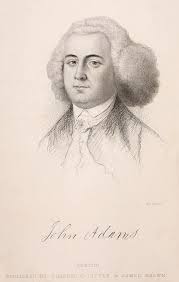
Early on Monday Morning last departed this Town, after a short Stay, for his native Place the Colony of Connecticut, the most reputable STAMPMAN [Jared Ingersoll], attended by his Brother Functioner of this Province [Andrew Oliver, shown above], amidst the Exclamations of the People—And we hear they were bewildered and lost their Way in going thro’ Roxbury; but by the Help of Sambo an innocent Negro Man, they were convey’d through Sheep-Alley into the great Road again, leading to Watertown.

We hear from Providence, in the Colony of Rhode Island, that the Freemen of that Town being lately called, to confer on such Measures as should appear to them necessary relative to the STAMP ACT,* whereby the Liberties, the darling Boast of the English North American Subject, which was once deem’d indefeasible, must be greatly abridg’d, if not totally annihilated; they according met for the aforesaid Purpose, and unanimously appointed a Committee to prepare Instructions suitable to be given their Representatives for their Conduct in the next general Assembly, on this truly alarming Occasion; and that they are to be laid before that Town for their Approbation To-Morrow; at which Time those Sons of Liberty are to convene again for the noblest of all Causes, their Country’s Good.—A Proceeding this, that conveys the most lively Idea of Principles nobly patriotic, and which will, it is to be wish’d, serve as an Example to other Towns, to exert themselves at this Crisis, and to remind them that they are entitled to all the Privileges of British Subjects, as long as they are denominated such, and to bear in utter Abhorrence the Name without the Substance.
Ironically, Jared Ingersoll, the Connecticut stamp agent who left Boston under a cloud, was also the man responsible for popularizing “Sons of Liberty” as the name of Stamp Act opponents.

As for that asterisk, it led readers to these lines of poetry:
———— Instead of voted Aid,
Free, cordial, large, a never failing Source,
The cumb’rous Imposition follow’d harsh.
THOM. Lib.
That was a quotation from Liberty by James Thomson (1700-1748). Specifically, it was from a passage about the tyranny of Charles I. You know, the king who was overthrown and executed by the Puritans.

Wednesday, August 12, 2015

Boston’s Middle Passage Port Ceremony, 23 Aug.

The campaign against the Stamp Act wasn’t the only fight over liberty in British North America in 1765, just the most popular. Hundreds of thousands of people in the colonies had lost their freedom to the practice of chattel slavery, fed by the transatlantic slave trade. But the colonial elite weren’t ready to give up their human property.

By the late eighteenth century, British authors were referring to the voyage from Africa to the Americas as “the middle passage.” The Rev. James Ramsay, a vicar from Kent, defined that term in his pamphlet An Inquiry into the Effects of Putting a Stop to the African Slave Trade (1784):
That the African trade is in itself destructive to our seamen, is known to every person who has an acquaintance with it. Indeed a mortality among his crew in the middle passage (from Africa to the West Indies) is a pleasant thing to a Guinea Captain, of which he is not often disappointed. It saves the ship a great expence in wages…
Thomas Clarkson used it in An Essay on the Slavery and Commerce of the Human Species (1788 edition):
The receivers…obtain the number of slaves, for which they are said to go. When this is accomplished, they weigh anchor, and begin what is termed the middle passage, to carry them to their respective colonies.
The term “Middle Passage” achieved new currency after 1990 from Charles Johnson’s novel of that name.

On Sunday, 23 August, the National Parks of Boston and the Boston Middle Passage Port Ceremony Committee will host “an intergenerational, interfaith ceremony” at Faneuil Hall recognizing Boston as a Middle Passage port site.

This event is part of a larger effort by the Middle Passage Ceremonies and Port Markers Project to “research, identify, and facilitate remembrance ceremonies at all ports of captive Africans’ entry during the 350 years of the transatlantic human trade in North, Central and South America, the Caribbean, and Europe.” The United Nations has recognized 23 August as “an international day of remembrance for the transatlantic slave trade” because that was the date in 1804 when Haiti achieved independence.

Boston’s Middle Passage commemoration is scheduled to begin at 3:00 P.M. It is free and open to the public.

Tuesday, August 11, 2015

President Washington in Providence, 15 Aug.

There are a couple of Revolutionary-era events happening in New England in the next several days that I want to acknowledge before the Stamp Act protest sestercentennial is officially upon us.

In 1789, President George Washington visited Connecticut, Massachusetts, and New Hampshire as part of his tour (some might even say his progress) through the northern states. Rhode Island was left out since it hadn’t ratified the Constitution yet.

Rhode Island finally ratified on 29 May 1790. It started to participate in the Congress and everything. So President Washington made a special trip that summer to tick Rhode Island off his list. This year marks the 225th anniversary of that journey—though not even Wikipedia offers a word for a 225th anniversary.

The President’s visit is being commemorated at the John Brown House in Providence on Saturday, 15 August, with an event called “Washington Returns to Providence.” Dean Malissa (shown above), Mount Vernon’s “official historical portrayer” of Washington, is making a special trip, courtesy of the Mount Vernon Ladies’ Association Vice Regent for Rhode Island, Elizabeth Mauran.

The Rhode Island Historical Society says:
We invite you to spend the day with our country’s first commander-in-chief and enjoy such festivities as a walking tour that explores the sites he visited, family-friendly activity booths, photo opportunities, and refreshments authentic to the period.
Free events start at 10:00 A.M. and are scheduled to last through late afternoon.

The event organizers also quote the Providence Gazette of 21 Aug 1790 on the original event:
On the President’s landing, he was welcomed by a federal Discharge of Cannon, and the Ringing of Bells. The Concourse of people was prodigious. The Procession was conducted with great Decorum, and exceeded any thing of the Kind before exhibited in this Town. . . . Every countenance indicated the most Heart-felt Joy.
So all that Anti-Federalism was forgotten. What was a “federal Discharge”? That phrase appeared often in reports of President Washington’s journeys and other early republican holidays. It was a thirteen-gun salute.

Monday, August 10, 2015

A Riotous Walk with Boston by Foot, 15 Aug.

On Saturday, 15 August, Boston By Foot is offering a special two-hour walking tour that focuses on the Stamp Act and the town’s riotous responses to it.

The “Taxes, Riots and Revolution” tour starts at 10:30 A.M. at the entrance to the Park Street T Station on the northeast corner of Boston Common. The organization promises:
Beginning with an overview of the Stamp Act, including Parliament’s reasons for the tax and the colonists’ objections to it, this tour will wind its way though Boston’s Revolutionary Era historic sites. From the Boston Common you will make your way to the Granary Burying Ground—the final resting place of Patriots such as Samuel Adams, Paul Revere, and John Hancock—through the downtown area and into the North End neighborhood as your guide reveals how the Stamp Act crisis escalated to street violence and ultimately led to the American Revolution.
That will leave plenty of time (if not energy) to participate in the Bostonian Society’s “Echoes of the Past” game and the late afternoon’s protest march from Liberty Tree Plaza to the Old State House. All three events are offered in connection with Revolution 250’s sestercentennial commemoration.

The walking tour costs $17, or $5 for Boston By Foot members. Tickets can be purchased in advance through the Boston By Foot website or at the start of the tour from the guide.

Sunday, August 09, 2015

What to Wear to a Riot in 1765

Ten years can be a significant time in the changing fashions of clothes. Ten years ago, there was still hope that Croc shoes would be a passing fad. Teen-aged boys had not yet received the mass text message telling them to stop having haircuts for several months. And the clothing industry hadn’t determined that what American men really wanted to wear was gingham, leaving no other type of dress shirt on store hangers.

Fifteen years ago, volunteers working with Minute Man National Historical Park came up with scrupulously researched clothing guidelines for the reenactment of the Battle of Lexington and Concord. Those guidelines continue to be updated with additional information. But they don’t necessarily apply to 1765, ten years earlier.

For the upcoming sestercentennial reenactments of the Stamp Act protests in Boston and Newport, Hallie Larkin and Stephanie Z. Smith of At the Sign of the Golden Scissors prepared guidelines for dressing in New England in 1765. That document can downloaded from this page at the Newport Historical Society.

It’s a big download: a 31-page P.D.F. file with lots of illustrations. There are many upper-class portraits, of course, but also images and other documentation about the clothing of middling folks and workers.

From eyewitness accounts of the Stamp Act protests we know the crowd was mixed. In Boston the daytime crowd included both men and women, as well as “two or three hundred little boys with a Flagg marching in Procession.”

After nightfall, Lt. Gov. Thomas Hutchinson wrote, the effigies were paraded around town by “Forty or fifty tradesmen, decently dressed,” followed by “some thousands.” Gov. Francis Bernard later declared those leaders were actually gentlemen disguised in middling dress; friends of the royal government never let go of the idea that political opponents in the elite were manipulating popular opinion rather than that the populace might have political initiatives of its own.

(Image above from a reenactment of 1770 recorded on the website of Nick Johnson.)

Saturday, August 08, 2015

Stamp Act Riot and More in Newport, 29 Aug.

The Newport Historical Society has its own Stamp Act sestercentennial commemoration this month, scheduled for the afternoon of Saturday, 29 August.

Starting at 1:00 P.M., there will be a big public reenactment in downtown Newport. The society’s announcement says:
Visitors can meet with craftspeople whose businesses were once present on Washington Square, such as a printer, tailor and milliner, along with historic interpreters portraying specific figures including sailors, rabble rousers and even prominent citizens like the Ellerys and Vernons. Events include an upper-class lady’s tea and children’s games; reenactments include an effigy demonstration much like the original protest and a “rank sacking” of the Society’s house museum, and will close with street theater in front of the Colony House.
Newport’s Stamp Act protests closely followed the model of events in Boston on 14 August. On 27 August, people paraded with effigies of the stamp agents, one of whom—Martin Howard (1725-1781)—was also the principal author of one of the only American pamphlets to argue that the new law was constitutional.

As night fell, citizens became more violent. They roughed up Customs official John Robinson. Howard intervened, making himself even less popular. The next night, a crowd broke into Howard’s house and chopped apart his furniture, then his doors, then his trees. Howard went aboard a British ship and left the colony. The Crown compensated him with an appointment as a judge in North Carolina. Robinson was made a Customs Commissioner based in Boston, where in late 1769 he got into a coffee-house brawl with James Otis, Jr.

Alongside its reenactment of these disturbances, the society is reinterpreting its circa-1697 Wanton-Lyman-Hazard House as a museum of the American Revolution in Newport rather than a traditional house museum. The first exhibit opens tomorrow, 9 August: “Revolution House: John G. Wanton and Newport at War.” Wanton took possession of the house in the fall of 1765 after the sudden departure of its previous owner—Martin Howard.

General admission is free through Friday, 11:00 A.M. to 1:00 P.M. (Donations welcome.) After that, Revolution House will become part of the regular tour of the Newport Historical Society’s sites.

Friday, August 07, 2015

The Stamp Act on the South Shore

Protests against Parliament’s new Stamp Act spread outside Boston in the late summer of 1765, and commemorations of its 250th anniversary will take place outside Boston, too.

Shortly after Samuel Adams led the Boston town meeting to complain about the law in instructions for its legislators, his younger second cousin John drafted a similar document for rural Braintree. In his post-Presidency memoirs, John Adams described that initiative this way:
I drew up a Petition to the Select Men of Braintree, and procured it to be signed by a Number of the respectable Inhabitants, to call a Meeting of the Town to instruct their Representatives in Relation to the Stamps. The public Attention of the whole Continent was alarmed, and my Principles and political Connections were well known. . . .

I prepared a Draught of Instructions, at home and carried them with me: the cause of the Meeting was explained, at some length and the state and danger of the Country pointed out, a Committee was appointed to prepare Instructions of which I was nominated as one. We retired to Mr. [Samuel] Niles House, my Draught was produced, and unanimously adopted without Amendment, reported to the Town and Accepted without a dissenting Voice. These were published in [Richard] Drapers Paper, as that Printer first applied to me for a Copy. They were decided and spirited enough. They rung thro the State, and were adopted, in so many Words, As I was informed by the Representatives of that Year, by forty Towns, as Instructions to their Representatives.
Actually not, say the editors of Adams’s papers. The draft in Adams’s handwriting was amended a little for the official version, and only a few instructions from other towns resemble Braintree’s.

In fact, Braintree’s arguments should sound quite familiar, though the language was a lot more legalistic:
We further apprehend this Tax to be unconstitutional. By the great Charter of Liberties, no Amerciament is to be imposed, but by the oaths of good and lawful Men of the Vicinage, and no Freeman is to be disseized of his Freehold &c but by the Judgment of his Peers &c or Law of the Land.—And We have always understood it to be a grand and fundamental Principle of the British Constitution that no Freeman should be subjected to any Tax to which he has not given his own Consent in Person or by Proxy. And indeed, the Maxims of the Common Law, as we have hitherto received them, are to the same Effect that a Man and his Property cannot be seperated but by his own Act or fault.
Still, drafting those resolutions helped to launch John Adams’s political career.

On Thursday, 13 August, the Abigail Adams Historical Society will commemorate the 250th anniversary of the anti-Stamp Act movement with Prof. Christopher Hannan’s talk on “The Stamp Act Riots and the Beginning of Revolution.” The society’s press release tries to make the case that the 13th will be the sestercentennial of when the effigies were hung on Liberty Tree, but I’m pretty sure they went up early in the morning of the 14th. But no doubt those effigies were under construction the night before.

This event will take place from 7:00 to 9:00 P.M. at the Abigail Adams Birthplace, 180 Norton Street in Weymouth. Admission is $10 for members, $15 for others. /$10 members; the society asks people to reserve space by email.

Thursday, August 06, 2015

August Saturdays at the Paul Revere House

The Paul Revere House in Boston’s North End is offering programs every Saturday afternoon this month.

8 August at 1:00, 1:45 & 2:30 P.M.
A Loyalist Perspective on the Revolution
Hear a first-hand account of the abuses that Loyalists suffered at the hands of emboldened “Patriots.” Michael Lepage takes on the role of Chief Justice Peter Oliver, brother of Andrew Oliver, the Massachusetts stamp agent.

15 August from 1:00 to 3:00 P.M.
The Art of Spinning
The art of spinning is best learned by the young, and Zoe Lawson has been practicing the craft of spinning by drop spindle and on a wheel since childhood. She shares her techniques while in eighteenth-century garb, accompanied by her fellow fiber artist and father, Fred Lawson.

22 August from 1:00 to 3:00 P.M.
The Tailor’s Craft
Clothing historian Henry Cooke IV takes on the role of an early Boston tailor. Watch as he “takes the measure” of visitors, then sits cross-legged, fashioning waistcoats from luxurious fabrics and “slops” from coarse weaves.

29 August at 1:00, 1:45 & 2:30 P.M.
John Adams: The Colossus of Independence
Hear from John Adams himself as he discusses his earliest beginnings in Braintree through his days as delegate of the Continental Congress and foreign ambassador. Hear his opinions of his contemporaries and how he longs to be home with his ”dearest friend,” Abigail, and their children. Mr. Adams’s singular wit is appealing to children and adults! [Or at least Mr. Adams would say so.]

These events are included with admission to the museum: adults $3.50, seniors and college students $3.00, children aged five to seventeen $1.00. Members and North End residents admitted free at all times. And if you visit the neighboring Hichborn House, you can see the historic site’s own Liberty Tree and add your thoughts on liberty to its leaves.

Wednesday, August 05, 2015

“Echoes of the Past” Game on 15 Aug.

As I described earlier in the week, the Bostonian Society is helping to commemorate the sestercentennial of Boston’s Stamp Act protests with a reenactment on Saturday, 15 August.

Before that event, from noon to 4:00 P.M., the society is also inviting the public to participate in a live-action game designed to provide extra illumination of that historical event and the people involved.

“Echoes of the Past” is a free “single-day gaming event” that blends live historical characters, puzzle-solving, and mystery to unspool the story of what happened in Boston’s streets 250 years ago. The society explains:
Players of all ages are invited to begin their adventure by picking up a guide booklet at the Old State House admission desk, or at the information cart in Downtown Crossing. With the guidebook in hand (or using a web version on their mobile device) players will hunt for ghosts, or “Echoes of the Past.”

These live costumed interpreters will quickly draw players into the political intrigues of 1765. With riddles, ciphers, secret societies, grudges, and plots, every interaction will entertain and enlighten, and every player’s choices will make their experience unique.

After collecting a stamp for their book from each character in the game, players will discover the game’s thrilling climax at 4:00 P.M. when they join together with an 18th-century mob to participate in a protest march from the site of the Liberty Tree to the hub of colonial power, the Old State House.
This special event grows out of the Bostonian Society’s established “Revolutionary Characters” program, which includes a lot of familiar folks. The person I’d like to discuss the Stamp Act riots with? William Story, one of the Crown officials targeted by the mob on 26 Aug 1765 and a very busy Patriot legislator ten years later.

Tuesday, August 04, 2015

Debates in Faneuil Hall over the Stamp Act

Yet another sestercentennial event in Boston this August are town-meeting-style debates over the Stamp Act in Faneuil Hall on Sunday afternoons. Boston National Historical Park explains:
Have you ever wondered what it would be like to hear the discussions and debates made by colonists in 1765 during their Town Meeting inside Faneuil Hall? . . .

Visitors…can join Park Rangers wearing the latest in eighteenth-century fashion in recreating a Town Meeting set in 1765. Join in to hear about—and possibly speak out!—the passionate arguments made by those who supported Parliament’s Stamp Act and those that perceived Parliament’s authority as a violation of their English liberties.
We have few clues about how the debate in town meetings went because nobody kept transcripts. The town clerk, William Cooper, recorded resolutions and the outcome of votes, but, like most public officials of the time, he emphasized unity over conflict.

We do have the outcome of that discussion, the special instructions to Boston’s representatives in the Massachusetts General Court, adopted on 23 Sept 1765. That document was created and published to reinforce public opinion, like a modern political party’s platform. It stated:
At a Time when the British American Subjects are cvery where loudly complaining of arbitrary unconstitutional Innovations the Town of Boston can not any longer remain silent without Just Imputation and Inexcusable Neglect. We therefore the Freeholders and other Inhabitants being legally Assembled in Faneuil Hall, to consider What steps are necessary for us to take at this alarming Crisis, think it proper to communicate to you our united Sentiments, and to give you our Instructions thereupon—

It fills us with very great Concern to find, that Measures have been Adopted by the British Ministry, and Acts of Parliament made, which press hard upon our invaluable Rights and Privileges and ten greatly to distress the Trade of the Province, by which we have heretofore been able to contribute so large a share towards the Inriching Of the Mother Country—But we are more particularly alarmed and astonished at the Act called the Stamp Act, by which a very grievous and we apprehend unconstitutional Tax is to be laid upon the Colonies—

By the Royal Charter granted to our Ancestors the power of making Laws for our internal Government and of levying Taxes, is vested in the General Assembly: And by the same Charter the Inhabitants of this Province are entitled to all the Rights & Privileges of natural free born Subjects of Great Britain; the most essential Rights of British Subjects are those of being represented in the same Body which exercises the power of levying Taxes upon them, and of having their Property tryed by Juries; These are the very Pillars of the British Constitution, founded in the common Rights of Mankind.

It is certain we were in no sense represented in the Parliament of Great Britain, when this Act of Taxation was made: And it is also certain that this Law admits of our propertys being tryed in Controversies arising from internal concerns by Courts of Admiralty without a Jury: It follows that at once it annihilates the most valuable Privileges of our Charter, deprives us of the most essential Rights of Britain and greatly weakens the best securities of our Lives, Liberties and Estates; which may hereafter be at the disposal of Judges who may be Strangers to us, and perhaps malicious, mercinary, corrupt and oppressive.
Thus, even before the phrase “no taxation without representation” was coined, that idea was the basis for Boston’s complaint. But the colonists were making their argument as “Britons,” not as Americans. (The document continues here.)

These instructions came out of a committee, but the man who gets credit for drafting them is Samuel Adams. Cooper recorded in the meeting minutes, “The aforegoing Report having been read several Times, and put Paragraph by Paragraph: It was Voted unanimously that the same be accepted.”

The programs at Faneuil Hall are free to the public, with no tickets required, but are subject to change if the space or personnel are needed for something else. The debate sessions are scheduled for 9 and 16 August at 2:30 and again at 4:00 P.M.

Monday, August 03, 2015

Tyler on the Hutchinson House at Old North, 26 Aug.

As I described yesterday, on the night of 26 Aug 1765, Bostonians ripped apart the North End house of Lt. Gov. Thomas Hutchinson (shown here at a happier moment).

This action was connected to the town’s ongoing protests against the Stamp Act. Hutchinson had in fact joined Massachusetts’s official argument against the new law when the government in London asked the colonies for their opinions, and his private letters also warned his British correspondents against enacting such a tax.

However, the lieutenant governor had long been a voice for less populist policies locally and more deference to the imperial authorities in London. He was politically allied with and related by marriage to Andrew Oliver, the stamp agent. So Hutchinson’s big family mansion in one of Boston’s poorer districts made a fat target for locals riled up about Parliament’s new tax.

On 26 August, the sestercentennial of that violent event, Old North Church will host an illustrated lecture by John Tyler titled “‘Such ruins were never seen in America’: The Looting of Thomas Hutchinson’s House at the Time of the Stamp Act Riots.” Tyler, co-editor of the Hutchinson Papers now being published by the Colonial Society of Massachusetts, will use the lieutenant governor’s inventory of what he lost to the mob to discuss the colonial elite’s furniture, clothing, and general lifestyle.

Tyler’s lecture is scheduled to last from 6:30 to 8:00 P.M. that Wednesday night. There will be a reception afterward. Old North Church, a member of the Revolution 250 coalition, asks attendees to reserve seats in advance.

Sunday, August 02, 2015

Reenacting a Riot along Washington Street, 15 Aug.

As I wrote yesterday, on 14 August the Revolution 250 coalition will host a ceremony illuminating and hanging lanterns in Liberty Tree Plaza, at the intersection of Washington and Boylston Streets, to commemorate the sestercentennial of Boston’s first public protest against the Stamp Act.

Among the organizations in Revolution 250 is the Bostonian Society, and its historian Nathaniel Sheidley will be a speaker at that ceremony. But the protest under the big elm wasn’t the end of the protests in August 1765, and the Bostonian Society and its volunteers will present another side of the story the next day.

After night fell on 14 Aug 1765, the crowd made their anger toward stamp agent Andrew Oliver clearer. One might think that hanging him in effigy during the daytime would be clear enough, but that evening they also demolished the small building he was expected to use as his stamp office, tore down his fence, and tried to steal his carriage before gentlemen intervened. They burned all the wood they took away in a bonfire. Twelve days later, a crowd attacked the mansion of Lt. Gov. Thomas Hutchinson in the North End, demolishing (or stealing) his windows, furniture, clothing, and papers.

On Saturday, 15 August, at 4:00 P.M., the Bostonian Society and Revolution 250 are sponsoring a “Reenactment of the Stamp Act Riot.” No actual mansions will be harmed in this event, but reenactors in period costume are invited to march raucously from the corner of Washington and Winter Street (near the Downtown Crossing T Station) to the Old State House, calling for Oliver’s resignation.

To me these twin events on Friday and Saturday, the lantern ceremony and the march, represent the two sides of the town’s August 1765 anti-Stamp disturbances. Back then town fathers recoiled from the violent destruction of Hutchinson’s house and started to emphasize civil protest and steely unity; likewise, the Friday lantern ceremony promotes community and liberty over political or personal conflict. Yet Boston’s attacks on the property of Stamp Act officials and their supporters, repeated in other American towns, were probably just as important in keeping the new law from going into effect.

Ironically, our civic ceremony will take place at night (the better to see the lantern illumination), and our riot reenactment will take place in the day.

Saturday, August 01, 2015

Revolution 250’s Liberty Tree Lantern Ceremony, 14 Aug.

In August of 1765, Bostonians carried out public protests against the Stamp Act that set the template for other actions up and down the coast of British North America.

On 14 August, there was a public demonstration against the impending law under the big elm beside the one road into town during market day. Such actions were rare, if not unheard of, in the British Empire.

To add to that event’s whiff of possible sedition, in the evening some of the crowd attacked the property of Andrew Oliver, Massachusetts’s agent for stamped paper. I’ll describe that day in more detail as it comes around.

For many contemporaries and historians, the colonial movement against the Stamp Act represents the beginning of the American Revolution. (John Adams argued that the process began earlier, but I argue that he had personal reasons for doing so, and that the disputes he highlighted were confined to the narrowly based Massachusetts attorney and merchant class.)

To commemorate Boston’s seminal role in the struggle for American independence, historians, historic sites, tour groups, and non-profit organizations have formed Revolution 250. This coalition meets to develop and promote programs and special events associated with key anniversaries.

Among the groups creating programs so far are Boston National Historical Park of the National Park Service, the Boston Public Library, the Massachusetts Historical Society, Old North Church, Old South Meeting House, and the Old State House/Bostonian Society.

On the evening of Friday, 14 August, Revolution 250 will welcome Bostonians to a community event at the site of the original Liberty Tree—the name that Boston Whigs gave to that big elm back in 1765. That’s now a small city park on the corner of Washington and Essex. The ceremony is supposed to get under way at 8:00 P.M.

The artistic non-profit Medicine Wheel Productions, with financial support from Boston National Historical Park, is working with five community groups to create 108 copper lanterns modeled on those hung on Liberty Tree in subsequent years. (Why 108? When Parliament repealed the Stamp Act in 1766, that was the voting margin, so Americans honored that “glorious majority.” But we’re getting ahead of ourselves.)

Folks can follow “Revolution250” on Facebook and @REV250BOS on Twitter to keep up with news and opportunities. There will be many more public events, which I’ll announce here. Additional financial support is coming from Eastern National, the Boston Cultural Council, and other organizations. Even the New York Times is recognizing Revolution 250’s ambition to add to Boston’s public history.

Friday, July 31, 2015

Boston’s Latest Liberty Tree

This is a photo of the Liberty Tree outside the Norman B. Leventhal Map Center at the Boston Public Library’s main building as it appeared earlier this week.

There are related displays in some of the branch libraries around the city, I understand. They’re all part of the sestercentennial of the first protests at the first Liberty Tree in 1765.

Each colorful leaf of that tree contains someone’s personal responses to the question “What does liberty mean to you?”

The “Liberty Tree 2015” project invites Bostonians and visitors to hang a leaf on this modern Liberty Tree or join the online conversation on Twitter, Instagram, and Facebook using the #LibertyTreeBPL hashtag.

“Liberty Tree 2015” runs through 29 November at the Copley Square headquarters of the library. It’s one of a number of sestercentennial commemorations that I’ll highlight over the next few days.

Thursday, July 30, 2015

Remembering Mary Katherine Goddard the Right Way

Earlier this month the Baltimore Sun reported on the installation of a historical plaque in a downtown Rite-Aid pharmacy.

That drugstore is on the probable site of the Goddard print shop in 1777. On 18 January of that year, Mary Katherine Goddard issued a broadside reprinting the Declaration of Independence with the names of all the Continental Congress delegates who had signed the document so far.

The Sun article has such headlines as “How a Baltimore woman defied the Redcoats” and “See how Mary Katherine Goddard helped win the Revolutionary War.”

It quotes Andrew Carroll, author of Here Is Where and promoter of this plaque, saying that her printing “was a total act of defiance. She was saying, ‘I’m stepping forward and I’m putting my life at risk in the expectation that other people will do the same. There's no turning back now.’”

Printing the Declaration, the article says, “put her life at risk.” An official at the Maryland Historical Society states of Goddard, “If the war had ended differently, the signers would have been convicted and hanged for treason, and she probably would have been hanged as well.”

For the record we should note that:
  • There were no redcoats in Baltimore to defy. The British army was no closer than Princeton, New Jersey, that month, and it never attacked or occupied Baltimore.
  • The British authorities had just held New Jersey signer Richard Stockton in custody and did not try or hang him.
  • There’s no example of the Crown executing an American printer for supporting independence or printing the Declaration. In fact, many British printers reprinted that text because it was significant news.  
  • While making the Declaration look nice for the Congress no doubt suggested support for its cause, Goddard’s status as a woman would have given her more insulation from political accusations—not that she was ever in British custody to be so accused.
Goddard’s work as both printer and postmaster was undoubtedly significant and deserves to be remembered. But the rhetoric around the installation of this plaque seems unduly sensational.

Wednesday, July 29, 2015

A Heavy Three-Pounder in Sturbridge

Among the cannon to be fired at this weekend’s “Redcoats and Rebels” encampment at Old Sturbridge Village, I expect, will be the iron three-pounder that the museum village put back into service for Independence Day.

That gun, called a “heavy 3-pounder” because it’s about the size and weight of a light six-pounder, was made in the 1970s by the LaPans Foundry in Hudson Falls, New York. Old Sturbridge Village bought it for a negligible price a few years ago but has invested lots of resources into refurbishing the barrel and building a carriage. That matches what I found for the Massachusetts Provincial Congress in 1774-75: it had to budget much more for new cannon carriages than for the used cannon themselves.

As the Worcester Telegram & Gazette reported, the museum craftsmen modeled their field carriage after those shown in John Muller’s A Treatise of Artillery (London, 1768). Blacksmith Derek Heidemann told the newspaper, “We were able to find an artillery manual that was printed in Massachusetts in 1817. It shows the same exact style of carriage and says the style of carriage that is devised by John Muller is still the one used by the Commonwealth. Now that’s 1817, but given that the U.S. government itself is having issues putting together carriages for the regular army, we think this is still the kind of carriage that is being used by the state militia in Massachusetts in the 1830s.”

The newspaper also prepared a video about the Old Sturbridge Village cannon project.

Tuesday, July 28, 2015

“Redcoats and Rebels” Returns to Sturbridge, 1-2 August

This weekend, 1-2 August, Old Sturbridge Village hosts what’s become the largest military reenactment in New England, its annual “Redcoats and Rebels” event.

Though the village normally portrays the 1830s, on this weekend its fields become a pair of military camps during the War for Independence. Nearly a thousand reenactors portray troops from America, England, Scotland, Ireland, France, and Spain, as well as civilians accompanying them.

Daytime events on the schedule include:
  • Tours of the Crown and American camps
  • Drilling and inspection of the troops
  • Mock battles and skirmishes
  • “School of the Soldier” training demonstrations
  • Musket drilling with kids
  • Cannon demonstrations, not with kids
  • Martial music
  • 18th-century Fashions in the Press featuring military and civilian clothing
  • Camp laundry
  • Scouting technique demonstrations 
  • Battlefield hospital, with smallpox inoculations and treatment of the wounded
  • Soldiers’ daily life, including delivery of uniforms, pay calls, and prisoner exchanges
  • 18th-century baseball
  • “Service for the Troops”
  • 18th-century dances
  • Interactive miniature war gaming
On Saturday evening, the village will stay open three extra hours until 8:00 P.M. so visitors can walk through the camps at twilight. These hours will also include a reading of the letters of John and Abigail Adams at 6:00 and an artillery barrage, presumably not at 6:00.

Old Sturbridge recommends visitors buy tickets online ahead of time because this is one of the site’s most popular events.

Monday, July 27, 2015

The Fight in Boston Harbor: A Vexillological Footnote

During last week’s investigation of the conflicting accounts of the June 1776 fight in Boston harbor that ended with the capture of troop transport ships from Scotland, Boston 1775 reader Peter Ansoff sent a message with some additional information. So I’m happily running it as a guest blog entry.

The schooners involved in the capture of the Scottish transports were not actually privateers, but the armed vessels commissioned by Gen. George Washington to prey on British commerce. One of them, the Hancock, was commanded by Samuel Tucker, who later served with distinction in the Continental Navy. Commodore Tucker wrote a short sketch of the affair in 1818, which was published in John H. Sheppard’s biography of Tucker in 1868:
The first cruise I made was performed in January 1776, and I had to purchase the small arms to encounter the enemy with money from my own pocket, or go without them; and the consort mentioned above [his wife] made the banner I fought under: the field of which was white, and the union was green, made therein in the figure of a pine tree, made of cloth of her own purchasing and at her own expense. These colors I wore in honor of the country—which has so nobly rewarded me for my past services—and the love of their maker, until I fell in with Colonel Archibald Campbell…
This is one of only two first-hand descriptions of “Pine Tree” flags carried by Washington’s cruisers, the other being the well-known flag of Capt. Sion Martindale’s brig Washington, captured by the British in December 1775.

Tucker’s description is different from the modern conception of the Pine Tree flag, in that the pine tree is in a union (or canton, a small rectangle in the upper hoist corner), rather than in the middle of a plain field. Tucker’s description is a bit puzzling. The white field and the green union are clear enough, but what color was the pine tree in the union? Or does his phrase “made therein” simply suggest a small green pine tree in the upper hoist corner of the flag, without a defined union? There is also no mention of the “Appeal to Heaven” motto that appeared on the Washington’s flag and is standard on modern Pine Tree flag replicas.

Tucker then recounts the capture of the troop ships George and the Annabella:
About ten P.M. a severe conflict ensued, which held about two hours and twenty minutes. I conquered them with great carnage on their side, it being in the night, and my small barque, about seventy tons burden, being very low in the water, I received no damage in loss of men, but lost a complete set of new sails by the passing of their balls; then the white field and the pine tree union were riddled to atoms. I was then immediately supplied with a new suit of sails and a new suit of colors, made of canvas and bunting of my own prize goods.
Unfortunately, this is no clearer with respect to what the “pine tree union” looked like.

Nor was Tucker’s phrase “I conquered them” clear that his Hancock was not the only ship in the battle with the George and Annabella, nor (by all other accounts) the biggest, most effective American ship during the final confrontation. But Capt. Seth Harding’s 1776 report had left Tucker and his colleagues out, so maybe Tucker figured this was only fair.

The image above is merely symbolic of the pine tree flag since we don’t even know what the pine looked like, much less the rest of the flag.

Thanks again, Peter!

Sunday, July 26, 2015

Remembering Revere in Revere

The city of Revere on Boston’s North Shore was named after Paul Revere in 1871, just a decade after Henry W. Longfellow’s poem turned the silversmith into a historical celebrity.

This weekend Revere Beach is hosting its annual International Sand Sculpting Festival. To launch the event, all the professional sculptors collaborated on a construction called “The Spirit of Massachusetts.” The detail above shows Revere, his horse, and the spire of the Old North Church, along with some other Boston landmarks.

I don’t know how well this sculpture or the others will fare in today’s weather, but I wanted to highlight that public art before it’s washed away.

Saturday, July 25, 2015

Hannigan on Slavery in Concord, 28 July

On Tuesday, 28 July, the Concord Museum will host a talk by John Hannigan titled “‘She Ought to be Set at Liberty’: Slavery and Freedom in 18th-Century Massachusetts.”

Hannigan is earning his Ph.D. in History at Brandeis University. I’ve enjoyed his eye-opening presentations on African-American soldiers in the first Continental Army, how the war affected slavery in New England and vice versa.

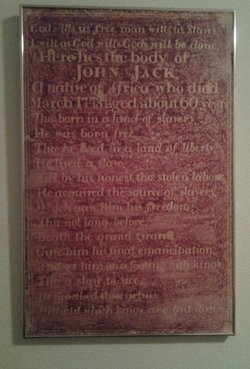
It looks like this talk will be about how slavery was woven into the fabric of life in eighteenth-century New England. As the museum’s event description acknowledges, Concord is more used to celebrating its links to abolitionism, not slavery. Town histories even praised the Loyalist lawyer Daniel Bliss because he wrote an anti-slavery tombstone for John Jack, shown here.

But the past decade has brought new attention to the wider experience of slavery in the region with such projects as Elise Lemire’s Black Walden, the Robbins House, and the exhibit this talk comes in conjunction with, “Thomas Dugan, Yeoman of Concord” (described here).

Hannigan’s talk is scheduled for 6:00-7:00 P.M. Admission is $5 for museum members, $10 for everyone else. Reservations are required; to make them, visit the museum website or call 978-369-9763, ext. 216.