J. L. BELL is a Massachusetts writer who specializes in (among other things) the start of the American Revolution in and around Boston. He is particularly interested in the experiences of children in 1765-75. He has published scholarly papers and popular articles for both children and adults. He was consultant for an episode of History Detectives, and contributed to a display at Minute Man National Historic Park.

Subscribe thru Follow.it


•••••••••••••••••


Monday, June 18, 2018

EXTRA: Who Killed Pitcairn?

The Journal of the American Revolution has just published an article by me titled “Peter Salem? Salem Poor? Who Killed Major John Pitcairn?”

This exploration of one aspect of the Battle of Bunker Hill grew out of a series of postings here from 2009, which I then rewrote as an article for the first Journal of the American Revolution print collection. With that book no longer available, we’re sharing the full essay online.

Here’s a taste:
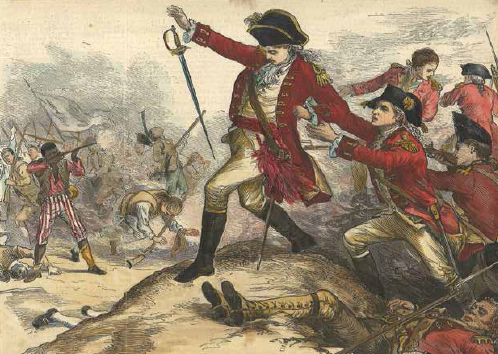
…after Lexington lots of New England men were gunning for the major. They wanted to see Pitcairn receive his just deserts for supposedly ordering his men to fire. They, and later generations of Americans, wanted his story to have meaning, and being brought low just when he thought he had triumphed — by a black man, of all soldiers — provided that satisfaction. A popular nineteenth-century engraving encapsulated that story in its caption: “The shooting of Major Pitcairn (who had shed the first blood at Lexington) by the Colored Soldier Salem.”
But the best evidence shows, I argue, that Maj. Pitcairn wasn’t killed by a black soldier as that print depicted, or by any of the other nineteenth-century claimants. Whatever Salem Poor did to merit extraordinary praise from Massachusetts officers, and whatever Peter Salem did in his Continental Army service, neither man shot Pitcairn as he mounted the edge of the Breed’s Hill redoubt.

The Trials of Thomas Careless

This weekend I made my debut at Small State, Big History, an online journal devoted to the history of Rhode Island.

My article, titled “Thomas Careless of the Royal Navy: Tried for Murder in Newport, Court-Martialed for Tossing a Block Islander,” grew from the series of Boston 1775 postings from May 2017 about how Midshipman Thomas Careless went on trial for killing Newport man Henry Sparker. This month has brought the sestercentennial of that trial.

There are a couple of Boston connections to that Rhode Island story. First, the Boston Chronicle had the most detailed report on what led Careless to stab Sparker. Rhode Island newspapers withheld some information, ostensibly to protect the integrity of the trial but perhaps also to maintain the colony’s respectability.

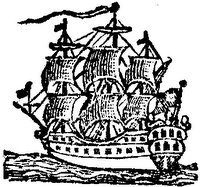
Second, the Royal Navy vessel on which Careless was serving, H.M.S. Senegal, was one of the warships that brought British troops to Boston in the fall of 1768. In fact, we discovered that the best period pictures of that ship were produced by Christian Remick and Paul Revere (as shown above) while the Senegal and the rest of that fleet lay in Boston harbor.

The Small State, Big History article also contains another story about Thomas Careless that I hadn’t found when I wrote my 2017 postings. He returned to Rhode Island during the war—and got in trouble again!

In connection with this article, I’m scheduled to appear on Bruce Newbury’s “Talk of the Town” show on WADK (1540 AM) in Newport on Monday morning shortly after 10:00 A.M. to talk about Sparker, Careless, and what their fatal encounter says about the American Revolution.

Small State, Big History comes from a team led by Christian M. McBurney, author of Spies in Revolutionary Rhode Island, Kidnapping the Enemy: The Special Operations to Capture Generals Charles Lee and Richard Prescott, and The Rhode Island Campaign: The First French and American Operation of the Revolutionary War, among other history books. Its weekly articles cover the whole range of the colony and state’s history, from founding to recent politics.

[ADDENDUM: Here’s a recording of my conversation with Bruce Newbury of WADK, starting off the hour after news.]

Sunday, June 17, 2018

Mapping the Battle of Bunker Hill

With the sestercentennial of June 1768 passing by, I have few days to devote to the Battle of Bunker Hill. But here’s Charles E. Frye’s map of that battle, completed in 2011 and available through Wikipedia. It’s unusual in positioning American army units on the Charlestown peninsula.

Frye is an army-trained cartographer. In this interview, Frye talked about how he came to make that map:
My wife suggested I help my oldest son with his 5th grade history project and that we could research to find out where [our ancestor] Isaac [Frye] was on the battlefield. Reading about the battle proved bewildering and disorienting. Therefore, my natural inclination was to make a map along with a timeline to organize that information. We started by mapping the Boston vicinity, including what was then known as the Charlestown Peninsula. Based on that and the major landmarks of the peninsula, we could then see the form of the battle and the sequence of events. My son hand-drew a one-page color map of the battle and wrote a short essay describing where Isaac most likely was located. We had narrowed it down to two possible locations. It took years before I finally located the documentation indicating which of the two was correct.

I ended up making my own map using GIS and because I learned the Library of Congress’s map division had copies of most of the maps depicting the battle, and already had a map-scanning program. GIS allows for scanned maps to be positioned relative to modern geographic data, which then could be used to create a historical map in the GIS. I knew a cartographer working at the Library of Congress, so I contacted her, and their staff bumped up the remaining maps of the battle so I could have faster access.

My map looked good to me, and it was rich with information. I shared it with the map division staff, and they liked it and cataloged a copy. However, the “Aha!” moment occurred for me two years later when I first visited the Bunker Hill Monument. There is a diorama there depicting the battle. Other than placement of the cannon, my map completely agreed with the diorama! How does a non-historian do that part-time in only a matter of months? With GIS of course. Mapping information in GIS forces rigor, which among other things affords efficiency because non-conforming information cannot be forced into database like it can be forced into a paragraph. I later published a data model and method for historians to use GIS in their work. I am happy to say many historians have since adopted, adapted, and expanded on that work.
Here’s more on Frye’s data model and method for others to use with G.I.S. systems.

Saturday, June 16, 2018

“Preserving a perfect Conciliation”

Late on 14 June 1768, a large committee from Boston town meeting headed by James Otis, Jr., visited Gov. Francis Bernard at his country house in Jamaica Plain. The governor reported receiving “a Train of 11 Chaises.”

The committee presented the governor with a petition that protested against:
  • taxation without representation, and thus the Townshend Act.
  • a petition to King George III being turned away (because it wasn’t sent to London through the official channel).
  • the Royal Navy’s impressment of sailors in Boston harbor.
That document concluded with a wonderful bit of trolling, saying that “the Board of Customs have thought fit, of their own motion to relinquish the exercise of their Commission here.” In other words, the Customs Commissioners had left their posts in Boston—no acknowledgment that they had done so out of fear of mob violence. Therefore, the committee continued, there was no need for H.M.S. Romney to stay around in Boston harbor since there were no longer any Customs Commissioners to protect.

Gov. Bernard shared wine with the gentlemen and promised them an answer the next day. His 15 June response was a collection of promises to do all he could, while noting that he could very little. “I shall not knowingly infringe any of your Rights and Privileges, but shall religeously maintain all those which are committed to me as a servant of the King,” he wrote. He couldn’t ignore Parliament’s laws, change a decision of the Privy Council, or give orders to the Royal Navy. But aside from all that, “I shall think myself most highly honoured, if I can be in the lowest degree an Instrument in preserving a perfect Conciliation between” Boston and the royal government in London.

The town meeting thus didn’t achieve any of its goals. John Hancock’s sloop Liberty remained in royal custody. The Customs service continued to collect tariffs, even if top officials were working out of Castle William. The Romney had already stopped drafting sailors because of the Liberty riot, and the governor had already promised the selectmen he’d speak informally to the warship’s captain. Nonetheless, the town’s formal and visible protest showed the people that the local political and mercantile establishment was pushing back, and that forestalled further violence.

That exchange wasn’t all Bernard had to deal with, though. On the same day that the governor sent off his response to the Boston petition, he received instructions from the Earl of Hillsborough, the new Secretary of State for North America. That letter stated:
it is the King’s Pleasure, that so soon as the general Court is again assembled at the Time prescribed by the Charter, You should require of the House of Representatives, in his Majsty’s Name, to rescind the Resolution which gave Birth to the Circular Letter from the Speaker, and to declare their Disapprobation of, & Dissent to that rash and hasty Proceeding. . . .

If…the new Assembly should refuse to comply with His Majesty’s reasonable Expectation; It is the King’s Pleasure that you should immediately dissolve them
Rescinding the “Circular Letter”—yet another political confrontation of June 1768!

COMING UP: The “Circular Letter” comes home.

Friday, June 15, 2018

“The People are to be left to use their own Discretion”

The Liberty riot of 10 June 1768 wasn’t just about the seizure of John Hancock’s sloop for alleged Customs violations. It was also about how H.M.S. Romney, which helped in that seizure, had been impressing sailors in Boston harbor.

Of course, it was a lot easier to threaten Customs officers than to threaten a 50-gun warship. By Sunday, Collector Joseph Harrison wrote, he was the only top Customs official in town, “all the rest having taken shelter either on board the Man of Warr or gone into the Country”—and he had stayed in bed for two days recovering from his injuries instead of venturing out.

Boston’s Whig politicians were trying to calm the town—or at least to make it look calm. As in late 1765, when the Stamp Act riots both served the purposes of the elite and made them nervous, gentlemen sought a way to end the unrest before it harmed Boston’s reputation.

One idea was that the Customs service would return the Liberty to Hancock in exchange for a promise that if he lost the smuggling case in court he’d surrender it to the government. That didn’t work, for two reasons. First, the Customs Commissioners didn’t like the way the offer was delivered:
a verbal Message from the People by a Person of Character to this Effect “That if the Sloop that was seized was brought back to Mr. Hancock’s Wharf, upon his giving Security to answer the Prosecution, the Town might be kept quiet”; Which Message appearing to Us as a Menace, we applied to Capt. [John] Corner to take Us on board His Majesty’s Ship
Commissioners John Robinson, Henry Hulton, William Burch, and Charles Paxton were all on the Romney by Sunday.

The second problem was that Hancock himself soured on the idea of compromise. I think he was waking to the instincts that would make him a very successful politician and an unsuccessful businessman. Getting the Liberty back would let him keep making money with it. Not getting it back would make him a political martyr, a hero of the waterfront. So the sloop remained anchored beside the warship, protected from rescue by its guns.

Gov. Francis Bernard had met with his Council on 11 June, but heard “no apprehension in the Council that there would be a repetition of these violences,” so he had gone off to his country house in Jamaica Plain. But by Sunday he was receiving alarmed reports from the Commissioners like this one:
some of the Leaders of the People had persuaded them in an Harangue to desist from further Outrages till Monday Evening, when the People are to be left to use their own Discretion, if their Requisitions are not complied with.
Bernard gave permission for the Commissioners, Harrison and his family, and other Customs men to be admitted to the safety of Castle William. He called an emergency Council meeting for Monday morning.

The governor later wrote:
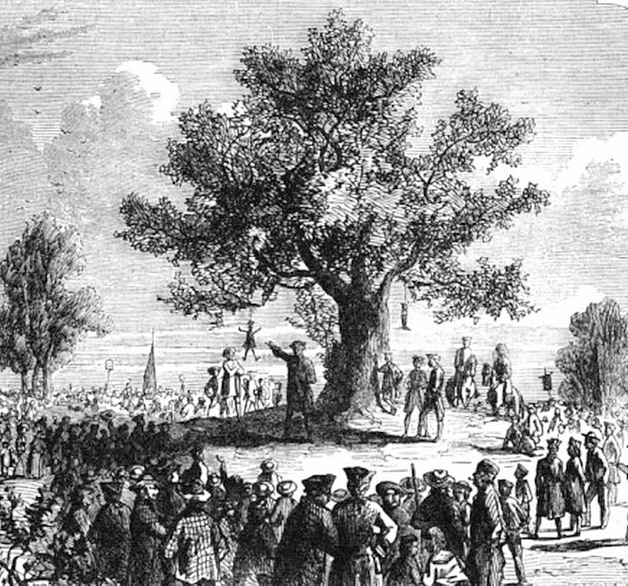
Before I went to Council, the Sheriff [Stephen Greenleaf] came to inform me that there was a most violent and virulent paper stuck up upon Liberty Tree, containing an Invitation to the Sons of Liberty to rise that Night to clear the Country of the Commissioners & their Officers, to avenge themselves of the Officers of the Custom-house, one of which was by name devoted to death:

There were also some indecent Threats against the Governor, if he did not procure the release of the Sloop which was seized.
In another letter Bernard said that paper invited the Sons of Liberty “to meet at 6 o’ clock to clear the Land of the Virmin which are come to devour them &ca. &ca.”

But Bernard and the Council weren’t the only men worried about further violence. By afternoon, there was a printed handbill being distributed around town:
Boston, June 13th, 1768.
The Sons of Liberty.
Request all those, who in this time of oppression & distraction, wish well to, & would promote the peace, good order & security of the Town & Province, to assemble at Liberty Hall, under Liberty Tree, on Tuesday the 14th. instant, at Ten O’Clock forenoon precisely.
That message came from street-level political leaders like the Loyall Nine who had organized the first anti-Stamp demonstration in 1765 and tried to steer most protests since. The handbill was most likely a product of Edes and Gill’s print shop. It superseded the call for an uprising on Monday night; as the 16 June Boston News-Letter reported, “the Expectation of this Meeting kept the Town in Peace.”

On Tuesday, 14 June, “vast Numbers of the Inhabitants” gathered at Liberty Tree under the British flag. Since the weather was “wet and uncomfortable,” they moved to Faneuil Hall. Someone proposed making this gathering an official town meeting, so the selectmen sent out a summons to convene at 3:00. So many men arrived that the crowd moved on to the Old South Meeting-House.

James Otis, Jr., presided over what the official minutes called “very cool and deliberate Debates upon the distressed Circumstances of the Town.” The meeting chose large committees to express Boston’s grievances—to present a petition to Gov. Bernard; to send a letter to Dennis Deberdt, the Massachusetts House’s lobbyist in London; and to draft a resolution protesting the Customs officers’ action. And then the first committee, again led by Otis, headed out to the governor’s house.

TOMORROW: Gov. Bernard’s response.

Thursday, June 14, 2018

“The whole Town was in the utmost Consternation and Confusion”

In a 17 June 1768 letter to his patron, the Marquess of Rockingham, Boston Customs Collector Joseph Harrison laid out the Liberty riot that he had triggered on the 10th.

A crowd of angry waterfront workers attacked the naval boats removing John Hancock’s sloop from his wharf. They attacked Harrison and his son and a colleague. And then:
All this happened about 7 o’Clock last Friday Afternoon and it was hoped that the People would have dispersed without doing any further mischief, but instead of that, before 9 o’Clock the Mob had increased to such a prodigious Number that the whole Town was in the utmost Consternation and Confusion.

When thus collected together, the First Attempt was on the Comptroller [Benjamin Hallowell, Jr.] whose House they beset; but on being assured that he was not at Home, they contented themselves with breaking a few pains of Glass and then departed in order to pay a Visit to the Collector, But before they got to my House several principal Gentlemen of the Town had assembled there in order if possible to protect my Family, but before the Mob got there it was thought proper to send my Wife and Children to a House in the Neighborhood.

On their Arrival the first Demand was for the Collector, but they were told he was not there, upon which they attempted to enter the House but were prevented by the Gentlemen there whose kind interposition in all probability prevented the Pillage and Destruction of all my Furniture. Finding this opposition within they concluded the Visit with breaking the Windows, and then marched off but in passing by the House of Mr. [John] Williams one of the Inspectors General of the Customs they served it in the same Manner.

After this in all probability the Mob would have dispersed if some evil minded People had not informed them that I had a fine sailing pleasure Boat which I set great store by, that they lay in one of the Docks, upon this Intelligence the whole Crowd posted down to the water side hauled the Boat out of the Water, and dragged her thro’ the Streets to Liberty Tree (as it is called) where she was formally condemned, and from thence dragged up into the Common and there burned to Ashes.
The crowd thus acted out a parody of the Customs service action of “condemning” Hancock’s sloop for seizure before the people proceeded to their traditional protest bonfire.

A few years before Harrison had written, “Sailing is so much my favourite Diversion,” according to the Collectors of Customs website. He also told Rockingham that his boat “has just before been nicely fitted out to send a present to Sir Geo. Saville,” a Member of Parliament for Yorkshire. But now it was in ashes.

Over the next dew days, Harrison and most of his colleagues in the upper ranks of the Customs house, starting with the Commissioners at the top, went on board H.M.S. Romney or to Castle William for their safety.

On Monday, 13 June, Edes and Gill’s Boston Gazette carried this report:
Last Friday Evening some Commotions happen’d in this Town, in which a few Windows were broke, and a Boat was drawn thro’ the Streets and burnt on the Common; since which Things have been tolerably quiet; it being expected that the Cause of this Disturbance will be speedily removed.
“The Cause,” in the radical Whigs’ eyes, being the Customs Commissioners.

TOMORROW: How to keep the peace in Boston?

[The photo above comes from the Go Hvar blog. Evidently on the island of Hvar, Croatia, the locals burn a boat every St. Nicholas’ Eve.]

Wednesday, June 13, 2018

“Volleys of Stones, Brickbats, Sticks or anything else that came to hand”

Yesterday we left Customs Collector Joseph Harrison just after he confiscated the sloop Liberty from John Hancock. He thought he had escaped retaliation from the waterfront crowd. He thought wrong.

As laid out on this website titled “Collectors of Customs,” Harrison was then fifty-nine years old. He and his younger brother Peter, the architect, had been born in Yorkshire and moved to Newport, Rhode Island, in the 1740s. Joseph was a merchant, doing well enough to woo a genteel wife from Britain. But he wanted a royal government job with a steady income. By lobbying family connections, in 1760 he joined the Customs service in the port of New Haven, Connecticut.

Four years later, Harrison sailed to London to seek a more lucrative posting. (He traveled with Jared Ingersoll, who on that trip got to see Parliament enact the Stamp Act.) Harrison won the attention of the Marquess of Rockingham a few months before Rockingham became First Lord of the Treasury—score! In July 1766 Harrison was named Collector in the busy port of Boston, earning £100 in salary plus a share of fees, seizures, and bribes, whichever he preferred (though it appears the service was becoming stricter about bribery in that decade). He arrived in Boston and took office in October 1766.

Harrison confiscated the Liberty late on the afternoon of 10 June 1768. He was walking away with his colleague the Comptroller and his eighteen-year-old son, Richard Acklom Harrison. In his own words:
But we had scarce got into the Street before we were pursued by the Mob which by this time was increased to a great Multitude. The onset was begun by throwing Dirt at me, which was presently succeeded by Volleys of Stones, Brickbats, Sticks or anything else that came to hand:

In this manner I ran the Gauntlet near 200 Yards, my poor Son following behind endeavouring to shelter his father by receiving the strokes of many of the Stones thrown at him till at length he became equally an Object of their Resentment, was knocked down and then laid hold of by the Legs, Arms and Hair of his Head, and in that manner dragged along the Kennel [canal, probably the drain down the middle of a street] in a most barbarous and cruel manner till a few compassionate people happening to see him in that Distress, formed a Resolution of attempting to rescue him out of the Hands of the Mob; which with much difficulty they effected, and got him into a House; tho’ this pulling and hauling between Friends and Enemies had like to have been fatal to him.

About this time I received a violent Blow on the Breast which had like to have brought me to the Ground, and I verily believe if I had fallen, I should never have got up again, the People to all appearance being determined on Blood and Murder. But luckily just at that critical moment a friendly Man came up and supported me; and observed that now was the time for my Escape as the whole Attention of the Mob was engaged in the Scuffle about my Son who he assured me would be taken out of their Hands by some Persons of his Acquaintance.

He then bid me to follow him, which I accordingly did, and by suddainly turning the corner of a Street, was presently out of Sight of the Crowd, and soon after got to a Friends House where I was kindly received and on whom I could depend for Safety and Protection: And in about an Hours time I had the satisfaction of hearing my Son was in Safety, and had been conducted home, by the Persons who rescued him from the Mob; but in a miserable Condition being much bruised and Wounded, tho’ not dangerously, and I hope will soon get well again.

With regard to my friend the Comptroller he was a little Distance behind when the Assault first began and on his attempting to protect my Son, was himself beset in the same Manner, and would certainly have been murdered by the Mob, if some Persons had not rescued him out of their Hands: however he was very much hurt, having received two Contusions on his Cheek and the Back of his Head.
Comptroller Benjamin Hallowell, Jr. (shown above, courtesy of Colby College), had been one of the targets of the anti-Stamp mob of 26 Aug 1765, though he had nothing to do with the Stamp Act, and one of the principal figures in the 1766 stand-off outside Daniel Malcom’s house. Unlike Harrison, he was a native of Boston, son of a well known merchant captain. I sometimes wonder if Hallowell was especially unpopular with the local crowd because he was a local himself, and thus seen as betraying the community.

But enough of such musings—the Liberty riot had only just started!

TOMORROW: Property damage after dark.

Tuesday, June 12, 2018

“I put the Kings Mark on the Main Mast”

On 10 June 1768, the Customs office in Boston determined that there was enough evidence to charge John Hancock with smuggling. They hadn’t caught him red-handed, but they had sworn testimony from tidesman Thomas Kirk saying that his staff had covertly unloaded casks of wine from his sloop Liberty the previous month so as to avoid paying duties.

What’s more, that ship had been reloaded to sail outbound without all the proper clearances—though ship masters almost always loaded while preparing that paperwork. The whale oil and tar now on the Liberty made it doubly valuable: the service could confiscate both the ship and the cargo, and the Customs officers involved would share in the proceeds.

Those officials knew, however, that such a seizure wouldn’t be easy. Collector Joseph Harrison described the situation in a letter to the Marquess of Rockingham dated 17 Jun 1768. He explained that Hancock, though “a generous benevolent Gentleman,” was “subject to the influence of [James] Otis and other Incendiaries.” Even worse, the young merchant was “the Idol of the Mob, just as Mr. [John] Wilkes is in England. Hancock and Liberty being the Cry here, as Wilkes and Liberty is in London!” So any move against Hancock would be unpopular.

Harrison described how he proceeded:
Under these Circumstances a Seizure must necessarily be attended with the utmost Risque and Danger to the Officer who should make the Attempt. However as I was judged to be the properest person to Effect it, I was deteremined that no Danger should deter me from the Execution of my Duty, tho’ I was then so ill as to be just able to stirr abroad.

So after sending on board the Romney Man of War (which then lay in the Harbour) to request their assistance in case a Rescue should be attempted, I proceeded to execute my Orders; first informing my Brother Officer Mr. [Benjamin] Hallowell the Comptroller of the Service I was going upon who generously declared that I should not singly be exposed to the fury of the Populace, but that he would share the danger with me, accordingly we set out together towards the Wharf where the Vessel lay and in our way thither my Son [Richard Acklom Harrison] (about 18 Years of Age) accidentally joined us in the Street and went along with us.

When we got down to the Wharf we found the Sloop lying there and after waiting till we saw the Man of Warrs Boat ready to put off the Comptoller and I, steped on board, seized the Vessel, and I put the Kings Mark on the Main Mast:

By this time the People began to muster together on the Wharf, from all Quarters; and several Men had got on board in order to regain Possession just as the Man of Warrs Boat well Man’d and Armed had got along side: They soon drove the Intruders out and I delivered the Vessel into custody of the commanding Officer. We then went a Shore and walked off the Wharf without any Insult or Molestation from the the People, who were eagerly engaged in a Scuffle with the Man of Warrs Men and endeavouring to detain the Sloop at the Wharf.
One of the young officers on the Romney, Midshipman William Senhouse, later told his service’s side of the seizure in a memoir:
Our Boats Mann’d & Arm’d were accordingly dispatch’d under the commnd of Mr. [John] Calendar, who was Master of the Romney, Mr. [William] Culmer, one of the Mates, and myself. We proceeded directly to the Sloop, wch was laying alongside of the Long Wharf [actually Hancock’s Wharf] and found her in possession of the Towns people, who on our near approach pelted us very severely with Stones. We nevertheless boarded the Vessel, drove the mob on shore, cut her fasts or moorings, and carried her off in triumph, bringing her to an Anchor under the Guns of the Romney.

Notwithstanding the rude reception we expected, form the people of the Town, we had received special directions not to fire upon them, but in the very last extremity. Billy Culmer however, tho’ he knew well how to obey, was extreamly urgent with the Master for his orders to fire and had this honest Madman been gratify’d in his wish, a terrible slaughter no doubt, wou’d have succeeded. As it was, we happily accomplished our purpose, at the expence only of some blows and bruizes of no great consequence.
But then the waterfront crowd turned its attention back to the Customs officers.

TOMORROW: The Liberty riot.

Monday, June 11, 2018

“I distinctly heard the Noise of the Tackles”

On 9 June 1768, a low-level Customs employee named Thomas Kirk told his bosses that, contrary to his declaration a month earlier, he had evidence of John Hancock’s ship Liberty being used to evade tariffs.

The next day, Kirk testified as follows before justice of the peace Samuel Pemberton:
I, Thomas Kirk of Boston, do declare and say, that being appointed one of the Tidesmen on board the Sloop Liberty, Nathaniel Barnard, Master, from Madeira, I went on board the said Vessel the 9th Day of May last, in the Afternoon, and about 9 o’Clock in the Evening Capt. Marshall came on board the said Vessel, and made several Proposals to me to persuade me to consent to the hoisting out several Casks of Wine that Night before the Vessel was entered, to all which I, I peremptorily refused;

upon which Capt. Marshall took hold of me, and with the Assistance of five or six other Persons unknown to this Declarent, they forcibly hove me down the Companion into the Cabin, and nailed the Cover down; I then broke thro’ a Door into the Steerage, and was endeavouring to get upon Deck that Way; but was forcibly pushed back again into the Steerage, and the Companion Doors of the Steerage also fastened, and was there confined about three Hours, and during that Time I heard a Noise as of many People upon Deck at Work a hoisting out of Goods, as I distinctly heard the Noise of the Tackles;

when that Noise ceased, Capt. Marshall came down to me in the Cabin and threatened, that if I made any Discovery of what had passed there that Night, my Life would be in Danger and my Property destroyed. The said Capt. Marshall then went away and let me at Liberty; and I was so much intimidated by the aforesaid Threatenings, that I was deterred from making an immediate Discovery of the aforesaid transactions:
Kirk’s story of being shoved around by a group of men working for Hancock echoed Owen Richards’s experience earlier in the spring. In Kirk’s case, however, he was pushed into the steerage deck of the ship rather than out of it.

What about the other tidesman assigned to work alongside Kirk? According to the Customs office in Boston:
The other Officer, who was also examined sayd he was asleep at the time of the above Transaction, but Kirk declared that he was drunk and gone home to Bed.—
Despite all the legal wrangling in this case, I haven’t been able to find the name of this tidesman, who would have been a significant witness one way or the other. Tidesmen were allowed to sleep on board the ships they were watching, apparently because people expected the noise of unloading to wake them up. But had this one really gone home to sleep off his drink?

What about Capt. John Marshall—how did he respond to Kirk’s accusation? Conveniently or not, Marshall had died on 10 May, immediately after this allegedly busy night. Indeed, some folks suggested that the exertion of unloading all those casks of wine had hastened his death at the age of only thirty-one.

The Customs office also stated that Hancock had “been heard to declare before her [the Liberty’s] Arrival, that he wo’d run her Cargo of Wines on Shore,” but it didn’t name anyone who had heard him say that.

Despite the questions about Kirk’s testimony, it was enough for higher-level Customs officers to move against John Hancock on 10 June 1768.

TOMORROW: Seizing a sloop.

Sunday, June 10, 2018

John Hancock’s Busy Month of May 1768

On 9 May 1768, A couple of weeks after the Customs Commissioners failed in their attempt to have John Hancock prosecuted for interfering with their employees, another of Hancock’s ships arrived in Boston harbor.

“Barnard from Madeira,” reported the Boston Gazette’s shipping news. That meant that Capt. Nathaniel Barnard on the Liberty had arrived from Madeira, a Portuguese island. Though Madeira wasn’t part of the British Empire, for over a century the laws had made an exception for importing Portuguese island wine, and North American ships could even trade there directly.

The Sugar Act of 1764 specified the duty to be paid on that wine:
For every ton of wine of the growth of the Madeiras, or of any other island or place from whence such wine may be lawfully imported, and which shall be so imported from such islands or place, the sum of seven pounds
Capt. Barnard declared that he had brought in 25 casks of wine. Two tide waiters from the Customs service watched the unloading and certified the next day that they had seen nothing unusual.

On that same day, 10 May, Hancock lost a captain. The 16 May Boston Gazette reported:
Tuesday Morning last died very suddenly, Capt. JOHN MARSHALL, in the 32d Year of his Age: For several Years Commander of the Boston Packet in the London Trade.—His Funeral was attended last Friday Afternoon.
The Boston Packet was Hancock’s regular back-and-forth ship to London, and Marshall appeared often in his correspondence from the mid-1760s.

Later in May, as I described in postings starting here, Hancock got into a dispute over whether his militia company, the Cadets, would serve as an honor guard for a banquet that included the Customs Commissioners. While that argument ended peacefully, it exacerbated the bitter feelings between the young merchant and the men in charge of the Customs office. In those same weeks, Hancock was voted onto the Council but then vetoed off by Gov. Francis Bernard.

Meanwhile, on 17 May H.M.S. Romney arrived in Boston harbor. This was a fifty-gun warship that required a crew of over 300 men. In the Royal Navy’s time-honored way, Capt. John Corner began stopping merchant ships and drafting men from their crews to serve under him.

Lt. Gov. Thomas Hutchinson recognized that this spelled trouble:
It is unfortunate that in the midst of these difficulties the Romney has been impressing seamen out of all inward-bound vessels and although he does not take men belonging to the Province who have families, yet the fear of it prevents coasters [ships trading along the coast] as well as other vessels coming in freely, and it adds more fewel to the great stock among us before. It is pity that in peaceable times any pressing of seamen should be allowed in the colonies.
Gov. Bernard was likewise arguing against impressment, and thinking he should get more credit in Boston for doing so.

On Sunday, 5 June, locals threw rocks at boats from the Romney to keep them from landing, fearing that those sailors were coming to impress men. A couple of days later they rescued a sailor away from a press gang. As both a merchant and a politician, Hancock was involved the official protests against the navy’s practice.

As all that happened, Hancock’s Liberty was being loaded with its outgoing cargo: 200 barrels of whale oil and 20 barrels of tar. It was ready to sail. And then on 9 June, one of the tide waiters who had watched the Liberty in May declared that in fact he had seen it used for smuggling.

TOMORROW: What the tide waiter saw.

Saturday, June 09, 2018

Lydia—Have You Searched Lydia?

On Friday, 8 Apr 1768, as I mentioned yesterday, Owen Richards received an “Appointment & Deputation” as a tide waiter for His Majesty’s Customs Service in Boston. He later said that “His Sallary was £25 pr. an. & 1sh. 6d. when employed,” for a total of about £45 a year.

Richards may already have been working for the Customs department, which would make this a new assignment, a promotion, or a commission under a new legal authority. Under the Townshend Act, the Customs service in North America had a new structure, topped by a five-man commission headquartered in Boston. It had the added responsibilities of collecting new tariffs for the Crown, and it had additional resources from those tariffs, so the Commissioners were probably on a hiring spree.

On the very same day that Richards received his new paperwork, a cargo ship arrived from London: the Lydia, under the command of Capt. James Scott. The owner of the Lydia and of the wharf where it docked was John Hancock, a Boston selectman and representative to the Massachusetts General Court.

Hancock had already attracted the attention of the Customs Commissioners, they later wrote: “early in the Winter he declared in the General Assembly that he would not suffer our officers to go even on board any of his London Ships.” But Customs officers were supposed to go aboard a ship when it arrived to watch over the cargo.

The two tide waiters assigned to the Lydia were Owen Richards and Robert Jackson. According to a summary of events written by Massachusetts attorney general Jonathan Sewall, they boarded the ship about 1:00 P.M. and confirmed the cargo included “Tea, Paper, and other Customable Goods.” The tide waiters’ job was to watch until all those goods were unloaded and counted.

At 4:00, Hancock himself came on board and asked to see the Customs men’s paperwork. He also told Capt. Scott and the ship’s mate not to let Richards and Jackson “go under Deck.” The tide waiters remained on the ship Friday night and all Saturday. Sewall wrote:
About seven o’clock on Saturday Evening, the said Owen Richards went down into the Steerage; and in about ten minutes the Master came and laid his Hand upon their Shoulders and told them they must go out of the Steerage or he should lose his Bread and they accordingly went out:

and about eight o’clock the said Owen went down into the Steerage again and continued there until about eleven o’clock when Mr. Hancock came on board again, attended by eight or ten people, all unarmed, and after demanding of the said Owen what Business he had below deck and to come up, upon his refusal, he demanded sight of their orders, which were shown him, he also demanded a sight of their Commissions and the said Owen showed his; to which he objected that it had no Date;

he [Hancock] then demanded to know if they had any Write of Assistants; and being answered in the Negative, he ordered the Mate and Boatswain to turn him out of the Steerage; who accordingly took hold of him under the Arms and Thighs and forced him upon Deck, after which the Companionway being fastened, Mr. Hancock demanded of him whether he wanted to search the Vessel; to which he answered that he did not. Mr. Hancock then told him that he might search the Vessel but should not tarry below.
One of the people who came on board with Hancock was Capt. Daniel Malcom. He had had his own confrontation with the Customs service in 1766, and the Customs Commissioners were certain he had snuck “about Sixty pipes of Wine” into Boston just a few weeks earlier. As Richards was removed, witnesses reported Malcom helpfully saying things like, “damn him hand him up, if it was my Vessel I would knock him down.”

It’s not clear to me what exactly was going on here—why Richards went below, or why Hancock had him physically removed but then said “he might search the Vessel.” The historian Oliver M. Dickerson believed that the Boston Customs office operated as a “racket” and was out to penalize Hancock because of his defiant words that winter. He suggested Richards was acting on orders from his supervisors to provoke Hancock or catch him doing something illegal. Alternatively, Richards might have snooped around on his own; if he had detected smuggled goods, he would have shared in any fines the Customs service levied. As for Hancock’s statement that Richards might search the ship, that might have been contingent on him producing a legal writ, which Hancock knew he didn’t have.

On 15 April, the Customs service asked attorney general Sewall to prosecute Hancock and his employees for interfering with their enforcement of the law. After examining the testimony for a week, Sewall declined. No statute specified that tide waiters had the power to go below deck, he wrote, even “in extreme cold and stormy seasons.” Hancock and his men had therefore done nothing illegal in manhandling Owen Richards.

TOMORROW: The arrival of the Liberty.

Friday, June 08, 2018

The Life of Owen Richards, Customs Man

Owen Richards was born in Wales, according to what he testified to the Loyalists Commission in 1784. Two years earlier he had told the royal government he was “now near Sixty Years of Age,” meaning he was born in the mid-1720s.

In 1744, again by his own account, Richards came to Boston. He had been “bred a Seaman” and made his living as a mariner of some sort. On 14 Dec 1745 the Rev. Timothy Cutler of Christ Church, the Anglican congregation the North End, married Richards and Rebecca Sampson.

Owen and Rebecca Richards had three children baptized at Christ Church, as preserved in its records:

  • Elizabeth on 26 Apr 1752.
  • James on 15 Feb 1756.
  • Joseph Prince on 26 Feb 1758.
In addition, there were two older sons in the family: William and John Lloyd.

Owen Richards became a steady part of Boston’s Anglican community. At some point he bought pew #75 in Christ Church. He sponsored four baptisms at King’s Chapel between 1750 and 1769 and stood godfather to three babies at Christ Church in 1766 and 1767. (Notably, the third of those North End babies appears to have been the son of John Manley, America’s first naval hero.)

In 1759, Richards bought a house on North Street, showing that he had earned some money at sea—and in his thirties he was getting ready to settle down. That deed listed his profession as “rigger,” someone expert in rigging the ropes and sails of ships. In February 1761 Richards was one of two executors for the estate of another rigger named William Prince, whom Joseph Prince Richards might have been named after.

In early 1764, the Boston News-Letter ran a series of ads in which Owen Richards promoted his services as an auctioneer. At the “North End New-Auction Room” he offered “Sundry sort of Goods”: new and secondhand clothing, cloth, a mahogany table, tobacco, and so on. He promised people with goods to sell, especially in-demand “Checks and Linens of all Sorts,” that he would get them the best possible prices and prompt payment.

It wasn’t a good time to enter business. There was a postwar recession. By February, Richards had to assure customers, “The Small-Pox is not anywhere nigh to the North End New Auction-Room.” In January 1765 Nathaniel Wheelwright’s bankruptcy shocked the Boston business community.

At some point, Owen Richards gave up his own business and took a steady, if unpopular, government job: he went to work for the royal Customs service. Exactly when he became a Customs man isn’t clear in the sources.
  • In 1782 Richards wrote that he had “been in the Service of his Majesty by Sea and Land near Thirty Years, the greatest part of that Time in his Majestys Customs at Boston.” That might have included some naval or privateering service during the 1750s, and he probably counted the Revolutionary War years when he wasn’t really able to do the job.
  • Customs Commissioner Henry Hulton wrote that Richards “had been many years Tidesman in this Port” before 1770.
  • However, in 1784 the earliest documentation for his Customs work that Richards could supply was an “Appointment & Deputation dated 8th of April 1768.” Now that might have been after a promotion or a new appointment under the Commissioners, who arrived in 1767.
As a Customs officer, Owen Richards became significant in the development of the American Revolution, as I’ll start to discuss tomorrow.

Returning to Richards’s personal story, his wife Rebecca died on 1 Sept 1758, leaving an infant and a two-year-old. Less than three months later, Owen remarried to Elizabeth Tucker at the Brattle Street Meetinghouse.

In February 1771, Richards, now listing himself as a “gentleman,” deeded the house he was still administering for the estate of William Prince to his sons William, John Lloyd, and James, the last then fifteen years old.

(As for daughter Elizabeth, she had married a man named Charles Perrin at King’s Chapel in August 1768, when she was sixteen. Their first child, George, was born the following June but died at four weeks. Their daughter Mary was baptized in 1771.)

On the list of Loyalists departing Boston in 1776, Richards appeared among other Customs employees as a “coxswain.” No family members were listed as leaving with him. However, in 1782 he told the government he had “a helpless Wife & four Children” to look out for.

The Loyalists Commission awarded Richards £120 in compensation for his property lost in Boston, plus a pension of £30 per year. He collected that until 1800, when he presumably died.

TOMORROW: Owen Richards and the Lydia.

Thursday, June 07, 2018

What the Founding Era Meant by “Bear Arms”

Last month Dennis Baron, a professor of English and linguistics at University of Illinois at Urbana-Champaign, published an op-ed essay in the Washington Post on the language of the Second Amendment to the U.S. Constitution:
Two new databases of English writing from the founding era confirm that “bear arms” is a military term. Non-military uses of “bear arms” are not just rare—they’re almost nonexistent.

A search of Brigham Young University’s new online Corpus of Founding Era American English, with more than 95,000 texts and 138 million words, yields 281 instances of the phrase “bear arms.” BYU’s Corpus of Early Modern English, with 40,000 texts and close to 1.3 billion words, shows 1,572 instances of the phrase. Subtracting about 350 duplicate matches, that leaves about 1,500 separate occurrences of “bear arms” in the 17th and 18th centuries, and only a handful don’t refer to war, soldiering or organized, armed action. These databases confirm that the natural meaning of “bear arms” in the framers’ day was military.
Lawyer Neal Goldfarb checked more variations of the phrase in the same databases and came to the same basic conclusion.

In the 2008 Heller case, as everyone involved in this discussion knows, the U.S. Supreme Court decided otherwise. Writing for the court, Justice Antonin Scalia treated “bear ams” not as an idiom with a military meaning but as a general phrase about carrying weapons.

The data shows otherwise—hardly anyone in the eighteenth century used it as Scalia did. As with the Reynolds case I wrote about here, the court’s finding is simply at odds with historical facts. The Heller ruling overturned legal understandings that prevailed for most of the twentieth century and changed the law going forward, but such rulings can’t change the actual past.

The Second Amendment reflects the Founding generation’s faith in the militia system of community self-defense that they had all grown up with. It said nothing about private ownership of firearms to hunt, to protect one’s home or person, or to make loud noises. Perhaps they viewed those activities as falling under the Tenth Amendment. We can’t know because the Tenth is so vague.

That said, the idea of a militia in the Founders’ time depended on widespread ownership of firearms by the (mostly white) men who made up the militia. Even if we go back to reading “bear arms” to refer only to military activity, as the Founders no doubt understood it, they still envisioned a public self-defense system in which most white men owned muskets, trained regularly with those muskets, and knew which officers to turn out for while carrying those muskets.

I think the big question of the Second Amendment lies in its opening premise: “A well regulated Militia, being necessary to the security of a free State.” We no longer have a militia system that the Framers would recognize. Instead, we have a large standing army with advanced weaponry, many of those troops deployed overseas—a situation that would startle the Founders, if not alarm them. If the premise of the Second Amendment no longer applies, what does that mean for the conclusion?

Wednesday, June 06, 2018

Princeton Battlefield

Last month the American Battlefield Trust (formerly the Civil War Trust and its Campaign 1776 initiative) announced that it had completed the “$4 million purchase of 14.85 acres associated with the 1777 Battle of Princeton.” News of the purchase was picked up by such news outlets as Planet Princeton.

That land had been owned by the Institute for Advanced Study, which had planned to build new housing on it until archeology suggested that it was indeed militarily significant.

The press release announcing the sale looks an awful lot like this Institute press release from December 2016, down to identical sentences. That was when the initial plan for this purchase was announced. Boston 1775 shared the news then.

At that time, the parties hoped to complete the sale by June 2017. But it wasn’t until the following fall that the institute received approval from the local authorities for its revised housing plan with a smaller footprint.

Now at last the purchase is complete. Eventually the American Battlefield Trust will transfer ownership of the land to the state of New Jersey, which owns the Princeton Battlefield Park.

And finally we can look ahead. Last year the American Battlefield Trust “received a federal grant to create a five-year preservation and interpretation plan for the Princeton battlefield, to help prepare the battlefield for its 250th anniversary in 2027.”

Tuesday, June 05, 2018

“Not to write for any goods after the first of June”

Boston’s patriotic celebration of the king’s birthday on 4 June 1768 papered over a deep political divide.

That divide had opened when the Townshend Act imposed tariffs on certain commodities imported into the colonies. North Americans protested on the practical ground that those tariffs hurt the economy, particularly by moving hard currency to Britain. And they protested on the philosophical ground that even Parliament had no right to raise revenue from populations not represented in Parliament.

North Americans had made the same basic complaints about the Stamp Act of 1765. They had convinced a new government in London to repeal that tax through a combination of formal protests, boycotts, and riots. So they were going back to the same playbook.

On 4 Mar 1768, John Rowe (shown above) recorded in his diary what he and his fellow import merchants had agreed to do:
In consideration of the Great Scarcity of mony which has for several years been so Sensibly felt among us & now must be Rendred much Greater not only by the immense Sums absorbd in the Collection of the Dutys lately imposd but by the great checks given thereby to Branches of Trade which yeilded us the most of our mony & means of Remittance,—

In consideration also of the great Debt now standing against us which if we go on Increasing by the excessive Imports we have been Accustomd to while our Sources of Remittance are daily drying up, must terminate not only in Our Own & Our Countrys Ruin but that of many of our Creditors on the other side of the Water [i.e., in Britain]—

In consideration farther of the Danger from Some Late Measures of our Loosing many Inestimable Blessings & advantages of the British Constitution which Constitution we have ever Rever’d as the Basis & Security of all we enjoy in this Life, therefore Voted

That we will not for one Year send for any European Commoditys excepting Salt, Coals, Fishing Lines, Fish Hooks, Hemp, Duck, Bar Lead, Shot, Wool Cards & Card Wire and that the trading towns in the province & other provinces in New England together with those in New York New Jersy & Pensilvania be Invited to Accede hereto—

2nd That we will encourage the Produce & manufactures of these colonies by the use of them in Preference to all other manufactures—

3d That in the Purchase of Such Articles as we shall stand in need off, we will give a Constant Preference to such Persons as shall subscribe to these Resolutions—

4 That we will in our Separate Capacitys inform our several Correspondents of the Reasons & point out to them the necessity of witholding our usual Orders for their Manufactures—the said Impediment may be Removd & Trade & Commerce may again flourish—

5 That these Votes or Resolutions be Obligatory or binding on us from & after the time that these or other Singular or tending to the same Salutary Purpose be adopted by most of the Trading Towns in this & the neigbouring Colonies—

6 That a Comittee be appointed to Correspond with merchants in the before mentiond Towns & Provinces & forward to them the forgoing Votes & that sd Committee be Impower’d to call a meeting of the merchants when they think Necessary—
The word went out as planned, and on 2 May Rowe wrote that he
met the Merchants at the Townhouse in the Representatives Room—agreed to the Resolutions of the City of New York—not to write for any goods after the first of June, nor Import any after the first Day of October, untill the Act Imposing Dutys on Glass Paper &c be Repeald
The merchants of Gloucester made the same commitment that day.

Thus, as June 1768 began, Boston’s mercantile community had just committed to “non-importation” of all goods from Britain, with a few exceptions of raw materials and tools that the local fishing and weaving industries needed.

It’s notable that, although the merchants met “at the Townhouse in the Representatives Room,” they were not an elected body. They were more like a chamber of commerce. They didn’t represent the whole population of Boston. Political leaders from outside the business community—such as James Otis, Jr., Samuel Adams, and the newcomer Dr. Thomas Young—weren’t involved.

That division would become an issue in the coming years.

Monday, June 04, 2018

Celebrating the King’s Birthday in 1768

June is so full of Sestercentennial developments that I’ve fallen behind the anniversaries already. So let’s get right to what happened in Boston 250 years ago today, on 4 June 1768.

That date was King George III’s thirtieth birthday. It was a holiday all over the British Empire, and Bostonians celebrated like the rest. Here’s the report of events in the town from the Boston Post-Boy:
About Noon his Excellency the Governor [Francis Bernard] went to the Council Chamber [in the Town House], where he received the Compliments of His Majesty’s Council, the Honourable House of Representatives, His Majesty’s Officers of all Denominations, and the principal Gentlemen of the Town, upon the happy occasion.

After which upon a Signal given the Guns of Castle-William and the Batteries of the Town were fired, and after them the Guns of the Romney Man of War. During which Time His Excellency with the Company in the Council Chamber drank the Health of his Majesty, the Queen, the Prince of Wales, and the rest of the Royal Family, and other loyal Healths suitable to the Day.

His Excellency’s Troop of Horse Guards [under Col. David Phips], the Regiment of Militia [under Col. Joseph Jackson] and the Train of Artillery [under Capt. Adino Paddock] were paraded in King-Street upon this occasion, and made the usual Firings; after which the Artillery Company divided into two Parties, performed an Exercise representing an Engagement, much to the satisfaction of the Spectators: The Whole was conducted with decency and good order, and great Expressions of Joy.
The train, or militia artillery company, had rapidly become a great source of pride for Bostonians. All the newspapers mentioned their maneuvers on this holiday, and the Boston Gazette ran a letter to the printers singling out that unit as “a very great Military Ornament to the Town, and likewise an Honor to the Province.”

Earlier that year, the train had received two small brass cannon from Britain to supplement the two they already had. That allowed the company to divide into two squads, each with two guns, and perform that impressive mock “Engagement.” (A little more than six years later, those four cannon disappeared from the company’s armories under redcoat guard, as I relate in The Road to Concord.)

In 1768, the king’s birthday was a unifying holiday. Members of the Massachusetts General Court toasted George III alongside Bernard, even though they were at odds with the governor on many political issues. Those disputes gave rise to the rest of this month’s Sestercentennial anniversaries.

Sunday, June 03, 2018

The Hourglass Effect and Its Discontents

Last month the Panorama, the blog of the Journal of the American Republic, shared Nathan Perl-Rosenthal’s essay “The Hourglass Effect in Teaching the American Revolution.”

Perl-Rosenthal, a professor at the University of Southern California, wrote:
The hourglass problem arises from trying to synthesize old and new ways of seeing the American Revolution in a single course. You probably start your class with a wide-angle early modern frame: Big, oceanic topics like global empire, Atlantic slavery, and the consumer revolution are good for framing and explaining the coming imperial crisis.

But before long, the course’s terrain contracts as you turn to the traditional chronology of the Revolution. One feels the squeeze already with the Sugar, Stamp, and Townshend Acts. After early 1770, it gets hard to leave eastern North America. First one is in Boston for the Massacre, then explaining the local politics of the Coercive Acts, followed by Lexington and Concord, and the debate over independence. The same goes for the war years and the critical period. A reopening outward typically only gets underway in the 1790s. . . .

The geographic cinching-up of the 1760s and 1770s, by temporarily shutting out events anywhere but North America, paradoxically ends up reinforcing the very exceptionalist narrative of the Revolution that a wider lens is supposed to help us avoid. The wider world may play its part in the revolutionary era, this approach implies, but during the crucial period of the 1770s and 1780s there is a particular and special North American story that must be told.
Perl-Rosenthal then tries to sketch out (with sketches!) how a course might “tell the story of the revolutionary decades in parallel with simultaneous developments elsewhere in the continent and the world.”
What would a course on the American Revolution look like with this approach in mind? First, it would begin by sketching out the common traits of the eighteenth-century Atlantic world—not just in the British empire but across imperial boundaries. . . .

Second, you would want to use these shared traits to constantly relativize and contextualize the American experience. . . .

Third, those shared elements would provide a basis for incorporating contemporaneous revolutions into the course, starting in the 1780s. The idea would be to see these revolutions not as disparate phenomena in distant regions, but as branches off of the same trunk in constant interaction. . . .

I’ll conclude by going back to Lexington and Concord, a particularly tricky point in the course if one wants to avoid the hourglass effect. Where are the “Atlantic cultures” to be found in this story of British regulars marching into a provincial burgh? Not far off at all. Civic militia were an almost universal feature of the Euro-American world, who generally defended local interests—as the American militiamen did. The British regulars’ tactics had much in common with those of career soldiers elsewhere in the Atlantic, from Prussia to Cape Colony. And the confrontation between the two was hardly unusual. The Dutch patriot revolt, the early French Revolution, and the Haitian Revolution—to name just a few—were also set off in part by similar clashes. 
John Fea, professor at Messiah College, responded briefly on his own blog:
As I read Perl-Rosenthal’s post I was struck by the presuppositions that guided the piece. It is assumed that any discussion of local narratives is bad or somehow contributing to American exceptionalism. He uses terms like “traditional chronology” as if that is a bad thing. Those who get too caught-up in this narrative “feel the squeeze.” And, of course, the word “exceptionalism” is a very loaded term with negative connotations in the academy. (In some ways, I would argue, the American Revolution was an exceptional event, even as it was shaped by global forces).
Perl-Rosenthal himself acknowledges the outsized influence of events in the thirteen colonies, but only parenthetically: “This emphatically does not mean denying the American Revolution’s transformative power in the region, nor its wider global significance.”

All of which suggests to me that some hourglass effect might be inevitable, especially if one is teaching American history at an American university to American students.

Saturday, June 02, 2018

Slavery Databases Open to Researchers

The Runaway Slaves in Britain database just became available for online researchers. It offers:
a searchable database of well over eight hundred newspaper advertisements placed by masters and owners seeking the capture and return of enslaved and bound people who had escaped. Many were of African descent, though a small number were from the Indian sub-continent and a few were Indigenous Americans.
Interest is so high that the host servers are having trouble keeping up.

This is just one of several online databases about enslaved people that researchers can now use. There’s the venerable Trans-Atlantic Slave Trade Database, which has numbers (not names) of every known slaving voyage from Africa to the New World. This project has recently received a National Endowment for the Humanities grant to expand with information about shipments from one American port to another.

The New York Slavery Records Index has collected records that “identify individual enslaved persons and their owners, beginning as early as 1525 and ending during the Civil War.”

Runaway Connecticut is based on a selection of the runaway notices that appeared in the Connecticut Courant between 1765 and 1820. Those advertisements involve different sorts of people—escaping slaves, runaway apprentices, deserting soldiers, escaped prisoners, and dissatisfied husbands and wives.

The Afro-Louisiana History and Genealogy site is based on databases created by Dr. Gwendolyn Midlo Hall and published on CD-ROM by the Louisiana State University Press in 2000.

The Virginia Historical Society’s Unknown No Longer website collects “the names of all the enslaved Virginians that appear in our unpublished documents.” That means it’s not as comprehensive as other compilations, but the society felt it was better to share what they had which would otherwise remain hidden than to wait for more.

There are a couple of databases for North Carolina, drawing on different pools of data: N.C. Runaway Slave Advertisements and People Not Property – Slave Deeds of North Carolina.

African Runaway Slaves in the Anglo-American Atlantic World is a compilation of runaway advertisement by Douglas B. Chambers. There are separate sections for the Chesapeake Bay and Carolina Low Country regions.

The Black Loyalist site starts with the “Book of Negroes,” people who evacuated New York with the British military in 1783, adding other sources about their lives in Canada and elsewhere in the British Empire. It comes from the University of Sydney and grew from Cassandra Pybus’s research for Epic Journeys of Freedom.

[ADDENDUM: Marronnage in Saint-Domingue is a bilingual website from Canada offering a database on Haiti. It compiles advertisements about enslaved or formerly enslaved people that appeared in the Affiches américaines between 1766 and 1790.]

[ADDENDUM: Ancestry.com makes available the Slave Registers of Former British Colonial Dependencies, 1813-1834. Between outlawing the transatlantic slave trade in 1808 and outlawing slavery in 1834, the British Empire collected registers of “lawfully enslaved” people in many of its Caribbean colonies.]

What data of this sort is available for Massachusetts? I know of three sites that offer raw numbers, not names. Unfortunately, even those numbers are incomplete and not comparable from one database to the next, but they can provide a start.

Primary Research has shared the 1754 Slave Census of Massachusetts, which counted the number of enslaved people over age sixteen in 119 towns in Massachusetts and Maine. Thus, for example, in 1754 two men and two women over age sixteen were held in bondage in Waltham.

The province’s 1765 census was reproduced in Josiah H. Benton’s Early Census Making in Massachusetts, available on archive.org. So far as I know, these figures haven’t been transcribed into a searchable or formulatable data, so one has to consult this just like a printed book. Also, these numbers make no distinction between enslaved and free people. In 1765, Waltham was home to eight male Negroes and five female.

Finally, the 1771 Massachusetts Tax Inventory compiled the property of individuals in many towns (though not all towns’ records survive). One type of taxed property was “Servants for Life,” or slaves. Drilling down patiently from county to town data reveals that in 1771 four Waltham residents were taxed for each owning one enslaved person: the widow Anna Ball, Samuel Gale, Thomas Wellington, and Bezaleel Flagg. Unfortunately, we still don’t know the names of the enslaved people, but it’s possible that further research on the owners would yield more details.

Friday, June 01, 2018

The Survival of Crispus Attucks in American Memory

Black Perspectives, the blog of the African American Intellectual History Society, recently shared Stephen G. Hall’s interview with Mitch Kachun, author of First Martyr of Liberty: Crispus Attucks in American Memory.

Here are some extracts from Kachun’s remarks:
Every nation needs a story that tells themselves, and others, who they are as a people. The broader society didn’t recognize that Blacks had any history or coherent collective identity, so Black speakers at these celebrations very consciously challenged dismissive mainstream historical narratives. They created an empowering story to bind African Americans together as a people with a rich history, a heritage, and a set of heroes in which they could take pride. They recounted the glories of ancient African empires; the prosperity and stability of early modern West African kingdoms; and the accomplishments of Blacks in America—in science, religion, education, activism, and military service.

In these speeches, I started encountering references to Crispus Attucks, first during the 1840s and even more during the 1850s and 1860s. Black speakers telling the story of their people used Attucks to demonstrate that Blacks had been part of the American nation from the beginning. They revised existing mainstream stories of the American Revolution to include one of their own, presenting Attucks as the first to make the ultimate sacrifice for the freedom of the American nation. Yet, as you note, we know almost nothing about Attucks’s life. . . .

Since his death, Crispus Attucks has remained a malleable figure in American memory. With so little documentary evidence about his life, he is a virtual blank slate upon which different people at different times have inscribed a variety of meanings—patriotic martyr; unsavory thug threatening the social order; Uncle Tom who sold out his race for the white society enslaving them; or irrelevant nobody with no historical significance whatsoever. . . .

One thing that fascinated me was that Black activists didn’t incorporate Attucks into their narratives until around 1850—some 80 years after his death. Boston abolitionist William C. Nell was foremost in recovering Attucks and promoting him as the First Martyr of Liberty; Attucks immediately became a frequently used symbol for bolstering Black activists’ arguments for abolition and full citizenship. By the time of emancipation Attucks was widely known, but during Jim Crow he was erased from mainstream histories and popular culture; it was left to African Americans to preserve his memory and his status as an American hero. . . .

I could not find a single American history textbook published between the 1880s and 1950s that mentioned Attucks in its coverage of the Boston Massacre. This began to change in the 1960s, and by the 1990s it was hard to find a textbook that did not mention Attucks.
Kachun goes on to discuss how “the mythic histories that inhabit the realm of collective memory cannot be contingent or ambiguous—they are constructed to provide empowering stories with clear resolutions.” But those mythic histories are at odds with evidence-based histories, which are full of holes, wrinkles, and ambiguities, and don’t carry the same appeal for a people as a whole.

(I wrote about the misty memory of Attucks in Boston before William C. Nell did his work as a historian and activist back here.)