J. L. BELL is a Massachusetts writer who specializes in (among other things) the start of the American Revolution in and around Boston. He is particularly interested in the experiences of children in 1765-75. He has published scholarly papers and popular articles for both children and adults. He was consultant for an episode of History Detectives, and contributed to a display at Minute Man National Historic Park.

Subscribe thru Follow.it


•••••••••••••••••


Thursday, April 25, 2013

The Soldier Who Died in Buckman Tavern

I was planning to start this entry by stating: “Because Pvt. John Bateman left a deposition on 23 Apr 1775, we know he hadn’t died from his wounds by that date. And that suggests he wasn’t the soldier buried near Buckman Tavern in Lexington, as memorialized by this stone.”

Except that last night Don Hagist kindly left a comment on yesterday’s posting to report that a British army muster roll says grenadier Bateman died on 21 April—two days before that deposition.

Now I believe the most likely explanation is that the muster roll is in error, based on information transmitted to the British command across the siege lines during an exchange of prisoners or talks leading up to it. My experience is that Patriot depositions were one-sided and incomplete, but not made up out of whole cloth and signed with a dead man’s signature. So I think it most likely that Bateman died after 23 April. Still, it’s a good reminder that our sources might be a crucial day or two off.

As for that stone in Lexington, the basis for it seems to be this passage from an article by Dr. Francis H. Brown, published by the Lexington Historical Society in 1905:
A British soldier was buried in the ground of the Munroe purchase. He was wounded on the 19th of April, and carried to the Buckman Tavern, where he died on the 22d. He was buried at a spot near the Eustis monument. Mr. Eli M. Robbins had the exact spot pointed out to him by Abijah Harrington, who died within a few years. Harrington’s father was sexton in 1775, had buried the soldier and knew the spot well. The exact spot has been pointed out to the writer. The grave should have a permanent mark.
At the same time Brown, Robbins, and the historical society published a collection of “Lexington Epitaphs” which included one non-epitaph for that soldier with an unfortunate typo:
An English soldier
wounded April 19, 1775; died
April 12, 1775; no stone marks
his grave.
The Abijah Harrington “who died within a few years” seems to be the man who lived from 1804 to 1893. His father was Nathan Harrington (1762-1837)—old enough to remember the fighting in Lexington but not old enough to have been the sexton at that time. So there seems to be some confusion along the line: Brown was referring to another Abijah Harrington, the sexton was really that man’s grandfather, or something else. In any event, we can only hope the information about the soldier’s death date was transmitted accurately in one form.

Charles Hudson’s 1913 history of Lexington reprints a bill from Dr. Joseph Fiske (1752-1837) to the Massachusetts Provincial Congress for treating wounded British soldiers, which hints at how many there were. Here are the appointments Fiske billed for:
  • 19 April: one soldier in Woburn, another at the Buckman Tavern in Lexington.
  • 20 April: seven British soldiers at that tavern (probably including the man who died two days later), two in Lincoln (perhaps including Bateman), three more at his uncle’s house in Lexington.
  • 23 April; one soldier in Cambridge.
  • 26 April: back at Buckman Tavern; he dressed the wounds of that last soldier “three times.”
Fiske submitted his bill in June, suggesting that was his complete work for the congress. Meanwhile, as I quoted yesterday, Concord historians say Dr. John Cuming was treating another batch of wounded soldiers in their town.

(Photograph of the modern marker for this soldier’s grave by Caitlin G. D. Hopkins.)

Wednesday, April 24, 2013

The Mysterious Prisoner of Ephraim Flint

To follow up yesterday’s deposition from Pvt. John Bateman of His Majesty’s 52nd Regiment of Foot, here’s another guest-blogger essay from Richard C. Wiggin.

Ephraim Flint “shouldered his musket” on April 19, 1775, “and as one of the results, captured a British Soldier at Lexington, and took him home with him, where he worked some time on the farm of his captor peacefully.” So we are told, at least, by Flint family lore.

The origin of the lore is somewhat obscure, and whatever details might once have filled out the story have long since been lost. The story survives as a one-sentence teaser, repeated by a descendant in the 1904 printed record of the 150th Anniversary Celebration of the incorporation of Lincoln. Is it possible that there could be some truth to this story? And if so, where would one look to find corroborating evidence?

There is a record of a British soldier in Lincoln four days later, on April 23, 1775. John Bateman, of the 52nd Regiment, was deposed in Lincoln as part of the Provincial campaign to document that the British Regulars fired unprovoked upon the locals. His is the only deposition (of twenty taken over three days) that was executed in Lincoln.

In it, Bateman gives no hint as to how or why he happened to be in Lincoln, but he is presumed to be either a prisoner or a deserter. Concord’s Rev. Ezra Ripley suggests that there may have been a fine line between the two. “Willing captives,” he called them in 1827. “They designedly separated themselves from their companions, in order to be taken...prefer[ing] this method to desertion, which would be attended with danger.”

Nor is it clear from Bateman’s deposition at what point he fell into the hands of the Provincials, or whether he may have been wounded. The content of the deposition ends with the firing on the Lexington Green, suggesting that he could have separated from the column before it reached Concord, or at least that he was probably not part of the patrol at the North Bridge. But this is speculative. All we know is that he was in Lincoln four days later.

Can anything be deduced from the fact that Pvt. Bateman was deposed in Lincoln? Nine Lincoln men had traveled to Lexington to be deposed on the same day; another was deposed in Lexington two days later. Is there a reason he could not have gone (or been taken) to Lexington, as well? Why was it necessary for the deposers to travel to Lincoln? Could John Bateman be Ephraim Flint’s prisoner of war?

That essay was adapted from Rick’s new book Embattled Farmers: Campaigns and Profiles of Revolutionary Soldiers from Lincoln, Massachusetts, 1775-1783, available at local bookstores and by mail from the Lincoln Historical Society.

In his 1835 history of Concord, Lemuel Shattuck wrote that Bateman was one of eight wounded soldiers whom Dr. John Cuming cared for; according to other sources, that was at the house of Loyalist Daniel Bliss, who had gone into Boston. Among those soldiers, only Bateman “died and was buried on the hill” in Concord. If Bateman was indeed suffering from a fatal wound, that suggests this man could not have “worked some time” on Ephraim Flint’s farm. It would also explain why he didn’t travel to Lexington to meet with magistrates there.

But Shattuck’s statement raises other questions. If Bateman was wounded, he presumably experienced parts of the battle beyond the skirmish at Lexington; did he have anything to say about those events? Why was Bateman in Lincoln four days after the battle instead of at Dr. Cuming’s improvised hospital in Concord? And finally there’s still the mystery of who was Ephraim Flint’s captive, if indeed there was one.

Thanks, Rick!

Tuesday, April 23, 2013

Pvt. John Bateman Testifies and Declares

I’m going to break away from “King Hancock” for a while to highlight a document dated 23 Apr 1775.

In the aftermath of the Battle of Lexington and Concord, the Massachusetts Provincial Congress set out to collect testimony about who fired first in that fight, and about any other arguable examples of British army misbehavior. Here’s the text of one of the depositions that magistrates set down:
Lincoln, April 23d, 1775.

I, John Bateman, belonging to the fifty-second regiment, commanded by Colonel [Valentine] Jones, on Wednesday morning, on the nineteenth day of April instant, was in the party marching to Concord. Being at Lexington, in the county of Middlesex, being nigh the meeting-house in said Lexington, there was a small party of men gathered together in that place, when our said troops marched by; and I testify and declare, that I heard the word of command given to the troops to fire, and some of said troops did fire, and I saw one of said small party lie dead on the ground nigh said meeting-house; and I testify, that I never heard any of the inhabitants so much as fire one gun on said troops.

John Bateman.
The Massachusetts authorities were no doubt pleased to have testimony supporting their version of events from a British soldier. The image above shows a copy of Bateman’s deposition that the legislature sent to the Continental Congress; it is now part of the U.S. National Archives.

TOMORROW: Are there any more clues about John Bateman?

Monday, April 22, 2013

“King Hancock” in 1770

The term “King Hancock” predates the Battle of Lexington and Concord in 1775, when Lt. Frederick Mackenzie of the British army reported hearing Massachusetts farmers shout it. The challenge is interpreting what people meant and understood when they referred to John Hancock that way.

The earliest sign of “King Hancock” I’ve found is in a satirical verse that Edes and Gill’s Boston Gazette published on 26 Mar 1770, three weeks after the Boston Massacre. This verse was headlined “A New SONG (Lately compos’d on Castle Island,) Said to be in vogue among the Caledonians.” The British army commanders had just moved the 14th and 29th Regiments to Castle William (mapped above). Thus, the newspaper, which was the voice of Boston’s Whigs, presented this verse as coming from the British military.

The new song’s second stanza read:
If you will not agree to Old England’s Laws,
I fear that K—g H——k will soon get the Yaws;
But he need not fear, for I swear that we will,
For want of a Doctor, give him a hard Pill.
   Derry down, down, hey, derry down.
Obviously this song wasn’t complimentary about Hancock. And the printers weren’t complimentary about the British they portrayed as enjoying the song; the term “Caledonians” suggested they were disloyal Scotsmen. (Frank Moore later wrote that the verses were also published as a broadside with a headline making it even more clear they came from the British troops.)

So did Bostonians coin the term “King Hancock” as a compliment for their leading merchant and politician? Did British army officers pick up that term and use it sarcastically, or did they invent the term sarcastically? Or did the Whig printers sarcastically invent the British officers sarcastically inventing the term in order to rile their readers?

Yesterday Boston 1775 reader David Niescior quoted another appearance of “King Hancock” from 1770. Months after the Massacre, royal officials collected depositions from British soldiers who had been in Boston about how they had been treated. In his sworn testimony Pvt. Edward Osbaldiston or Osbelddeston of the 14th Regiment stated that in May 1770 a crowd had attacked the British military hospital on the Common and shouted:
Damn the King of Great Britain, Damn the Ministry, and all the Scoundrels that order’d the Lobsters to Boston, and drinking a health to King Hancock hoping King George would not be long on the Throne.
One might question the likelihood that people in the middle of a riot would pause for “drinking a health to King Hancock.” Pvt. Osbaldiston was a few months and a few colonies removed from Boston, and unlikely to encounter any challenge to his recollection. The officials who arranged for the soldiers’ depositions wanted testimony that put Bostonians in the worst light.

For example, Pvt. George Smith of the 14th told magistrate James Murray about hearing “a number of well dress’d Men” on King Street in Boston calling out:
What King, for the King of England had no more business with them than any other Man, and if they imagin’d any person present thought so, they would, Tar and Feather him immediately and afterwards cut off his Head & stick it up on the highest post in the Town.
Is that an accurate description of how Boston gentlemen were behaving in late February 1770? Certainly they said nothing close to that in print or private letters. As I wrote yesterday, until 1776 American political leaders were careful to portray themselves and their supporters as patriotic subjects of George III, opposing only the government ministers who were corrupting his fine intentions.

But were ordinary Bostonians in May 1770 already willing to curse the king, as Pvt. Osbaldiston described, or behead his defenders? Or were those locals sarcastically echoing a phrase from the March 1770 newspaper back at the army (i.e., “You guys threaten ‘K—g H——k’? We’ll cheer for him, and you can’t do anything about it. How do you like them apples?”)? Or was Osbaldiston exaggerating, picking up a phrase he’d heard back on Castle Island?

COMING UP: The further career of “King Hancock.”

Sunday, April 21, 2013

“Calling out, ‘King Hancock forever’!”

According to Lt. Frederick Mackenzie of His Majesty’s 23rd Regiment of Foot, as the British column made its way back to Boston on 19 Apr 1775:
During the whole of the march from Lexington the Rebels kept an incessant irregular fire from all points at the Column, which was the more galling as our flanking parties, which at first were placed at sufficient distances to cover the march of it, were at last, from the different obstructions they occasionally met with, obliged to keep almost close to it.

Our men had very few opportunities of getting good shots at the Rebels, as they hardly ever fired but under cover of a stone wall, from behind a tree, or out of a house; and the moment they had fired they lay down out of sight until they had loaded again, or the Column had passed.

In the road indeed in our rear, they were most numerous [or, according to the earliest transcript, “they were not numerous”] and came on pretty close, frequently calling out, “King Hancock forever”!
Mackenzie’s account was first published by the Massachusetts Historical Society in 1890. Though he clearly wrote from the perspective of a British officer, he was generally calm and factual, and most historians trust him on the details.

So if we believe Mackenzie about the provincials shouting, “King Hancock forever!” what did they mean by that?

Giving John Hancock the nickname “King” could have been an allusion to his wealth. Likewise, colonial Americans referred to Robert “King” Carter of Virginia (1663-1732), and Robert “King” Hooper (1709-1790) of Danvers. Men in Lexington might have had a particular fondness for Hancock because his paternal grandfather had been the minister of their town for a long time.

But Lt. Mackenzie probably heard sedition in those calls. With Hancock just concluding a stint as president of the Massachusetts Provincial Congress, royal officials might have suspected he wanted to set himself up as monarch of Massachusetts.

Hancock and other leading American politicians of April 1775 would have hotly denied such an ambition. At the time they were still professing their loyalty to George III and the British constitution. The source of all the troubles, they complained, was the corrupt ministry in London, not the king. So I doubt those men would have been pleased to hear the provincial soldiers shout “King Hancock forever!”

In fact, in nearly all the uses of the term that have come down to us, “King Hancock” was a pejorative thrown out by supporters of the royal government trying to discredit or ridicule Hancock and the Patriot cause.

COMING UP: The birth and rise of the “King Hancock” meme.

Saturday, April 20, 2013

The Young British Fifer

Besides Luther Blanchard, there’s another story of a wounded fifer on 19 Apr 1775, this one on the British side. But I’ve been unsuccessful in nailing down the details.

Abram English Brown wrote Beneath Old Roof Trees in 1896 based on historical accounts, family traditions, and some fictionalization—but it’s hard to know how much of each. Setting the scene as a yearly reunion of Revolutionary War veterans in Lexington, Brown quoted a “Lieutenant Munroe” about a “little fifer”:

“He was a bright little fellow, and had piped away for [Maj. John] Pitcairn as well as he could, in coming down from Concord, until an old fellow had let fly at him from his musket loaded with shot for wild geese, and had broken one of his wings; at least, there he sat, with his fife stuck into the breast of his jacket, begging for help.”

“We gave it to him too,” cried a voice from the perch above; “although they abused our folks, young and old.”
Almost a century later, in 1994, David Hackett Fischer wrote in Paul Revere’s Ride:
Later, [Joshua] Simonds captured a musician, a boy fifer whose coat was closely buttoned, and fife projecting from it. This English fifer was but a child, and begged Simonds not to kill him. The militiaman discovered that the coat had been buttoned to staunch a fatal wound. The child was taken to an American farmhouse, and died a few days later.
The citation for that paragraph and the preceding is “Simonds, ‘The Affair in the Lexington Meetinghouse.’” Unfortunately, that source doesn’t appear in the book’s lists of first-person American accounts or local histories. Perhaps it sits unpublished in a local historical archive.

Joshua Simonds’s willingness to blow up the Lexington meetinghouse was first described in Elias Phinney’s History of the Battle of Lexington in 1825, so it seems reliable. Brown’s book retold that story, citing Simonds’s descendants, and another anecdote about a prisoner. However, Brown didn’t go on to connect Simonds to the young fifer as Fischer’s book did.

Gen. Thomas Gage listed one musician killed in the Battle of Lexington and Concord, one wounded (I don’t know which regiments). Did those casualties include this young fifer? Did he die, as Fischer wrote, or survive, as Brown implied? Or is he entirely fictional?

Friday, April 19, 2013

The Death of Luther Blanchard

As I described yesterday, Luther Blanchard was an eighteen-year-old fifer when the Revolutionary War broke out. He was wounded in the fighting at the North Bridge in Concord—but not badly enough to keep him from continuing to march with the Acton militia company throughout the day.

Furthermore, Luther Blanchard was well enough to enlist on 24 April as a private in the company of Capt. William Smith of Lincoln, assigned to Col. John Nixon’s regiment. That regiment was in the thick of the fight at Bunker Hill in June. Luther was listed as a corporal in his company on 1 August. On 30 September, he was “reported dead.” His older brother Calvin returned from Col. Benedict Arnold’s expedition against Québec months later to learn that Luther had died.

Nineteenth-century historians provided contradictory timelines for Luther Blanchard’s death. Samuel Adams Drake’s Middlesex County history of 1879 stated:
Though the wound that day appeared slight, and only briefly detained him from his company, it became the cause of his death soon after.
D. Hamilton Hurd’s Middlesex County history of 1890 stated exactly how soon, citing a Blanchard descendant as its source:
He followed on in the pursuit of the British on their retreat to Boston, fifing with all the vigor of his manly strength, which grew less as the excitement of the day began to tell upon his wasted forces. The wound, which he did not think serious at first, grew worse as he proceeded, and on reaching Cambridge he was obliged to be taken to a hospital, where he died.
Finally, according to Lucie Caroline Hager’s Boxborough: A New England Town and Its People (1891):
The wound appeared slight, but he died three days later in consequence of it. His body was brought to Littleton and laid in the old cemetery there. Today the spot is unmarked and unknown.
But clearly Luther Blanchard didn’t die in April 1775. He was not only alive in August but healthy enough to be a corporal. Unfortunately, neither Continental Army records nor the published vital records of Littleton offer any more information.

In 1895, the Blanchard family erected a memorial which said: “Luther was the first man hit by a British bullet at the old North Bridge, and died in the service of his country a few months later.” (The monument shown above courtesy of Find a Grave appears to be a later one.)

In a small book about Luther and Calvin Blanchard published in 1899 by a descendant, writer Alfred Sereno Hudson argued that the wound at the North Bridge had indeed been fatal:
Calvin Blanchard always stated in unequivocal terms that his brother Luther died from the effects of that wound; and, repeatedly, did his son Simon state what he had so often heard from his father’s lips about his uncle Luther.
The family also understood that Luther died in a building of Harvard College. Hudson says that the college buildings were used as a hospital, but in fact by the fall of 1775 they were used only as barracks. The hospitals were kept a distance from the bulk of the men. Of course, one doesn’t have to be a hospital to die, and people from rural Massachusetts might think of all Cambridge as Harvard.

Curiously, the family’s 1895 memorial inscription doesn’t say that Luther Blanchard died of his original wound. It simply said he died while in the army. There was a dysentery epidemic in 1775 which killed many soldiers and civilians. Overall more Revolutionary War soldiers died in camp than in battle. So while it’s possible Luther’s April wound was indeed the cause of his death, it may be more likely that he died of an unrelated disease and his family came to blame the old wound.

In any event, the teen-aged fifer at the North Bridge did not live to see twenty.

Thursday, April 18, 2013

Luther Blanchard, Fifer

Yesterday I wrote about the Acton Minutemen marching toward Concord’s North Bridge, reportedly to the tune later codified as “The White Cockade.” The fifer in that unit was Luther Blanchard, son of Simon and Sarah Blanchard, born 4 June 1756 and therefore eighteen years old.

Luther was also one of the first people wounded during the North Bridge skirmish. In A History of the Fight at Concord (1827), Ezra Ripley wrote:
In a minute or two, the Americans being in quick motion, and within ten or fifteen rods of the bridge, a single gun was fired by a British soldier, which marked its way, passing under Col. [John] Robinson’s arm, slightly wounding the side of Luther Blanchard, a fifer in the Acton company. This gun was instantly followed by a volley, which killed Capt. [Isaac] Davis and Mr. [Abner] Hosmer, both of the same company.
Eight years later, Lemuel Shattuck added in a footnote in A History of the Town of Concord:
Luther Blanchard went to Mrs. [Rebeckah] Barrett’s, who, after examining his wound, mournfully remarked, “A little more and you’d been killed.”

“Yes,” said Blanchard, “and a little more and ’t wouldn’t have touched me;”—and immediately joined the pursuers.
Though Luther Blanchard marched with the Acton company (fifers got paid for musters), he lived in the neighboring town of Littleton, in an area that’s now part of Boxborough. Luther appears on Boxborough’s town seal, and every June it observes Fifer’s Day in his honor; this year’s celebration comes on 15 June.

COMING UP: What happened to Luther Blanchard?

Wednesday, April 17, 2013

The Questions of “The White Cockade”

In 1835, septuagenarian Charles Handley sat down with local historian Josiah Adams to relate his memory of the start of the Revolutionary War. Handley testified that on 19 Apr 1775 he was twelve years old and “lived at the tavern kept by Mrs. Brown, nearly a mile northwest of the North Bridge” in Concord. Usually when a child was “living with” someone outside the family, that meant he or she had been put out to work.

Handley recalled:
I saw Captain [Isaac] Davis’s company, as they came from Acton. I first saw them coming through the fields north of Barrett’s mill, and they kept the fields till they came to the road at Mrs. Brown’s tavern. They there took the back road leading to the bridge. They marched quite fast to the music of a fife and drum. I remember the tune, but am not sure of its name; think it was called the “White Cockade.”
Handley then whistled the tune he remembered, which Adams confirmed was “The White Cockade.”

That tune was definitely established by 1775. It was printed the next year in David Herd’s Scottish Songs and again in Campbell’s Reels (1778) and Aird’s Airs (1782). The first used the title “My Love Was Born in Aberdeen,” but the latter two included the music only. A Boston 1775 commenter reported that the melody appears in many handwritten American collections of fife tunes from the Revolution.

In 1790 Robert Burns (1759-1796, shown above) published the lyrics that gave the tune the name “The White Cockade.” For the first time in print the song was explicitly in favor of the Jacobite uprising of 1745. And that raises some questions.

D. Michael Ryan addressed some of those questions in an essay on “The White Cockade” and another article on martial music at the North Bridge. As he notes, authors around the time of the Centennial picked up Handley’s small detail and ran with it. They wrote that the Acton Minutemen had played “The White Cockade” while actually marching down on the British regulars at the North Bridge, though young Charles didn’t see that. Further writing said that “The White Cockade” was a favorite of Acton, or of Capt. Davis—again with no additional evidence besides Handley testimony. One local man later told a newspaper that his father, a veteran of the battle, described the same tune, but by then the historical accounts might have affected memories.

Even after peeling away the latter-day exaggerations, Ryan asks:
Still, we have to wonder why this Scottish tune would have been a “signature tune” of the Acton Minute Men, a “familiar air to the dwellers of the vicinity,” or a “favorite” of Captain Isaac Davis, particularly as there appears to be no local connection to the 1745 Jacobite uprising. It is true that the tune was one of rebellion, it was popular with military and civilian musicians and audiences on both sides of the Atlantic Ocean, it was found in music books of the period, and it was a lively tune for marching. Yet with some 500 witnesses at the North Bridge, why would not one deem it appropriate at the time (especially among the King’s men) to comment about “The White Cockade,” unless its notes simply were not played?
Another question occurs to me. In 1775, the Massachusetts Patriots were eager to show that they were standing up for British liberties and traditions. They viewed their political opponents as breaking those traditions with new taxes, appointees, &c. They linked that opposition whenever they could to Jacobite and Scottish usurpation, which let them present themselves as defenders of true British liberty. Why would those same provincials choose a tune that was clearly associated with the Jacobite threat?

I suspect that the tune we now know as “The White Cockade” didn’t have such a clear political meaning until Burns published in 1790. It probably had several sets of lyrics and several names, including a Jacobite version or two. But in New England, musicians might well have known the tune without political connotations.

After the Stuart line petered out, Burns’s “The White Cockade” was no longer a political threat but a quaint relic, suitable for publication. Burns’s popularity soon made his words the best-known lyrics to that tune. Therefore, by the time Handley and Adams spoke in 1835, they knew the tune first and foremost as “The White Cockade.” Back in 1775, it may not have had such a specific meaning.

Tuesday, April 16, 2013

The Aftermath

From William Diamond’s Drum, by Arthur Bernon Tourtellot:

Later on the morning of April nineteenth. Captain [John] Parker reassembled his Lexington minutemen, to march toward Concord. Some of the wounded, now bandaged, formed in awkward but determined lines. Among them was Jedediah Munroe, the old man who had fallen on the Common before he could shoot and who had brought along the old Scotch claymore as an extra weapon. William Diamond beat his drum again. The little company marched off toward Concord, the beat of the drum and the thin music of the fife echoing briefly after them. And this was perhaps Lexington’s saddest and most triumphant moment of the whole day—the sun now high in the sky, the smell of British gunpowder still in the air, their dead brothers lying on the Common behind, and the company of minutemen, knowing now what they faced, marching off to meet the enemy again.

(Photograph from Joanne Rath’s coverage of the reenactment at Lexington yesterday for the Boston Globe. Pictured are Quinn, Peter, and Joleen Ricci of Bedford.)

Monday, April 15, 2013

The British Plan to Burn Harvard College

On 22 Nov 1775, the Rev. Isaac Mansfield, Jr., a Continental Army chaplain, preached a Thanksgiving sermon in the camp at Roxbury. He leveled this accusation about the British military’s plans the previous April:
What, but the hand of Providence preserved the school of the prophets from their ravage, who would have deprived us of many advantages for moral or religious improvement.[?]
Okay, most of Mansfield’s listeners would probably have had little idea of what he was talking about. “School of the prophets”? But when he published this sermon the following year after becoming minister in Exeter, New Hampshire, Mansfield added a footnote:
“General Gage, as governor of this province, issued his precepts for convening a general assembly at Boston, designing to enforce a compliance with Lord North’s designing notion; they were to be kept as prisoners in garrison, till under the mouth of cannon and at the point of the bayonet they should be reduced to a mean and servile submission. To facilitate this matter, he was to send out a party to take possession of a magazine at Concord; presuming that this might be done without opposition, the said party upon their return from Concord were to lay waste till they should arrive at Cambridge common; there, after destroying the colleges [i.e., Harvard] and other buildings, they were to throw up an entrenchment upon the said common, their number was to be increased from the garrison [in Boston], and the next morning a part of the artillery to be removed and planted in the entrenchment aforesaid. This astonishing manoeuvre, it was supposed, would so effectually intimidate the constituents, that the general assembly by the compliance designed would literally represent their constituents.”

The author is not at liberty to publish the channel through which he received the foregoing; but begs leave to assure the reader, that it comes so direct that he cannot hesitate in giving credit to it. He recollects one circumstance, which renders it highly probable; Lord Percy (on April 19.) suspicious his progress to Concord might be retarded, by the plank of the bridge at Cambridge being taken away, brought out from Boston several loads of plank, with a number of carpenters; not finding occasion to use them, he carried them on his way to Concord, perhaps about a mile and an half from the bridge: About an hour after the plank were returned. If he had intended to repass that river at night, he must have reserved the plank; if he designed to stop in Cambridge, the plank must be an encumbrance. This conduct, in returning the plank, may be accounted for upon supposition of the foregoing plan of operation.
Mansfield thus accused the British commanders of planning to capture the Massachusetts legislators, destroy Harvard College, and fortify Cambridge common. He refused to identify his source for that inside information about enemy plans. And of course he was speaking in the midst of a war, when rumors and accusations fly at their fastest.

In fact, Mansfield’s claims don’t make sense. Gen. Thomas Gage did issue a call in September 1774 for the Massachusetts General Court to convene, but they were to gather in Salem, not Boston, and he quickly canceled that summons after the “Powder Alarm.” (The politicians gathered in Salem anyway, out of his reach, and formed a Provincial Congress instead.) There was no call for a legislature in April.

There was also nothing in Gen. Gage’s orders about Harvard. Indeed, the college was so little on Col. Percy’s mind on 19 April that he had to ask tutor Isaac Smith, Jr., which road led from there toward Concord. Percy didn’t have entrenching tools, and Cambridge was a poor place to stop and defend. So when Percy brought the column back through Cambridge, they didn’t pause at the college or the common, nor tried to recross the bridge over the Charles River, but pushed straight on to Charlestown, which was closer to the troops in Boston and more easily defended.

Not many authors repeated Mansfield’s accusations, but one who did say the British planned to burn Harvard was Frank Warren Coburn in The Battle of April 19, 1775, published in 1912. Coburn had found no further evidence of this plot. He merely wrote, “Mr. Mansfield fully believed such plans to have been made and states that his information came so direct that he could not hesitate to accept it…”

Coburn’s was one of the last histories of the Battle of Lexington and Concord written without access to many British sources or much interest in what the British actually planned or experienced, as opposed to what the provincials assumed and published about them. And however sincere those stories and accusations were, they aren’t solid evidence.

Sunday, April 14, 2013

The Mystery of James Nichols, Reluctant Soldier

One of the most striking anecdotes of the confrontation at the North Bridge in Concord is the story of an Englishman who mustered with his local militia, but decided to go down to talk to the redcoats at the bridge. After that chat he took his gun and went home, not wanting to be part of the fight. However, only one witness recounted this story, and that seventy-five years after the battle. Back in the spring of 2001, D. Michael Ryan pondered the mystery for Concord Magazine, wondering if it was just a legend.

Richard C. Wiggin, author of
Embattled Farmers: Campaigns and Profiles of Revolutionary Soldiers from Lincoln, Massachusetts, 1775-1783, has found a longer trail for that Englishman, with a different ending from what the one witness recalled. I asked Rick to share that essay from the book here as a guest blogger.

In 1850, 75 years after the battle at Concord’s North Bridge, Lincoln’s Amos Baker recalled an interesting anecdote about one of the men present:

Before the fighting begun, when we were on the hill, James Nichols, of Lincoln, who was an Englishman, and a droll fellow, and a fine singer, said, “If any of you will hold my gun, I will go down and talk to them.”

Some of them held his gun, and he went down alone to the British soldiers at the bridge and talked to them some time. Then he came back and took his gun and said he was going home, and went off before the fighting. Afterwards he enlisted to go to Dorchester and there deserted to the British, and I never heard of him again.
The story has fascinated generations of history buffs. Amos Baker may never have “heard of him again,” but James Nichols did leave a small trail in the historical records through which we can piece together the rest of the story...and test the mental acuity of the 94-year-old Baker.

The record tells us that shortly after leaving Concord, Nichols enlisted in the provincial army besieging Boston, and he participated in the Battle of Bunker Hill. He served through that summer and fall, and into the following spring. He appears to have served through the fortification of Dorchester Heights—but without deserting to the British. Baker, too, served at Dorchester Heights, albeit in a different unit.

That summer (1776), Nichols appears to have left Lincoln, gone to Weston, then taken up residence in Acton, perhaps an itinerant worker moving from job to job. By wintertime, he was back in militia service at Dorchester—this time in the same unit as Baker, and they evidently renewed their friendship. During their three-month stint, Nichols was recruited into the Continental Army, and one January day Baker discovered his friend gone.

The Continental unit Nichols joined had a handful of other Lincoln men in it. They were marched northward in chase of the British army of General John Burgoyne, who was threatening to split the country along the Hudson River/Lake Champlain corridor. In September 1777, after eight months of Continental service, Nichols was reported as having deserted. He may have become disillusioned at the not-so-rosy life of a Continental soldier. Or gotten cold feet with the approach of what was certain to be a climactic battle. Or perhaps he simply succumbed to itinerant tendencies. The historical record does not reveal what was going on in his head. Two months later, he appears to have returned to militia service in Cambridge, guarding the British and German troops surrendered by General Burgoyne following the climactic battles at Saratoga.

Somewhere along the line, Amos Baker learned of the reported desertion by Nichols, probably from one of the Lincoln men serving in the same unit. Perhaps in the years that followed, he occasionally thought about the good times they had together—the singing, the humor, the storytelling. He recalled the incident at the bridge. He remembered last seeing his friend at Dorchester....

Seventy-plus years later, Baker was feted as the last known surviving participant of the fight at the Concord bridge. Old memories returned, a little worn with age. He was coaxed to write them down for posterity. And he left us with a wonderful snippet of the human side of the developing conflict. He got it almost right; he passes the acuity test. But even he did not know the rest of the story.

Thanks, Rick! The launch party for Embattled Farmers, published by the Lincoln Historical Society, is on Monday, 15 April (Patriot’s Day), at 5:00 P.M. in the Lincoln Public Library.

Saturday, April 13, 2013

This Week in the North End

Patriots Day is a busy time in the North End of Boston, where Paul Revere’s journey on 18-19 Apr 1775 began, as well as out here in Middlesex County, where it ended.

A new addition to the North End is Captain Jackson’s Colonial Chocolate Shop, in the Clough House on Unity Street. This shop explains the role of chocolate in the eighteenth century. It’s named after Newark Jackson, a chocolate maker who was part of the Old North Church’s congregation (his family owned pew 13 before James Smithwick). The enterprise is sponsored by Old North, the Freedom Trail Foundation, and Mars Chocolate North America. See more of the shop’s opening at North End Waterfront.

In the same building, the Print Shop of Edes & Gill is opening for the season this weekend. Stop in to see Gary Gregory demonstrate how type was set and engravings printed. Printers were a vital part of the American Revolutionary movement—probably even more vital than chocolate, though I wouldn’t want to have to choose between them. Both shops will be open on weekends only until mid-June, then most of the week through October.

Nearby is the venerable Paul Revere House, with a full schedule for both tourists and families enjoying the spring school vacation. Its events include:

  • Paul Revere Pottery Hands-on Activity, Saturday, 13 April, 1:00-3:00. In the early 1900s, immigrant girls decorated tiles, plates, and bowls in a pottery named for Revere. Clay artist Anne Bowen, who reproduces these pieces, invites visitors of all ages to try that work.
  • Henry Wadsworth Longfellow, Sunday, 14 April, 1:00-4:00. Longfellow himself (portrayed by literary historian Rob Velella) helps visitors young and old learn how to read and understand poetry better. At 1:00 and 3:30, he will present “Paul Revere’s Ride” and his reasons for writing it.
  • From North Square to Old North Church: A Paul Revere Walking Tour, Tuesday, 16 April and Thursday, 18 April, 2:00-3:30. A new guided walking tour of North End sites related to Revere, ending with a visit to the church’s bell-ringing chamber and the story of the Midnight Ride. Recommended for families with children in grades 5-8. Reservations required through 617-523-2338. $10 for adults, $6 children aged 5-17. A self-guided visit to the Revere House is included.
  • Midnight Ride Storytelling Program, Wednesday, 17 April, 2:00-3:30, and Friday, April 19, 10:30-12:00. Find out what really happened on Paul Revere’s ride! Separate facts from myths, then retrace Revere’s route from his home to the banks of the Charles River. Participants don hats and carry props as they go, taking on the roles of Paul and Rachel Revere, their children, British soldiers, rowers, John Hancock, and Samuel Adams. Particularly appropriate for kids in grades K-4. Reservations required through 617-523-2338. $4.50 for each adult and child age 5 and up.
  • Patriot Fife and Drum, Saturday, 20 April, 1:00-3:00. A lively concert of music that accompanied colonists as they marched, danced, wooed, and waged war. David Vose and Sue Walko provide insight into each selection they perform.
Visit the Paul Revere House website for a preview of its May events on spinning, gilding, basket-weaving, and Revolutionary War medicine.

Friday, April 12, 2013

New Book Profiles the Embattled Farmers of Lincoln

Lincoln is right between Lexington and Concord, and Lincoln militiamen were in the middle of the Battle of Lexington and Concord. But does the town get named in the battle? No! (Well, the battle’s name is plenty long already, and if we let Lincoln in, then Menotomy will want to be represented, too.)

The Lincoln Historical Society has just published Embattled Farmers, a comprehensive study of Lincoln’s Revolutionary War soldiers researched and written by local historian and reenactor Richard C. Wiggin.

Yesterday’s Boston Globe reported on Rick’s work:

In his research, Wiggin uncovered 55 new war heroes. He also outed some long-heralded “soldiers,” such as Levi Brooks, who was 12 when the war broke out, and never set foot on Battle Road the fighting on April 19, 1775.

“There is a myth of the Minutemen and then there is the reality of the Minutemen,” said Wiggin. “The reality is sometimes more interesting.”

Tracing stories like that of Jonathan Gage, a Lincoln soldier held prisoner on a British ship, drew him in, Wiggin said.

In his pension records, Gage describes his role in a skirmish, known as Young’s House, in 1780 outside New York City, and states he was never paid for service. Wounded by a sword to the head and a “bayonet to my body,” he nearly died. Such nuggets kept the project rolling.

“It brings it out. Now Jonathan Gage is a real person,” said Wiggin, a retired life sciences executive with a fascination for the Revolutionary War.
The official launch date of Embattled Farmers: Campaigns and Profiles of Revolutionary Soldiers from Lincoln, Massachusetts, 1775-1783 is, appropriately, on Patriot’s Day. That’s Monday, 15 April, with a reception at the Lincoln Public Library starting at 5:00 P.M.

Rick tells me that all Boston 1775 readers are welcome to that event, and I suspect we’d be especially welcome if we want a copy of the book (592 pages, $30 paperback, $45 hardcover). Embattled Farmers is on sale in Lincoln and neighboring towns, including Lexington and Concord, but I don’t have a link for ordering it over the web.

Thursday, April 11, 2013

Where Should a Dr. Joseph Warren Statue Go?

As I described yesterday, Boston’s bronze statue of Dr. Joseph Warren now stands in a courtyard at the Roxbury Latin School in West Roxbury. In 2011, the Boston Globe suggested that the city should find a more public site. But where?

One possibility is simply to leave the statue where it is. The school seems to care for it well. It might inspire the 300 boys who study there. Most telling, since the Globe’s editorial no other institution appears to have stepped forward with more enthusiasm about the statue.

Another possibility is, of course, back at Warren Square in Roxbury, the statue’s original site. That was fairly close to where Warren grew up. The traffic island where the statue originally stood is now too small, but there are some green spaces in the area, some already labeled with the Warren name. Yet neighbors might well see more to admire in Phillis Wheatley, honored in a nearby park, than in the slaveholding doctor.

Here’s a third possibility: the approximate site of the house Dr. Warren was renting in 1775, the year he sent William Dawes and Paul Revere to Lexington and the year in which he died at the Battle of Bunker Hill. But where was that?

Earlier this year Charles Bahne looked into that question for Dr. Samuel Forman’s blog on Dr. Warren. A strong nineteenth-century tradition held that the American Hotel stood on the site of that house. So locating the hotel on nineteenth-century maps helps to locate the house.

And lo and behold, the spot’s on public land, near the established Freedom Trail, in an area that could use some friendly faces: Government Center Plaza.


As Boston 1775 reader Mark Jacobson pointed out this week, right now there isn’t even a plaque to identify that site as important to the start of the Revolutionary War.

Wednesday, April 10, 2013

Three Statues of Dr. Joseph Warren

After yesterday’s news about this month’s unveiling of a new Samuel Adams statue at the Boston Tea Party Ships, Boston 1775 reader John L. Smith wrote:
Are you familiar with a statue anywhere in Boston (or anywhere for that matter) of Dr. Warren? HE is the one who should have multiple statues!
Wikipedia counts three public statues of Dr. Joseph Warren. The oldest is a marble carving inside the lodge beside the Bunker Hill Monument. The sculptor was Cambridge artist Henry Dexter (1806-1876), and his work was dedicated in 1857. (Dexter licensed a Charlestown man to sell busts based on this sculpture, so there might be more of those all over.) The photo at right comes from Warren Cabinets, and an older image is in the Boston Public Library’s Flickr collection.

Another full-length statue is in Warren, Pennsylvania, named after the doctor in 1795. This bronze statue went up in 1910, and I can’t find a name for the artist. The local D.A.R. refurbished the statue recently.

The third Warren statue is now standing on the grounds of the Roxbury Latin School, a fact which has produced a tiny controversy. Warren grew up in Roxbury, went to the town school, and taught there for a brief time after college. The present-day academy traces its roots from that town school.

Roxbury became part of Boston in 1868, and in 1904 the city installed this bronze statue of Dr. Warren in Warren Square, along Warren Street, in front of the Warren Hotel. (You sense a theme, no?) The sculptor was Paul Wayland Bartlett (1865-1925). As historic images at Black Connections show, it stood on a tall platform in the middle of a traffic island.

In 1968, the city removed that statue from that square because of road construction, planning to restore it once the project was done. After the statue spent months in lonely storage at Franklin Park, however, a hospital physician convinced the city to loan it to the Roxbury Latin School. And there it’s remained since 1969 (with no podium). Though officially still the property of the city, it now stands in the courtyard of a private school educating about 300 boys.

As with so many questions in Boston, this also involves neighborhoods. Roxbury Latin School is located in West Roxbury. Back in Warren’s day, that was part of the town of Roxbury, though not the part he lived in. West Roxbury split from Roxbury in 1851, then joined with Boston in 1874. So the statue remains within the bounds of the city, and even within the bounds of what used to be Roxbury, but not in what we now call Roxbury.

Boston’s statue of Dr. Warren is apparently well cared for, but it’s not easy for the public to see it, much less stumble across it and learn about him. In 2011, the Boston Globe editorialized about the need to find a proper public place for Warren’s statue.

TOMORROW: But where would it go?

Tuesday, April 09, 2013

The 19th of April at the Boston Tea Party Ships

The Boston Tea Party Ships & Museum has multiple events lined up for Friday, 19 April, the actual anniversary of the Battle of Lexington and Concord. (The state holiday of Patriots Day comes on Monday the 15th this year.)

At 9:30 A.M., the museum will unveil its new statue of Samuel Adams outside its doors. This event is free and open to the public since it is, well, out on the bridge. Susie Chisholm created this statue at her studio in Georgia. The picture here comes from a sneak preview the museum offered on its blog last month.

Since there’s already a statue of Samuel Adams at Faneuil Hall, I question whether the city needs another one. And right next to the tea ships? While the tea was being destroyed, Adams kept far away from the scene and in the middle of a crowd of witnesses.

You know whose statues we really need in Boston? Dr. Thomas Young and William Molineux, two of the most active crowd leaders during the pre-Revolutionary protests of the late 1760s and early 1770s. Both were off the scene by the end of 1774—Young moved to Newport and then Philadelphia, and Molineux died. That’s one big reason they’re the least remembered of Boston’s important political leaders. Of course, both also had unorthodox religious views and radical ideas or methods that didn’t endear them to later generations of historians.

We also don’t have portraits of either Young or Molineux. But the lack of an accurate visual model didn’t stop the Tea Party Museum when it wanted a statue of Capt. John Parker from the Lexington green. Young was with Adams in the Old South Meeting-House during the Tea Party, but Molineux wasn’t, and therefore probably down at the docks.

Back to 19 April at the museum: At noon and again at 6:00 P.M., Prof. Benjamin Carp will speak at the museum on the myths, facts, and global ramifications of the Boston Tea Party. Ben’s the author of Defiance of the Patriots: The Boston Tea Party and the Making of America, and coauthor of at least one promising project this year. Tickets to his lectures (which cost $35) include “assorted pastries and tea, beer or wine.” Advance purchases recommended; call 617-338-1773.

Monday, April 08, 2013

The Myth of Jonas Davenport

Here’s a story of the battle on 19 Apr 1775 that doesn’t get told much anymore. It quotes an aged Revolutionary War veteran named Jonas Davenport:
I lived near Lexington. My house stood on the road. I joined the minute-men when I heard of the comin’ of the British troops, and left my wife and two children home, under the care of my father, then about sixty. I told ’em to keep as quiet as possible and they would be safe.

Well, as I said, I joined the minute-men, and, when the rascals retreated from Concord, followed and did some execution with my firelock. But one of ’em shot me in the shoulder, and I could n’t point my gun any more. I waited till the enemy had got a considerable distance on the road towards Boston, and then managed to reach my house—but such a house as I found it!

The windows were broken in, the doors torn off their hinges, and the furniture broken and thrown about in heaps. I called for my father and wife, but received no reply. I crawled up stairs, for I was nearly exhausted from loss of blood, and there I found my father and oldest child stretched on the floor dead. The old man had his gun still clenched in his hand, and he had, no doubt, done the enemy some damage with it. But his face was beaten in, and he had two or three bayonet stabs in his breast. The little boy had been shot through the head.

I was a pretty tough-hearted man, but I fainted at the sight; and, when I came to myself, I found my wife and the youngest child bending over me crying. How they did hug and kiss me when they saw me revive! I think I did as much to them, for I never expected to see them alive.

My wife told me that the old man would fire at the British as they were passing the house, and some of them stopped, broke open the doors, and knocked the things about. The old man and the little boy ran up stairs, while my wife and the other child ran from the house towards a neighbor’s. As she ran away, she heard the muskets fired, but could n’t stop, as she thought the rascals were after her. She had returned as soon as she knew they were far on the road.

I did n’t grieve long; but sent her for the doctor at Lexington to dress my wound. Boys, boys, I’ve made many a red-coat pay for the lives of that old man and child. I hated them enough before, but that day’s work made me all gall!
That text comes from Henry C. Watson’s 1851 book, The Yankee Tea-Party. Watson had Davenport go on to tell the legend of Hezekiah Wyman. Another voice in the book was David Kinnison, Chicago’s fake Tea Party veteran. In sum, the book is full of spurious stories.

In this case, Watson combined the bloodiest elements of three actual incidents:
Fortunately, no one believed Watson’s tale and repeated it as fact—though he himself reprinted it in The Boston Tea-Party in 1889 and Daring Deeds of the Old Heroes of the Revolution in 1893.

Sunday, April 07, 2013

The Patriots Day Season Has Begun

This is a photo of the Paul Revere Capture Ceremony yesterday in Lincoln, an event produced by the Lincoln Minute Men. People portraying participants in the actual capture correct the words of Henry Wadsworth Longfellow. It’s one of the first events of Massachusetts’ Patriots Day season.

But only one. Also yesterday was the Merriam’s Corner Exercise in Concord and the Liberty Pole Capping in Bedford—the first a commemoration of another part of 19 Apr 1775, the second a more modern local tradition but honored nonetheless. Today at 2:00 Lexington folks practice for their reenactment of the skirmish on the town common, a chance to actually see the action instead of the back of someone’s head, and at a civilized hour of the day.

Keeping track of all the different events related to Patriots Day is a huge challenge. A few years back I tried it on this blog and wore myself out. Now BattleRoad.org offers a round-up of events in Middlesex County. But there are others in Boston and nearby towns, a talk at the Boston Tea Party Ships & Museum, and more. I’ve come to look at that multitude of separate events, some coordinated and some operating on their own, as emblematic of New England town culture.

The History List has taken up the task of listing every Patriots Day event from as many websites as its staff could find. But it could use some help. This site is a “Web 2.0” enterprise that allows users to register, list events, and update those listings. Organizations can spread the word about their upcoming lectures, ceremonies, reenactments, exhibits, and so on. Visitors can get a broad overview of opportunities. But only if folks list their own events!

Saturday, April 06, 2013

“Turtius Bass and wife are parted.”

Who was the Braintree man that Abigail Adams called “Tertias Bass” in 1776? I was ready to give up that quest when I came across a letter that Abigail’s older sister Mary Cranch sent to her in 1785:
Turtius Bass and wife are parted. He has sold the House and land which his Sons liv’d in and divided his Estate into four parts, given his wife one fourth part, one half to his two Sons. The remainder he has taken to support himself and Nell Underwood in their Perigrinations to the Eastward [i.e., Maine] whither he is going he says to settle.

And as he is going into a new country, tis proper he should take a young person to help People it, and her abbillity to do it She has given ample proof off by presenting somebody (she swore them upon Leonard Clevverly [1758-1828]) with a pair of Twins last winter. She liv’d in Mr. Bass’s Family—but as they both dy’d she was at Liberty to pursue her Business as Housekeeper in some distant part of the State as well as at Braintree, and who would be Maid when they might be mistress?

Mr. Bass was so generious to the Girl, that he keept her in his house to lay in, and gave Mr. [Royall] Tyler a handsome Fee as Counsel for her in case Mr. Cleaverly should deny the charge which he did most solemnly. In this case the woman has the advantage in law. He was oblig’d to enter into Bonds, but the children dying, and Mr. Tyler not appearing, he took up his bonds and Mr. Bass was oblig’d to bear all the charges.

Mrs. Bass is in great trouble. Seth is mov’d into the House with her, and the other Son with his wife and child are mov’d seventy mile into the country out of all the noise of it—so much for Scandle.
This letter tells us that in 1785 “Turtius Bass” had a wife and two sons, at least one of them married with a child and the other named Seth. Page 55 of this 1835 genealogy indicates that “Turtius” was most likely the Samuel Bass born in 1737, son of Seth and Eunice Bass. He married Alice Spear in 1758 and had sons Jeriah in 1760 and Seth in 1761. That book says nothing of Nell Underwood. It also says nothing about when this Samuel Bass died, indicating that his relatives in Braintree had lost track, or chosen to lose track, of him.

But this biographical directory from 1897 suggests that Samuel Bass settled in Wilton, Maine, and his son Jeriah eventually brought his family there, too. After another century, their descendant George H. Bass was a leading local shoe manufacturer.

As for Alice Bass, neighbors John and Abigail Adams bought some of her land in 1788.

Friday, April 05, 2013

The Mystery of Tertias Bass

As I quoted yesterday, Abigail Adams wrote that in the spring of 1776 the only person in Braintree making saltpetre was “Mr. Tertias Bass as he is calld.” But no such name appears on the town records. Later she wrote that “Tertias Bass” was serving as lieutenant in a militia company, but no such name appears on militia records.

The answer to this mystery starts with the arrival of Deacon Samuel Bass in Braintree around 1640, one of the town’s earliest settlers. He had a lot of sons, and they had a lot of sons, and as a result a century later the town had a lot of men named Bass. When John Adams went to Philadelphia in 1775, for example, he hired a neighbor named Joseph Bass as a personal servant. The colonel in charge of Lt. Bass’s regiment was Col. Jonathan Bass.

The prevalence of that surname was especially problematic when families paired it with a common first name, and colonial New England families chose from a smaller pool of given names than we use today. One particularly popular given name was Samuel.

In that situation, the custom of the time was to distinguish the two men by:

  • profession, which also carried legal weight. Thus, in 1704 the town’s tithingmen included “Samuel Bass[,] Carpenter” and “Samuel Bass[,] Cooper.”
  • militia rank or other professional achievement. Braintree’s 1792 tax list included both “Ensign Samuel Bass” and “Lieutenant Samuel Bass.”
  • suffixes such as “Senior,” “Junior,” and “tertius,” or third.
To make it more confusing, however, those suffixes weren’t permanent and they weren’t necessarily indications of a father-son relationship. “Samuel Bass, Jr.” was simply the younger of the two Samuel Basses doing business in town at the time. When the older one died, he became “Samuel Bass,” or “Samuel Bass, Sr.” if there were others younger than him. So the same man could be designated in different ways on documents only a few years apart.

This genealogy page reports a 1761 will witnessed by “Samuel Bass (tertius).” In 1785 Braintree chose “Mr. Samuel Bass, 3rd” as a selectman. Were those the same man, twenty-four years apart, or had the “tertius/3rd” designation been passed down from one man to another? I’m not sure. But I didn’t find any other Braintree Basses using that suffix.

It’s striking that Abigail Adams’s letters from 1776 indicate that one local Bass was known to his neighbors by the suffix “Tertius” as if that were his given name. Presumably he had been the third-oldest Samuel Bass in town at birth and grew up behind two others for so long that people got used to calling him “Tertius.” (Or “Tertias” in Adams’s spelling.)

There’s a very early published genealogy of the Bass family from 1835 listing multiple Samuels alive in 1776, and local and family historians have added more. Was “Tertius” the Samuel Bass reportedly held prisoner by the British military? The Samuel Bass who helped found Braintree, Vermont?

I was ready to give up on nailing down “Tertias Bass” until I stumbled across a piece of juicy gossip from Abigail Adams’s sister.

TOMORROW: Hmm. Should I share that?

Thursday, April 04, 2013

Saltpetre in Braintree

John Adams was one of the Continental Congress delegates most enthusiastic about the war effort, and therefore eager to see Americans producing saltpetre to make into gunpowder. I doubt he’d ever tried that process himself, but in March 1776 he asked his wife Abigail to do so back home in Braintree.

Abigail wrote back to John in Philadelphia:
You inquire of whether I am making Salt peter. I have not yet attempted it, but after Soap making believe I shall make the experiment. I find as much as I can do to manufacture cloathing for my family which would else be Naked.

I know of but one person in this part of the Town who has made any, that is Mr. Tertias Bass as he is calld who has got very near an hundred weight which has been found to be very good. I have heard of some others in the other parishes. Mr. Reed of Weymouth has been applied to, to go to Andover to the mills which are now at work, and has gone. I have lately seen a small Manuscrip describing the proportions for the various sorts of powder, fit for cannon, small arms and pistols. If it would be of any Service your way I will get it transcribed and send it to you.
As the folks at the Massachusetts Historical Society showed us on Tuesday, this passage comes toward the end of a letter best known for Abigail’s plea to “Remember the Ladies” in designing the new republic, probably a plea for more equal property laws in a marriage. Considering how she was volunteering to send John military information, one might think his reply would have been more respectful.

Be that as it may, on 29 September Abigail told John about a new military development: “Nathl. Belcher goes Capt. and Tertias Bass Lieut. from this Town. They March tomorrow.” Lt. Bass was away from home for a while, so that was the end of his saltpetre production—unless his wife took over.

I’m not sure where those troops were marching or why. Nathaniel Belcher (1732-1786?) captained a company in Col. Jonathan Bass’s Massachusetts militia regiment for much of the war. Pattee’s History of Old Braintree and Quincy includes a list of men who served in Belcher’s company for four days in June 1776, but doesn’t mention another deployment until 1777. And in June that company didn’t have a lieutenant named Bass.

TOMORROW: What kind of name is “Tertias Bass”?

Wednesday, April 03, 2013

How Not to Make Saltpetre

Prof. David Hsiung’s “Making Saltpetre” seminar at the Massachusetts Historical Society last night was quite interesting, and I probably missed the most interesting part because I was in a committee meeting upstairs for the first half.

David’s paper collected eight sets of instructions for extracting saltpetre from soil promulgated in newspapers, pamphlets, and letters in 1775-76. Everyone at the seminar also got a copy of a ninth method published in Isaiah Thomas’s Royal American Magazine in August 1774, with the above engraving by Paul Revere as illustration (courtesy of the American Antiquarian Society).

Unfortunately, the Americans of 1775-76 weren’t simply wrestling with a shortage of saltpetre, and thus of gunpowder. They were also dealing with a very incomplete knowledge of chemistry. Joseph Priestley had just isolated oxygen, but Antoine Lavoisier and Humphrey Davy hadn’t isolated and named nitrogen and postassium yet. People did recognize nitre as the precursor to saltpetre, and that soil rich in nitre could produce saltpetre, so that was at least a start.

Unfortunately, none of the nine methods of finding nitre and turning it into saltpetre agreed with another. In fact, the instructions differed on fundamental questions like whether one should start with soil that’s been exposed to a lot of urine or not. The Royal American Magazine told its readers:
it has been often found by experiments made in England, that the mortar of old walls, moistened with urine, and exposed to the northeast wind, in a covered shed, will, in a few weeks, afford a considerable quantity of nitre.
But a report recommended by the Continental Congress and printed by Benjamin Edes in Watertown in 1775 recommended against starting with soil from “stables, and all other places, where the earths were impregnated with ruinous and excrementicious salts.”

Hsiung presented modern chemistry to show that bringing water close to a boil strongly increases the solubility of saltpetre without affecting the solubility of other mineral salts so much—so the hotter the water, the more saltpetre it will yield relative to undesired compounds. Yet some methods from 1775-76 say nothing about heating water, meaning they’re inefficient at best.

Early American saltpetre production was hampered by successful longtime makers’ reluctance to share their secrets, ignorance of which variables in different conditions really mattered, and the tendency of confident men (like Dr. Benjamin Rush) to drown out others whether or not they were correct.

Eventually the Continental authorities realized it was much more efficient just to smuggle in finished gunpowder from French, Dutch, and other territories, and the saltpetre instructions stopped appearing in print. But in 1775-76 making lots of people were working hard at making saltpetre—without a whole lot to show for that effort.

TOMORROW: Saltpetre and the Adams family.

Tuesday, April 02, 2013

A Hard Case

This is the case I chose for my iPhone 4 last year. It shows Boston during the siege of 1775-76, from a nineteenth-century map based on precursors by Henry Pelham and others, and comes on a smooth, solid, padded plastic case. It’s available through the wallarts store at Zazzle.

I wouldn’t have mentioned such a modern product, even though I use it and like it, but the folks at Declaration Clothing got in touch with me about their offerings.

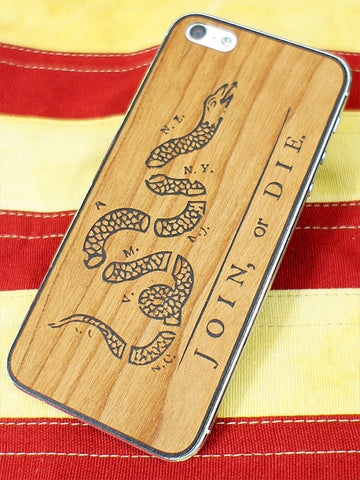
I thought their “Join or Die” skin for the iPhone 5 also looked handsome. This design doesn’t provide all the protection of the case (it sticks onto the back instead of wrapping around the edges), but it’s real wood with a real eighteenth-century image etched onto it.

Declaration Clothing also offers a variety of T-shirts condemning the Stamp Act, celebrating John Paul Jones, and the like. Some of the designs are striking.

[This isn’t a paid advertisement for either product or dealer; I just thought some members of the Revolutionary War fandom might like to browse the offerings on those sites.]

Monday, April 01, 2013

The Unicorn All Around the Town

The unicorn, already a rare species in modern New England, will get even harder to spot this fall.

A carved unicorn stood atop the east façade of Boston’s Town House, part of the royal arms. After the public reading of the Declaration of Independence on 18 July 1776, the crowd pulled down that pageantry and burned it.

Replicas of the unicorn and its leonine partner were reinstalled when that building, by then called the Old State House, was made into a museum in the late 1800s. (Folks are welcome to ponder the significance of elite Bostonians’ renewed fondness for British royal symbols in the urban America of that time.)

In October the unicorn will be taken down again to be refurbished. After work by Skylight Studios of Woburn, it will be regilded and re-palladiumed inside the museum before being sent back up to the roof.

This work will be supported by a gift from Boston Duck Tours, and celebrates the 300th anniversary of the Old State House building.